Photo: Adam Mørk
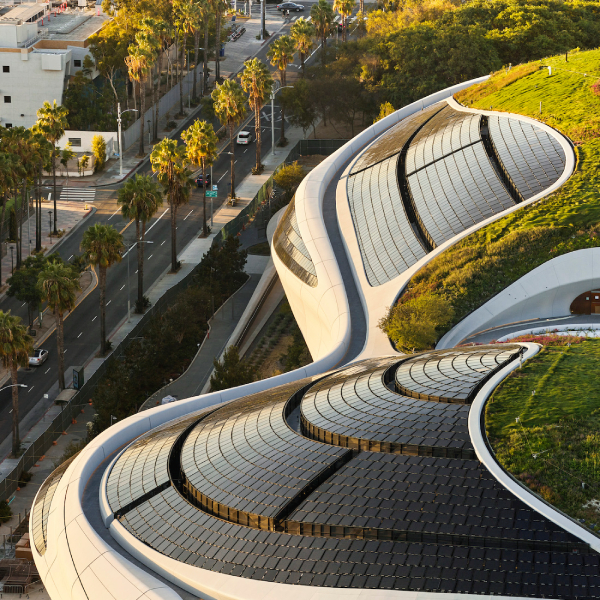
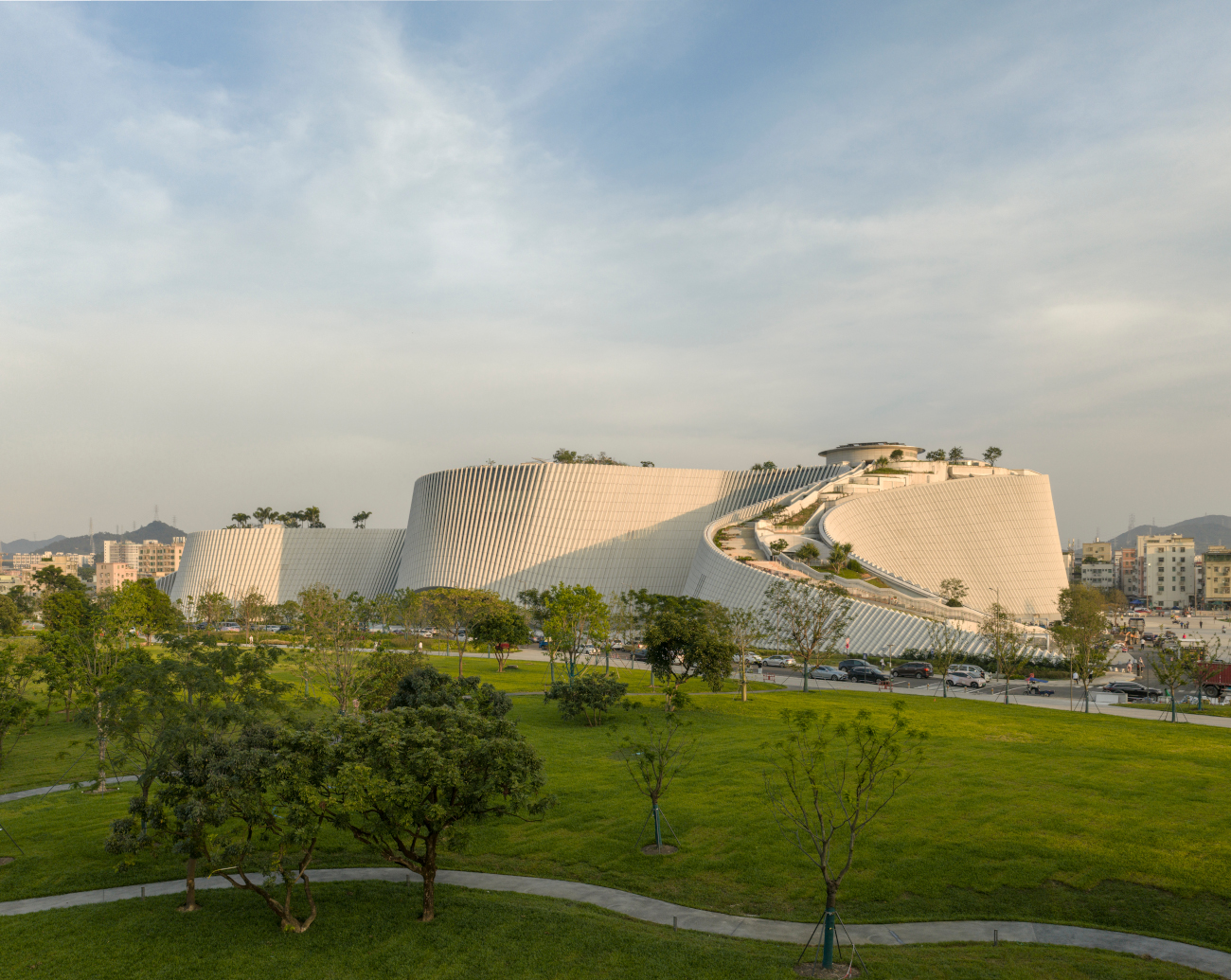
Over the last few years, Shenzhen, long regarded as China’s tech capital, has bet on a new wave of cultural institutions. The recently opened Shenzhen Natural History Museum is the latest example. But rather than leaning on the city’s futuristic atmosphere, the organic design blends in with the surrounding natural landscape, signaling a communion between the natural and the man-made world.
Conceived by a consortium formed by 3XN, B+H Architects, and Zhubo Design, the Shenzhen Natural History Museum is now the largest of its kind in South China and one of the largest natural history museums in the world. The building, which spans over 1.13 million square feet, sits next to Yanzi Lake. But the wonder of its design is how this winding building seems to have emerged from the ground up with its granite facade and carved openings.
“Nothing in nature is square. Nature is amorphous, dynamic, and always in formation,” says Kim Herforth Nielsen, Founder, Senior Partner, and Creative Director at 3XN. “From the beginning, the ambition was to create not a building, but a piece of landscape that had always been there—shaped by local geology, water, and time. That idea has been carried all the way from the competition stage to the museum that opens today, a place where the story of our planet is experienced as a physical journey through terrain, light and space.”
The museum building comprises five cone-shaped volumes that divide the main exhibition halls. Rather than moving from one box-shaped gallery to another, the curved walls of the museum evoke a continuous cave system. This offers an immersive visit in which guests can explore passages, atria, terraces, and framed views.
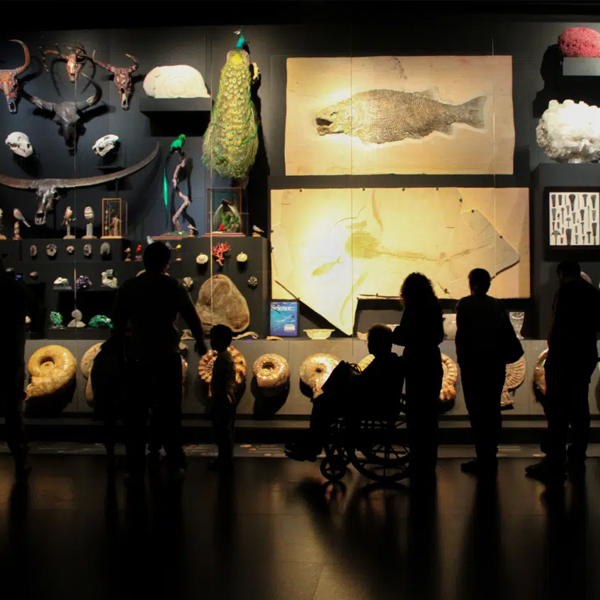
Among the exhibits on display are large‑scale installations and media environments alongside animal, plant, mineral, and fossil specimens. Together, these elements guide visitors through 4.6 billion years of Earth’s history, highlighting the natural ecosystems that make up the Shenzhen area and the South China region to connect them to a global natural history narrative.
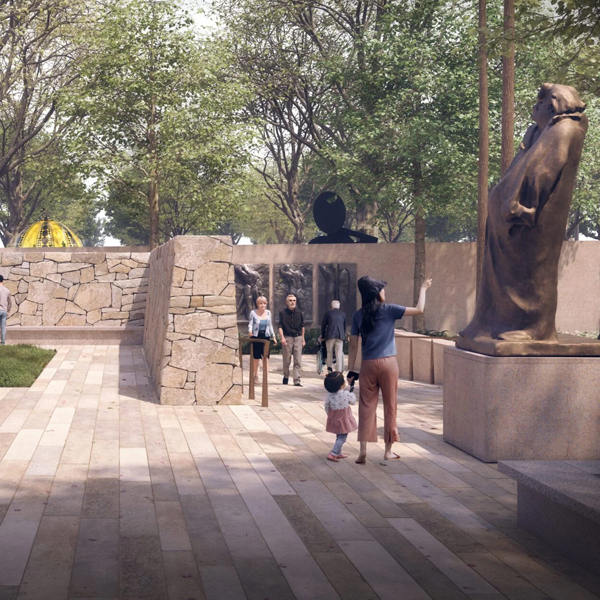
The building and its outdoor environment are a communal experience, almost doubling as a park—an always welcome addition to a burgeoning metropolis where green areas can easily become an afterthought. Its walkable public roof takes visitors from the ground on a charming path featuring viewing terraces, themed gardens, and public plazas where people can roam and gather.
While the museum unites collections and research chronicling our planet’s evolution, it’s ultimately the architecture that makes this story a tangible one. “By turning the museum into a living educational landscape,” shares Nan Zhaoxu, Director of Shenzhen Natural History Museum Preparatory Office, “from the roof park to the cone‑shaped galleries—it allows visitors from Shenzhen and around the world to experience science, nature and place as one continuous journey that is specific to its place.”
The new Shenzhen Natural History Museum seems to blend in with the surrounding natural landscape.
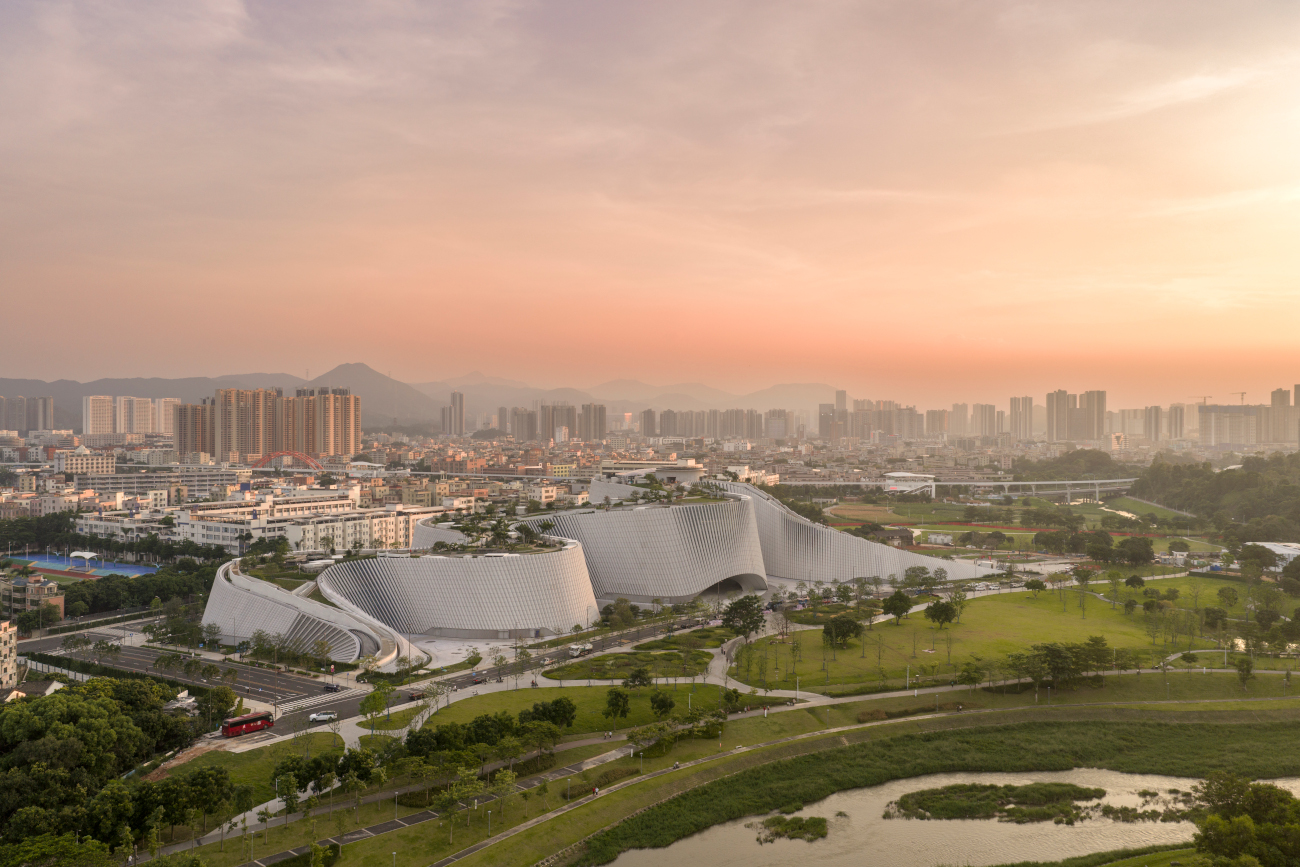
Photo: Adam Mørk
Conceived by a consortium formed by 3XN, B+H Architects, and Zhubo Design, the Shenzhen Natural History Museum is now the largest of its kind in South China.
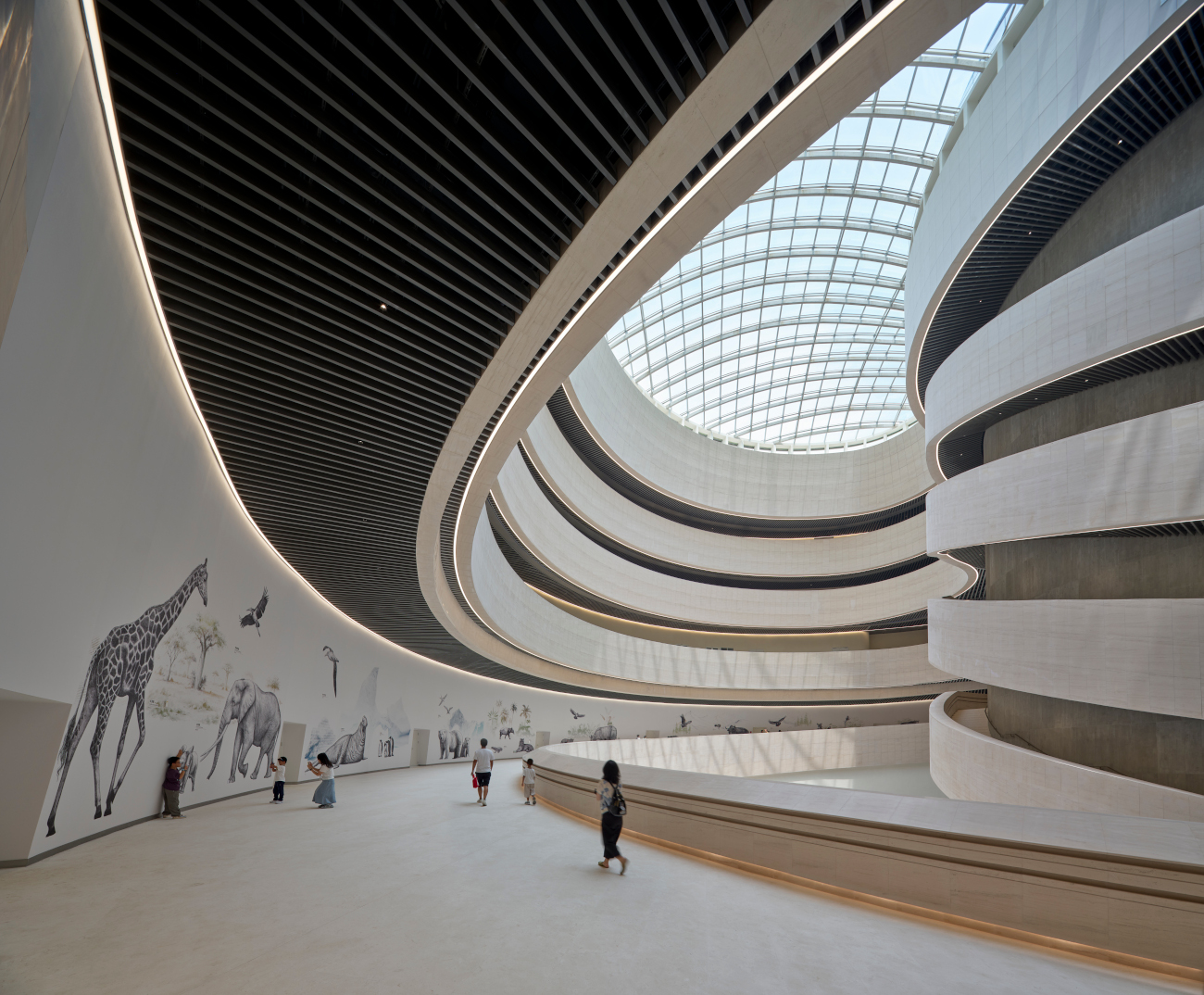
Photo: Adam Mørk
The wonder of its design is how this winding building seems to have emerged from the ground up with its granite facade and carved openings.
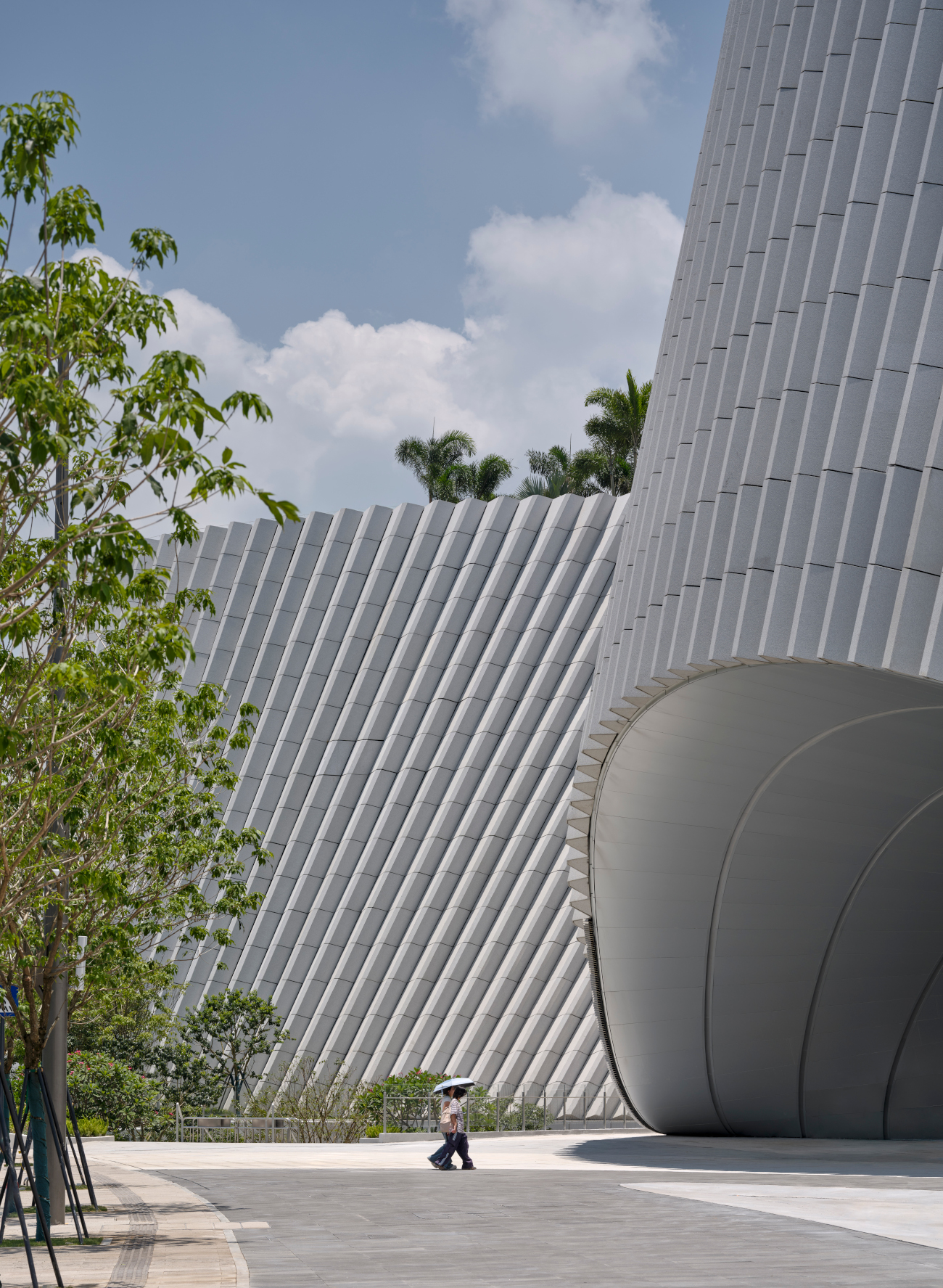
Photo: Adam Mørk
The building and its outside environment are a communal experience, almost doubling as a park.
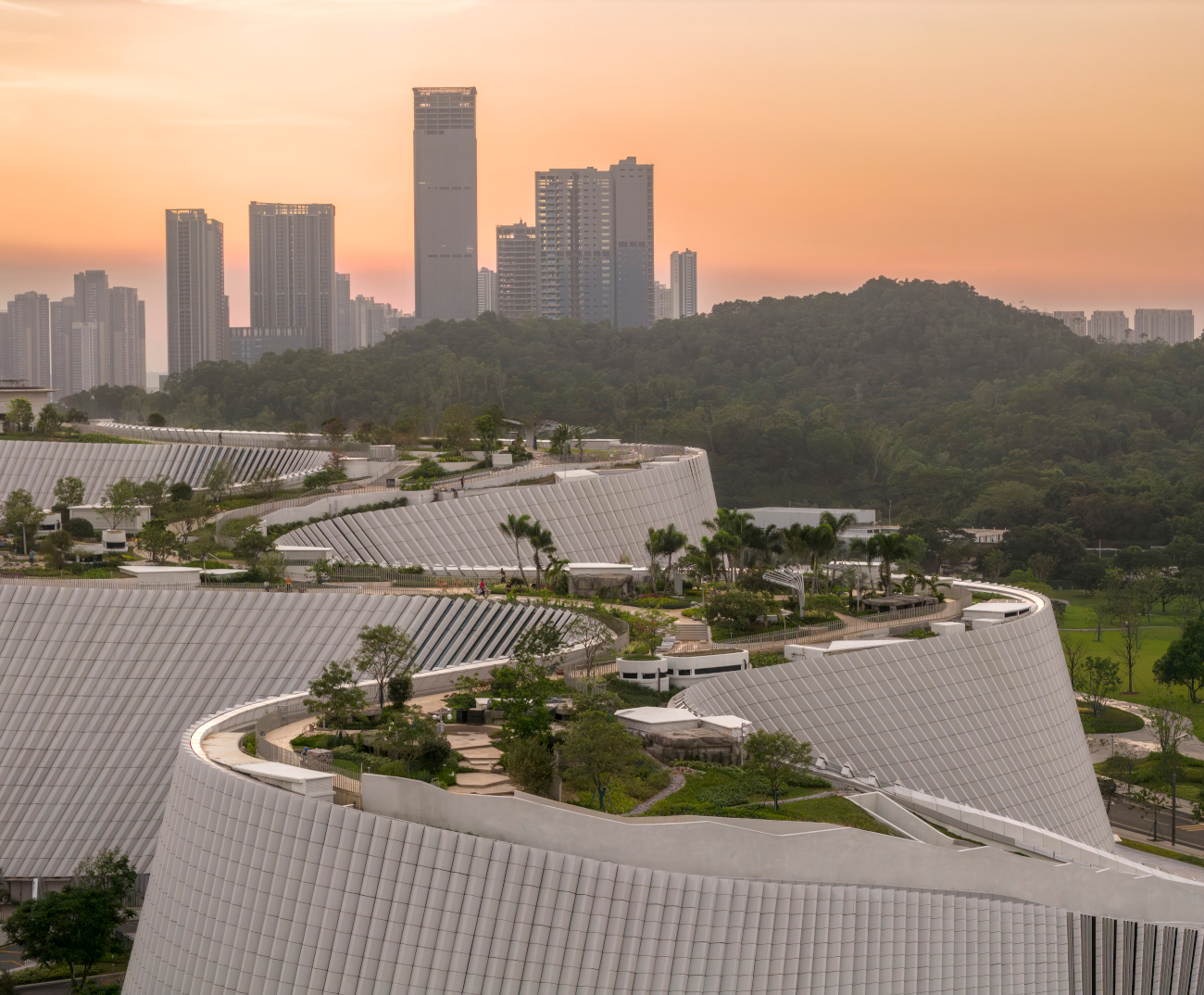
Photo: Adam Mørk
Inside, the museum building comprises five cone-shaped volumes that divide the main exhibition halls.
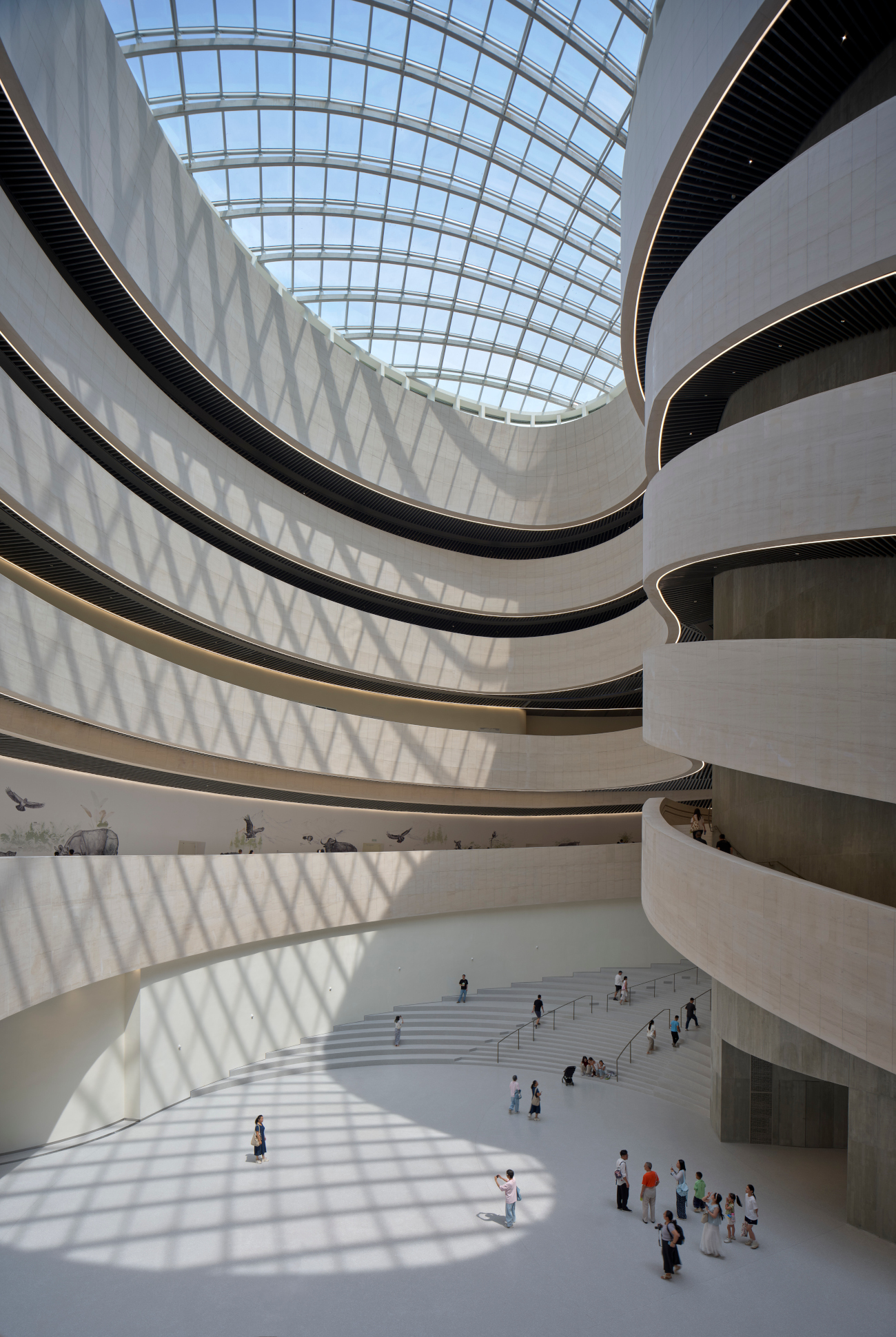
Photo: Adam Mørk
Rather than moving from one box-shaped gallery to another, the curved walls of the museum evoke a continuous cave system.
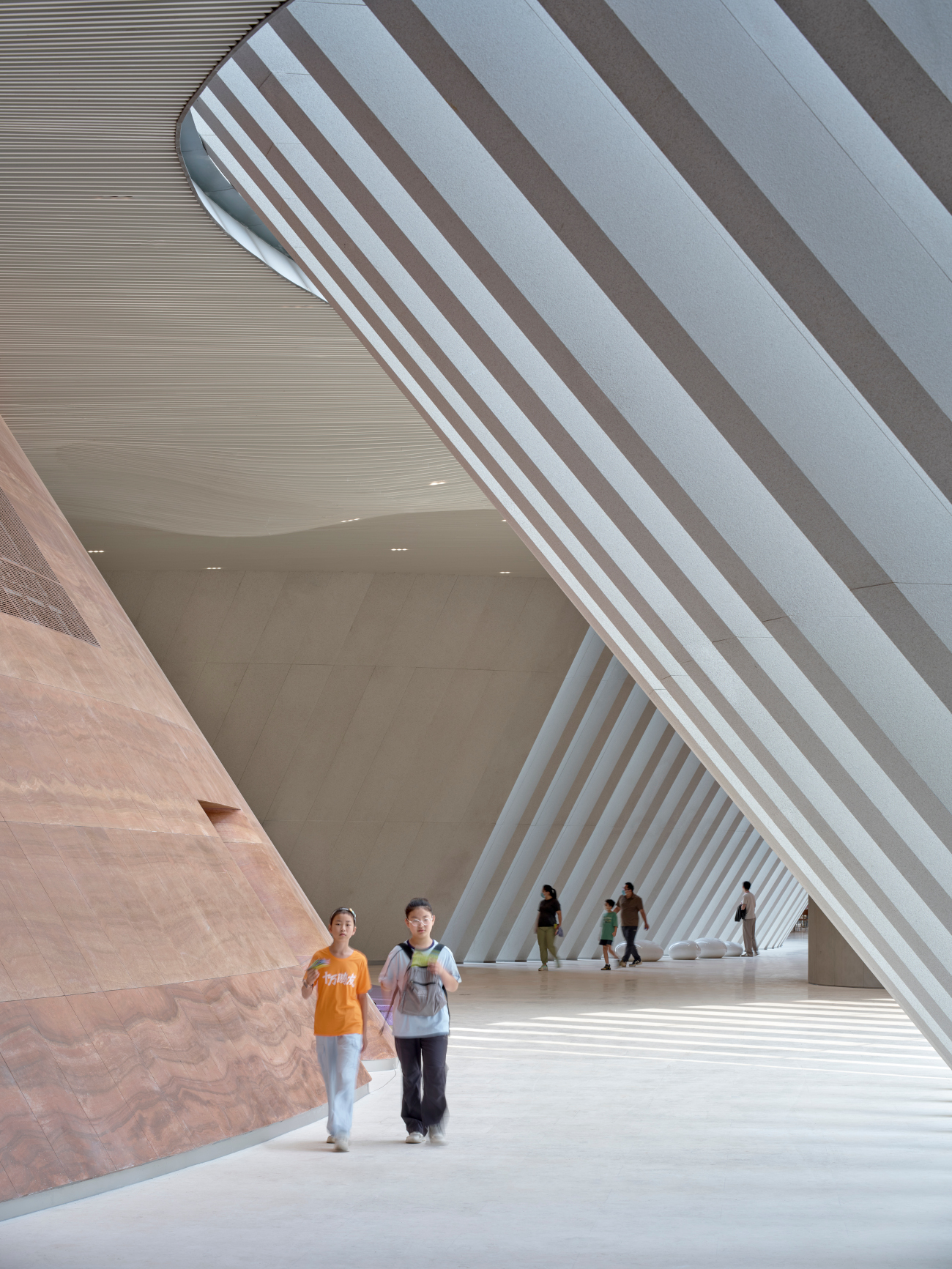
Photo: Adam Mørk
“By turning the museum into a living educational landscape it allows visitors from Shenzhen and around the world to experience science, nature and place as one continuous journey that is specific to its place.”
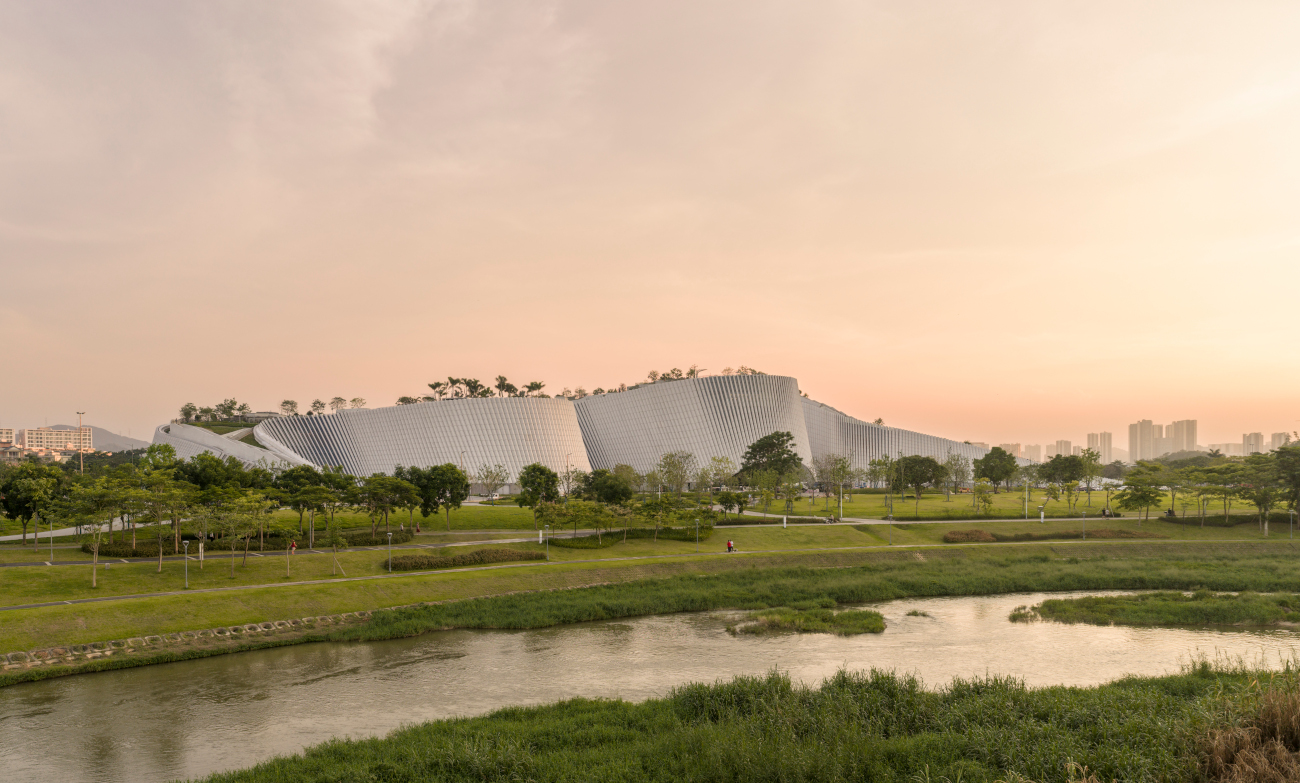
Photo: Adam Mørk