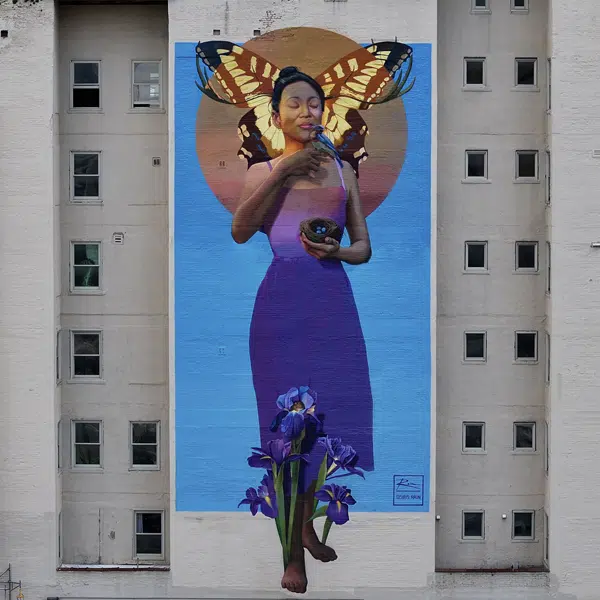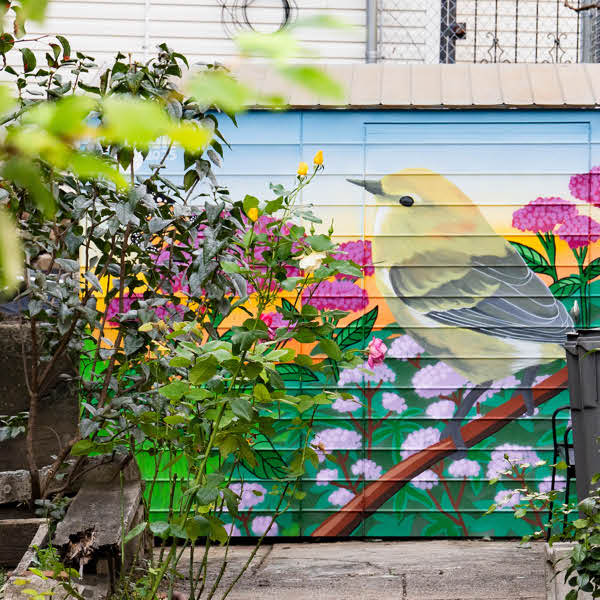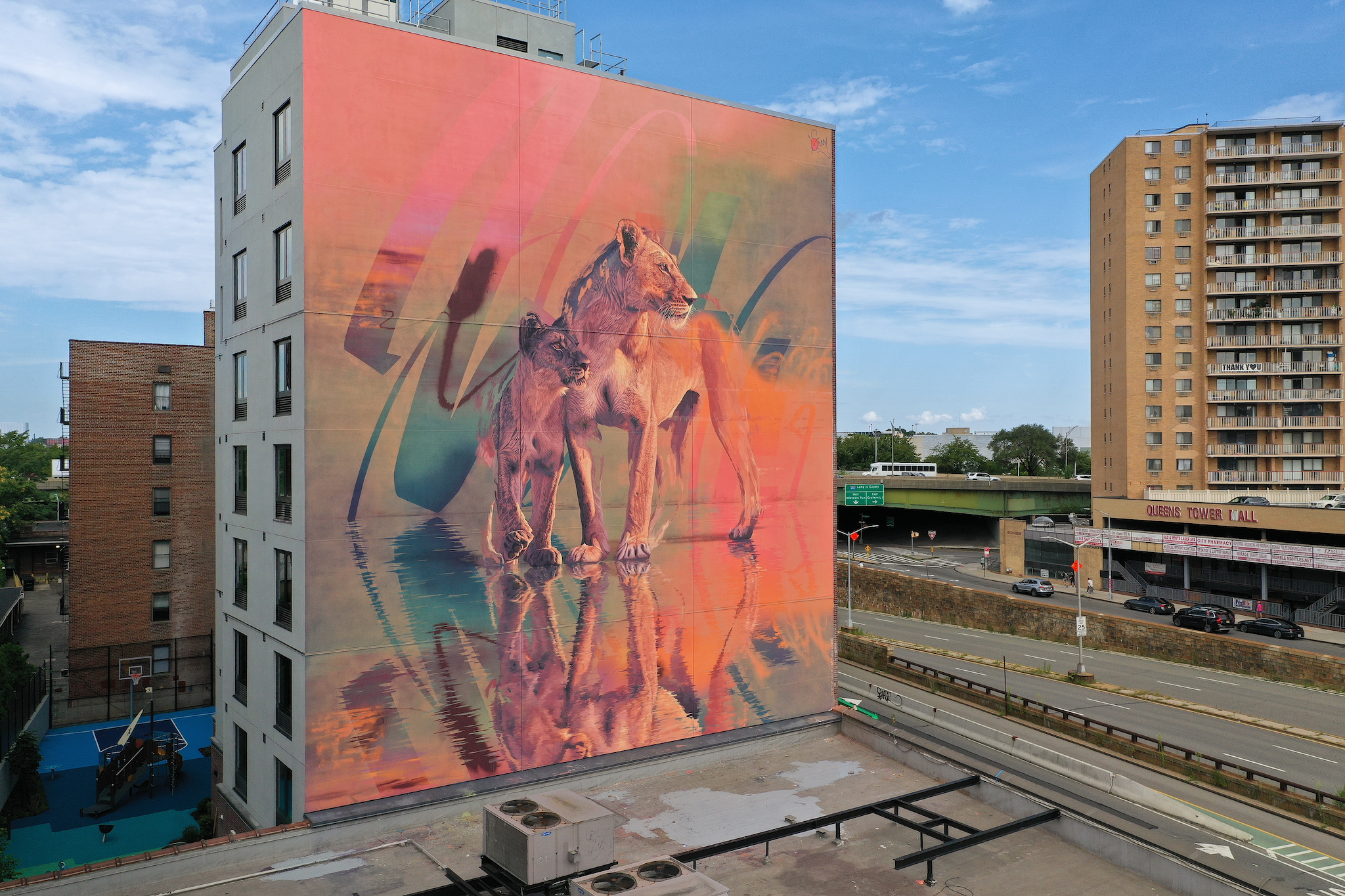
“Queens Pride,” Queens, NY, 2024
In many cases, it seems as though cities and wildlife are at odds, unable to coexist given their inherent—and vast—differences. For Sonny Behan, this assumption couldn’t be further from the truth. Across his multidisciplinary practice, the artist introduces urban environments to the animal kingdom, something that has propelled him since his childhood.
“I was born in England, but moved with my family to South Africa when I was 11,” Behan tells My Modern Met. “Growing up surrounded by so much natural beauty and wildlife had a huge impact on me. Spending time in the African bush was completely unlike anything I had experienced before, and I had never felt more alive or present than in those moments.”
When Behan began producing his own art, it only felt logical for him to revisit those feelings of awe. The artist’s murals transform lions, tigers, birds, and other creatures into monumental renditions of themselves, complete with bold color palettes and confident, fluid linework. More often than not, these public artworks emerge within cities, ranging from New York to Houston to Cape Town. To encounter Behan’s murals within these urban settings is to be transported into a natural and, considering his soft brushstrokes, almost magical world. That, of course, is the artist’s whole point.
“I believe our connection to nature is inseparable from our connection to ourselves, and ultimately to the universe and our place within it,” Behan explains. “It feels like I’ve been on an endless pursuit to portray this magical, otherworldly, dreamlike sensation that nature gives me. [I’d like] to move someone emotionally in the way the natural world continues to move me.”
Blooming across concrete and brick facades, these murals are intertwined with their urban surroundings, encouraging passersby to reflect upon the vibrant animals they see before them. The relationship between viewer, public artwork, and nature seems to suggest a sort of interconnectedness, in which city inhabitants, wildlife, and Behan himself all exist in harmony.
“Painting in public is super engaging,” Behan confirms. “You’re constantly influenced by your surroundings. It’s often noisy, chaotic, and full of people.”
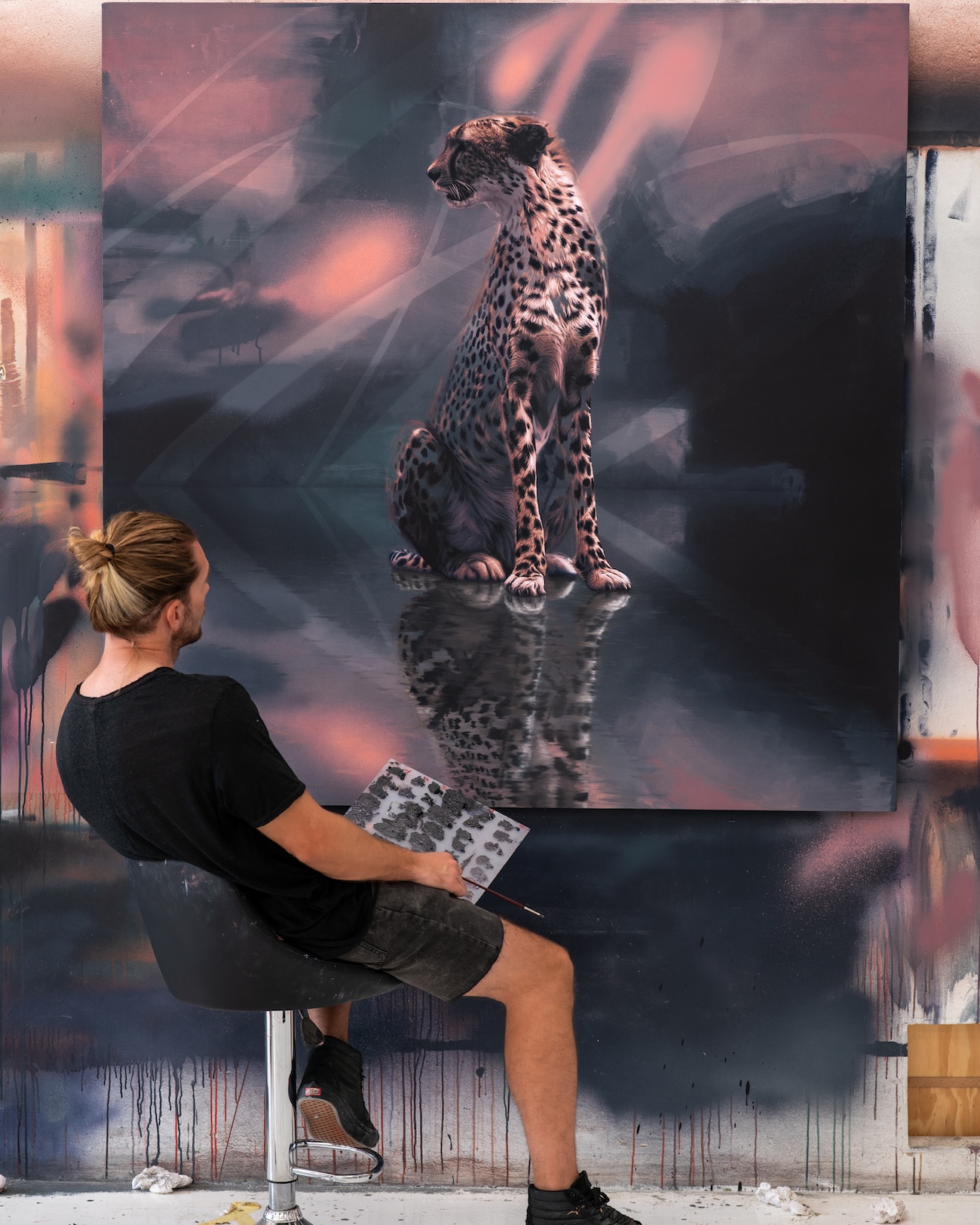
Sometimes, though, Behan prefers a little solitude. During those moments, he retreats to his studio, creating smaller paintings and sculptures, some of which are later installed in public spaces. “[Studio work] is quiet and involves long hours of experimenting, refining, and perfecting,” the artist says. Still, shifting between monumental to miniscule, public to private, painting to sculpture, is precisely what energizes Behan. “Each medium has its own unique challenges and its own results,” he adds. “Switching between them keeps me on my toes and I’m now beginning to notice that they’re starting to mold into each other.”
Regardless of medium or setting, animals will always figure strongly within Behan’s work. For him, animals exemplify the “space between what feels real and what feels imagined,” and he hopes that his viewers can explore that liminality alongside him.
“I guess I’m less interested in spelling things out than in creating a space where viewers can project their own experiences and emotions,” the artist concludes. “I’m not trying to give answers with my work. All I can hope for is that people walk away feeling a sense of reflection, connection, or perhaps a glimpse of the feeling of awe that I find in nature.”
Across his multidisciplinary practice, Sonny Behan introduces urban environments to the animal kingdom through monumental, vibrant murals.
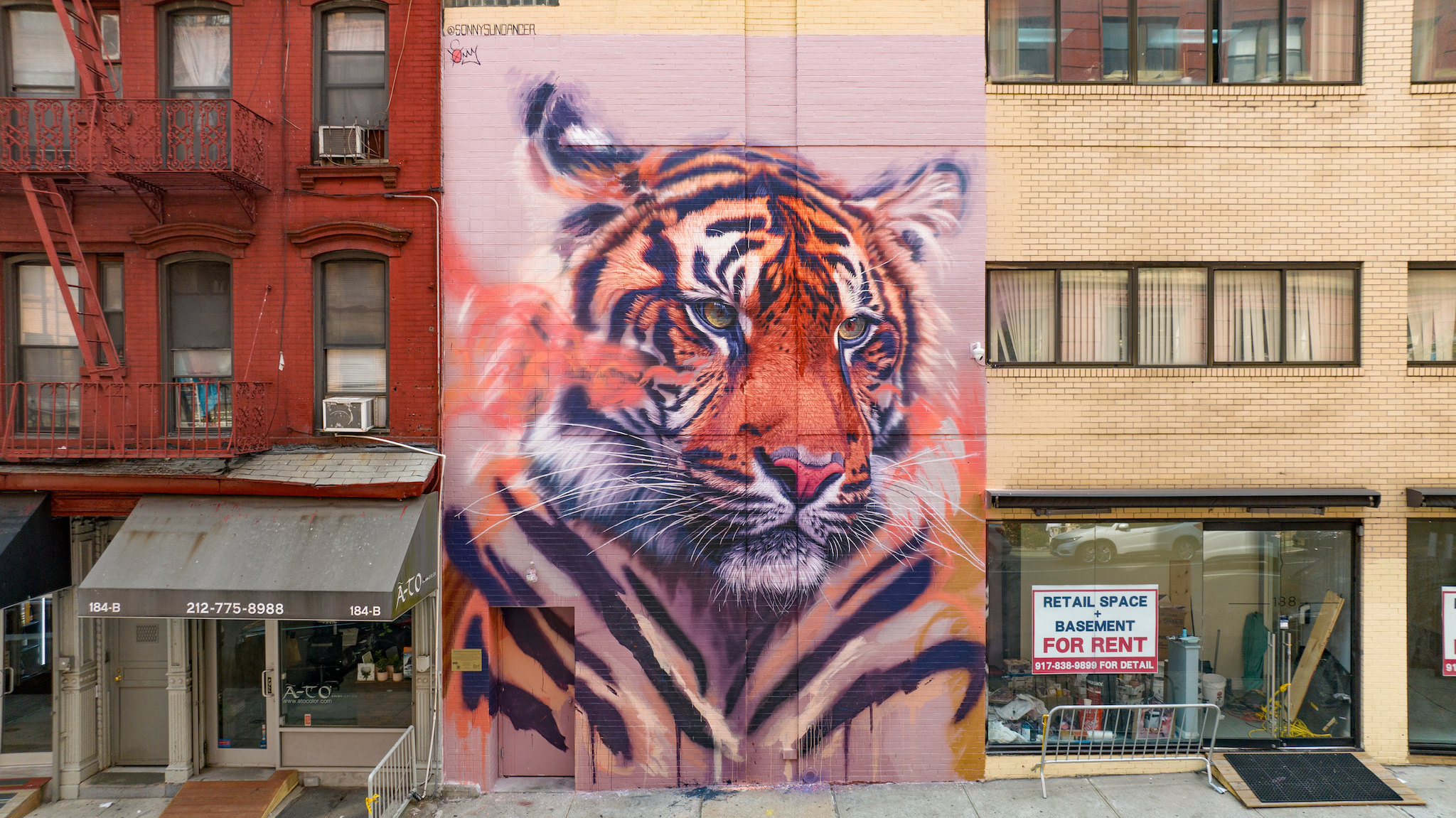
“Beyond Boundaries,” New York City, 2023
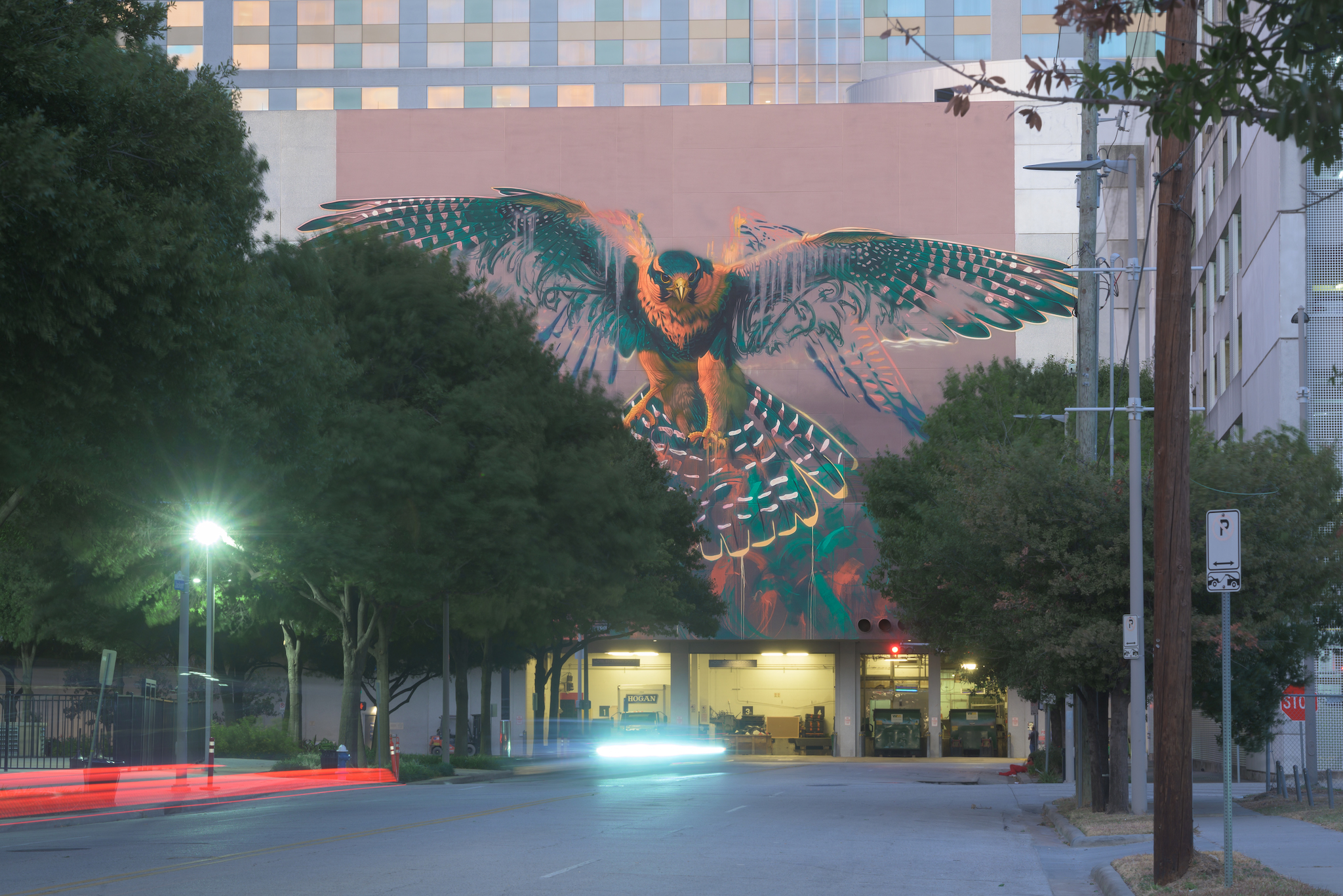
“Fight or Flight,” Houston, TX, 2022
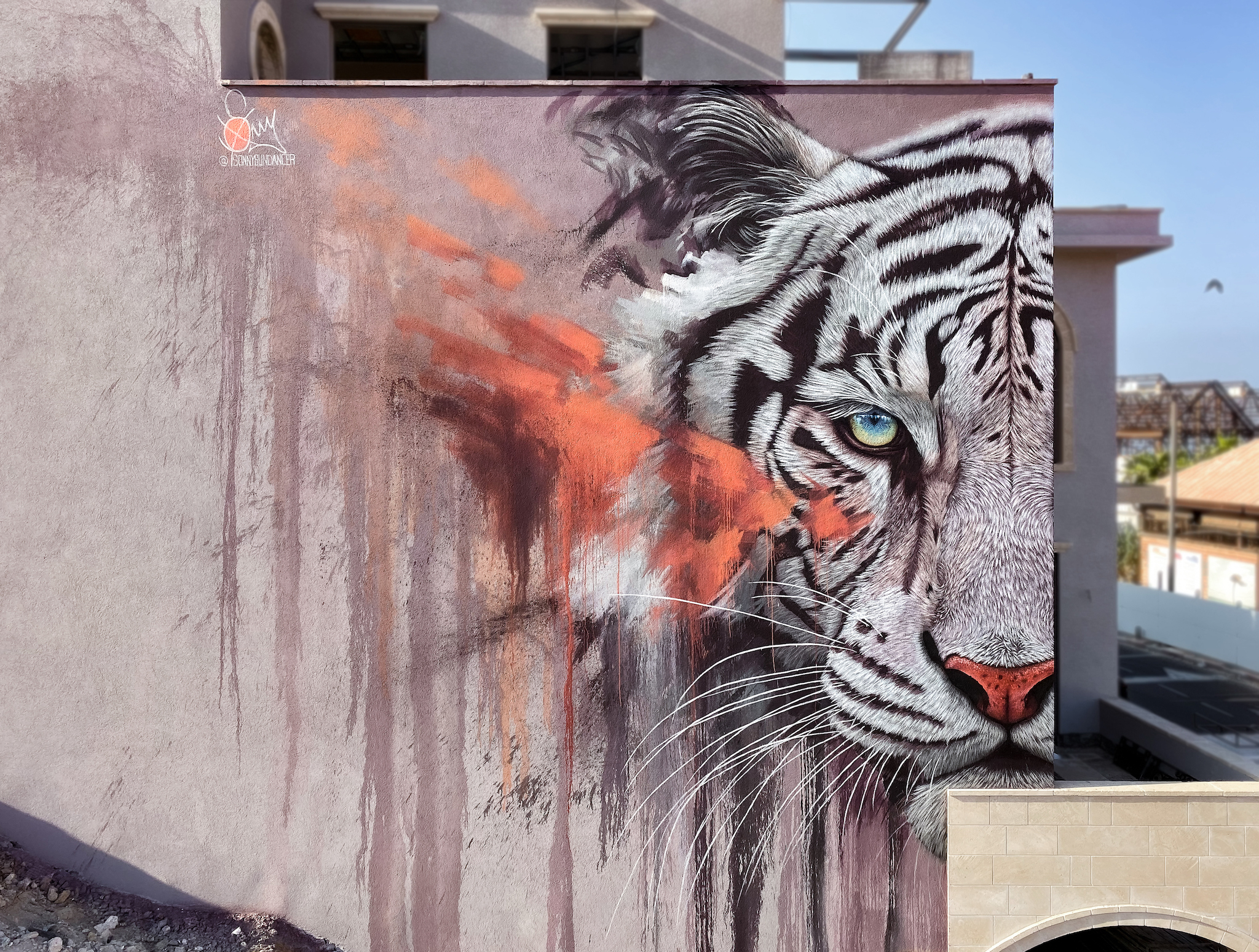
“Baihu,” Tel Aviv, 2019
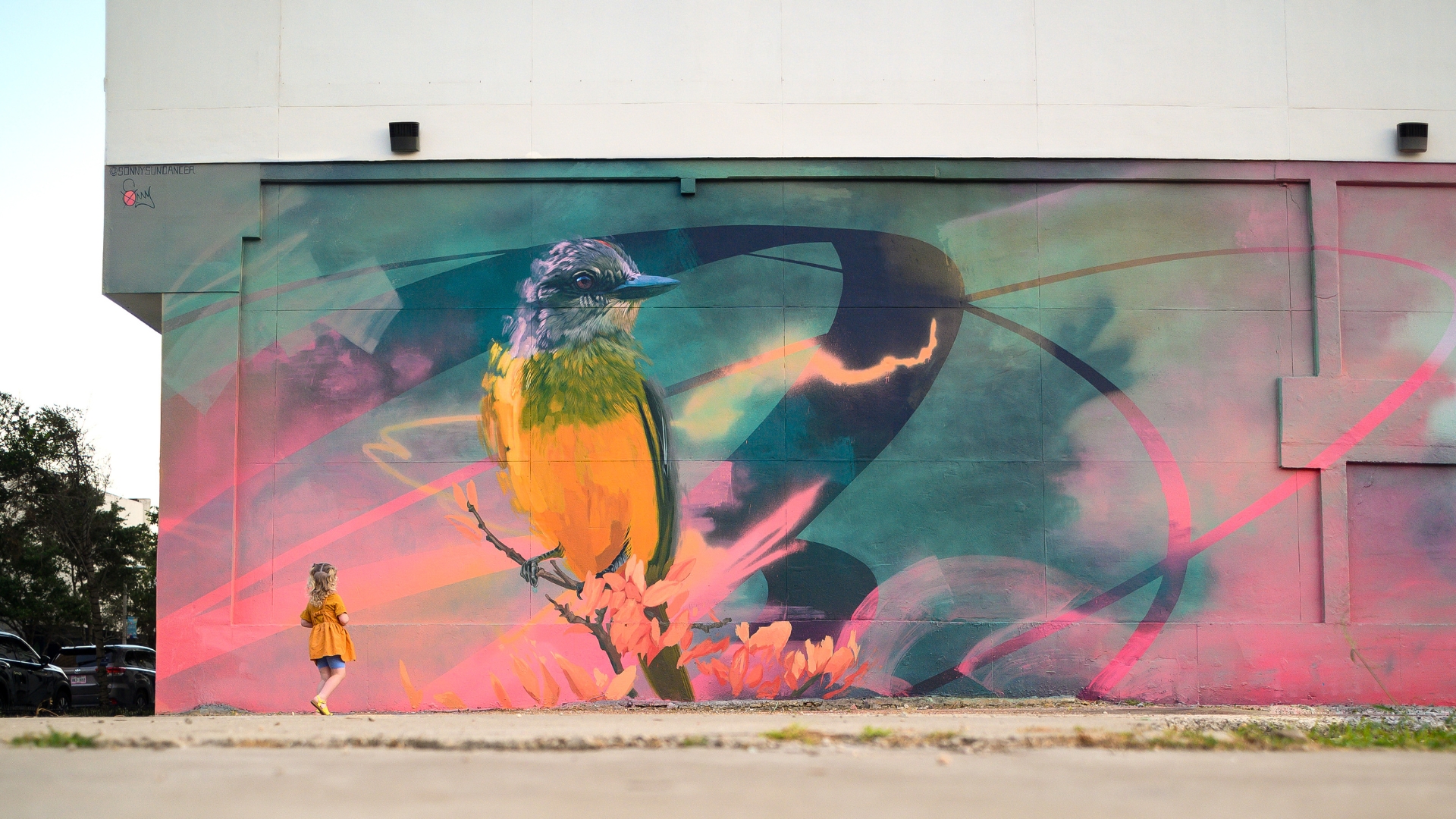
“Wanderer,” Corpus Christie, TX, 2024
Aside from his vibrant murals, Behan also produces smaller-scale works and sculptures inspired by wildlife.
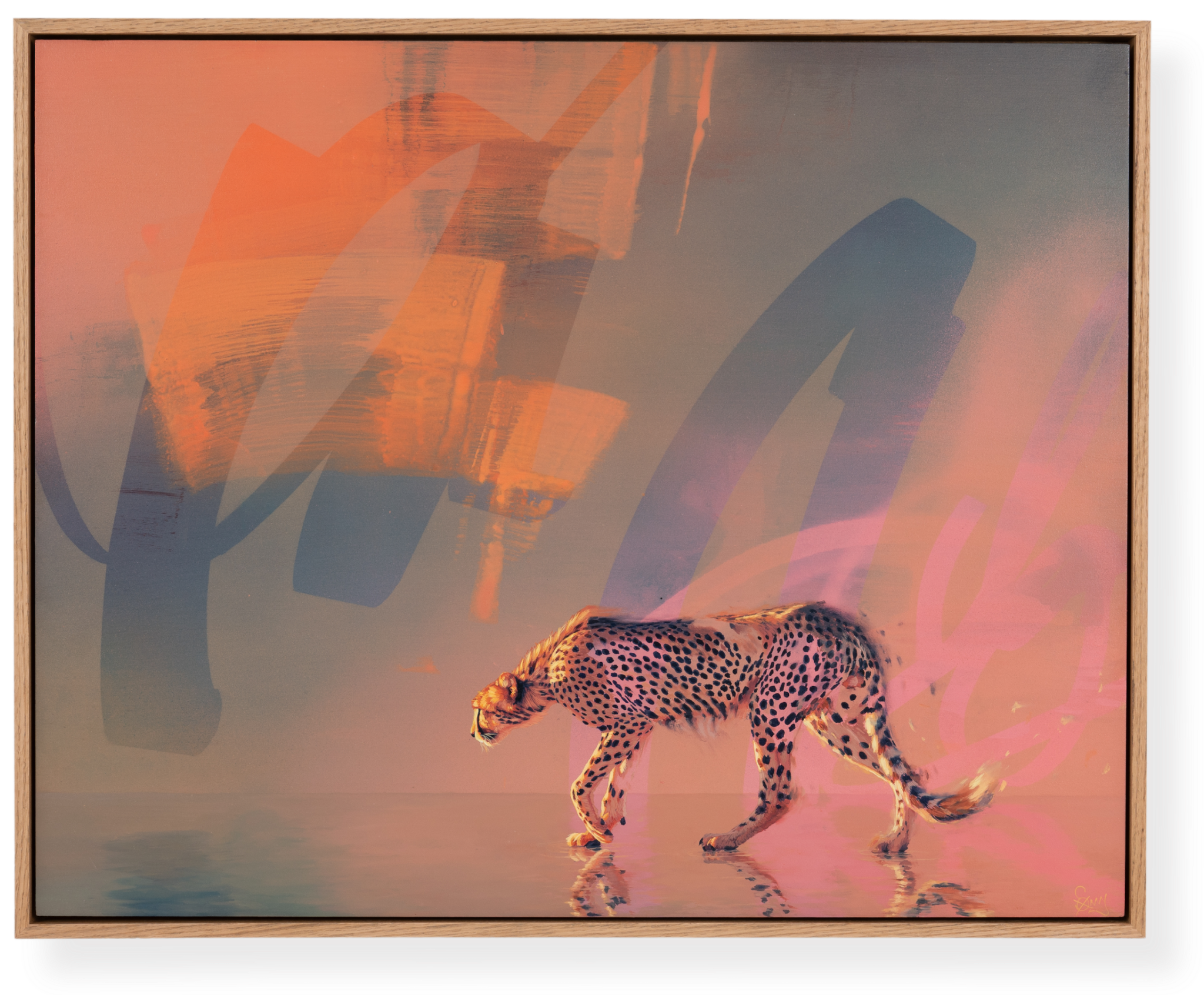
“Wildlife — Oringo”
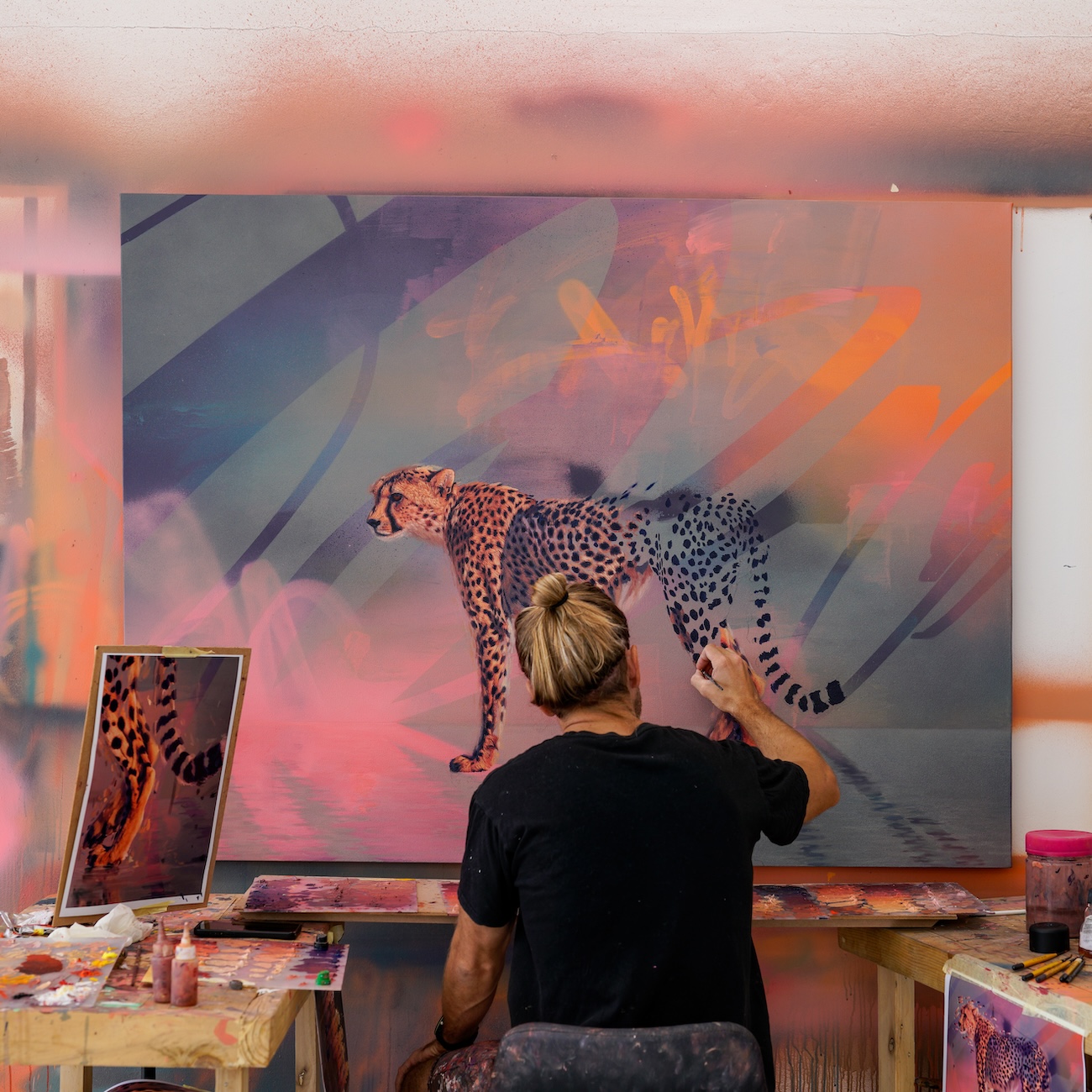
Sawedi
Usiku
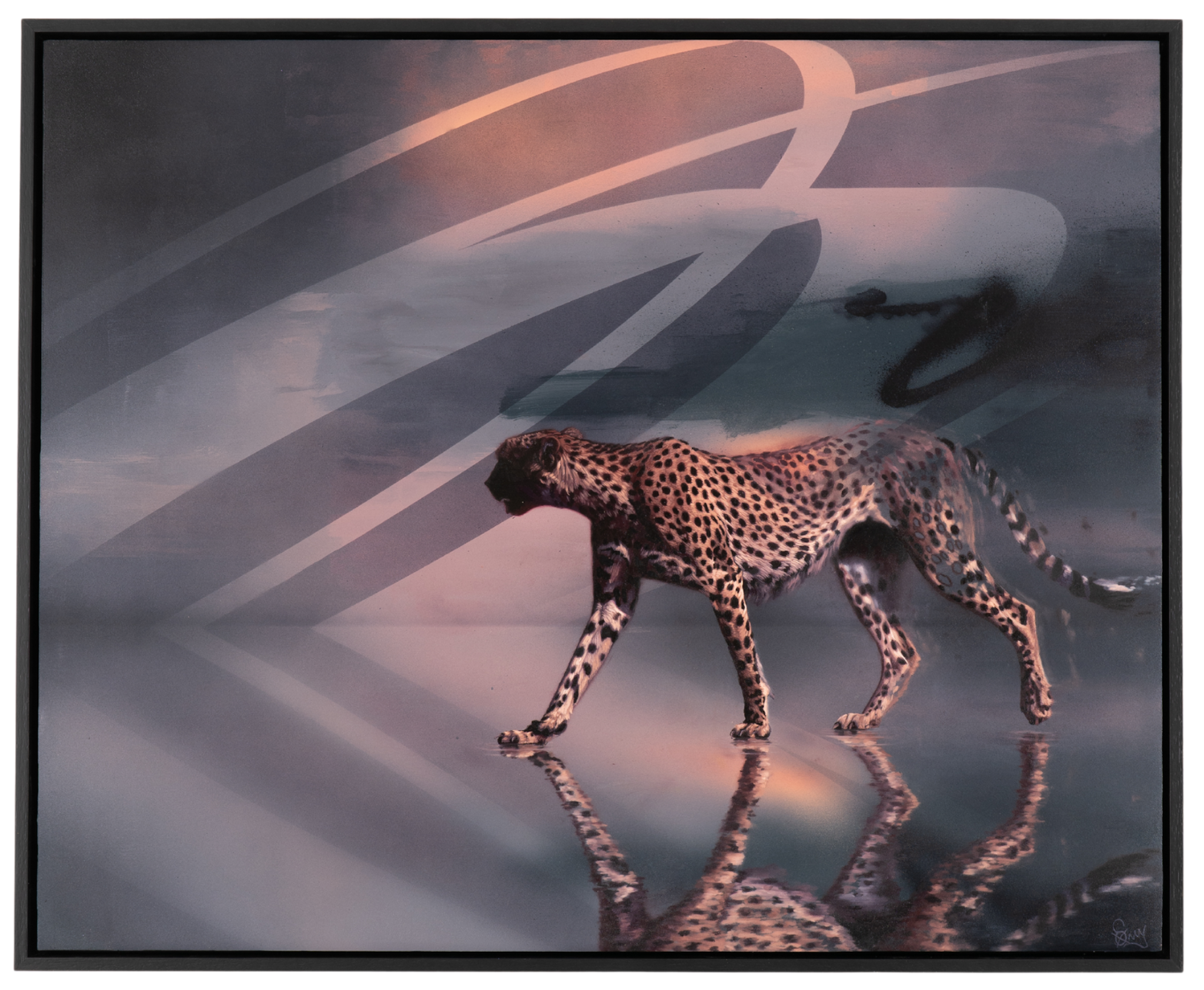
“Wildlife — Dusk Walker”
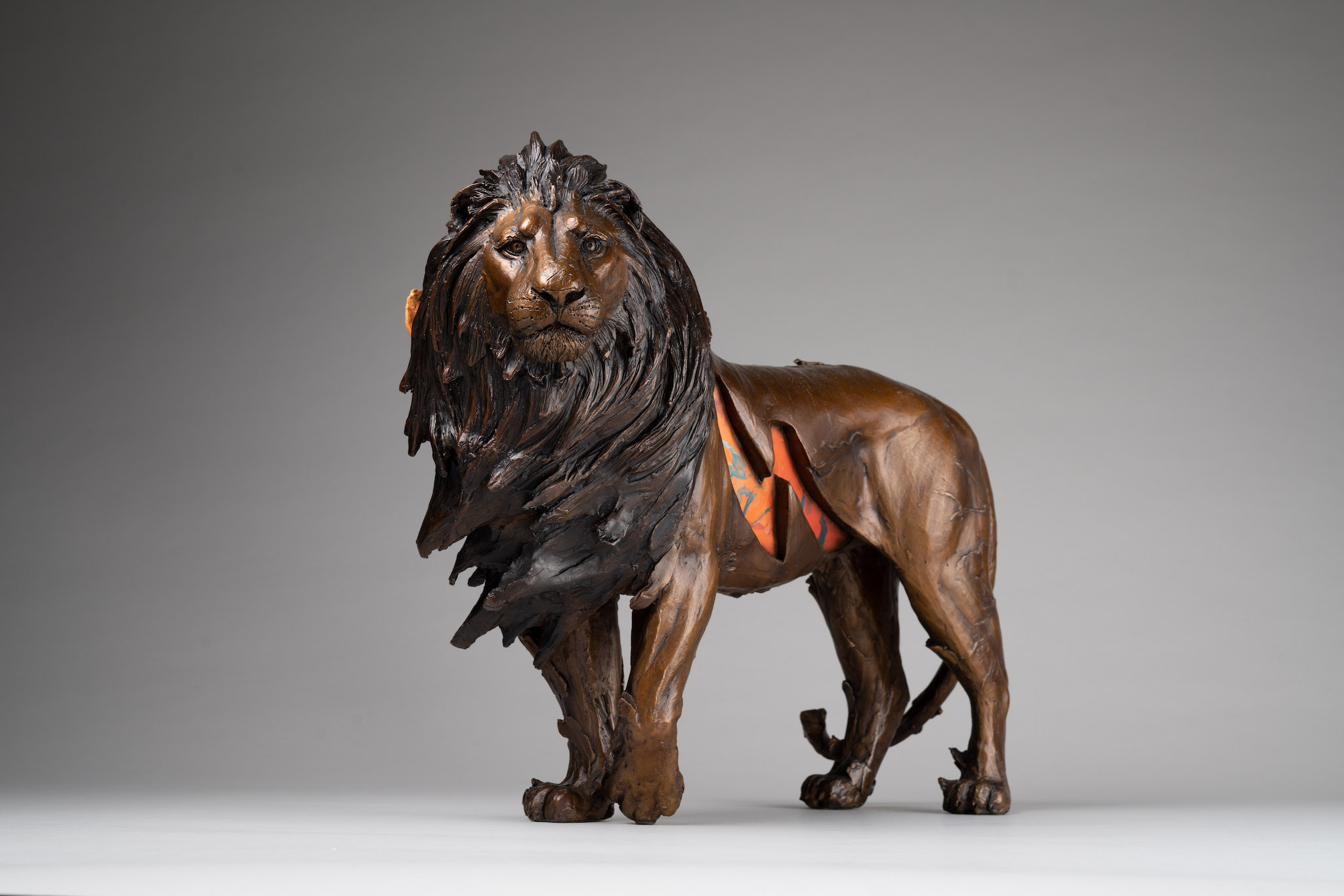
“Savanna”
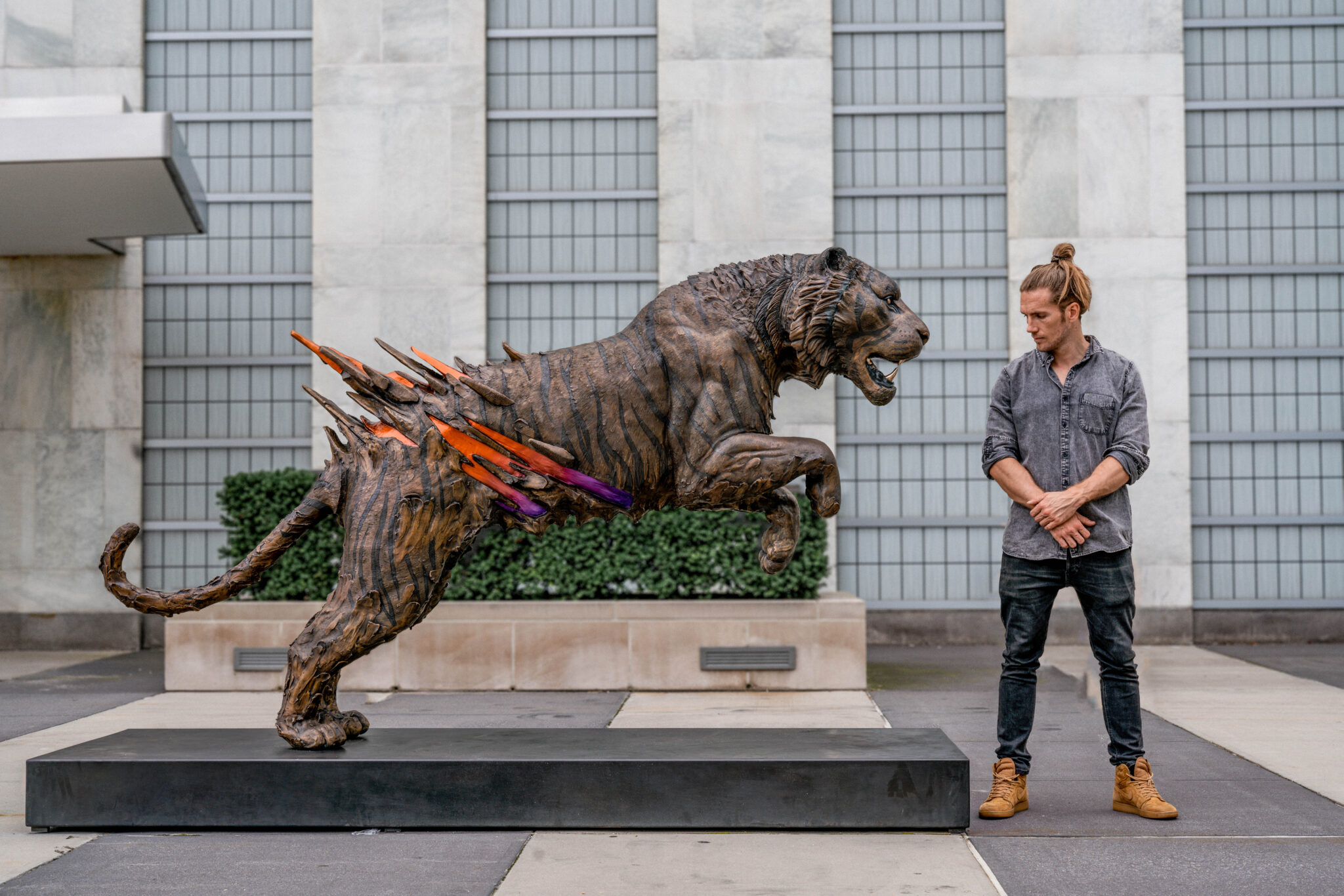
The artist beside his “Abhaya” installation, 2021