
Music researchers estimate that there are more than 1,500 musical instruments in the world. And out of all of these, there's seemingly only one that can be played without physically touching it—the eerily-sounding, hypnotic-looking theremin. While it has been around for about a century, many believe it still has plenty of untapped potential. The music created by the theremin is as unique as its history, and its possibilities have inspired musicians across genres and generations.
Defined as an electronic instrument, the theremin has a deceptively simple appearance. Most models consist of a box with two metal tubes; one standing straight above the box, and the other curved, attached to the opposite side of the box in a U-shape. This set-up produces oscillations at two sound-wave frequencies above the range of human hearing. To play it, one moves a hand or a baton above the box. This will alter the inaudible frequencies, creating sounds within our range of hearing as the movement progresses.
The theremin was invented in the 1920s by Leon Theremin, a Russian engineer and physicist. He created it almost by accident. “[Theremin] was working in a laboratory in Russia as a young scientist, he was actually working on a gas meter to measure the density of gases,” biographer Albert Glinsky told CBS News. “So as he brought his hand closer to the gas meter, he heard kind of a higher squeal. And as he brought his hand back to his body and away from the machine, it was a slower squeal. And he started to play melodies on this thing. And lab assistants and his boss in the lab started to gather around and said, ‘Well, this is amazing.’”
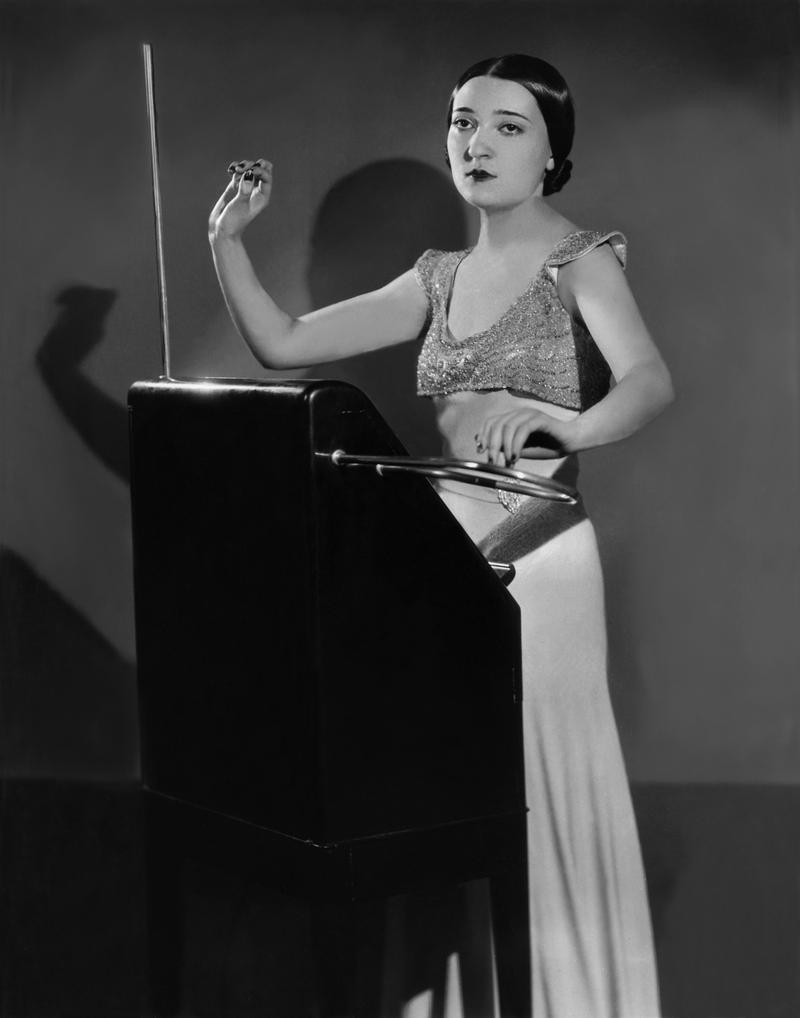
Playing the theremin requires precision and a trained ear, so previous musical experience helps a lot. Among the first proficient theremin players was Clara Rockmore. A classically trained violinist, she quit playing when tendinitis affected her bow arm. As fate would have it, meeting Theremin resulted in her adopting this new instrument, and with time, becoming its most recognizable face thanks to her controlled performances. Rockmore worked with Theremin to further the possibilities of the instrument, and their time together led to the inventor falling in love with her. But when he proposed to her, she declined.
The theremin continued to make its way to modern music. In 1967, Paul Tanner invented electrotheremin, an instrument that mimics the sounds of the theremin, and is responsible for the high-pitched sound on “Good Vibrations” by the Beach Boys.
Two years later, Led Zeppelin gave their hit “Whole Lotta Love” its particular texture with the help of a theremin. “I knew what I wanted, and I knew how to go about it. It was just a matter of doing it,” Led Zeppelin found Jimmy Page told Guitar World. “I created most of the sounds with a theremin and my guitar. The theremin generates most of higher pitches and my Les Paul makes the lower sounds.”
Nowadays, while not resoundingly famous, the theremin has been at the service of popular culture as a vehicle for the eerie or the quirky. The soundtrack for the TV show Loki, composed by Natalie Holt, features plenty of theremin to enhance the puzzling, uneasy weight of the story. The theremin itself also appeared on TV when Sheldon Cooper played it on The Big Bang Theory in the episode titled “The Bus Pants Utilization.” Trying to disturb his friend's work after being kicked out of a project, he plays his theremin out loud, resulting in him being sacked from the apartment he shares with his friend Leonard altogether.
Check out some more examples of theremin sounds and songs featuring it.
The music created by the theremin is as unique as its history, and its possibilities of this instrument have inspired musicians across genres and generations.
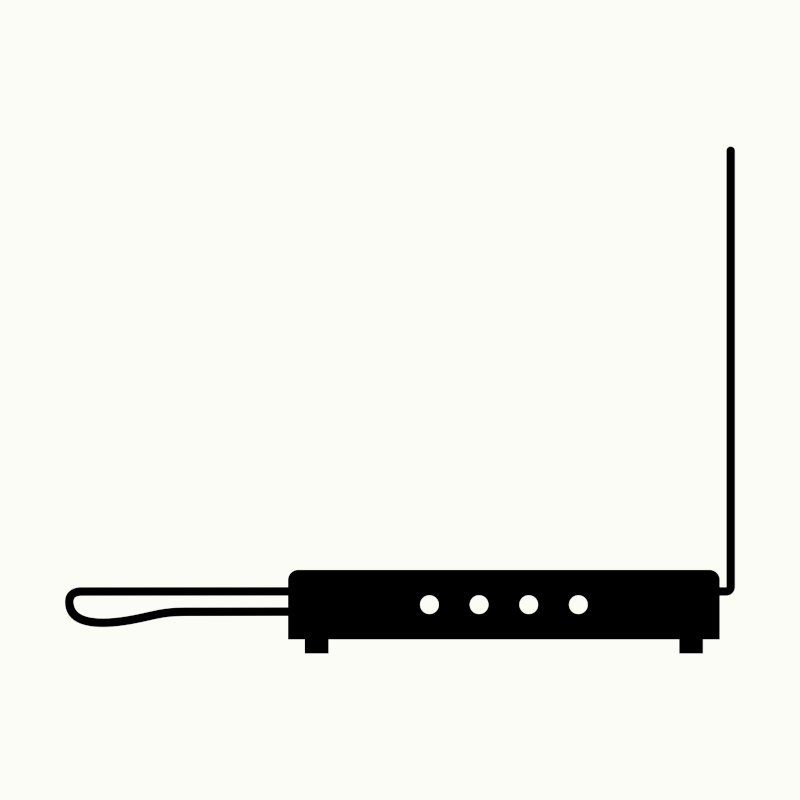
The theremin was invented almost by accident in the 1920s by Leon Theremin, a Russian engineer and physicist, when working on a gas meter.
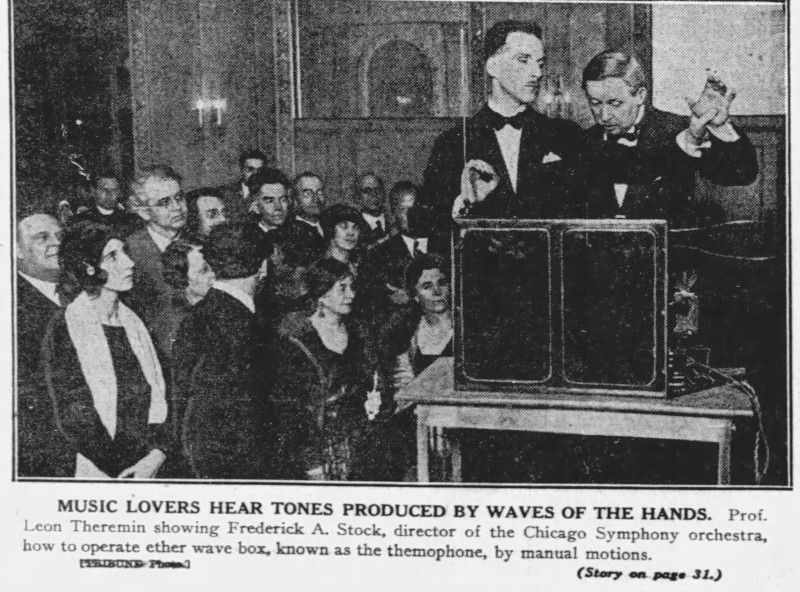
“Prof. Leon Theremin showing Frederick A. Stock, director of the Chicago Symphony orchestra, how to operate ether wave box, known as the thermophone, by manual motions,” 1928. (Photo: Chicago Tribune via Wikimedia Commons, Public domain)
Among the first proficient theremin players was Clara Rockmore, who worked with Theremin to further the possibilities of the instrument.
The theremin made its way to modern music, with one of the most famous examples being “Whole Lotta Love” by Led Zeppelin.
The soundtrack for the TV show Loki, composed by Natalie Holt, features plenty of theremin to enhance the puzzling, uneasy weight of the story.
The theremin itself also appeared on TV when Sheldon Cooper played it on The Big Bang Theory in the episode “The Bus Pants Utilization.”
Carolina Eyck plays Ennio Morricone's “The Ectasy of Gold” on theremin.
Sources: Theremin on Britannica; The Theremin: A strange instrument, with a strange history; How Many Musical Instruments Are There in the World?; The theremin: The strangest instrument ever invented?; Jimmy Page on the Making of ‘Whole Lotta Love’: ‘Evil Sounds That You’re Not Supposed to Hear’; The Real Instrument Behind The Sound In ‘Good Vibrations'; Natalie Holt on Creating the Score for Loki, Marvel's God of Mischief
Related Articles:
Musical Instrument Museum Showcases the Extraordinary Craft of 16th Century Stringed Instruments
Hidden Interiors of Musical Instruments Look Like Secret Rooms of Old World Architecture
Yamaha Builds Electric Guitars Out of Upcycled Instrument Manufacturing Wood Scraps
Creative Band Plays Music Using Vintage Typewriters as Musical Instruments