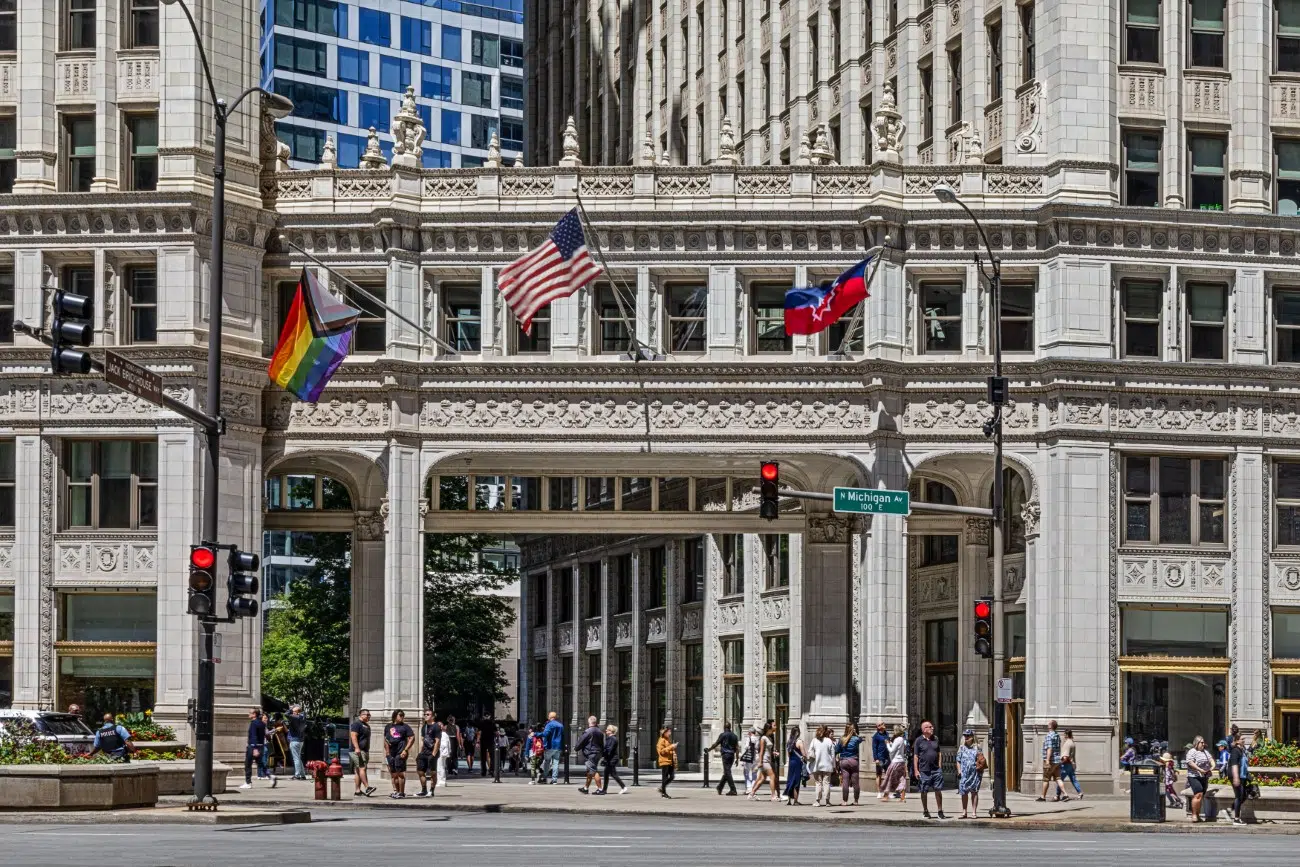
The Wrigley Building is one of Chicago’s most iconic pieces of architecture, yet at the same time, one of its most mysterious. Designed by an architect who is not a household name, it has still managed to become a staple of American architecture. Now, a new book is shedding light on its rich history, from the chewing gum mogul who commissioned it to the underrated architect whose creative vision continues to captivate us today.
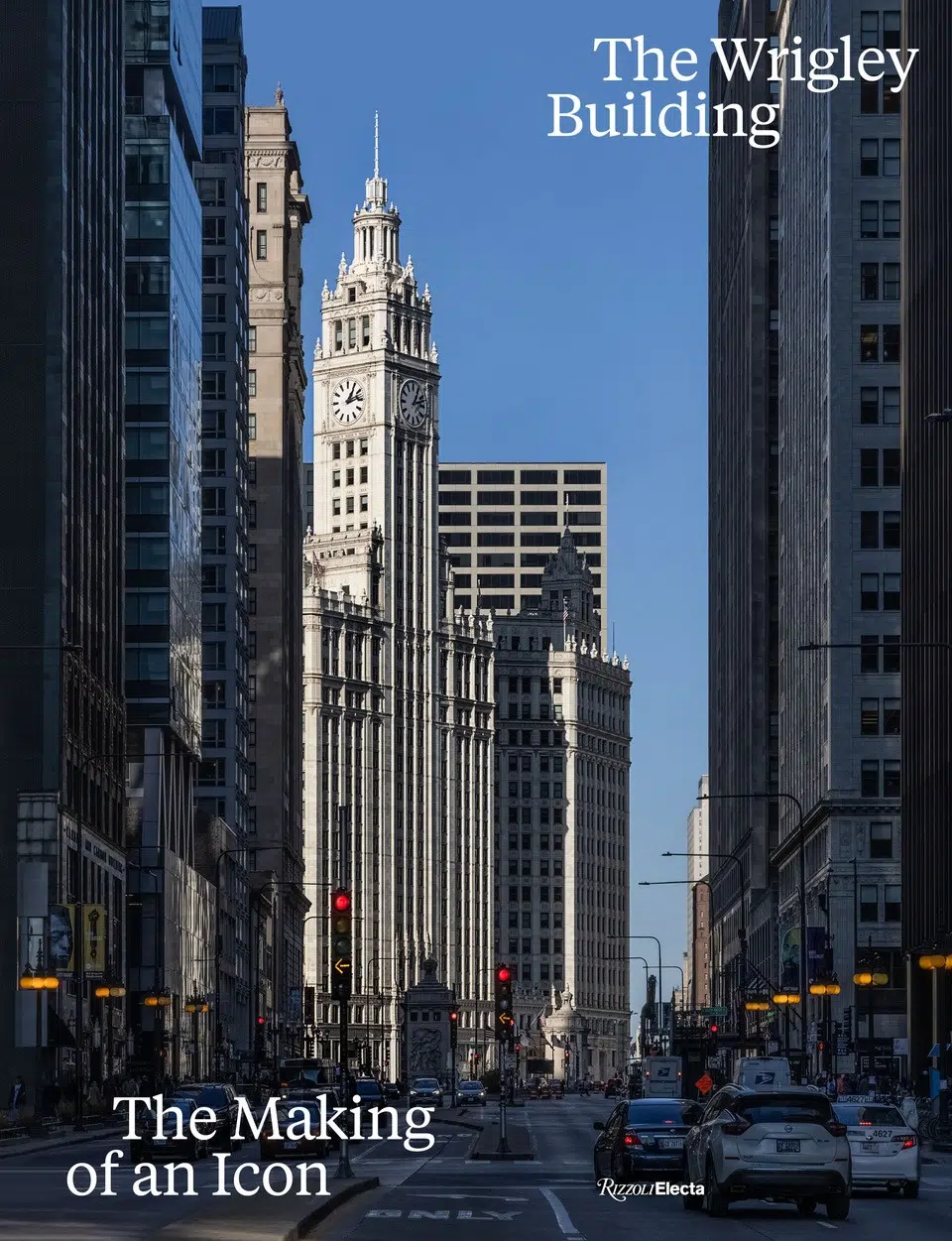
The Wrigley Building: The Making of an Icon dives into the fascinating history of this skyscraper. Authored by arts and culture writer Robert Sharoff, whose work has been featured in The New York Times and Chicago magazine, among others, the book uses text accompanied by archival visuals and images by architectural photographer William Zbaren to transport readers back in time to its construction in the 1920s.
The nearly 400-page volume is divided into 25 chapters that not only detail the architectural history of the book but also give the context of its design and construction. This makes it an exceptional read not only for architecture lovers, but also for anyone who enjoys history and anyone who loves Chicago.
Eugene Kim, Co-Founder and Editor-in-Chief of My Modern Met, was struck by the men’s passion for the project. “I had the privilege of meeting esteemed writer Robert Sharoff and decorated photographer William Zbaren in Chicago. Hearing them speak about the years of work behind The Wrigley Building: The Making of an Icon, it became clear how much time, dedication, and thought shaped every page,” he says.
“Their enthusiasm for Chicago’s architecture and their deep respect for this project came through in every story they shared. Their commitment to capturing a city’s spirit is truly inspiring. It was an honor to meet them, and we are excited to share this remarkable and beautifully realized photo book with the My Modern Met community.”
We had the opportunity to chat further with Sharoff about the Wrigley Building and the creation of this book. Read on for My Modern Met's exclusive interview with the author.
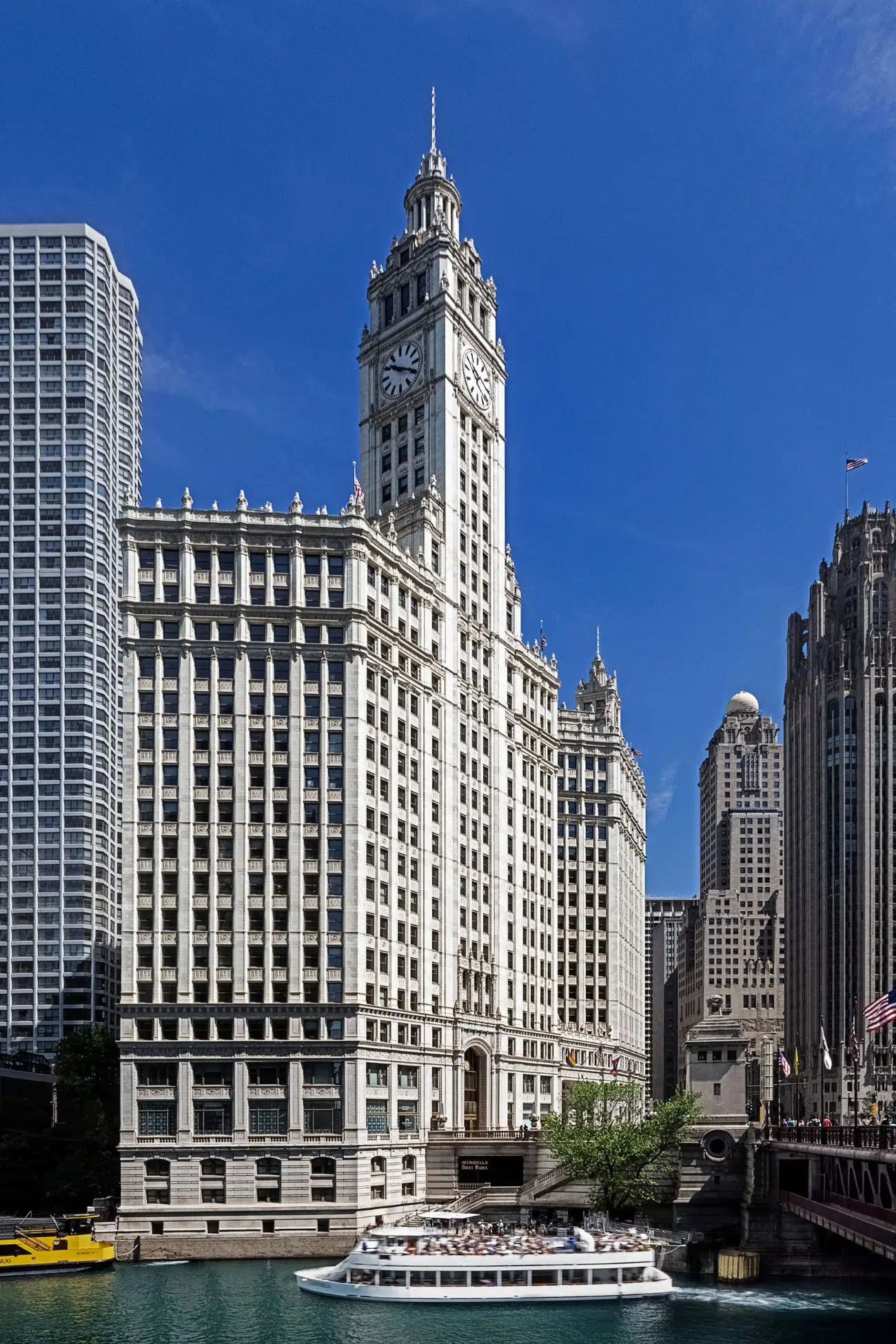
Photo: William Zbaren
What drew you to the Wrigley Building as a subject?
The Wrigley Building is a paradox in that it’s the most famous building in the city, and also the least known. It is one of the few buildings in Chicago where you don’t have to give an address when you get into a taxi. The name alone will get you there.
But architecturally it has always been a cipher—a lavishly ornamented Beaux Arts palazzo in a Midwestern city that promotes itself as being the home of barebones Modernism via the work of Louis Sullivan, Frank Lloyd Wright, and Mies van der Rohe.
There has never been a monograph on the building and—up until now—very little was known about its architect, Charles Gerhard Beersman. The same is true for William Wrigley Jr., the larger-than-life chewing gum mogul who commissioned the building and whose ebullient spirit continues to define it.
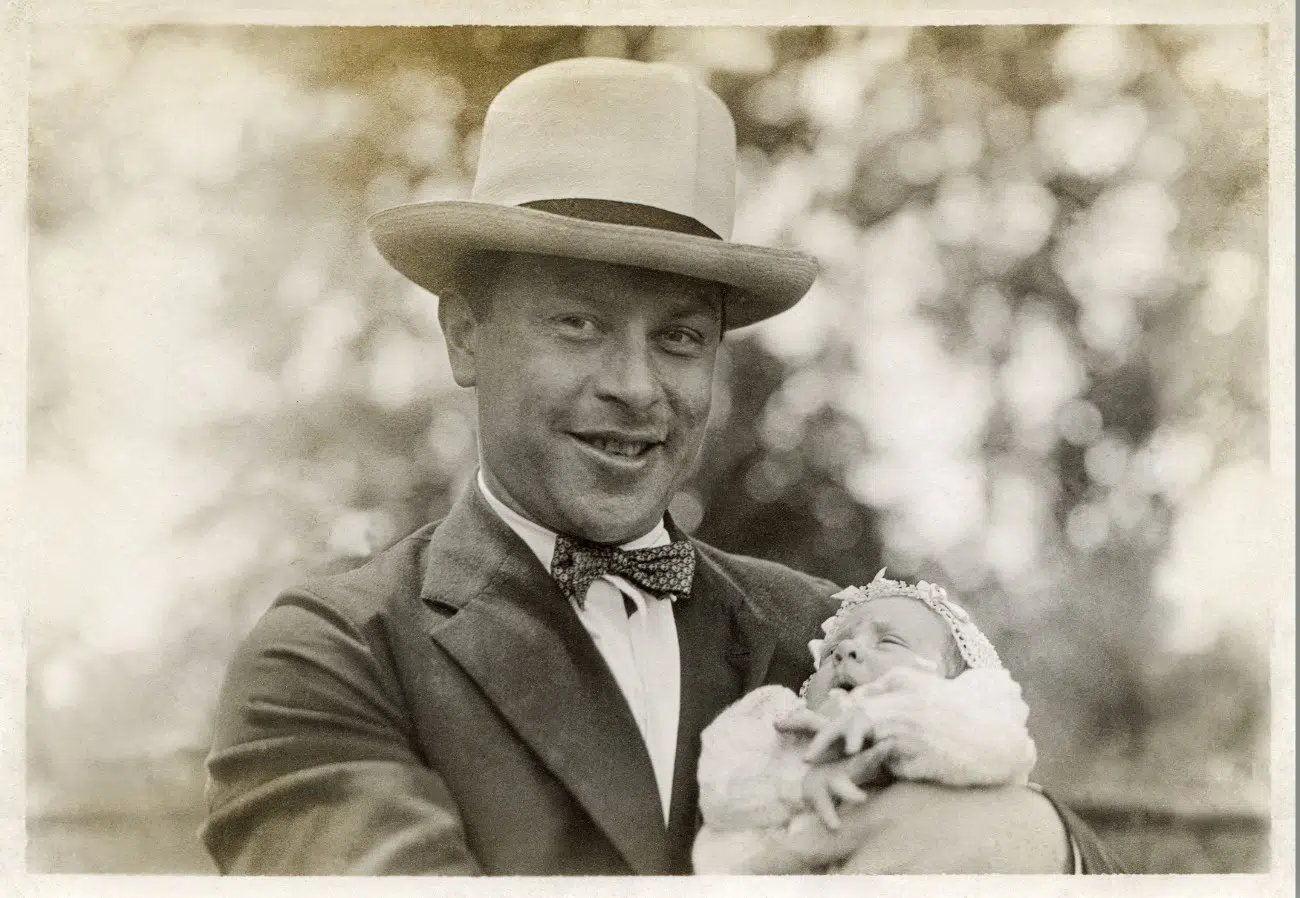
Wrigley Building architect Charles Gerhard Beersman with son Jack in the early 1920s.
What sort of research went into preparing the book?
One of the most important discoveries was finding and interviewing Diane MacFadyen, the 92-year-old daughter of the Wrigley Building’s architect, Charles Gerhard Beersman. Beersman was born in San Francisco in 1888 to a family of itinerant saloon keepers. As a teenager, he attended a trade school where he studied both architectural rendering and electrical engineering. The latter skill would be utilized in a major way at the Wrigley Building, where Beersman installed a much-praised exterior lighting system.
MacFadyen remembered her father saying that he owed his architectural career to one person — the pioneering architect Julia Morgan. Morgan was the first woman to attend the École des Beaux-Arts in Paris in the late 1890s. Afterwards, she founded a firm in San Francisco and went on to design more than 700 buildings, including San Simeon, a 165-room Spanish Revival castle for the newspaper magnate William Randolph Hearst.
From 1907 to 1909, Beersman worked for Morgan as a draftsman. She became his mentor and pulled strings to get him into the University of Pennsylvania’s prestigious School of Architecture. Later, the incredibly elaborate Beaux Arts ornamentation of Morgan’s 1915 Los Angeles Herald Examiner Building—another Hearst commission—would serve as an important model for the Wrigley Building.
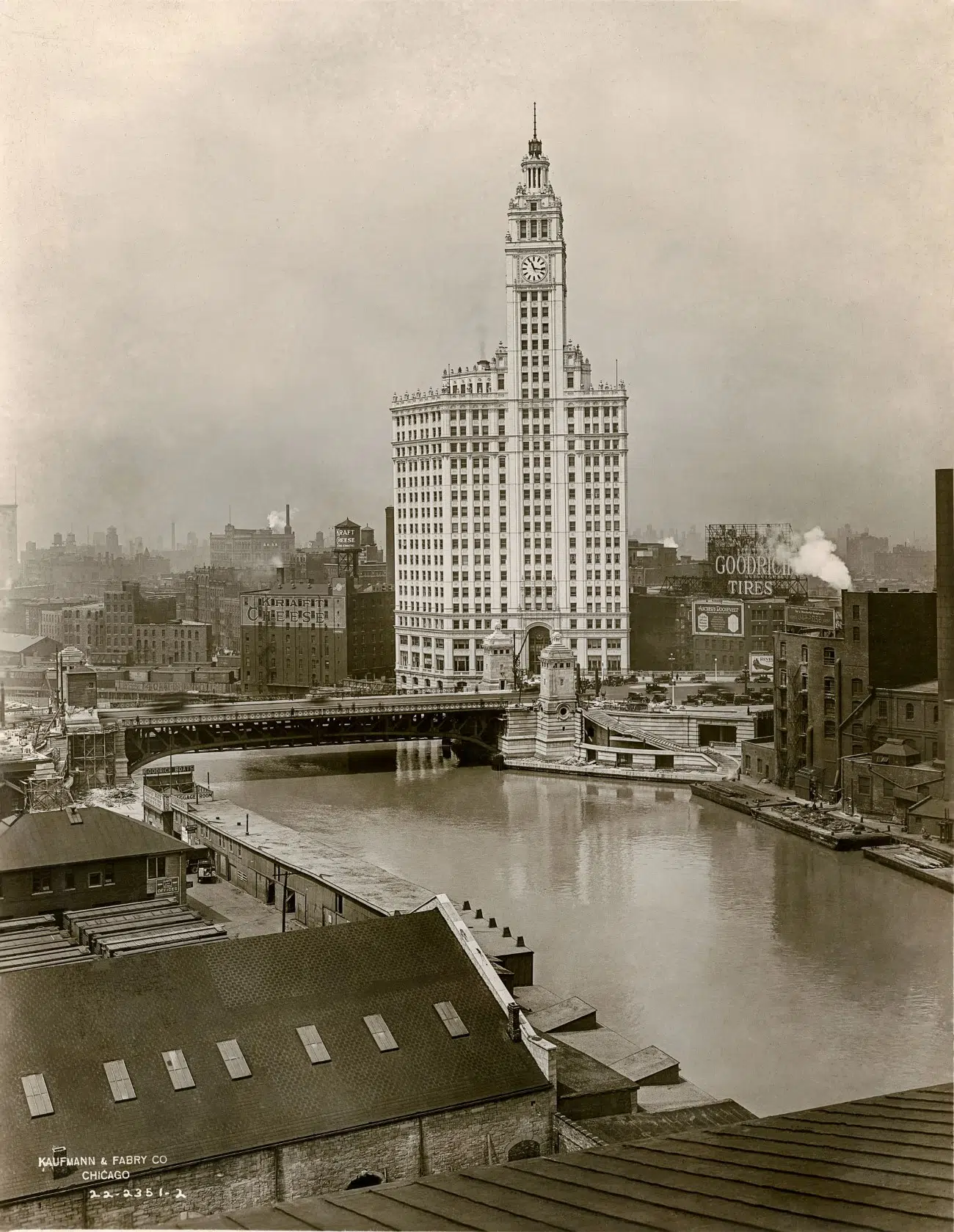
Wrigley Building in 1921
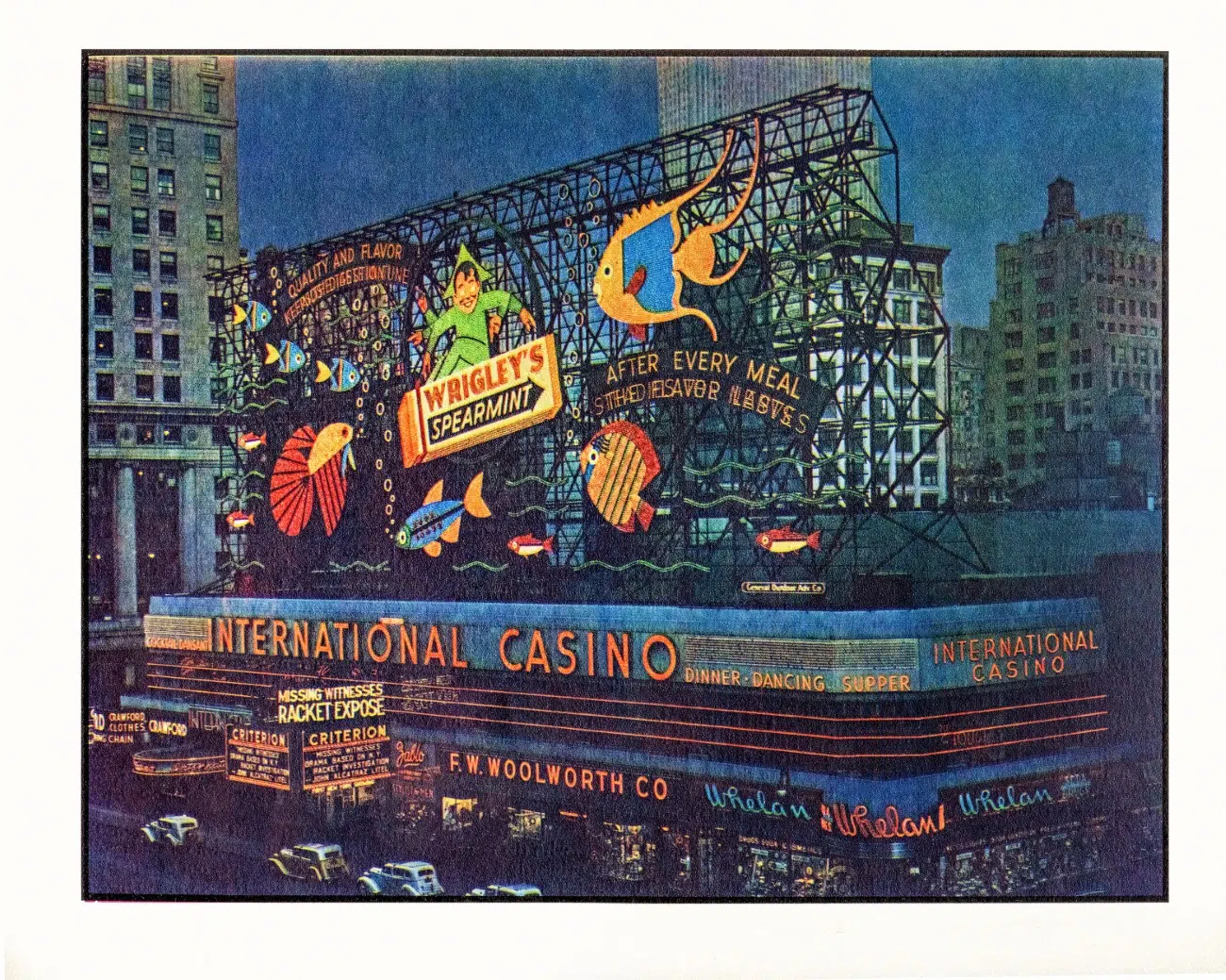
Wrigley Times Square billboard by Dorothy Shepard
What was the most surprising or unexpected thing you learned about the Wrigley Building during this journey?
The building’s role as an art incubator. The Wrigley opened in 1921 and, almost from the beginning, became the hub of Chicago’s creative community. The Wrigley Company was a Top Five national advertiser with tens of thousands of billboards from coast to coast, and additional thousands of bus and subway cards and newspaper and magazine ads. Advertising for the Wrigley Company was a beast that needed to be continually fed.
In 1932, William Wrigley’s son, Philip Wrigley, hired Otis and Dorothy Shepard to be his in-house advertising team. Otis was a Bauhaus-influenced graphic designer, while Dorothy was a gifted painter and colorist in a style that freely referenced Matisse, Modigliani, and other Modern painters. Over the next 30 years, they would totally revamp the Wrigley Company’s image with sophisticated ads and graphics that today are recognized as masterpieces of Modern design. (In 2024, MOMA’s Christmas card featured a vintage Otis Shepard design.)
From 1921 through the mid-1940s, the Wrigley Building was also the home of the Arts Club of Chicago, one of the premier showcases for Modern art and design in the United States. Among the artists who had solo exhibitions at the Wrigley Building were Picasso, Braque, Brancusi, Matisse, Léger, Chagall, Modigliani, Duchamp, and Miro. In 1939, Picasso’s Guernica was displayed at the building. In 1945, the Arts Club hosted an early solo exhibition by Jackson Pollock that was curated by Peggy Guggenheim. This hi/lo contrast — fine art and commercial art in close proximity — gave the building a unique energy and glamour.
Also, for many years, the building was the home of WBBM Radio, an early CBS affiliate that produced a wide variety of original programming that included comedies, dramas, variety shows, and live music concerts by the station’s 46-piece studio orchestra. The station also included a legendary Columbia Records recording studio where major Big Band, Jazz and Blues, and Country & Western performers such as Benny Goodman, Gene Krupa, Cab Calloway, Memphis Minnie, Bill Monroe and His Bluegrass Boys, and the Carter Family recorded some of their greatest hits.
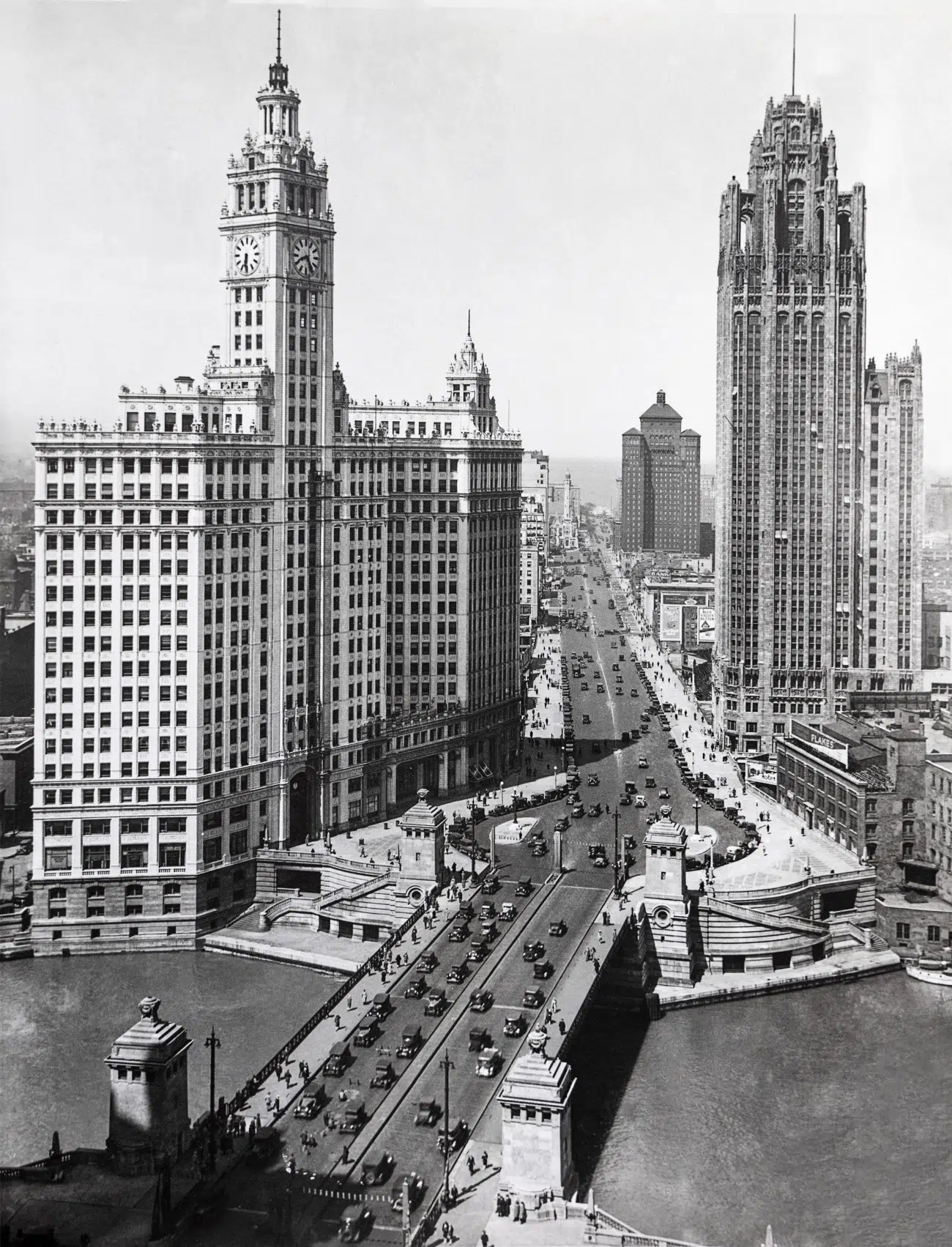
Wrigley Building and Michigan Avenue in the early 1930s
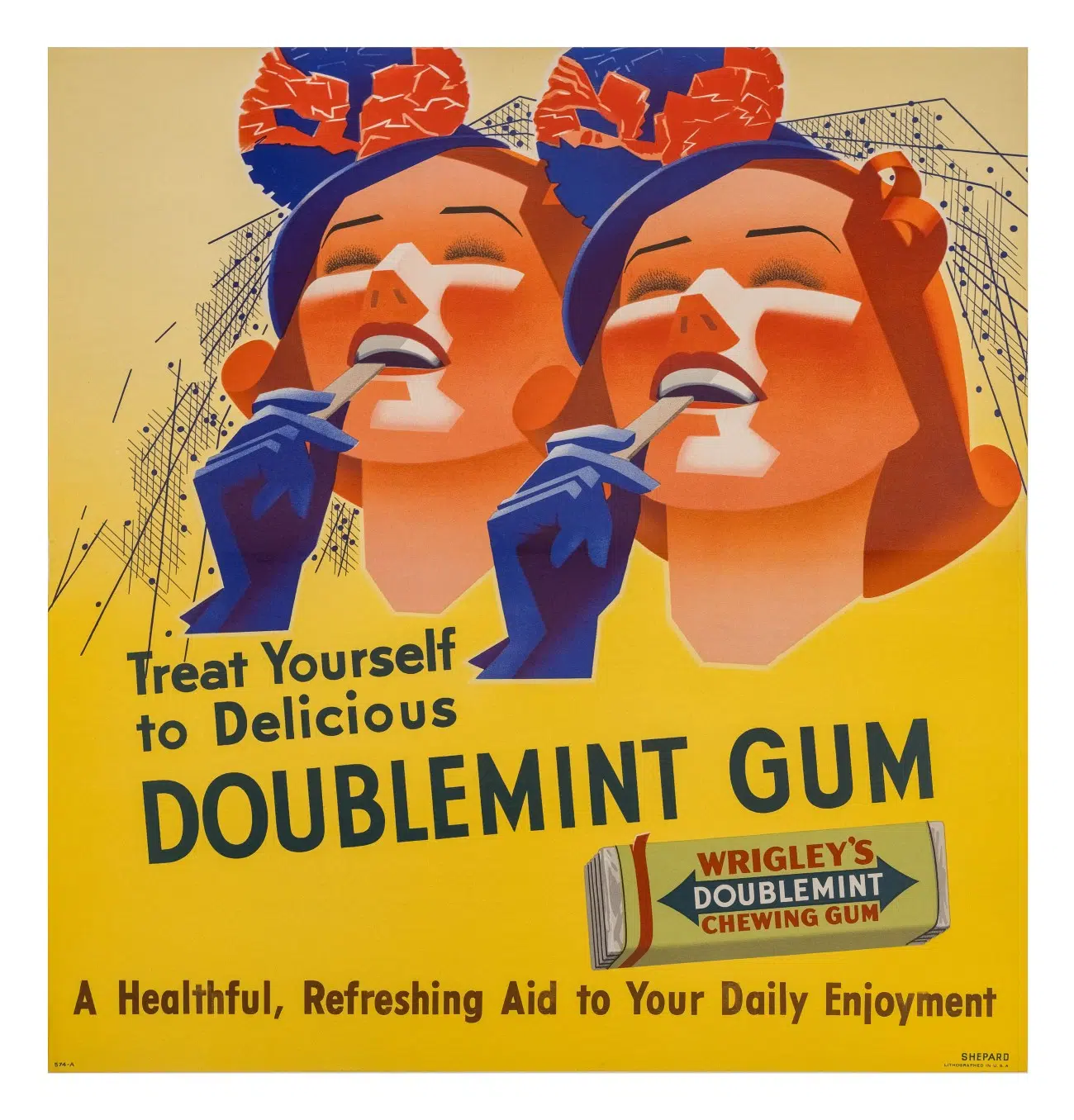
Wrigley ad by Otis Shepard
The visuals—both the photos and the archival material—are so much fun and really breathe life into the space. Why were they important to include?
Well, architecture is a visual art. The book includes about 400 images, half of which are new photographs by William Zbaren and half are vintage photos, ads, blueprints, postcards paintings, posters, lithographs, drawings and diagrams. It’s a huge mix.
Over the four years it took to complete this project, William Zbaren shot over 10,000 images of the Wrigley Building from every conceivable angle and at different times of the day and year. It’s an astounding portfolio. The building is famous for its extravagant terra cotta ornamentation, much of which few people have seen because it’s not visible from the street. It's in odd little niches and corners on the roof or high up on the clocktower. Beersman’s inspiration was the architecture of the Renaissance where such un-viewable ornamentation was meant not for humankind but “for God.” (“God” in this case was William Wrigley Jr.)
The book—which was designed by Studio Blue in Chicago—is really a work of art about a work of art. And the printing is superb. The book was printed by Trifolio in Verona, a premier fine art printer that combines modern technology with Old World artistry and works mainly with museums like The Met and MOMA and also with artists like Jasper Johns.
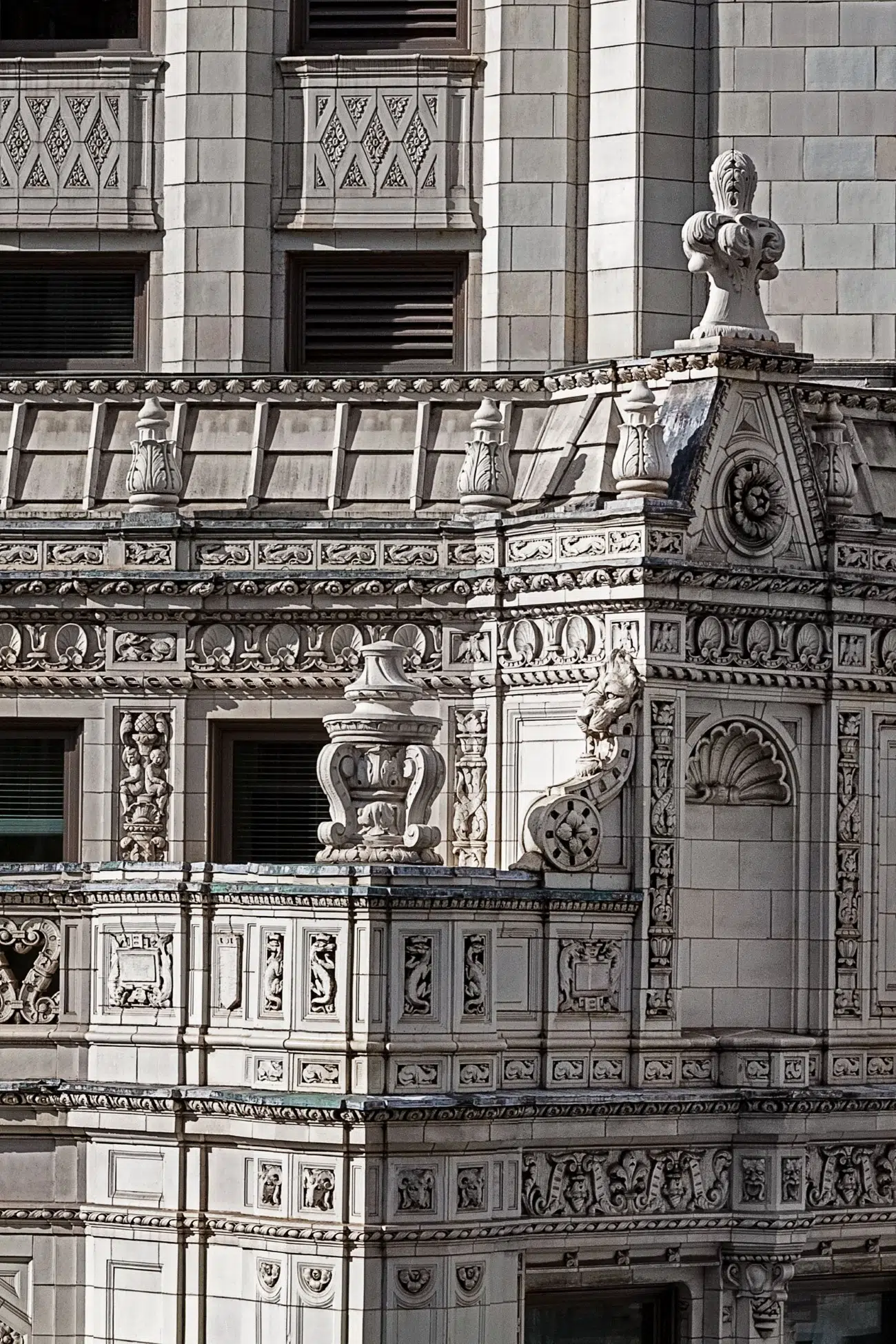
Photo: William Zbaren
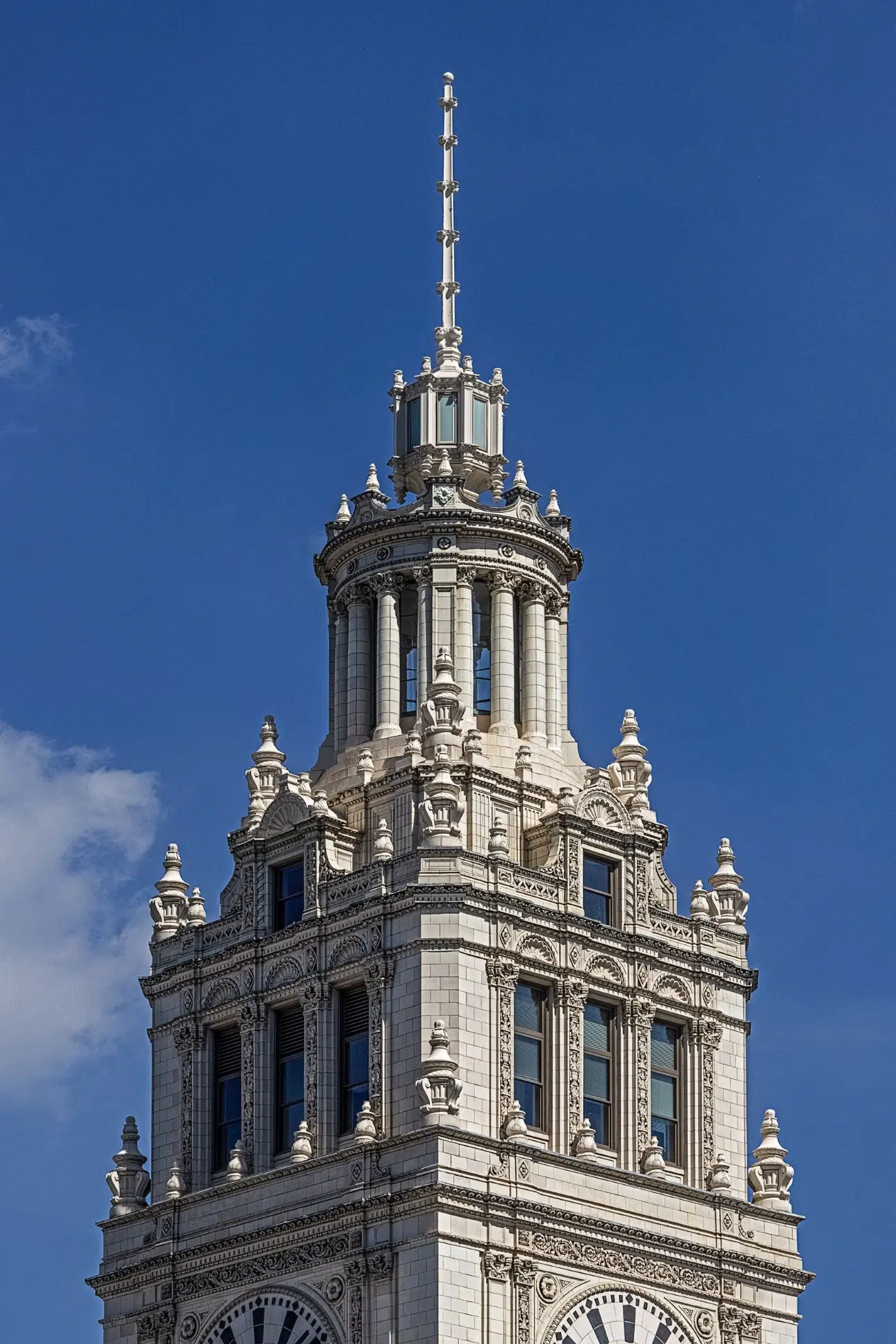
Wrigley Building Clock Tower (Photo: William Zbaren)
Today, I feel that most people walk by famous buildings without giving them a second thought. Why was it important for you to preserve the story of the Wrigley Building and how it was created?
We’re going through such a rocky period right now in terms of culture, politics, philosophy, who we are as a country, and what we believe in. The Wrigley Building is the product of a different era, a time when Americans felt very optimistic about the future. The building reflects that confidence. It’s a reminder of what we were once capable of and what we still might achieve in the future.
One of the things I love about it is that it’s a palace built from nickels. A package of chewing gum in the 1920s cost a nickel. For all its grandeur, the building is not pretentious. You never feel diminished by it. Astonished, yes. Amused, definitely. It always makes me smile.
What do you hope that people take away from the book, particularly people who may not necessarily be architecture lovers?
It’s inspiring in the same way a great work of art is inspiring. It combines beauty, history, thought, and a touch of the divine.
What’s next for you?
Another book—this one on Solon S. Beman, another forgotten architect who designed one of the marvels of the late 19th Century—the Town of Pullman, a wondrous model city built over a three year period for the Pullman Palace Car Company that included housing for 15,000 people, churches, stores, theaters, libraries, hotels, hospitals, schools, government offices, paved streets, modern plumbing and an enormous factory. In the 1880s, tourists in Chicago wanted to see two sights — the Union Stockyards and the Town of Pullman. It still exists and today is a national park.