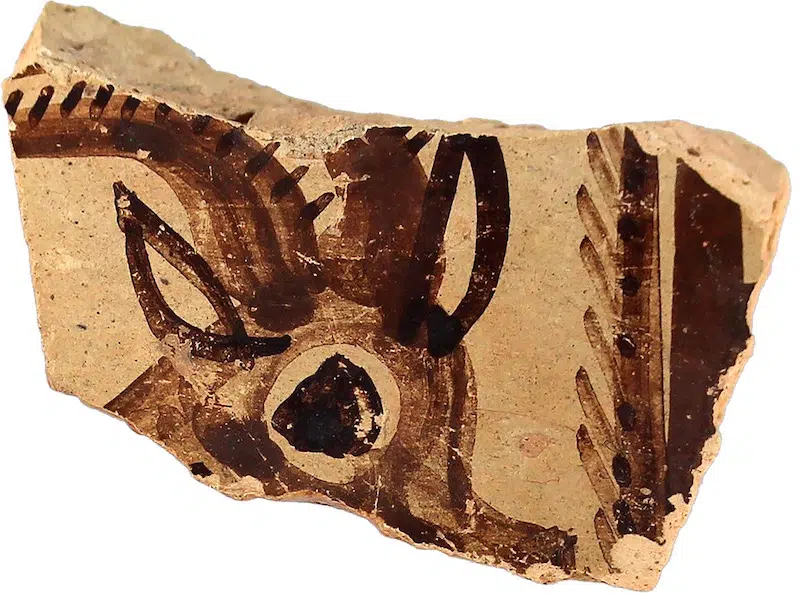
Qurayyah Painted Ware QPW 3. (Photo: Marta Luciani @ Qurayyah Joint Archaeological Project, CC-BY 4.0)
More than 3,000 years ago, people may have already been seeking out a recognizable “brand.” A new study of Qurayyah Painted Ware (QPW) suggests that these distinctive ceramics became a desirable product in the ancient world. Made at the oasis of Qurayyah in northwestern Saudi Arabia, the pottery traveled far beyond its place of origin, reaching communities across the ancient Near East.
The pottery dates back to around 3,200 years ago and stands out for its bold painted designs. Geometric patterns meet stylized animals, birds, and human figures, often arranged in a striking two-color palette. The distinctive look may have helped people recognize the pottery long after it left Qurayyah.
Archaeologists have found examples hundreds of miles from the oasis. This wide distribution gives researchers an important clue about the pottery’s popularity and the trade networks that carried it across the region.
A new study published in PLOS One examines how this ceramic tradition developed and spread. Archaeologist Marta Luciani of the University of Vienna led the international research team, which analyzed pottery fragments from Qurayyah and studied their materials, production methods, decoration, and distribution.
The researchers found a remarkably consistent tradition. Artisans maintained recognizable designs and production techniques across generations, while workshops at Qurayyah continued to produce the vessels. At the same time, the finished ceramics traveled well beyond the oasis, with examples found at archaeological sites in modern-day Jordan and Israel.
That combination makes QPW especially fascinating. The researchers argue that it functioned much like a brand: it had a recognizable identity, a connection to a specific place, and a reputation that extended beyond its original community. There is even evidence that other potters wanted to imitate it.
Qurayyah-inspired designs appear at sites far from the original production center. The copies suggest that the style had become recognizable enough to reproduce. Genuine examples also turn up in elite burial contexts, offering another indication that the ceramics held social value.
The comparison to modern branding has its limits. Bronze Age artisans did not have logos, advertising campaigns, or corporate identities. Instead, recognition came through the pottery itself. Its colors, patterns, craftsmanship, and connection to Qurayyah created a visual identity that consumers could recognize.
The discovery also offers a glimpse into ancient consumer culture. Trade did not simply move practical goods from one settlement to another. People cared about appearance, craftsmanship, and origin. Certain objects could become desirable because of the reputation attached to them.
QPW remained in production for centuries, allowing its distinctive visual language to persist across generations. What began as a regional ceramic tradition became a recognizable style with an audience far beyond its source.
Today, a familiar logo can make a product instantly recognizable. More than 3,000 years ago, a painted ceramic may have done something surprisingly similar.
More than 3,000 years ago, artisans at Qurayyah in northwestern Arabia created distinctive painted ceramics that traveled hundreds of miles across the ancient Near East.
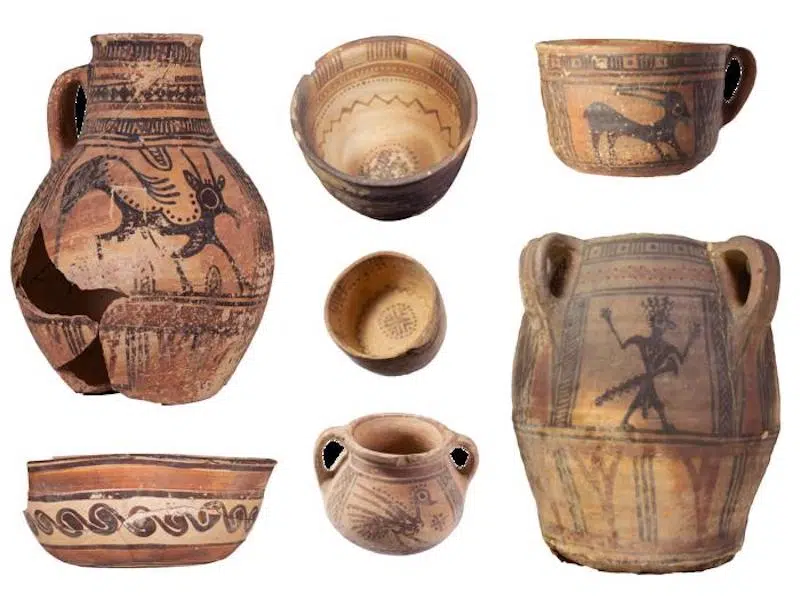
Ancient “brand” Qurayyah Painted Ware QPW 4, formerly known as ‘Midianite Pottery’. (Photo: Marta Luciani @ Qurayyah Joint Archaeological Project, CC-BY 4.0)
Their recognizable designs, consistent production, and widespread appeal suggest that these vessels may have been an ancient form of branding, long before the logos and labels we know today.

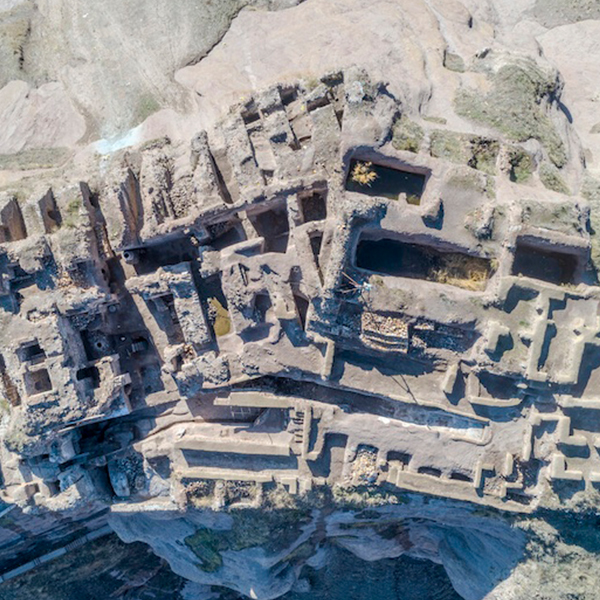
Drone photo of the oasis of Qurayyah. (Photo: Marta Luciani @ Qurayyah Joint Archaeological Project, CC-BY 4.0)
Sources: Pioneering study proves that oases in the desert of Arabia created ‘brands’ already in the Bronze Age; Creating a brand. Genesis, transformation and diffusion of Qurayyah Painted Ware; Qurayyah Painted Ware, 3200-yr-old ceramics, painted with distinctive black-and-red geometric designs, stylized animals and human figures, may have been an early example of an ancient “brand”
Related Articles:
Man Unearths Mysterious 2,700-Year-Old Bronze Sword Standing Upright in a Polish Forest
Archaeologists Discover 3,000-Year-Old Tomb With Colorful Murals Inside
Archaeologists Discover 15,000-Year-Old Clay Jewelry With Children’s Fingerprints on Them
700-Year-Old Shipwreck Reveals a Trove of Ceramics Challenging History Itself