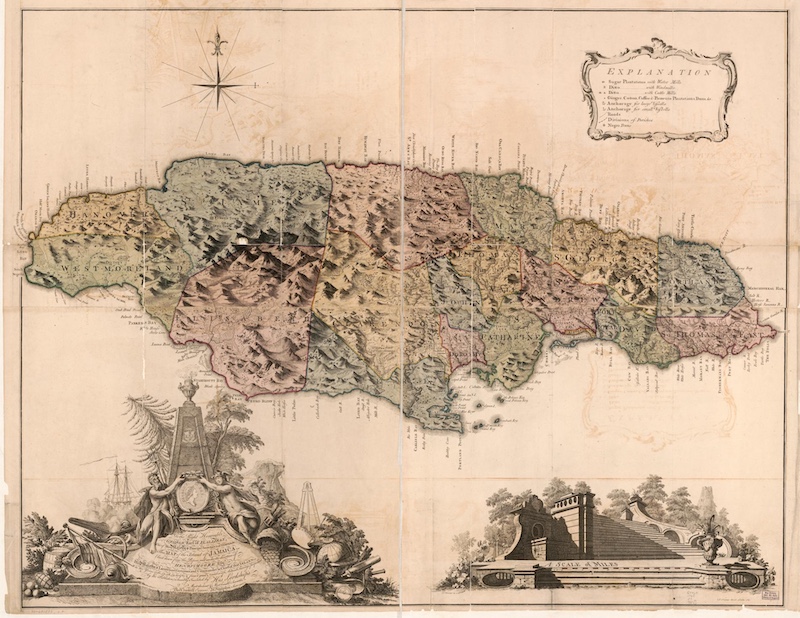
A 1763 map of Jamaica showing the island’s parishes, settlements, and geographical features. (Photo: Thomas Craskell, Henry Moore, James Simpson, and Daniel Fournier via Library of Congress, Public Domain)
Tracing your family tree can sometimes lead to unexpected discoveries, but for descendants of enslaved people, finding information about their ancestors can be especially difficult. Ancestry is hoping to make that process a little easier with the release of nearly 4 million records documenting enslaved individuals across 20 former British colonies. They span across the Caribbean, Central and South America, the Indian Ocean, and South Africa. They include places such as Jamaica, Barbados, the Bahamas, Trinidad, Mauritius, and South Africa.
Released on September 22, 2026, the Former British Colonies Enslavement Registers collection includes around 300,000 digitized pages dating from 1813 to 1840. For the first time, the records have been fully indexed and made searchable online, giving descendants across the African diaspora a new way to explore their family histories.
“For descendants of enslaved individuals, family history research may often present a set of unique challenges to overcome, but what makes this collection so groundbreaking is its extraordinary level of detail,” says Nicka Sewell-Smith, professional genealogist and Senior Story Producer at Ancestry. “Featuring names, ages, and family connections, these registers give descendants across the diaspora a real opportunity to solve longstanding family mysteries and speak their ancestors’ names back into history.”
Nearly 4 million records released by Ancestry are giving descendants a new way to trace their family histories.
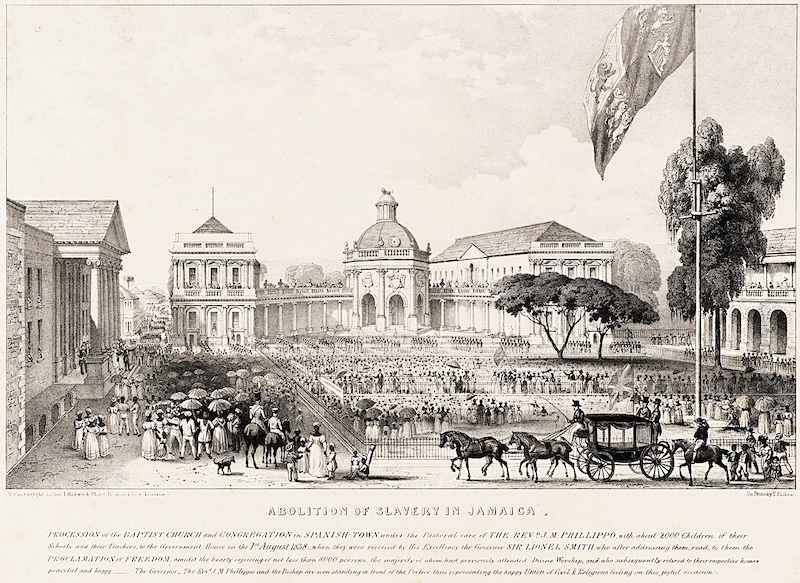
The proclamation of the abolition of slavery in Jamaica in Spanish Town on August 1, 1838. (Photo: Thomas Ashburton Picken via Wikimedia Commons, Public Domain)
Depending on the individual record, researchers may find names, ages, genders, family relationships, physical descriptions, births, deaths, and even information about a person’s African origins before enslavement. Details like these can be especially valuable for people trying to trace family histories that were disrupted by slavery.
The registers themselves have a much darker origin. Following Britain’s abolition of the transatlantic slave trade in 1807, the government required colonies to document enslaved populations in an effort to prevent illegal trafficking. These records were ultimately created as part of a system that treated human beings as property and kept track of enslaved populations before emancipation.
More than two centuries later, however, those same documents can be read in an entirely different way. Rather than simply serving as administrative records, they can reveal names, relationships, and other details about people whose individual stories were often left out of traditional historical accounts.
Documents once used to track enslaved people are now helping families recover their stories.
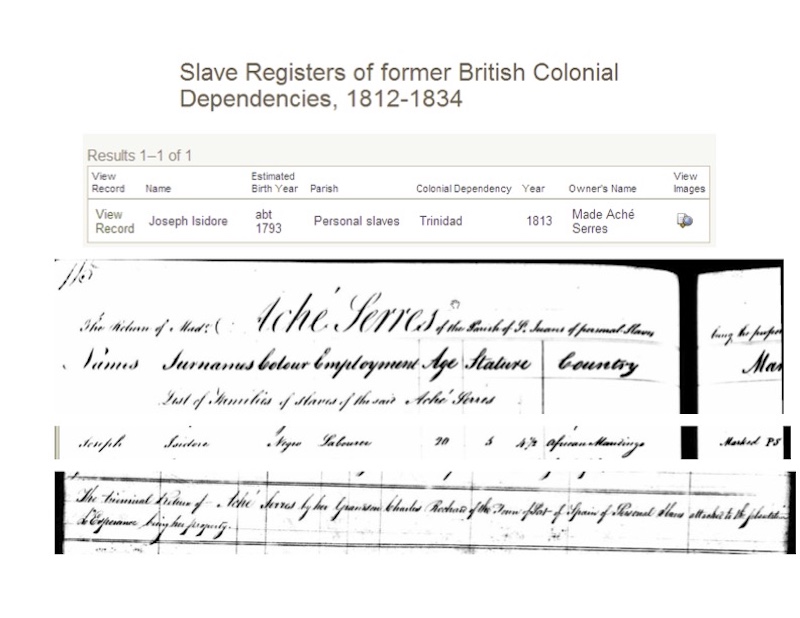
A digitized entry from the Slave Registers of former British Colonial Dependencies, showing a record for Joseph Isidore in Trinidad in 1813. (Photo: Stefan Isidore via Wikimedia Commons, CC BY-SA 3.0)
The collection was digitized directly from original manuscripts held by The National Archives in the United Kingdom. Ancestry also partnered with University College London’s Centre for the Study of the Legacies of British Slavery to provide historical context and support further research into the records.
The release is part of Ancestry’s larger effort to make records relating to enslaved and formerly enslaved people more accessible. The company says it already offers more than 19 million such records for free.
Documents once used to monitor enslaved people can now help their descendants uncover names, relationships, and family stories that might otherwise have remained hidden. The Former British Colonies Enslavement Registers are available to search for free with an Ancestry account.
Source: Ancestry Makes Nearly 4M Records Related to Enslaved People in Former British Colonies Available at No Cost
Related Articles:
Former Plantation Is Transformed Into a Cultural Space for Healing, Art, and Repair
Mural Honors Ona Judge’s Escape From George Washington’s Household and Fight for Freedom
New Exhibition Offers Portals Into the Past, Present, and Future of Blackness