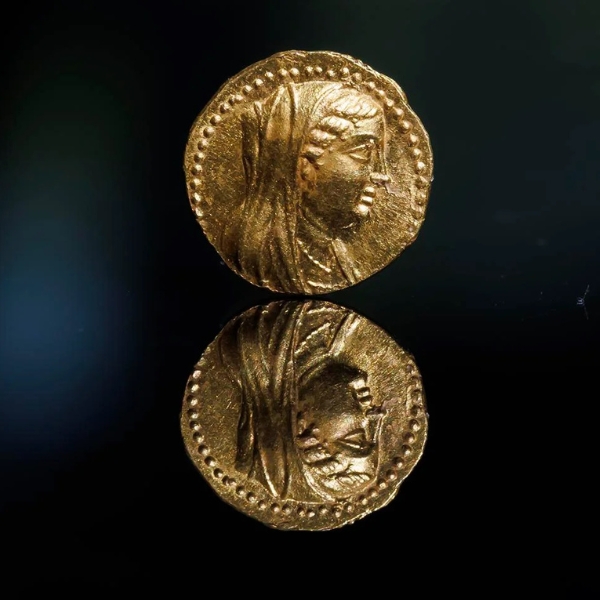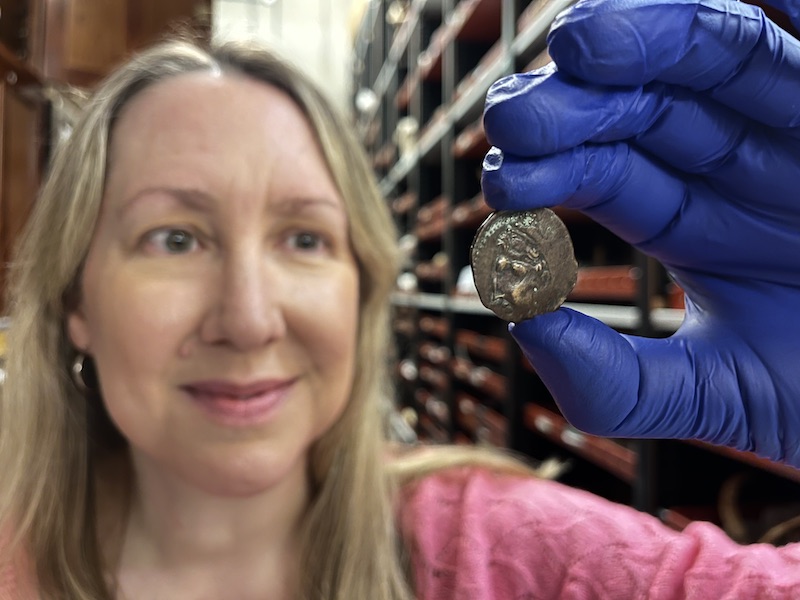
Kat Baxter, Leeds Museums and Galleries’ curator of archaeology and numismatics with the ancient coin now at Leeds Discovery Centre. The astonishing discovery, handed to an unwitting local bus driver in the 1950s, was produced by Carthaginians, part of the Phoenician culture, in the Spanish city of Cadiz during the 1st Century BC and has now kindly been donated to Leeds Museums and Galleries.
When transit workers in Leeds, England, sorted through the day’s bus fares in the 1950s, one coin in the pile looked noticeably different. Decades later, researchers have finally confirmed the surprising reason why: the coin had been minted more than 2,000 years ago.
This small bronze coin recently made its way to the collection of Leeds Museums and Galleries after its unusual history was uncovered. What once passed casually through a bus fare box is now recognized as an artifact from the ancient Mediterranean world.
The story begins with James Edwards, a chief cashier for Leeds City Transport. Part of his job involved sorting and counting coins collected from bus fares across the city. Occasionally, he noticed coins that didn’t resemble contemporary British currency, and he kept some of these unusual pieces aside.
Many years later, his grandson, Peter Edwards, began looking more closely at the collection. One coin stood out in particular due to its design and heavy wear. Curious about its origins, he sought expert help to identify it.
Researchers determined the coin has been minted in Gadir, an ancient Phoenician city located in what is now Cádiz, Spain. The city was part of the wider Carthaginian trading network, meaning the coin likely circulated during the height of the Carthaginian civilization roughly two millennia ago.
The coin’s imagery reflects the culture of the region where it was produced. One side shows the Phoenician god Melqart, who was often associated with strength and maritime trade. The reverse features two tuna fish, referencing the fishing industry that was central to the coastal economy of Gadir.
Coins from Phoenician and Carthaginian settlements often included symbols tied to local resources and religious beliefs, offering historians insight into the priorities of ancient trading communities.
Exactly how the coin traveled from the ancient Mediterranean to a mid-20th century bus fare box in northern England remains unknown.
One theory suggests it may have been brought to Britain by a traveler or soldier and later entered circulation by mistake. Over time, it likely passed through several hands before eventually being dropped into the fare collection system.
Now preserved by Leeds Museums and Galleries, the coin will be studied and displayed as part of the city’s broader historical collection. Its unlikely path—from ancient minting to modern public transit—offers a small but fascinating example of how historical objects can surface in everyday places.
A coin collected from bus fares in Leeds has turned out to be over 2,000 years old.
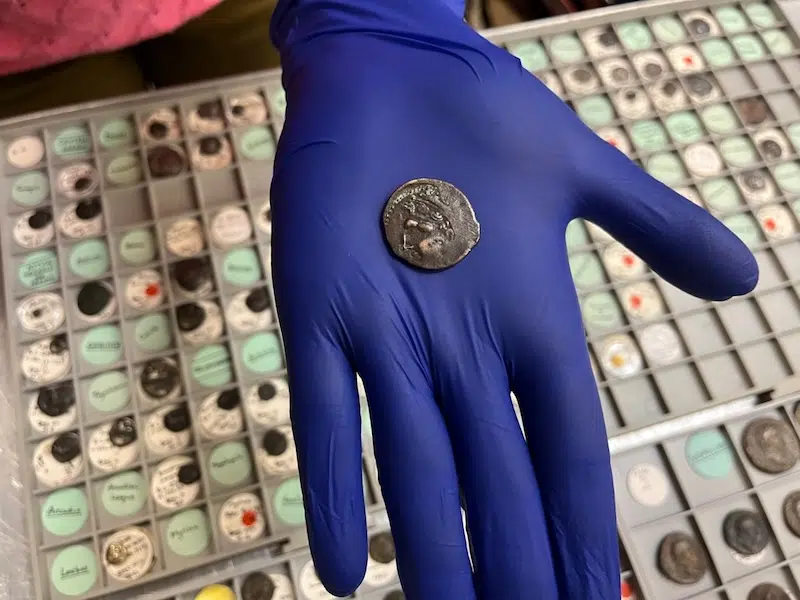
On one side the coin bears the face of the god Melqart, resembling the Greek hero Herakles and wearing his famed lionskin headdress. At that time, some Phoenician coins carried Greek imagery to make them more appealing to traders.
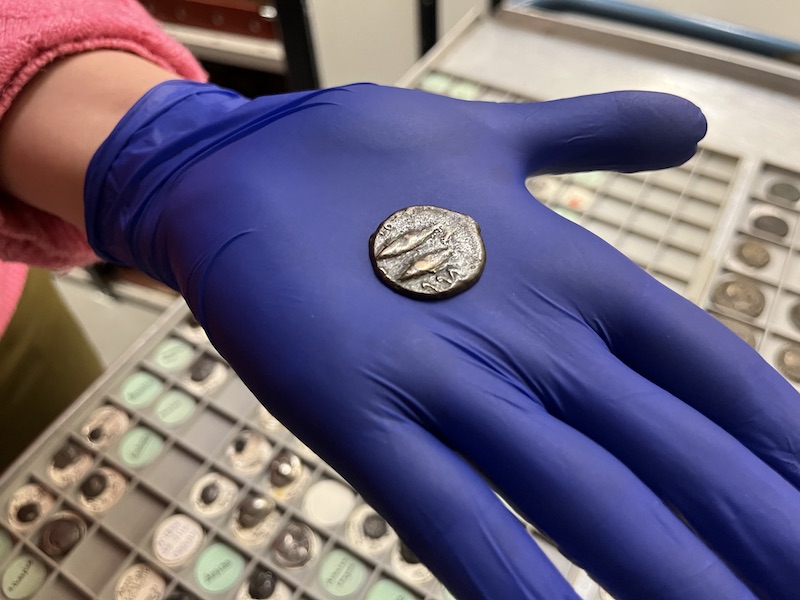
Experts identified the bronze coin as Carthaginian currency minted in the ancient city of Gadir in present-day Spain.
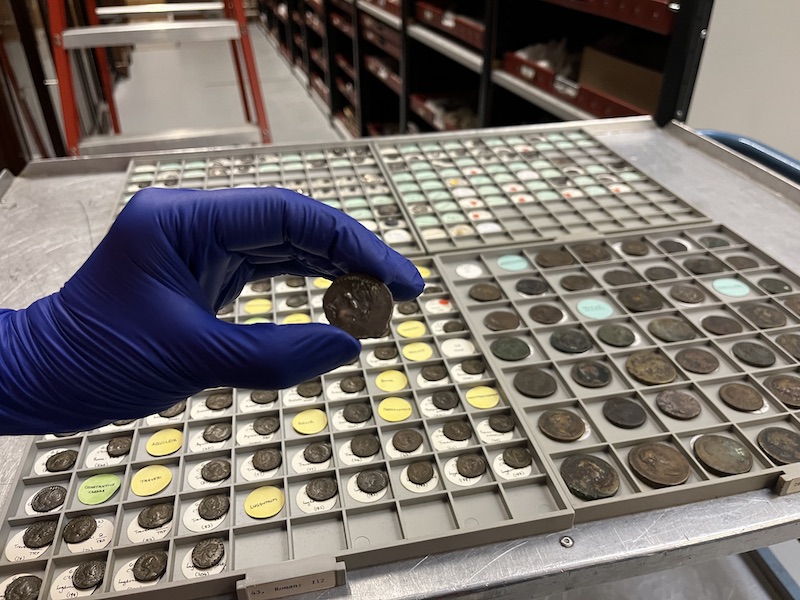
The astonishing discovery, handed to an unwitting local bus driver in the 1950s, was produced by Carthaginians, part of the Phoenician culture, in the Spanish city of Cadiz during the 1st Century BC and has now kindly been donated to Leeds Museums and Galleries.
After decades in a private collection, the coin has now been donated to Leeds Museums and Galleries.
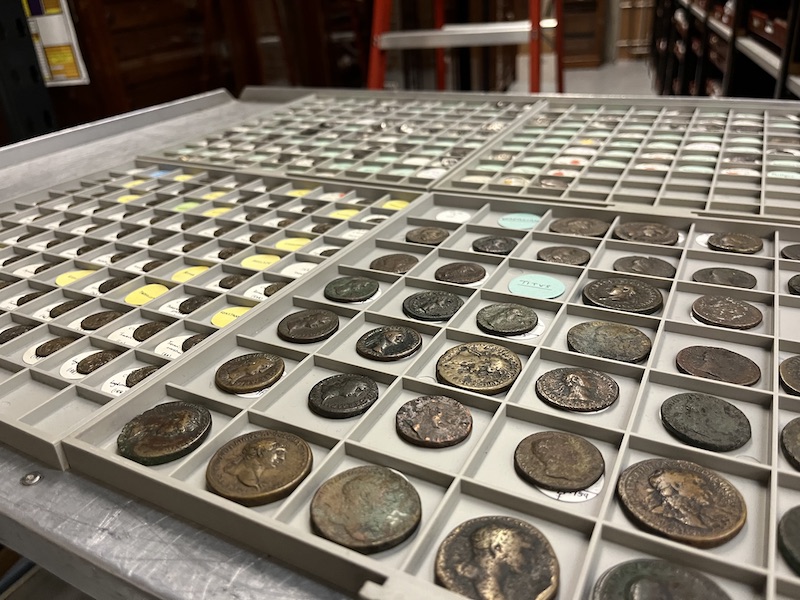
The coin will now be part of the collection based at Leeds Discovery Centre, which includes coins and currency from cultures around the world spanning thousands of years of history.
Source: Fare to say ancient coin has travelled through time, Strange Coin Used on U.K. Bus Turns Out to Be 2,000-Year-Old Relic
All images via Leeds City Council.
Related Articles:
Hidden Hoards and Buried Treasure Troves Are Real and Still Being Discovered
Archeologists Discover Neolithic Earthworks That Are 2,000 Years Older Than Stonehenge
Father and Son Discover a Hoard of Centuries-Old Coins in the Polish Woods Worth Over $120,000
Mysterious Hoard of 3,000 Roman Coins Discovered in Germany, Miles from the Empire’s Borders
British Man With a Metal Detector Stumbles Upon 52,000 Ancient Coins Worth $500K