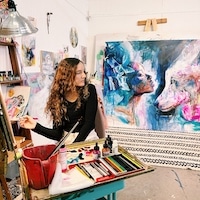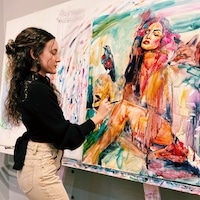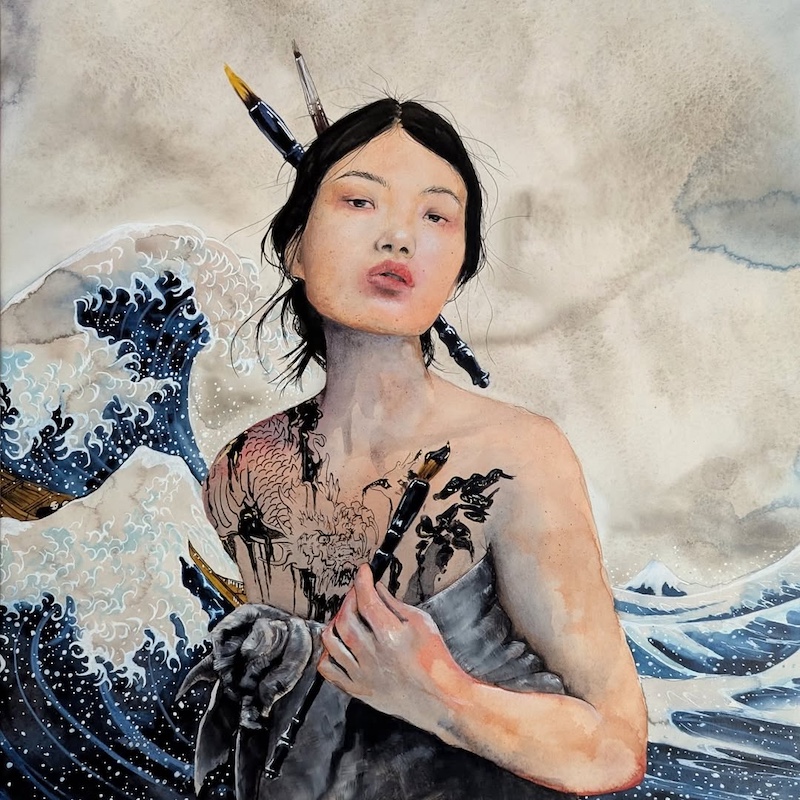
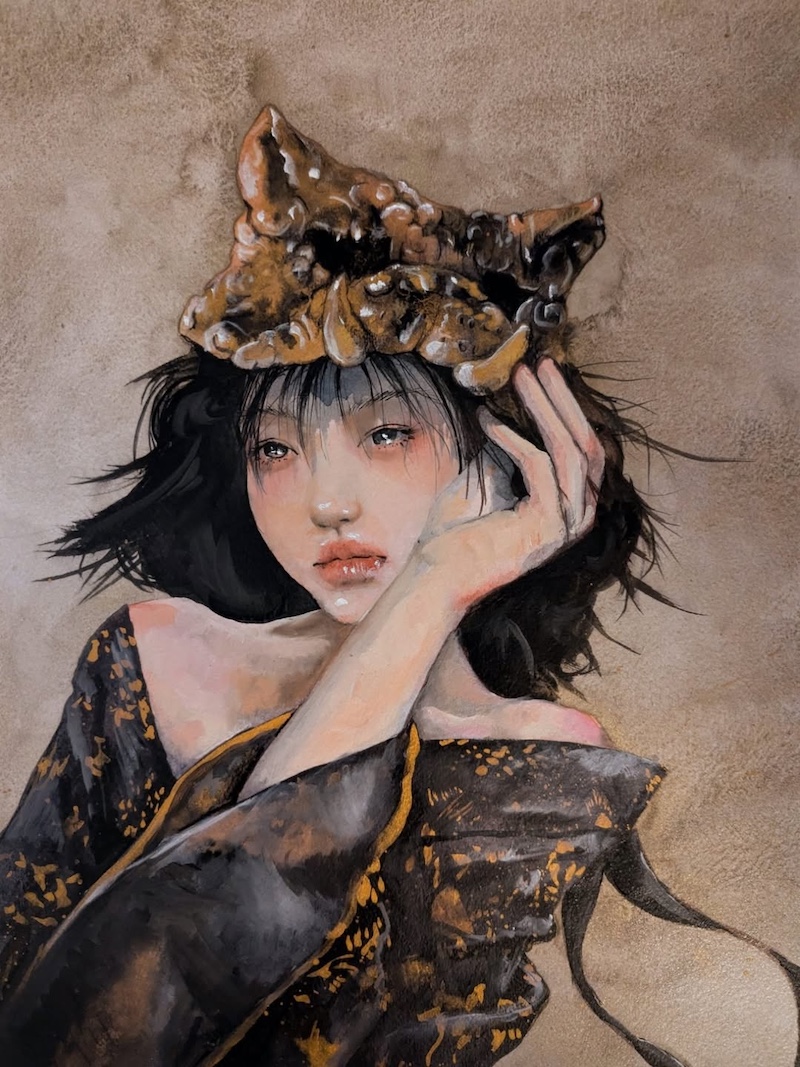
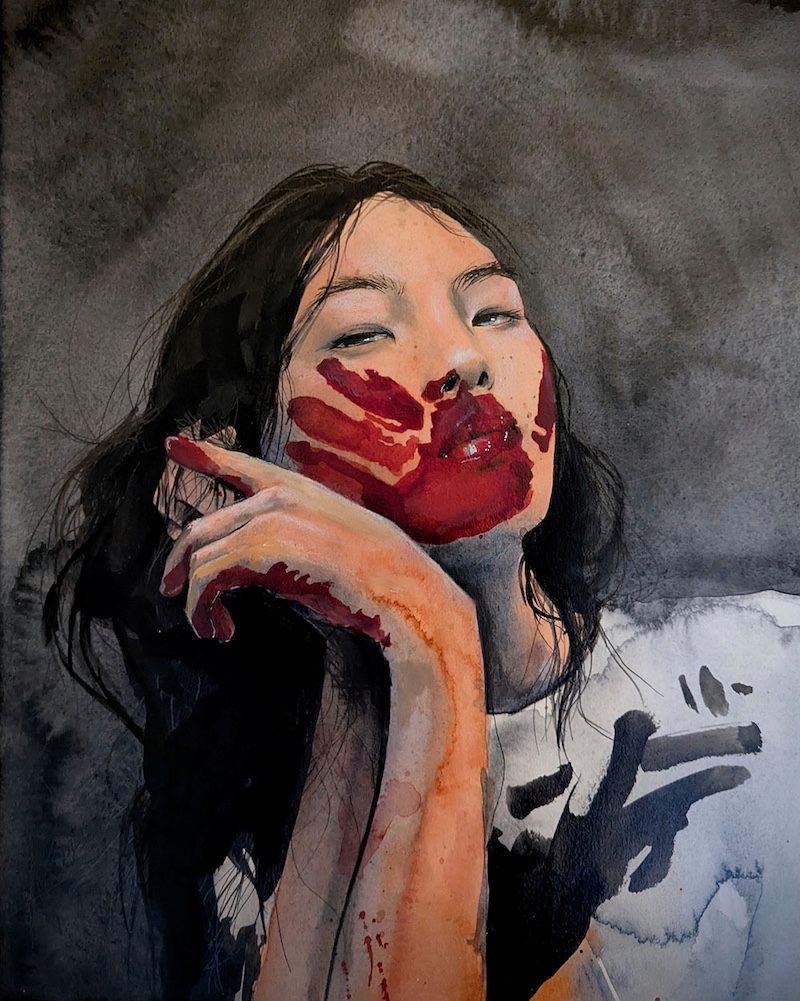
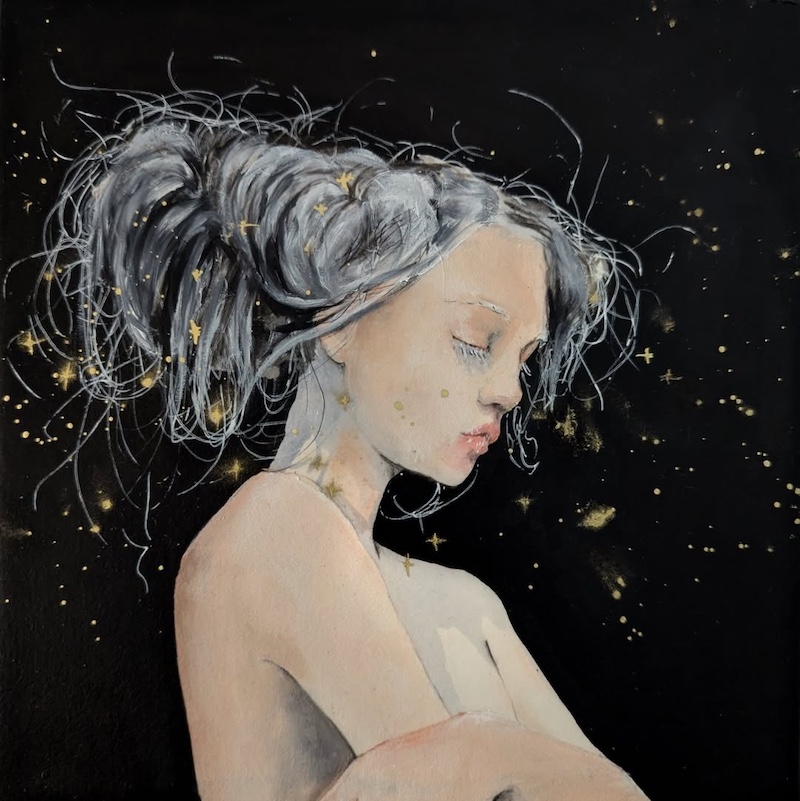
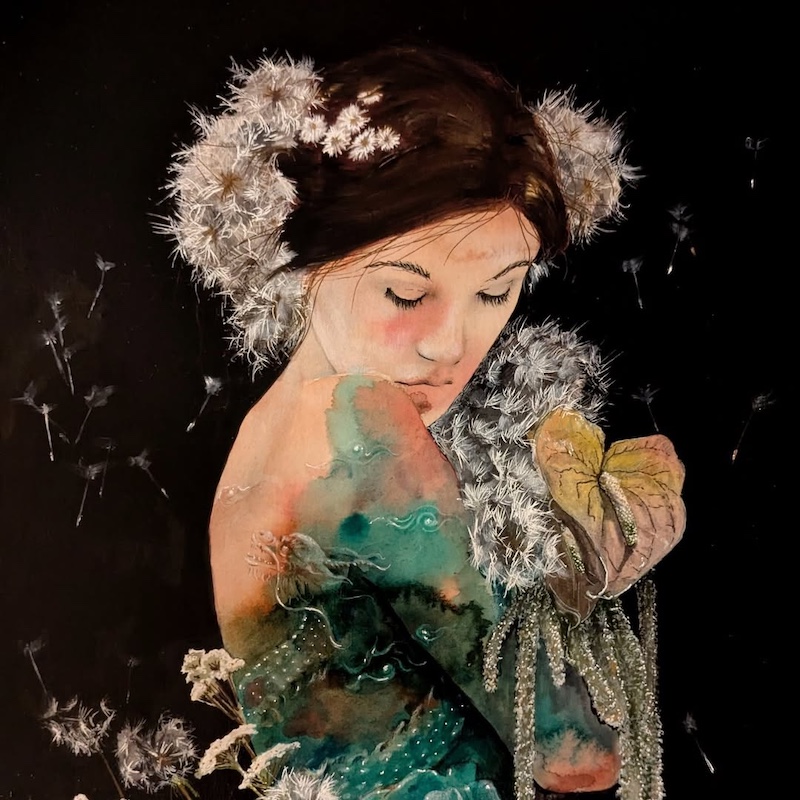
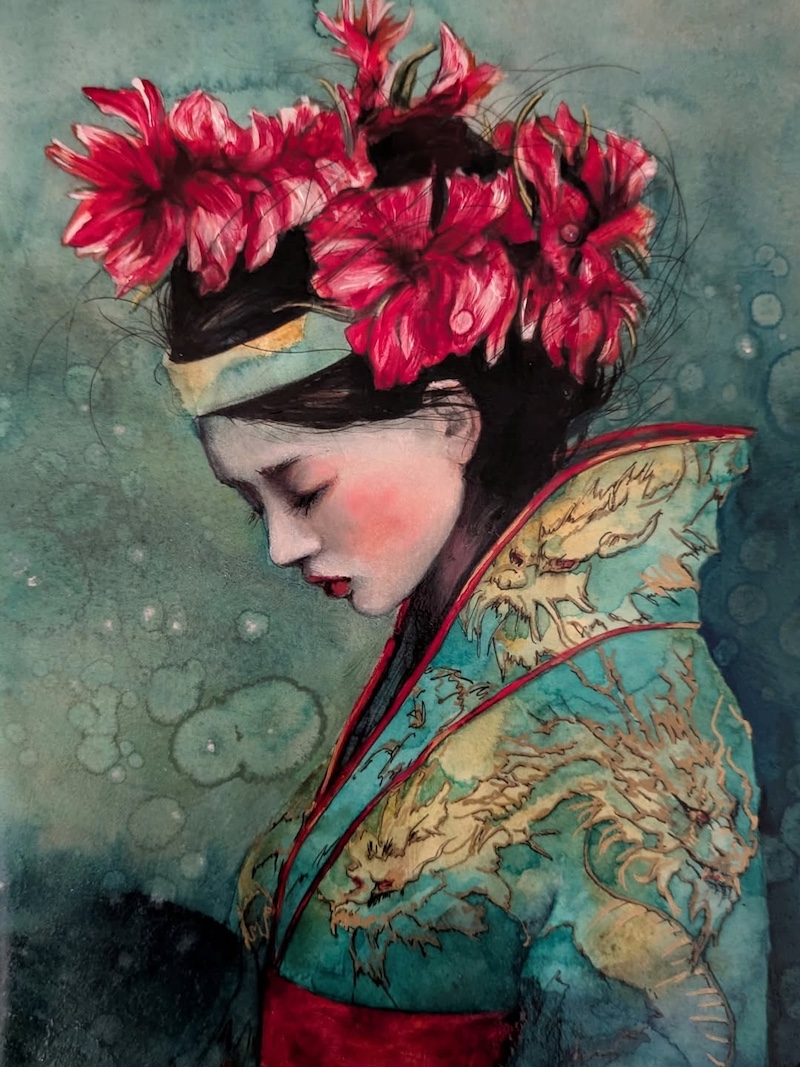
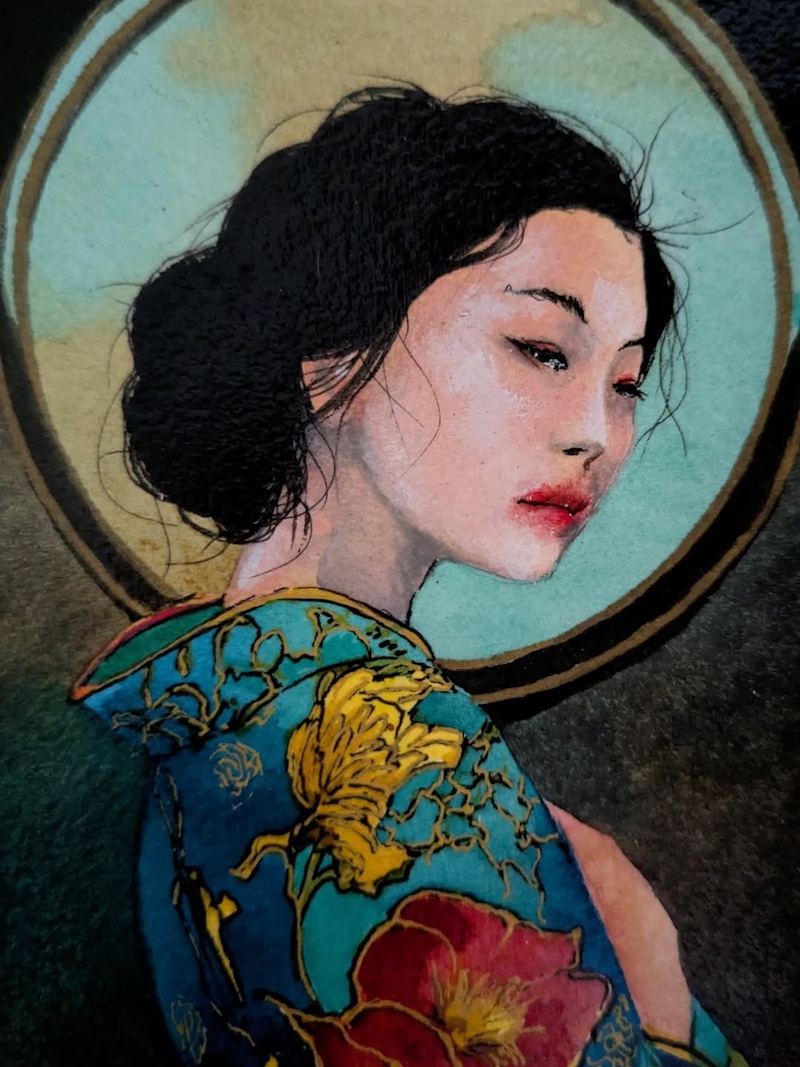
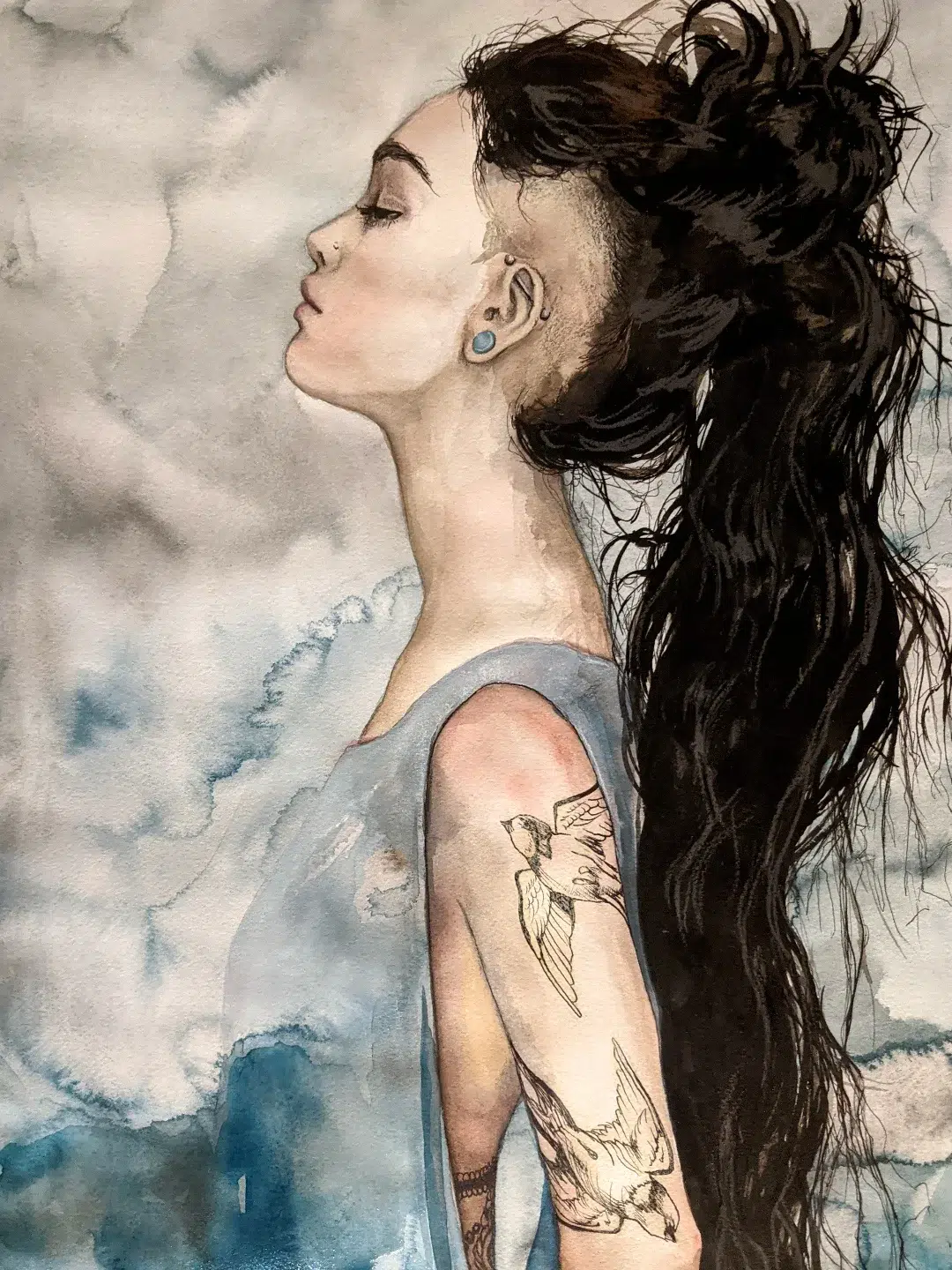
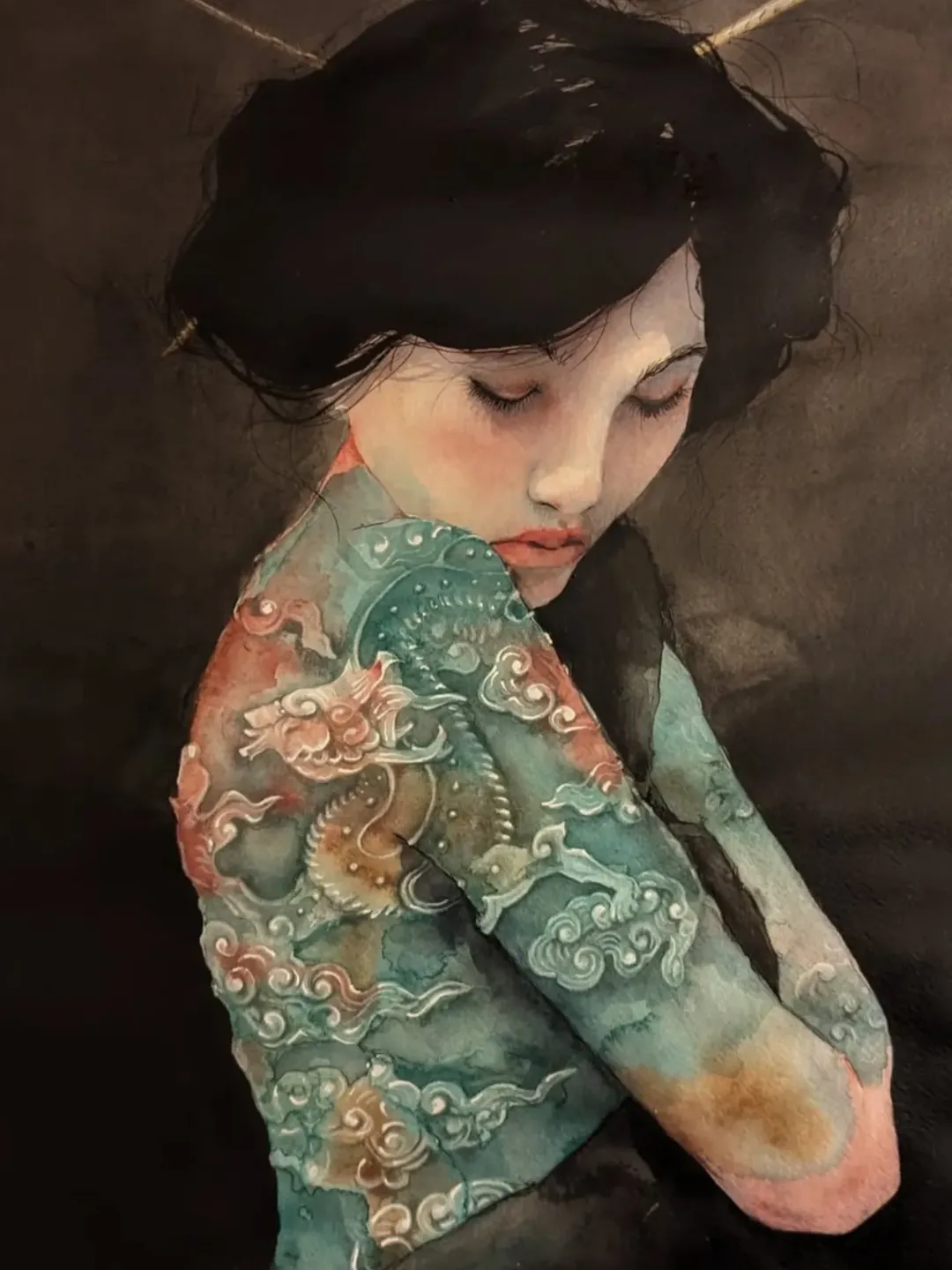
Working in watercolor and oil, Virginia-based artist Crystal James creates ethereal figurative paintings that capture the fleeting nature of life. Her stunning work explores themes of youth, beauty, and mortality, encouraging viewers to embrace the present moment and appreciate the beauty found throughout each stage of life.
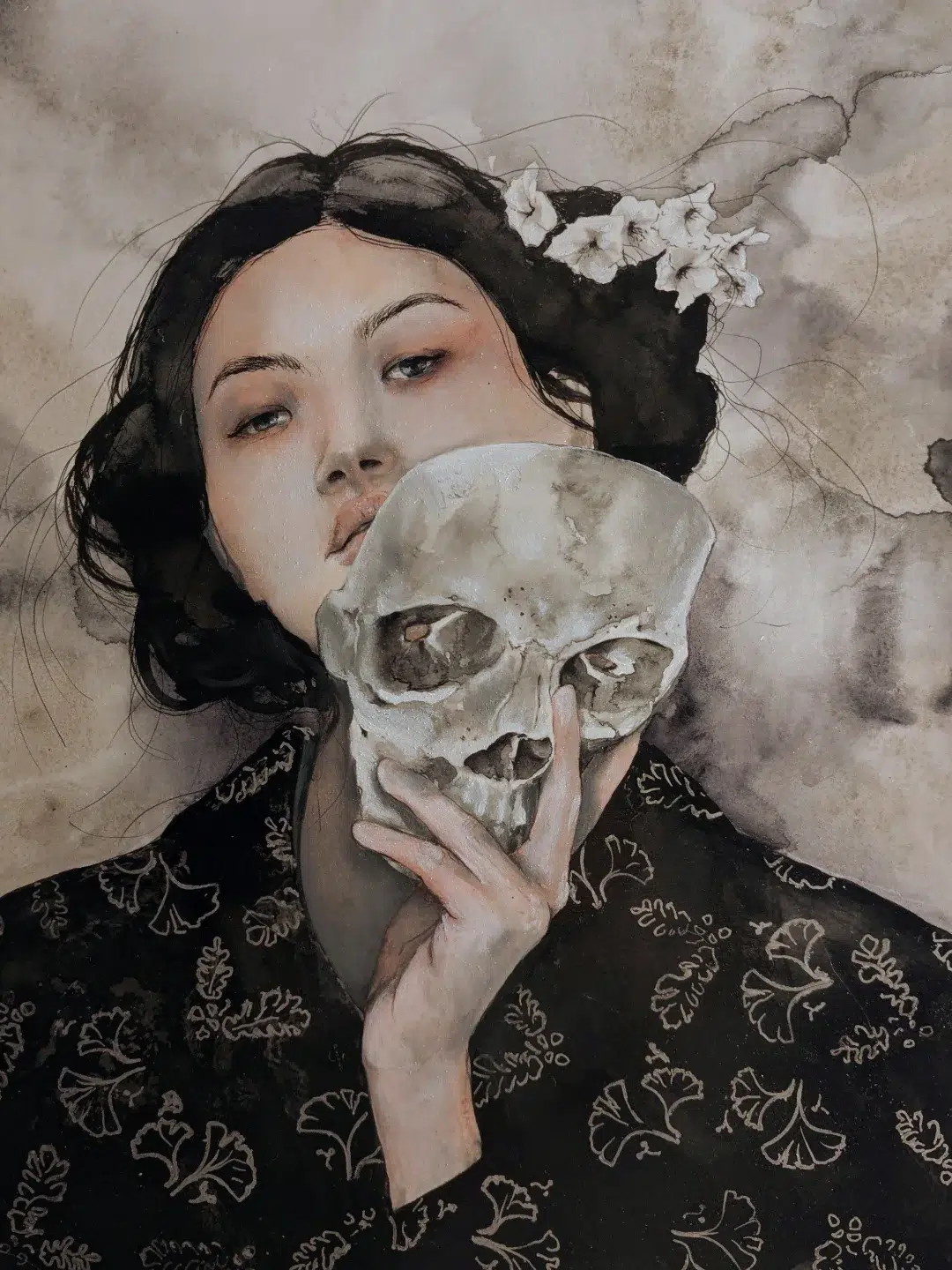
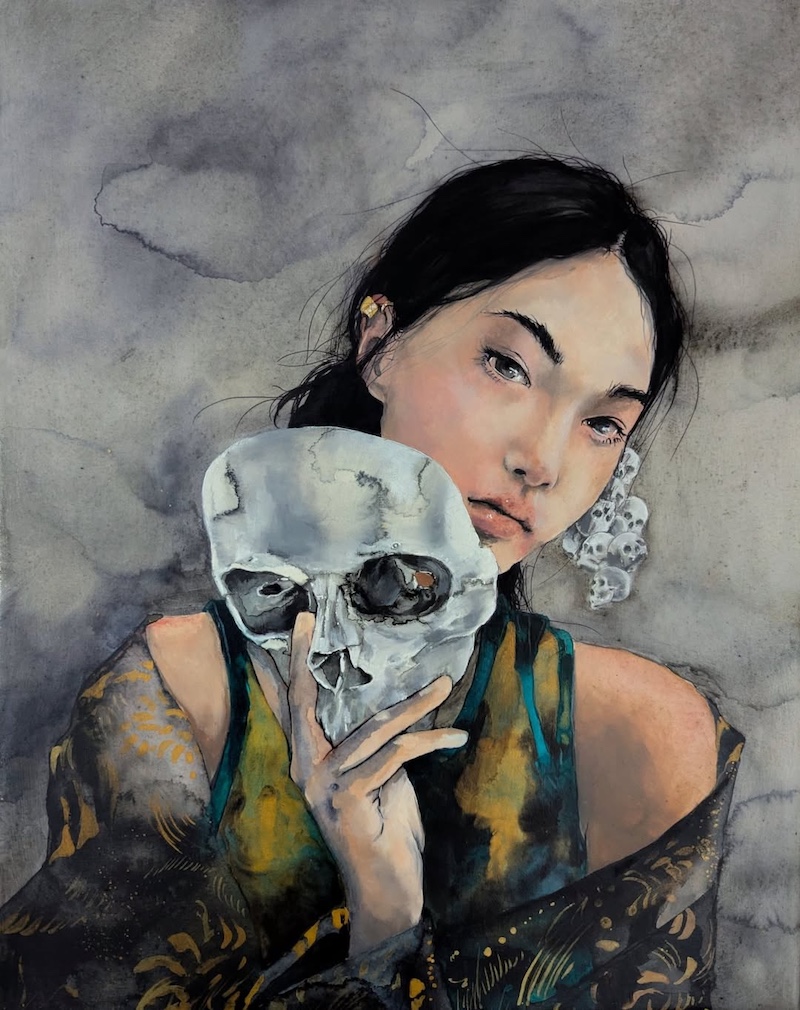
Each of James’ paintings tells a story, frequently depicting young women as ethereal, otherworldly figures. Set within soft watercolor environments, some of these figures carry skull masks, capturing a subtle reflection on mortality and the passage of time.
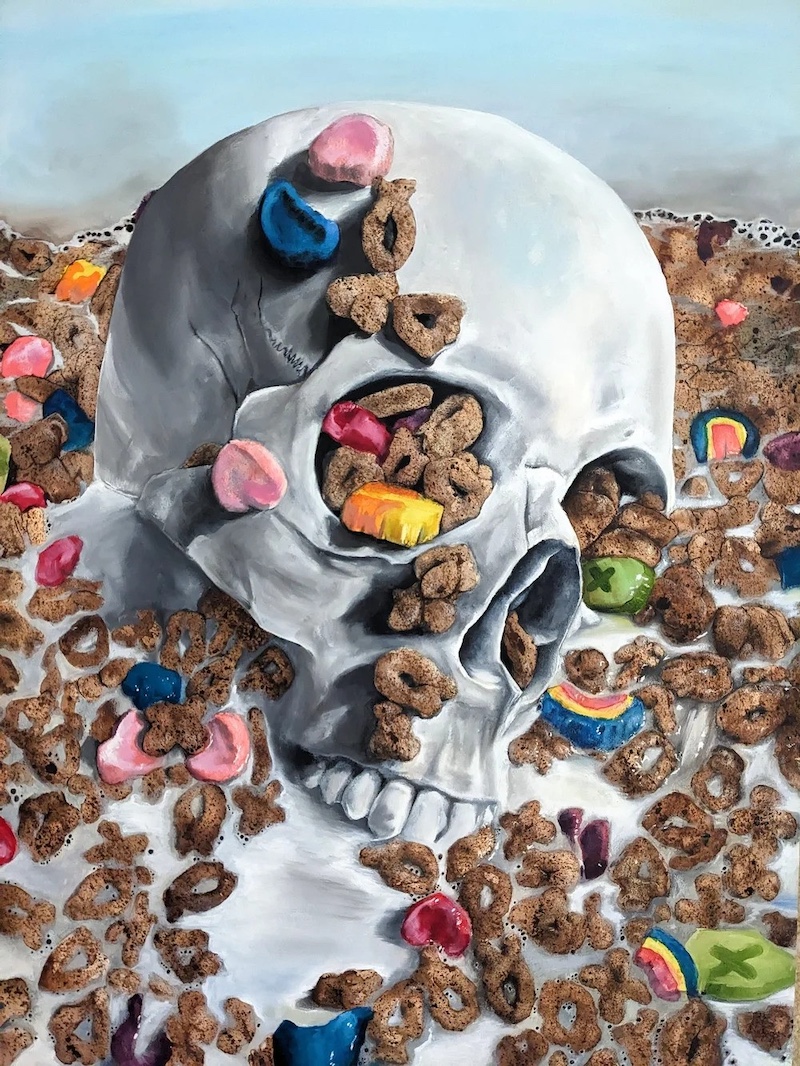
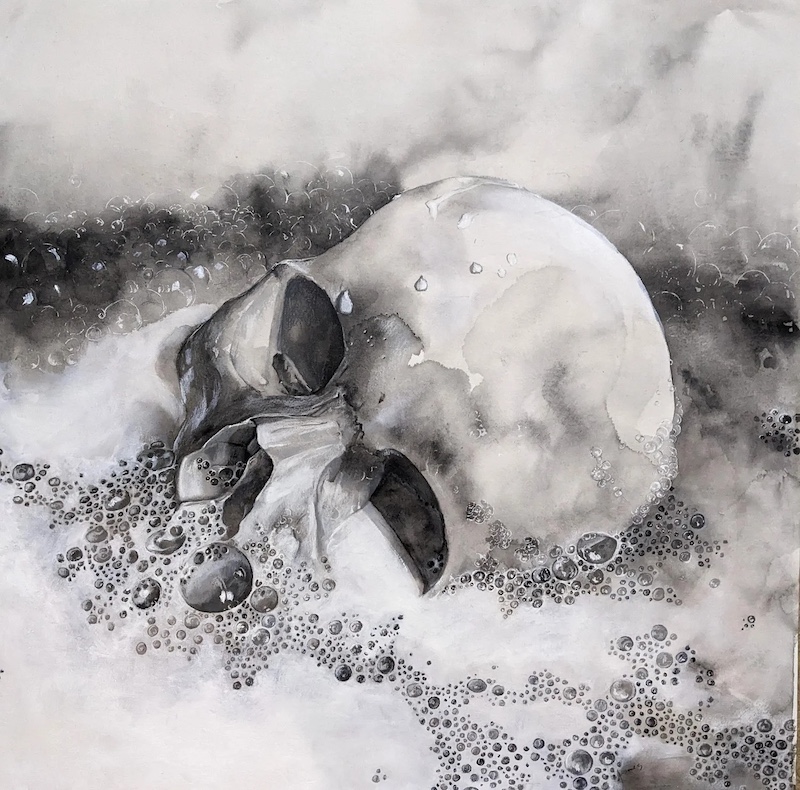
In other works, James explores death and memory more directly. One painting features a skull surrounded by milk and sugary cereal, creating a contemporary take on a memento mori. The artist often uses food to reflect the “short but sweet” nature of life, and the fact that nothing lasts forever.
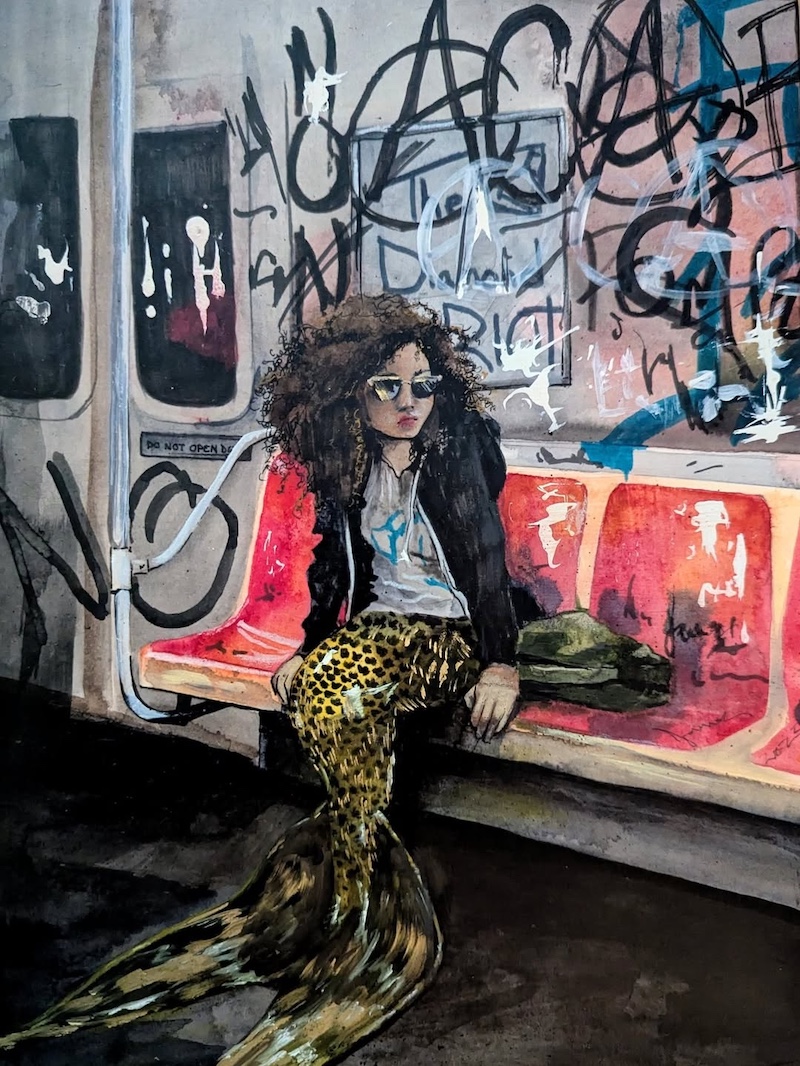
In another series, James pushes her imagination further, painting mermaids as they carry out everyday, human jobs. No matter what she paints, James aims to create a sense of magic, making the everyday appear even more extraordinary.
We recently got in touch with James to ask her more about her work and life as an artist. Read on for My Modern Met’s interview.
When you start a new piece, what usually inspires the idea?
I work primarily in a series, or bodies of work, so one piece flows into the other. I also work on multiple pieces at a time, often from three to 10 are in progress. All my pieces have a narrative aspect to them.
While I work I write the story of who they are, and what their life is like. So, one piece creates the idea for the next. For instance, I was at the swimming pool wishing I was at the beach. Then I was thinking I wish I could be at the beach all day every day and never work, like a mermaid. Then I started to think, what kind of job would a mermaid have? And here the ideas for the paintings come: Mermaid working at a noodle cart, mermaid working a coffee drive thru, mermaid working a food truck, mermaid getting after work drinks, mermaid commuting to work on the subway, mermaid working at a laundromat. One idea leads to another.
If I was starting from zero ideas and no motivation, I would look for inspiration in scientific botanical illustrations—Preraphalite art or Vogue Magazine from circa 2000.
Has your understanding of beauty changed as your life and artistic practice have evolved?
Beauty has become more important to me. I think that an admirable goal is to try and make our world more beautiful. I believe destructive and nihilistic practices will not stand the test of time. I am very drawn to work that celebrates the absurdity of life. I have always enjoyed the genre scenes from the Northern Renaissance, like Peter Bruegel the Elder and Nicolaes Maes. Their humor translates well into current society.
What are some non-artistic influences, like films, music, or books, that shape your work?
I watch thousands of hours of YouTube a year. I screen grab a lot of ideas from there especially travel vloggers.
Whose work (past or present) do you look at when you want to feel creatively recharged?
Damien Hirst. I stumbled across his project Treasures from the Wreck of the Unbelievable on YouTube. There is a documentary video of the “wreck” and art show. It is inventive and he pushes the boundaries of exploration, history, and truth. He pushes the boundaries of what if you found an ancient ship wreck and the drama and the artifacts.
What’s one part of your process that’s stayed the same since you began, and one that’s evolved dramatically?
It’s hard to say exactly what has stayed the same because it’s the way it’s always been done, and that is hard to say exactly. Maybe I would say with the process I always start with the face. If it’s messed up I haven’t wasted my time with a background. I struggle with backgrounds and so if I don’t like the subject, I don’t want to fight with a background.
What has changed is how I finish a painting. I have learned how important edges are and framing. My first solo show I saw, much to my mortification, that the pieces without painted edges looked cheap and unfinished on a gallery wall. The most helpful feedback you ever received was: Paint my edges! If you haven’t considered how the work will be viewed and taken care of that answer, then the work isn’t done.
The advice was given to me as, “The only advantage to an unpainted edge is there’s less worry about damaging the art as it’s slid into the warehouse. Unsold.” They softened the blow with, “It doesn’t have to look great. But it does need to look not bad.” And they are right—gallery wrap, decorative edges, solid painted edges always looks better than nothing. I try and view it as part of the process and have fun with it.
Death can be a difficult subject to engage with visually. How do you approach it in a way that feels right for you?
I didn’t take creating art seriously till after a series of losses. It put me into a tailspin and I started to paint obsessively. It is a way for me to let the world know “I was here! I loved these people! I miss them!”
What’s the most important thing you’ve learned about yourself through being an artist?
I want to be a creator not a consumer. I want to leave this world a bit more beautiful. My art has made me more comfortable being an introvert. No more guilt or fabricated excuses because I don’t want to be social. I have to get these paintings done. That’s going to take tons of hours.
“Sorry, would love to go out to whatever-whereever-the-fluff, but I have to go home and paint.”
Only one time has anyone questioned what room I am painting in the house.
How do you navigate self-doubt?
I remember, I am painting for myself. It is better I create bad work than no work at all. My other advice would be to read and do (even if it is only half-assed) The Artist’s Way book and workbook. The first few chapters focus on quieting the inner critic and overcoming self-destructive patterns that can hinder creative work.
Crystal James: Website | Instagram
My Modern Met granted permission to feature photos by Crystal James.
Related Articles:
Evocative Watercolor Paintings Visualize Dreamscapes Filled With Majestic Wildlife and Raw Emotions
Learn the Basics of Watercolor Painting in This Online Class
Artist Captures the Quiet Strength of Women Through Eastern-Inspired Portraits [Interview]
Artist Paints Floral Portraiture That Celebrates Life’s Continuity [Interview]