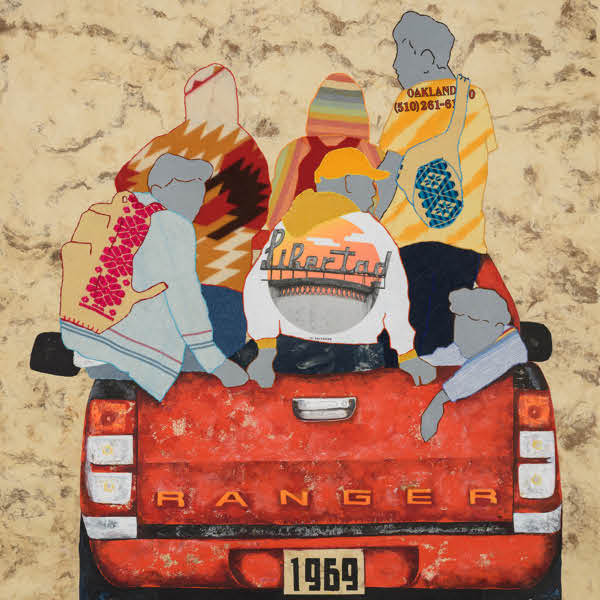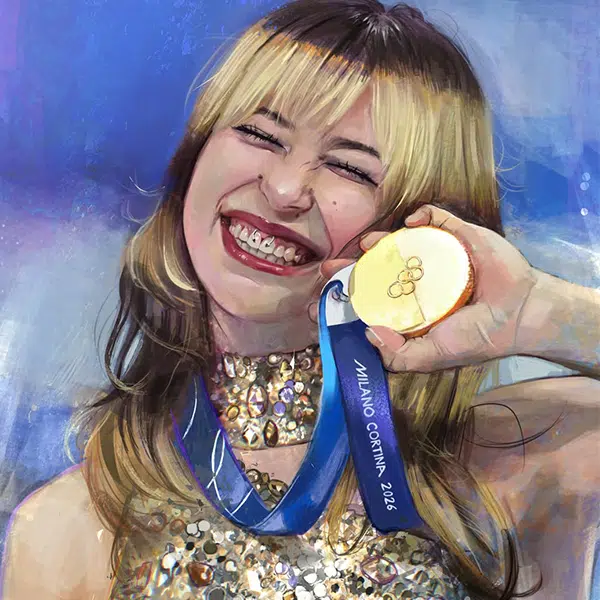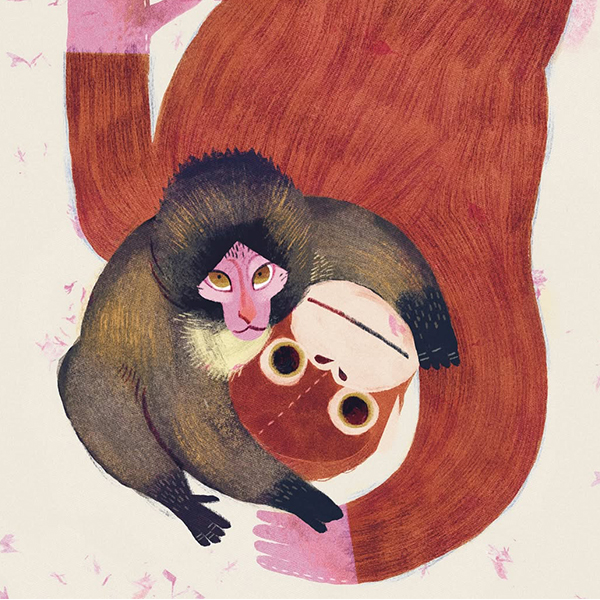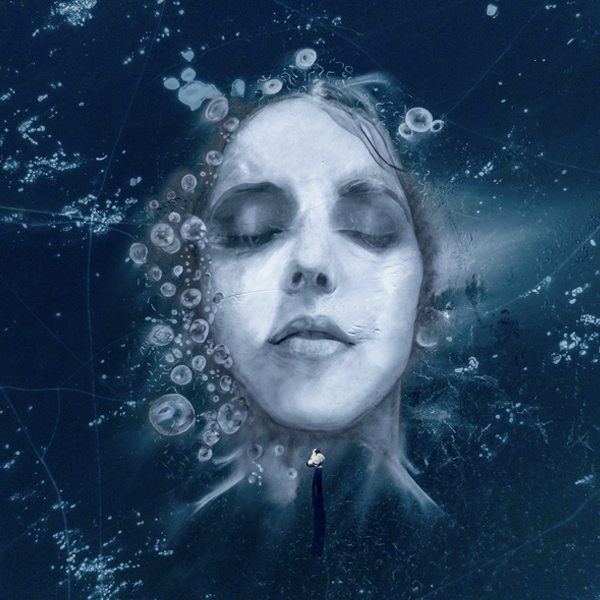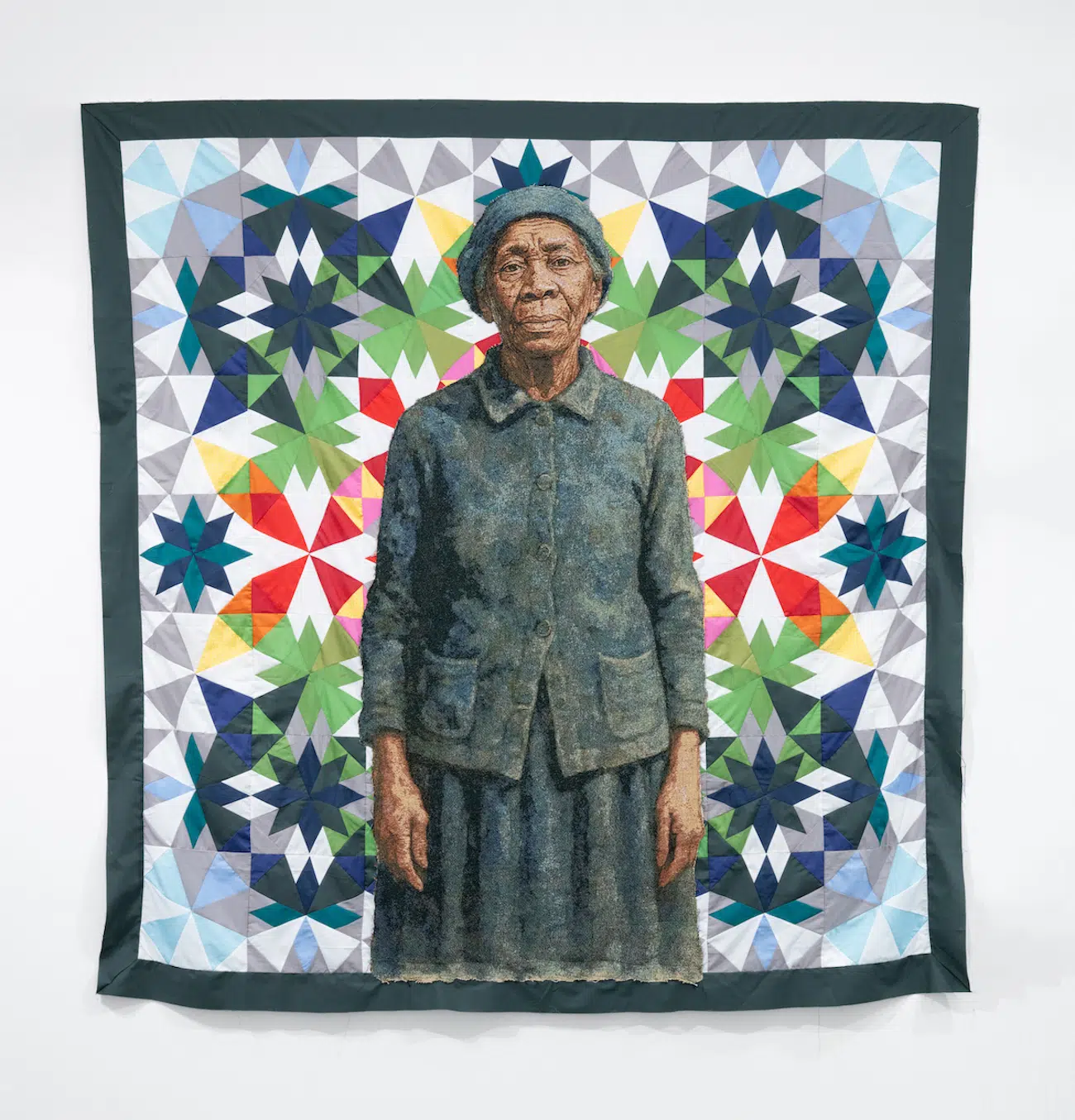
“She Stands Where the Blues Begin,” 2025. Digital painting, woven Jacquard loom, hand and machine sewn piece-worked fabric. 86 x 86 in.
Artist Desmond Beach’s textiles quietly command attention. At SCOPE Miami Beach 2025 during Miami Art Week, they didn’t compete with the visual noise of the fair. From a distance, the works appeared familiar, domestic almost, reading as pattern and surface. But as viewers moved closer, the pieces shifted and deepened. In Beach’s textile art, figures emerge gradually, layered and three-dimensional, faces revealed in stitch and weave. The fabric does not merely hold the image; it remembers it. What first seems like a textile becomes something more atmospheric, something that demands to be felt.
Beach’s work began far from the gallery, rooted in a moment of quiet reflection during the pandemic. As images of racial violence circulated again, he sat with helplessness, unsure how to respond. Within that stillness, a deeply personal and spiritual clarity arrived—not from abstraction, but through someone very real: his grandmother. She spoke to him in a way that carried more than her own presence, delivering guidance traced back to his ancestors. “She said, ‘You’re going to make work that heals us,’” Beach recalls.
Simultaneously, he remembered Michael Brown, whose body lay uncovered in the street for hours, a searing image of neglect and trauma. Beach felt the impulse to cover, to protect, to restore dignity. “I thought, I would have gone and grabbed a quilt. I would have covered his body,” Beach tells My Modern Met. That gesture became the foundation of his work. His textiles function as imagined acts of care—extensions of a gesture that could not happen but still needed to exist.
This instinct is inseparable from memories of his grandmother stitching in her bedroom. He remembers standing in her doorway, watching her hands piece together fabric with quiet precision. She remained fully present in the act. That intimate, attentive space has grown into a larger concept for him.
Drawing from Bell Hooks’ notion of the “homeplace,” Beach understands his work as an extension of safety, care, and affirmation—a homeplace for viewers as well as for himself.
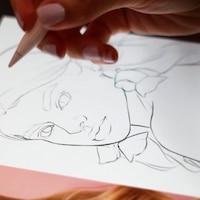
The figures that inhabit his textiles are chosen through a process both deliberate and intuitive. Beach works in archives at the New York Public Library, the Library of Congress, and the Smithsonian Institution, but he does not enter with a fixed idea of whom to find. Instead, he moves slowly, letting images interrupt and resonate with him. “I don’t go in looking for anything specific, it is whoever makes me stop,” he shares. That moment of recognition carries emotional and ethical weight; Beach treats the subjects’ likenesses with care, often hours of searching yield just a single image that truly speaks to him.
His attentiveness extends to materials as well. Beach selects fabric not for convenience or beauty alone, but for something less tangible. Walking through stores or thrift shops, he waits for a response that feels almost conversational. “I only pick up what says ‘Use me,’” he says. Each piece is a choice guided by alignment rather than control. The resulting surfaces are layered, intersecting, and alive with texture. His background in sculpture ensures the works extend physically beyond the wall. The figures emerge from the material, inhabiting the space as if held within it.
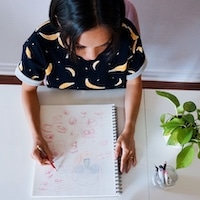
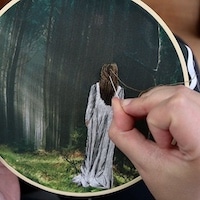
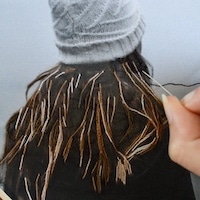
At the center of Beach’s practice is the act of stitching, a gesture both physical and symbolic. Every seam joins fragments together, creating continuity where there was once separation. “Taking two pieces and stitching them together that’s a moment of healing,” he reflects. Repetition transforms this labor into meditation, a communal and personal act that bridges memory and presence.
Beach’s work engages directly with the ongoing impact of generational trauma, particularly within the African diaspora. Histories of violence and oppression continue to inhabit bodies, yet the textiles do not dwell in despair. They point toward repair, offering evidence that what has been carried can also transform. “If we carry the trauma, then we must also carry the answer to heal it,” Beach says.
Beach’s artworks are more than visual objects; they are acts of care. Shaped by memory, guided by intuition, and sustained through repetition, they hold grief but also cultivate quiet presence and possibility. In a world that demands speed and clarity, his work insists on slowness, on attention, and the capacity to be held.
Desmond Beach creates intimate textile works that emerge from memory, care, and spiritual reflection.
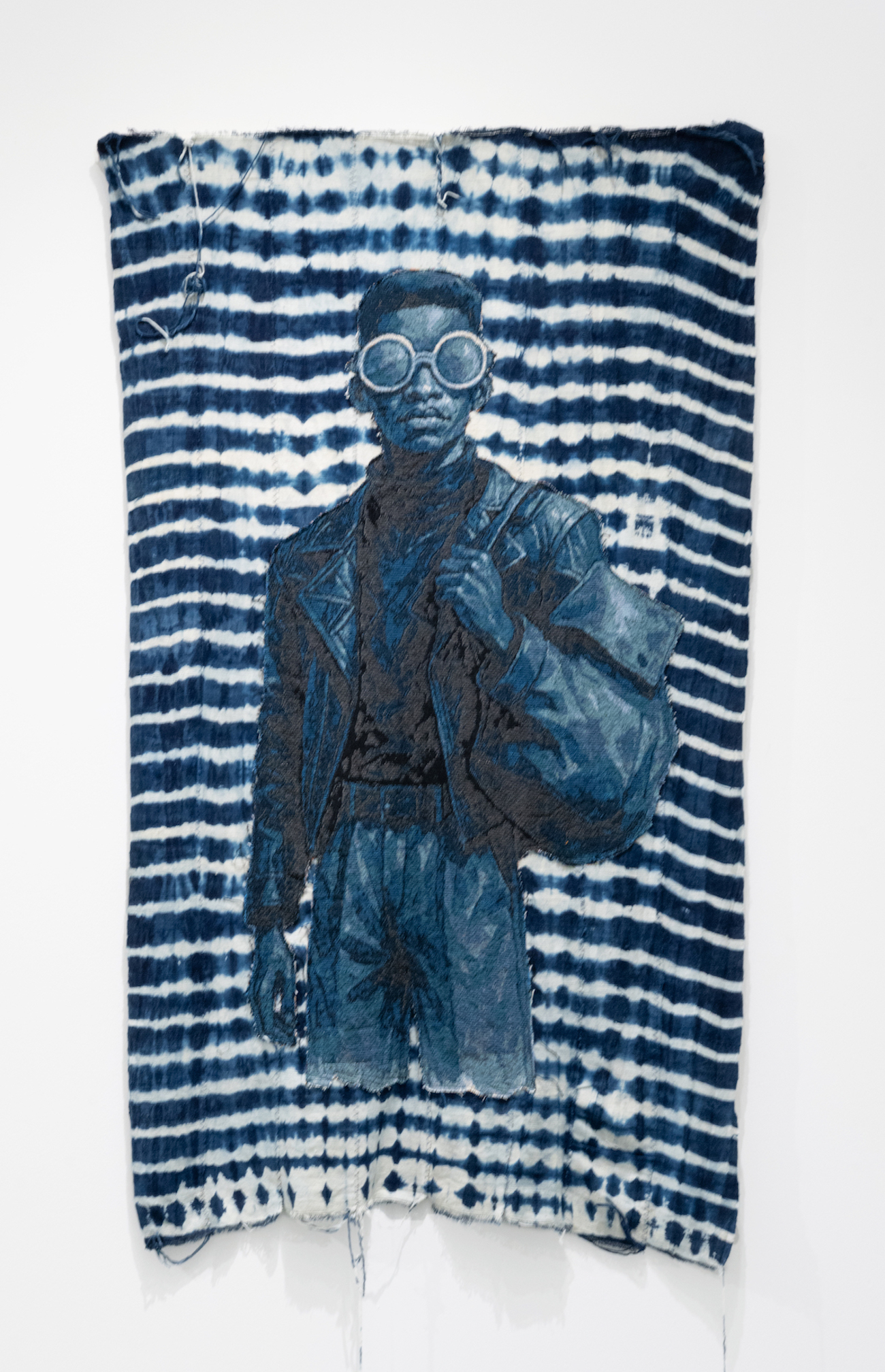
“The One Who Walks Already Arrived,” 2025. Digital painting, woven Jacquard loom, and Indigo fabric. 60 x 48 in.
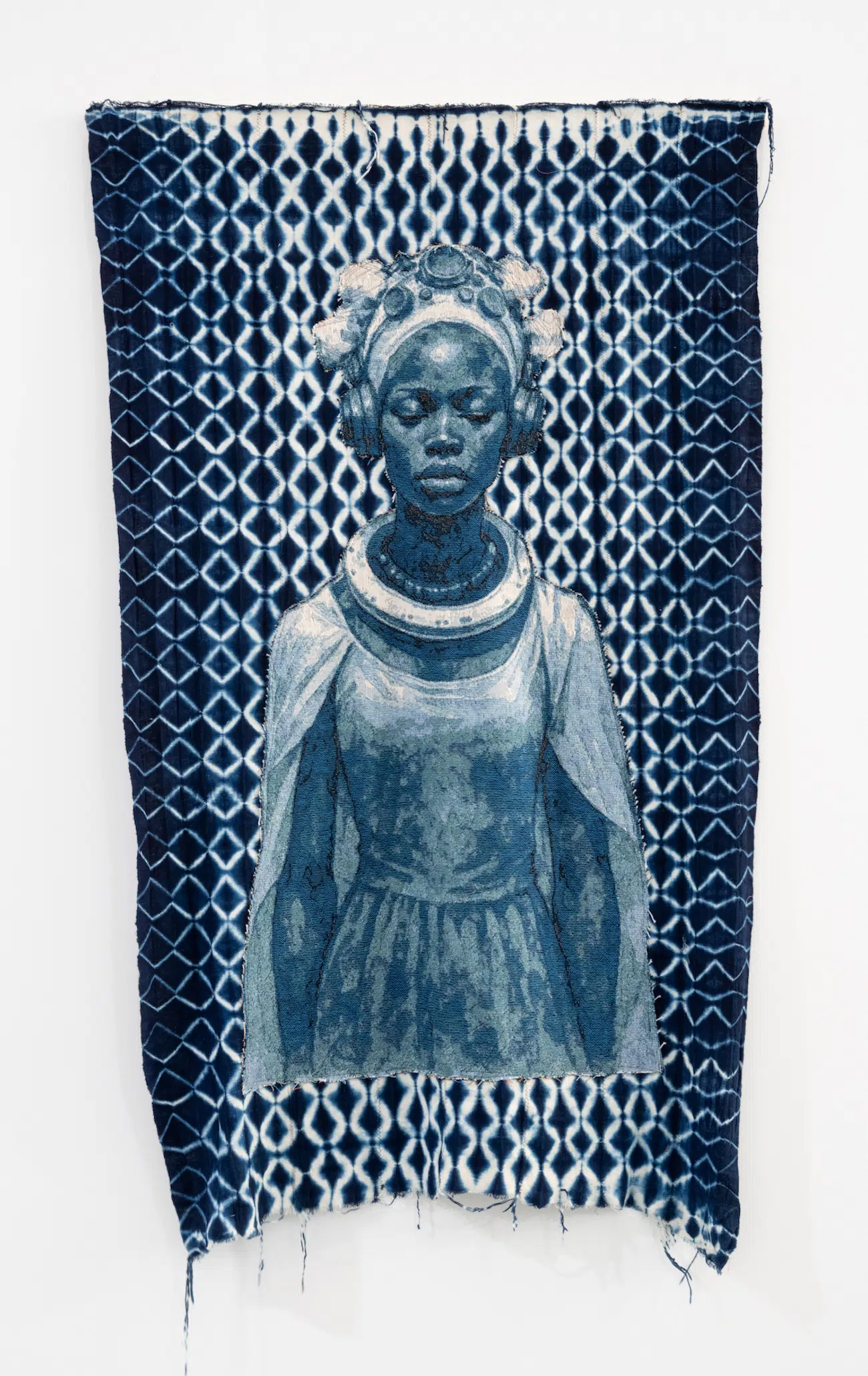
“The One Who Carries Constellations in Her Hair,” 2025. Digital painting, woven Jacquard loom, and Indigo fabric. 60 x 48 in.
His process draws on personal experiences, archival images, and attentively chosen materials to bring figures and stories to life.
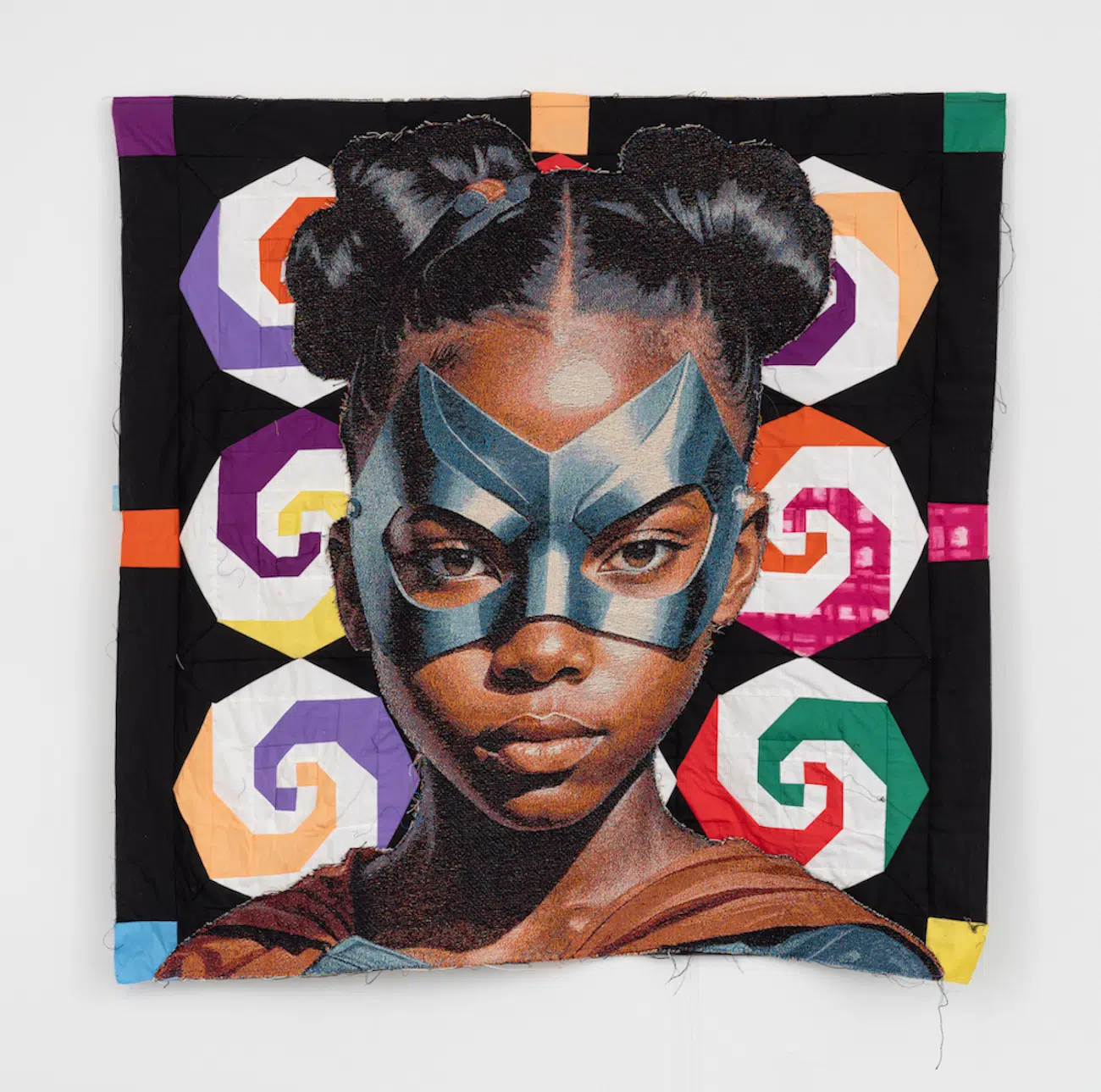
“The Lightkeeper,” 2025. Digital painting, woven Jacquard loom, hand and machine sewn piece-worked fabric. 47 x 47 in.
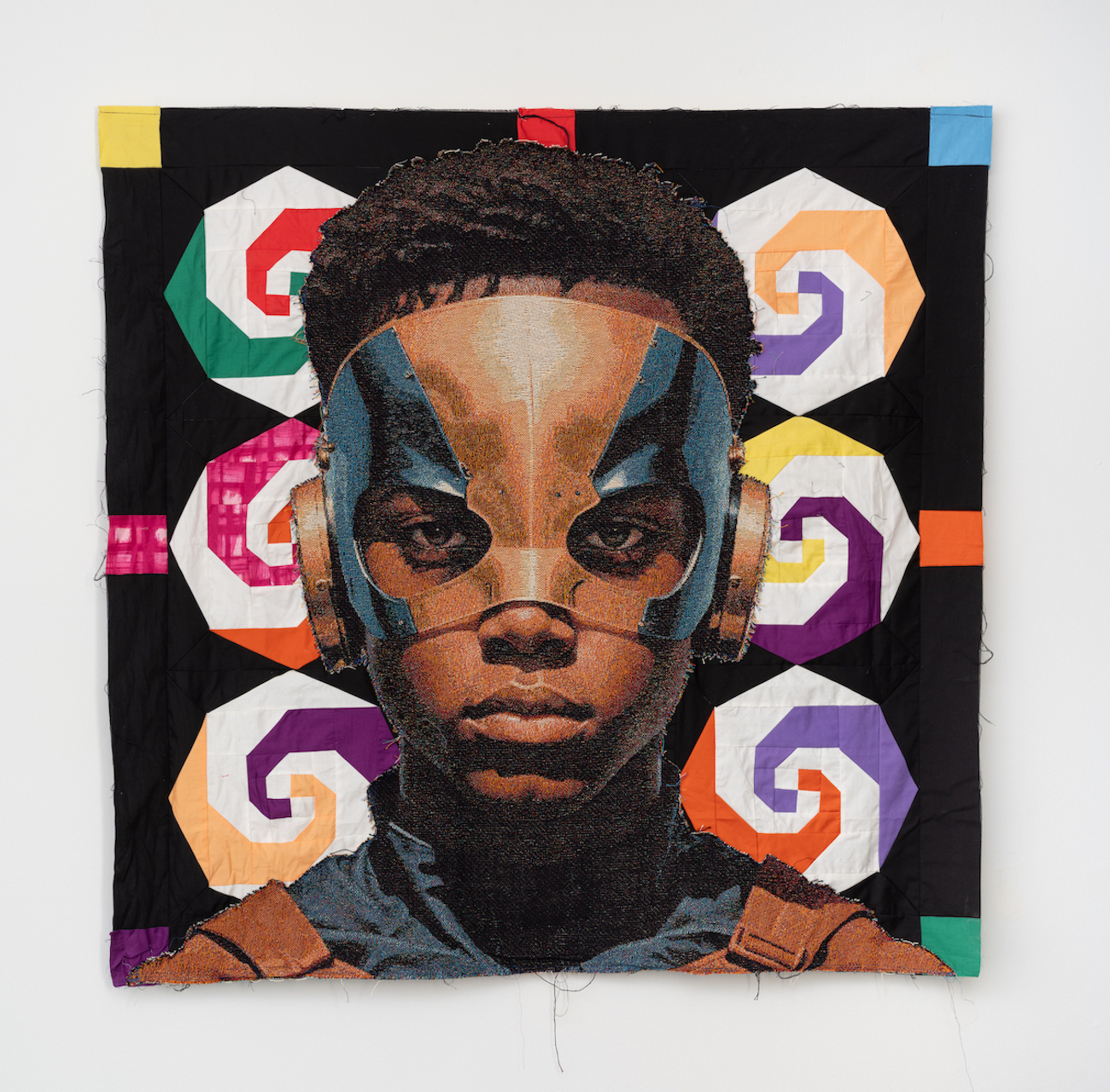
“The Watcher in the Wind,” 2025. Digital painting, woven Jacquard loom, hand and machine sewn piece-worked fabric. 47 x 47 in.
Through stitching and layered textiles, Beach transforms trauma into acts of healing, offering viewers a space for presence and quiet contemplation.
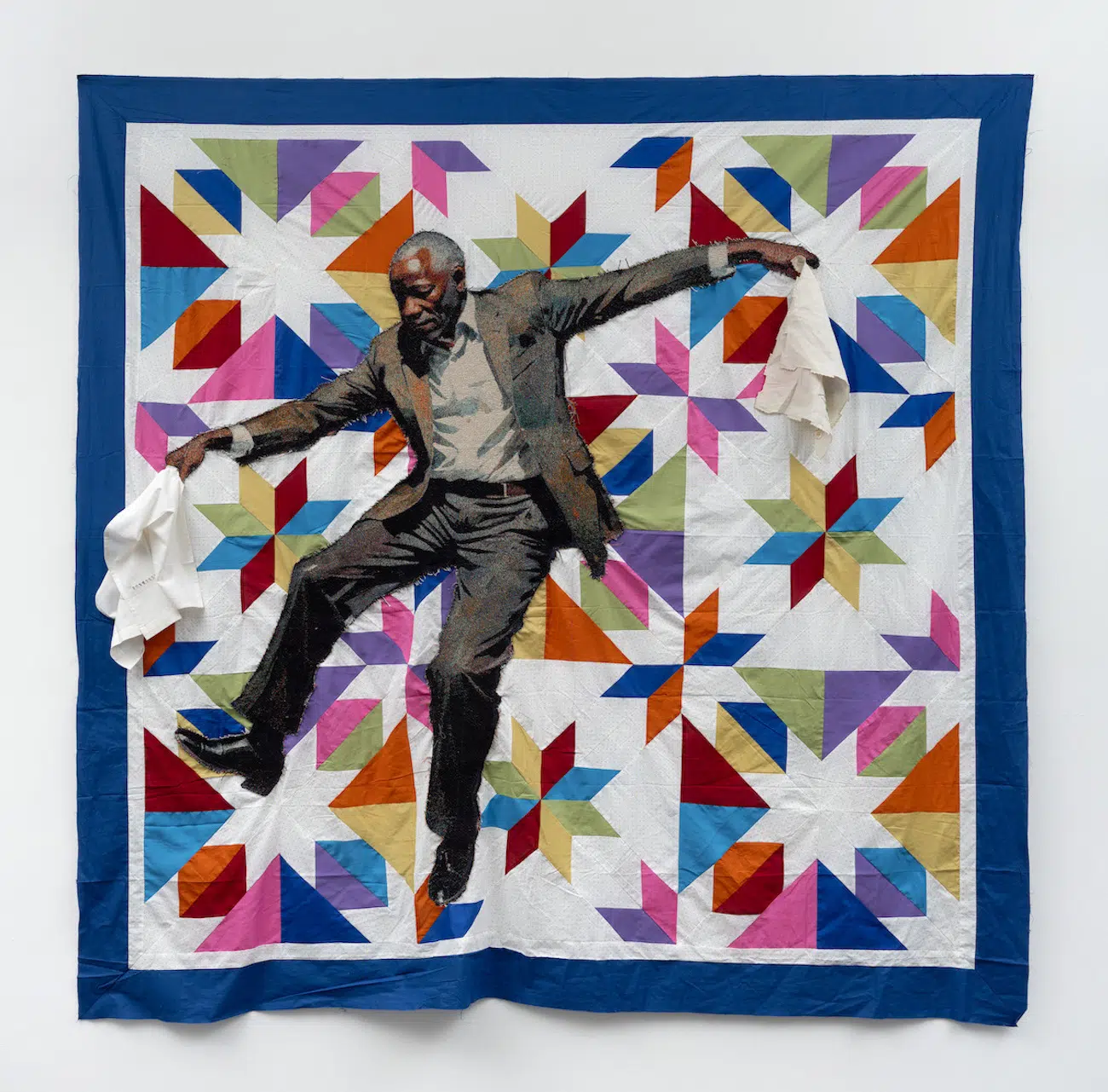
“Swing Low, Kick High,” 2025. Digital painting, woven Jacquard loom, hand and machine sewn piece-worked fabric. 86 x 86 in.
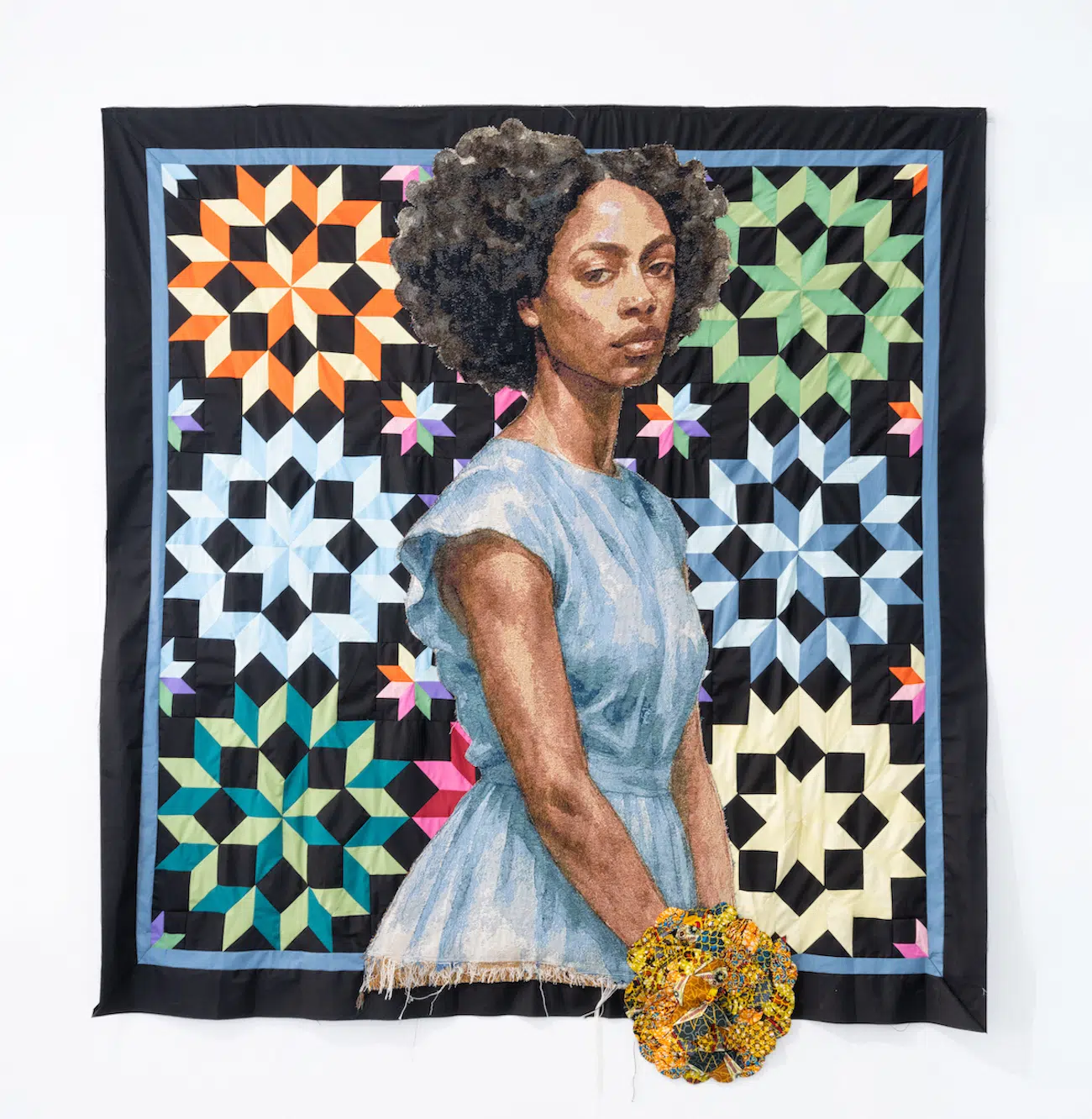
“She Brings the Garden to the Threshold, 2025. Digital painting, woven Jacquard loom, hand and machine sewn piece-worked fabric. 86 x 86 in.
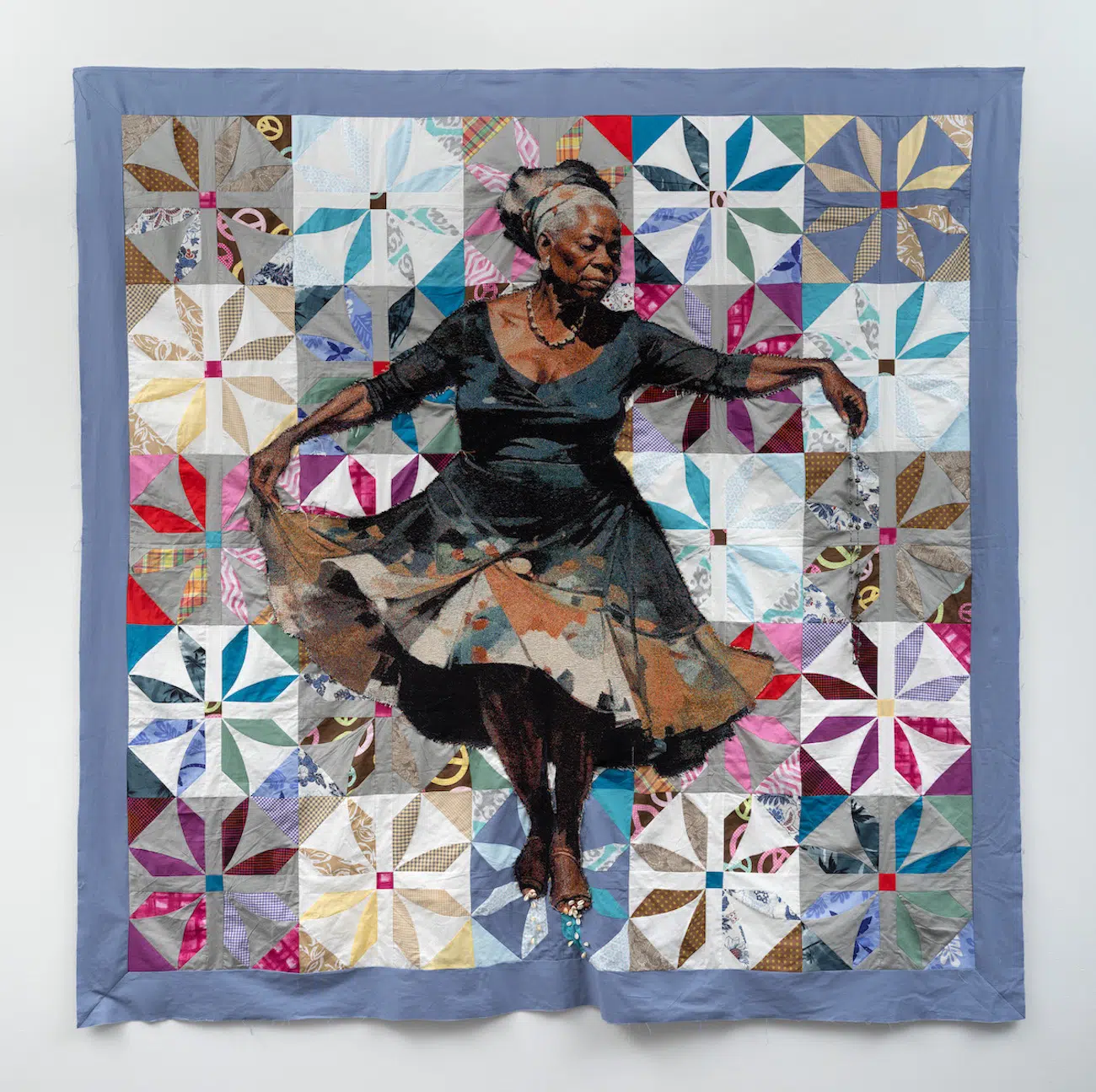
Blessed Are the Daughters Who Dance,” 2025. Digital painting, woven Jacquard loom, hand and machine sewn piece-worked fabric. 86 x 86 in.
View this post on Instagram