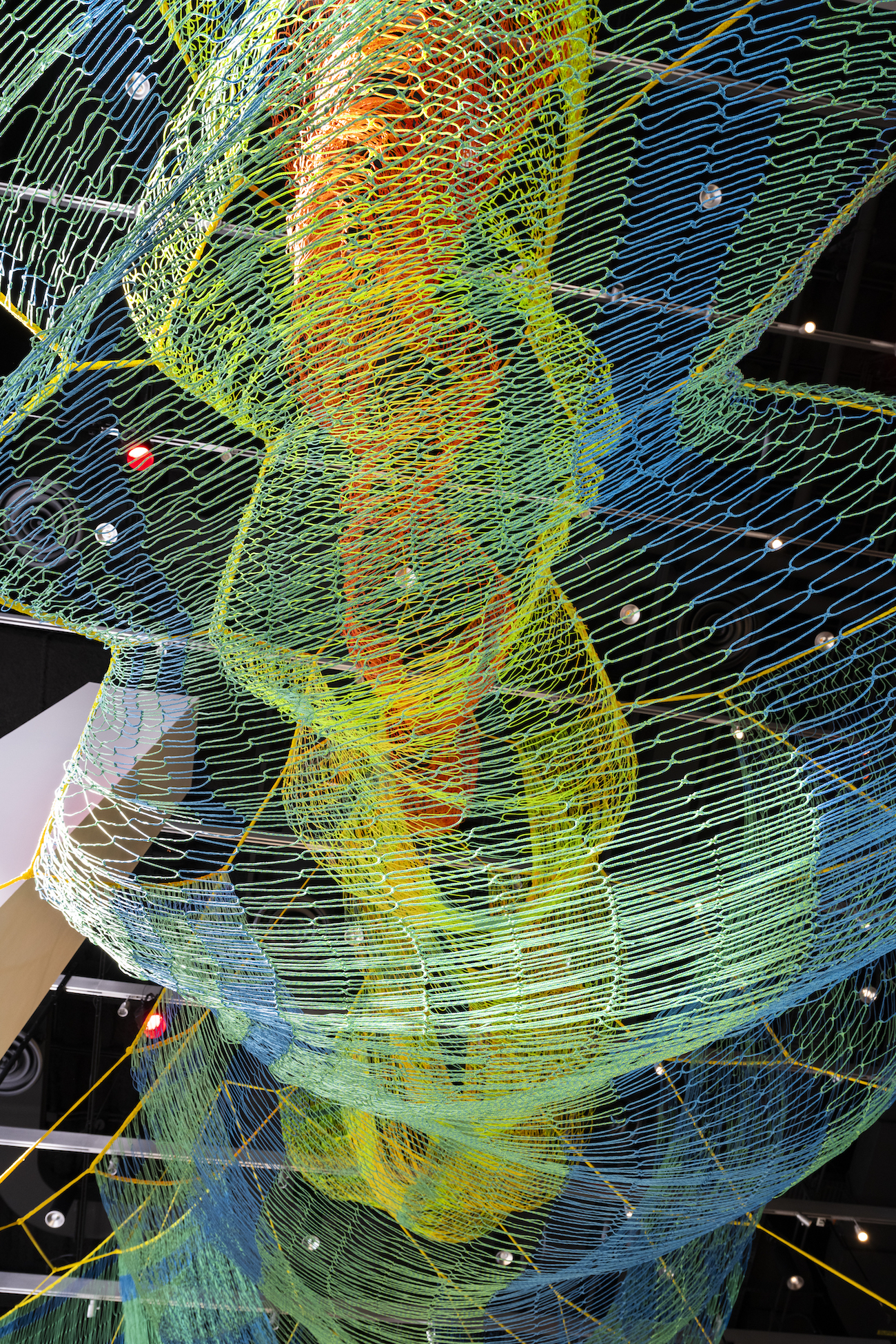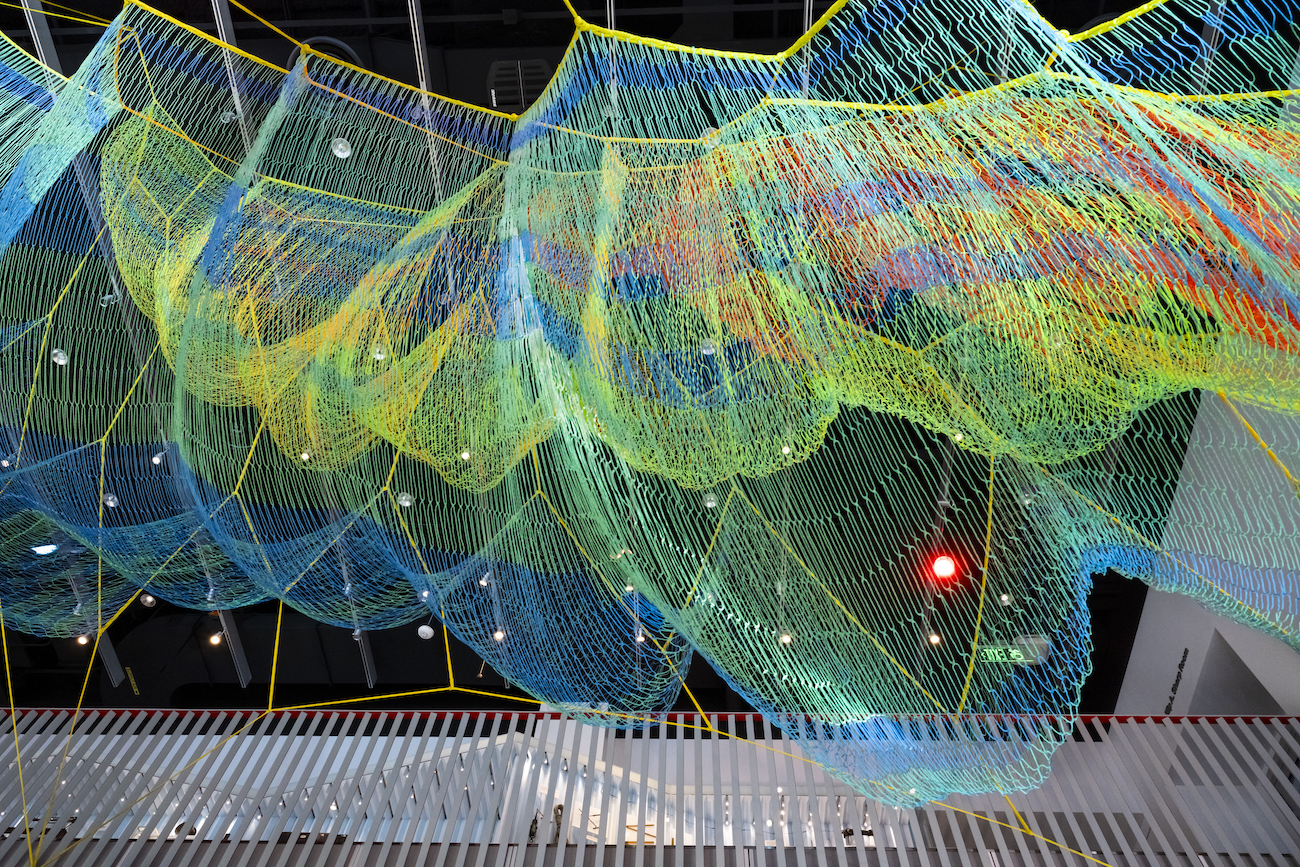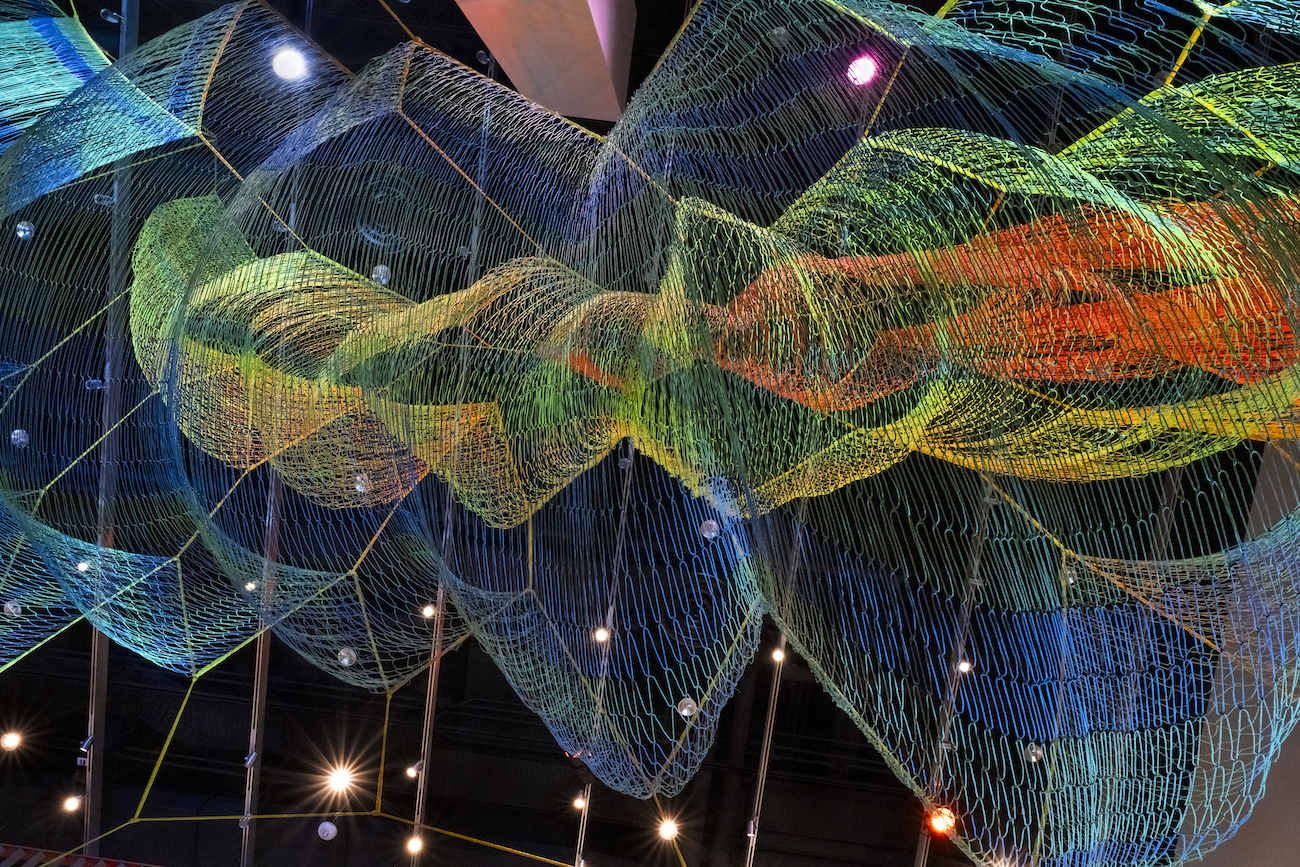
Suspended high above the atrium of the MIT Museum, a vast, netted sculpture by Janet Echelman invites visitors to look up and think forward. Titled Remembering the Future, the installation transforms complex climate data into a luminous, immersive work that merges art, science, and engineering.
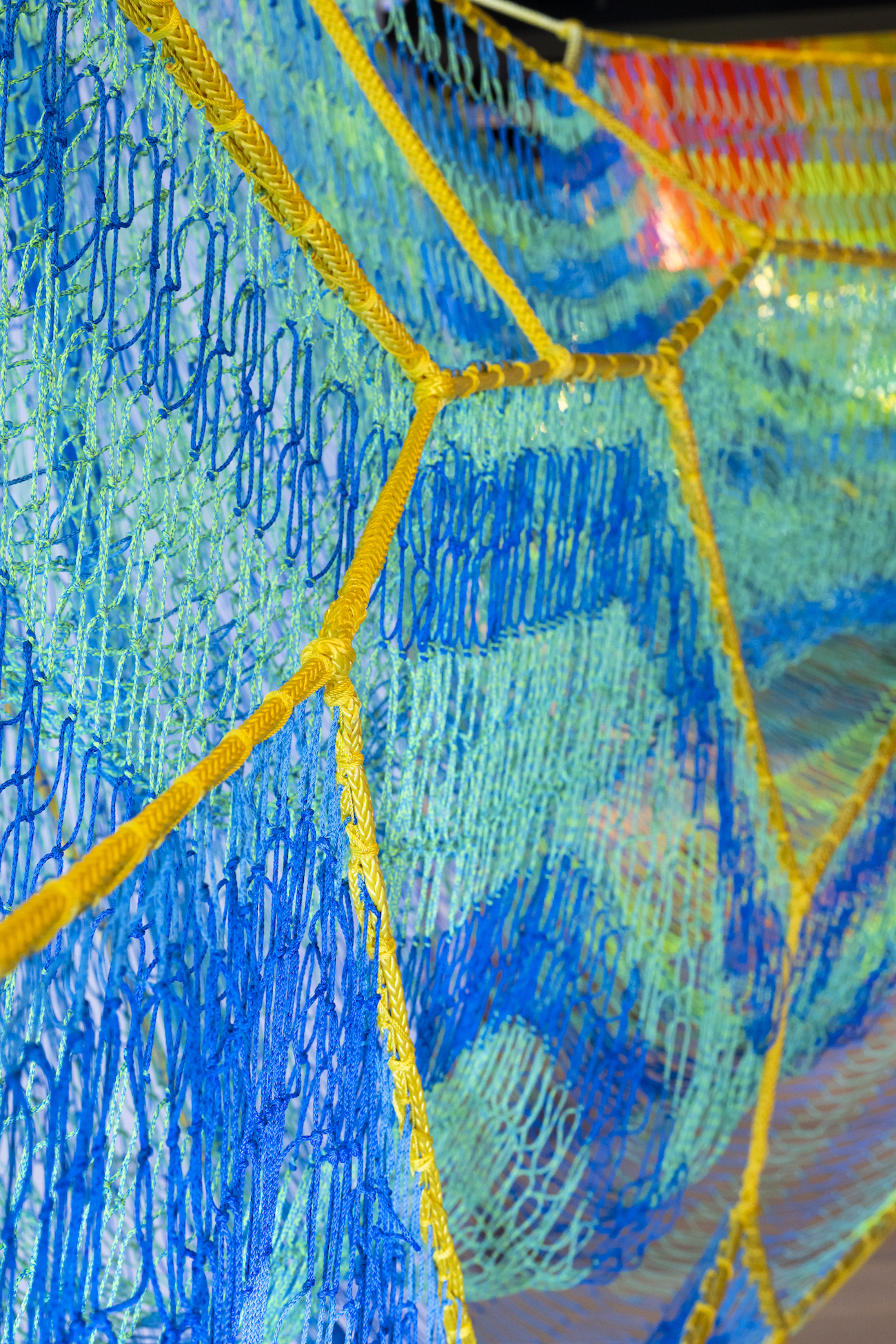
Unveiled in September 2025, the monumental piece stretches across the museum’s lobby as a canopy of braided fibers in shifting hues of blue and orange. By day, natural light filters through the layered netting, while at night, programmed illumination activates the piece, casting soft, atmospheric reflections throughout the space.
Rather than relying on abstract form alone, Remembering the Future is directly informed by scientific research. The installation draws on climate datasets that track atmospheric carbon dioxide levels, global temperature shifts, and ocean circulation patterns from the last ice age—roughly 20,000 years ago—to projected future scenarios based on current emissions trajectories. These datasets, commonly used in climate modeling, are translated into the sculpture’s curvature, density, and spatial layering.
Working alongside architect and MIT professor Caitlin Mueller and climate scientist Raffaele Ferrari, Echelman transformed this research into a three-dimensional textile form. Ferrari’s work in physical oceanography, particularly his studies of how heat and carbon move through the ocean, helped inform the piece’s representation of interconnected global systems. The result is both visually delicate and conceptually weighty, functioning as a physical timeline of Earth’s climate history and a speculative map of what lies ahead.
Color plays a key role in communicating this narrative. Cooler tones correspond to glacial periods and lower atmospheric carbon concentrations, while warmer hues reflect rising global temperatures and higher greenhouse gas levels associated with industrialization and future projections. Subtle shifts in the net’s elevation and tension also mirror thresholds identified in climate science, such as tipping points in ice melt or ocean circulation.
The installation is also a feat of structural innovation. Developed in collaboration with the MIT Digital Structures research group, the piece uses computational design tools typically applied in architecture and engineering. These tools simulate how flexible materials respond to forces like gravity and wind, allowing the sculpture to maintain stability while appearing almost weightless.
Despite its massive scale, the sculpture floats effortlessly, an effect achieved through precisely calibrated tension and anchoring systems. Visitors can further explore these principles through an interactive digital component, where they can manipulate a virtual version of the net and see how changes in force and structure ripple across the entire form, echoing the interconnectedness of climate systems themselves.
More than a visual spectacle, Remembering the Future is designed as an emotional and intellectual experience. By transforming data into something tangible and immersive, Echelman encourages viewers to engage with climate science not as distant information, but as a lived and shared reality that continues to evolve.
The installation anchors the museum’s broader “TIME” program, a season dedicated to exploring how art and science can reshape our understanding of temporal change.
On view through fall 2027, the work remains free and open to the public, offering an accessible space for reflection on the interconnected systems that shape our planet and the choices that will define its future.
A woven sculpture suspended inside MIT Museum transforms climate data into an immersive installation.
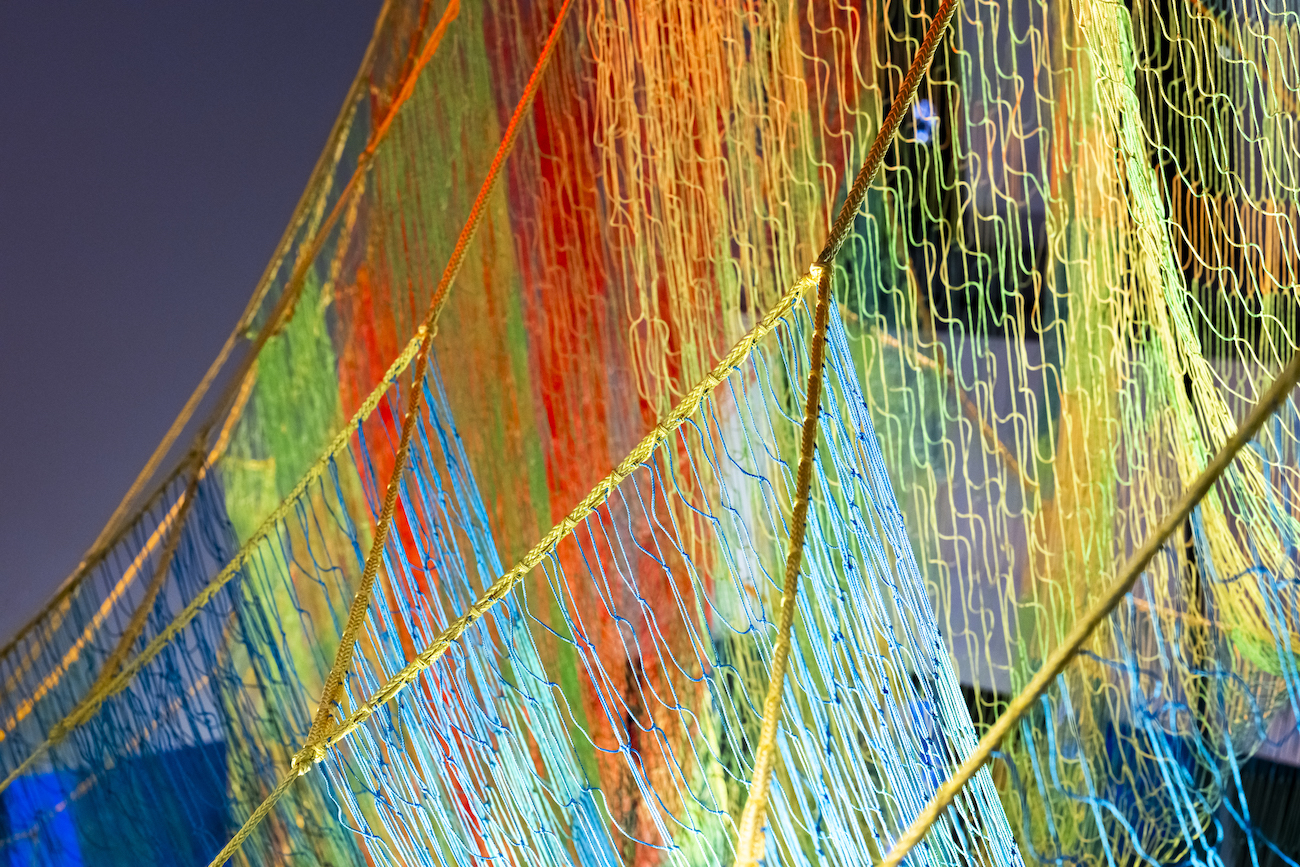
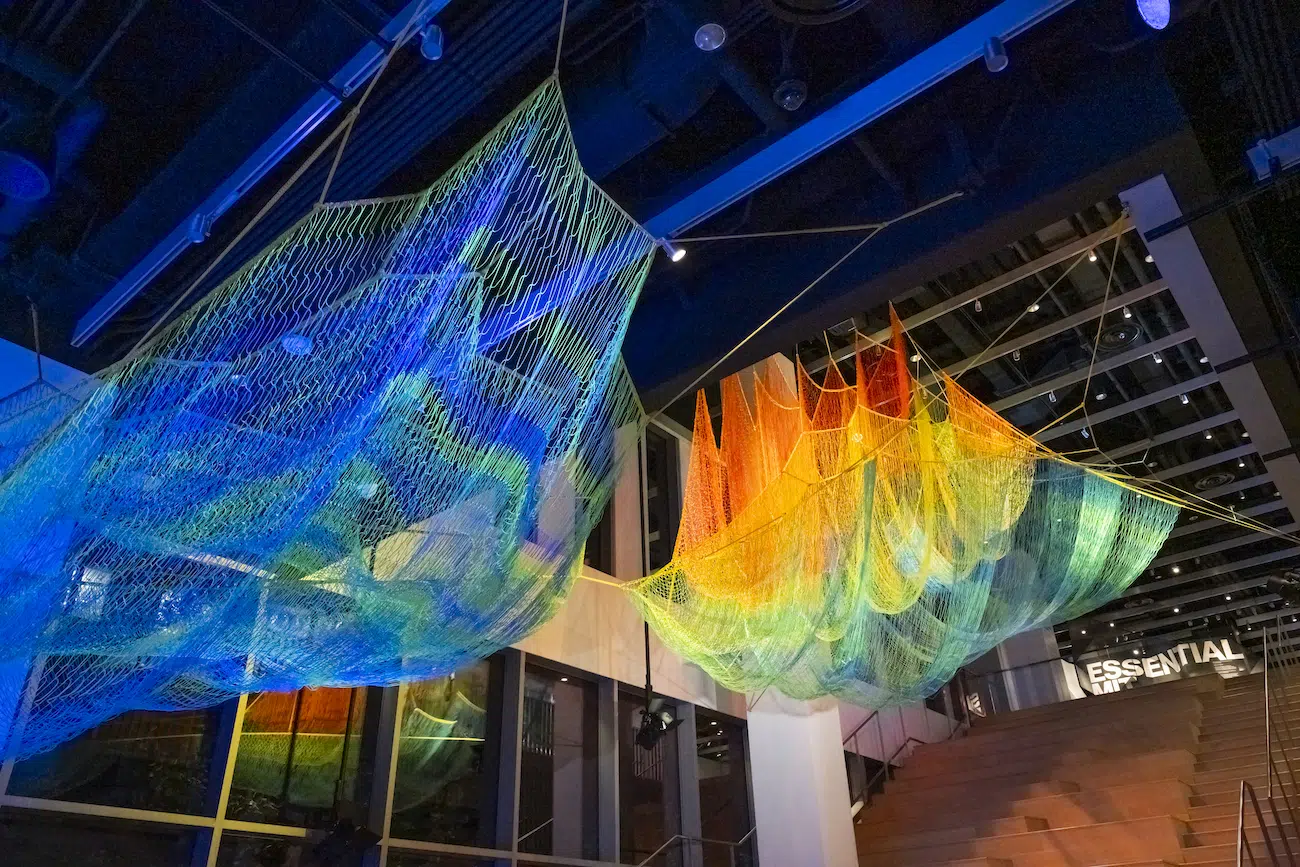
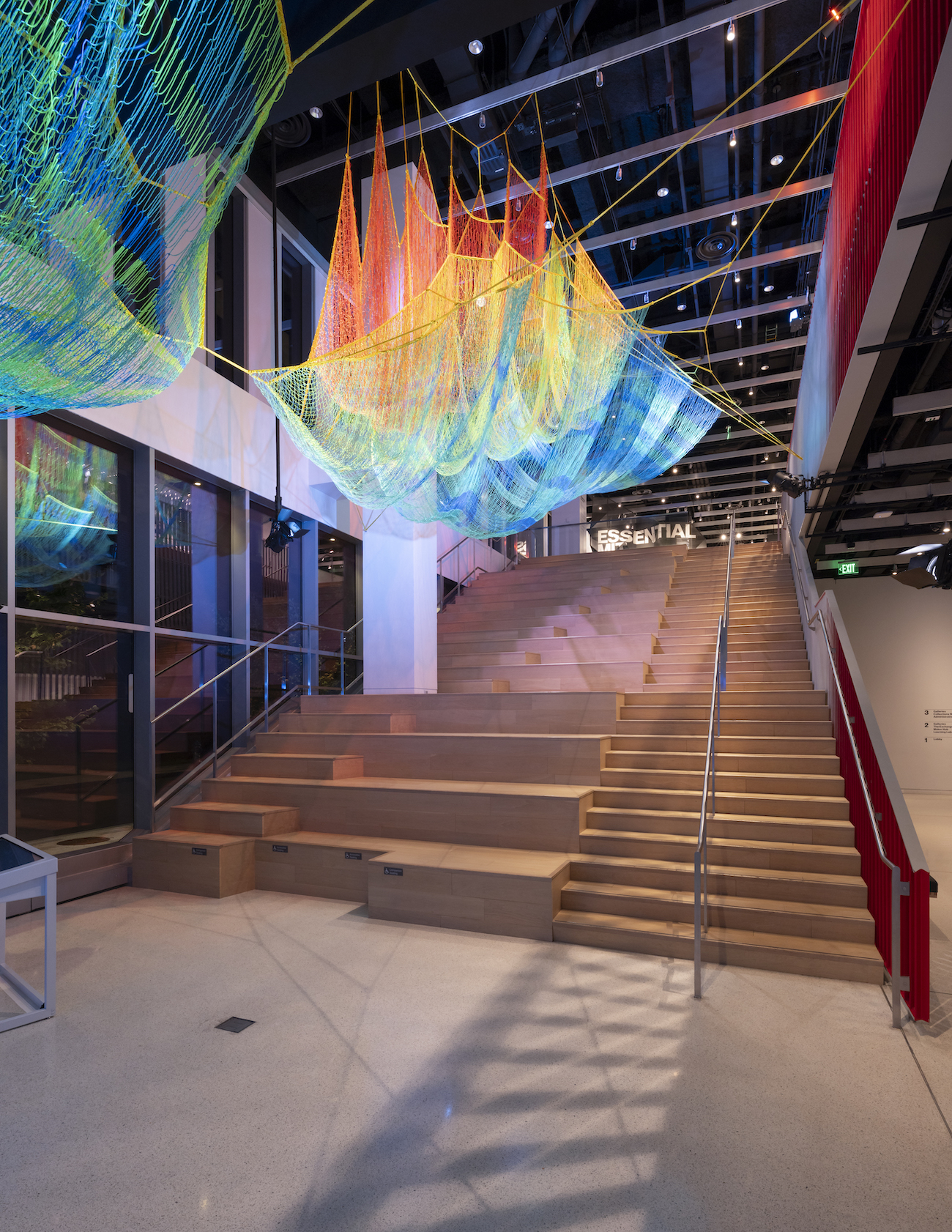
Developed through a collaboration between artists, engineers, and scientists, the piece visualizes Earth’s past and projected environmental futures through shifting color and form.
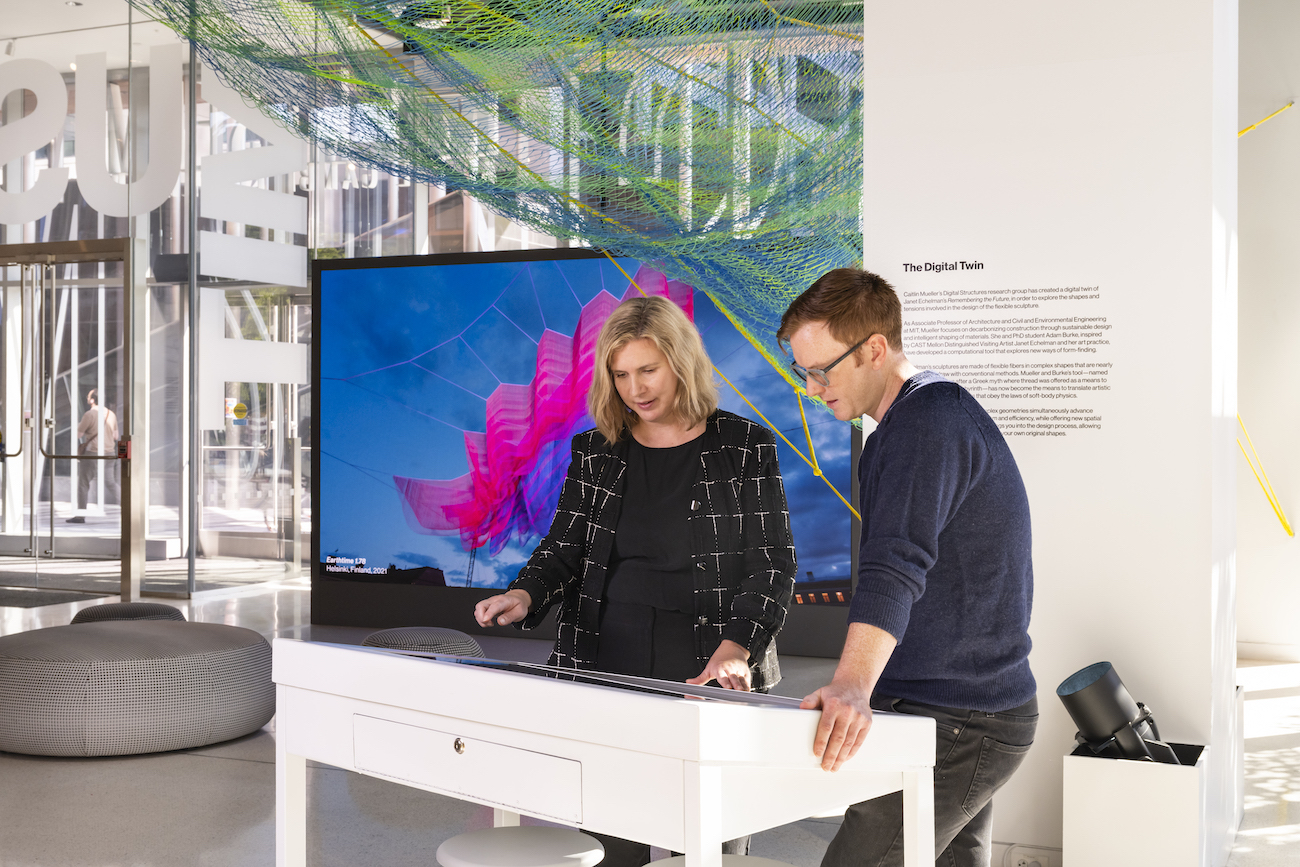
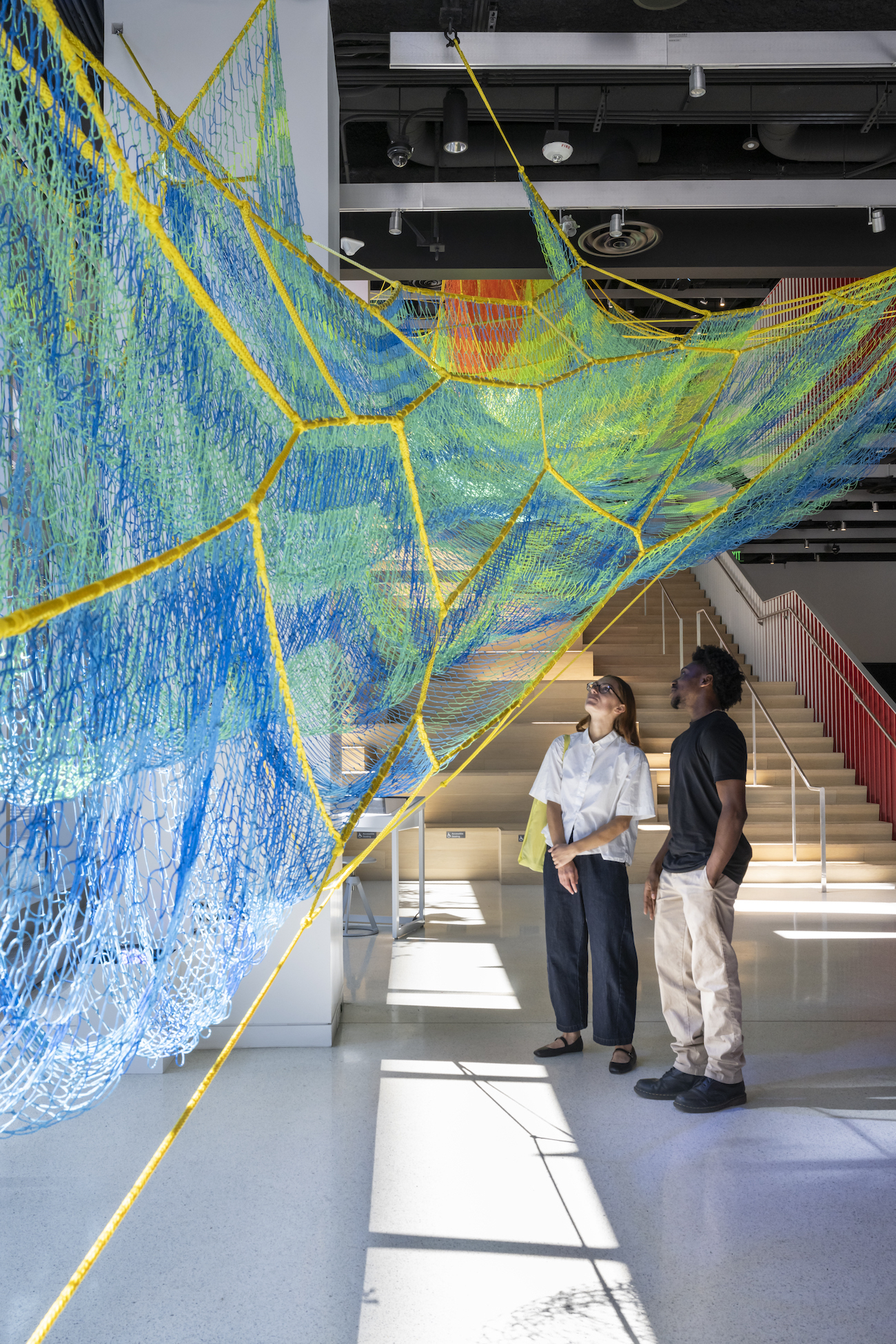
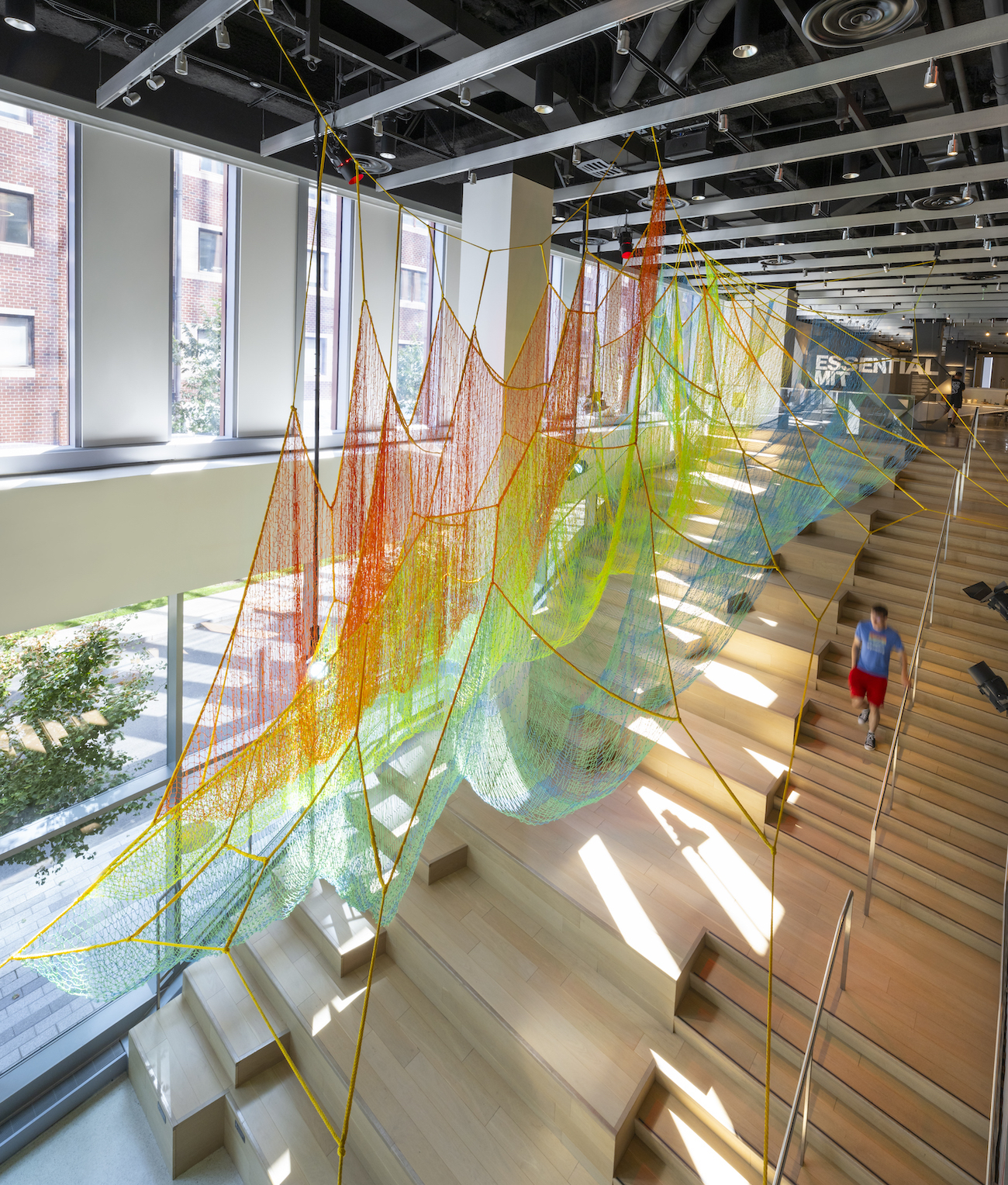
The installation invites visitors to reflect on climate change and humanity’s role in shaping what comes next.