For nearly 2,000 years, one city in China has shaped the history of porcelain. Nestled in the mountains of Jiangxi province, Jingdezhen has earned a reputation as the world’s ceramic capital. The city sits atop rich deposits of kaolin clay, the material that gives porcelain its signature whiteness and translucency. For centuries, emperors, merchants, and artists relied on its workshops, helping transform a regional craft center into one of the most influential creative hubs in the world.
Ceramic production in Jingdezhen dates back to the Han Dynasty (206 BCE–220 CE), but the city rose to prominence during the Song Dynasty (960–1279) when Emperor Zhenzong bestowed his reign name, Jingde, upon it in recognition of the exceptional quality of its porcelain. Subsequent dynasties expanded imperial production, drawing the country’s most skilled artisans to a single location where they refined techniques in wheel throwing, glazing, underglaze painting, and high-temperature kiln firing. Over time, Jingdezhen became synonymous with technical precision and artistic excellence.
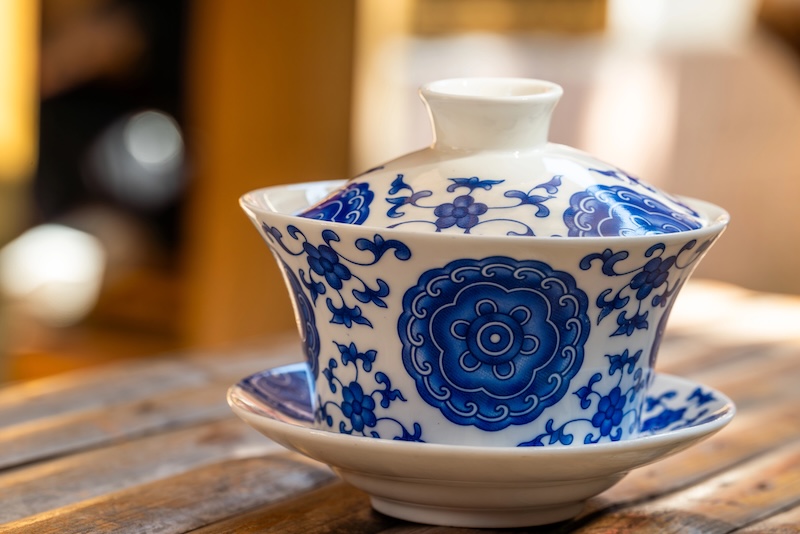
As trade routes expanded, Jingdezhen’s porcelain traveled far beyond China’s borders. Its wares reached Japan, Southeast Asia, the Middle East, and Europe, introducing new approaches to ceramic decoration and craftsmanship. The city became particularly famous for blue-and-white porcelain, a style that emerged during the Yuan Dynasty (1279–1368) and flourished under the Ming (1368–1644) and Qing (1644–1911) dynasties. Artists painted intricate landscapes, floral motifs, dragons, and narrative scenes using cobalt pigment beneath a transparent glaze before firing the vessels at extremely high temperatures. The resulting deep blue imagery and luminous white surfaces became defining characteristics of Chinese porcelain and helped make these works highly sought after across the globe.
What set Jingdezhen apart was not only the quality of its materials but also the extraordinary specialization of its workshops. Individual artisans often dedicated their entire careers to a single aspect of production, whether shaping forms, painting decorative motifs, preparing glazes, or managing kiln firings. This collaborative system allowed makers to achieve a level of refinement rarely matched elsewhere, producing porcelain that balanced technical mastery with artistic expression.
By the Qing Dynasty, ceramic painters had elevated porcelain decoration into a respected art form, creating detailed landscapes, figures, calligraphy, and symbolic imagery that transformed functional vessels into painted works of art. That tradition continues to inspire artists working in the city today.
Many contemporary ceramicists draw from Jingdezhen’s rich visual language while pursuing distinctly modern ideas. Some reinterpret traditional blue-and-white painting through contemporary imagery, while others experiment with sculptural forms, textured surfaces, and innovative glaze chemistry. Their work reflects the same spirit of experimentation that has defined the city for centuries.
Despite rapid modernization, Jingdezhen’s identity remains inseparable from clay. Ancient techniques continue to pass from one generation to the next, while artists constantly reimagine what porcelain can become. That balance between preservation and innovation has allowed the city to remain at the forefront of ceramic art for nearly two millennia, making it one of the most influential centers in the history of the medium.
Generations of Jingdezhen artisans refined porcelain into an art form, earning imperial patronage and establishing the city as China’s most celebrated ceramic center during the Song Dynasty.
View this post on Instagram
From delicately painted blue-and-white vessels to intricately glazed wares produced for emperors, Jingdezhen’s master potters and ceramic painters developed artistic traditions that influenced makers across Asia, the Middle East, and Europe.
View this post on Instagram
Today, contemporary ceramic artists continue that legacy in Jingdezhen’s studios and creative districts, combining centuries-old craftsmanship with new forms, surfaces, and personal artistic expression.
View this post on Instagram
Sources: The remarkable ceramic artisans of Jingdezhen; The World Capital of Ceramics; The New Jingdezhen
Related Articles:
Artist Works With Bees To Repair Broken Ceramics in Kintsugi-Inspired Honeycomb Pottery
Ceramic Shards Repurposed Into Monumental Mosaic Vases Explore the Korean Diaspora
Hand-Painted Ceramics Capture the Magic and Mystery of Mermaids With Golden Accents
700-Year-Old Shipwreck Reveals a Trove of Ceramics Challenging History Itself