There is an old Japanese adage embedded in the philosophy of kintsugi: a broken thing, once mended with gold, becomes more beautiful than it ever was before. The cracks act as the very record of an object's life. Artist Ava Roth has taken that ancient wisdom and handed it, quite literally, to the bees.
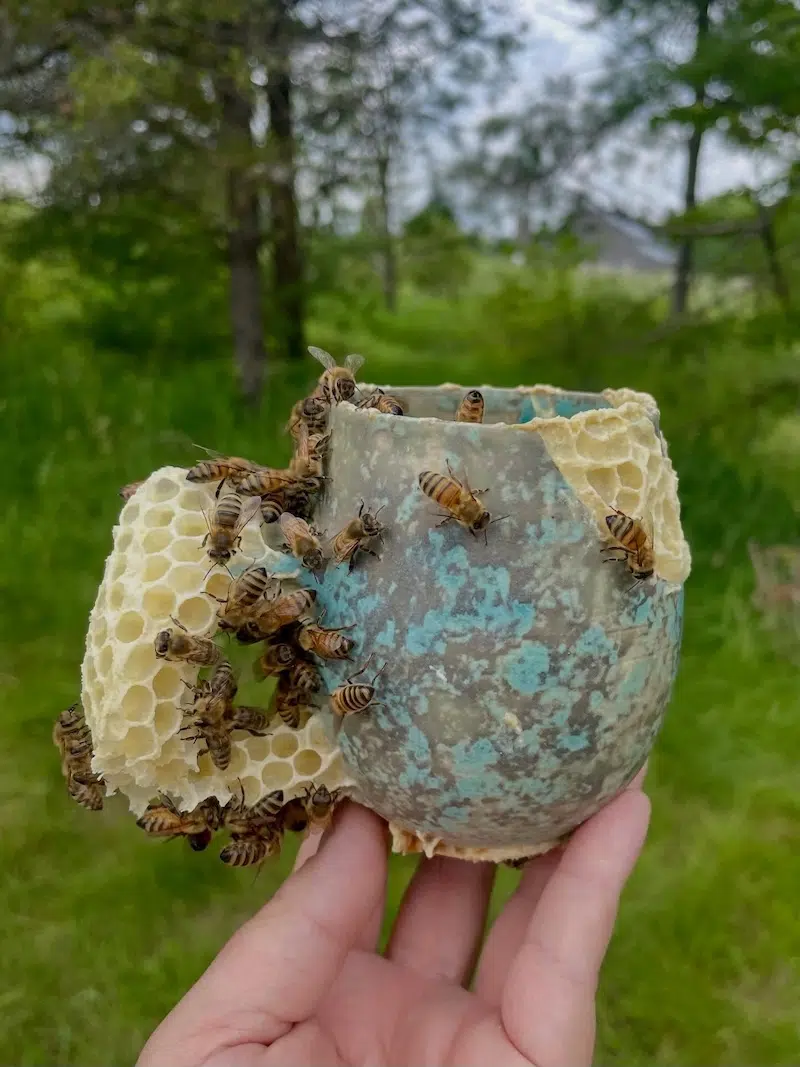
Her new series, Kintsu-Bee, is a quietly astonishing body of work in which deliberately fractured or damaged ceramics are placed inside active beehives. The insects do what insects do: they build. And what they build, cell by hexagonal cell, is something neither purely natural nor purely human, but something altogether more tender and strange than either alone.
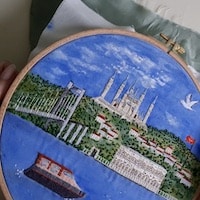
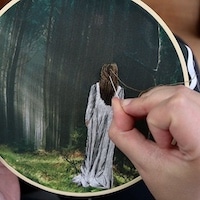
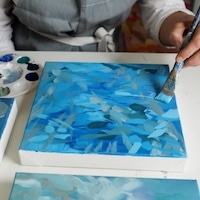
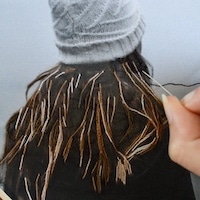
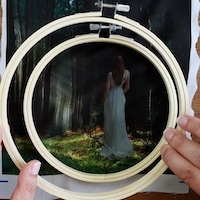
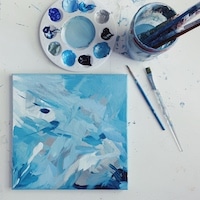
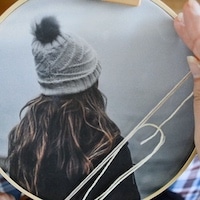
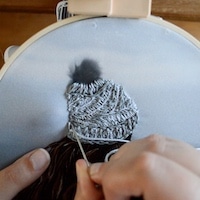
For over a decade, the Toronto-based encaustic painter and mixed-media artist has collaborated with thousands of Ontario honeybees alongside Master Beekeeper Mylee Nordin. Earlier works involved embroidered and woven panels placed inside hives for the bees to alter freely, resulting in intricate compositions disrupted by the organic swell of wax and comb.
Now, Roth has carried that collaboration into pottery. A chipped green mug, a cracked terracotta vase, a fractured dinner plate—each object enters the hive already imperfect. Into those gaps, the bees build.
The series draws from the Japanese practice of kintsugi, which emerged in 15th-century Japan as a method of repairing broken ceramics with lacquer mixed with powdered gold. Rather than concealing damage, kintsugi highlights it, transforming fractures into part of an object’s history. The philosophy is closely connected to wabi-sabi, the appreciation of impermanence and imperfection.
Roth’s substitution of honeycomb for gold feels especially resonant. Where traditional kintsugi depends on deliberate human repair, Kintsu-Bee relies on living architecture—structures that are functional, mathematical, and completely unpredictable. Honeycomb carries its own kind of value: it requires immense collective labor, biological precision, and time.
What makes the work especially compelling is Roth’s surrender of control. The bees decide how much to build, where to build, and whether the repair succeeds at all. A missing mug handle may return as an amber arch of hexagonal wax cells. A fracture in a plate might become covered with a thin veil of comb that follows the original crack line almost perfectly.
The finished objects are astonishing to look at. The honeycomb never attempts to imitate ceramic; it remains unmistakably organic, glowing softly against smooth glazed surfaces. Yet the repairs feel strangely right, as though the objects were always meant to heal this way.
The series also carries an ecological weight. By placing broken human objects into the care of bees, Roth subtly reverses the relationship between humans and pollinators at a time when bee populations continue to decline worldwide. The works become meditations not only on repair, but on coexistence, dependence, and care.
In recent years, kintsugi has become a cultural shorthand for resilience. Kintsu-Bee makes that metaphor literal. These are truly broken objects repaired by living creatures whose own survival has become increasingly fragile.
The resulting sculptures sit at the intersection of Japanese craft philosophy, ecological art, and contemporary sculpture. Quiet yet deeply affecting, Roth’s works ask viewers to reconsider repair not as concealment, but as collaboration.
To keep up to date with the artist’s work, follow Ava Roth on Instagram.
Canadian artist Ava Roth places cracked ceramics inside active beehives, where honeybees rebuild the damaged spaces with delicate honeycomb structures.
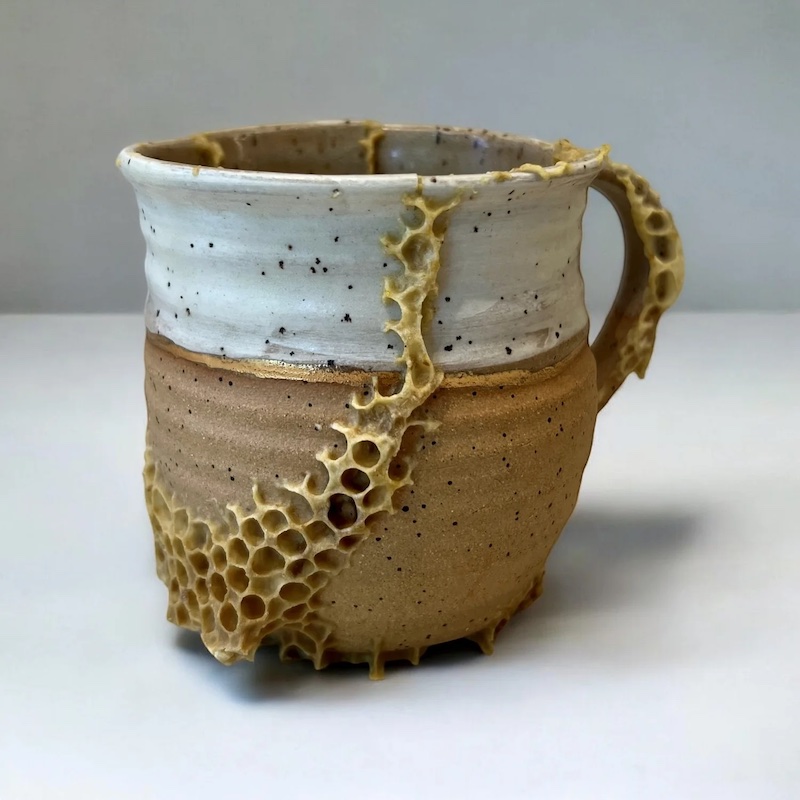
Kintsubee mug with gold band.
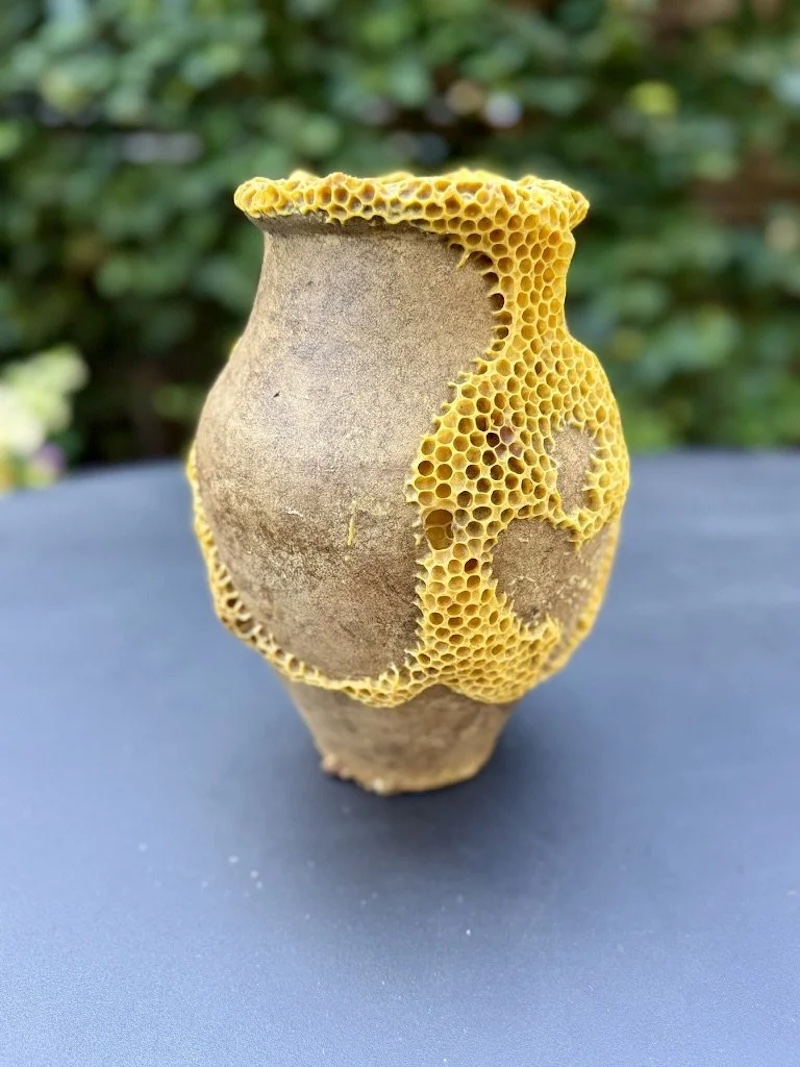
Kintsugi Vase, terracotta, vintage terracotta vase with natural honeycomb.
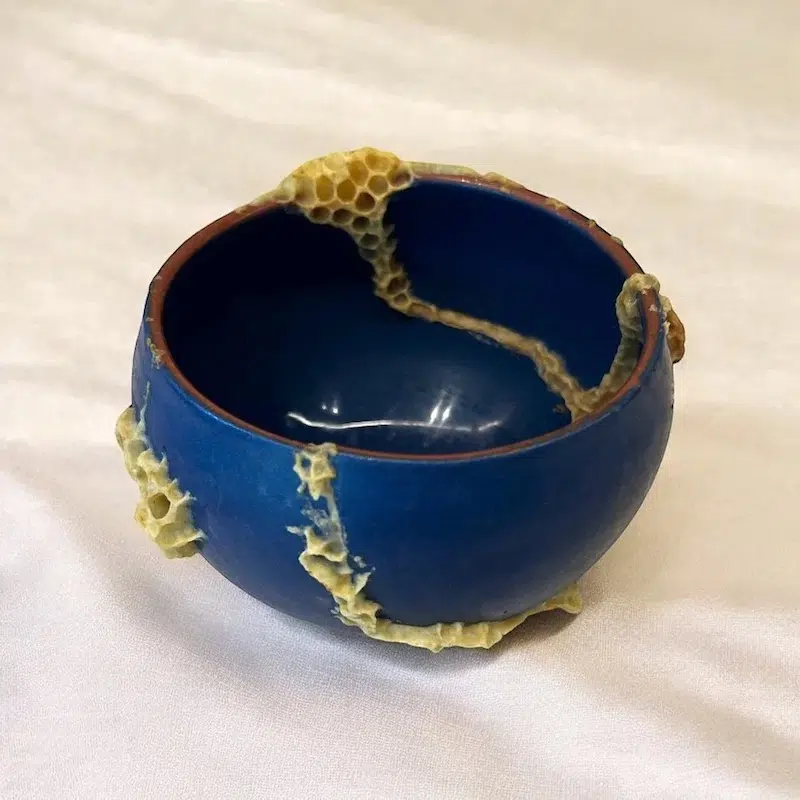
Honeycomb Kintsugi Blue Bowl, ceramic, honeycomb
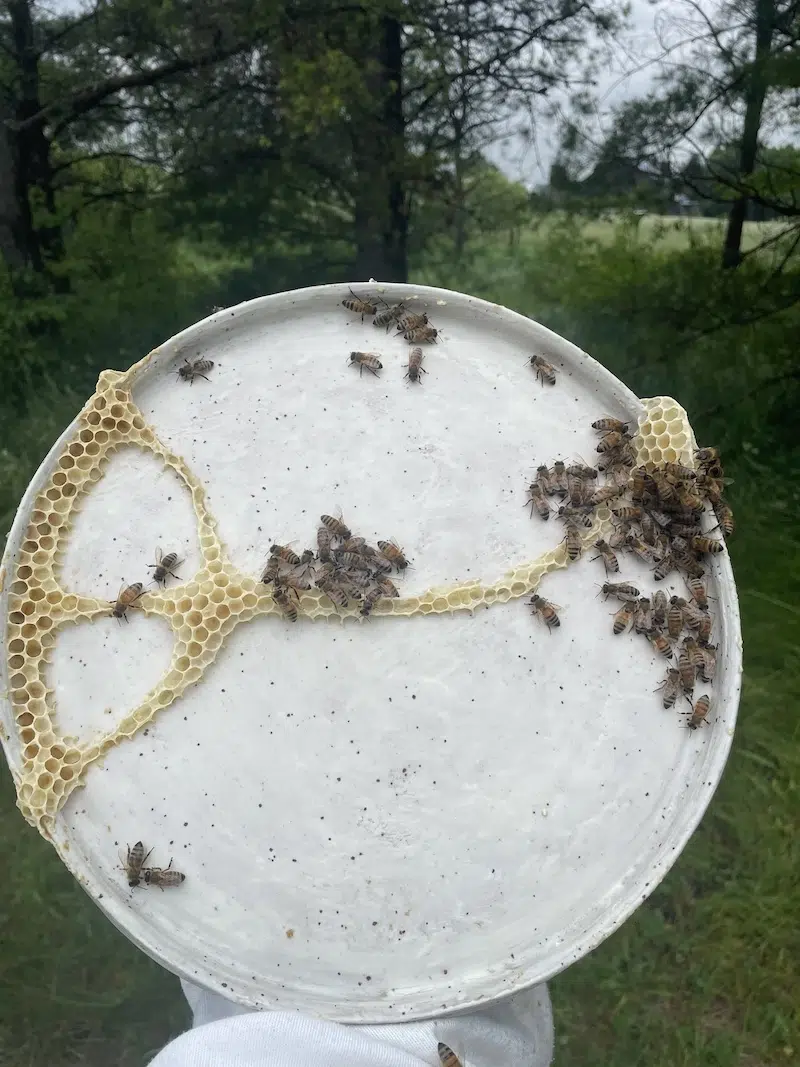
Honeycomb Kintsugi, White Plate #1, ceramic (made by @satoshi_yoshikawa_ceramic) and honeycomb.
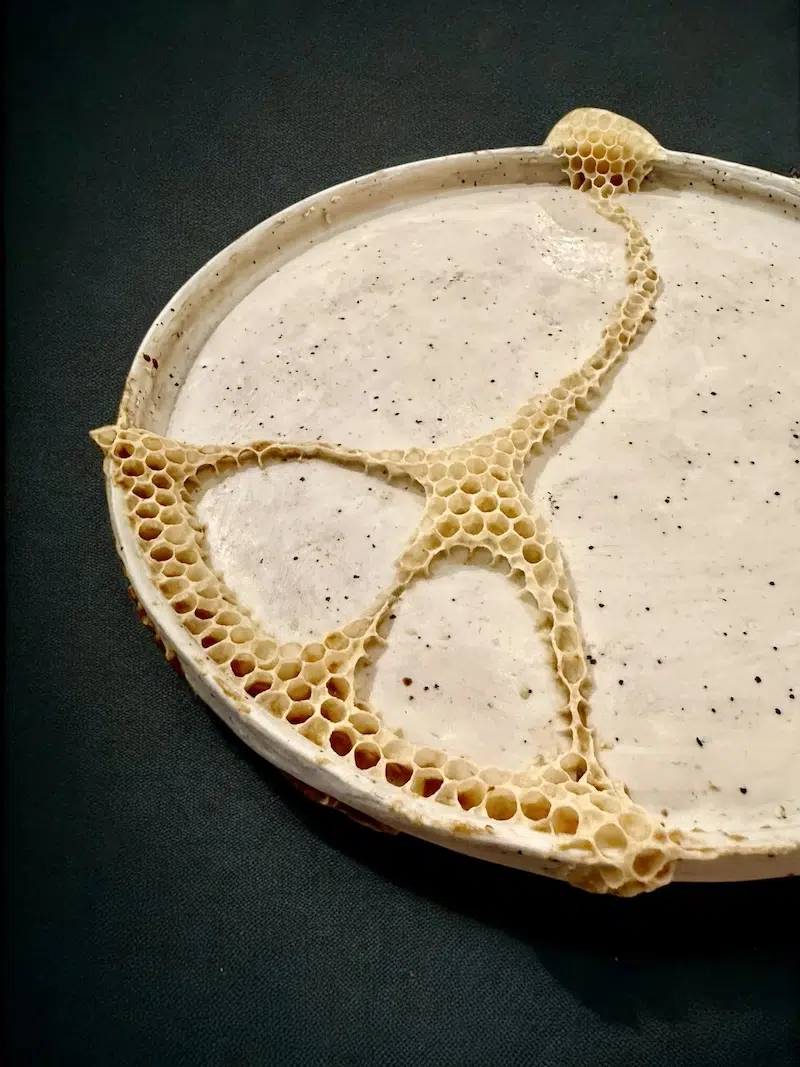
Honeycomb Kintsugi, White Plate #1, ceramic (made by @satoshi_yoshikawa_ceramic) and honeycomb.
Inspired by the Japanese philosophy of kintsugi, which repairs broken pottery with gold to celebrate its history rather than hide its damage, Roth allows bees to mend fractured ceramics with glowing honeycomb instead.
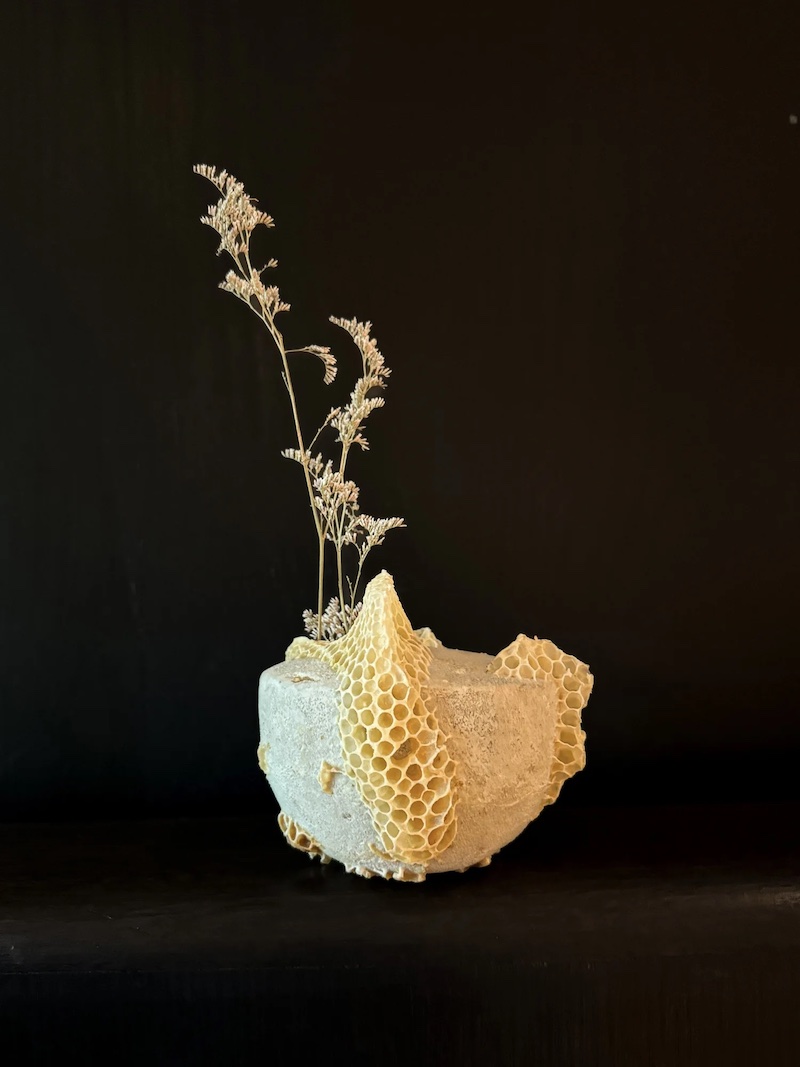
Ceramic Vase with Honeycomb and Dried Flowers, ceramic vase made (made by Satoshi Yoshikawa) with wild honeycomb and dried flower.
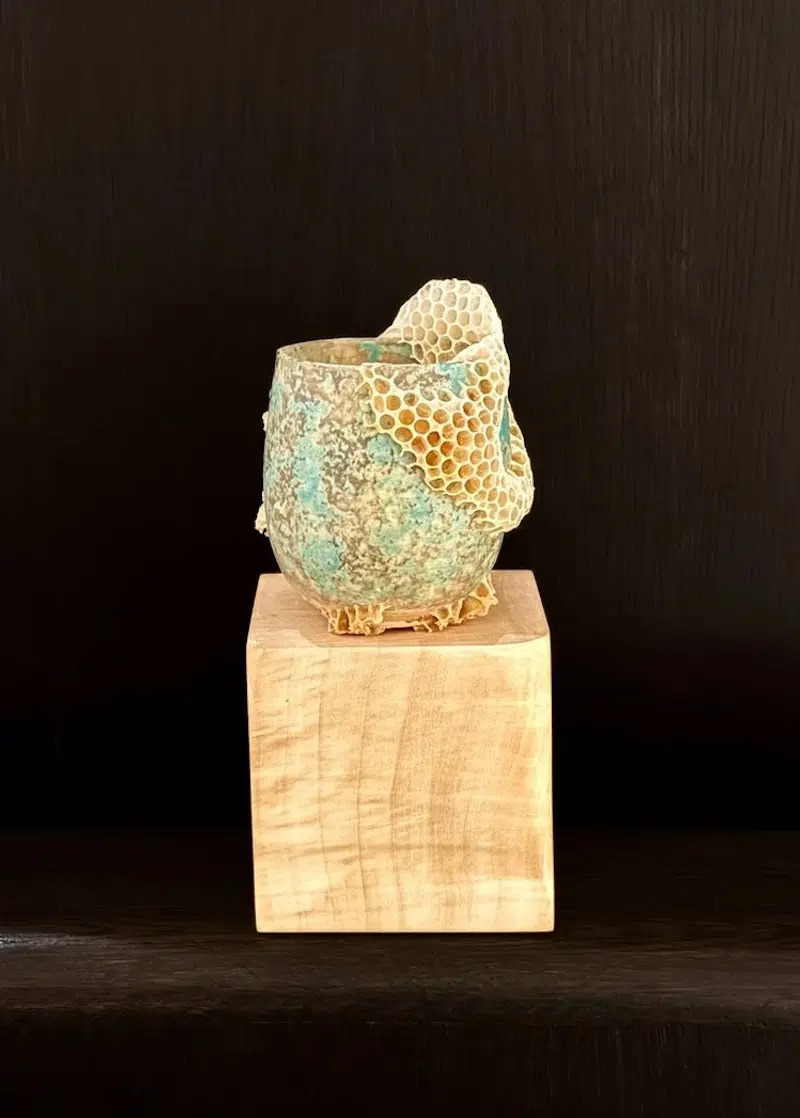
Honeycomb Kintsugi, Green Mug #2, ceramic (made by @makikohicher) and honeycomb.
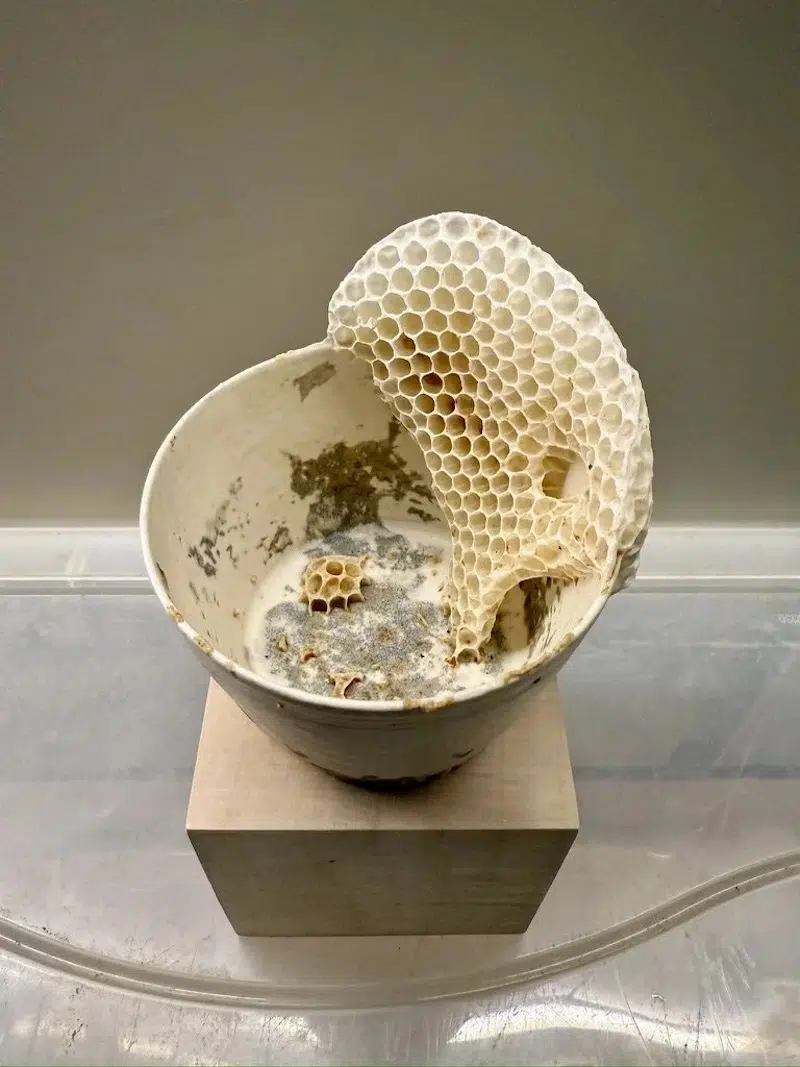
Honeycomb Kintsugi, White Mug, ceramic (made by @makikohicher) and honeycomb.
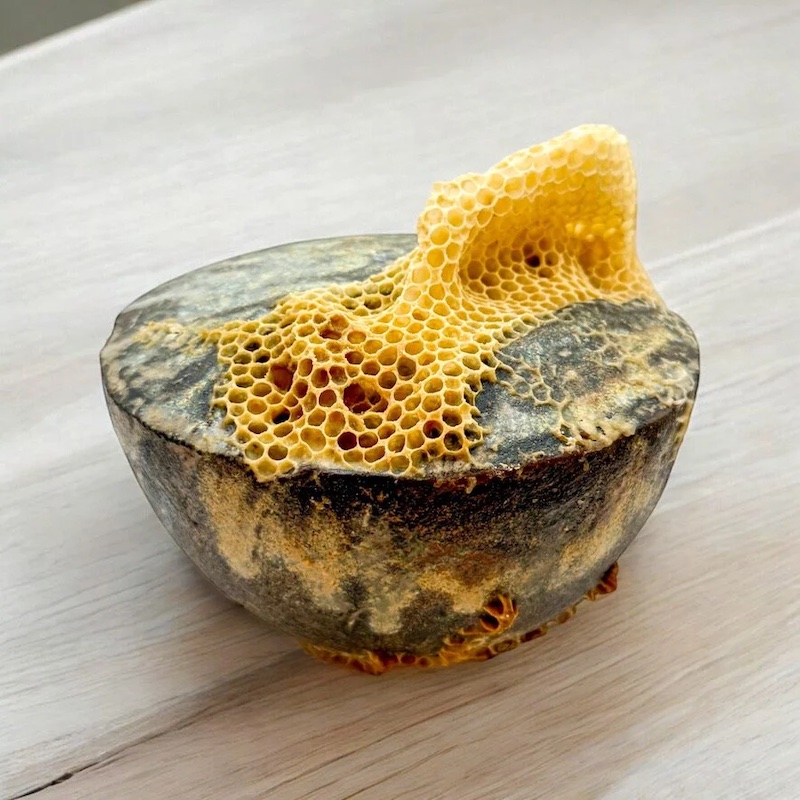
Ceramic Vessel with Natural Honeycomb, ceramic vessel (made by Satoshi Yoshikawa) and wild honeycomb.
The resulting sculptures transform broken objects into quiet collaborations between humans and pollinators, turning fracture, repair, and coexistence into works of art.
(Swipe to see the honeybees assessing their fine work.)
View this post on Instagram
Ava Roth: Website | Instagram
My Modern Met granted permission to feature photos by Ava Roth.
Related Articles:
Brilliant Kintsugi Tattoos Look Like Fragile Broken Ceramics Gilded Together
2025 Burning Man Temple Draws From Kintsugi and Volcanic Rock To Mix Strength and Fragility
Trevor Noah Shares How ‘Kintsugi’ Helped Him Reframe the Worst Moment of His Life
Inventive ‘Kintsugi Oreos’ Fix the Broken Cookie Problem by Mending Them With Frosting