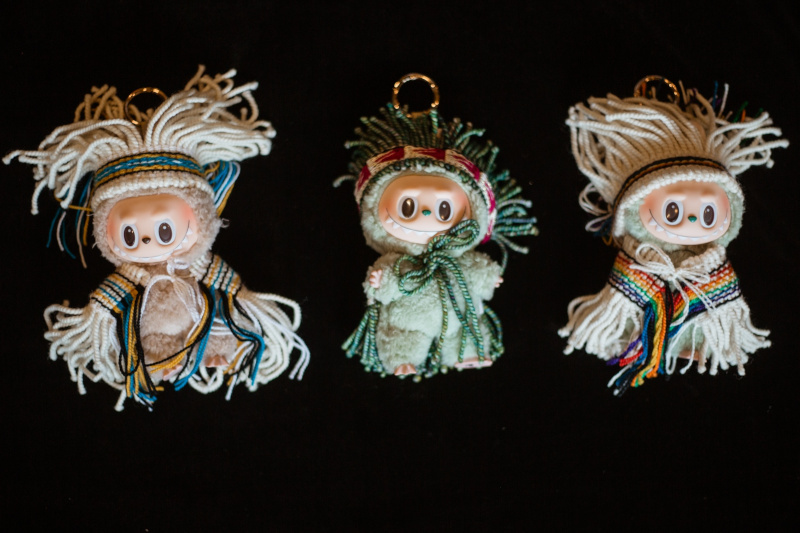
Ravenstail Monsters. (Photo: Sydney Akagi)
Artist Lily Hope has devoted her work to elevating Chilkat weaving and, through it, tackling current and historical cultural expressions. She has previously found inspiration in masking during the COVID-19 pandemic, creating face coverings that contained artwork found on ceremonial dancing blankets made by the Indigenous peoples of the Northwest Coast. Most recently, her creativity was sparked by the accessory of the moment: Labubus.
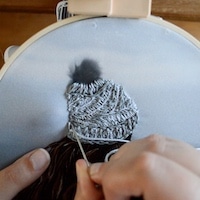
“My three youngest children got hooked on collecting and unboxing the blind box viral monsters,” Hope tells My Modern Met. “My eldest kid sent me a few Instagram reels of Native artists who were indigenizing the dolls with quill and beaded hats, and ribbon skirts.” Having perfected the traditional techniques, she found a new realm for her work.
Hope, who is based in Juneau, Alaska, got her start in Chilkat weaving from her mother, the late artist Clarissa Rizal. “[She] taught me to weave when I was a teenager. In my late twenties, I began co-teaching with her and weaving on her larger works. I spent about a decade apprenticing with her before she passed.”
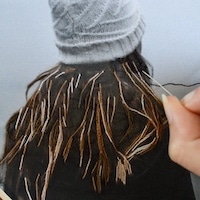
The artist works with wool and cedar, as these were the materials she was taught to weave with. “I harvest yellow cedar bark, process mountain goat hair, or often click the ‘buy’ button for sourcing 100% merino wool roving,” Hope shares. “I thigh-spin the bark and wool together to make warp, which is the fiber I finger-twine across to construct Ravenstail and Chilkat works of art. In recent years, I pay other artists to spin warp for me, since I’m single-momming five kids and ‘only’ have 40 hours a week to weave.” She puts so much time into her craft that her kids say she's working 11 days a week because she wakes up to work long before they do.
Hope is passionate about her art in a way few artists are; she daydreams about the day she has more time and resources to integrate new materials and techniques into her already ornate work. She is also appreciative of the community around weaving, from relaying tips and tricks to enjoying tea and snacks with her fellow creatives.
“I made myself a sticker that reads ‘I do it for the cookies,’ which is a cute distillation of doing it for the community wellness, the sharing of knowledge and the being togetherness of co-creating art,” Hope says.
Ultimately, she hopes her craft, whether on human or toy-sized models, makes Ravenstail and Chilkat weavings as visually recognizable as some other world-famous textiles. “I hope when someone sees my work (and the work of my colleagues) they initially become curious about the makers, our location(s), and history of the work,” Hope says. “I hope many people get exposure and knowledge that these works are not only historic and ceremonial, but are contemporary cutting-edge fine art being made today for art collectors and children of all nations to enjoy.”
To stay up to date with the artist, follow Hope on Instagram. If you want to make your own Labubu regalia with Hope’s guidance, she’ll be offering an in-person workshop on September 13, 2025, in Juneau, and one on Zoom on September 27, 2025.
Artist Lily Hope has found a new source of inspiration for her Chilkat weaving textiles: Labubus.
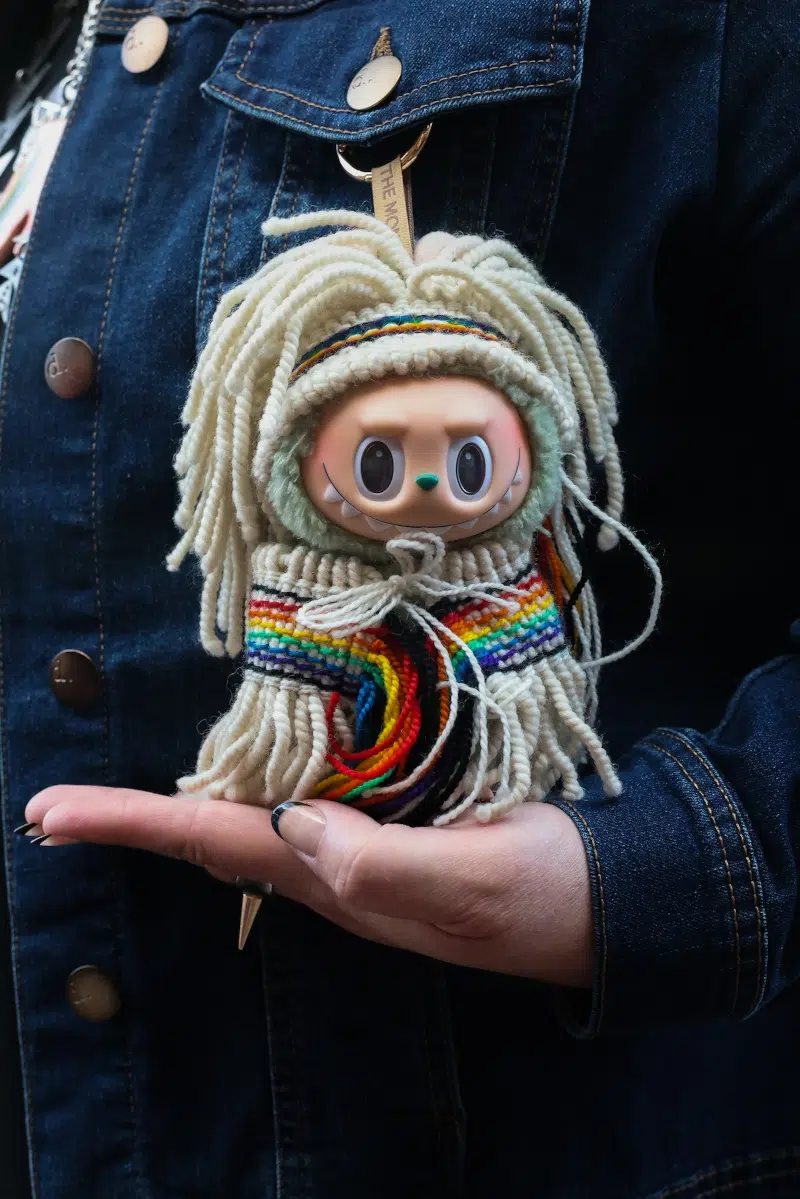
Tlingit. (Photo: Kaela Waldstein)
Hope, who is based in Juneau, Alaska, got her start in Chilkat weaving from her mother, late artist Clarissa Rizal.
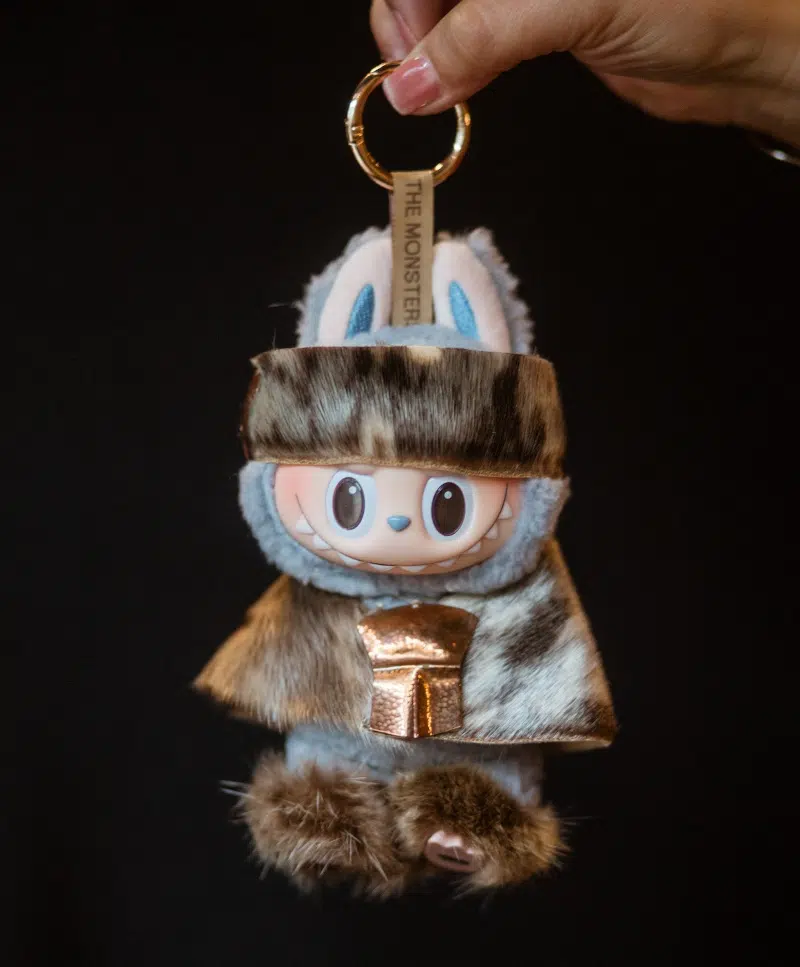
Seal Fur Monster. (Photo: Sydney Akagi)
It was her kid who sent her some videos of Labubus wearing little traditional garments, prompting her to create her own.
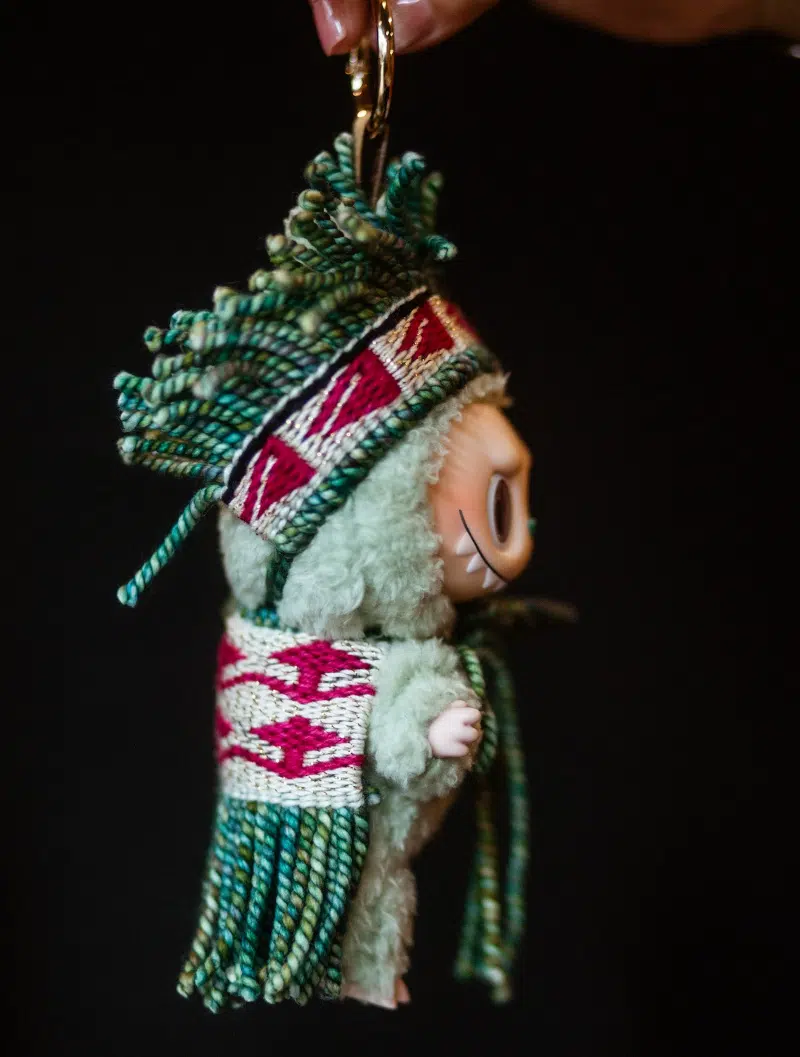
Fire Weed Monster. (Photo: Sydney Akagi)
Hope is also offering workshops to help people create woven accessories for their Labubus—and spread the word about the beauty of Chilkat designs.
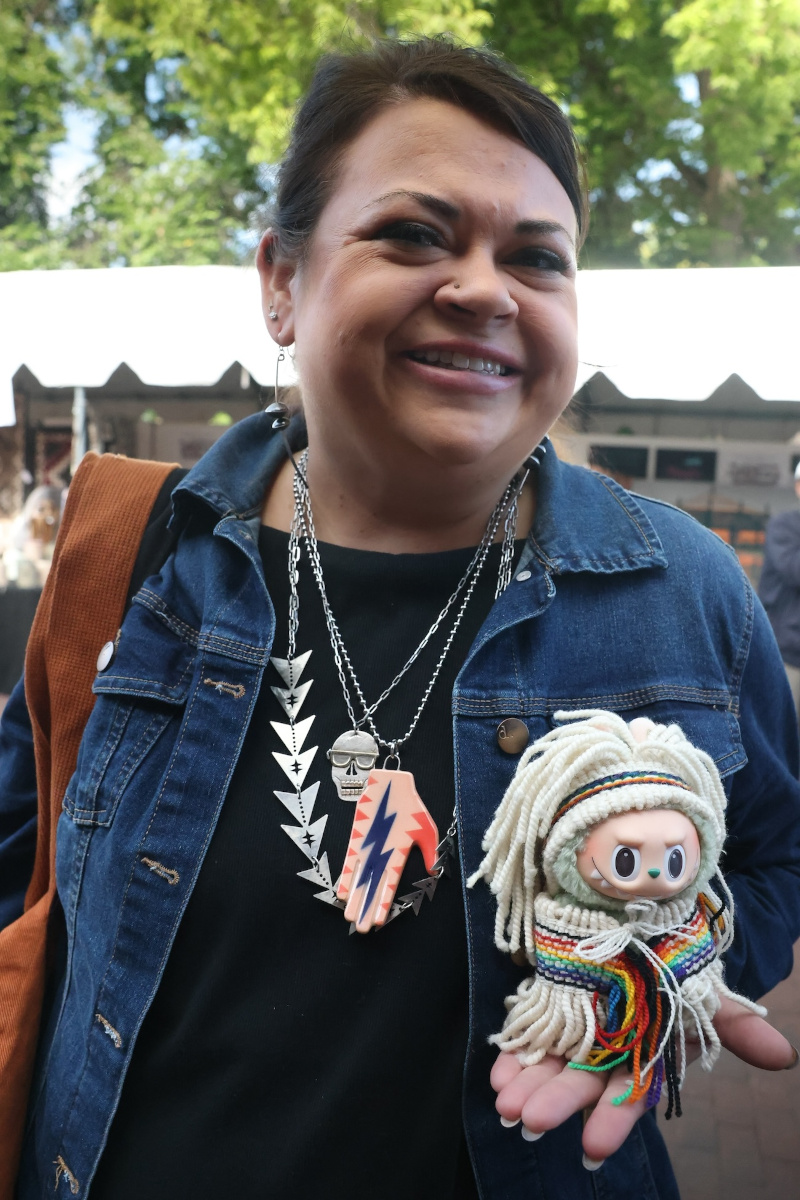
Jami Powell (Osage) holding doll by Lily Hope (Tlingit). (Photo: Kaela Waldstein)
“I hope when someone sees my work (and the work of my colleagues) they initially become curious about the makers, our location(s), and history of the work,” Hope says.
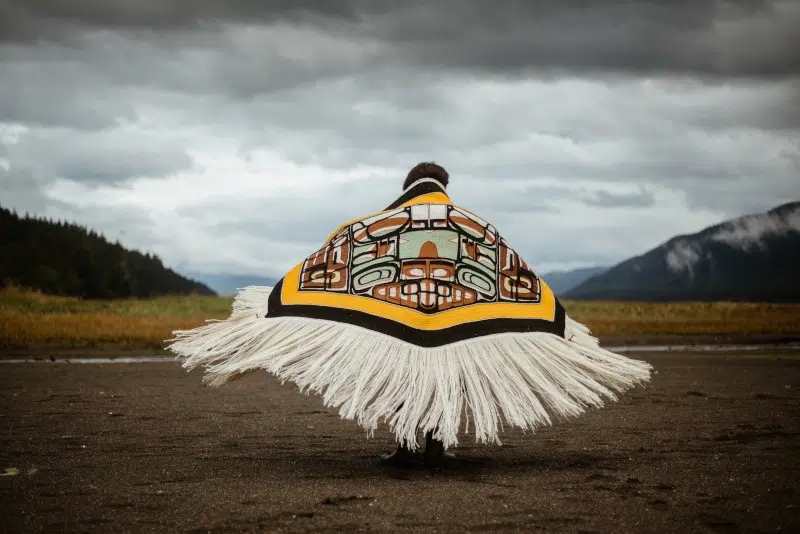
Between Worlds, 2022
Chilkat weaving techniques on thigh spun merino and cedar bark warps, merino weft yarns dyed with copper/ammonia, and wolf moss, and hemlock bark. Technical support from Melina Meyer. 64” x 44” tall.
Hope has long devoted her work to elevating Chilkat weaving and, through it, tackling current and historical cultural expressions.
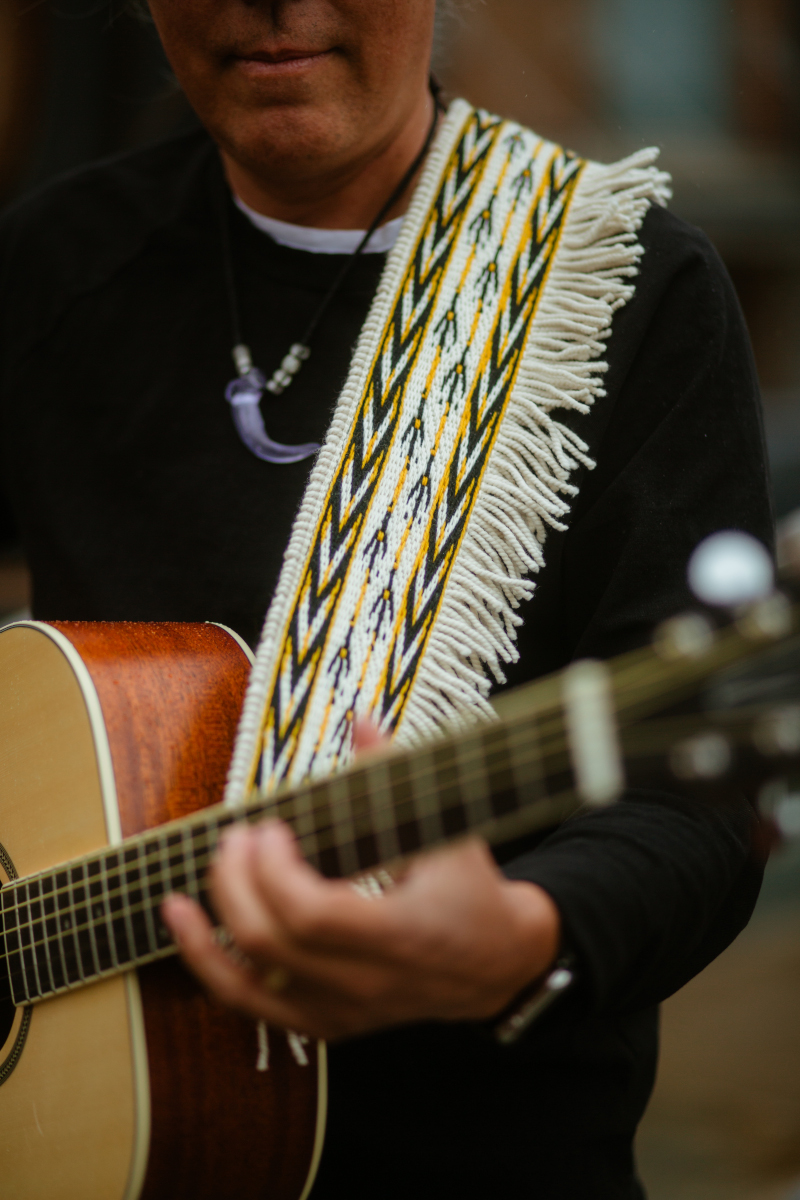
Eagle Footprints Guitar Strap, 2025
Commissioned by Preston Singletary. Ravenstail weaving techniques on thigh spun merino wool and merino weft yarns. Woven with deep honor for Lily’s mother, Clarissa Rizal. This piece crosses the boundaries of art and kinship, strengthening our connections and sharing responsibility for our community.
“I hope many people get exposure and knowledge that these works are not only historic and ceremonial, but are contemporary cutting edge fine art being made today for art collectors and children of all nations to enjoy.”
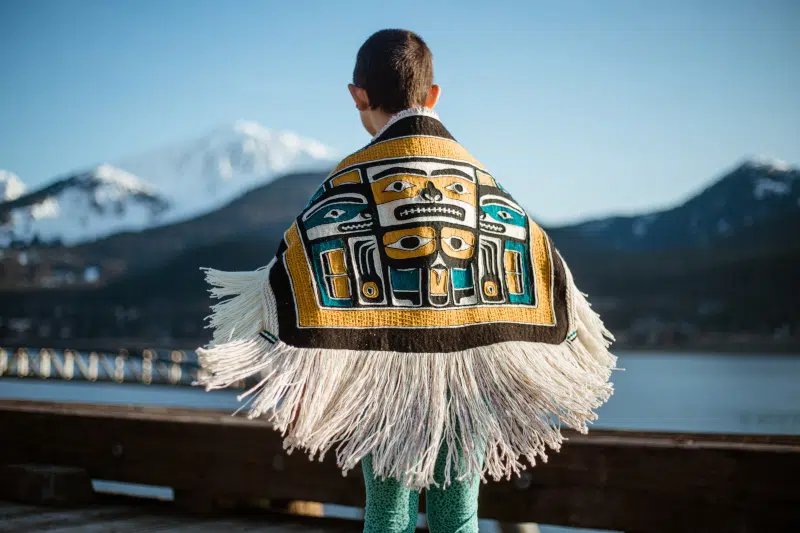
Seven Generations 2.0. Child Sized Chilkat Robe, 2023
Chilkat weaving techniques on thigh spun merino and cedar bark warps, merino weft yarns dyed with copper/ammonia, and wolf moss, and hemlock bark. 32” x 30” including fringe.
Lily Hope: Website | Instagram
My Modern Met granted permission to feature photos by Lily Hope. Quotes have been edited for length and clarity.
Related Articles:
Traditional Azerbaijani Weaving Reimagined as Unraveling, Melting, and Glitching Carpets
Artist Weaves Together the Female Form and Nature in Larger-Than-Life Embroidery
Nontraditional Fiber Artist Seamlessly Weaves Beautiful Circular Creations
Massive Woven Wall Hangings Modernize the Ancient Art of Weaving