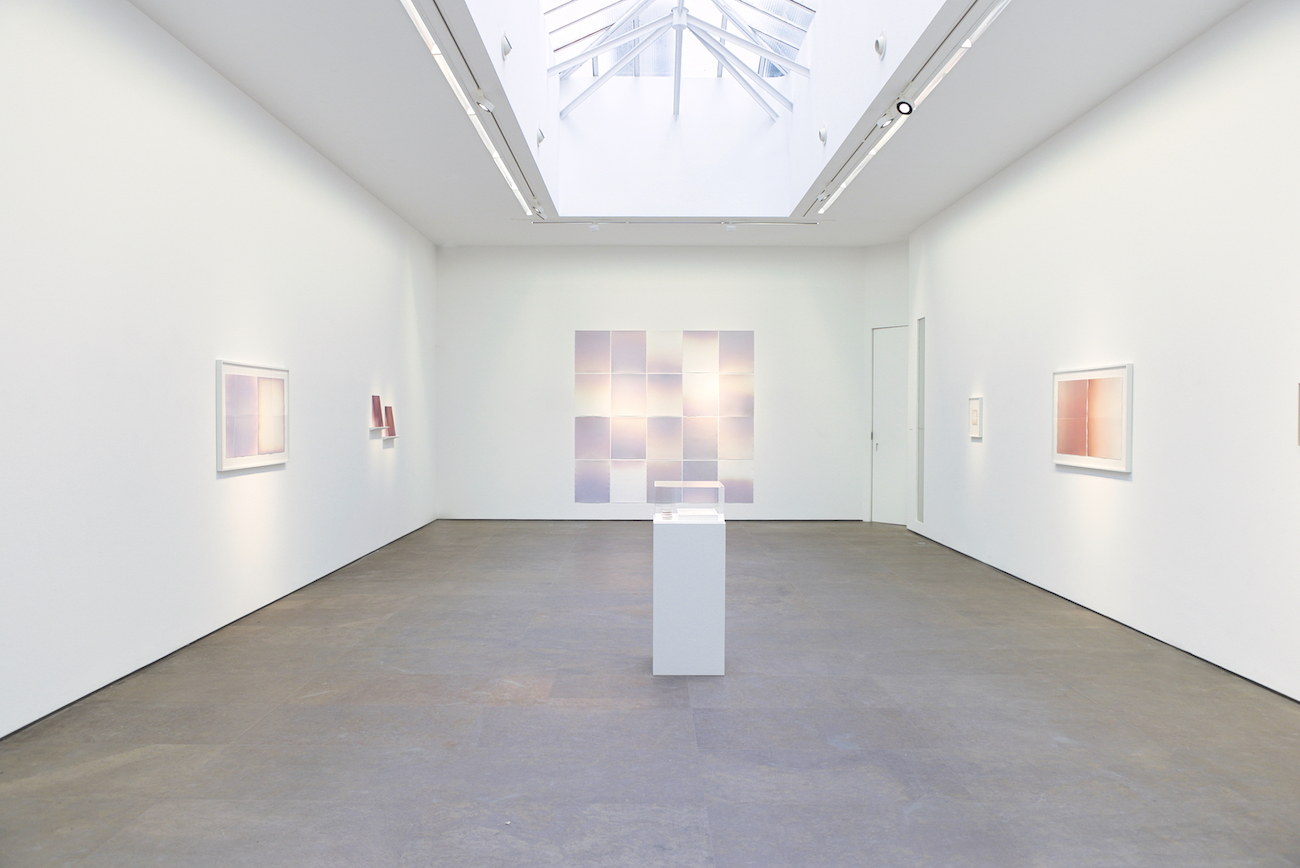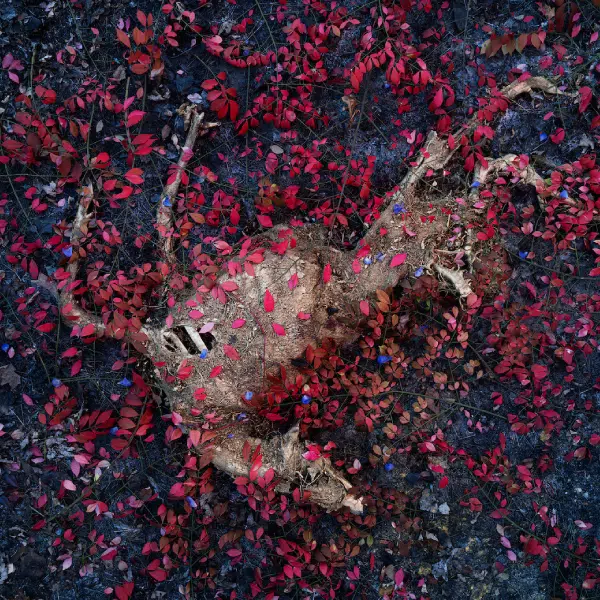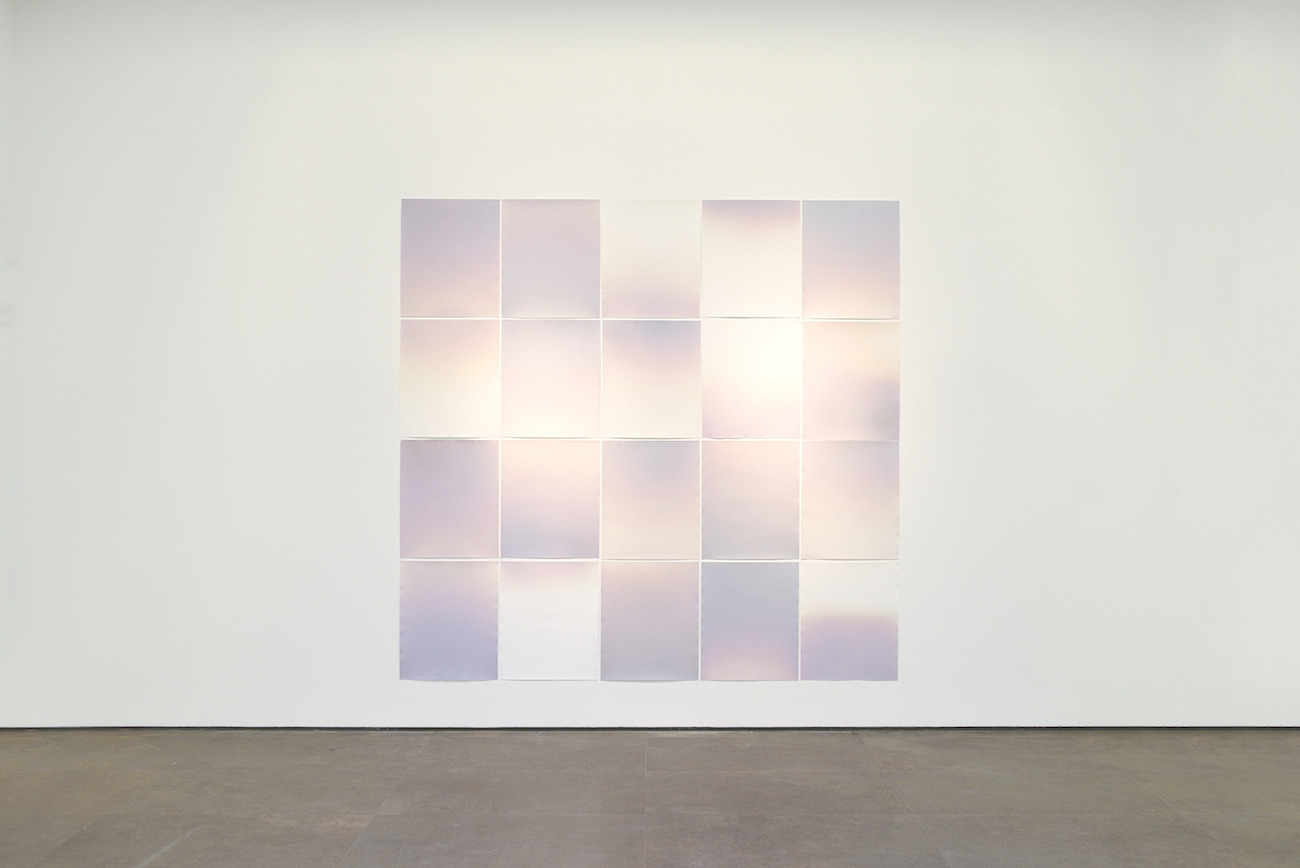
“Ciels (Printemps 2025),” 2025, Luminogram on B&W gelatin silver paper, 99 x 109 inches (20 x 24 inches/each). Photo: Bigaignon
For artist Rachelle Bussières, photography begins where the camera ends. Working primarily with black-and-white silver gelatin paper, the French-Canadian artist creates camera-less works that allow light, time, and physical gesture to shape the image. Her luminous surfaces emerge in blues, violets, and warm beiges, not through applied pigment but through the chemistry of photographic paper responding to exposure.
Bussières works between photography, sculpture, and works on paper. In her Brooklyn studio, she transforms the space into a camera obscura and darkroom, folding, rolling, masking, and suspending large sheets of photographic paper before exposing them to light. Some exposures last seconds. Others unfold over days or weeks. She may begin with an idea or sketch, but the final image depends on conditions she cannot completely control.
The resulting works hold the traces of their own making. A fold interrupts the light. A curve changes its distance from the source. A shadow becomes a boundary. Humidity, clouds, and the sun’s movement can all alter the final surface. Bussières describes the paper not as a passive support but as an active body that records its encounter with light.
Across her practice, Bussières asks us to reconsider what a photograph can record. Her images do not simply depict light. They bear evidence of having received it.
My Modern Met spoke with Bussières about working in near darkness, treating photographic paper as sculpture, surrendering control to environmental conditions, and learning to see light not as something that illuminates the world, but as something that acts upon it. Scroll down to read our exclusive interview.
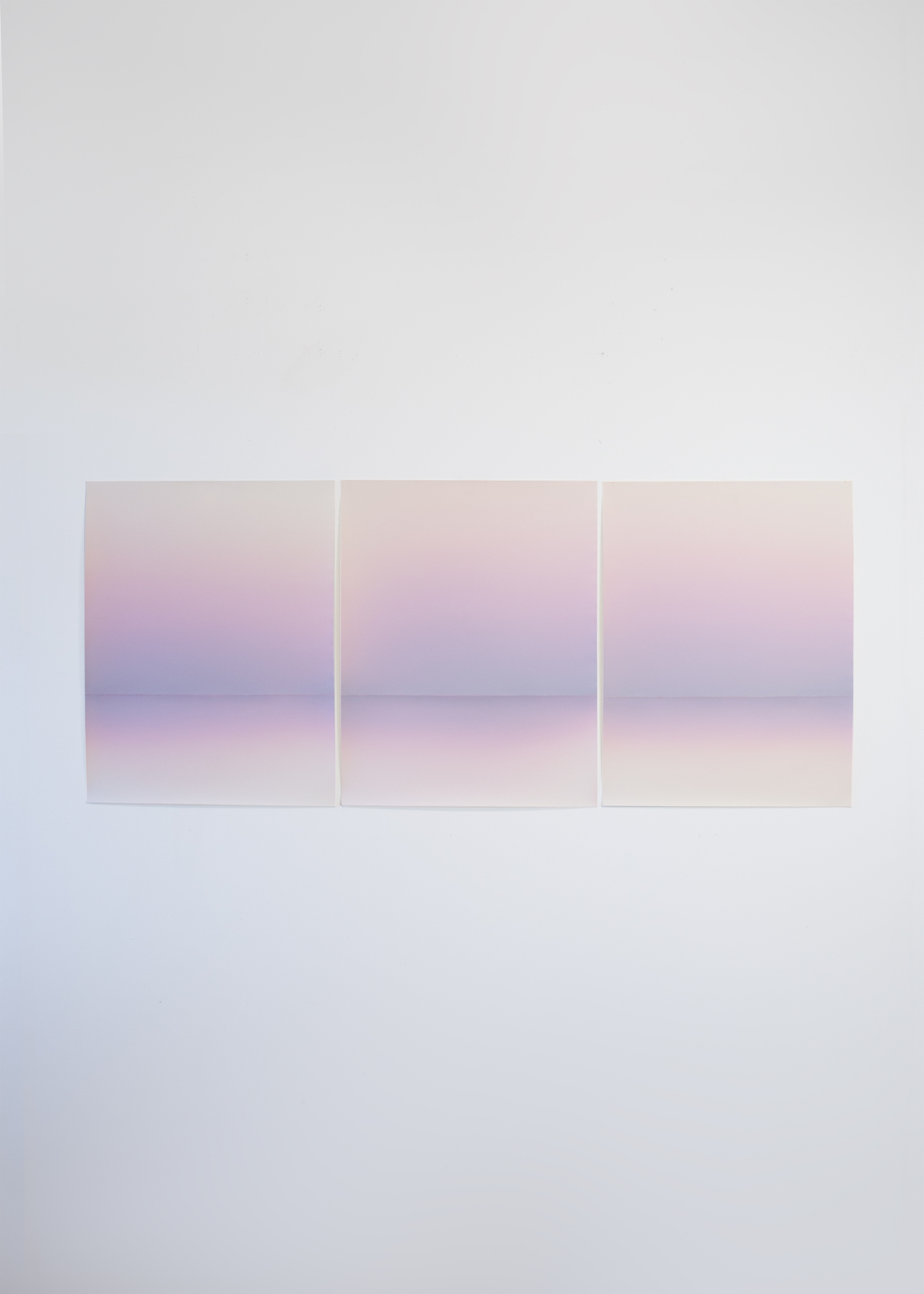
“Light Field (Pond, Delhi),” 2026, Luminogram on B&W silver gelatin paper, 24 x 62 inches.
Can you walk us through the making of a single work, from folding, rolling, or masking the paper in near darkness to the moment the image first appears in the fixer bath?
My studio serves as a camera obscura, a darkroom, and a presentation space. I have two large windows that I use as light sources, a large stainless steel tray to wash my prints, and a high-hanging fishing line for air drying. With my blackout curtains pulled down, I first cut a large sheet from the mural-size roll and decide how I want to expose it. I might roll the paper horizontally or vertically and attach it with a thin thread, fold it toward the middle to create a physical crease, or pin it to my wall and build gradients with multiple light tools. I have handlights of different sizes that I use as my brushes, shining their light directly onto the paper while moving my hands in gestural motions in the dark. Masking and dodging have become central techniques I have developed over the years. Borrowed from the classic black-and-white printing darkroom process, these methods are traditionally used to even out the exposure of an image. In my case, I use them to do the opposite, enhancing the tension between light and shadow. I usually begin a single work with a few sketches and an idea of how I want to manipulate the paper, but the real decisions take place once I start working and responding to the light. Because I respond to the light conditions of a given day, I tend to work on multiple pieces at a time since they operate at different speeds; I might have a few rolled works sitting by my window for days or weeks while I make faster works through masking and dodging. I do not see the final imprint until the paper enters the fixing bath. This is the first moment when the image fully reveals itself, and there is always an element of surprise as I watch the colors and gradients emerge from something I have made almost entirely in the dark. The colors continue to shift slightly as the paper is washed and dried. It is very much a process made in the dark, in the literal sense. Silver gelatin paper undergoes a color transformation as the silver particles oxidize and lose their light sensitivity over time. That is why the black and white paper yields these unexpected colors, luminous blues, violets, pinks, and warm beiges, a chemistry I embrace even as its full scientific explanation remains beyond my expertise.
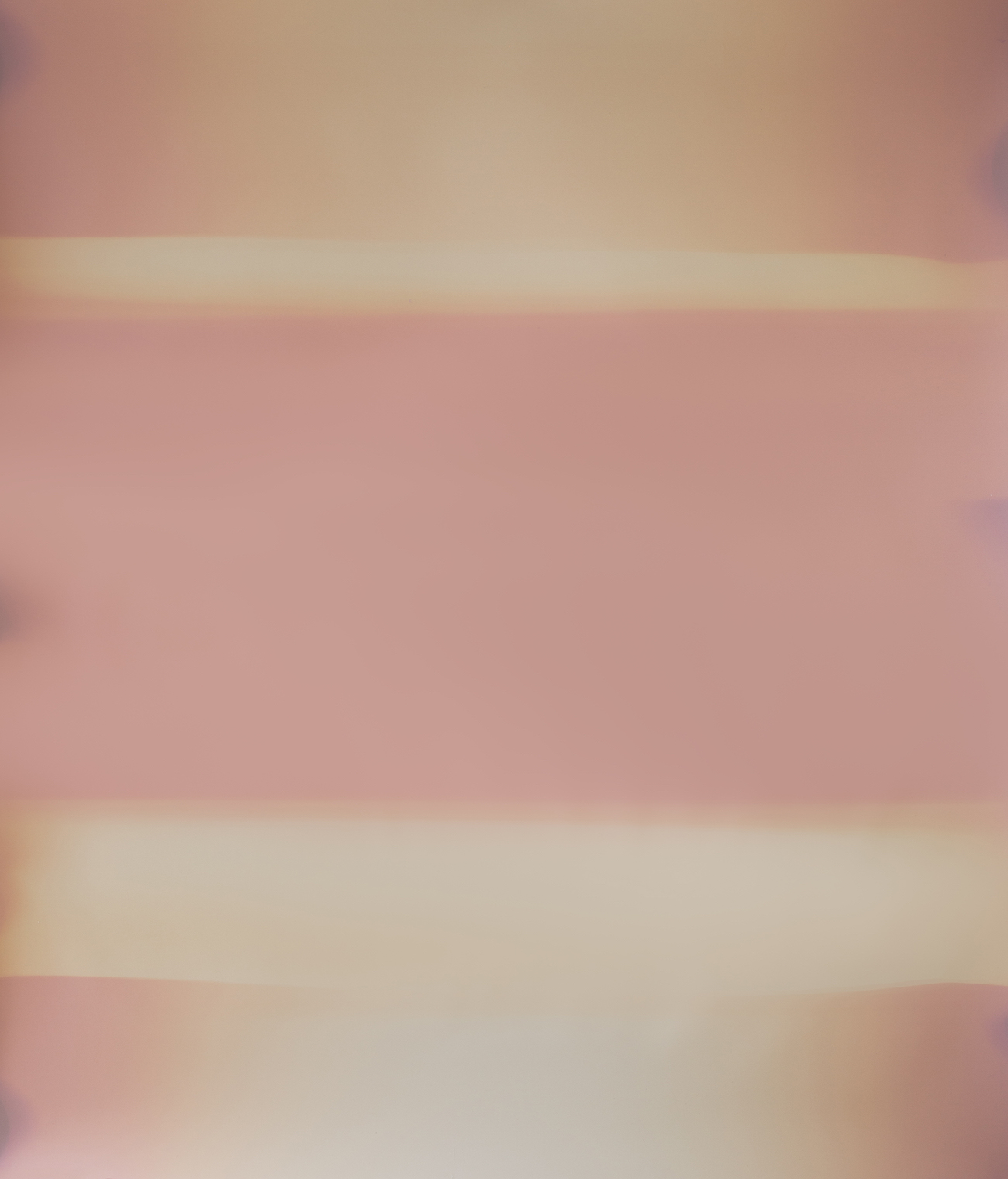
“Light’s Measure II,” 2026, Luminogram on B&W silver gelatin paper, 41 5/8 x 47 inches.
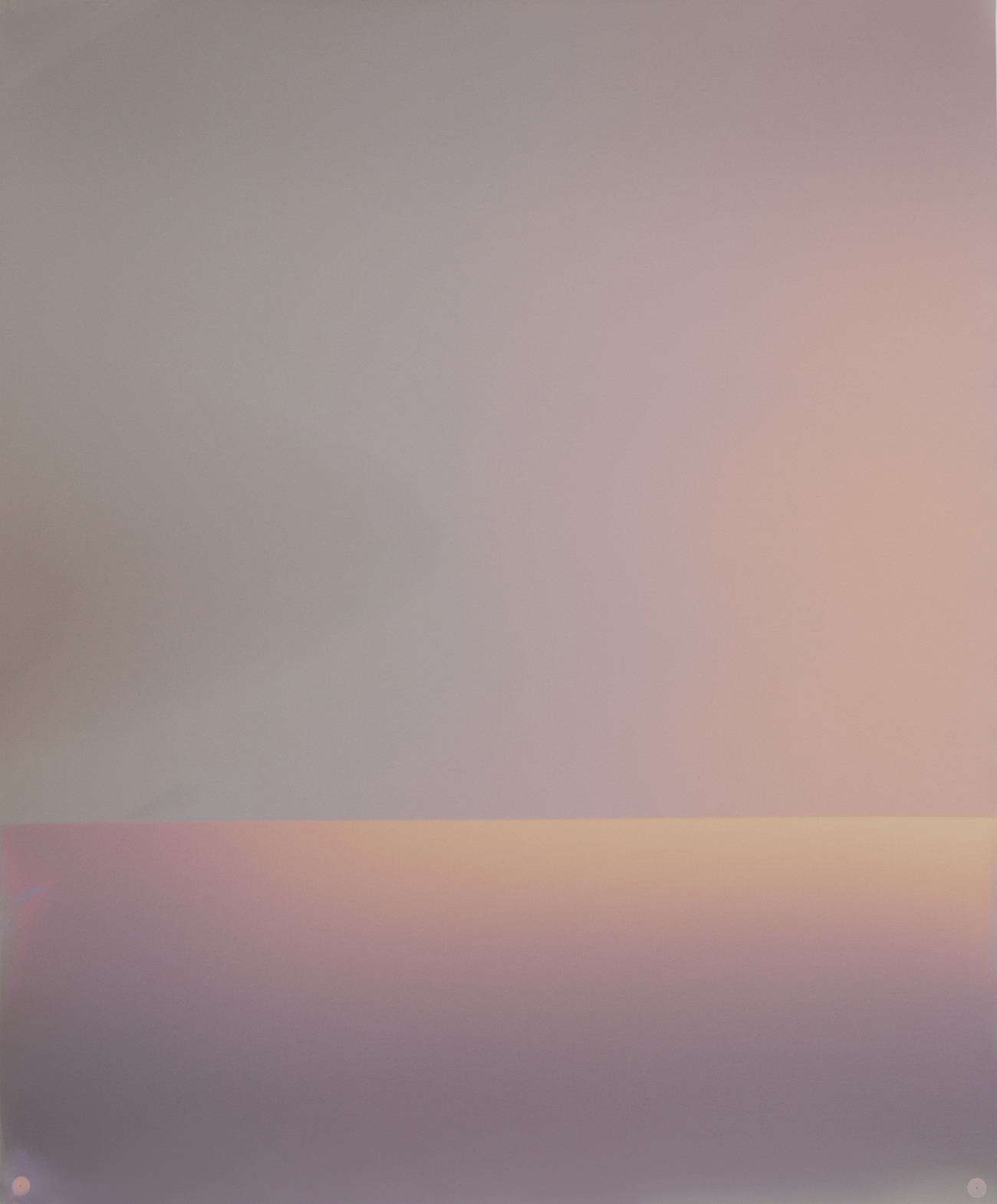
“Light’s Measure,” 2026.
You’ve described approaching the darkroom as a sculptor, so how does treating photographic paper as a physical, three-dimensional material shape the forms that end up on its surface?
I am thinking spatially as I work, considering the distance between the paper and the light source, how it occupies the room, and how each curve or fold creates its own conditions for exposure. I expose the paper in layers of light, which creates different colors depending on proximity to the source. I see the paper as a three-dimensional material that receives these exposures and records its relationship to light through its physical form. When I roll the paper, for example, the curvature creates shifting orientations so that light registers unevenly across the surface, producing gradients and transitions that a flat sheet would never yield. A fold introduces a hard crease, a boundary where light stops and shadow begins. These physical manipulations are the first gestures that initiate a piece; light then completes the process by acting on the forms I have created. In this sense, the paper is not a passive support for an image but an active body that shapes how light is received. The sculptural treatment means the final work carries traces of its own making, the memory of being rolled, folded, or suspended. The pieces that feel most successful to me are those where there is a liminal space between these layers, where the boundary between light and darkness becomes uncertain, and the image holds both presence and absence at once.
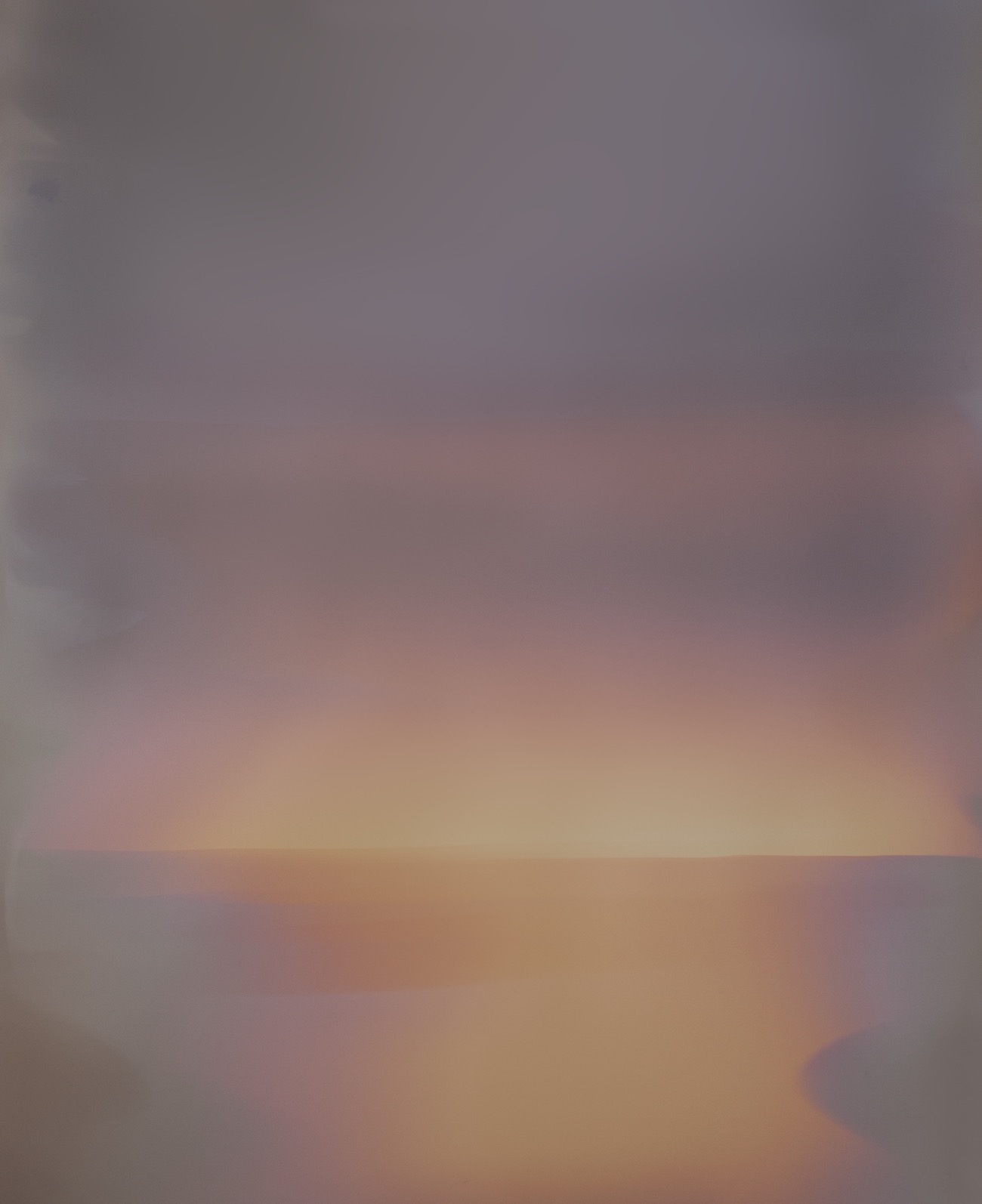
“Light’s Measure VI,” 2026, Luminogram on B&W silver gelatin paper, 39.5 x 47 inches.
With no camera and no subject in front of you, how do you decide what a piece should become, and how much of that do you hand over to light, time, and chance?
I have always been obsessed with light patterns and light phenomena. Whether it is the light coming through my studio windows making patterns with the architecture, or a breathtaking cloud formation on a Tuesday evening, I have thousands of these images on my phone. I look at them from time to time. They become my starting points, and light itself becomes both the subject and the exposure source. When I begin working, I have these images and my sketches in mind, and I consult my latest work as well. The last piece usually informs the next, either in color, composition, or sculptural element. I always try to follow the work and create the least resistance to where it wants to go. Once a piece is underway, I negotiate with forces I cannot fully control. A rolled paper by the window is at the mercy of how the sun moves that day, how long the clouds hold, how humidity softens the emulsion. I set the conditions, but light and time write the final image. I rarely keep finished work displayed on my walls. I like to keep them empty so that each darkroom session is an opportunity to start something entirely new. I also deliberately shift my production style, controlling outcomes tightly in one piece and surrendering them in the next, working slowly or quickly. These changes keep me feeling and looking at things with fresh eyes. I want things to stay mysterious for me, because the moment the process becomes predictable, it stops being alive.
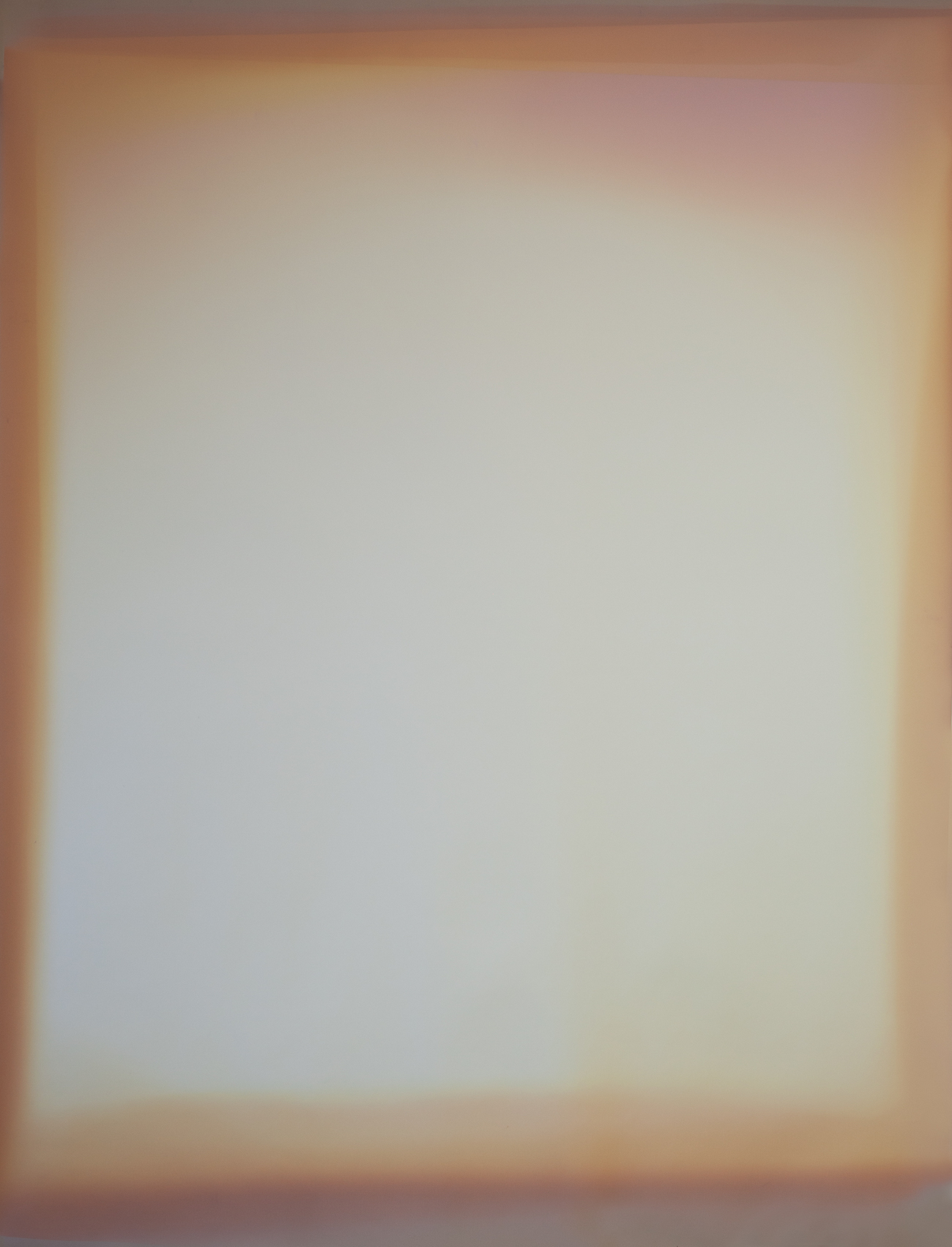
“Air Print (10 days),” 2026, Luminogram on B&W silver gelatin paper, 42 x 53 inches.
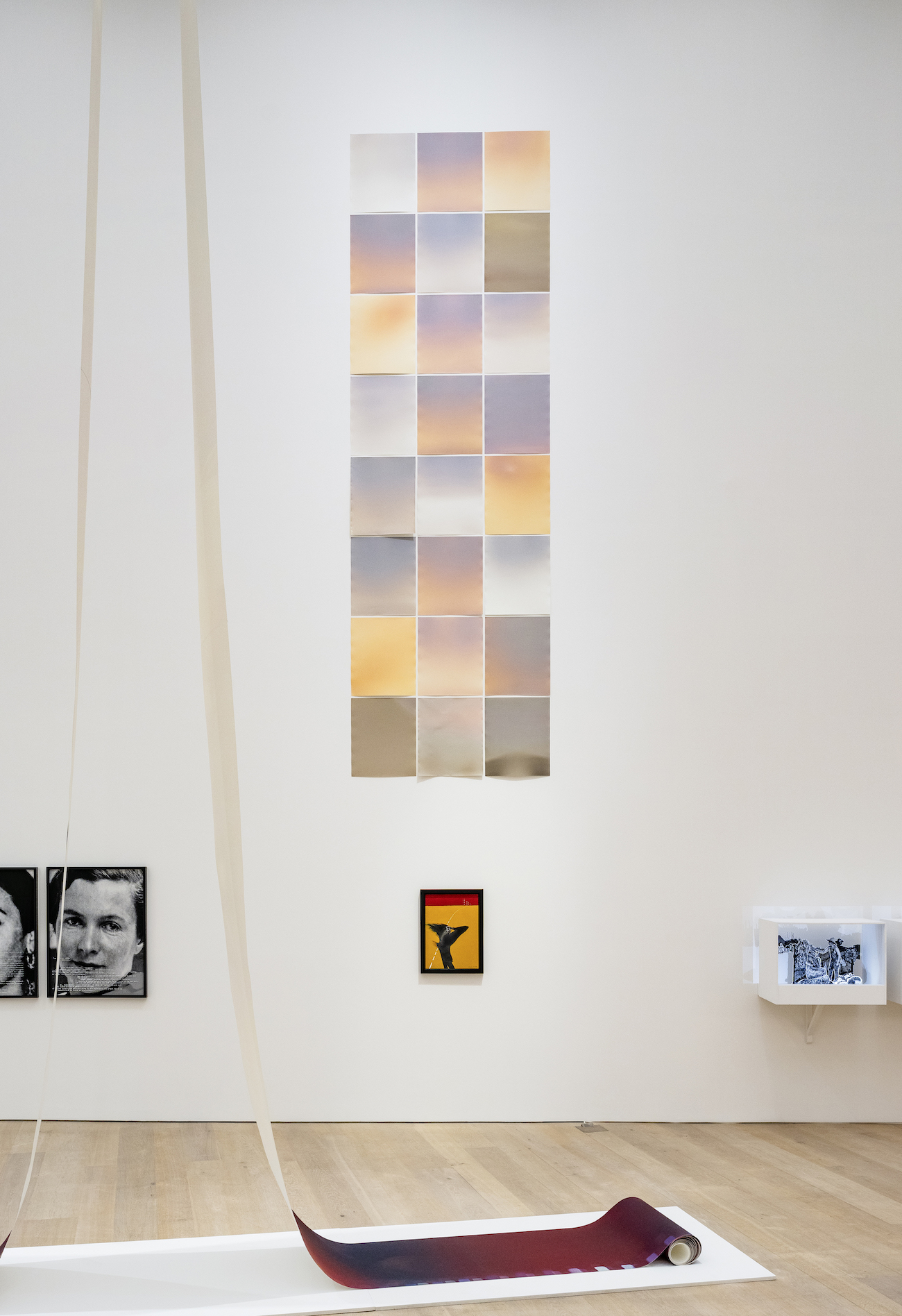
“Sky Prints (Wild Fires),” 2023, Luminogram on B&W gelatin silver paper, 120 x 96 inches (20 x 24 inches/each).
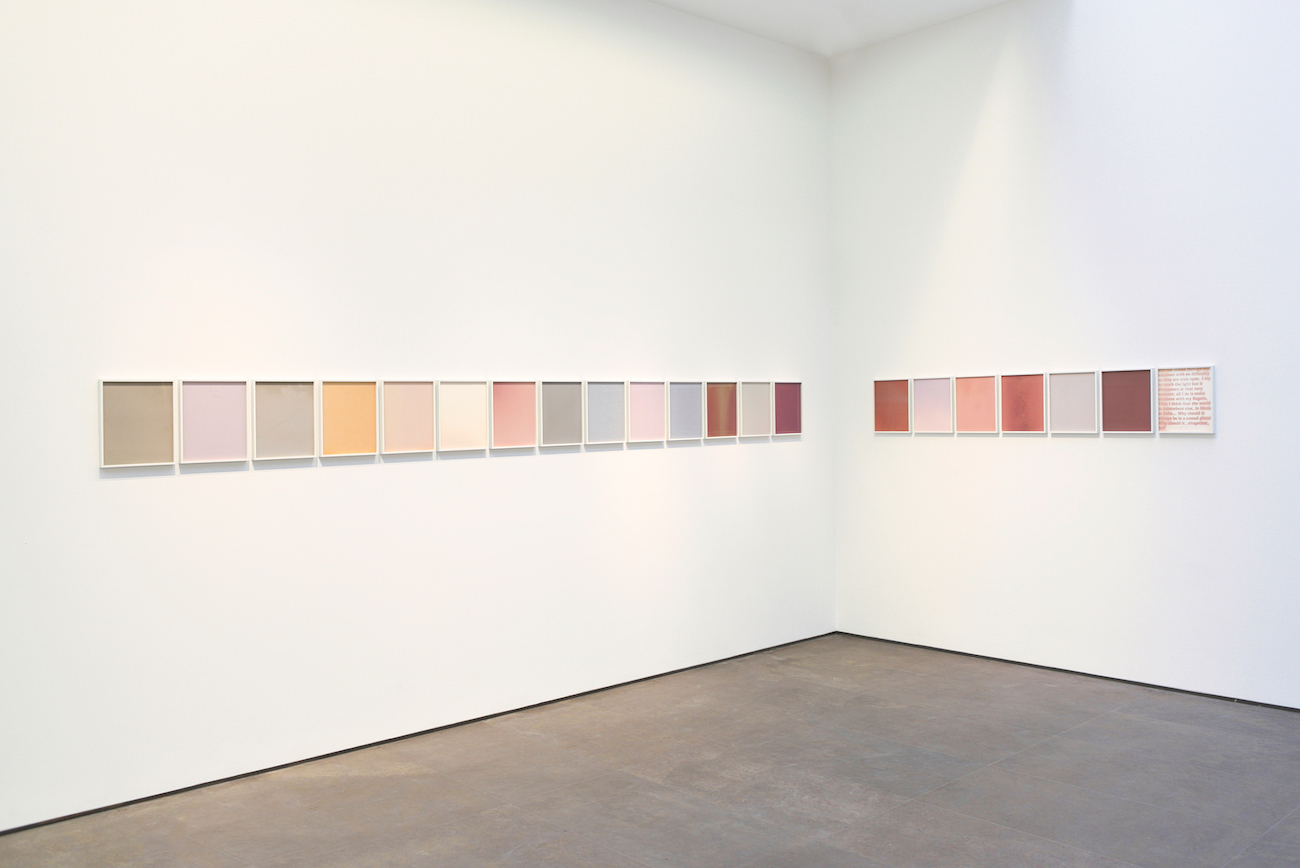
Installation view, 2025, Bigaignon, Paris. (Photo: Bigaignon, Paris)
What led you away from the traditional camera and toward alternative processes like lumen printing, and how has working this way changed your understanding of what photography can be?
I first started as a photojournalist and spent a number of years building a portfolio while traveling the world in my early twenties. When I moved to a rural community on the side of a cliff in Northern California, I began photographing the land, the sky, and the liminal space of fog and sea. I made handmade paper with natural fibers from the surroundings and printed my scanned negatives onto it. That was my first gesture toward treating the photographic material as something physical, something rooted in place. When I started grad school, I had never worked in a darkroom, but I was immediately drawn to that environment. The darkness, the humidity, and the smell of the chemicals made me feel connected to the greater forces of the world, and to myself. I never feel alone when I am in a darkroom, even though it is such a solitary place. I began working with chemigrams instinctively. I did not have much knowledge of alternative processes and had never developed a silver gelatin print. I was photographing California landscapes with a medium format camera at the time and started manipulating the paper and disrupting the printing process. I became obsessed with solarization and that threshold between what is visible and invisible, landscape and abstraction, control and freedom. Over time, I exchanged the camera entirely for direct encounters with light, treating the sun and atmosphere as active collaborators rather than things to be captured. This shift fundamentally changed my understanding of what photography can be. It is no longer about representing the world from behind a lens but about letting the world write itself onto a surface through time, environment, and material. The image is not taken; it is received.
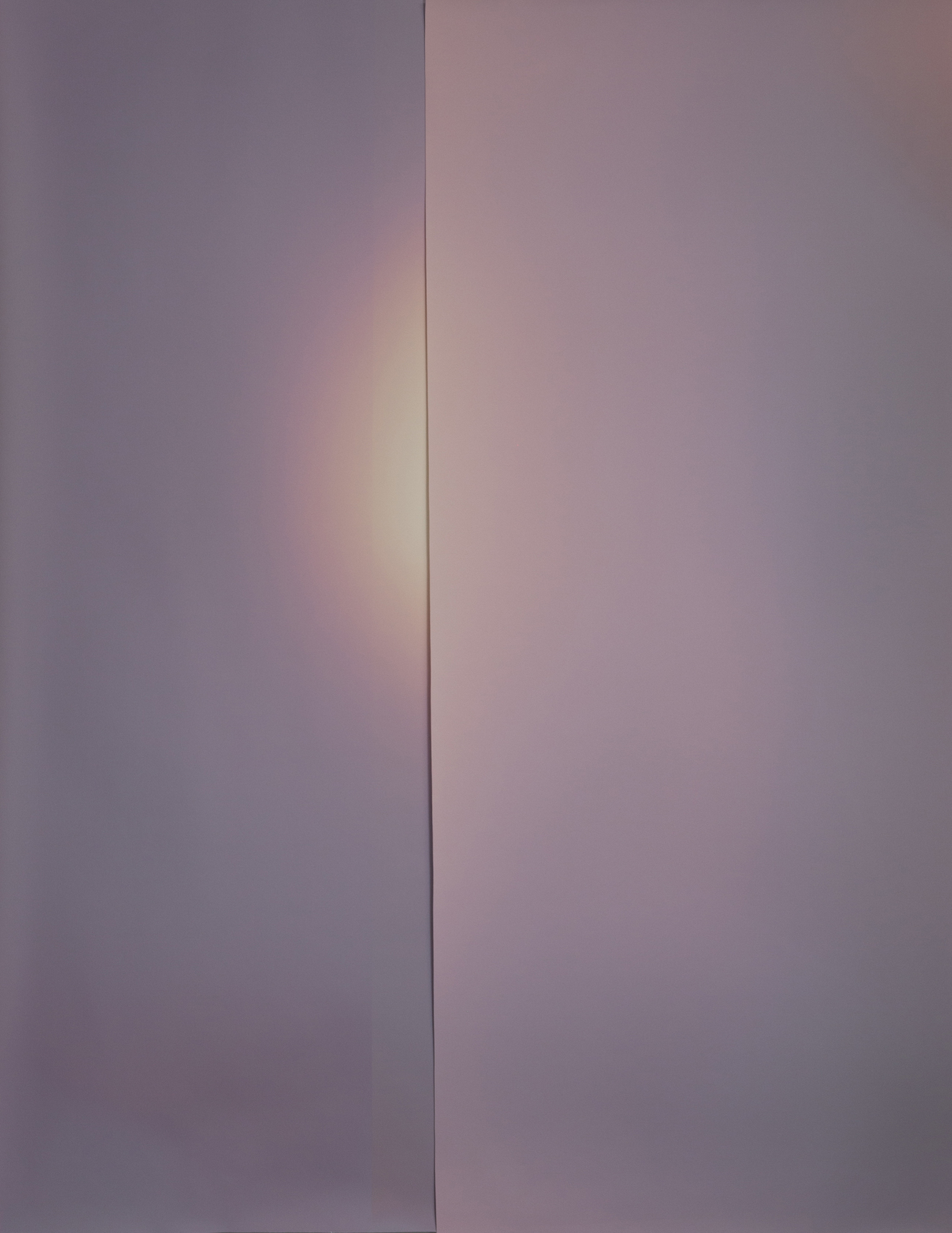
“Untitled,” 2026, Luminogram on B&W gelatin silver paper (2 sheets, stacked), 44 x 54 inches.
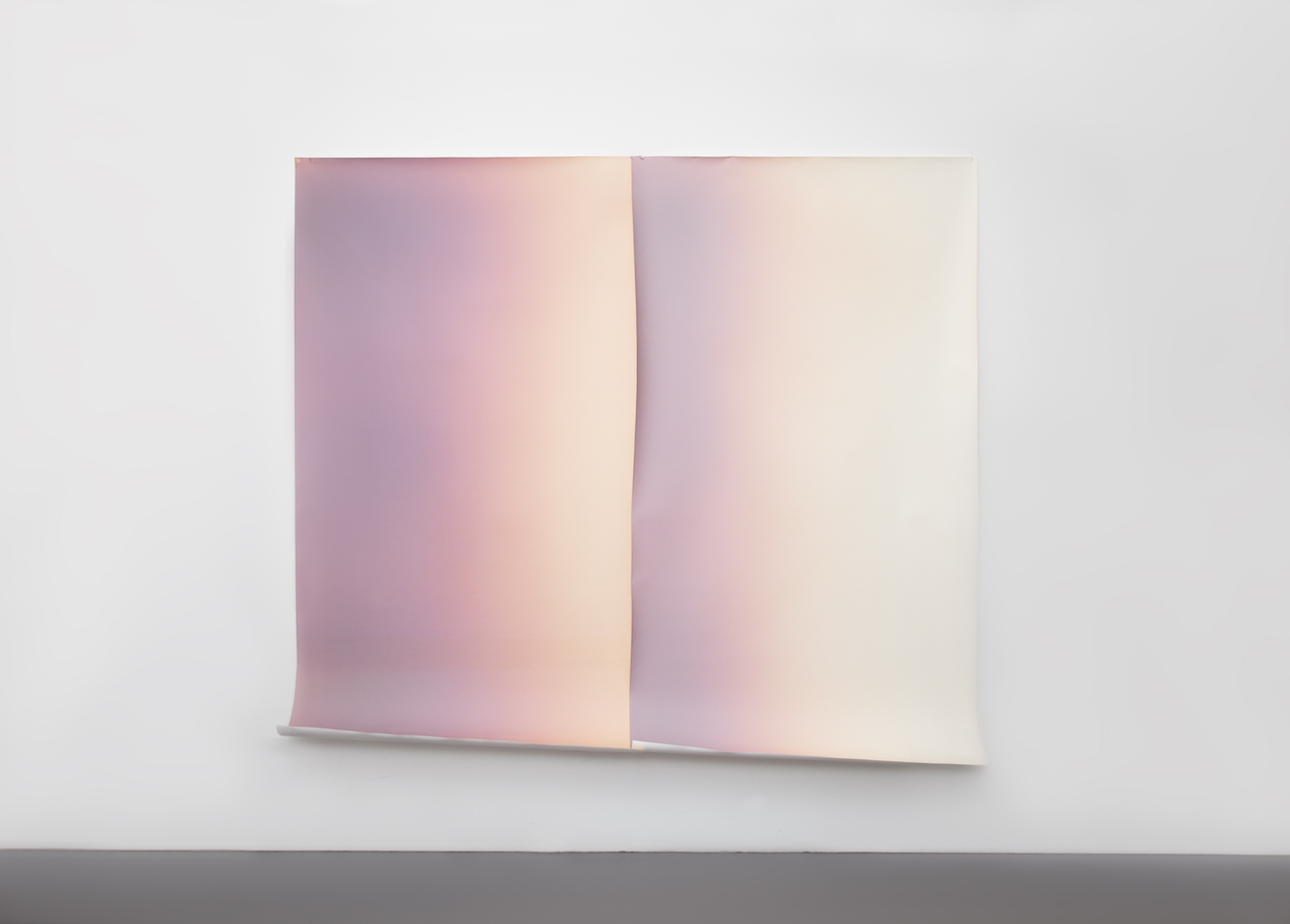
“Light Field (Dyptich),” 2026.
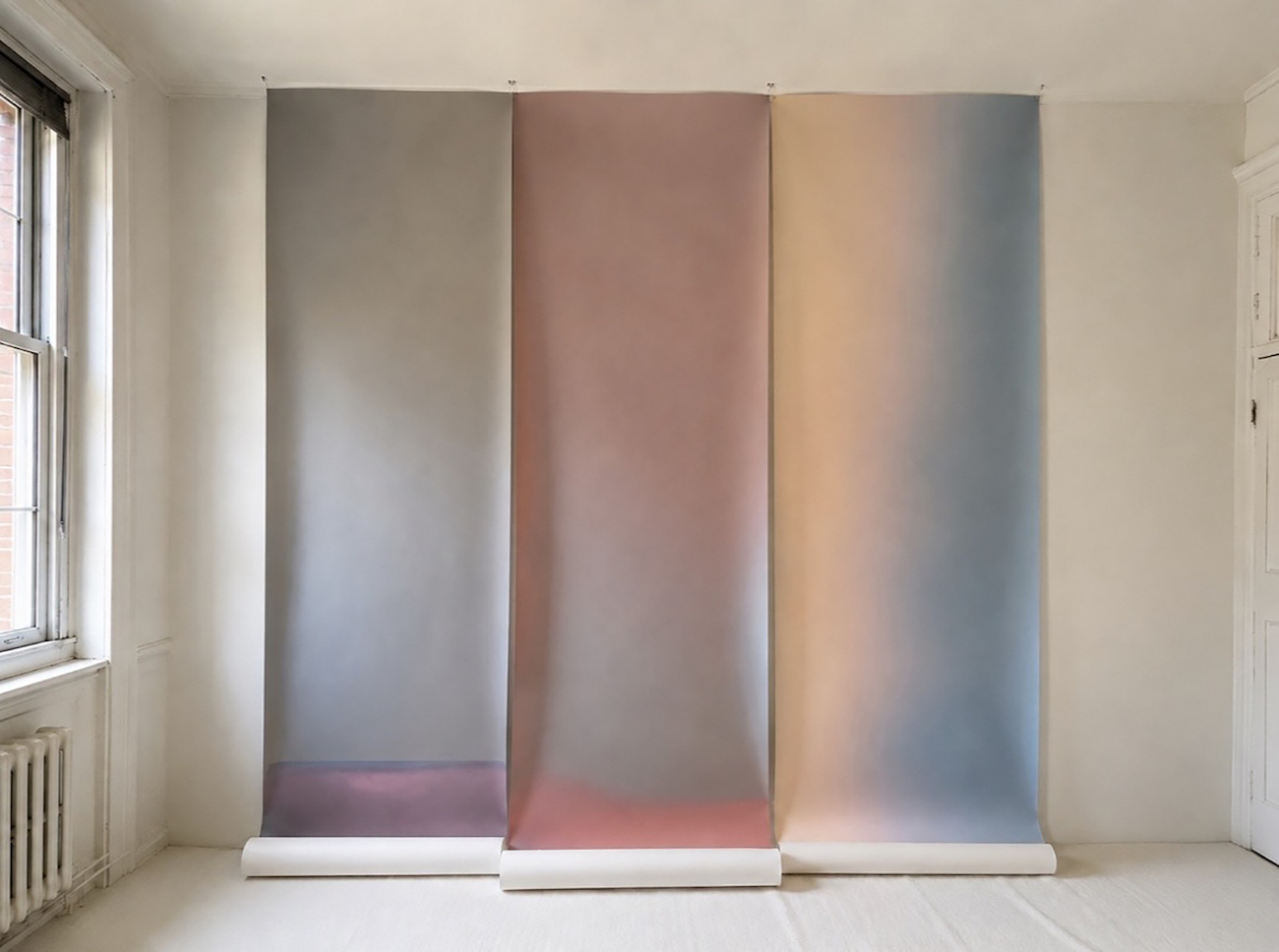
“Light’s Measure (Studio installation),” 2026, Unfixed silver gelatin paper, 42 x 120 inches/each.
Your work treats light as a physical force that acts on the paper rather than simply illuminating it, so how have years of working this way changed the way you see light in everyday life?
This way of thinking was sparked by reading The Crossing of the Visible by Jean-Luc Marion, who considered vision an act of receiving the thing that is giving its sight. This phenomenological understanding of the visible is linked to apparition and to the conditions that make it possible. In my practice, the work is created by these very conditions: how close the paper is to the light source, how it is presented to it, the humidity and heat of a given day. Because the works are tied to environmental conditions, they become embodied records of what they receive. Over years of working this way, I have found that this awareness has moved far beyond the darkroom. I now see light in everyday life as something that acts, not something that simply is. I notice how afternoon light falls differently across a wall in winter and summer, how a cloud passing over the sun changes the temperature of a room in an instant, how the light reflected off the East River at dusk has a different weight than the light in my studio at noon. I pay attention to the speed of light, its duration and warmth, the way it transforms surfaces and spaces over the course of a day. Photography taught me to look. Working without a camera taught me to receive. That shift from looking to receiving is how my practice has fundamentally changed my relationship to the visible world.
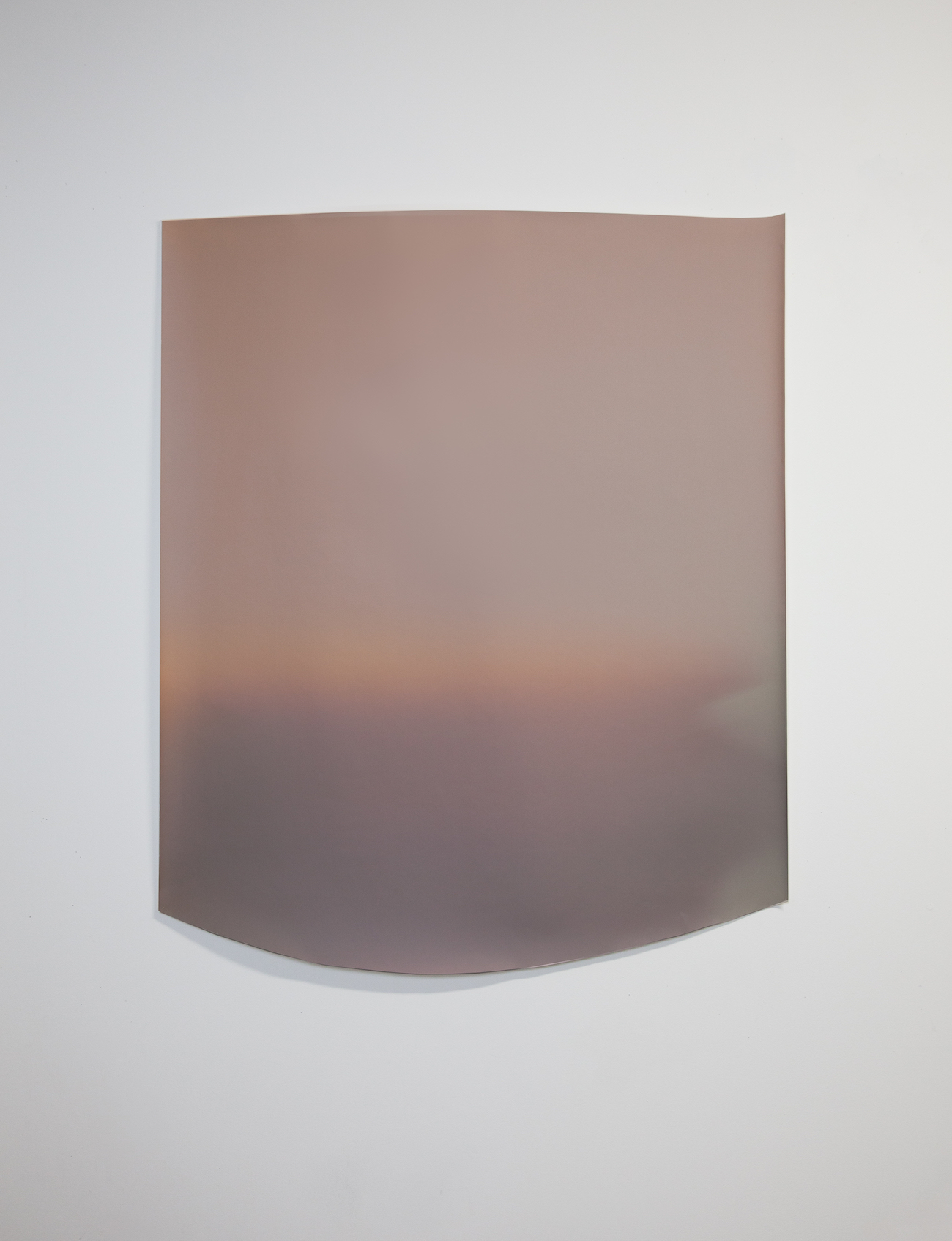
“Light’s Measure,” 2026.
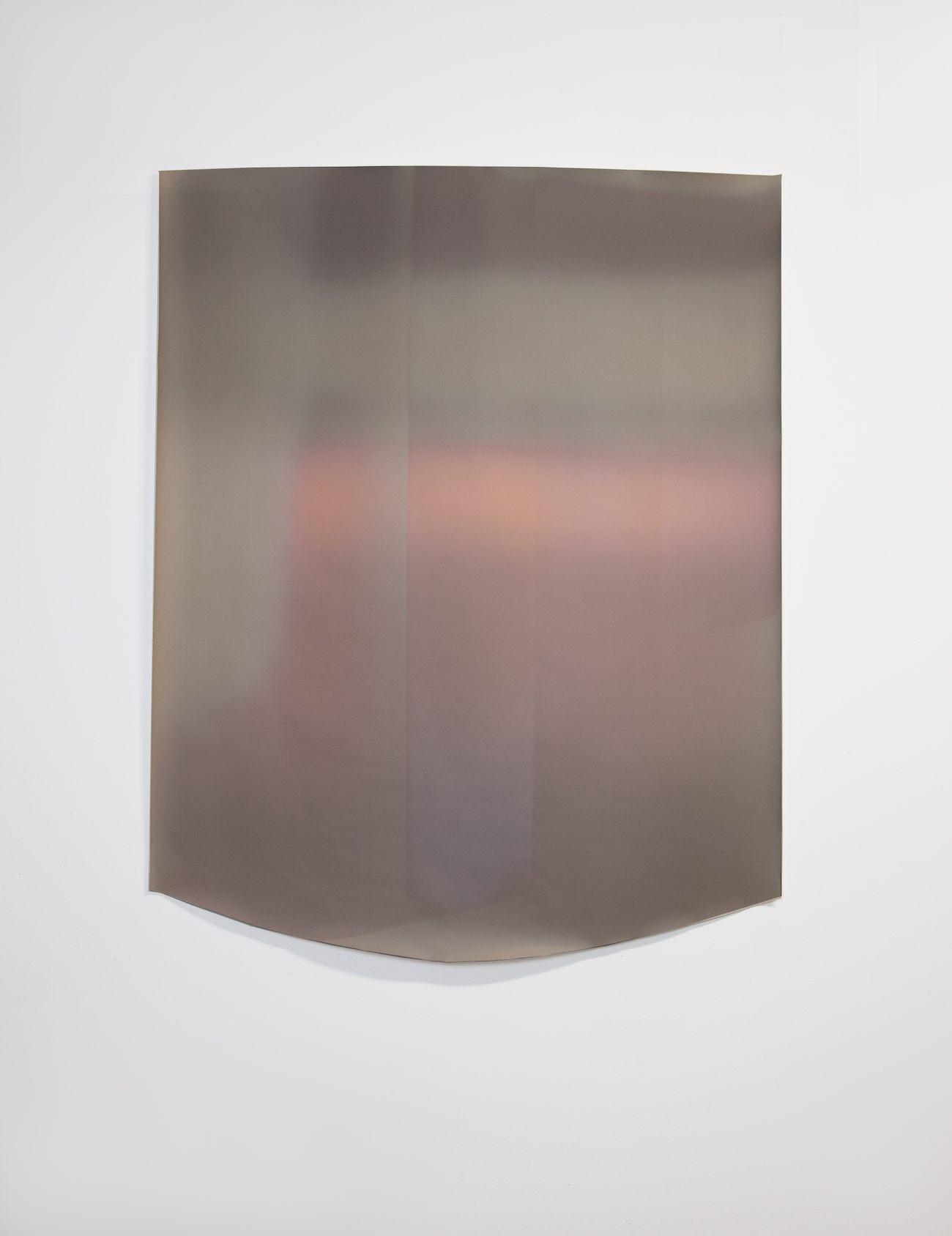
“Light’s Measure,” 2026.
When someone stands in front of one of your prints, what do you hope they sense about the light, time, and place that shaped it?
I hope people feel a sense of connection to the invisible forces of the world, and to themselves.
I hope they sense an emotion that resembles watching a natural phenomenon, a memorable sunset or the aurora borealis, something that stops them before they try to understand it. I want mystery and awe to be the first things that envelop them, and only then does curiosity about the process follow. My hope is that understanding the methods actually reinforces the mystery rather than dissolving it, because even though these works are made with light, time, and the conditions of a specific place, their language still remains universal and open. They hold something that cannot be fully explained, even to me. That is what I want someone to stand with: the feeling that they are witnessing something that was received, not fabricated, and that the same forces that shaped the work are shaping the world around them at that very moment.