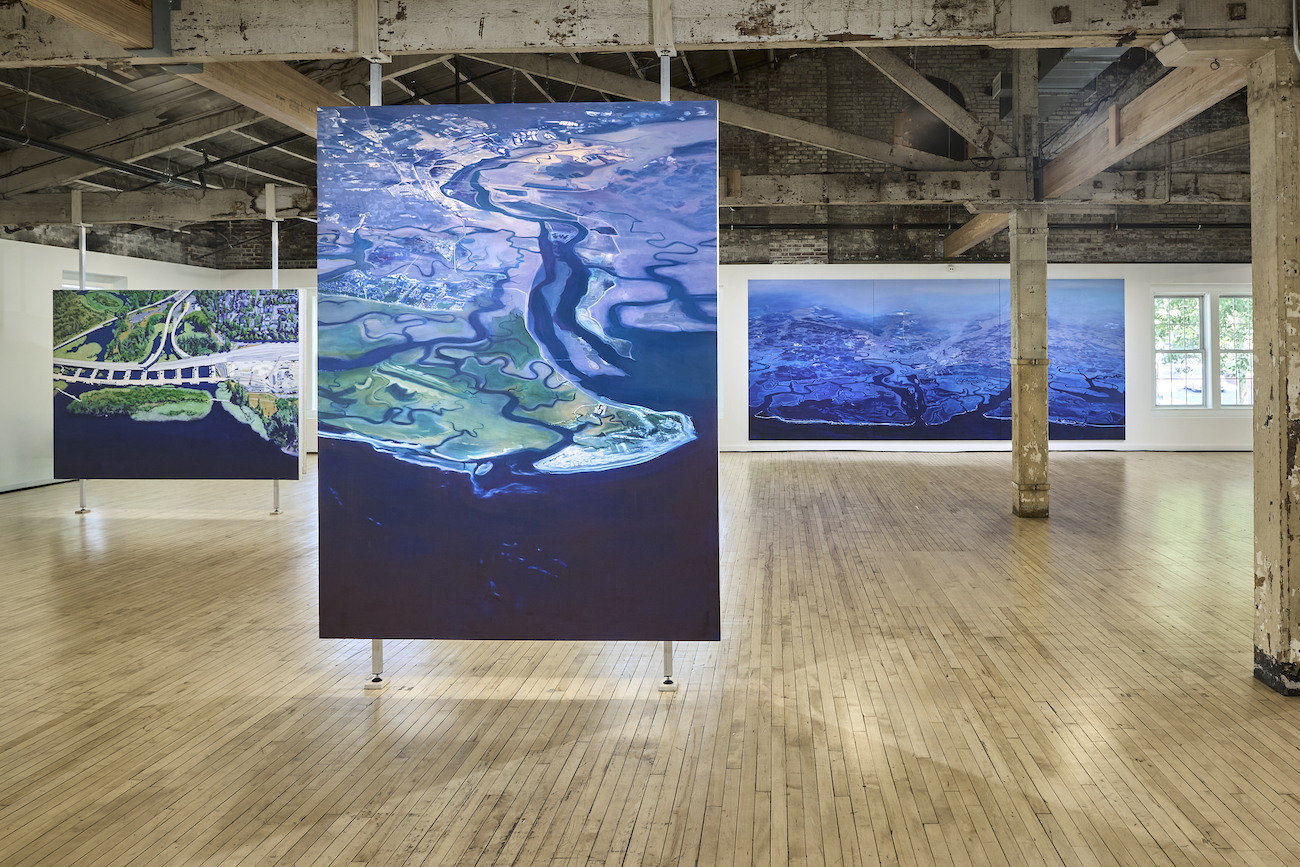
The Unintended Blues Exhibit. Part of The Unintended Blues by Leslie Wayne. On view at LMCC’s Arts Center at Governors Island, 2026. Photo by Cole Witter.
Artist Leslie Wayne turns aerial views of coastlines, waterways, and ice into large-scale paintings that examine a changing planet. Her exhibition The Unintended Blues is on view at the Arts Center at Governors Island in New York through September 27, 2026, as part of Lower Manhattan Cultural Council’s River to River Festival.
The series began in 2024 on a flight along the East Coast. Looking down at the Chesapeake Bay, Wayne noticed hundreds of tributaries cutting through the coastline. The view was beautiful, but it also made the threat of rising sea levels impossible to ignore. She took photographs from the plane and soon began translating them into paintings.
That first painting, The Unintended Blues, measures 100 by 234 inches. It became the starting point for a larger project documenting vulnerable shorelines across the United States. Wayne later incorporated photographs of melting icebergs near Greenland, bringing the effects of Arctic climate change into the series.
From above, familiar landscapes take on an unexpected character. Rivers become sweeping lines. Coastlines resemble maps. Icebergs appear almost abstract. Wayne uses that unusual perspective to look at both the beauty of these places and what could be lost as the climate changes.
The project also builds on Wayne’s long relationship with landscape. She began as a plein-air painter on the West Coast before moving to New York and turning to abstraction. Her abstract paintings remained rooted in the geology and forces of nature, even when recognizable landscapes disappeared from the canvas.
With The Unintended Blues, Wayne returns to representation without leaving those ideas behind. Instead, she uses the landscape to make climate change visible.
My Modern Met spoke with Wayne about the flight that sparked the series, her shift toward aerial landscapes, and how beauty can draw attention to environmental loss. Scroll down for your exclusive interview.
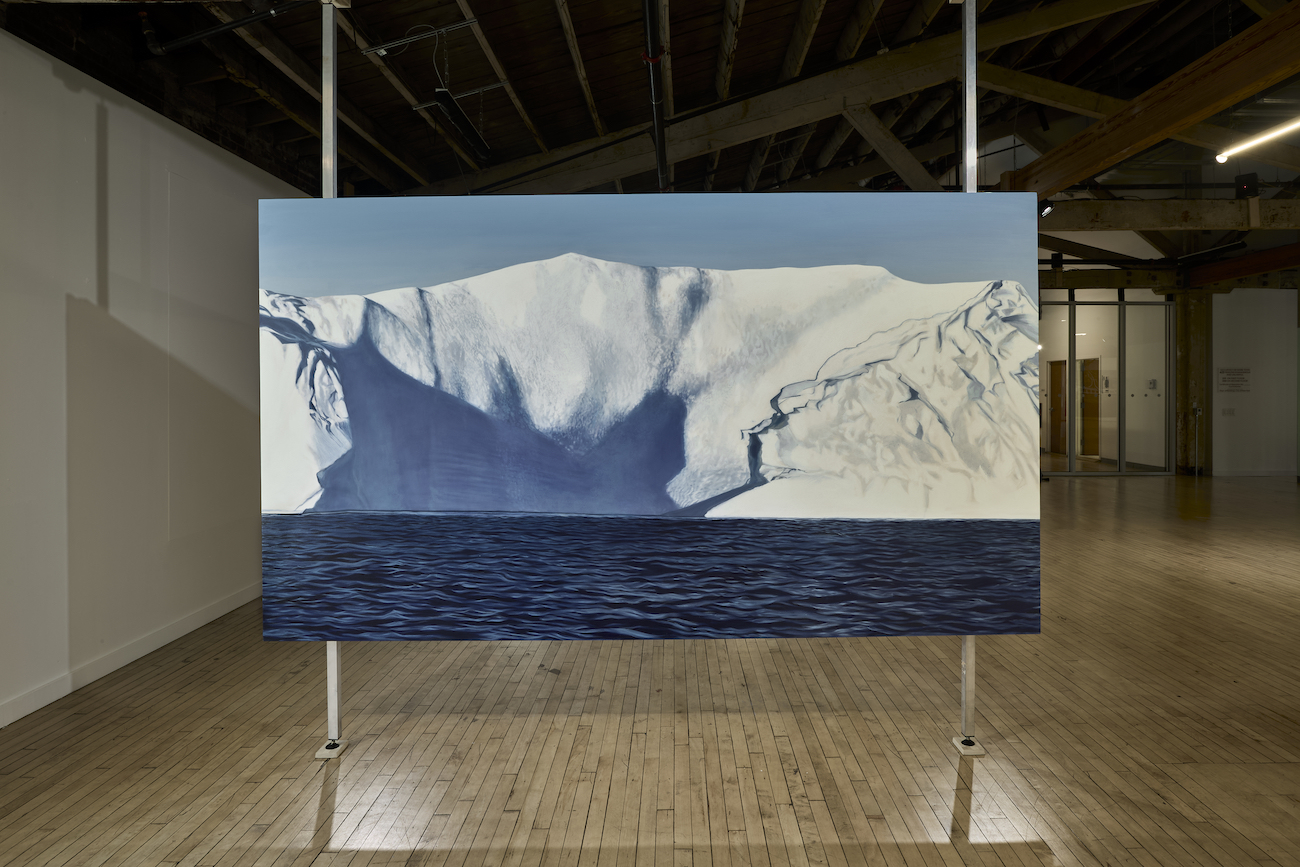
Melville Bay, 2, 2026. Oil on canvas, 67 x 118 inches. Part of The Unintended Blues by Leslie Wayne. On view at LMCC’s Arts Center at Governors Island, 2026. Photo by Cole Witter.
Where did The Unintended Blues begin for you, and was there a particular place, image, or moment that sparked this body of work?
It began on a flight up the East Coast one evening when I looked out the window and saw the hundreds of tributaries of the Chesapeake Bay infiltrating the coastline like a web of aggressive veins and arteries. I was immediately struck by the beauty of it but also by the graphic clarity of one of our greatest existential threats, rising sea levels. I began to take numerous photos and knew instinctively that they would become the source material for a large painting. That painting, which I titled The Unintended Blues ultimately launched the project to document vulnerable shorelines on all three coasts of the continental United States.
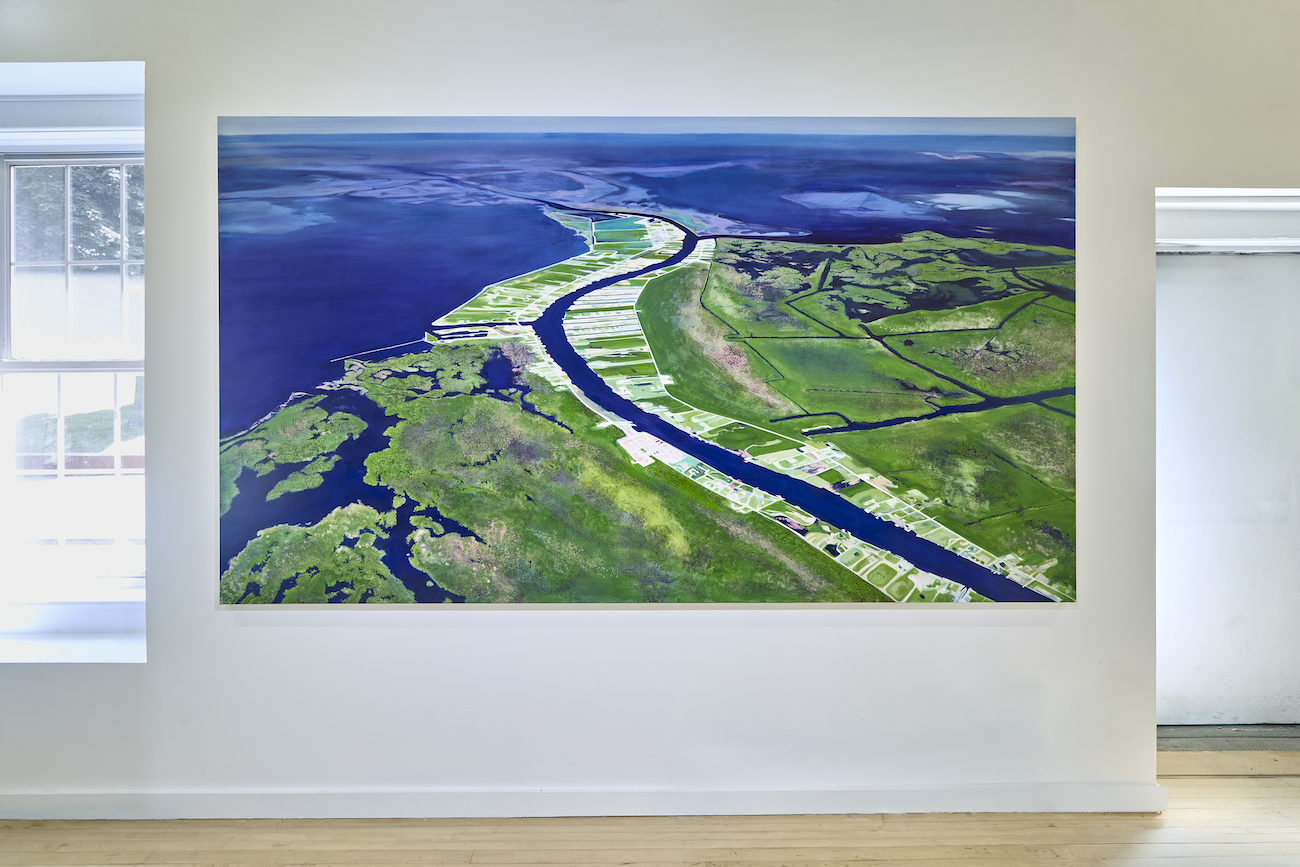
Lafitte, 2025. Oil on canvas, 67 x 118 inches. Part of The Unintended Blues by Leslie Wayne. On view at LMCC’s Arts Center at Governors Island, 2026. Photo by Cole Witter.
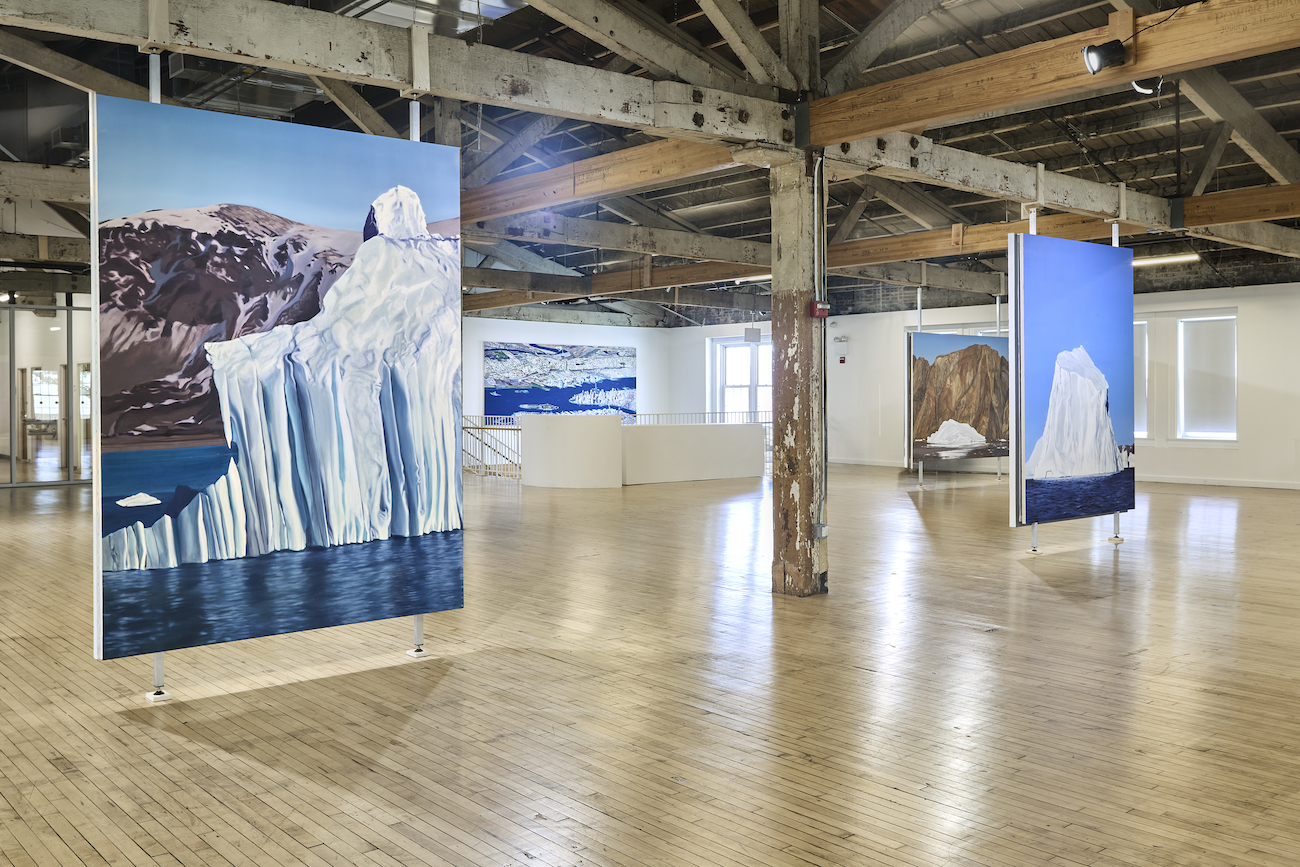
The Unintended Blues Exhibit. Part of The Unintended Blues by Leslie Wayne. On view at LMCC’s Arts Center at Governors Island, 2026. Photo by Cole Witter.
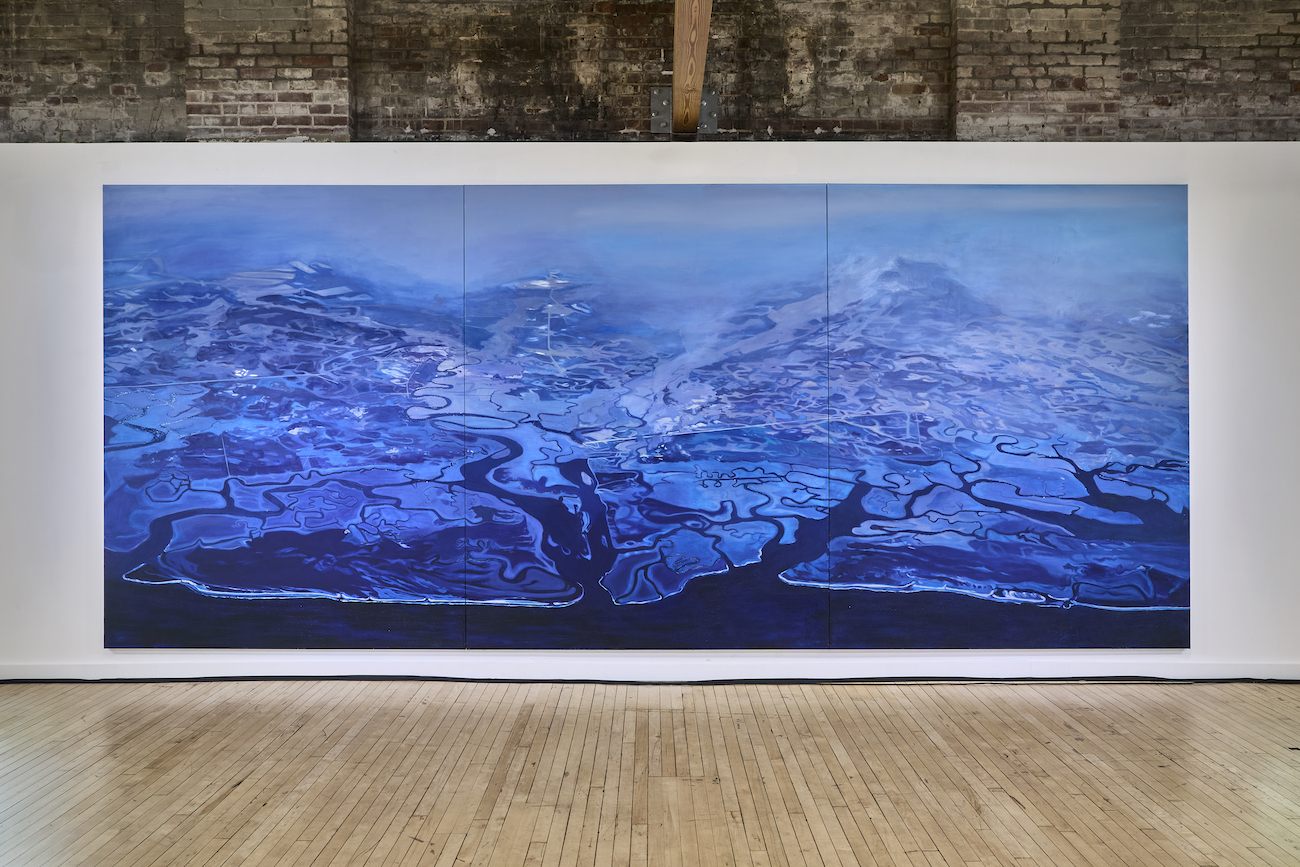
The Unintended Blues, 2024. Oil on canvas, 100 x 234 inches. Part of The Unintended Blues by Leslie Wayne. On view at LMCC’s Arts Center at Governors Island, 2026. Photo by Cole Witter.
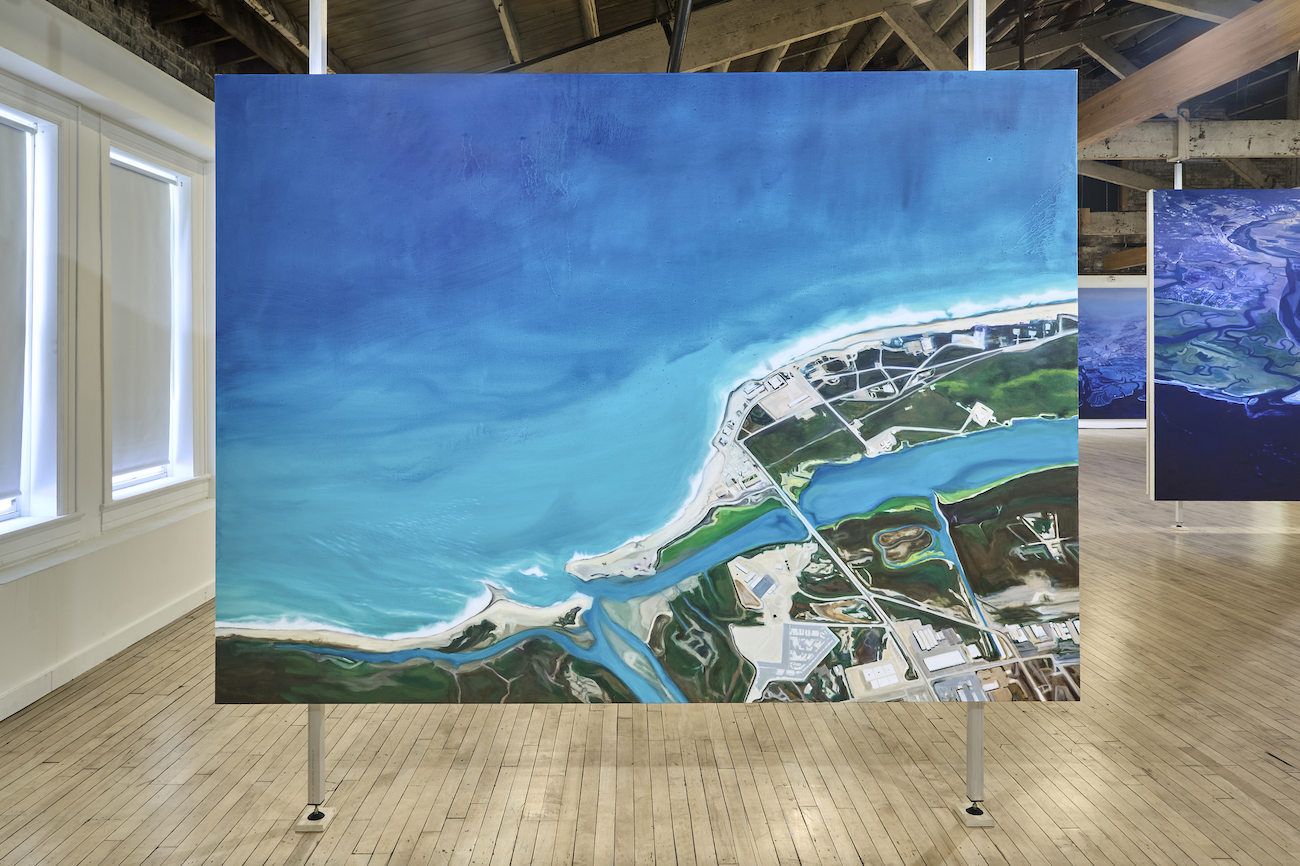
Calleguas Creek, 2025. Oil on canvas, 75 x 102 inches. Part of The Unintended Blues by Leslie Wayne. On view at LMCC’s Arts Center at Governors Island, 2026. Photo by Cole Witter.
What drew you to view waterways, coastlines, and ice from above, and how has that perspective changed the way you see the natural world?
I think that view is something we’ve all experienced and been awestruck by when flying but we don’t always get the window seat and we don’t often have the advantage of a clear sky. But by pure chance I had the good fortune of having both while on a flight from New York to Seattle several years ago, and ended up taking over 45 photographs—valleys, plateaus, mountains, snow-capped volcanic peaks, deserts, canyons, reservoirs—all of them amazing and each one so different from the last. Those became an entire body of work based on the West and inspired by Woodie Guthrie’s song, This Land is Your Land. So to embark on this current project seemed like a natural evolution. To have that aerial perspective allows you to see shapes and patterns that are not just formally beautiful, but incredibly informative. You can actually see the imprint of time cartographically. And then, I was halfway through painting the work for The Unintended Blues when I was gifted a series of stunning photographs by a friend of melting icebergs in the Northwest Passage near Greenland. Only these were taken from a zodiac [boat], in the water, face to face with these giants of the Arctic. I thought this made a perfect counterpoint to the view of the land from above. This was the ice from below, and together they inspired me to really look at the genre of landscape painting and nature as an artistic endeavor from the distinct perspective of climate change. So not only has my painting of nature changed, but my research and reading has expanded!
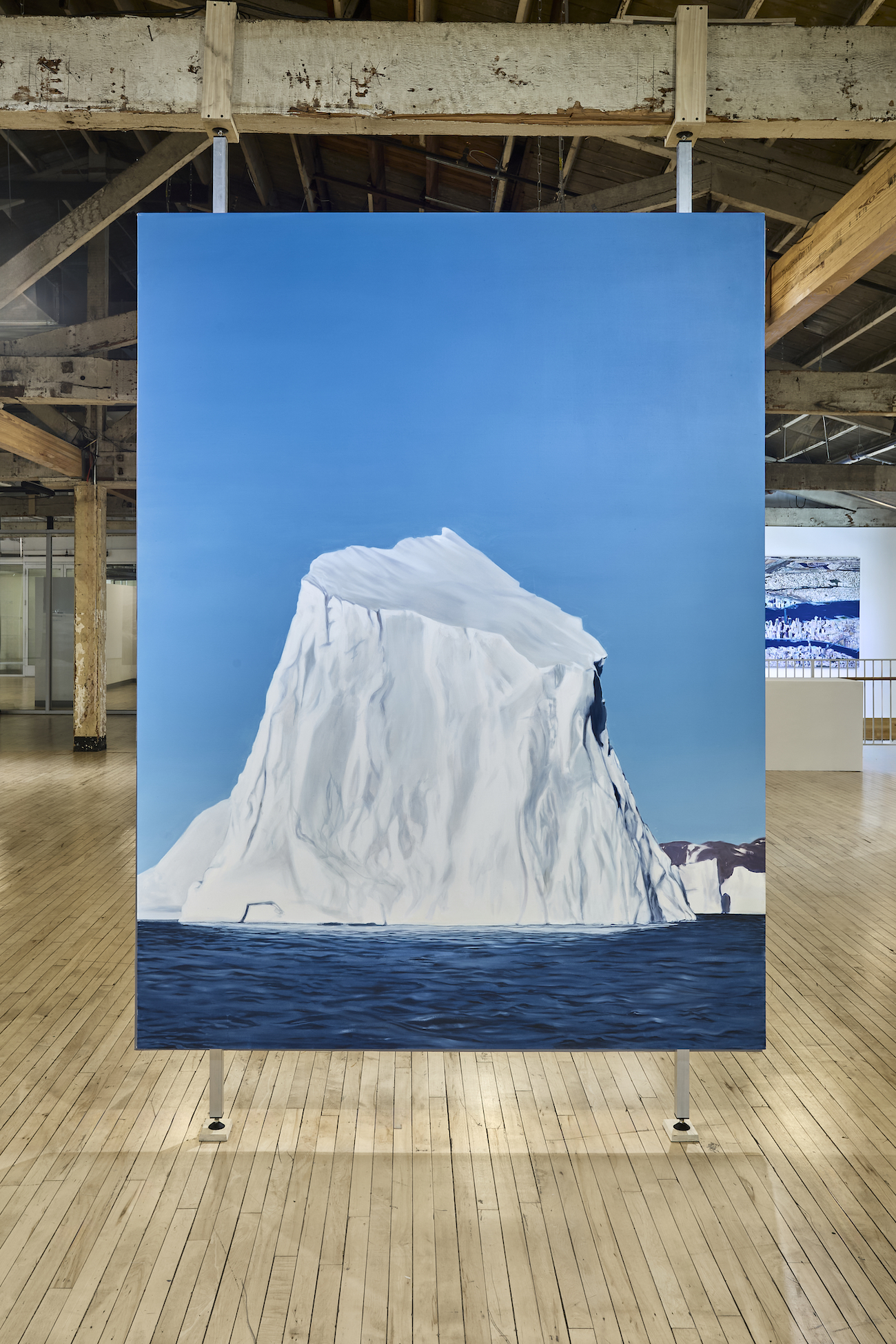
Griese Fjørd, 2026. Oil on canvas, 100 x 75 inches. Part of The Unintended Blues by Leslie Wayne. On view at LMCC’s Arts Center at Governors Island, 2026. Photo by Cole Witter.
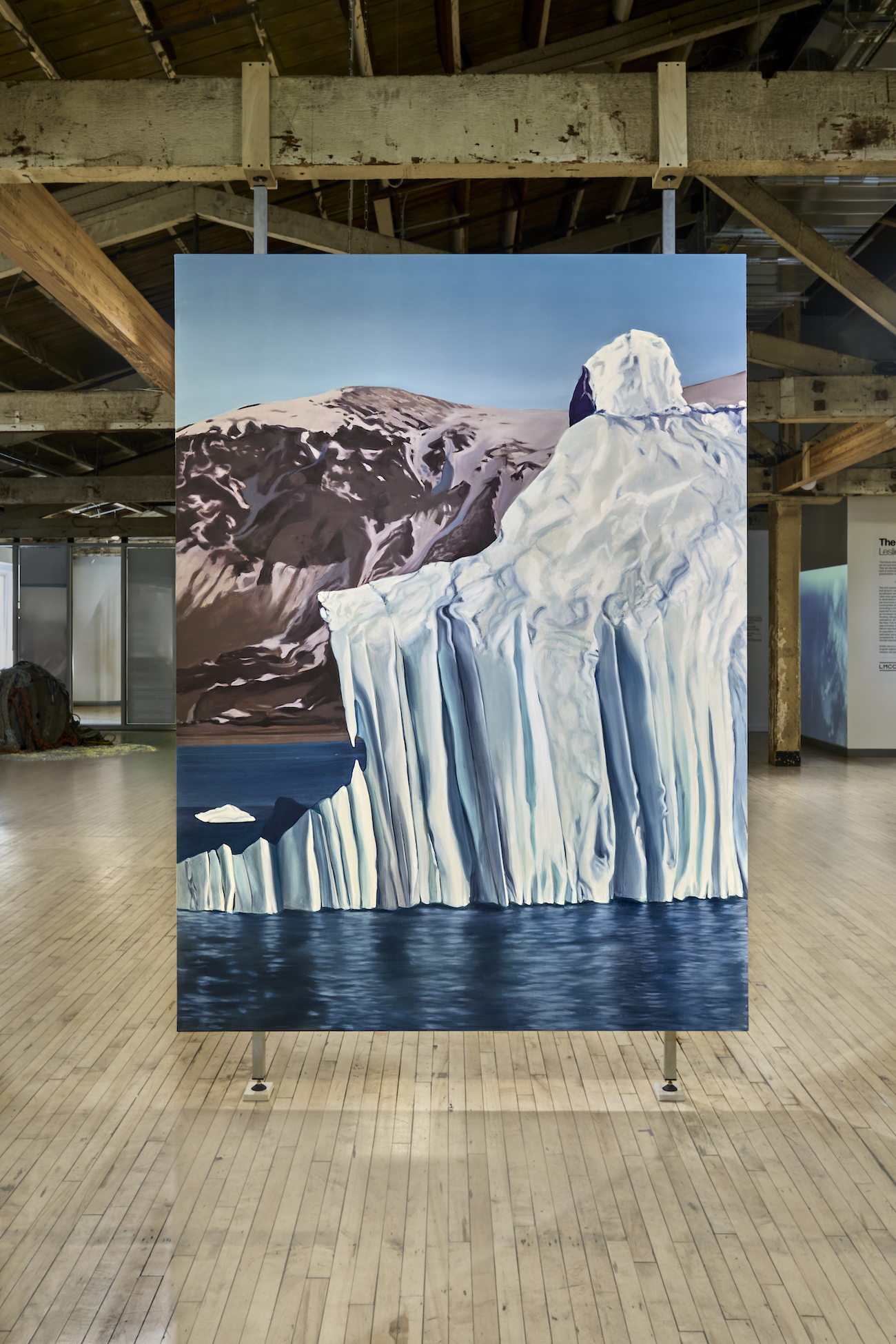
De Dødes Fjørd, Kap York, 2026. Oil on canvas, 102 x 75 inches. Part of The Unintended Blues by Leslie Wayne. On view at LMCC’s Arts Center at Governors Island, 2026. Photo by Cole Witter.
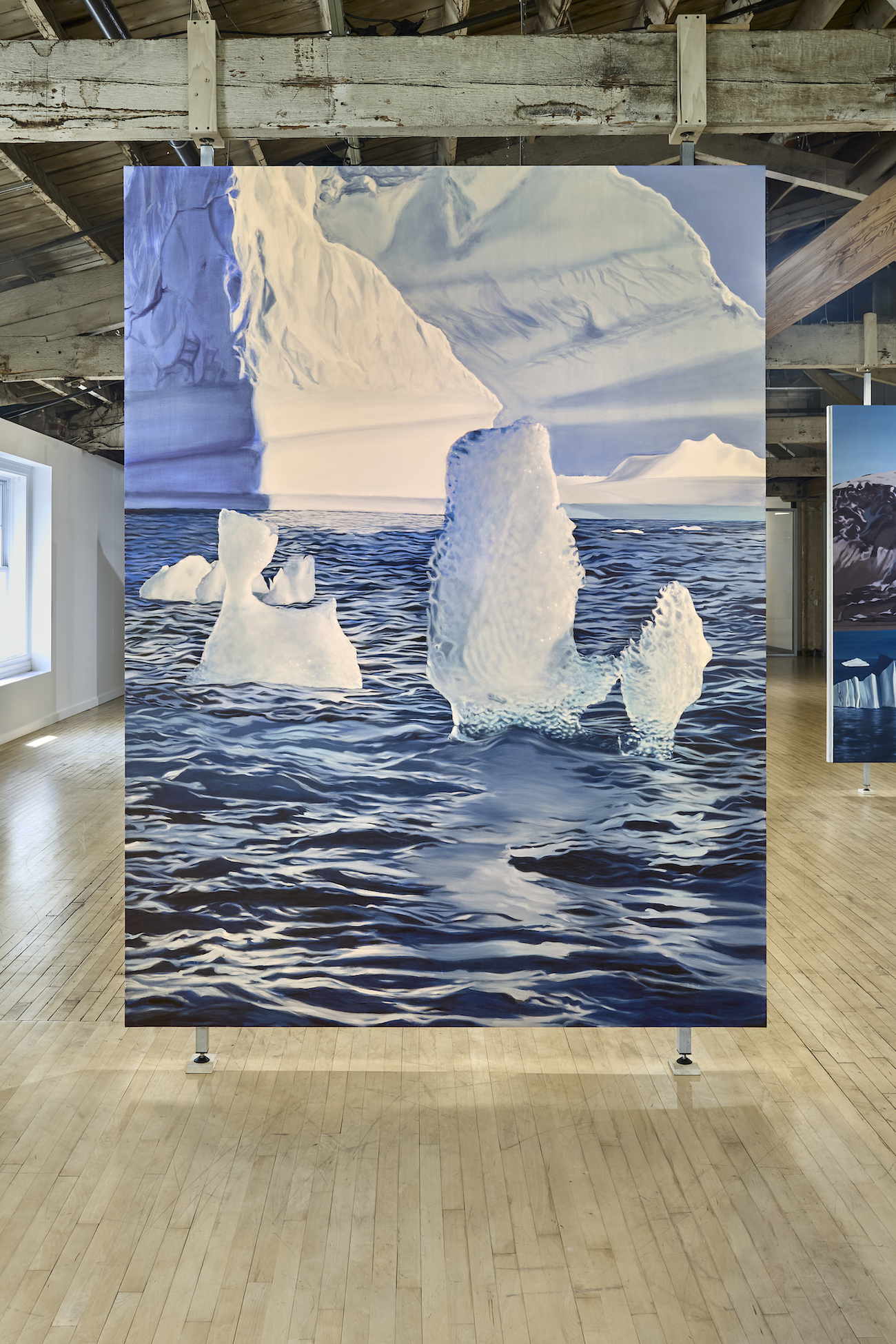
Melville Bay, 2025. Oil on canvas, 110 x 82 inches. Part of The Unintended Blues by Leslie Wayne. On view at LMCC’s Arts Center at Governors Island, 2026. Photo by Cole Witter.
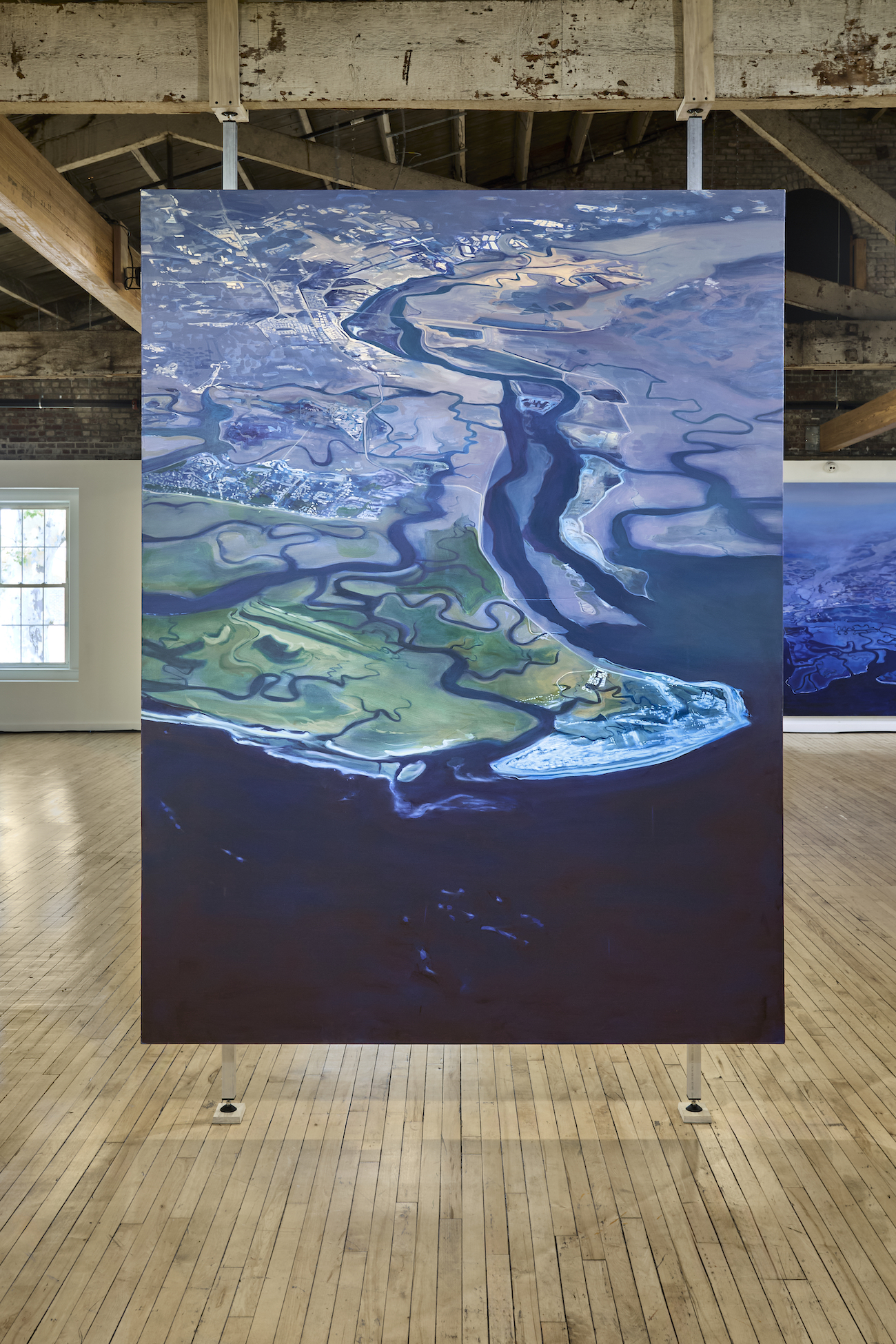
Chesapeake, 2025. Oil on canvas, 100 x 75 inches. Part of The Unintended Blues by Leslie Wayne. On view at LMCC’s Arts Center at Governors Island, 2026. Photo by Cole Witter.
How do you balance the beauty of these landscapes with the environmental changes threatening them, and what do you hope viewers take away from that tension?
I have tried to paint the extraordinary beauty of our natural world as a way of expressing what we stand to lose by our inaction in the service of unabated and thoughtless “progress.” Alongside the paintings, there are three other works in the show which present this tension in a more direct manner. One is a large video projection of lapping sea water, placing the viewer in the imaginary position of trying to stay afloat during an extreme flooding event.
Another is a sculpture consisting of a large pile of used tug lines, the most common tool employed to tow in everything from boats and people to cars and entire homes during catastrophic floods. And the last is a list of 78 science and climate-based words culled from over 350 words and phrases banned by the Federal Administration, serving as an invitation to viewers to express their own thoughts on paper about the climate debate today and the importance of science. Together, I hope that viewers come away moved to think about the how the beauty of our planet is not just there as a resource for our entertainment, but that its health and survival are inextricably tied to what we do on it.
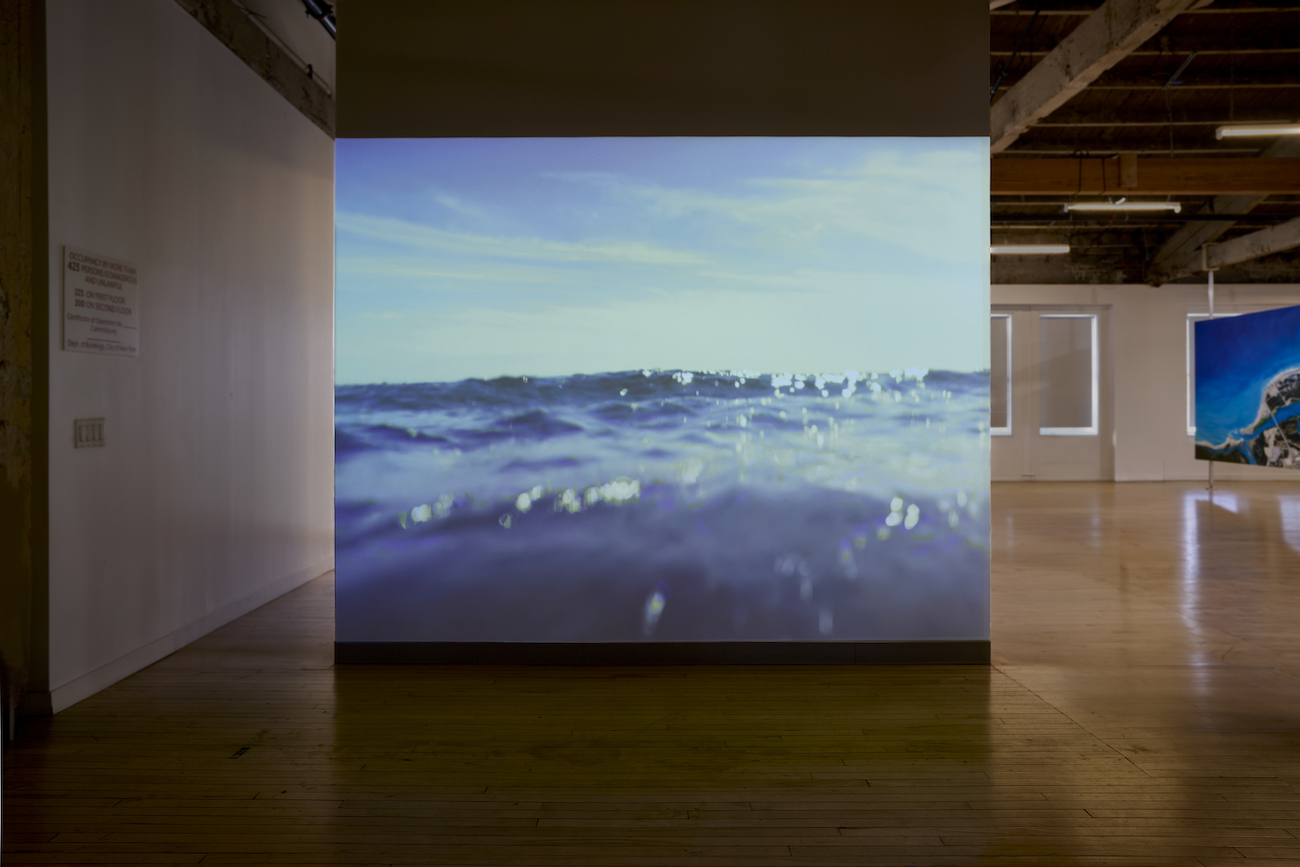
Submerging, 2025 – 2026. Single channel UHD video with sound, 13 minutes continuous loop. Part of The Unintended Blues by Leslie Wayne. On view at LMCC’s Arts Center at Governors Island, 2026. Photo by Cole Witter.
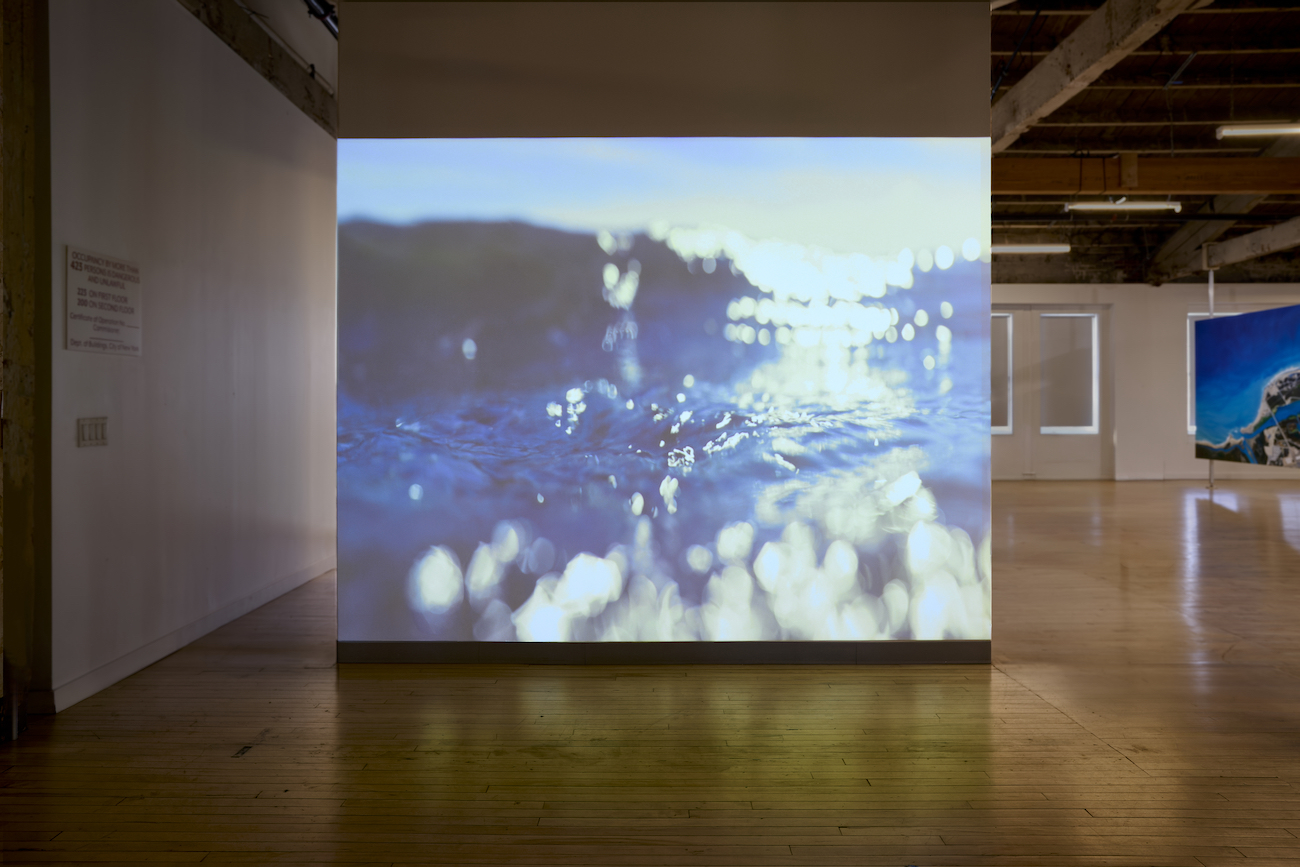
Submerging, 2025 – 2026. Single channel UHD video with sound, 13 minutes continuous loop. Part of The Unintended Blues by Leslie Wayne. On view at LMCC’s Arts Center at Governors Island, 2026. Photo by Cole Witter.
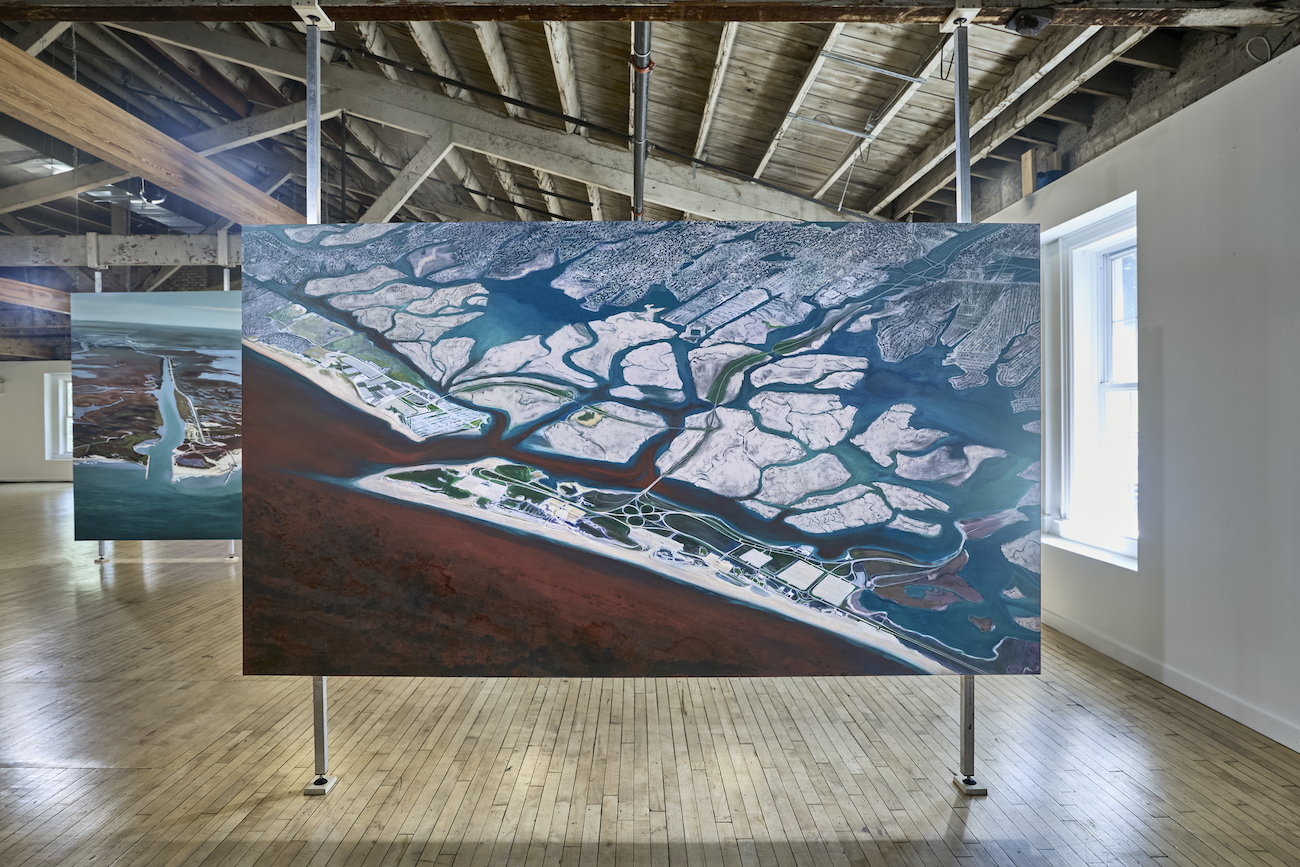
Red Tide at Robert’s Pike, 2025. Oil on canvas, 67 x 118 inches. Part of The Unintended Blues by Leslie Wayne. On view at LMCC’s Arts Center at Governors Island, 2026. Photo by Cole Witter.
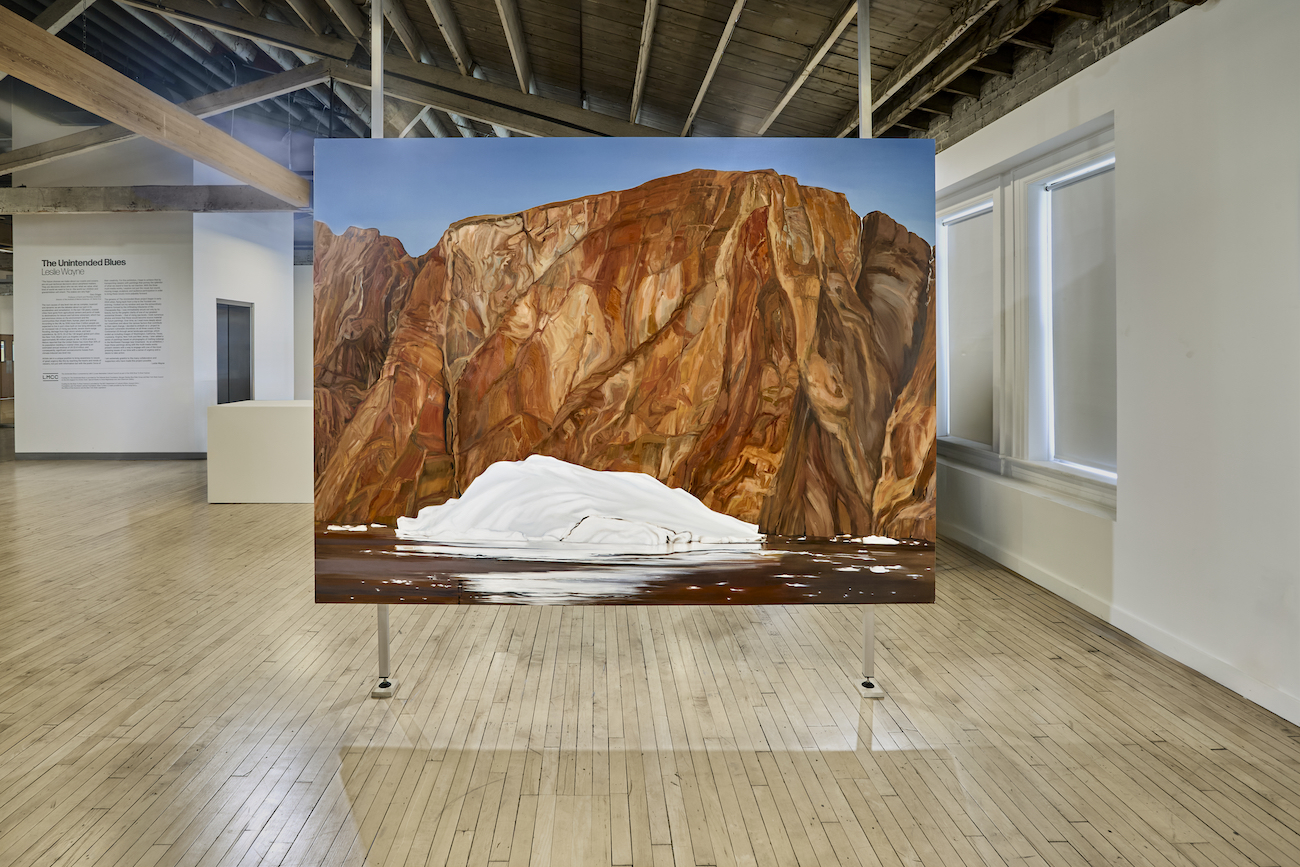
Kiatassuaq Island, 2025, Oil on canvas, 75 x 100 inches. Part of The Unintended Blues by Leslie Wayne. On view at LMCC’s Arts Center at Governors Island, 2026. Photo by Cole Witter.
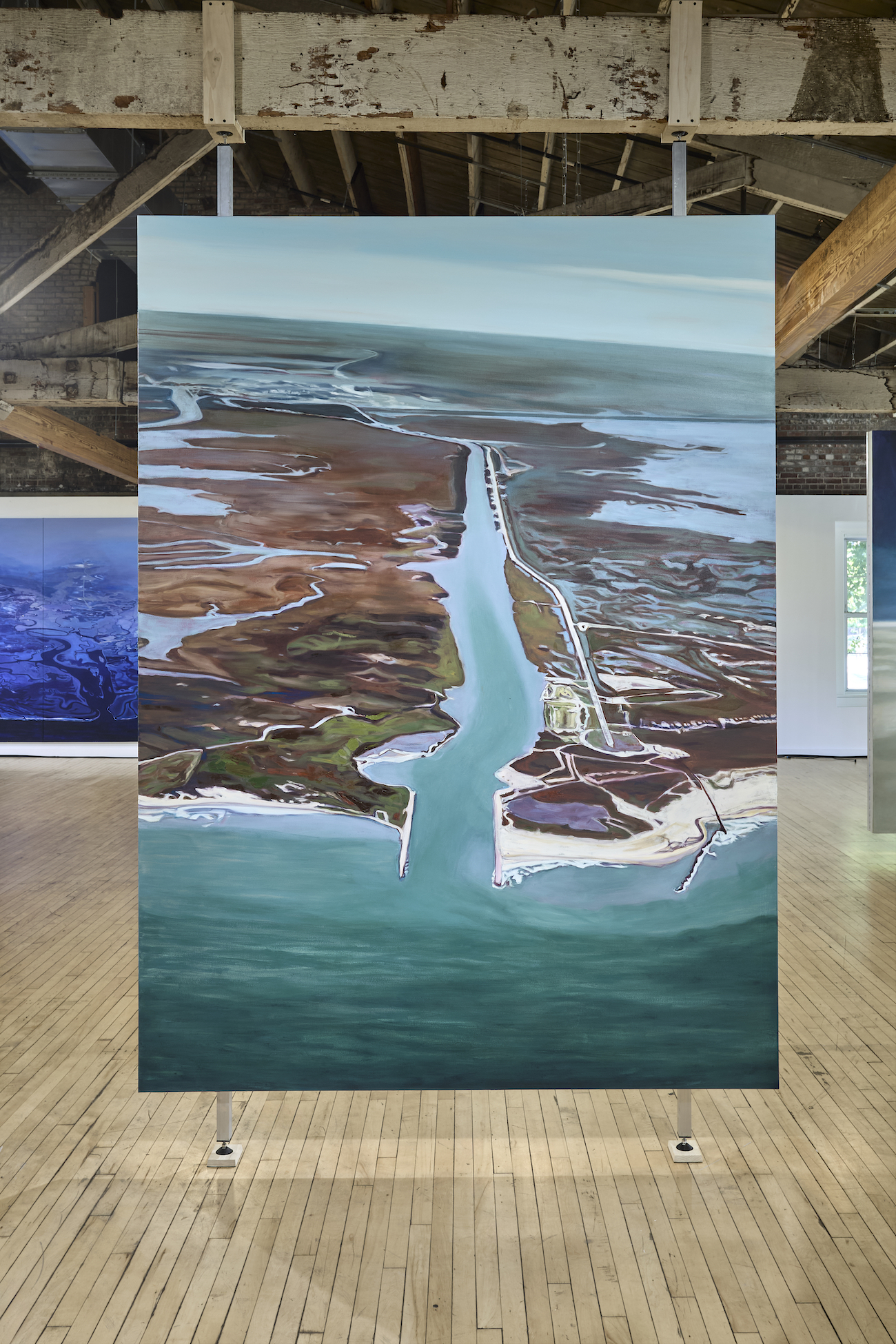
Matagorda, 2025. Oil on canvas, 102 x 75 inches. Part of The Unintended Blues by Leslie Wayne. On view at LMCC’s Arts Center at Governors Island, 2026. Photo by Cole Witter.
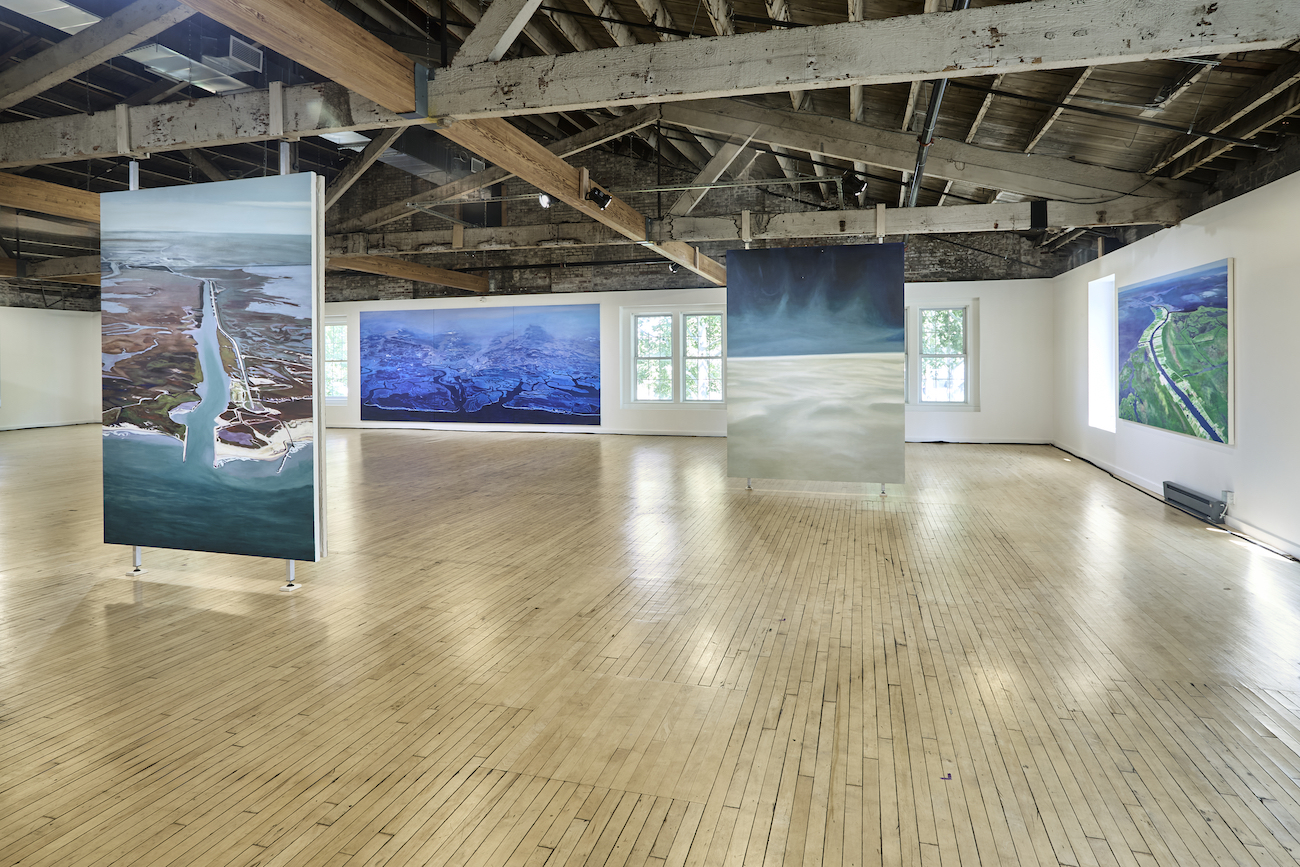
The Unintended Blues Exhibit. Part of The Unintended Blues by Leslie Wayne. On view at LMCC’s Arts Center at Governors Island, 2026. Photo by Cole Witter.
Looking across your career, how has your relationship with landscape evolved, and where does The Unintended Blues fit within that larger journey?
I grew up on the West Coast as a plein-air landscape painter but abandoned landscape for abstraction when I moved to New York in my twenties. My abstractions were entirely informed and inspired by my relationship to the geology of the West, serving as a kind of analogy to the forces of nature, rather than a picture of it. And I built my entire career on that work. So what might now look like a recent shift from abstraction back to representation is really only superficial. The throughline has always been landscape and nature. My larger journey remains to be seen. The shift to aerial landscape was completely unanticipated, and made possible only because of a flight to Seattle and the good fortune of getting those photographs. But since The Unintended Blues has so thoroughly taken hold of me for the last two years, I imagine I will continue exploring ways in which my relationship to nature can be expressed in works that are not only transporting as works of art, but compelling as works of thought.
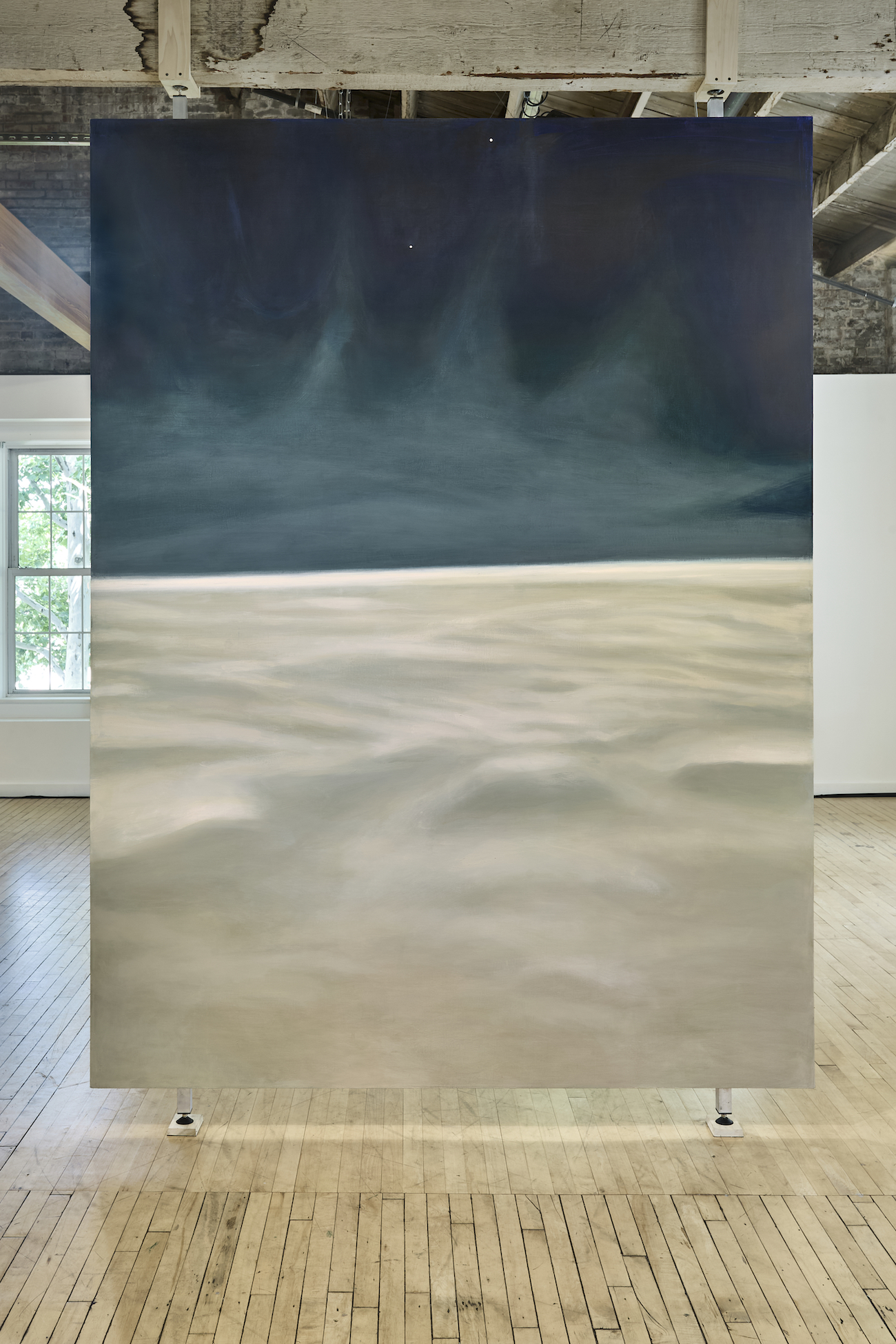
Ascent, 2024. Oil on canvas, 110 x 82 inches. Part of The Unintended Blues by Leslie Wayne. On view at LMCC’s Arts Center at Governors Island, 2026. Photo by Cole Witter.
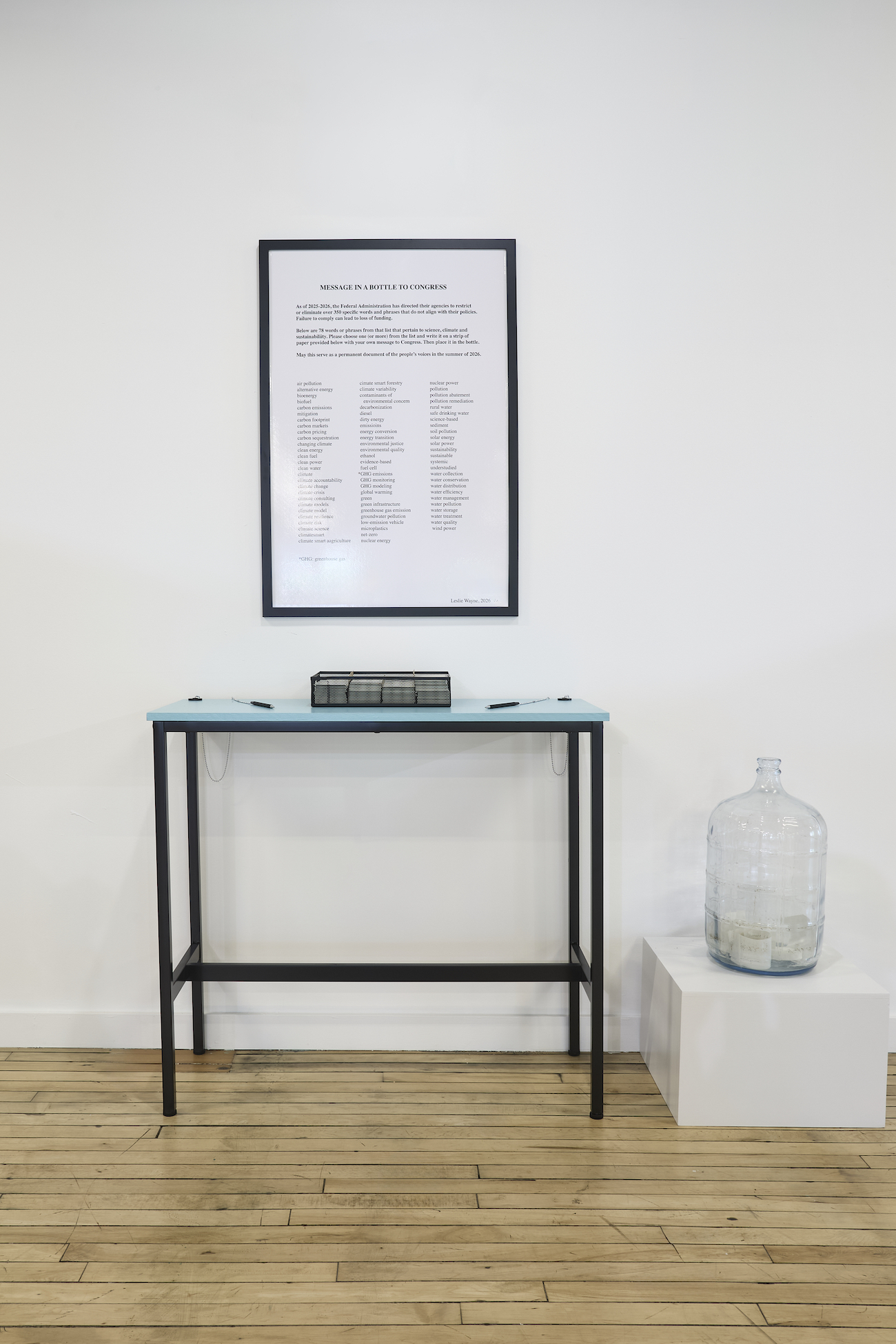
Message in a Bottle to Congress, 2026. Glass bottle, poster, table, pens, paper. On view at LMCC’s Arts Center at Governors Island, 2026. Photo by Cole Witter.