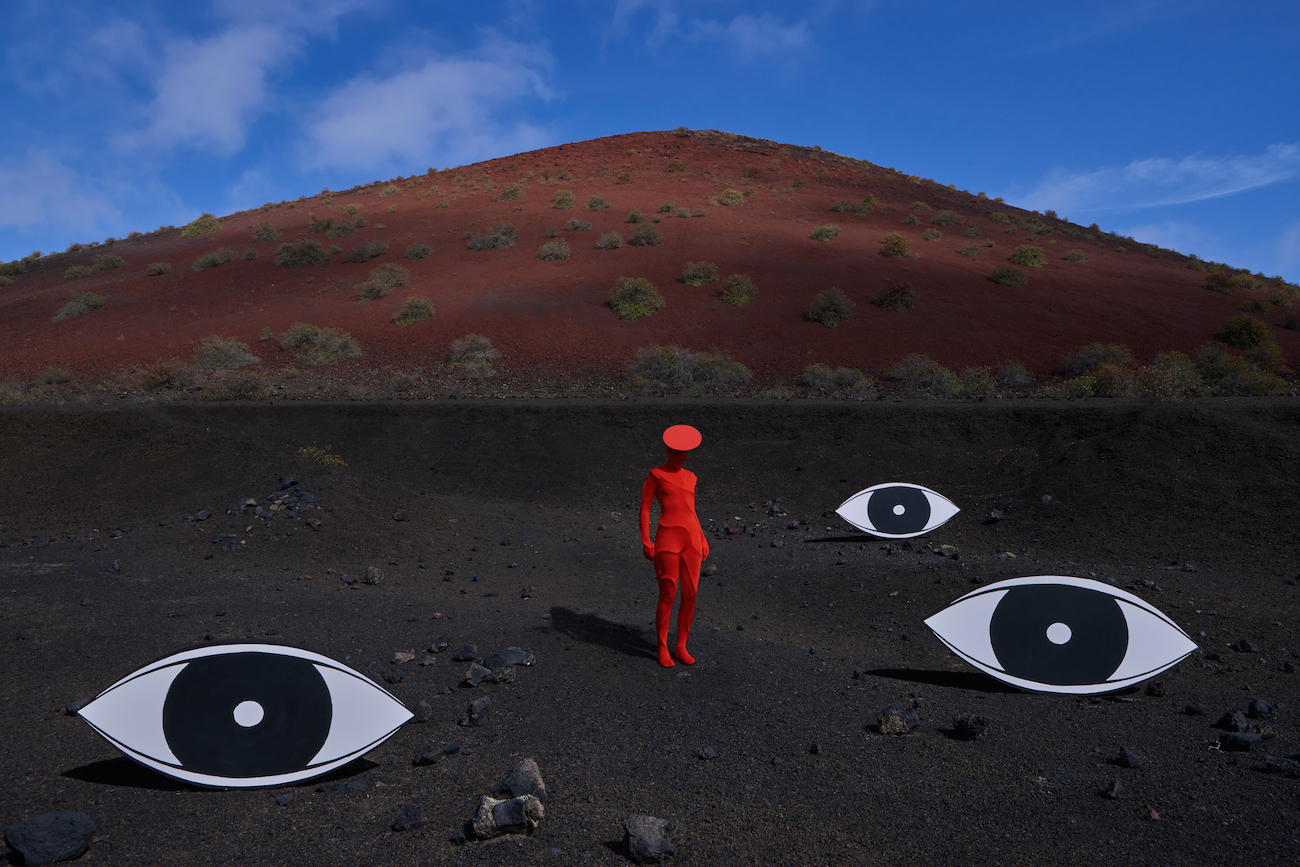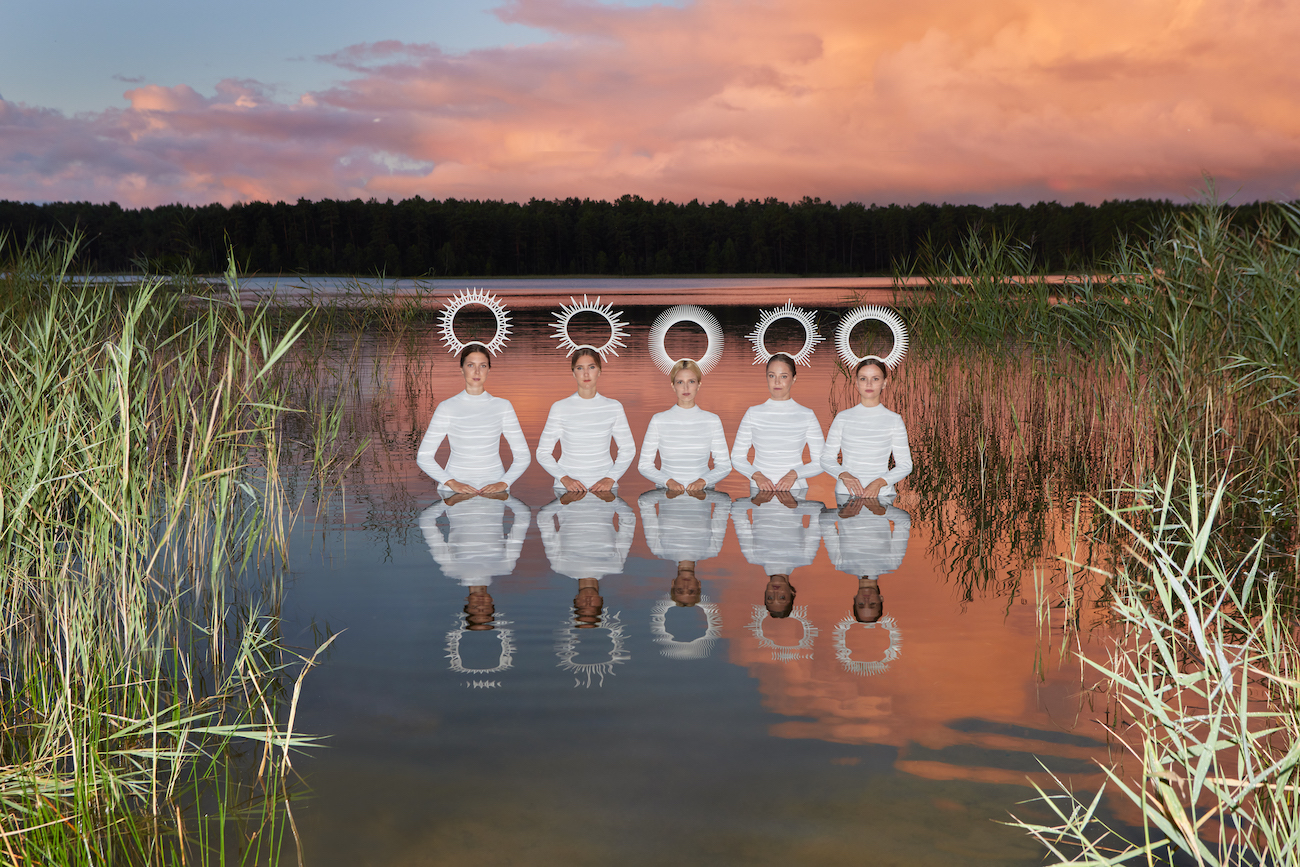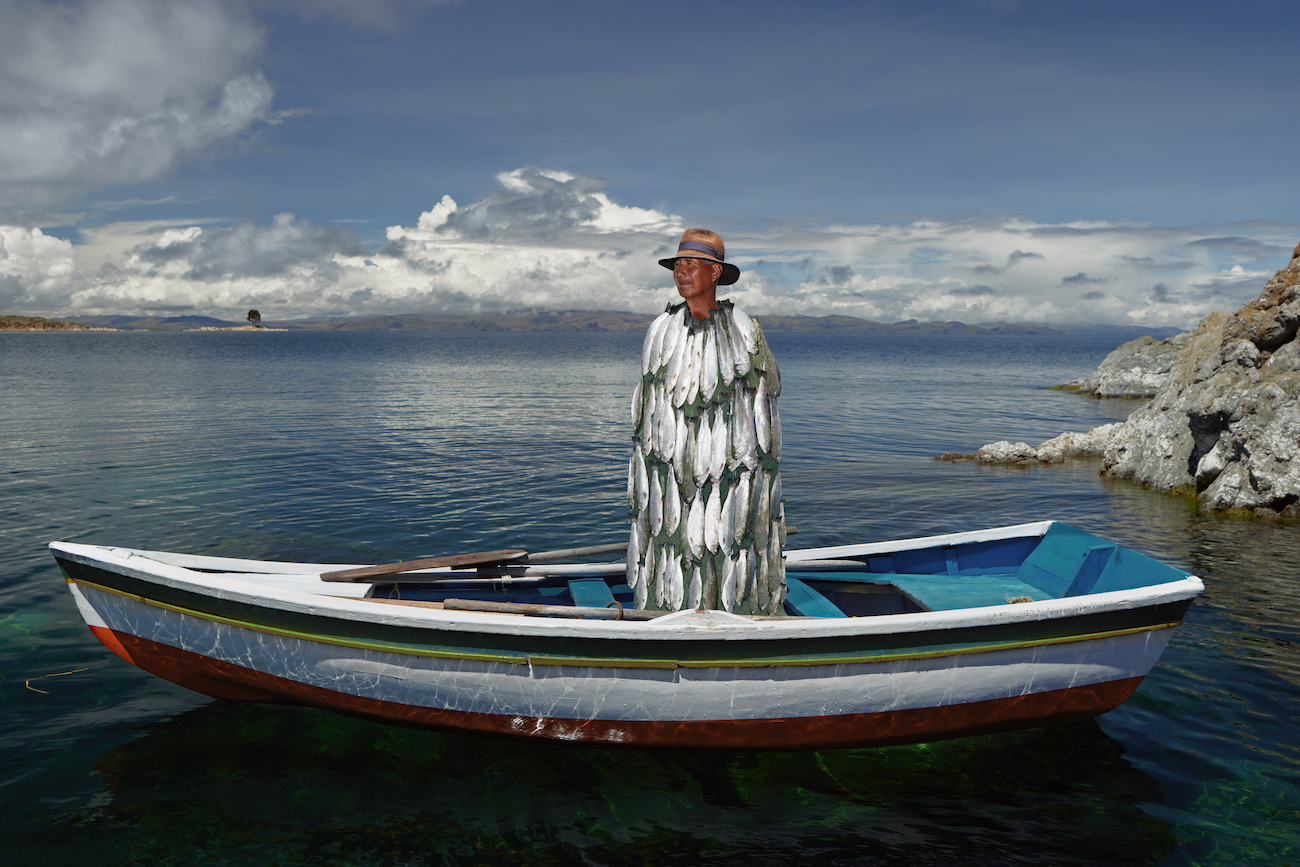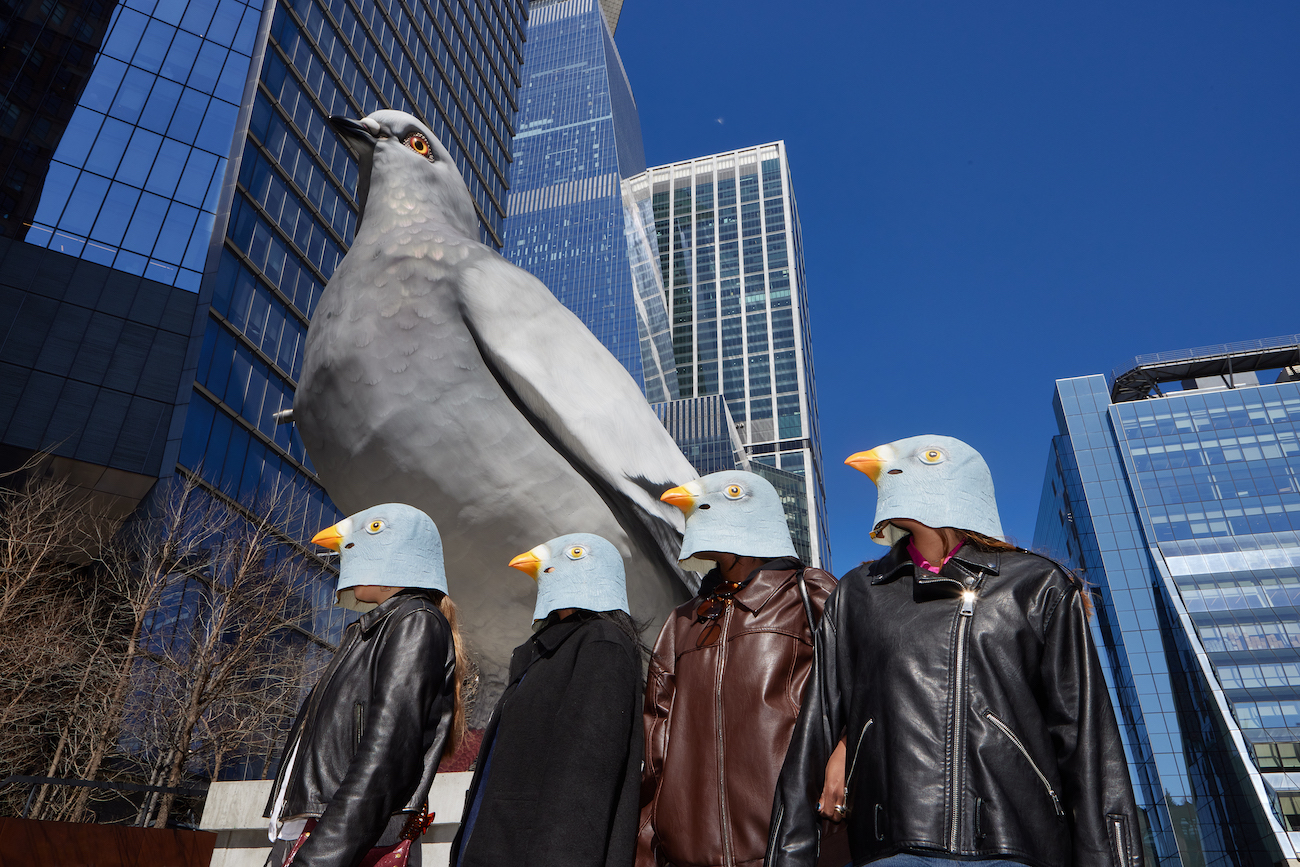
For photographer Julia Buruleva, travel is more than a way to see the world. It is the foundation of her artistic practice. Through her ongoing Art Expedition project, the Russian-born, Barcelona-based creative travels from country to country, spending extended periods immersed in unfamiliar places before translating their colors, forms, and cultural traditions into surreal photographs.
Buruleva works at the intersection of fine art and commercial image-making. Her photographs blur the boundaries between photography, performance, and installation. She uses real people, physical props, body painting, and carefully chosen locations to create dreamlike scenes. Yet despite their surreal quality, the images are made in real environments rather than digitally fabricated.
Buruleva describes Art Expedition as a form of slow travel, in which each location becomes a collaborator in the creative process. She spends weeks exploring a place before creating a body of work, allowing its visual language to influence everything from color and composition to the subjects and stories that emerge. She also frequently works with local people, who become collaborators rather than simply subjects in front of her camera.
The results range from the colorful streets of Jaipur and Varanasi to the vast landscapes of Bolivia and Guatemala. Across these works, Buruleva combines observation with imagination while remaining grounded in the physical reality of the places she visits.
My Modern Met spoke with Buruleva about how travel shapes her photography and how different cultures influence her visual language. Scroll down for our exclusive interview.
What first drew you to photography as a way of combining travel, observation, and constructed imagery?
I don’t know any other way to combine all of this.
I’ve been doing photography all my life. But there have always been two parallel things in my life – photography and, in parallel, travelling, which has always been my passion. Even before Instagram. I started taking quite unusual trips back when the internet and social media were not yet widely available, when there was really nowhere to talk about these experiences.
For example, when I was a student, I hitchhiked across half of Russia several times.
I’ve always been more interested in places that are not yet deformed by tourism, where something real and authentic has been preserved.
But at some point I realized that I didn’t want to separate these two things anymore. Why separate two sides of what you love if you can combine them?
Also, I realized very clearly that I was no longer interested in tourism in the form of short trips. I didn’t want to be a tourist, I wanted to be a discoverer.
But since, geographically speaking, everything has already been discovered a long time ago, I came up with my own way – to rediscover countries through the lens of art photography… through my Art Expedition project, by immersing myself deeply in the environment and communicating with local people. That’s how my two passions merged into one.
Now that I’m 47, I’ve decided that I don’t want to have a home base anymore. I want to be permanently exploring, photographing and having adventures—not as separate parts of my life, but literally as the fabric of it.
How does spending extended time in a place influence not only the subjects you photograph, but also the colors, compositions, and visual language you develop there?
Oh, the influence is very powerful. And I find it super fascinating to see how it works.
When I arrive somewhere new, I start walking, looking, observing, gradually getting used to the place – and at some point the place itself starts dictating what I photograph and what it should look like. I usually don’t arrive with a ready-made idea and try to impose some kind of aesthetic on the place. The colors, textures, geometry – everything I see around me starts soaking into my brain and eventually finds its way into the way I shoot.
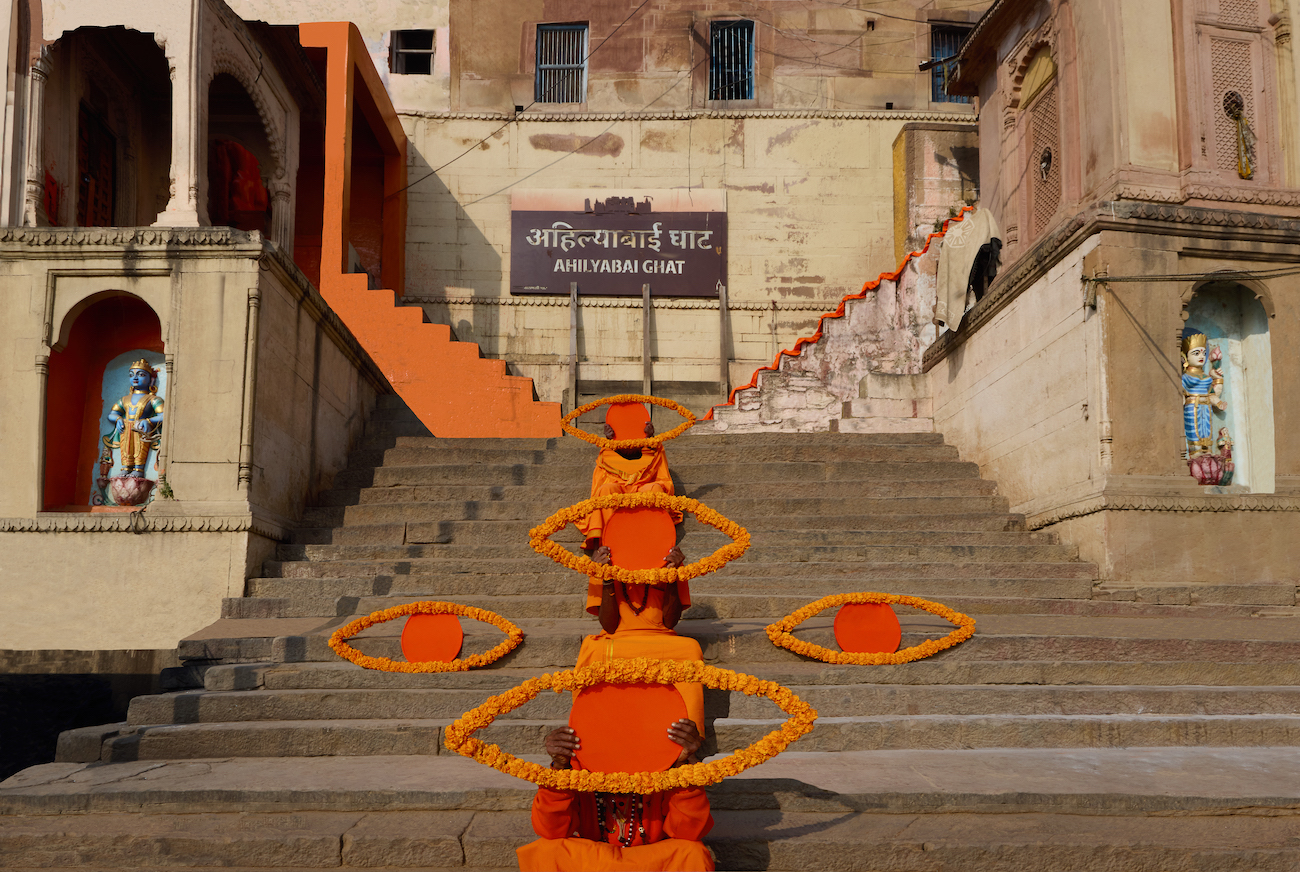
For example, in Varanasi, after a few days I started noticing that orange was literally everywhere: on the walls of the temples, in sculptures of Ganesha and Hanuman, in the clothes of the sadhus, in the ritual flowers.
That’s how Ode to Orange came about, where I combined figures of sadhus dressed in orange with orange installations decorated with marigolds, all against the orange steps of a temple.
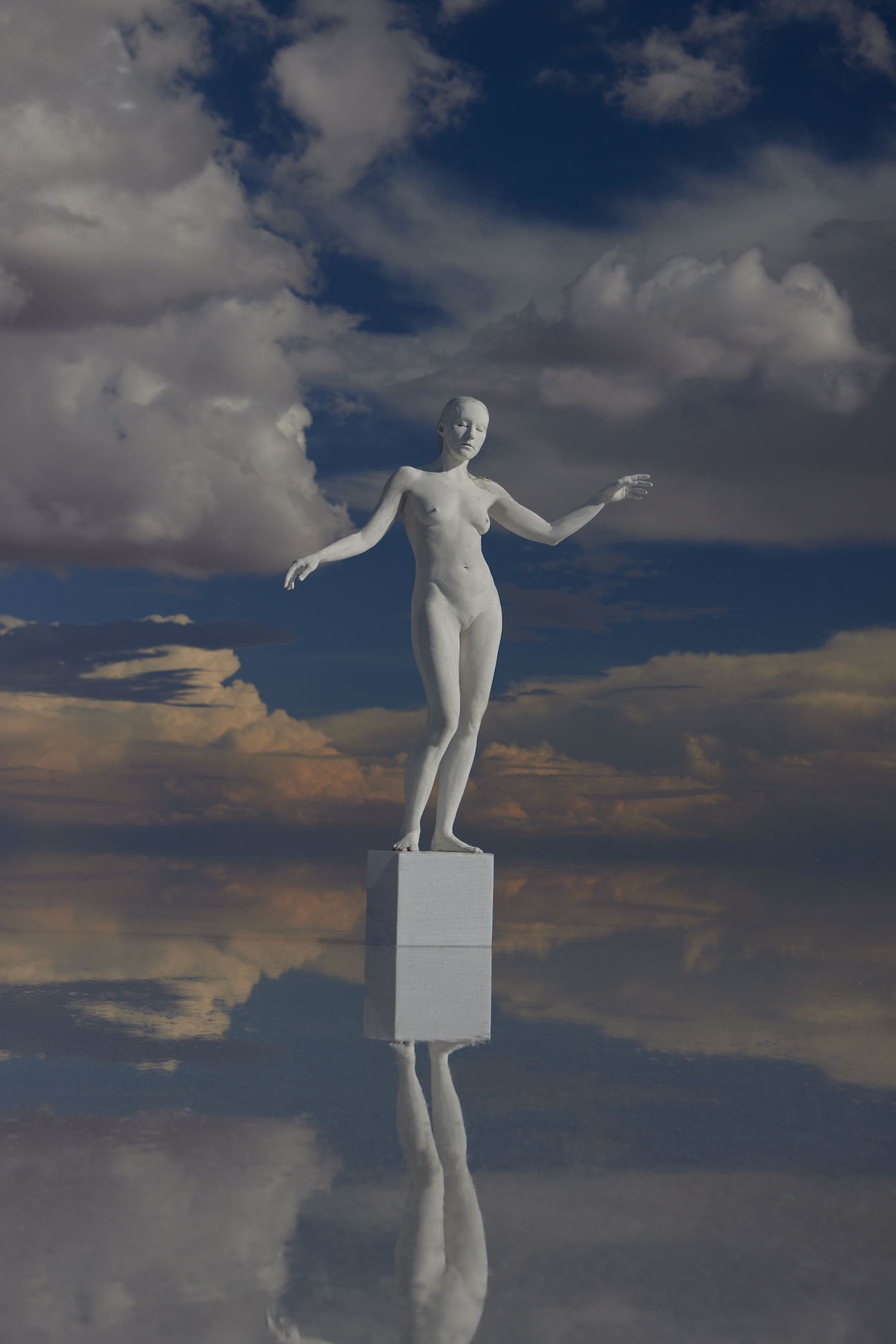
Or, for example, in Bolivia, where the white of the Uyuni salt desert and the minimalism of the desert spaces became the basis for several works.
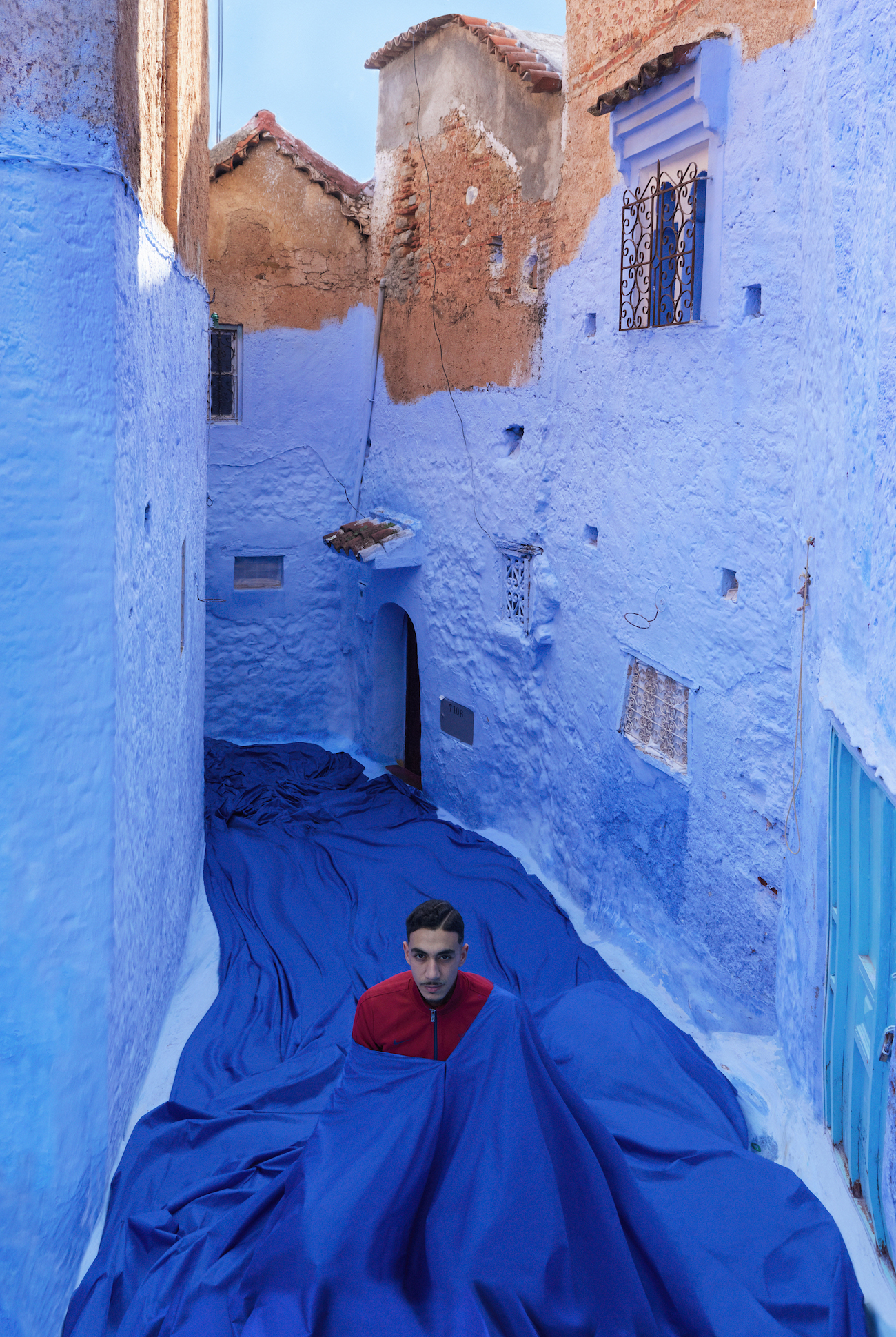
[continued] And in Chefchaouen, the Blue City in Morocco, of course I couldn’t pass by the subject of color, which literally defines the identity of the city and the images made there.
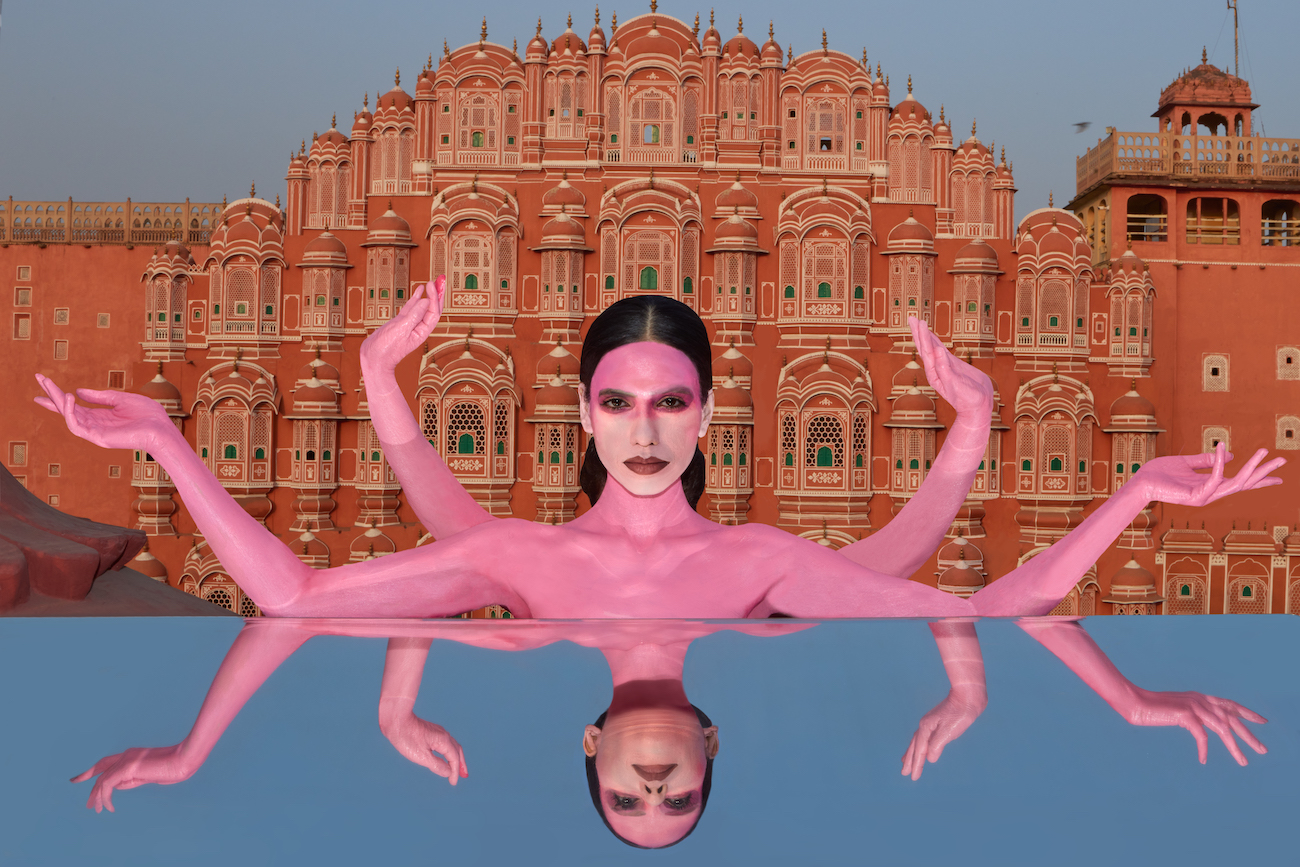
Very often, the influence of a place is expressed not only through color but also through the visual language. For example, Jaipur is more geometric, there is a lot of symmetry, and the images I make there also become very symmetrical, built around geometry. In Varanasi, there is visually more chaos, but there is also a much stronger influence of the spiritual and religious dimension—and this immediately manifested itself in works with a religious subtext.
So in every place my style changes with it. I become more of a conduit for what I see. I don’t dictate to the place what colors and forms to use—the place gradually dictates them to me.
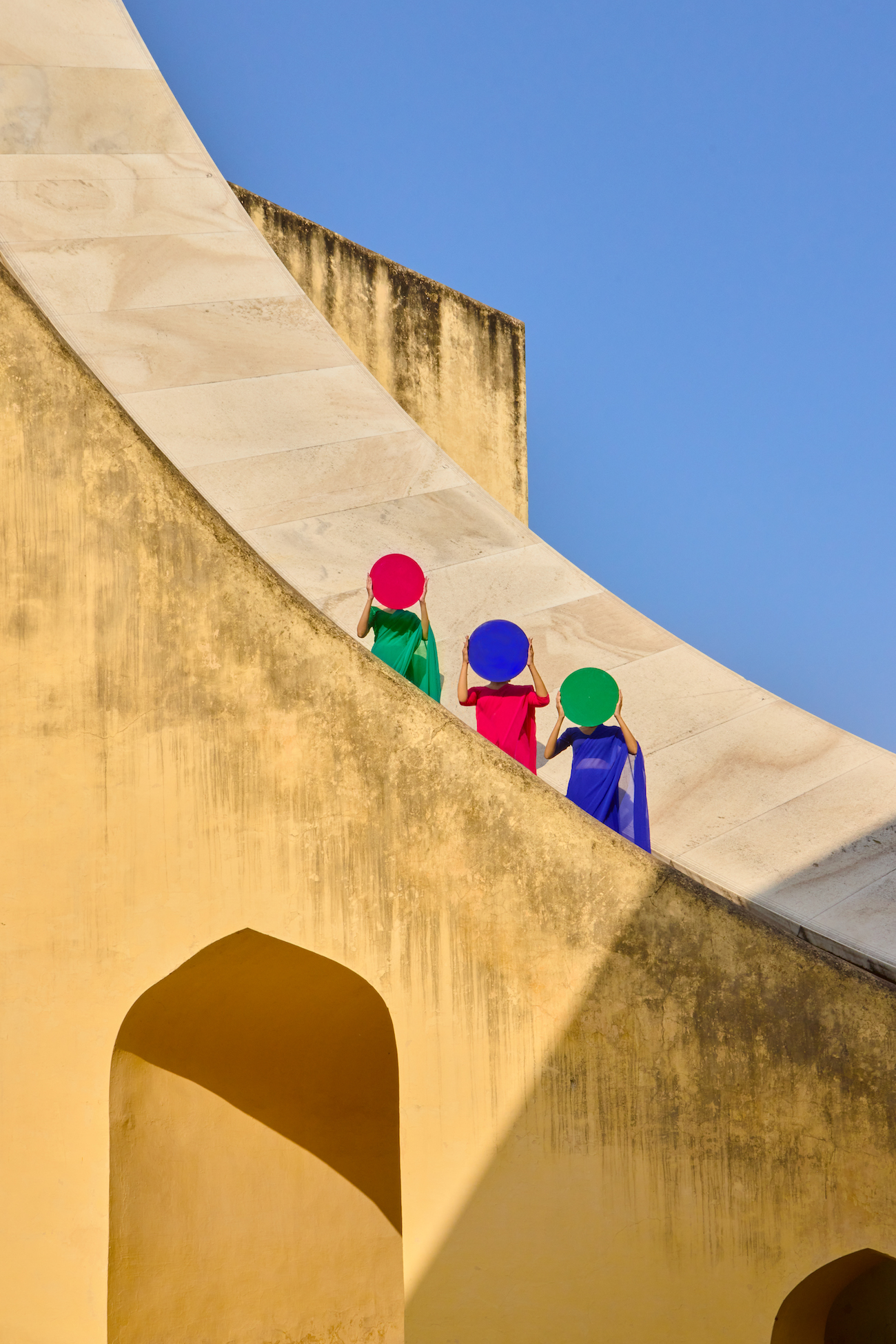
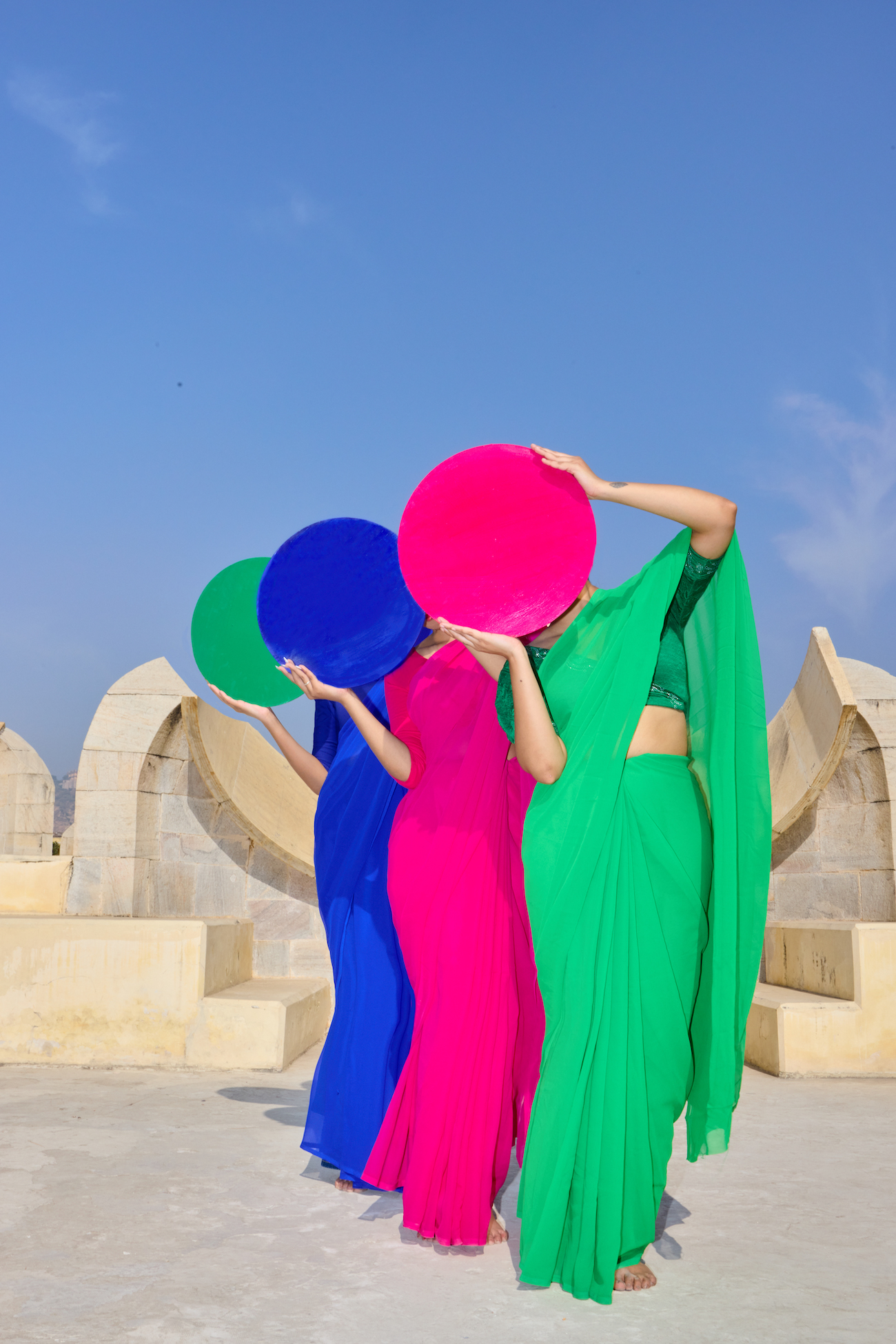
In works such as your photographs from Jaipur, how did the intense pinks and warm tones of the city influence the aesthetic and emotional atmosphere you wanted to create?
Jaipur is one of the clearest examples of how a place can completely determine the color of my work. It is called the Pink City, and when you arrive there, pink literally surrounds you. The walls, fabrics, saris, paint – this color is everywhere.
After a while, you simply can’t resist this palette. It literally fills you. So I built the whole Jaipur series around the idea of making pink the dominant color in the frame.
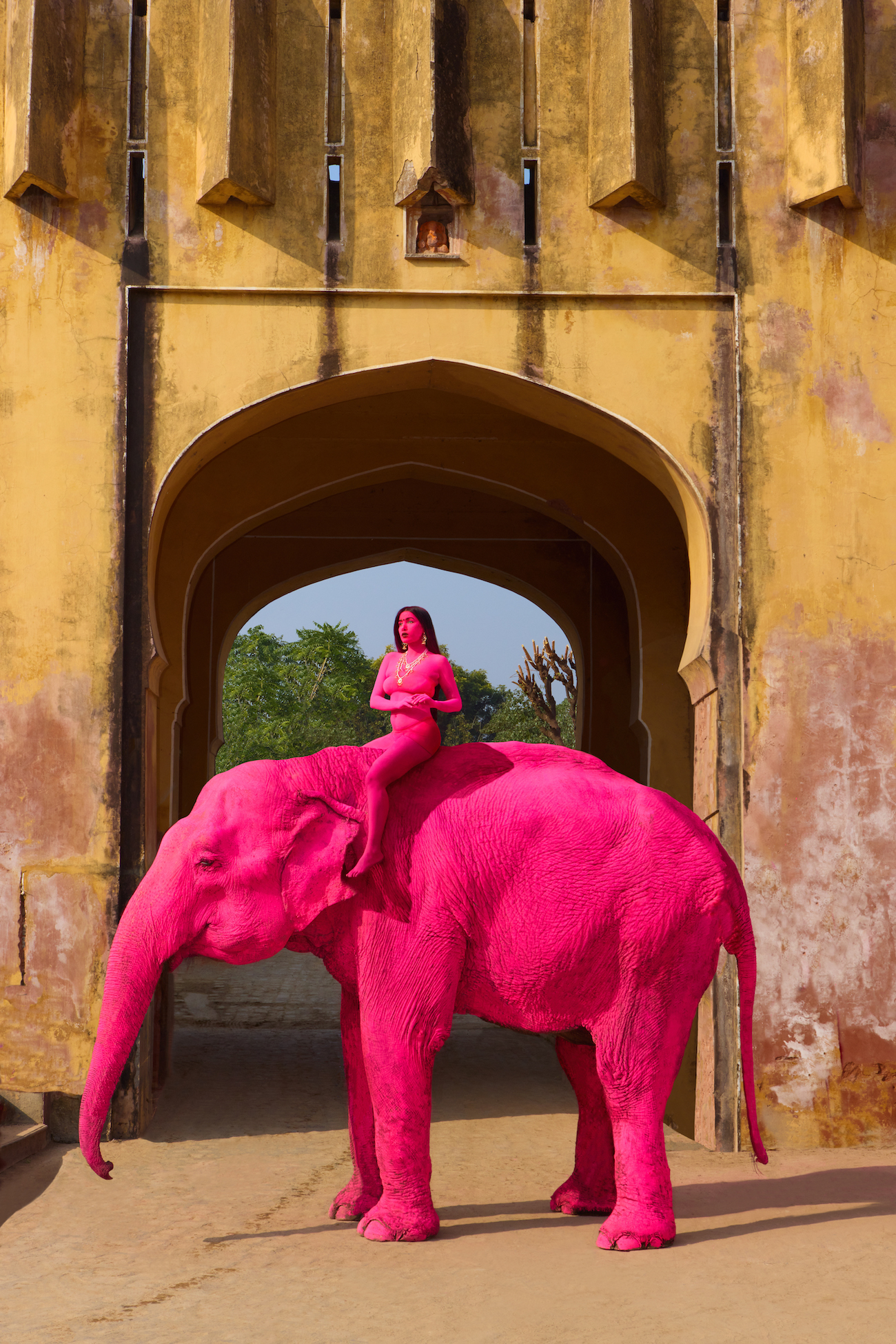
For example, the Pink Elephant also came from this feeling. I saw painted elephants everywhere on the streets of Jaipur – it is part of the local tradition, and pink is also one of the several colors that locals use to paint elephants.
Some viewers said that I had chosen a terrible color, that it was too bright, kitschy or even vulgar. But this is actually a color that is really used for painting elephants.
I was simply reacting to what I was actually seeing around me.
Indian color aesthetics are very intense in themselves. Pink with yellow, strong color combinations – to a European eye this can sometimes look unusual or even excessive, but in India this is a completely natural visual environment. So this palette was not invented by me – I simply brought into the work what I was seeing.
And the elephant itself was also a reaction to what I was observing around me. Elephants are everywhere in Rajasthan – not only walking through the streets, but also in ornaments, frescoes, fabrics, drawings and sculptures. They are one of the main visual symbols of Rajasthan. And I decided to combine the elephant as a symbol of the place with pink as the main color of the city.
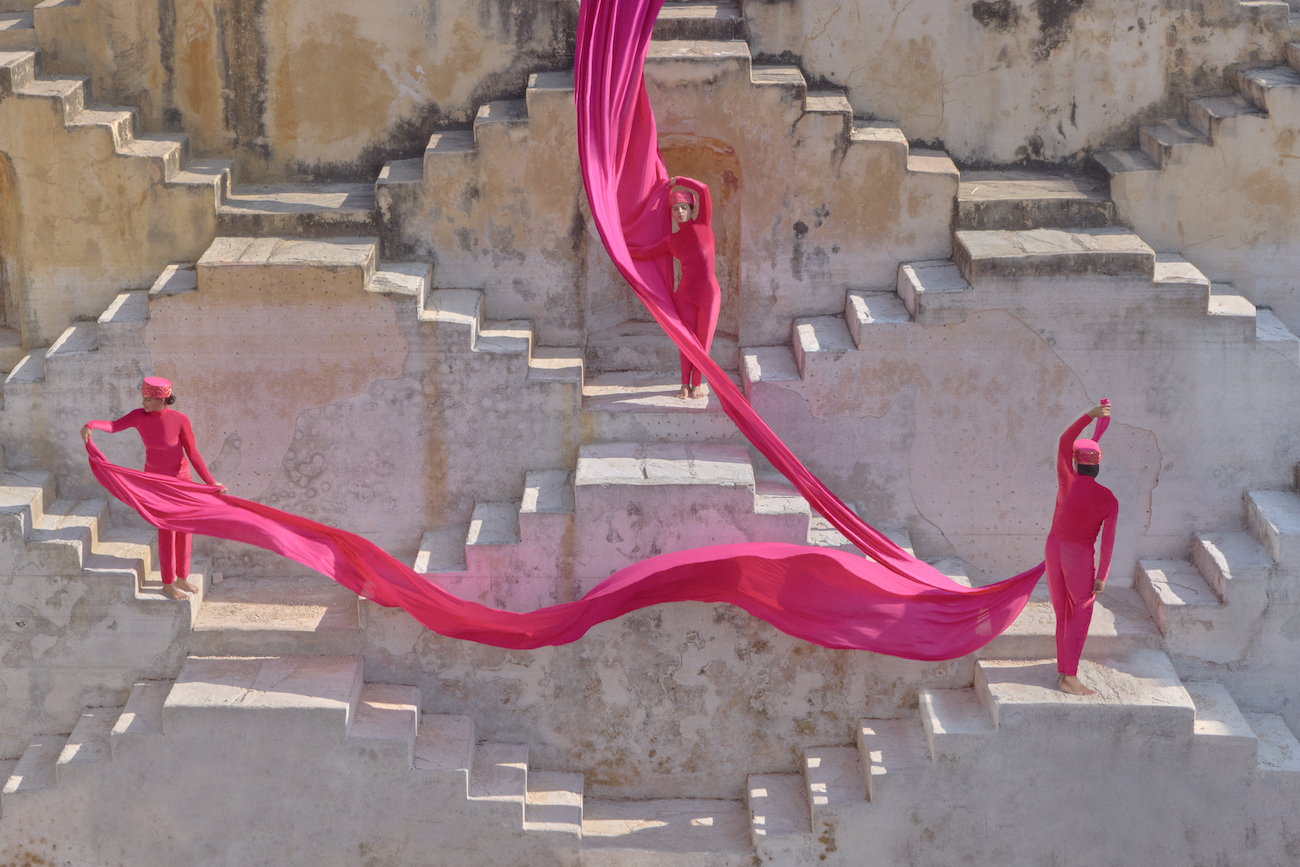
In your images, people often seem to merge with their surroundings; what interests you about using the body to express something about a landscape?
A person—their appearance, features, clothing—is also a carrier of the visual code of a place. Every country, every region has its own characteristics. So I’m interested in integrating people into the frame, creating an additional descriptive layer.
But at the same time, I’m not interested in making portraits of specific individuals. I try to avoid personalization—that moment when the photograph becomes a photograph of a particular person.
I try to make the person somehow dissolve into the image. To make them as abstract as possible as a carrier of the visual code of the place, while erasing the individual identity.
What role does collaboration play in your process, particularly when working with people you meet in the places you visit, and how can those encounters change the direction of an image?
Collaboration is basically the essence of the whole project. I could talk about this forever.
Literally everything is built around collaboration, from researching the place to organizing the production and the actual shoot.
Every time I arrive somewhere where I don’t know a single person. I have no team, no models, no assistants, and sometimes I don’t even understand how things work. So I start every chapter of the shoot completely from scratch.
I don’t use fixers. I walk around different places myself, talk to people and make all the arrangements directly. Very often the first person I meet is the owner of the hostel, and I simply start asking them: where is this, how does this work here, who can I talk to?
Then I start meeting people who help me find locations and subjects, and help with the preparation. It can be a fisherman in Bolivia, an extreme hiking guide on a volcano in Guatemala, local dancers in Jaipur, people working on elephant farms, tuk-tuk drivers, boatmen, carpenters who make props, tailors who make costumes, florists, and so on.
So every time I’m basically building an entire network of social contacts from scratch, and the result of the shoot depends a lot on how quickly and effectively I can build that network. It is very important to build trusting relationships with people from another culture and with a different mentality. And it’s not an easy part of the process, but it gives me a huge amount of understanding of the place I’m in.
Very often, the idea itself is born from these collaborations. I usually don’t arrive with a fully formed concept. I follow this network of new contacts as it expands every day, and the idea usually grows out of the next new person I meet.
For example, in Jaipur, a dancer contacted me and said that she had a small group and that they would like to work with me. I met them, and then we started developing the idea together—where and how we could shoot it. She then took me to Indian markets, helped me choose and negotiate for fabrics, found me a tailor for the costumes, and we created the looks for them from scratch, making them work with the location that local people had also shown me.
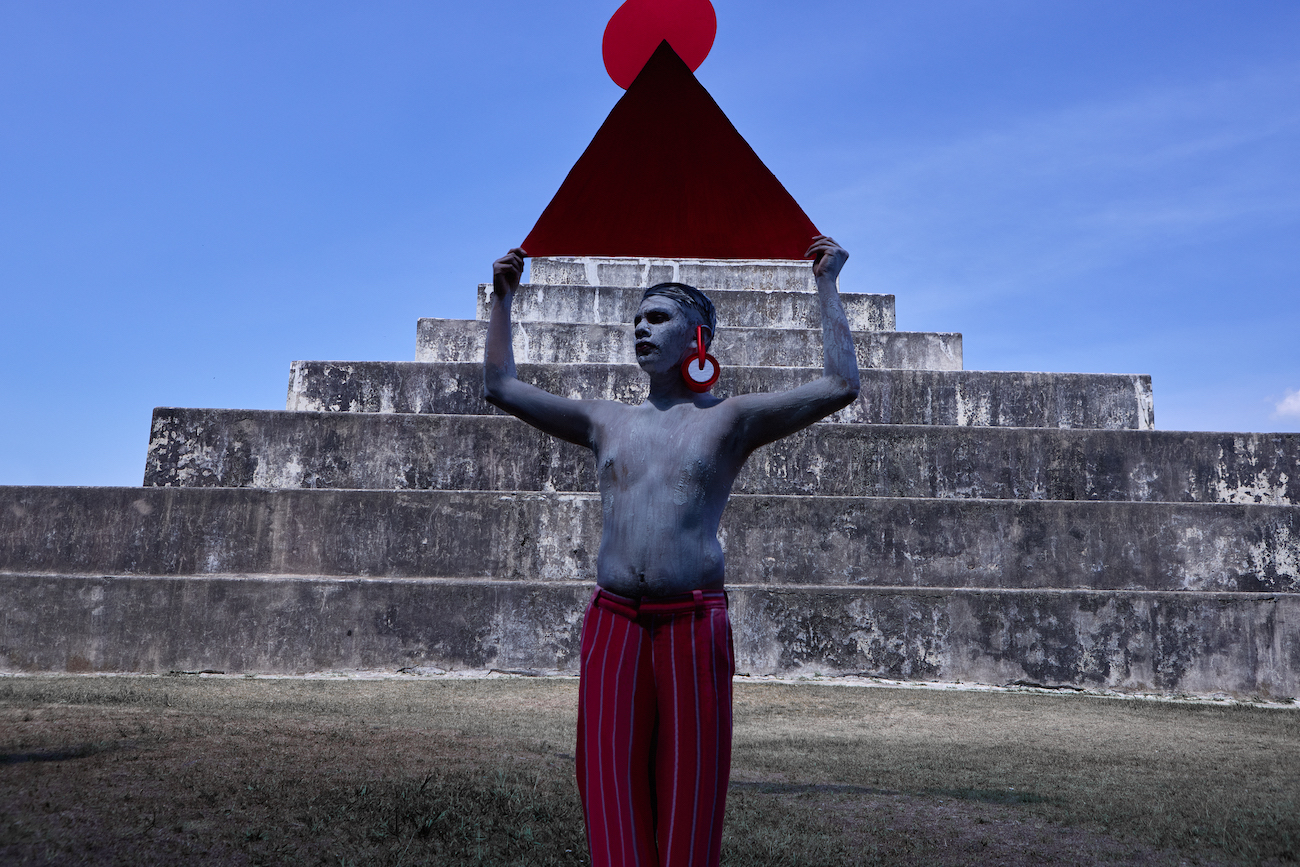
In Guatemala, I arrived in a small town where I wanted to make a shoot with a Mayan pyramid, and I needed a male model, a local assistant and someone to create the set design props. I happened to see a little shop renting traditional local clothing on the street. I went in to look at the clothes for the shoot, started talking to the owner, and after ten minutes of conversation, all my other questions about the shoot were solved too – she offered to help make the props, suggested her son as the model and her daughter as the assistant. So I solved all the production issues in half an hour.
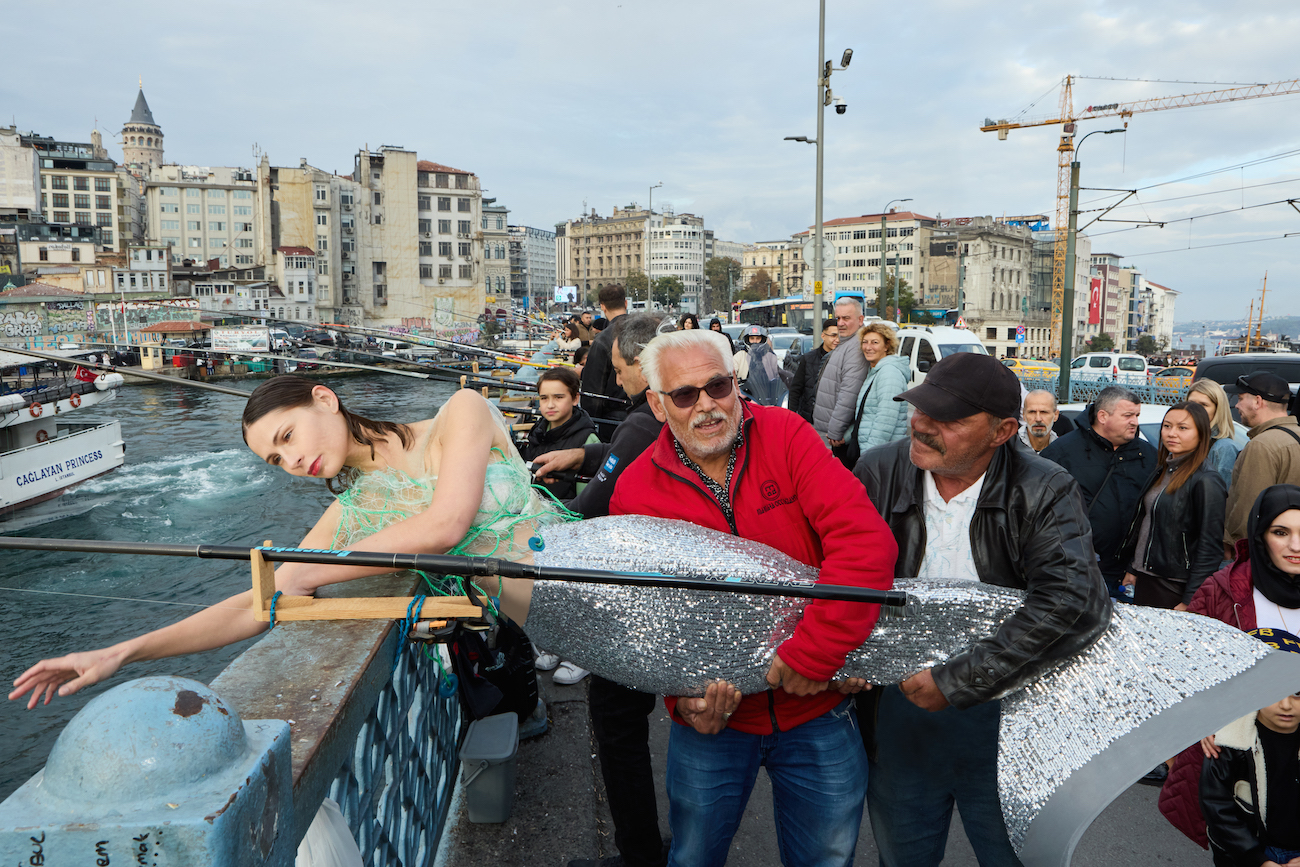
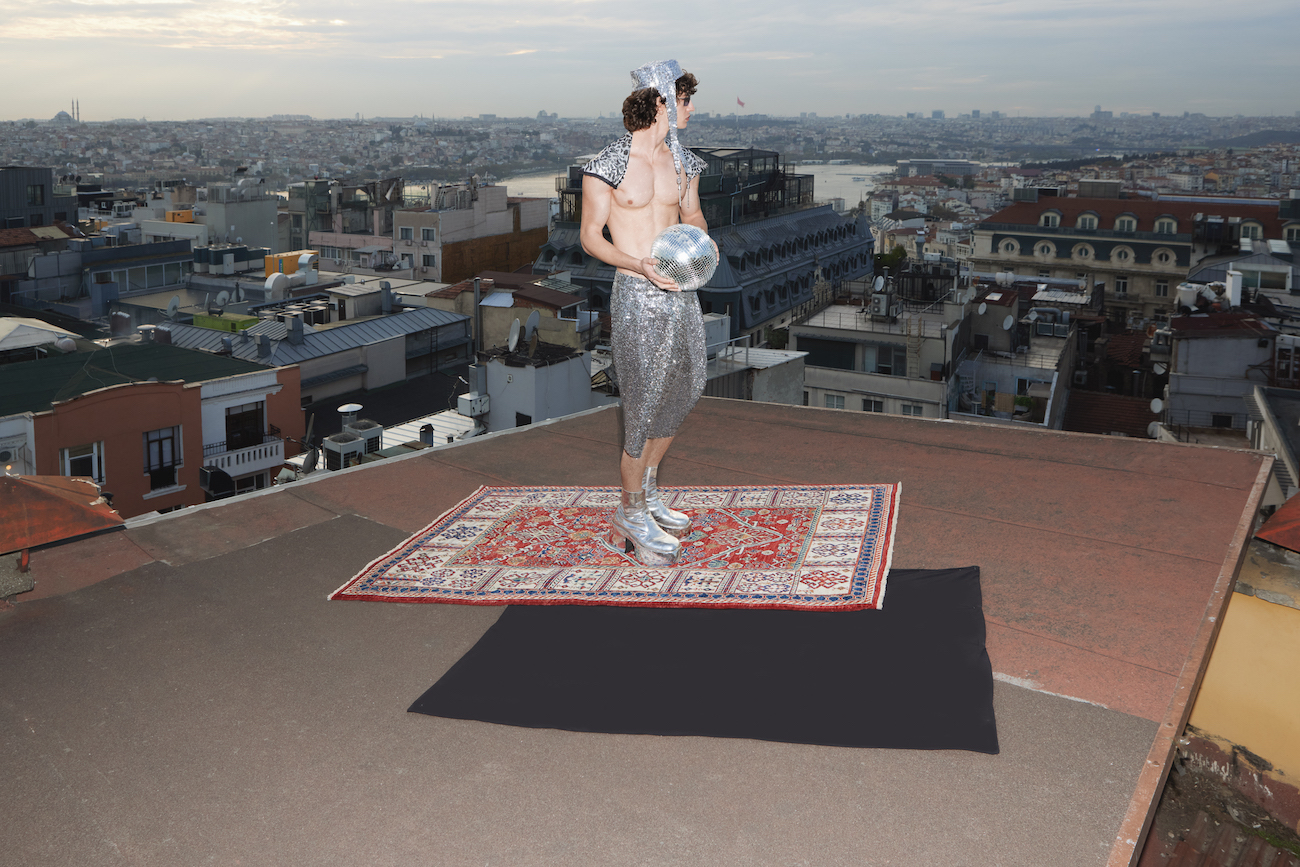
In Istanbul, I made a shoot inspired by an Eastern fairy tale, with a flying carpet, only because I met the owner of a carpet shop.
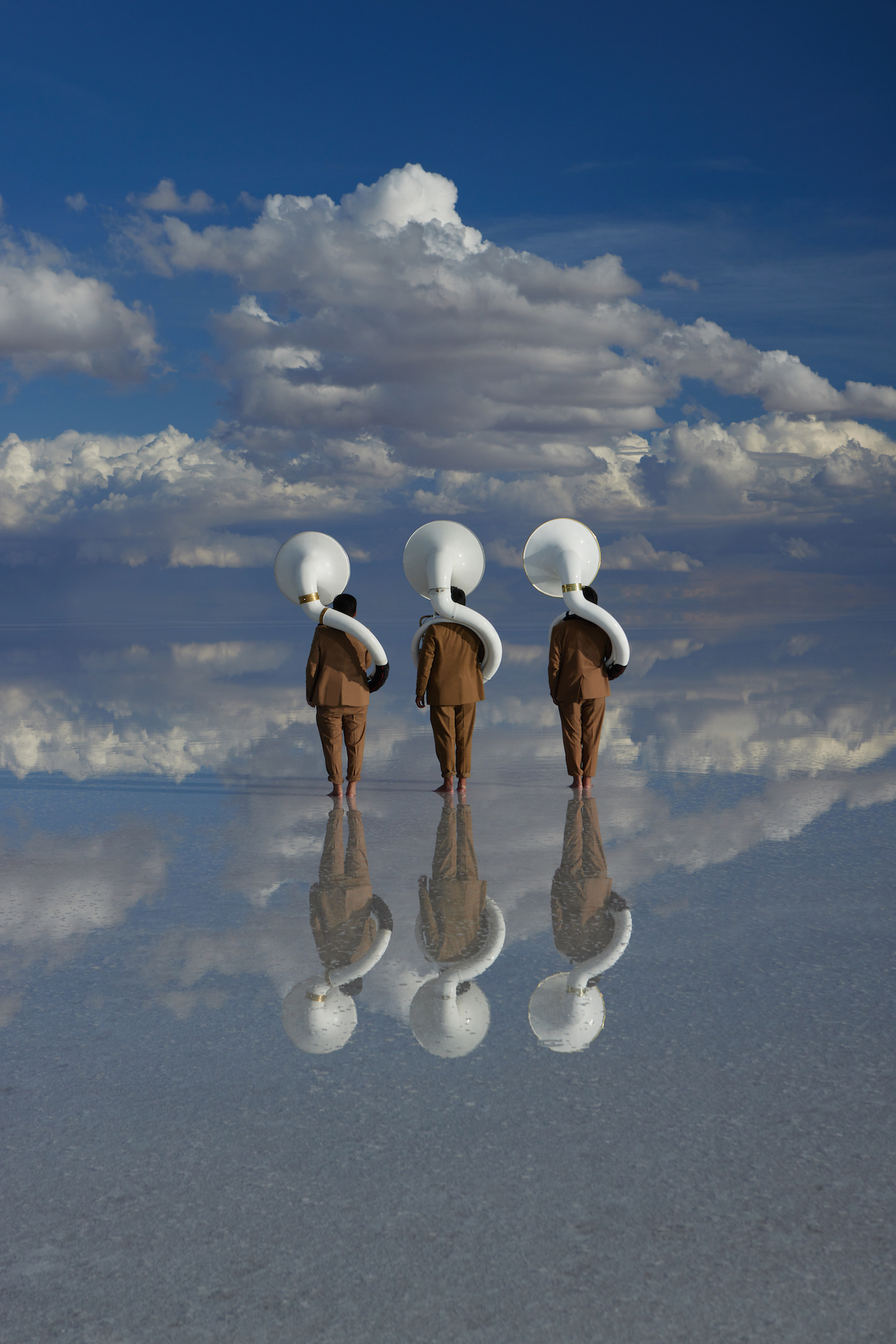
[continued] Or in Bolivia—I arrived during carnival season and saw local musicians with huge white brass instruments. Seeing them gave me the idea to photograph them in the salt desert, with their white instruments reflected in the salt surface.
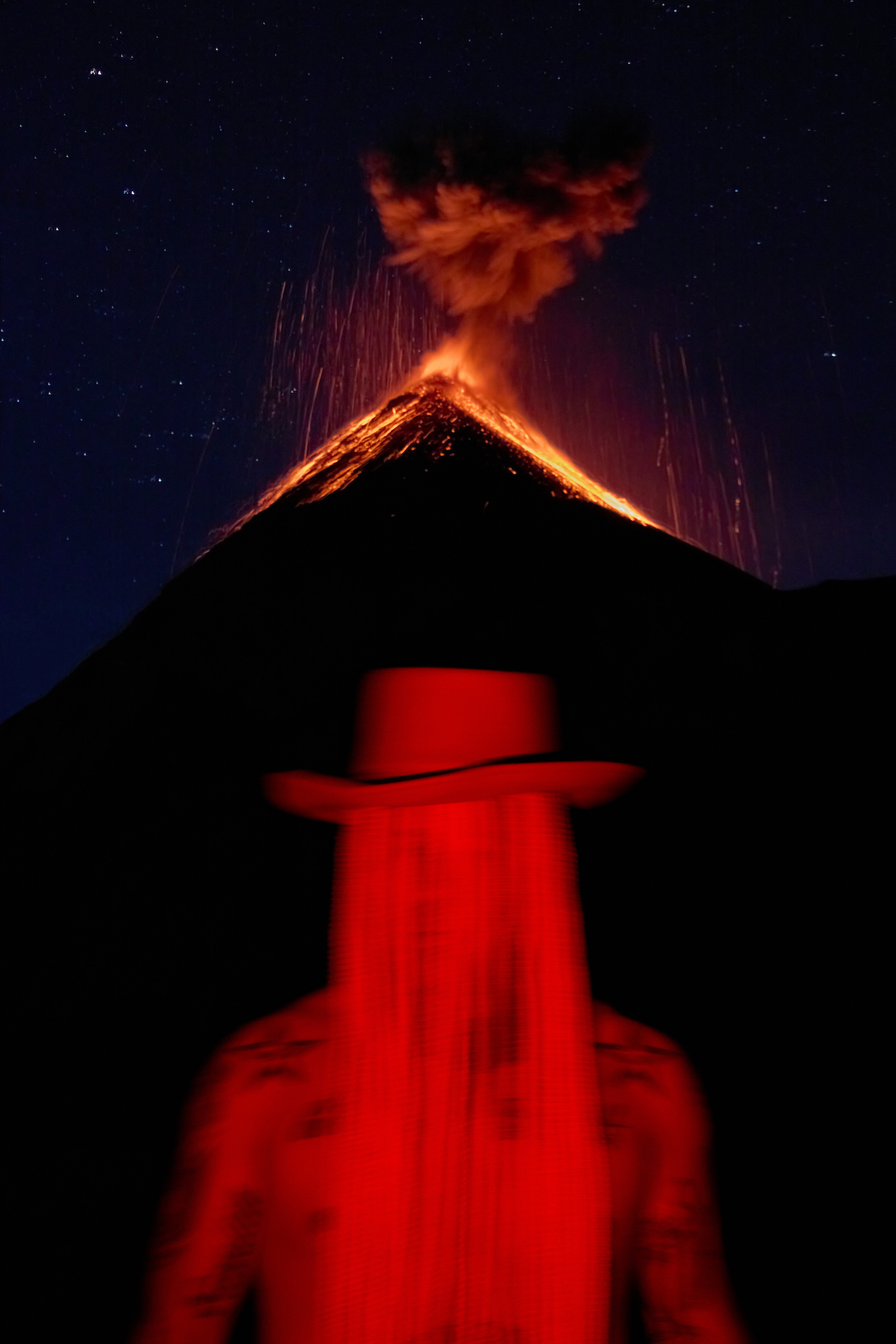
And sometimes a random encounter can change an existing idea literally at the last moment. In Guatemala, I knew exactly that I wanted to make a shoot against the erupting Volcán de Fuego, but I didn’t know who the model would be. Because of the difficulty and cost of the climb, I couldn’t bring a model or assistants with me.
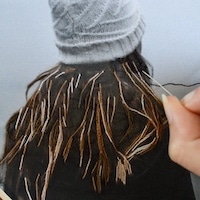
I bought a red hat at the market and decorated it with long red threads, so that it would visually echo the color and fluidity of the lava. But I had no idea who I was going to put this accessory on. At about four thousand meters, I started asking the guides and porters if they would participate.
Basically, who would agree to take their clothes off in the cold at night and put this strange accessory on? And it really was very cold, everyone was wearing jackets and hats.
One guy agreed. He said he could take his shirt off literally for a minute.
And then he takes off his jacket, and I see that his body is covered in very distinctive Guatemalan tattoos. Suddenly there was this very strong masculine energy, a rather brutal image with a certain criminal vibe that I could never have planned in advance. And it was very “about Guatemala”.
So for me, collaboration is not simply a way to realize a photograph I have already imagined. Very often, the photograph itself is born from the collaboration.
Can you speak about one photograph from Art Expedition that particularly captures the relationship between your experience of a place and the final visual image you created from it?
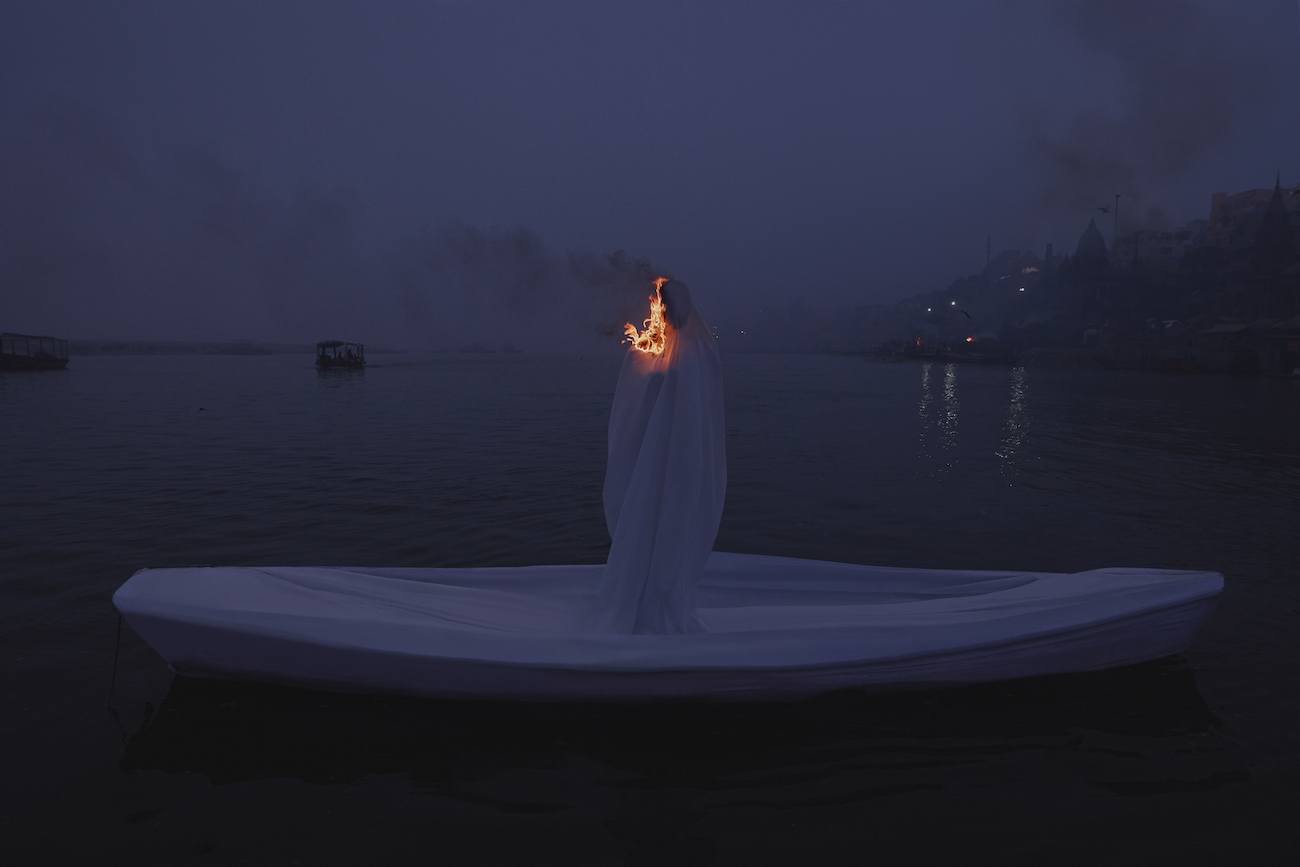
One of the clearest examples is a work I created in Varanasi after spending six weeks living there.
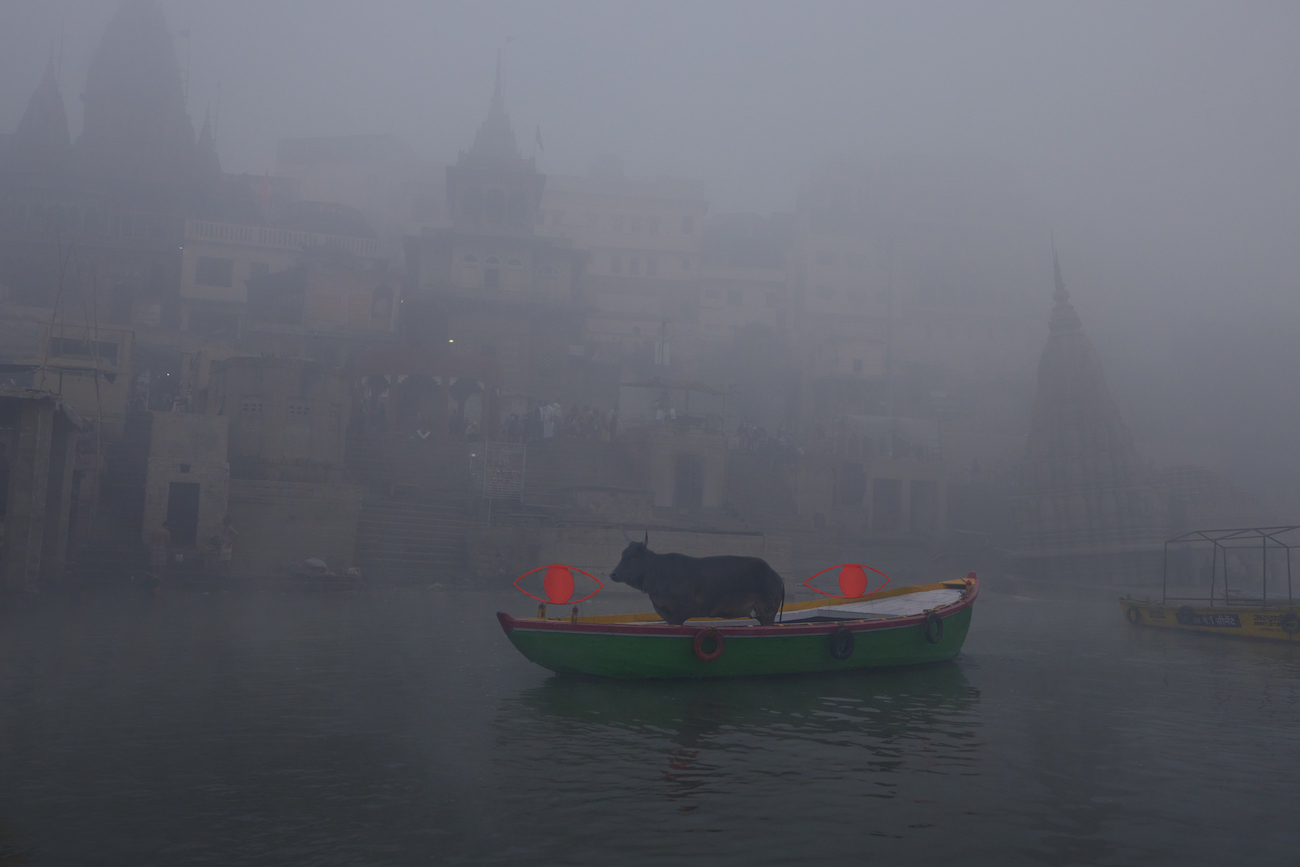
I lived in the city, observed it and gradually immersed myself in its atmosphere. Varanasi is a place where the themes of life, death and religion are literally everywhere. It is the main city of Hinduism, standing on the banks of the sacred River Ganga.
It is believed that being cremated in Varanasi allows your soul to leave the cycle of rebirth and become liberated. Every day you see the cremation fires burning there, as they have for centuries. You see people carrying the dead to the Ganga, people bathing and praying on the riverbank. You see the Ganga itself and understand how important it is to the life of the city – religiously, spiritually and ceremonially.
And I brought all these symbols together in one image.
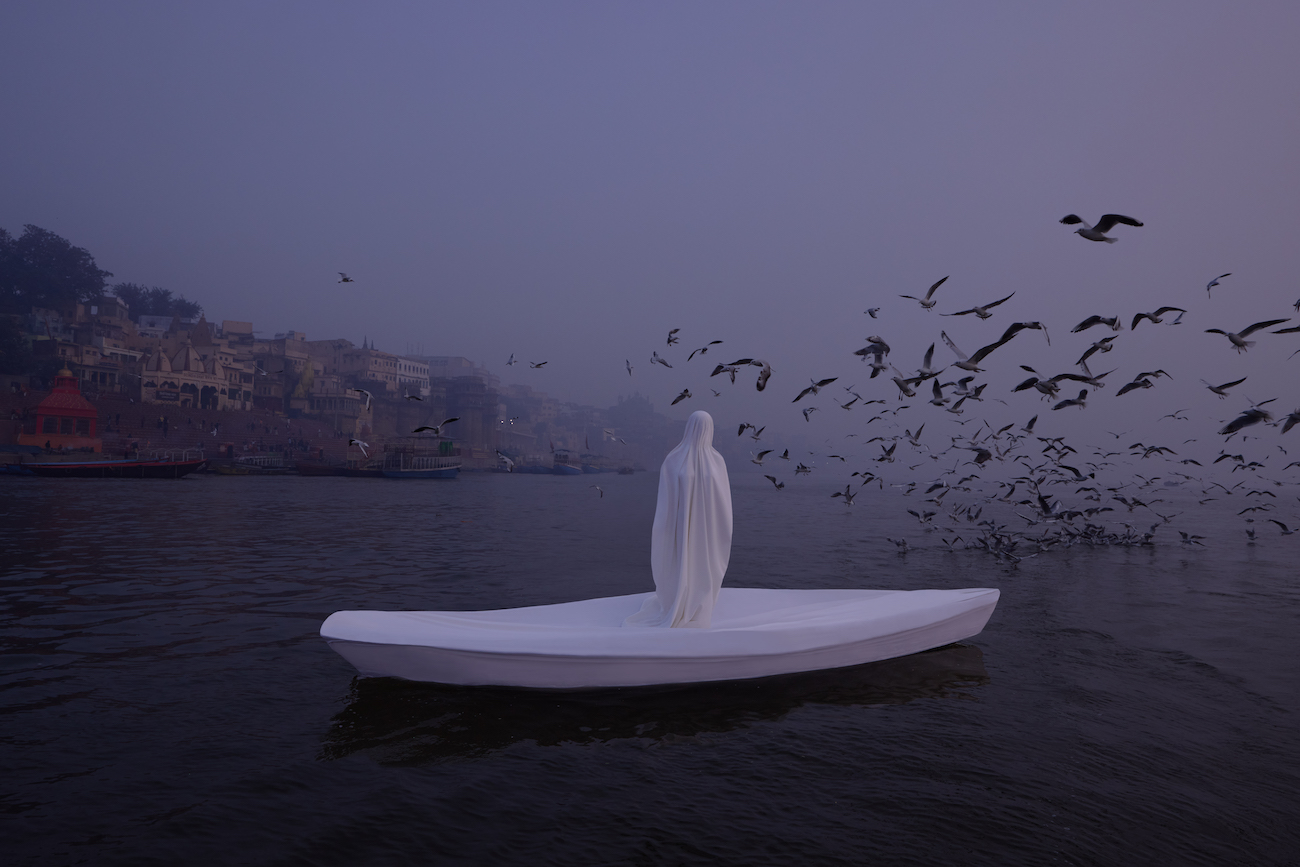
I created an art installation on the Ganga: a figure and a boat wrapped in white fabric, with the figure burning.
I wanted to bring together all these things that I was seeing around me in Varanasi—the river, the bodies wrapped in white shrouds, the boats and the cremation fires.
I saw the boat as the human body carrying the soul through its earthly journey, and the fire as a symbol of liberation—the soul leaving the cycle of rebirth and attaining moksha.
Of course, this interpretation can be different. People who commented on the work came up with different readings of it, but everyone who had been to Varanasi said that, in a metaphorical way, I had managed to capture the deeper spirit of the city.
How has working across different locations changed the way you think about photography as both a physical process and a way of translating an experience into an image?
For me, this question is primarily about how important the physical process of making the work is. Travelling, physically being in a place, exploring an unfamiliar environment, random encounters, collaborations—all of this is not a preparatory part of photography. It is part of the creative process itself.
And this is where I think about a question I’m often asked: “Wouldn’t it be easier to just create all of this with AI?”
And my answer is—what exactly are you going to give the AI as a prompt? To formulate a good, precise prompt, you first need to see something and clearly understand what you want.
For example, the idea of the pink elephant in Jaipur came to me because I saw painted elephants literally everywhere.
And I saw the architecture, those endless Rajasthani arches and gates that later became part of the specific image. If I had never been to Jaipur, I simply would not have been able to form such a specific image in my head. It simply would never have appeared there.
The same applies to things like light, air, reflections, the angles at which the sun falls, textures, geometry—all of these things are unique to every place. And this is why people who live somewhere or know a place well can often immediately understand where my photograph was made, even if the image itself is completely surreal.
Because everything in it is real.
A documentary foundation is very important to me. I don’t mean documentary photography—I mean real elements, real places, real people, real visual impressions. I can combine them into a completely surreal image, but underneath it there is always a reality that I have personally seen and experienced.
So my creative method is not simply to imagine something and then ask AI to visualize it. I first need to physically get to the place, see it, get to know it, collect this visual material. And only then can I turn it into my own image. Otherwise, where would it even come from?