Near the eastern entrance of the Singapore Straight lay a trove of centuries-old ceramics just waiting to be discovered. But it wasn’t until the late 2010s when archaeologists excavated the site and recovered about 3.5 tonnes of ceramic shards, now part of what’s known as the Temasek Wreck. It marked the first ancient shipwreck ever found in Singapore’s waters.
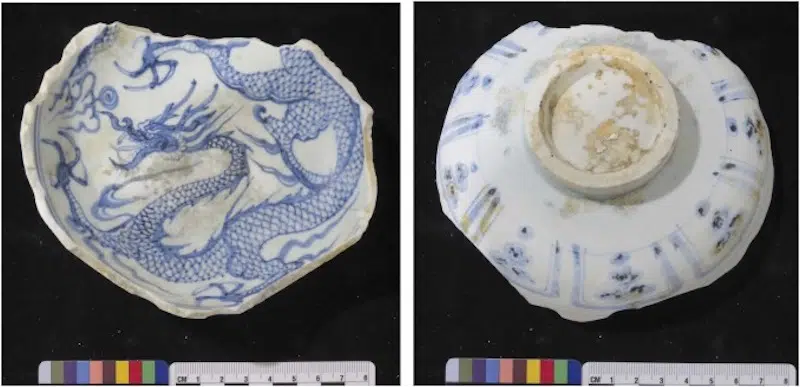
Researchers worked on the site between 2016 and 2019. In addition to the ceramic shards, they discovered several intact and nearly intact vessels. Most of the cargo came from southern China, and a large portion consisted of Yuan dynasty blue-and-white porcelain. The findings, aside from being a notable shipwreck, make it the largest recorded underwater cargo of its kind in the world.
The blue-and-white porcelain alone weighed about 300 pounds (136 kilograms). Archaeologists cataloged more than 2,350 shards along with several complete bowls and vessels. Artisans decorated these ceramics with mandarin ducks, lotus ponds, floral scrolls, and other detailed motifs, which helped scholars date the wreck to around 1340 to 1352. They confirmed this timeframe by comparing the pieces with known kiln production patterns from the Yuan dynasty.
The Temasek Wreck offers more than an impressive quantity of artifacts; it captures a single voyage frozen in time. Many archaeological sites accumulate objects over centuries. This cargo, however, represents one moment in history. Because ceramic styles changed in traceable ways, researchers can date the shipment with unusual precision. That clarity gives scholars a valuable reference point for understanding regional trade in Southeast Asia.
For decades, many narratives described pre-1819 Singapore as a quiet fishing settlement. The Temasek Wreck challenges that idea. The cargo proves that Singapore’s earlier incarnation functioned as an active entrepot, in which merchants connected it to China and to the wider Maritime Silk Road network. They traded not only bulk goods but also high-quality ceramics prized by elites and consumers alike.
The discovery reshapes our understanding of Singapore’s early maritime history by highlighting the scale of ocean trade in the fourteenth century. It also shows how art, commerce, and cultural exchange shaped societies long before colonial empires emerged.
Marine archaeologists uncovered Singapore’s first ancient shipwreck near the entrance to the Singapore Strait, revealing 3.5 tonnes of Yuan dynasty ceramics, including rare blue-and-white porcelain.
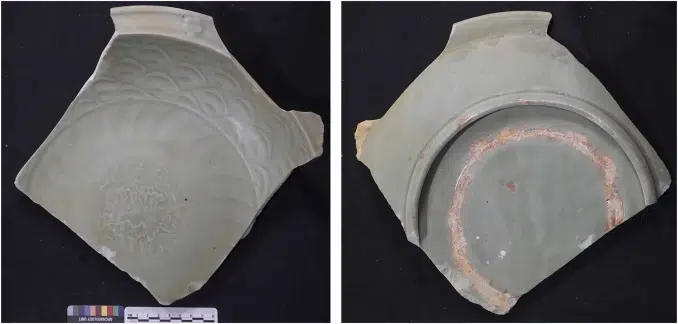
The diverse cargo suggests the ship sailed from southern China to the thriving 14th-century port of Temasek.
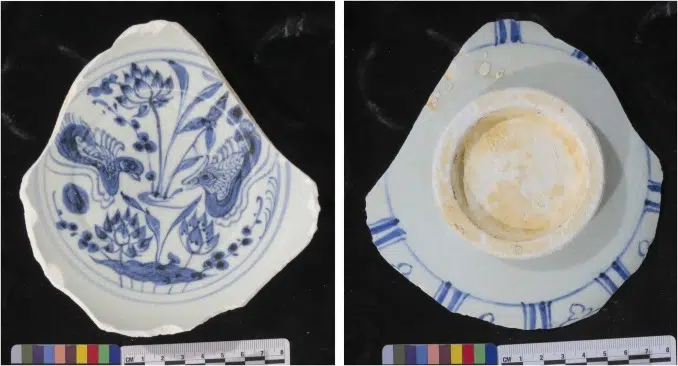
This remarkable discovery is reshaping our understanding of Singapore’s role in early maritime trade.
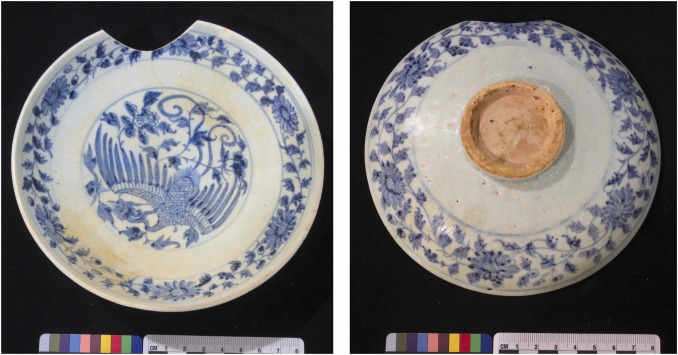
Source: The Temasek Wreck ceramics cargo: Yuan blue-and-white porcelain, celadon and other ceramics found in Singapore waters
Related Articles:
Smashed Cans Sculpted in the Traditional Style of Ming Dynasty Porcelain
Magnificent 18th-Century Chinese Vase Accidentally Discovered in Someone’s UK Kitchen
Porcelain Sneaker Sculptures Celebrate the Memory and Meaning of Everyday Objects
Intricate Blue Ink Tattoos Wrap the Body in Sprawling Chinese-Inspired Dragon Designs