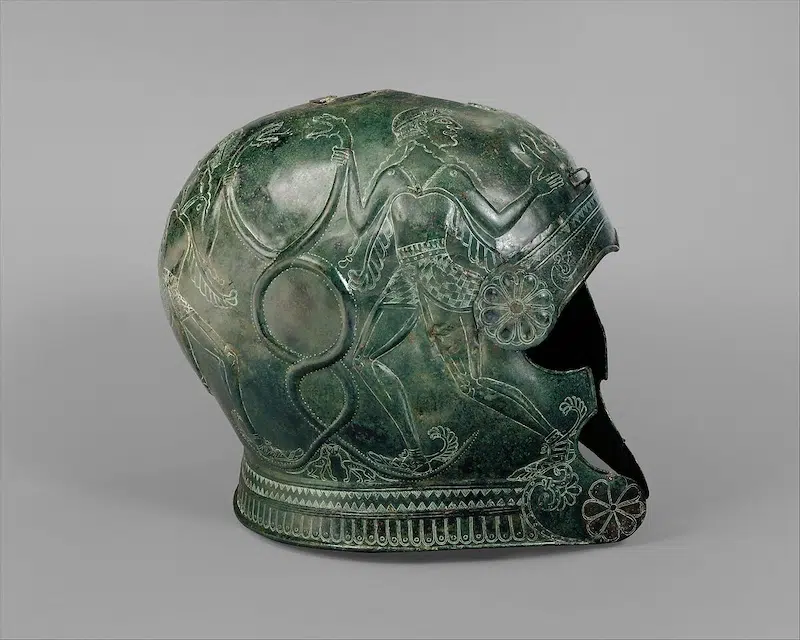
Bronze helmet with winged figures and intertwined serpents, Greek, Cretan, late 7th century BCE. (Photo: The Metropolitan Museum of Art, Public domain)
Ancient artifacts can spend decades far from where they were originally found. But for 15 Greek antiquities that were recently held at the Metropolitan Museum of Art, that journey is finally coming to an end. The Manhattan District Attorney’s Office recently announced the repatriation of 15 artifacts collectively valued at nearly $3 million. The objects were seized from The Met as part of multiple investigations into antiquities trafficking and have now been formally returned to Greece.
Together, the works span thousands of years of history. Among them are five pieces of bronze armor from ancient Crete, a terracotta beak-spouted jug dating to around 1750–1700 BCE, and a Roman marble head from the first century CE.
15 ancient Greek artifacts valued at nearly $3 million have been returned to Greece after being held at the Metropolitan Museum of Art.
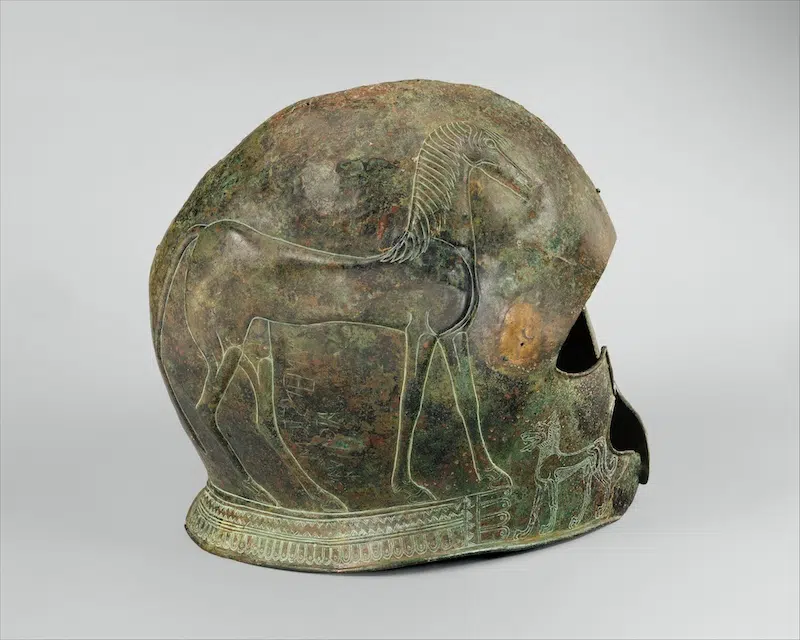
Bronze helmet with horses and lions, Greek, Cretan, late 7th century BCE. (Photo: The Metropolitan Museum of Art, Public domain)
Among the returned objects are five intricately decorated pieces of bronze armor dating to the late 7th century BCE.
Some of the most striking pieces are the five examples of bronze armor. Dating to the late 7th century BCE, the group includes two helmets and three bronze armor plates designed to protect the lower abdomen. Despite their practical purpose, the pieces are incredibly ornate. One helmet is decorated with winged figures holding intertwined serpents, while another features horses and lions. The three bronze armor plates are covered with images of horses, winged horses, and sphinxes.
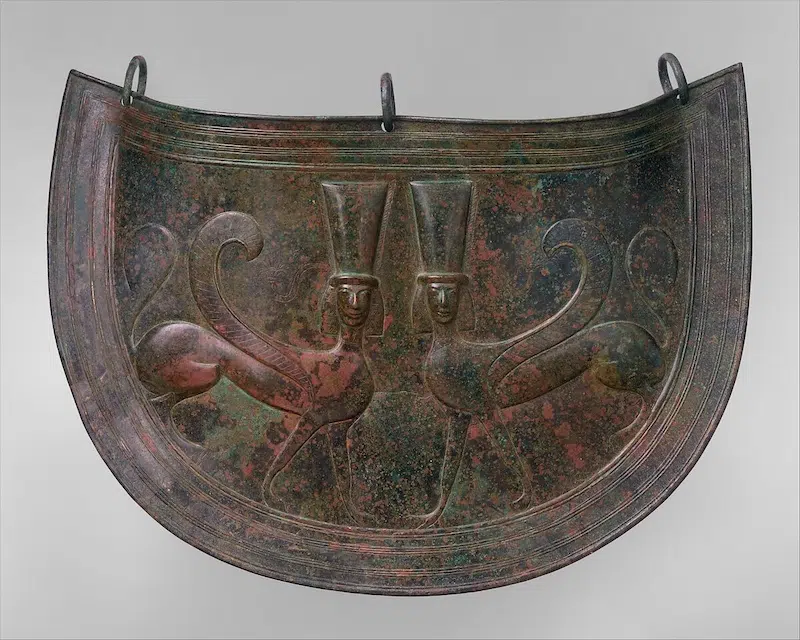
Bronze protective plate with sphinxes, Greek, Cretan, late 7th century BCE. (Photo: The Metropolitan Museum of Art, Public domain)
Greek authorities traced the armor back to an illegal excavation carried out in 1964 at Afrati on the island of Crete. Similar artifacts from the same excavation are already housed at the Archaeological Museum of Heraklion, meaning these newly returned pieces can finally be reunited with objects from the same archaeological site more than 60 years later.
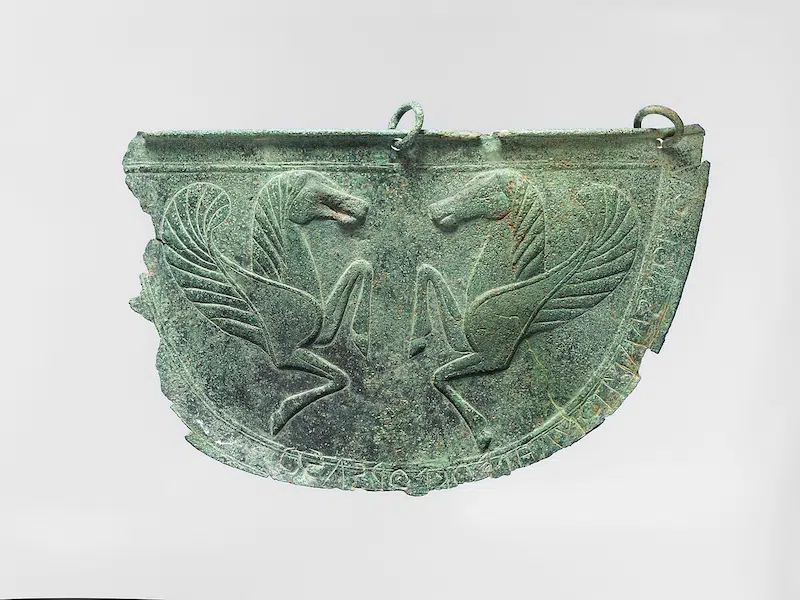
Bronze protective plate with winged horses, Greek, Cretan, late 7th century BCE. (Photo: The Metropolitan Museum of Art, Public domain)
Other works making their way home include a nearly 4,000-year-old terracotta jug and a Roman marble head from the first century CE.
Another object making its way home is a terracotta beak-spouted jug dating to around 1750–1700 BCE. The vessel was looted from a burial site in Greece before traveling through Switzerland and the United Kingdom and eventually entering The Met’s collection. A Roman marble head from the first century CE is also among the returned works. The sculpture is believed to represent Genius, the personification of an emperor’s spirit.
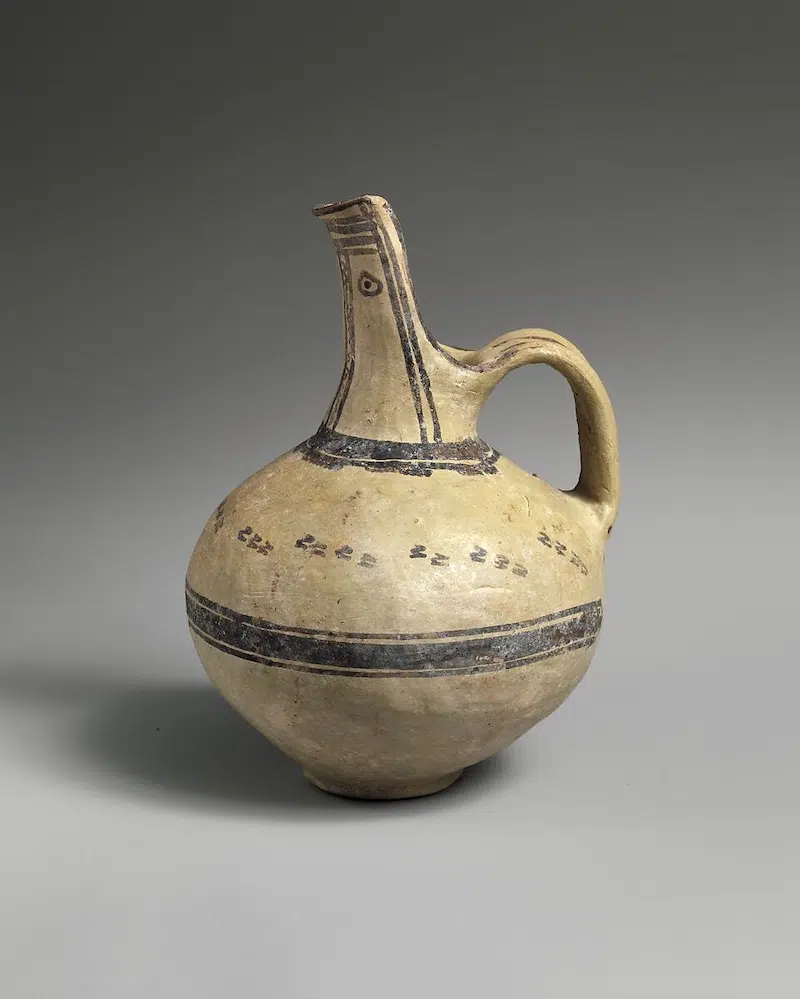
Terracotta beak-spouted jug, Helladic, ca. 1750–1700 BCE. (Photo: The Metropolitan Museum of Art, Public domain)
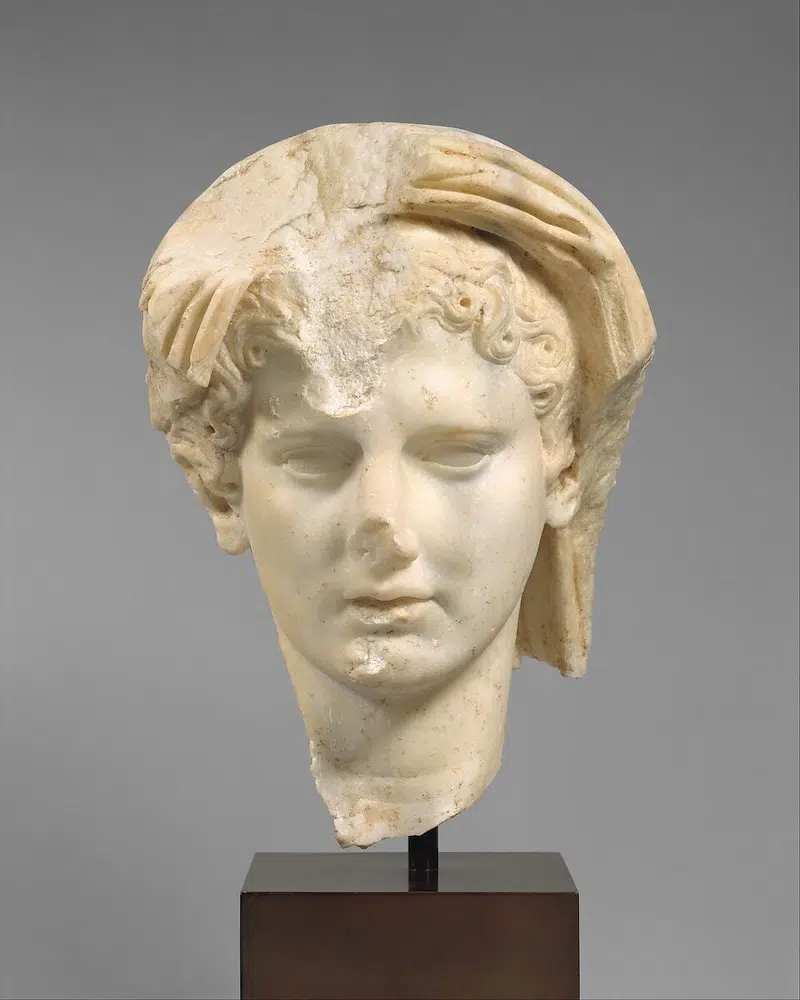
Marble head of a veiled man, Roman, first half of the 1st century CE. (Photo: The Metropolitan Museum of Art, Public domain)
For some of the artifacts, returning to Greece also means being reunited with objects from the archaeological sites where they were originally found.
The Met says information uncovered through the Manhattan District Attorney’s investigations, along with its own provenance research, helped determine that the objects should be returned to Greece. For Greek Minister of Culture Lina Mendoni, their return is about more than recovering valuable works of art. “Every repatriation is an act of justice towards our history,” she says, “but also proof that the illicit trafficking of cultural property can be effectively confronted when we join forces with trust, consistency, and determination.”
The Manhattan DA’s Antiquities Trafficking Unit has recovered thousands of cultural objects in recent years and returned them to countries around the world. But for some of these 15 artifacts, the homecoming is especially significant. After decades away, they can once again be seen alongside objects from the archaeological sites where their stories began.
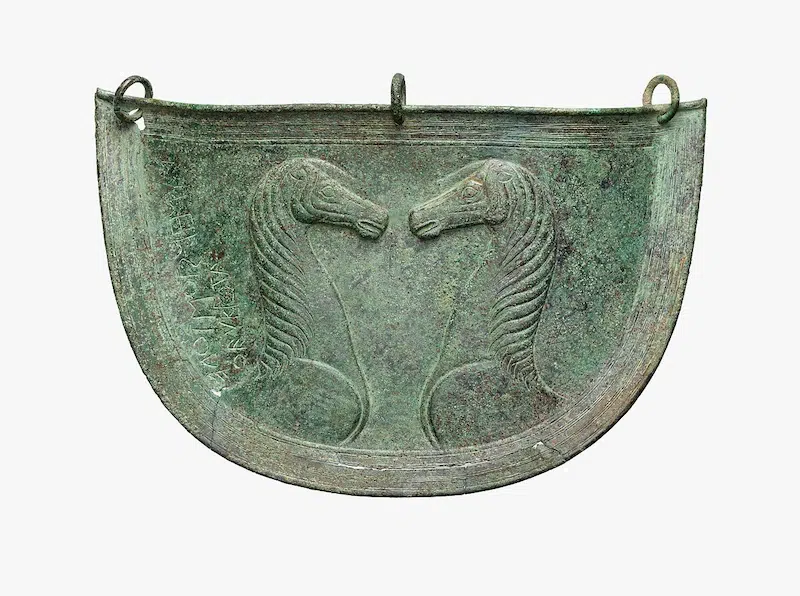
Bronze protective plate with horses, Greek, Cretan, late 7th century BCE. (Photo: The Metropolitan Museum of Art, Public domain)
Sources: The Metropolitan Museum of Art Returns Objects to the Hellenic Republic; D.A. Bragg Announces Return of 15 Antiquities to the People of Greece
Related Articles:
$2.2 Million Worth of Stolen Ancient Artifacts Returned to Greece and Italy
The Metropolitan Museum of Art Returns Three Ancient Sculptures to Iraq
London Museum Receives Incredible Donation of Over 14,000 Roman Artifacts