Sometimes, art can come with surprising costs. Three Banksy artworks in London have cost British taxpayers nearly £150,000 (about $200,000) in removal, security, and other expenses. The mounting costs have renewed a familiar debate surrounding the elusive street artist’s work: Is it vandalism or valuable public art?
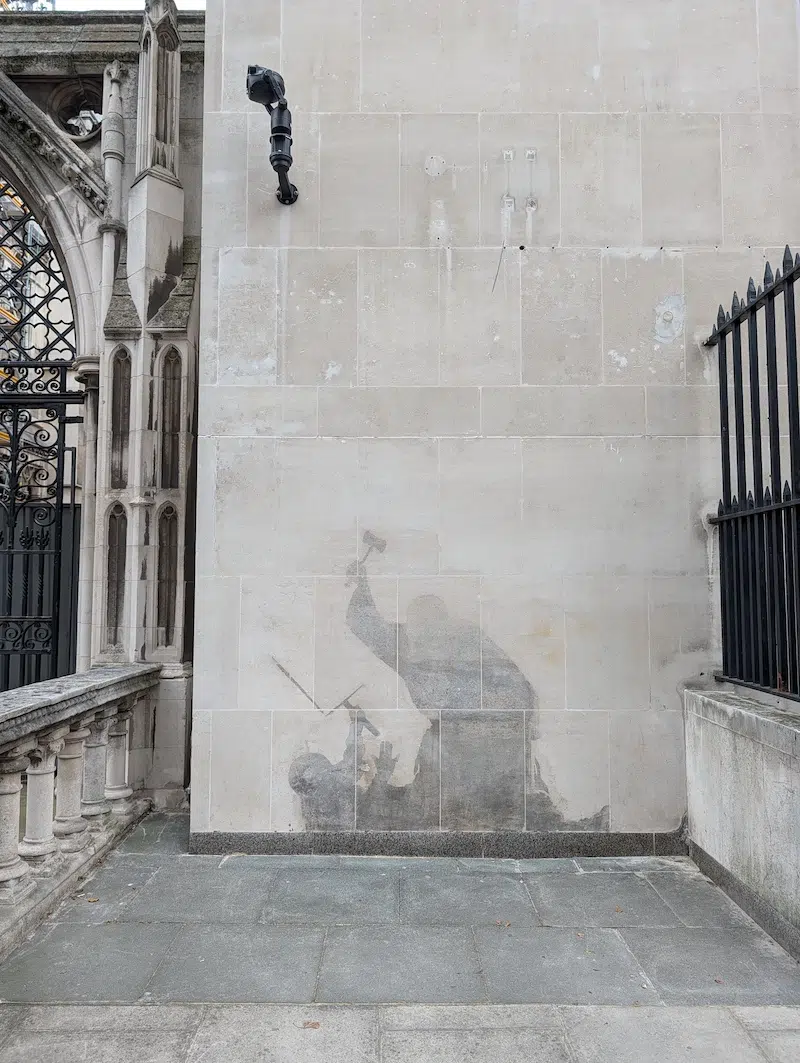
The largest bill comes from a mural that Banksy painted on London’s Royal Courts of Justice in September 2025. The artwork depicts a judge in a traditional wig and gown looming over a protester on the ground, a gavel raised above his head.
Banksy confirmed the work as his own shortly after it appeared, sharing an image of the mural on his website and Instagram. But the Royal Courts of Justice is a Grade II-listed historic building, meaning its architectural character is protected.
Three Banksy artworks in London have cost British taxpayers nearly £150,000 (about $200,000) in removal, security, and other expenses.
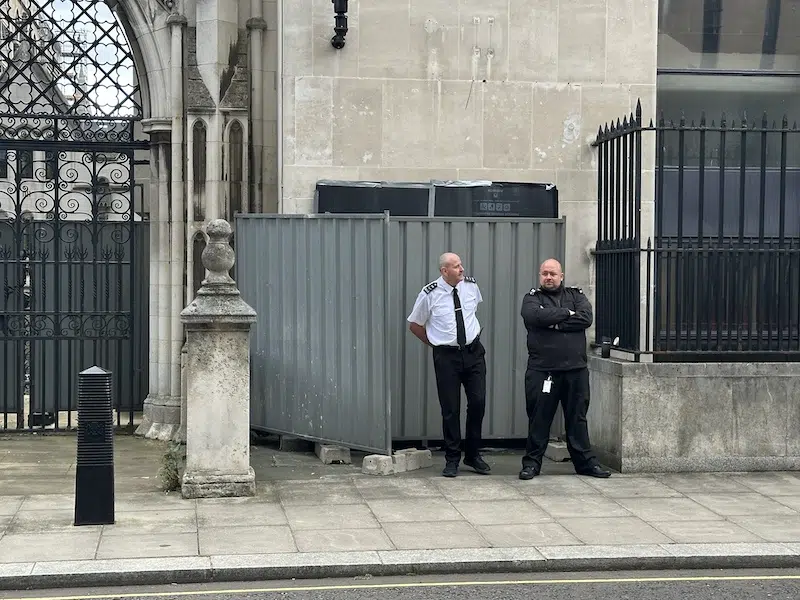
According to figures obtained by the BBC through Freedom of Information requests, the Ministry of Justice has spent £50,000 (nearly $68,000) attempting to remove the paint from the building. Another £35,300 (nearly $48,000) has gone toward security and staff overtime, bringing costs associated with the mural to more than £85,000 (over $115,000). Contractors are now reportedly using laser technology after initial cleaning attempts proved unsuccessful.
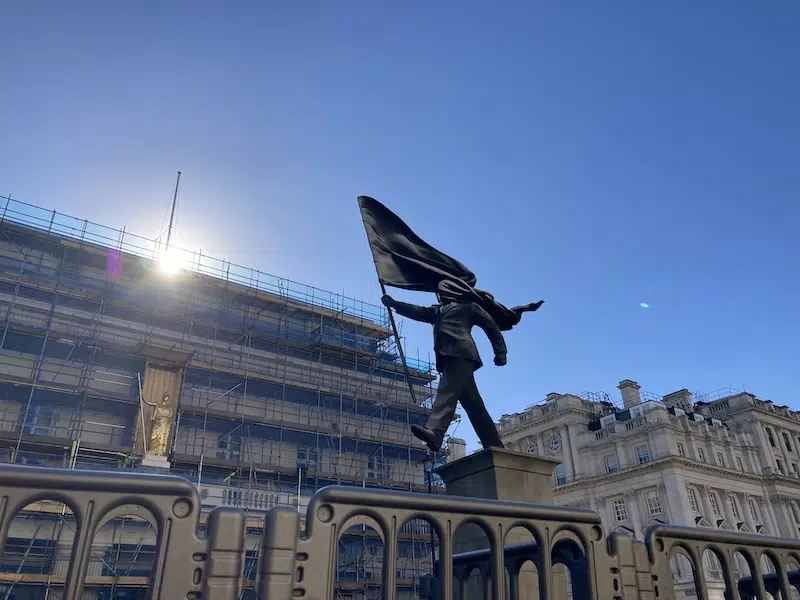
The Royal Courts mural isn’t the only recent Banksy work to come with a significant price tag. In April 2026, a sculpture of a man carrying a Union Jack appeared overnight in Waterloo Place near Trafalgar Square. Westminster City Council has since spent nearly £60,000 (almost $82,000) on barriers, security, and other costs associated with the installation.
Another Banksy intervention has taken a different path. In August 2024, the artist transformed a City of London Police sentry box by painting a swirling school of piranhas across its glass surfaces. The box was removed at a cost of £2,200 (almost $3,000) and placed in storage, with plans for it to eventually go on public display at the London Museum.
Together, the three works illustrate an unusual contradiction at the center of Banksy’s career. His artworks can command millions at auction, yet when they unexpectedly appear on public property, preserving or removing them can leave taxpayers with a substantial bill.
Together, the three works illustrate an unusual contradiction at the center of Banksy’s career. His artworks can command millions at auction, yet when they unexpectedly appear on public property, preserving or removing them can leave taxpayers with a substantial bill.
Art critic Estelle Lovatt defended the accessibility of Banksy’s work, telling the BBC that some tourists visit Buckingham Palace while others seek out the street artist’s creations. She argued that his public artworks bring people together while making art available outside the confines of galleries and museums.
The ongoing removal of the Royal Courts mural captures the tension that has followed Banksy throughout his career. An unauthorized artwork can become a tourist attraction almost overnight while simultaneously creating an expensive problem for whoever owns its unlikely canvas.
Whether considered vandalism, public art, or something in between, Banksy’s work continues to challenge conventional ideas about who gets to decide what art is worth preserving.
Source: Banksy works cost public almost £150,000
Related Articles:
Banksy Unveils New Sculpture in Central London That’s Already Sparking Debate
Efforts To Erase Banksy’s New Mural May Have Actually Amplified His Message
Banksy’s Latest Mural Shines a Light on Unhoused Children During the Holidays