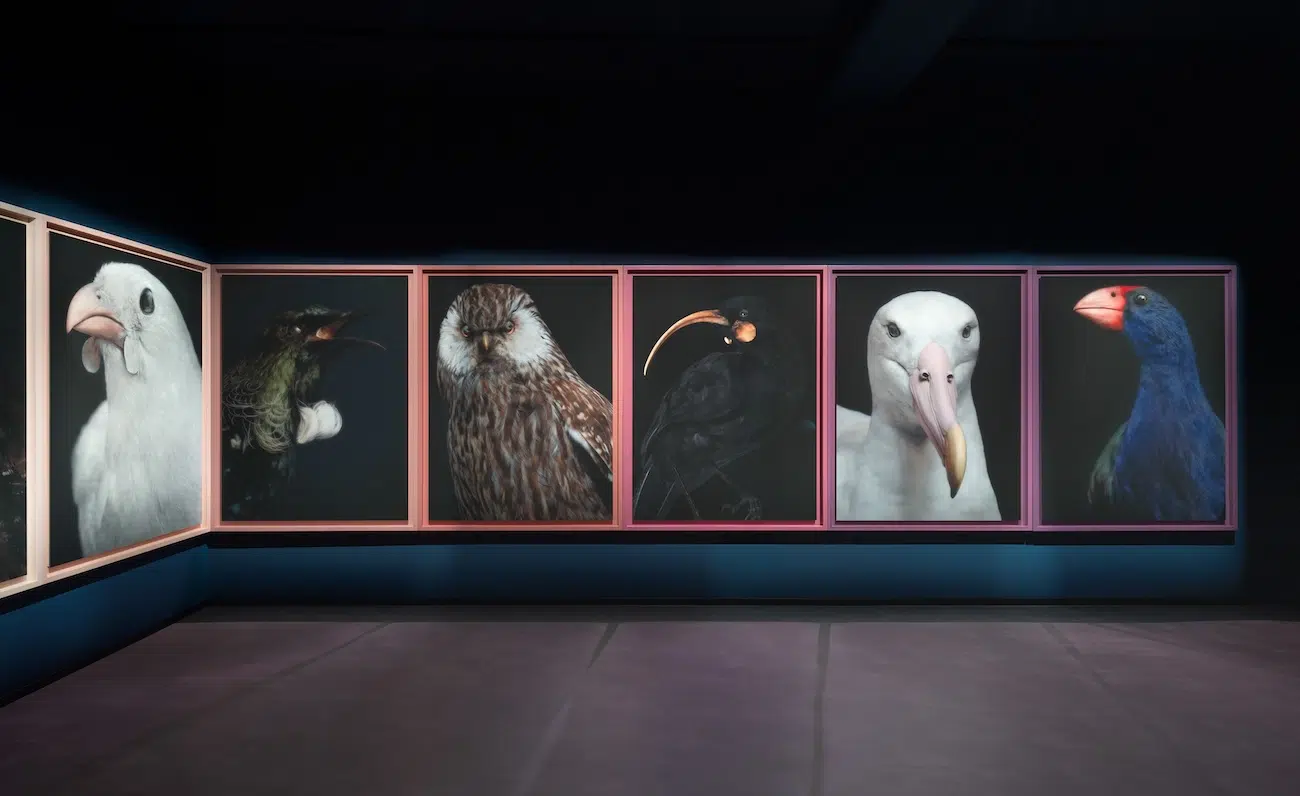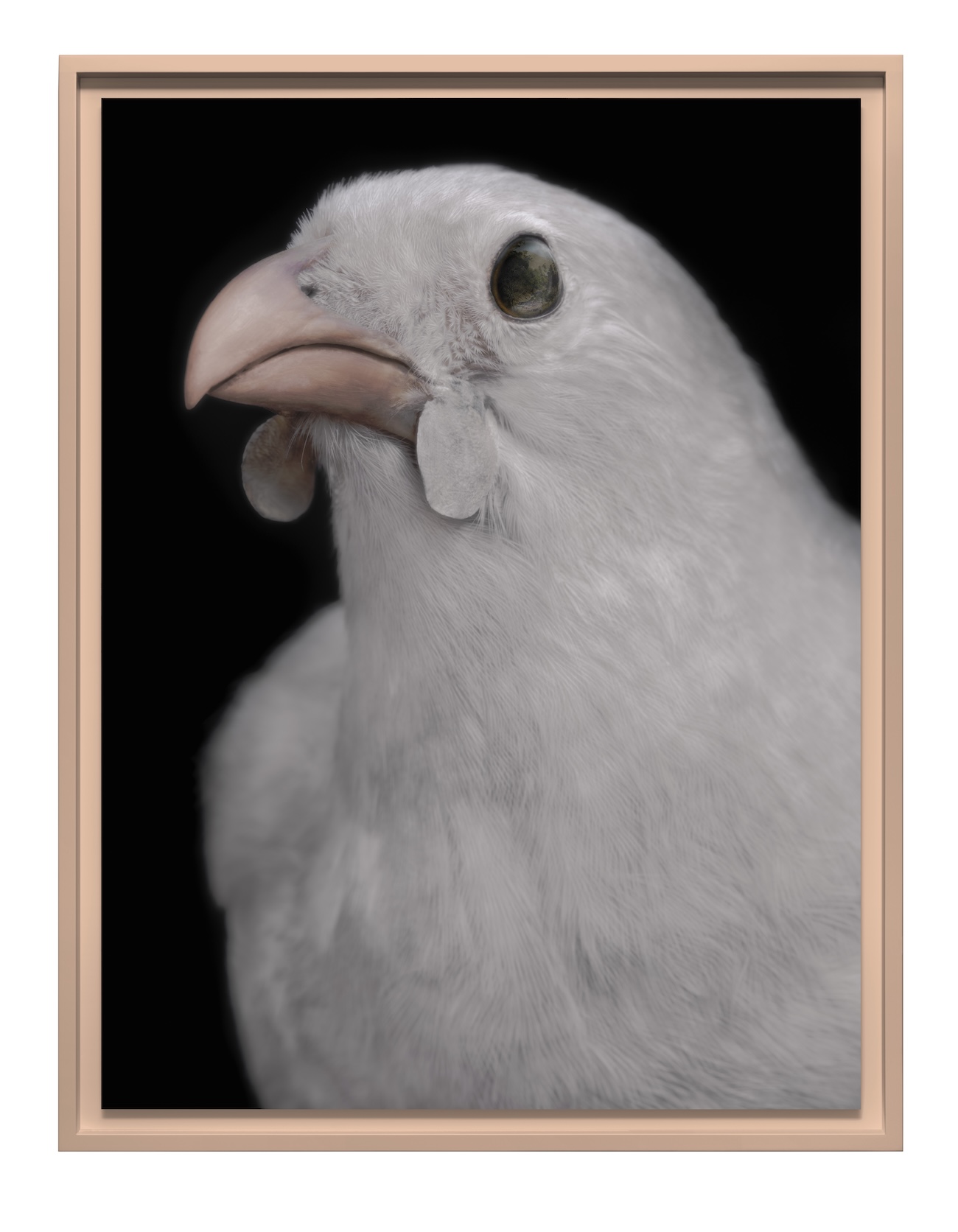
Fiona Pardington, Taharaki Skyside, Kōkako framed.
Artist Fiona Pardington is giving new life to dead birds. For decades, Pardington has been photographing museum archives. Her latest subjects are taxidermied birds endemic to Aotearoa (New Zealand), which can be seen in her latest exhibition titled Taharaki Skyside. The show is now on display at the Aotearoa New Zealand Pavilion at the Venice Biennale until November 22, 2026.
Pardington’s collection centers on the relationship between the corporeal and metaphysical. “Taxidermy occupies a unique space between love, death and fetish… By using strategic lighting and angles, I am trying to draw out their charisma—to free them from the constraints of being mere objects,” she says. With her large-scale portraits, she allows people to engage with each bird, observe its expression and unique beauty, and see firsthand the fragility of biodiversity.
Pardington is of Māori and Scottish descent, and the manu (birds) have great cultural and historical significance to the Māori people. “The ideas I am conjuring remind us of the integral significance of manu within te ao Māori—as sources of food and materials, and intermediaries between human and divine worlds,” says Pardington.
Dante’s Divine Comedy also has a spiritual role in this exhibition. The poet’s description of Purgatory as an island in the Southern Hemisphere gives the manu a symbolic place in the threshold between mortal and divine worlds. And just as Purgatory signifies the boundary between life and death, so did birds for the Māori.
Pre-human Aotearoa was an abundant birdland, shaped over millennia in the absence of land mammals, where birds evolved to fill every ecological niche. That world quickly broke after the arrival of humans. Among the species Pardington has photographed are the huia and the whēkau, or laughing owl, which have been extinct since the early 20th century. Others in the series are not extinct but remain critically vulnerable, a fact that Pardington’s photography aims to point out. Furthermore, she is reflecting the complex histories of colonization and colonial collecting, scientific classification, and cultural loss. Evolving without natural predators left many Aotearoa bird species defenseless when humans arrived and introduced invasive predators.
Just as Purgatory signifies the boundary between life and death, so did the manu, and now so does Pardington with modern technology. Although they are dead, the birds live on in this exhibition, with their species bringing more attention to their importance by Pardington and people like her.
Fiona Pardington’s large-scale photography is raising awareness of the unique extinct and endangered bird species of Aotearoa (New Zealand), and their symbolism.
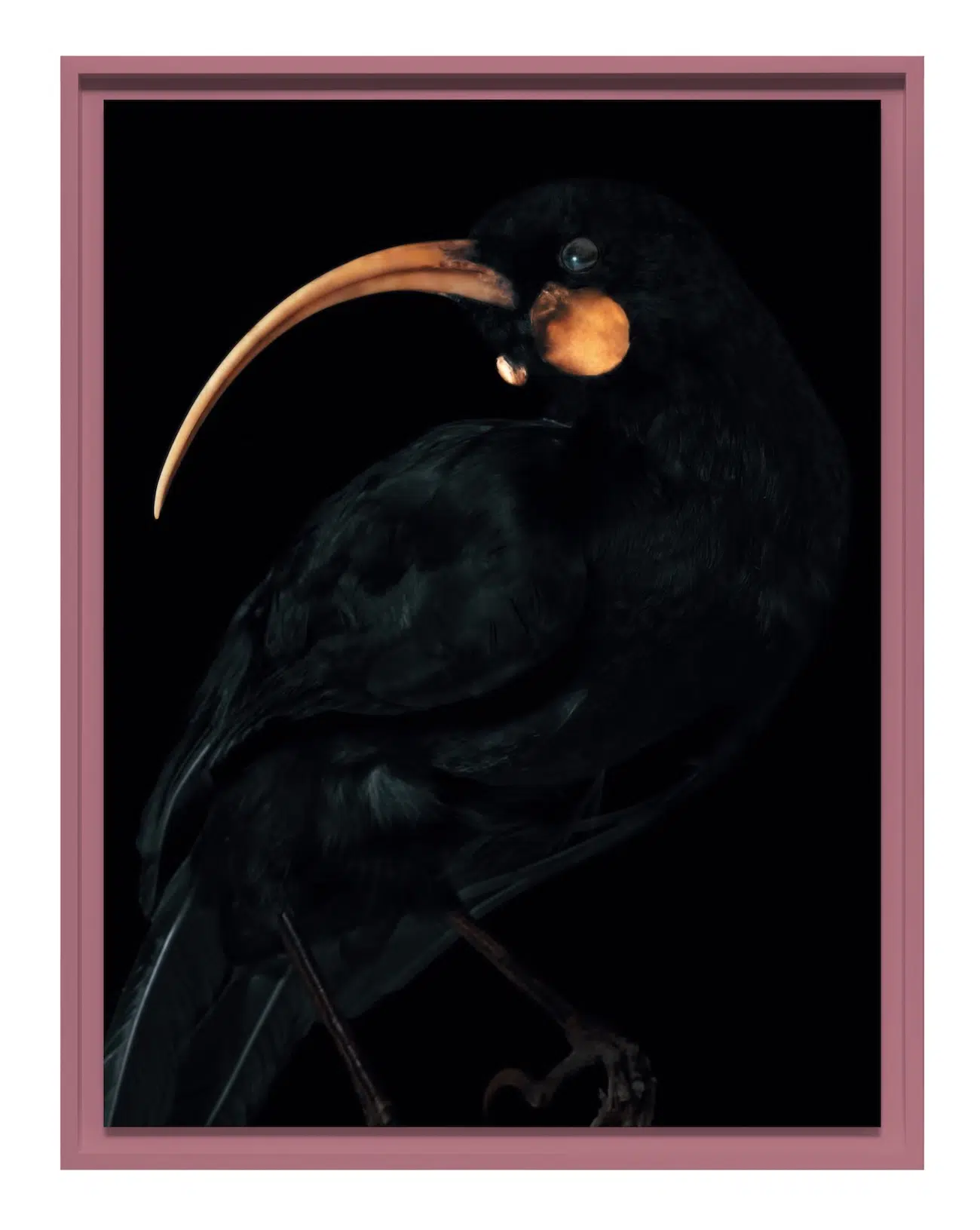
Fiona Pardington, Taharaki Skyside, Huia framed.
Pardington aims to capture the birds’ charisma and portray them as more than objects but as real species with ecological and cultural significance.
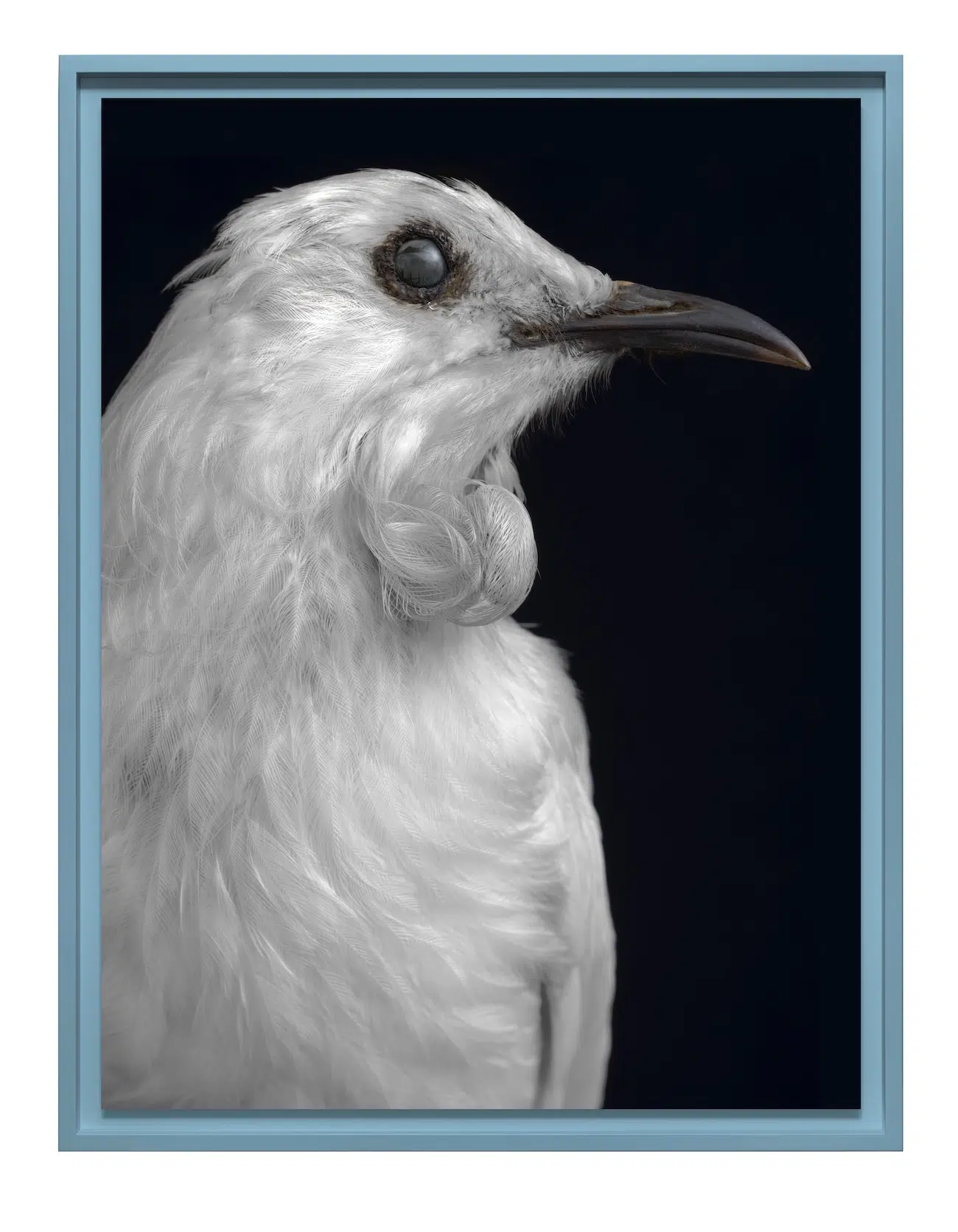
Fiona Pardington, Taharaki Skyside, Tui aberrant white framed.
The birds are historically important to the native Māori people as a bridge between the physical and spiritual realms.

Fiona Pardington, Taharaki Skyside, Kākā Kura framed
Pardington also cites Dante’s Purgatory, which is described as an island in the Southern Hemisphere similar to New Zealand and a symbolic threshold between mortal and divine worlds, as the Māori believed.
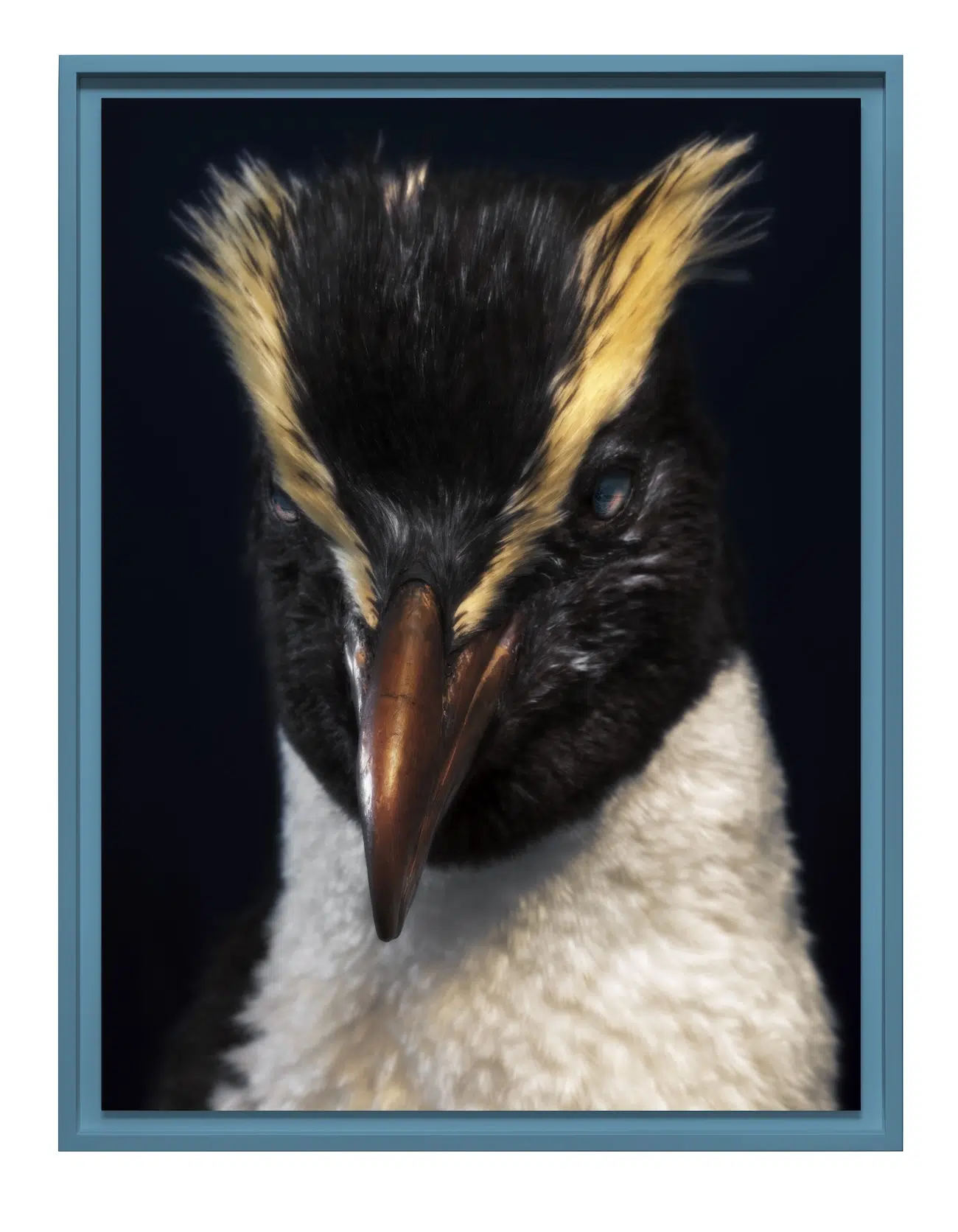
Fiona Pardington, Taharaki Skyside, Tawaki framed.
Dante, the Māori, and Pardington mention the significance of the Aotearoa manu (birds), and now Pardington is using contemporary art to raise awareness and hopefully protect what’s left.
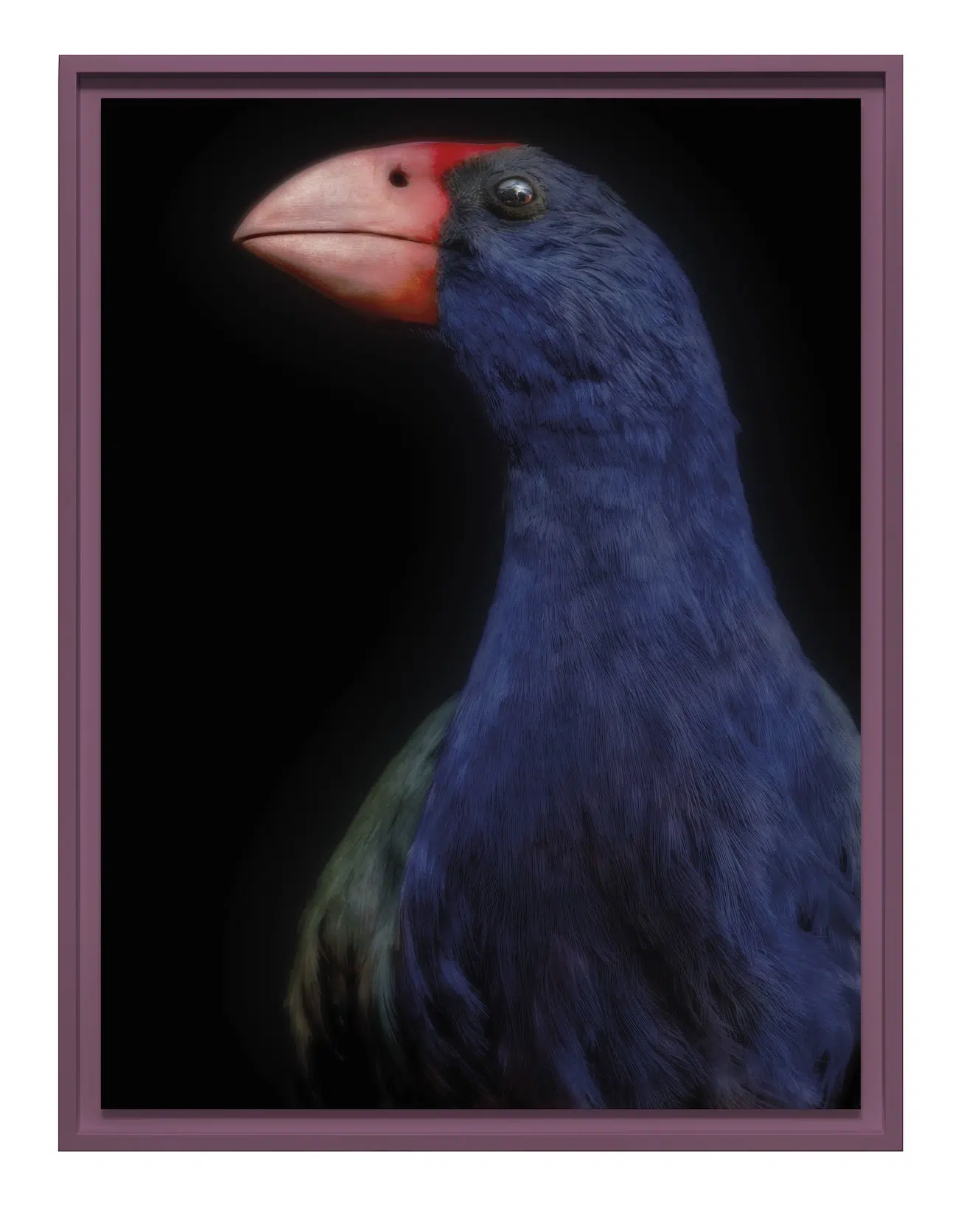
Fiona Pardington, Taharaki Skyside, Takahē framed.
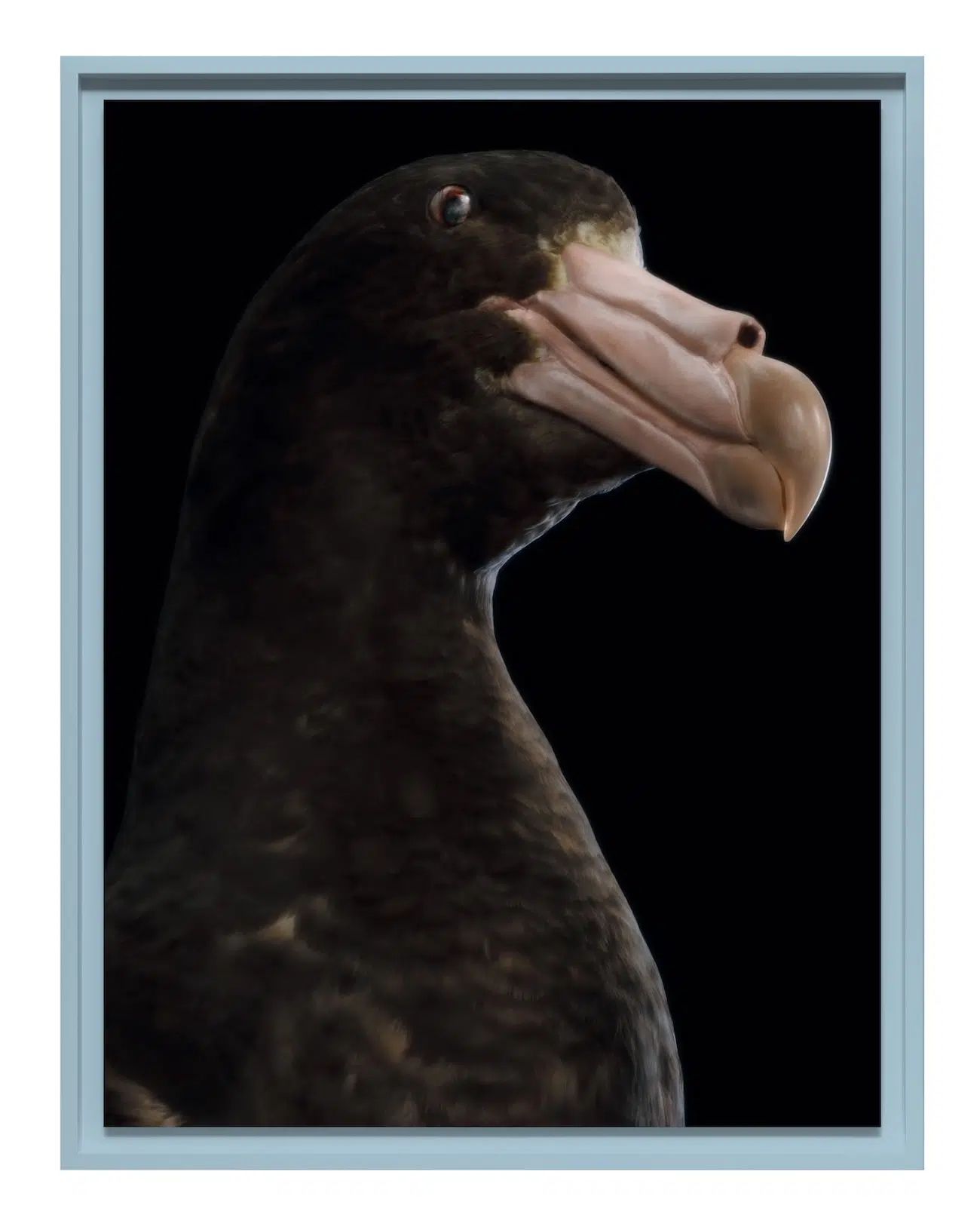
Fiona Pardington, Taharaki Skyside, Pāngurunguru framed.
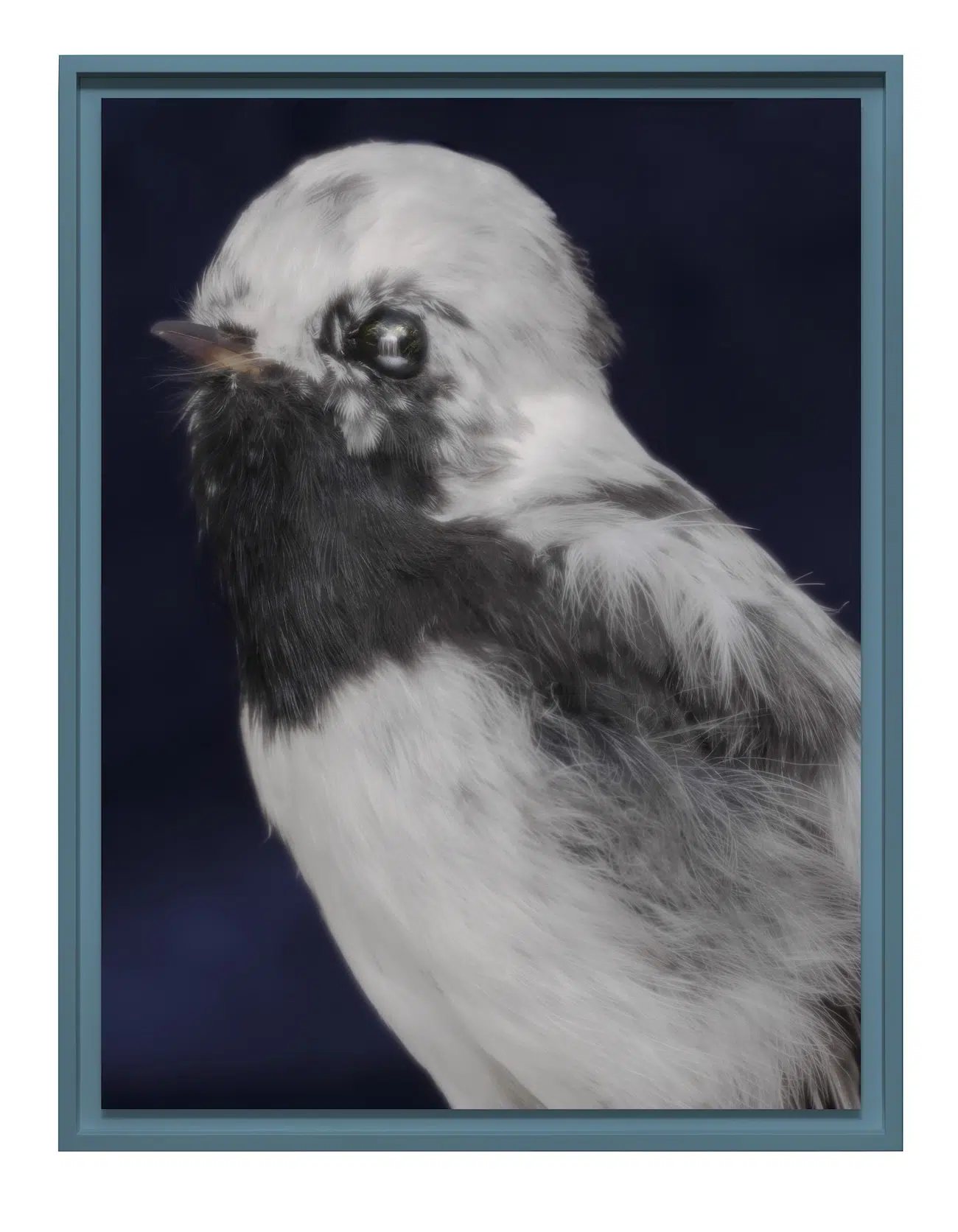
Fiona Pardington, Taharaki Skyside, Kōmiromiro framed
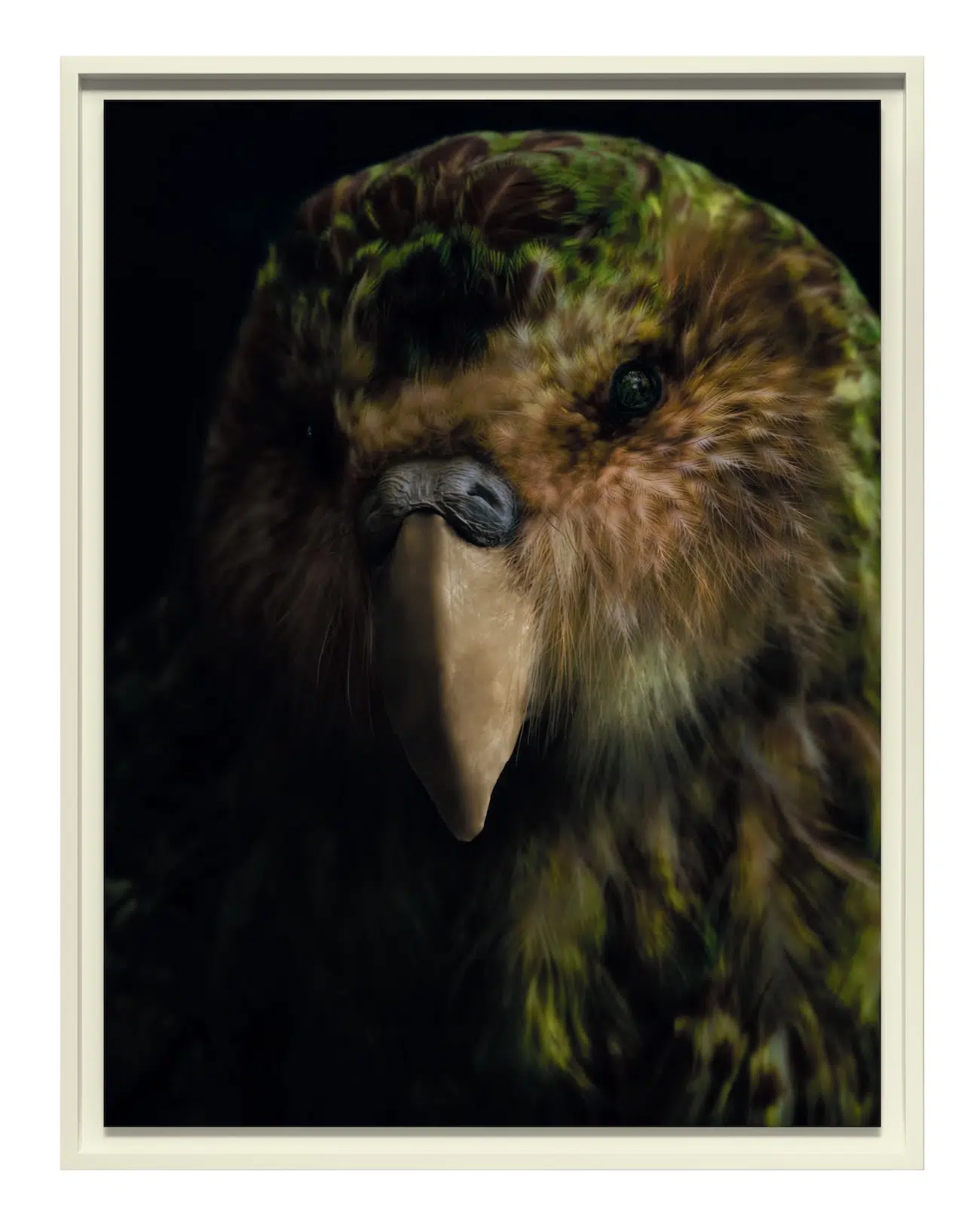
Fiona Pardington, Taharaki Skyside, Kākāpō framed.
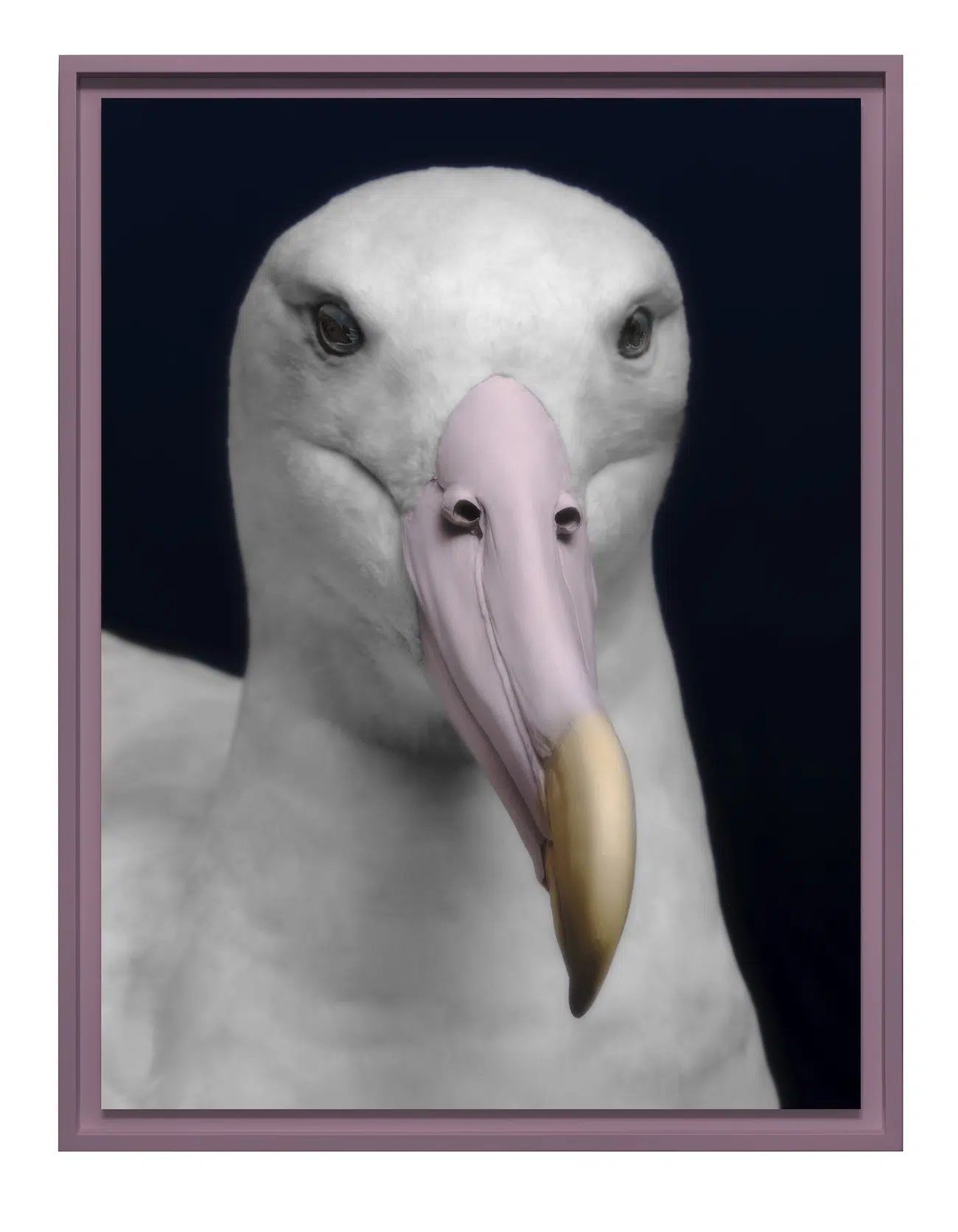
Fiona Pardington, Taharaki Skyside, Toroa framed