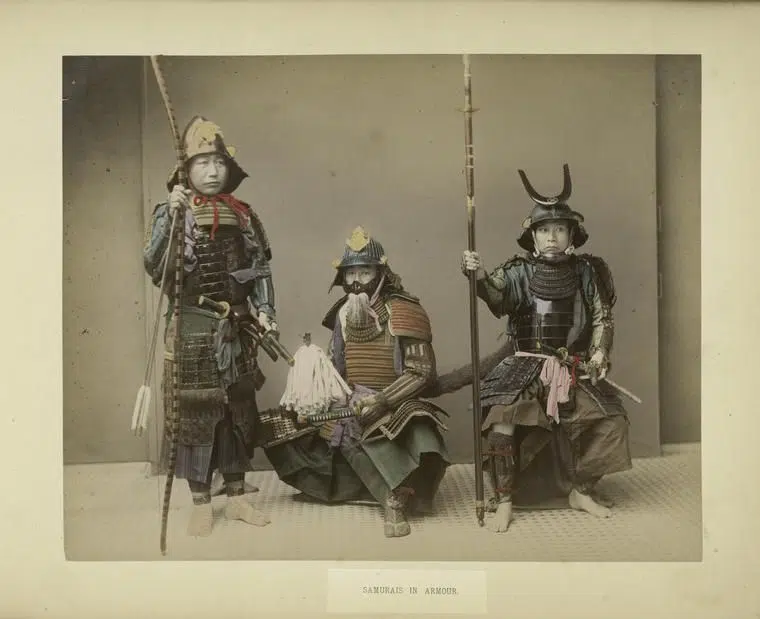
“Samurais in Armor”
Before color film existed, photographs were painstakingly colored by hand, making them not only records of daily life, but also treasured pieces of art. The New York Public Library Digital Collections has let us into the beauty of this old practice with the release of hand-colored images from 19th-century Japan. These hand-colored photographs capture Japan at a moment of profound transformation, and preserve scenes of traditional life just as the country was opening up to the modern world.
Photography arrived in Japan very early—a little less than a decade after it was invented in Europe. The first daguerreotype camera was imported into Japan in 1848, and in the 1850s, Dutch photographers continued to transform the practice with newer photographic techniques that they brought with them through the small Dutch trading post of Dejima in Nagasaki. Throughout the 1850s, as Japan opened up to foreigners, the images from this time capture not only a nearly forgotten moment in history but also a rare transitional time in which traditional Japanese life was being affected by rapid modernization.
According to the NYPL Digital Collections, this gallery of historical images provides “a rich resource for the understanding of the political, social, economic, and artistic history of Asia from the 1870s to the early 20th century.” The images within depict everything from posed portraits in traditional attire to smaller, more intimate scenes between locals. These moments include samurais posing in their armor, women and children performing daily chores, and two young women talking in a garden. They each feel vivid and nostalgic at the same time, existing somewhere between a drawing and a photograph.
“In the broadest sense, photography entered Asia from Europe and America as part of the process of colonialism,” the NYPL Digital Collections states, “but soon took root in those regions with local photographers, who learned the craft from European and American photographers, along with travelers, military people, and merchants.”
One of the most important photographers from this time period was Kusakabe Kimbei (who mainly went simply by Kimbei). He served as one of the first Japanese photographers to expand the practice into hand-coloring photographs. Kimbei studied under Beato, an Italian-British photographer who was known for documenting the first British Military campaign in China. Kimbei continued the painstaking process of hand-coloring and opened up his own large-scale studio in Yokohama in 1881. Many of his photographs are represented in the digital archive.
The NYPL Digital Collections captures not only daily life in 19th-century Japan during a period of rapid modernization, but also the emergence of hand-colored photography, which transforms these scenes into luminous works of art. To see the full gallery, go to the NYPL Digital Collections website.
Before color film existed, photographs were colored by hand, making them not only records of daily life, but also treasured pieces of art.
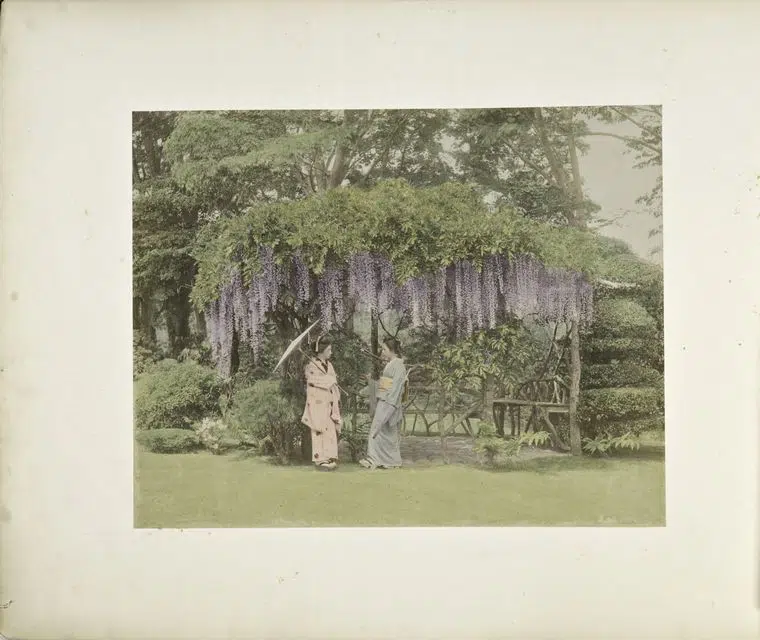
“Women in The Garden”
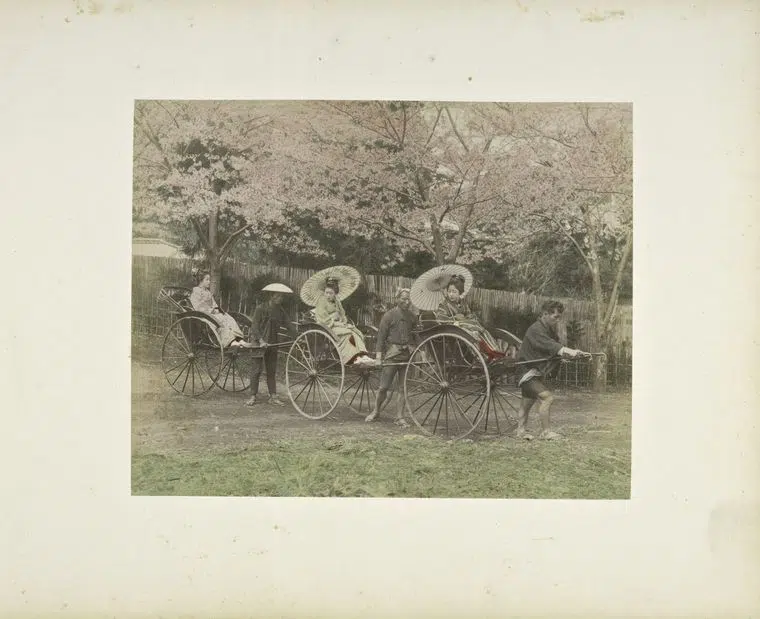
“Women Riding in Rickshaws”
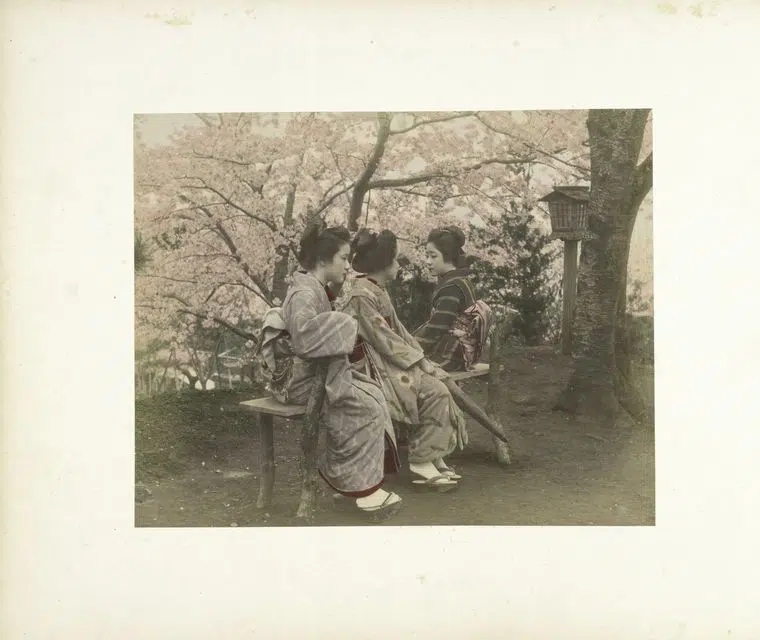
“Women under the Cherry Tree”
The New York Public Library Digital Collections gives us a glimpse of the beauty of this practice with its archive of hand-colored images from 19th-century Japan.
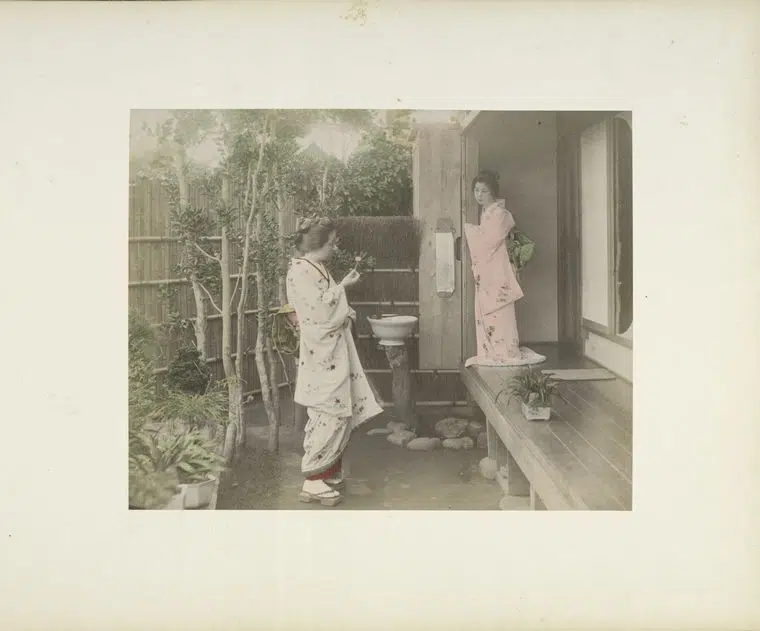
“Girls Feelings”

“Herb Picking”
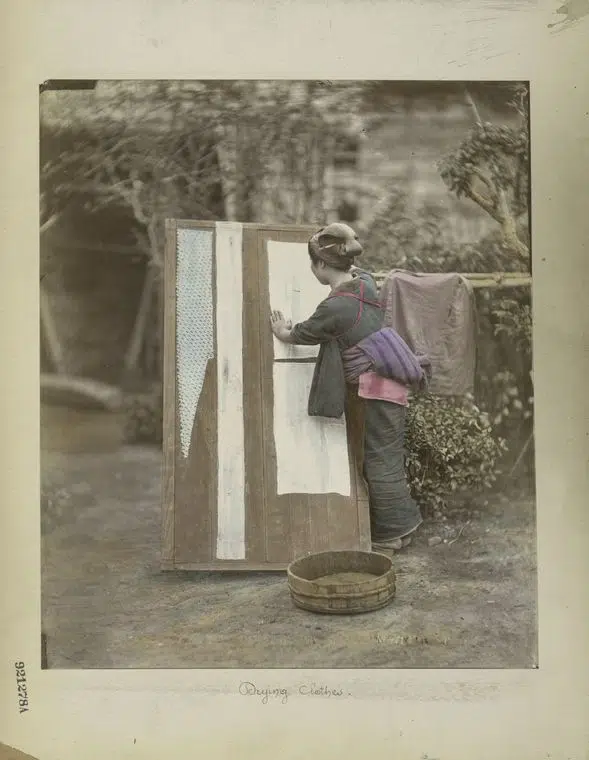
“Drying Clothes”
The images feel both vivid and nostalgic, existing somewhere between a drawing and a photograph.
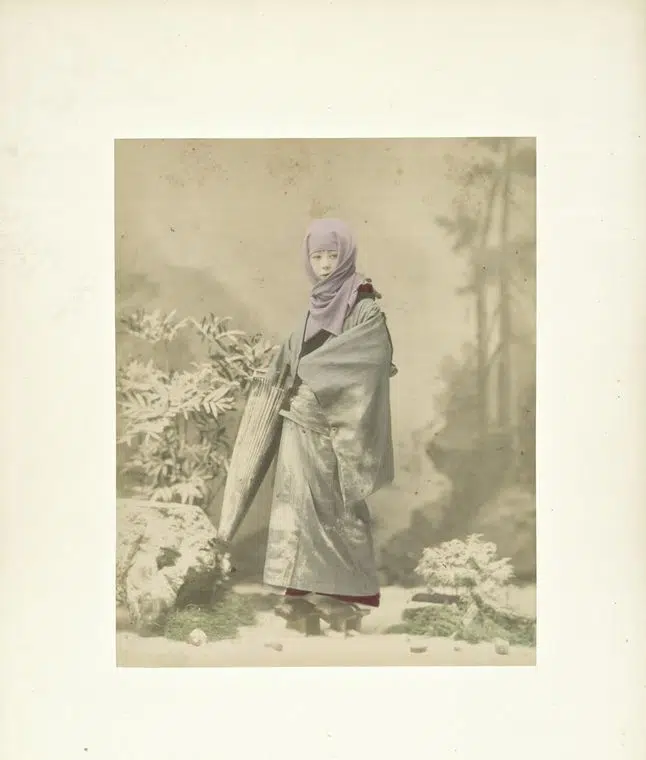
“A Woman Wearing A Winter”
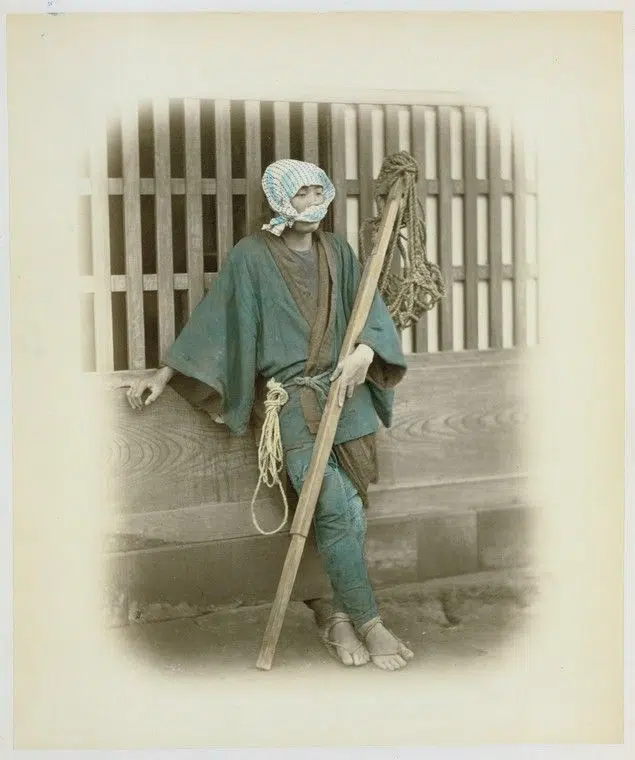
“Coolie”
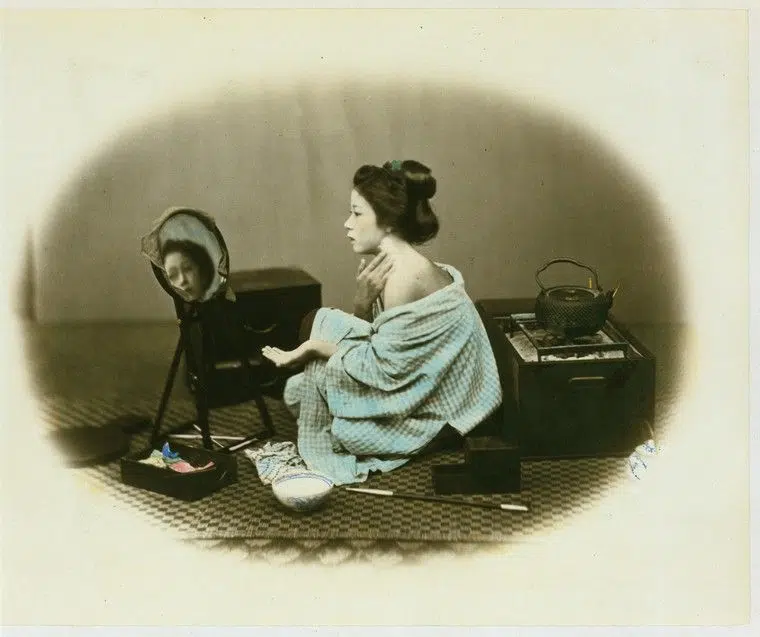
“Woman using cosmetic”
The collection captures not only daily life in 19th-century Japan during a period of rapid modernization, but also the emergence of hand-coloring photographs, which had a lasting impact on how the practice of photography is viewed.
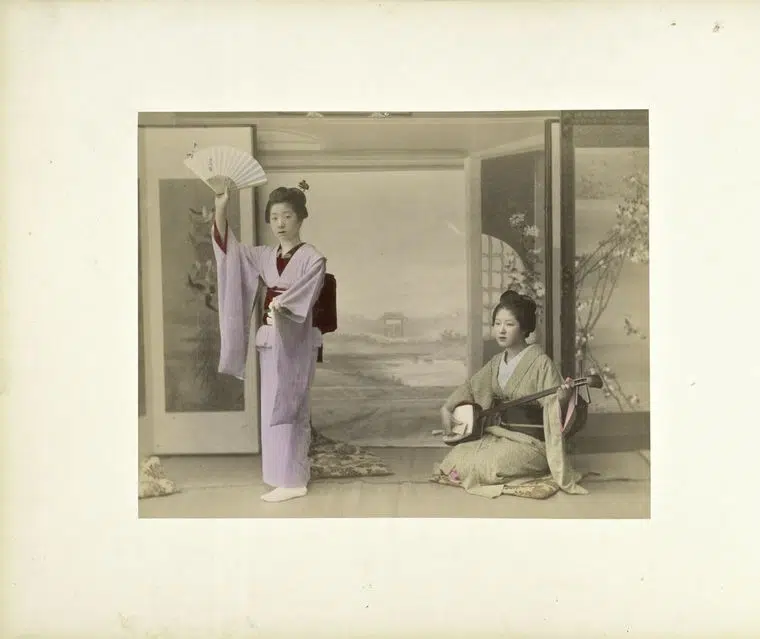
“Dance to The Shamisen Music”

“Dancing and Singing”
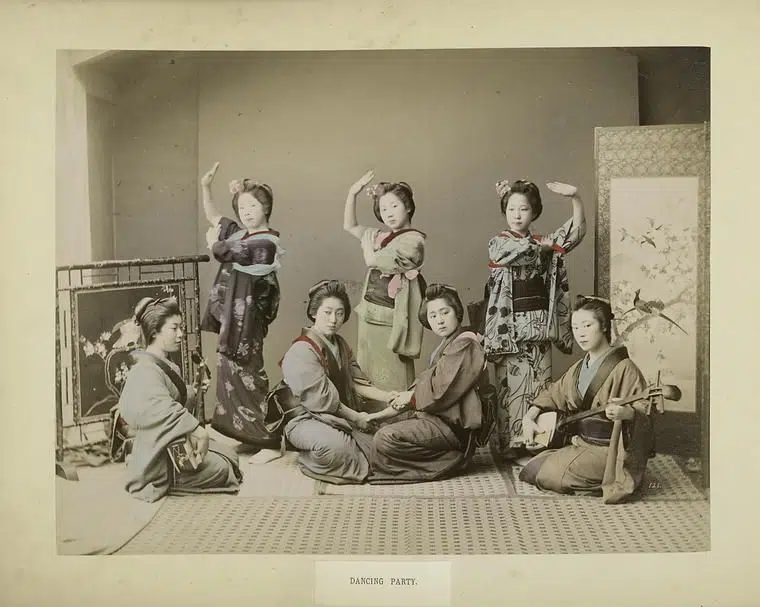
“Dancing Party”
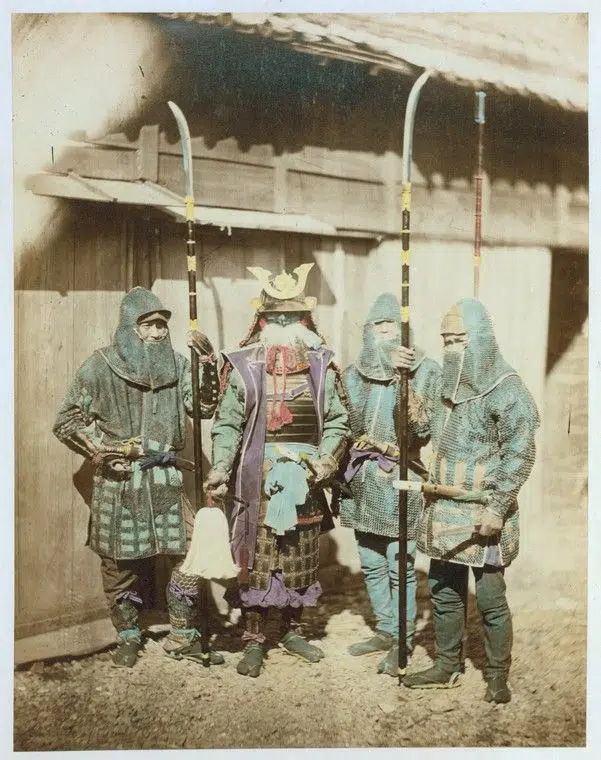
“Ancient Armour”
All images via The New York Public Library Digital Collections.
Related Articles:
Explore 870,000 Items in the New York Public Library Online Archives
New Takashi Murakami Exhibit Traces Shared Art History Between Europe and Japan
100-Year-Old Hand-Colored Postcards Offer a Fascinating Glimpse of Pre-War Japan