For centuries, popular depictions of Japan’s samurai have focused almost entirely on men. Paintings, films, and historical narratives often present warfare as a male domain, leaving little room for women in the story. However, archaeological discoveries and historical records suggest that women played a more active role in Japan’s military past than many people realize.
Recent discussions about female warriors have gained attention thanks to research conducted at several Japanese battlefield burial sites. One of the most frequently cited examples comes from Senbon Matsubara in Shizuoka Prefecture, the site of a battle fought in 1580 during Japan’s turbulent Sengoku period. Researchers examined skeletal remains recovered from the battlefield and identified both male and female individuals among those buried there.
The findings challenged long-held assumptions about who occupied Japan’s battlefields. At Senbon Matsubara, women accounted for a substantial portion of the remains studied. Similar discoveries at other sites have revealed female individuals among groups associated with military conflict. These results indicate that women were present in some conflict zones far more often than traditional historical accounts suggest.
At the same time, historians caution against drawing sweeping conclusions from the archaeological evidence. The remains confirm that women appeared at certain battle-related sites, but they do not prove that women made up a large percentage of samurai armies across Japan. Researchers continue to debate the exact roles these women held, whether they fought directly in combat, supported military operations, or became casualties during periods of conflict. Even so, the discoveries have encouraged scholars to take a closer look at women’s place in Japanese warfare.
Historical records already provide evidence that female warriors existed. Known as onna-musha, these women belonged to Japan’s warrior class and received training in martial arts and weaponry. During times of unrest, some fought to defend their families, territories, or castles. Their participation became especially important during periods when rival clans battled for power across the country.
Despite evidence, any accounts of Japanese warfare gradually minimized women’s contributions. As the samurai evolved from a military class into a more formal social institution, cultural expectations increasingly emphasized domestic roles for women. Histories written in later periods often centered male political and military leaders, leaving many female figures at the margins.
Today, archaeology offers a new way to examine the past. Skeletal analysis, DNA testing, and other scientific methods allow researchers to investigate questions that written records alone cannot answer. While these discoveries do not overturn everything historians know about samurai culture, they do reveal a more complex picture of Japanese warfare.
Rather than appearing only as rare exceptions, women may have participated in military life more frequently than earlier generations believed. As researchers continue to study battlefield sites across Japan, they are uncovering evidence that helps restore a forgotten chapter of history and broaden our understanding of who shaped the nation’s past.
Archaeological discoveries and DNA analysis of battlefield burials have prompted historians to reconsider women’s roles in Japan’s military history
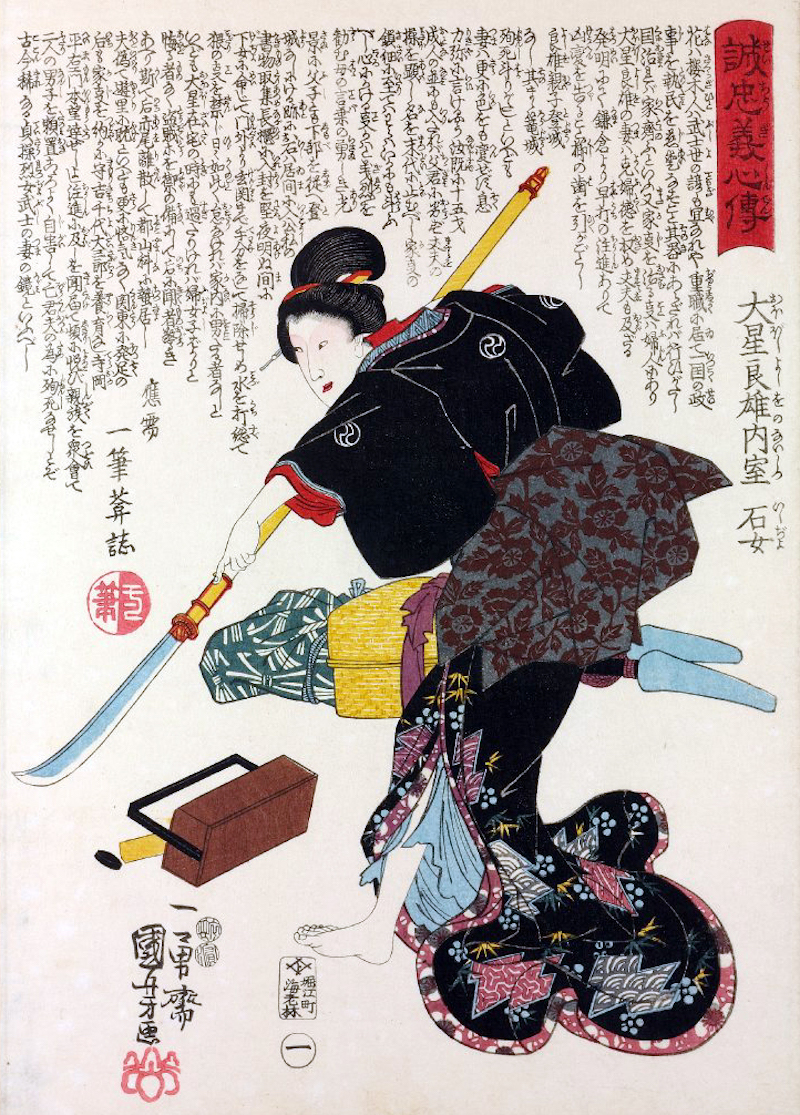
Ishi-jo, wife of Oboshi Yoshio, one of the “47 loyal ronin.” Print by Kuniyoshi, from the series Seichi Gishin Den, 1848. (Photo: Utagawa Kuniyoshi via Wikimedia Commons, Public domain)
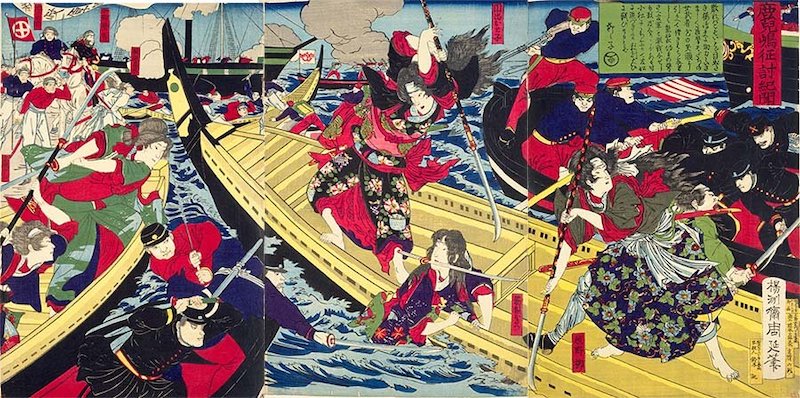
Historical records also document women known as onna-musha, members of the warrior class who trained in martial arts and sometimes fought alongside men.
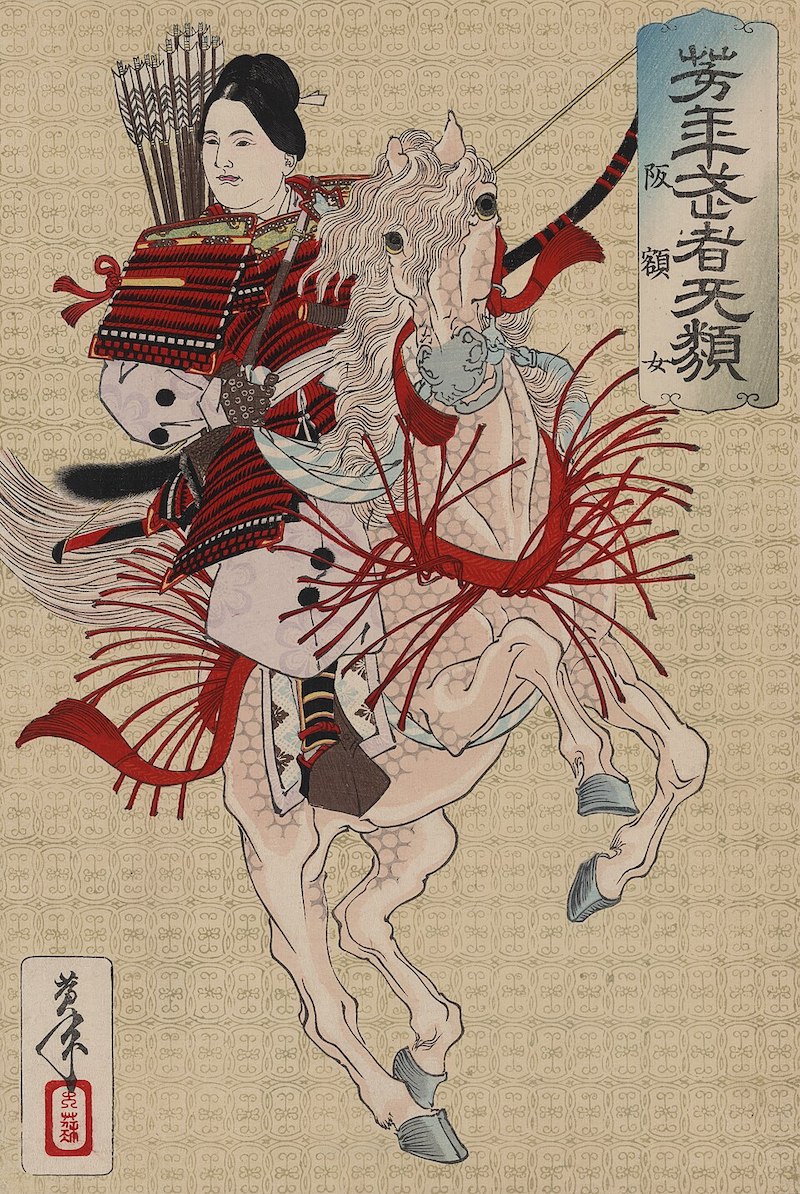
“Hangakujo.” The female warrior samurai Hangaku Gozen by Yoshitoshi (1839-1892). (Photo: Yoshitoshi via Wikimedia Commons, Public domain)
Sources: Legendary Japanese Onna-Musha (Female Warriors) | List of 7; The Head-Burial Site in the Numazu City and the Skulls of the Medieval Japanese; Does DNA Prove Female Soldiers at Senbon Matsubara?; Did Japan have female samurai?
Related Articles:
Artist Paints Striking Portraits of Real Women of Color as Fearless Female Warriors
Discover How Japanese Swordsmiths Transform Sand Into Legendary Katanas
Keiko Fukuda: Learn the Story of the Trailblazing Japanese-American Female Judoka
Artist Captures the Quiet Strength of Women Through Eastern-Inspired Portraits [Interview]