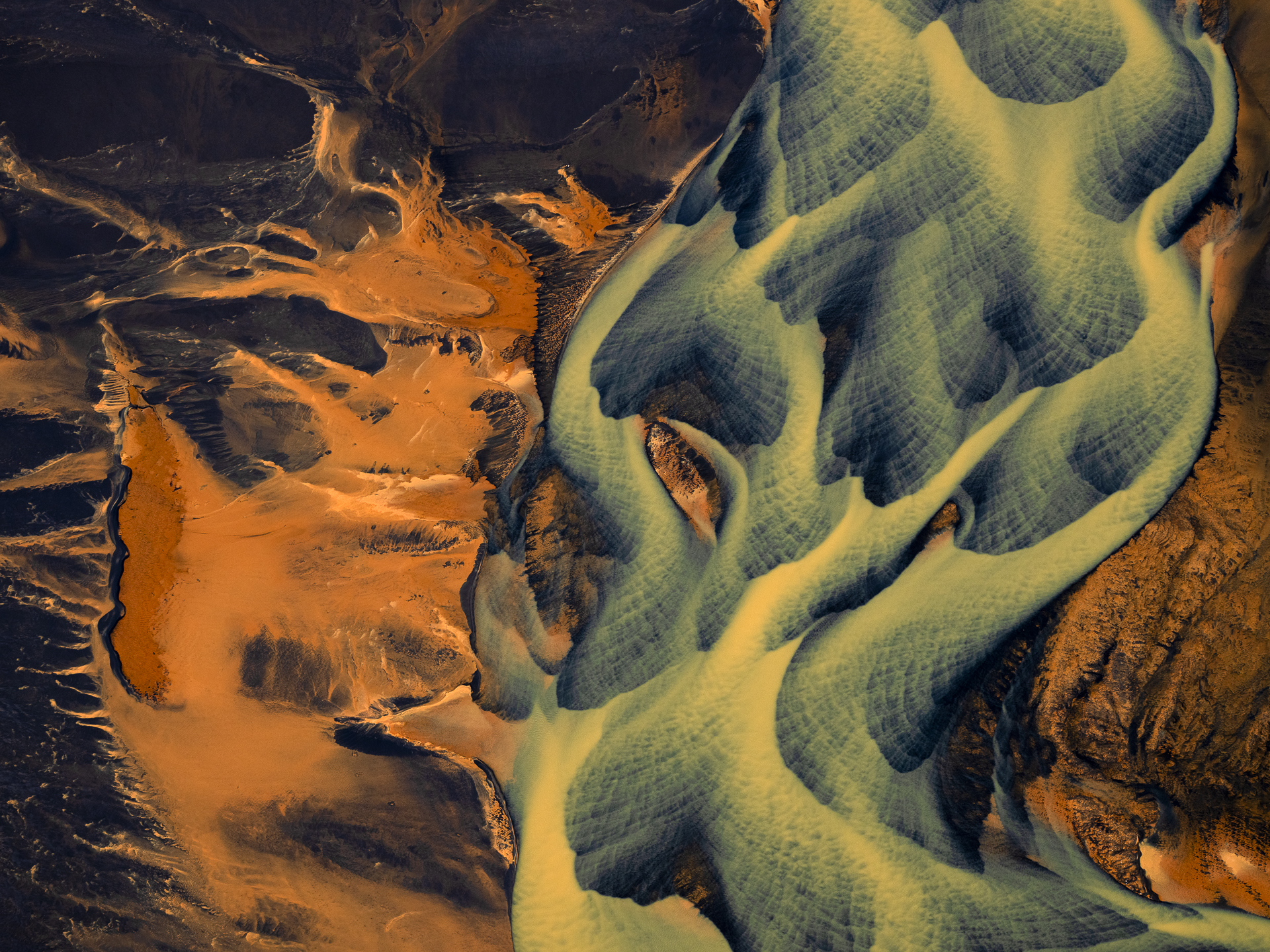
Iceland, 2025. In southern Iceland, braided rivers spread across broad outwash plains. As ice melts, torrents of sediment-rich water surge downstream, depositing sand, silt, and volcanic ash in overlapping channels that are constantly rearranged by flow, floods, and seasonal change.
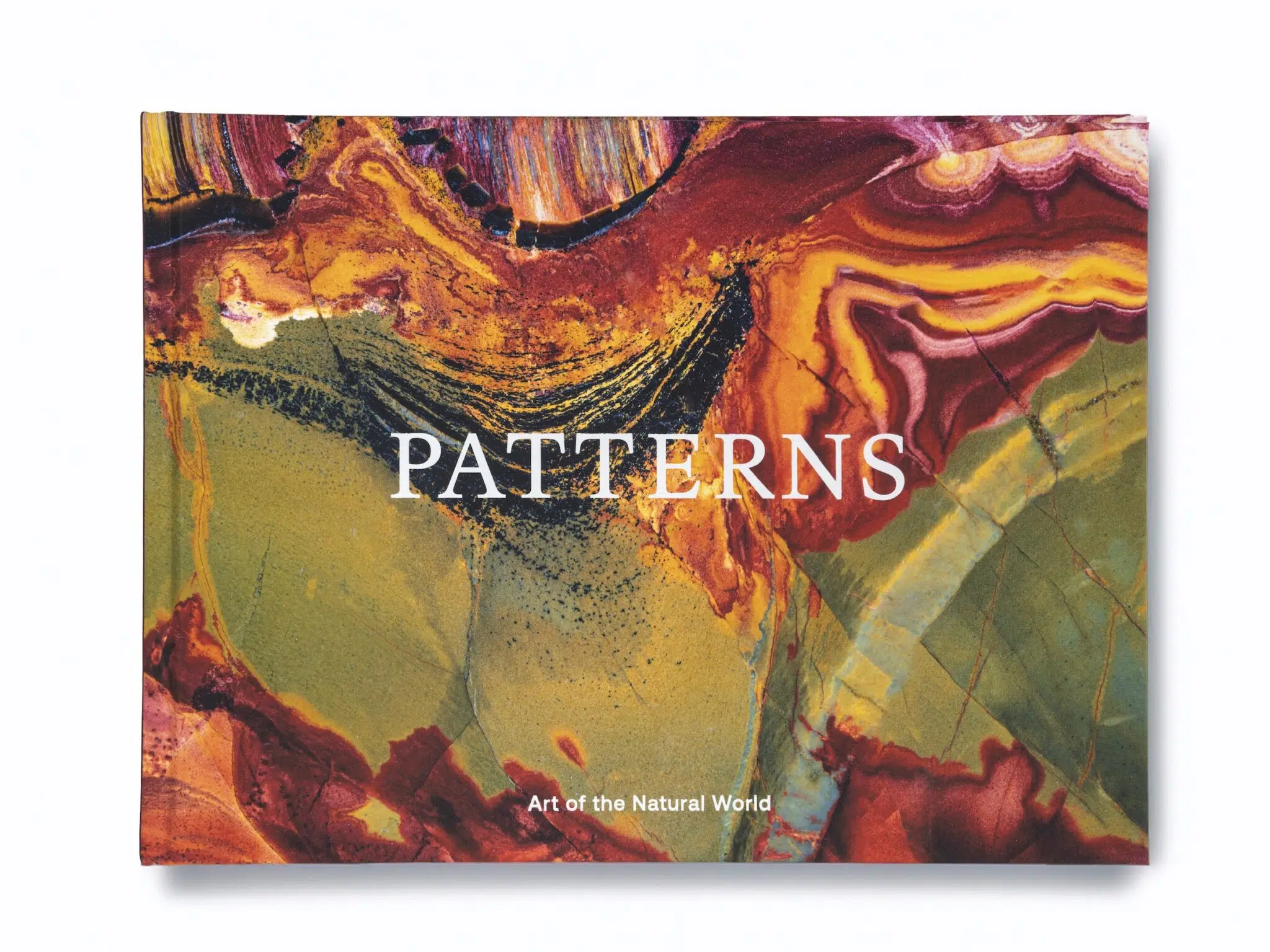
In Jon McCormack’s mind, he’s less of a nature photographer than what he calls a “pattern photographer.” It’s a fitting label, considering it encapsulates his enduring interest in natural geometries. For years, McCormack has unearthed the hidden patterns that define our world, whether they be microscopic mineral blooms or vistas overcome by flocks of flying birds. Such scenes are at the heart of the photographer’s new monograph, which celebrates the many rhythms that connect our environments.
Published by Damiani, McCormack’s Patterns: Art of the Natural World journeys all around the globe, spanning everything from the volcanic coasts of Iceland to the wilds of Kenya. Each image proposes a new way of seeing, unveiling organic phenomena that may otherwise have been invisible to us. A 2023 photograph from Iceland may embody this best, showcasing an ice cave nestled deep within the Vatnajökull glacier. Following a flash flood and intense cold, air bubbles ultimately froze into small, delicate rings, dotting the cave’s floor like ripples in water. McCormack renders the moment with clarity, memorializing a fleeting moment through a vivid color palette, an evocative composition, and a rare immediacy, as though we, as viewers, could simply reach out and touch the ice for ourselves.
Throughout Patterns, there are dozens of photographs that assume this intimate scale. A vulture guinea fowl isn’t placed within a broader Kenyan landscape, but rather approached up close. In McCormack’s final shot, we trace the bird’s intricate plumage, speckled with fine white dots set against dramatic shades of charcoal and indigo. Similarly, the North Atlantic’s vastness is reduced to a minuscule landscape peppered with diatoms, a type of algae found in nearly all aquatic environments. McCormack employed a microscope to capture these organisms, each bearing an almost metallic sheen and arranged into a pattern so exquisite that it feels intentional rather than biological.
Other images, though, are grander in their scope. An aerial photograph from Iceland, for instance, reveals braided rivers spreading across broad outwash plains, the earthy tones and formations resembling thick paint. A scene from Botswana’s Okavango Delta, on the other hand, depicts trails gradually carved out by hippos, who, due to their poor eyesight, rely on scent to orient themselves in the dark. The olfactory cues remain in the water each night after the hippos graze, providing them with familiar corridors through the landscape. These pathways may be “subtle on the ground,” as the photographer says, but from above, they’re “unmistakable.”
To achieve the book’s visual diversity, McCormack incorporated several cameras and photographic techniques. “There are either seven or eight different cameras involved in the making of [Patterns],” he told Petapixel in a recent interview. “It’s basically like, ‘Here’s the thing I want to do, and now what’s the simplest thing to do it with?’” The photographer even leaned on his iPhone, whose camera software he helped engineer at Apple.
Taken in its entirety, Patterns is a resounding testament to McCormack’s passion for nature. In fact, the book’s proceeds benefit Vital Impacts, a women-led nonprofit founded by photographer Ami Vitale that supports conservation efforts. The volume, then, is not only a literal but also an artistic form of advocacy, exploring the natural world in all of its geometric intricacy—from the immense to the minute.
“I wanted people to see what I see in nature,” McCormack said in National Geographic. “I wanted to put the wonder I see in front of other people and I wanted to do that in a way that was accessible. I didn’t want it to be a fancy art book, textbook, or treatise. This book is my visual poem to our planet.”
Patterns: Art of the Natural World is now available for purchase via Bookshop.org and Damiani’s website.
In his new monograph, photographer Jon McCormack offers a stunning new way to encounter the world: through its intricate and at times hidden patterns.
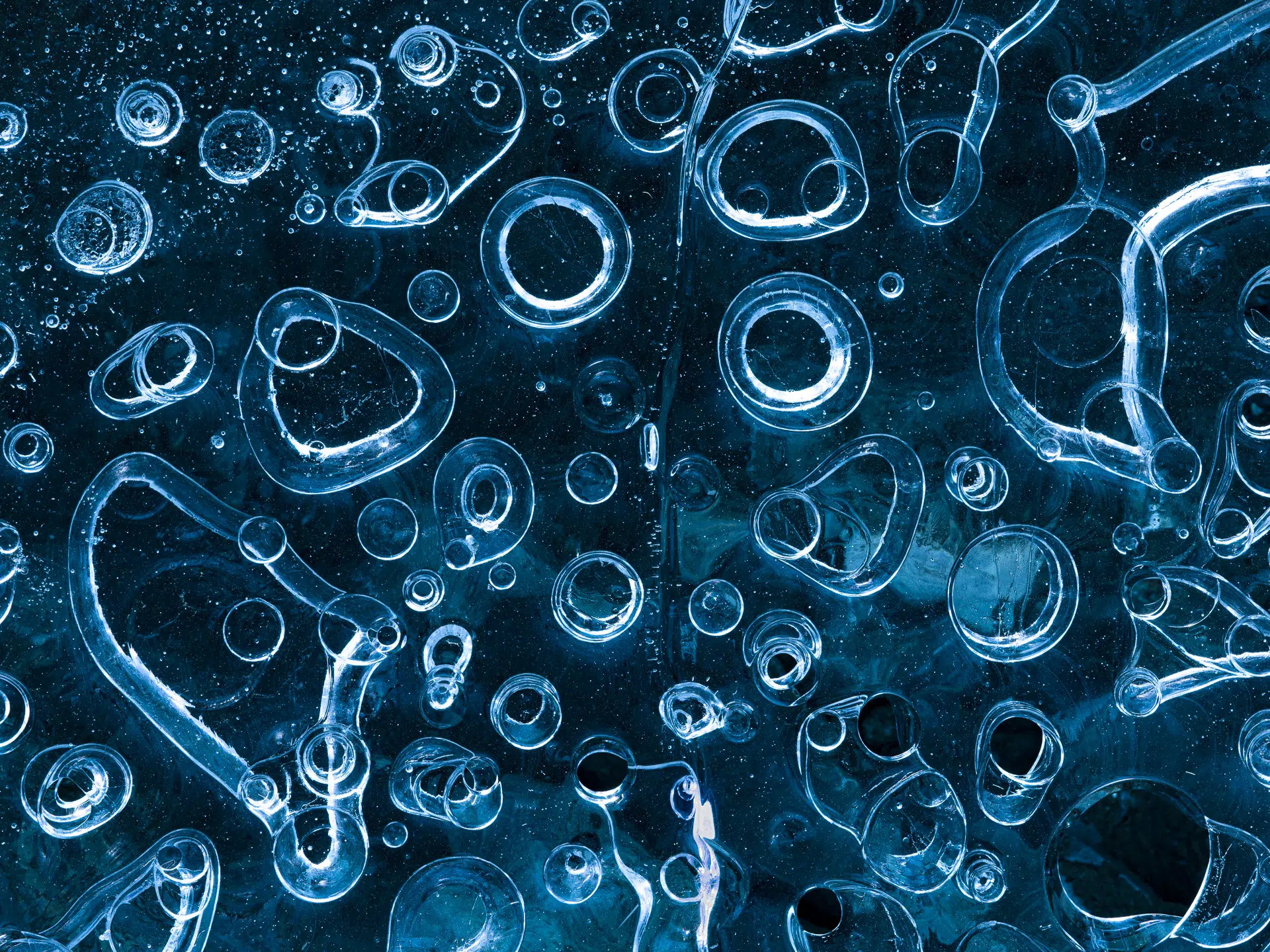
Iceland, 2023. As glaciers melt in southern Iceland, ice caves are born. This cave, deep within the Vatnajökull glacier, was flash-flooded, and the cold was so intense that air bubbles froze into delicate rings across the cave floor with each ring measuring between one and three inches in diameter.
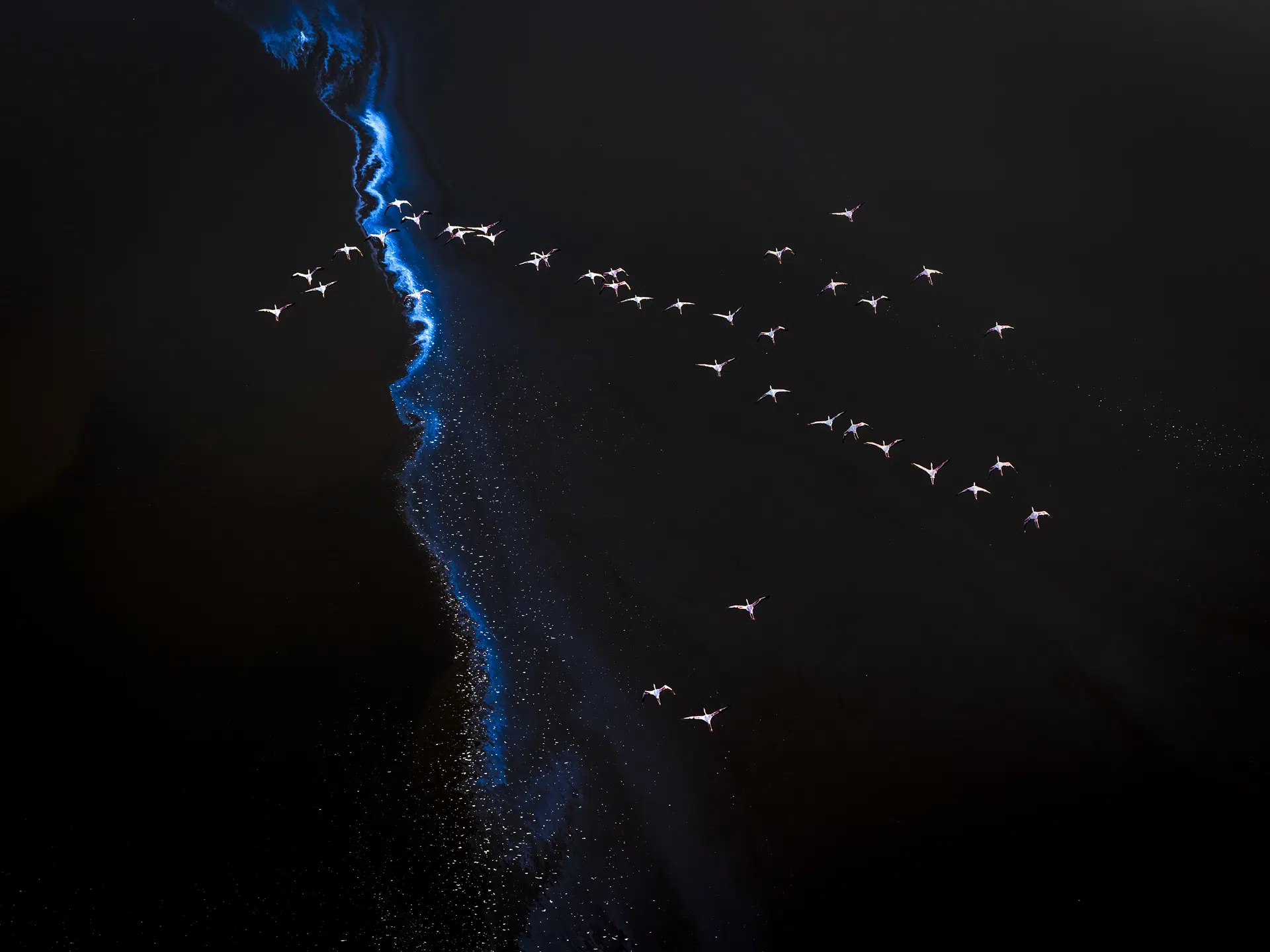
Kenya, 2024. Over Lake Magadi, flamingos and algae choreograph living patterns. The lake’s extreme alkalinity creates the perfect conditions for dense blooms of cyanobacteria, whose pigments stain the water in deep crimsons and rusts. As flamingos gather to feed on the algae, their movements trace pale arcs and whorls across the surface, stirring the mineral-laden shallows and reshaping the colors beneath their feet.
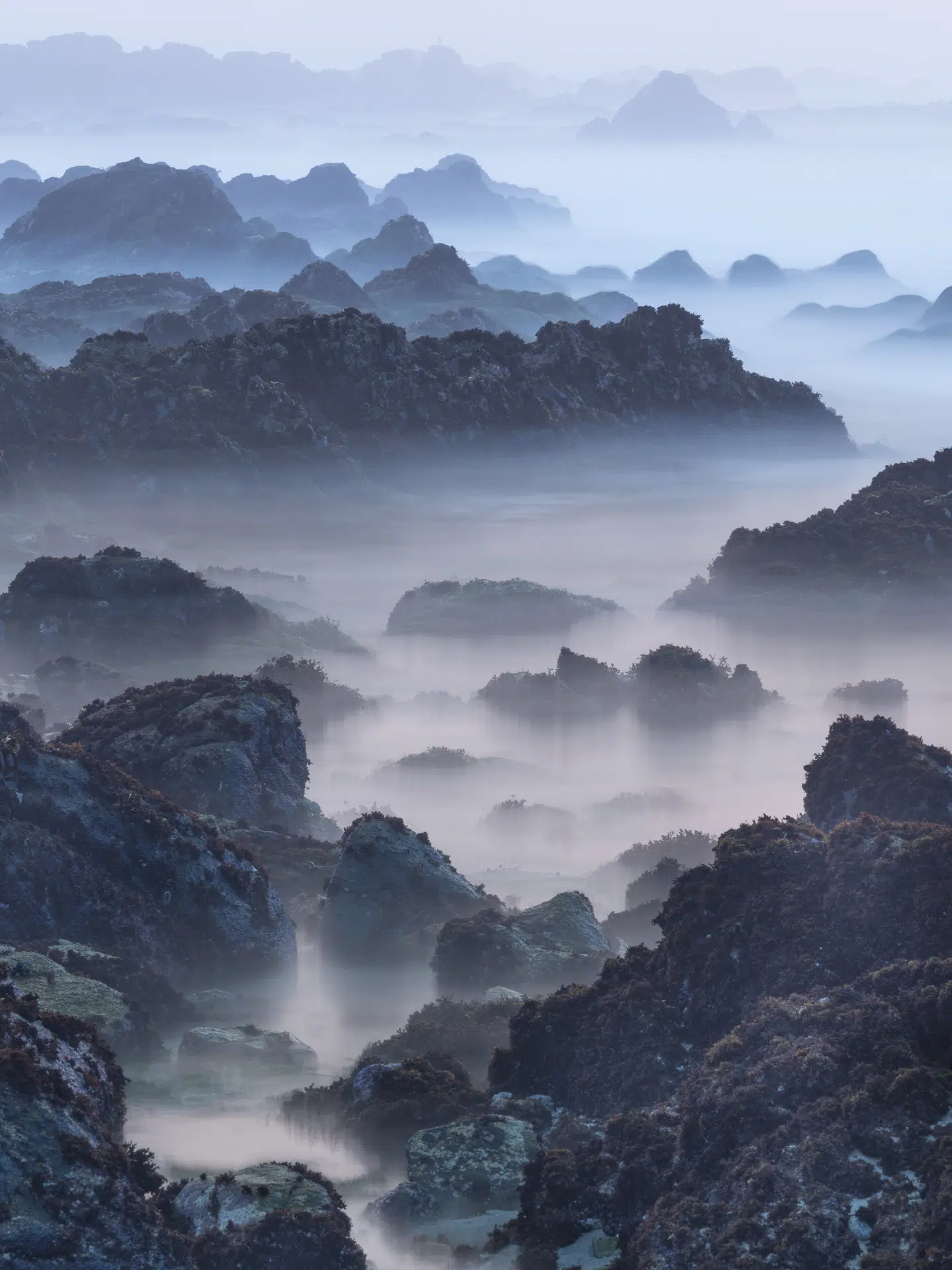
California, 2020. In the blue hush of twilight, the beach rocks of Northern California begin to resemble China’s karst mountains because light, scale, and erosion briefly align.
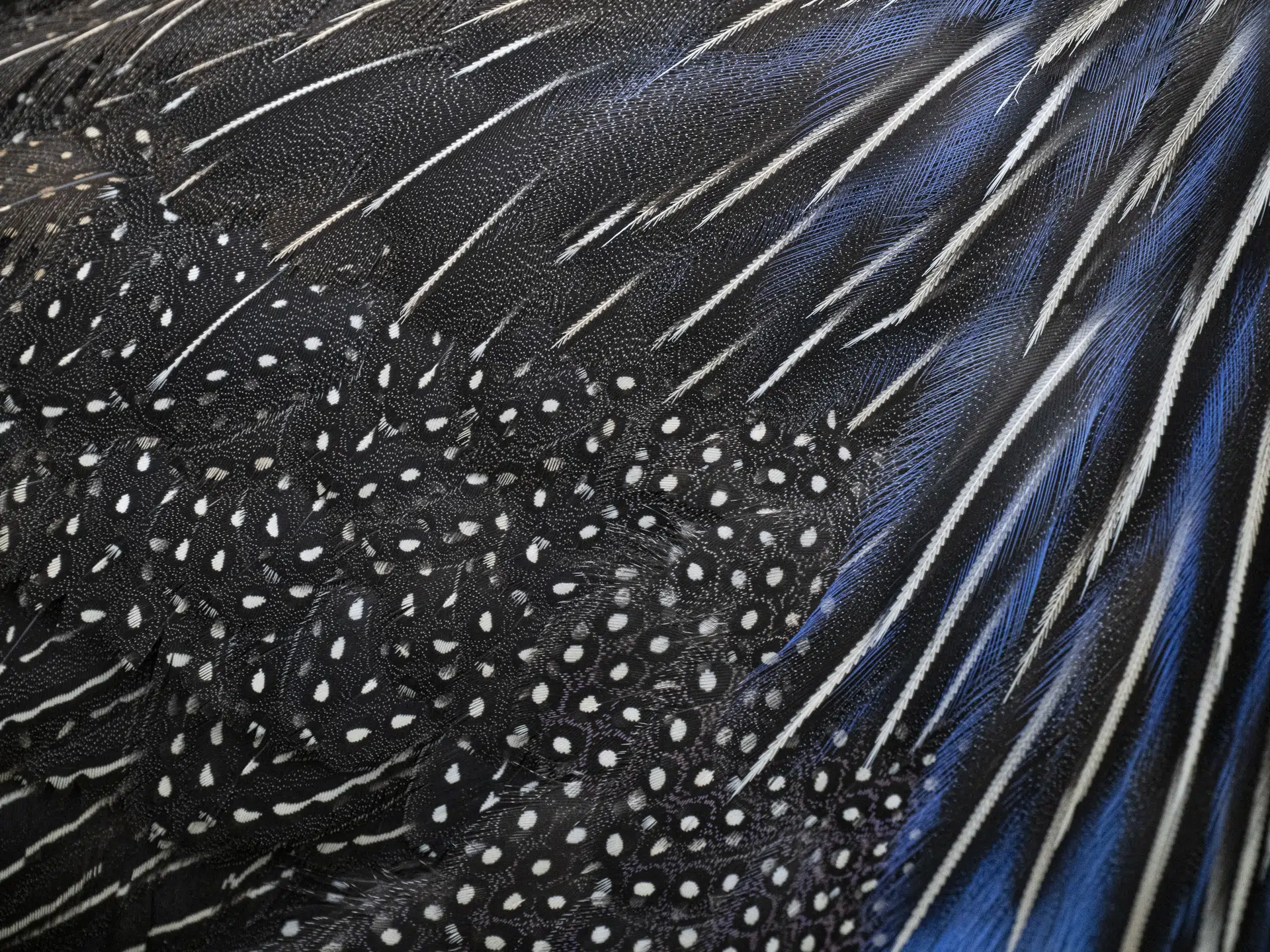
Kenya, 2024. The vulture guinea fowl is adorned with a remarkable tapestry of feather patterns. Its plumage is densely speckled with fine white dots, arranged in rhythmic rows across a deep charcoal or indigo ground, creating a surface that reads almost like woven fabric.
Now available for purchase, Patterns ventures around the world to celebrate natural geometries, ranging from microscopic mineral blooms to vistas overcome by flocks of flying birds.
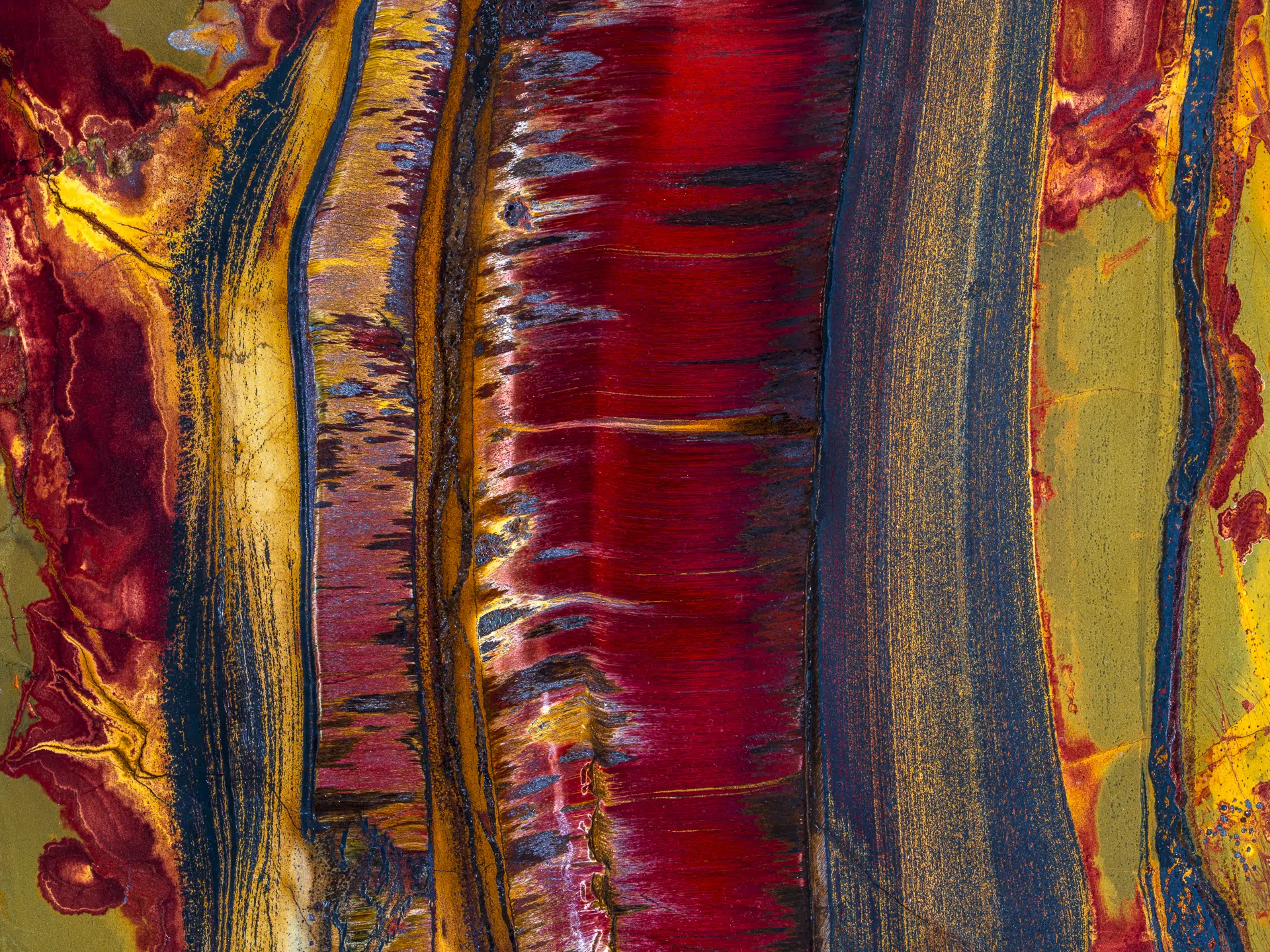
Australia, 2025. Tigerite from Australia’s Northern Territory is formed when silica-rich fluids replaced ironstone within ancient sediments, preserving bands of fibrous quartz intertwined with iron oxides such as hematite and goethite. Golds and yellows emerge where iron oxidized slowly; deep reds and browns mark areas of higher iron concentration; and blues and greys appear where silica dominates.
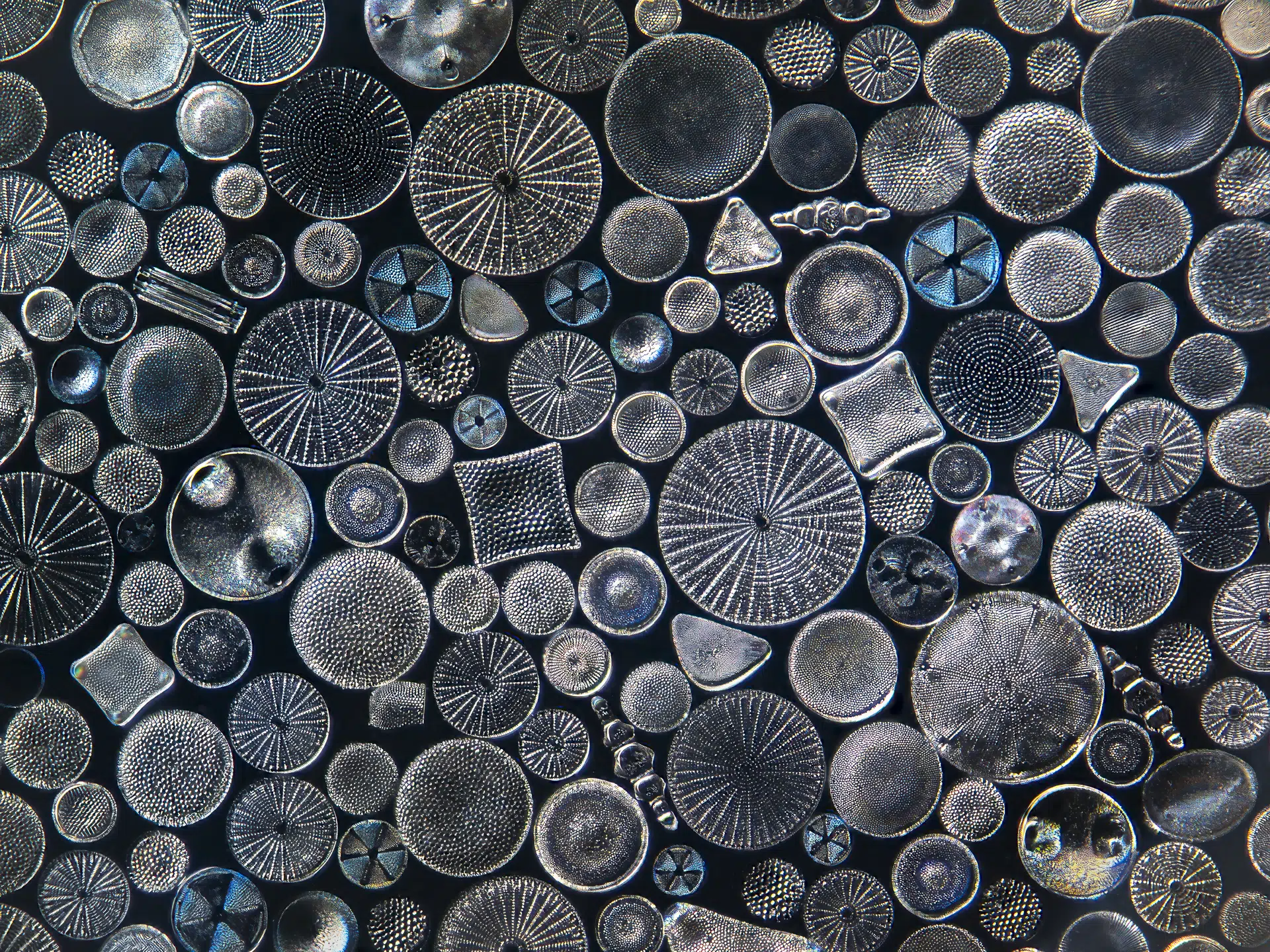
Microscope photograph, 2024. Using a microscope to photograph diatoms from the North Atlantic reveals a hidden world of astonishing precision and beauty. Each diatom is no larger than the width of a human hair, yet under magnification they appear like tiny, luminous buttons scattered across the field of view.
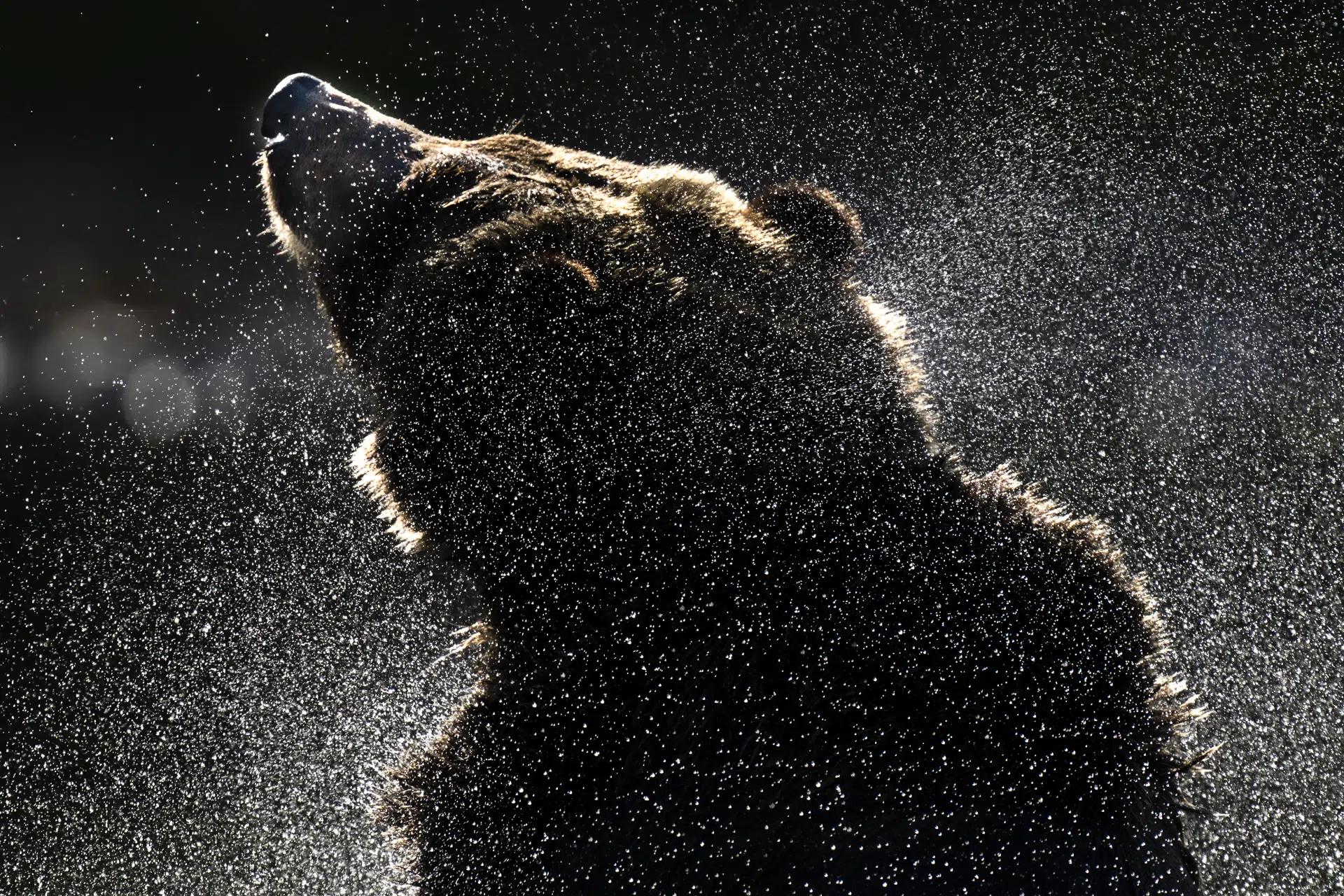
Canada, 2022. Each fall, grizzly bears gather along the Chilcotin River as the salmon return, drawn by a seasonal abundance that has sustained life here for millennia.
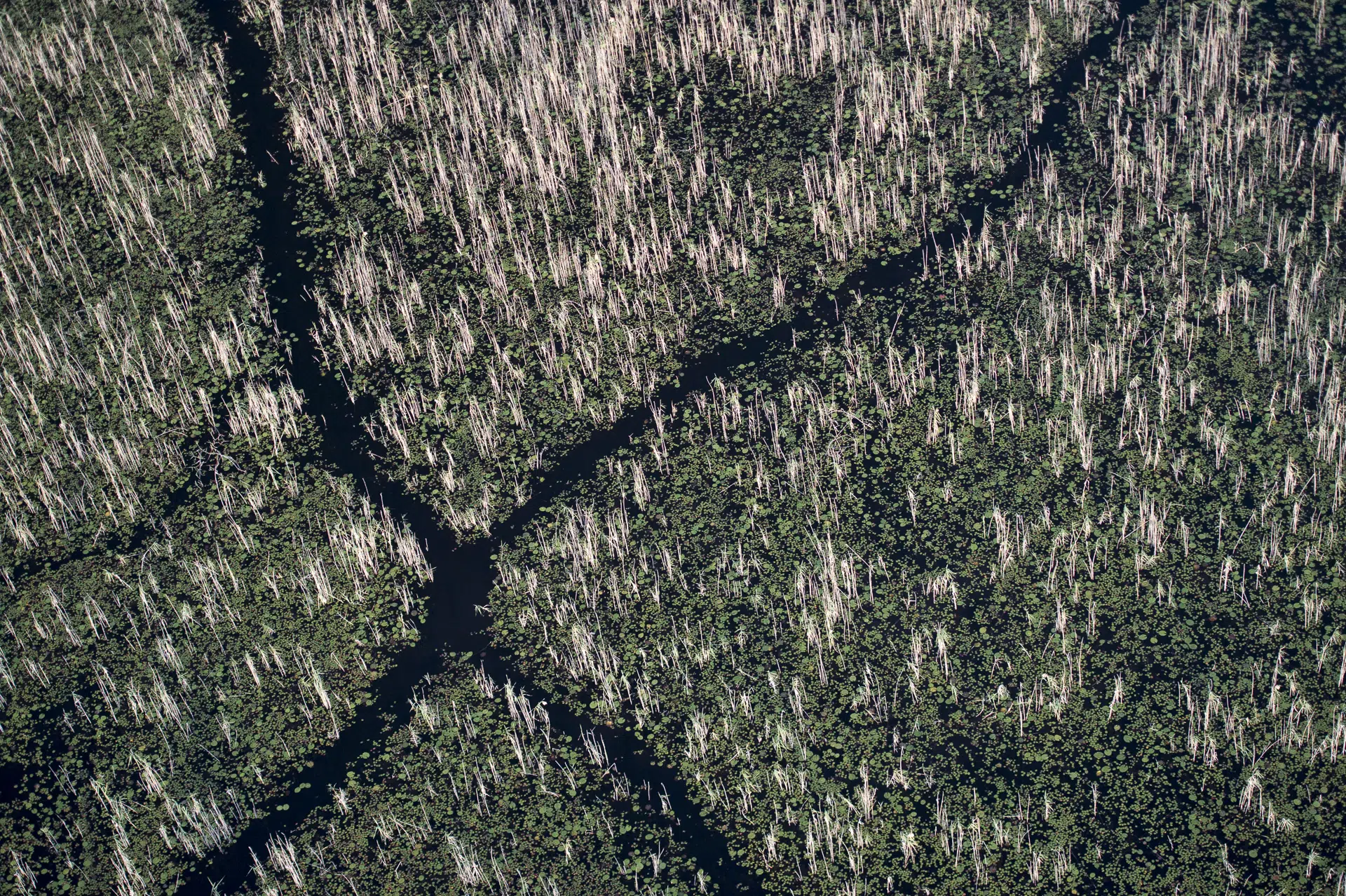
Botswana, 2014. Hippos move through the Okavango Delta guided less by sight than by smell. With relatively poor eyesight, they rely on scent to orient themselves in the dark, following familiar olfactory cues as they leave the water each night to graze. Over time, these repeated movements carve clear corridors through the landscape, subtle on the ground but unmistakable from above.
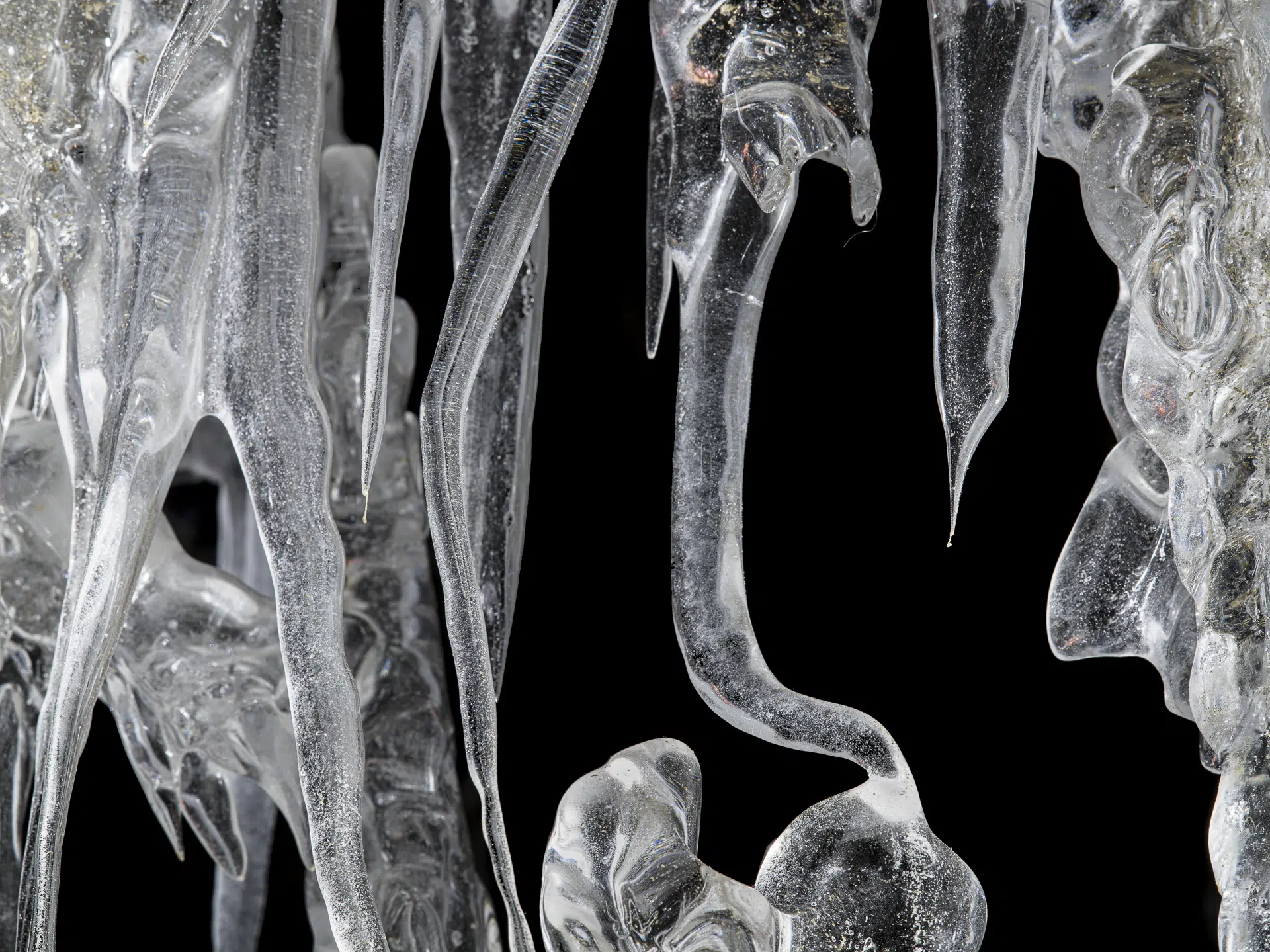
Svalbard, 2023. Deep beneath a glacier in Svalbard, photographing a delicate ice structure felt like entering a hidden cathedral carved by time and pressure. The air was still and intensely cold, and every sound seemed absorbed by the ice itself.