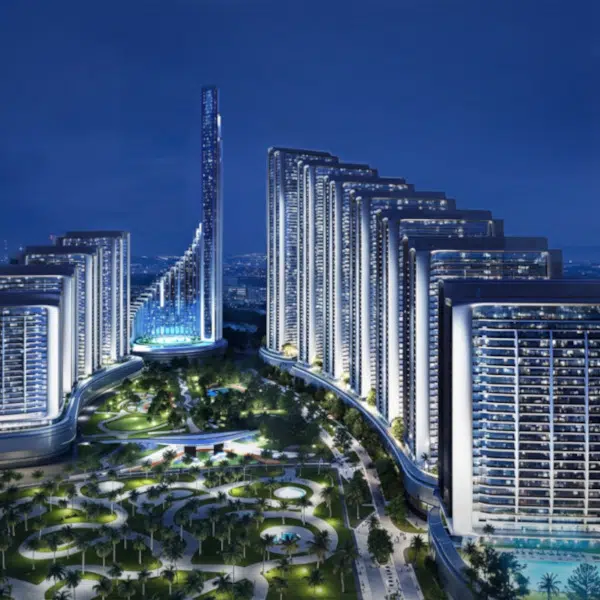
Fiji is one of the countries that is most at risk from climate change. Hoping to offer a solution to the challenges that its population faces, MASK Architects, creators of the first self-charging motorcycle, conceived a living concept for a future where the existing infrastructure becomes vulnerable. The Fiji Solar Crown is a structure that integrates everything to keep energy and water running, all wrapped up in a stylish and alluring design.
“When infrastructure fails on an island, failure is immediate and visible,” say the designers. “There is no redundancy, no alternative grid, no distant reservoir to compensate. Energy instability, water scarcity, and environmental stress collide directly with daily life.” As such, MASK Architect sees the Fiji Solar Crown as a response framework, rather than an architectural object.
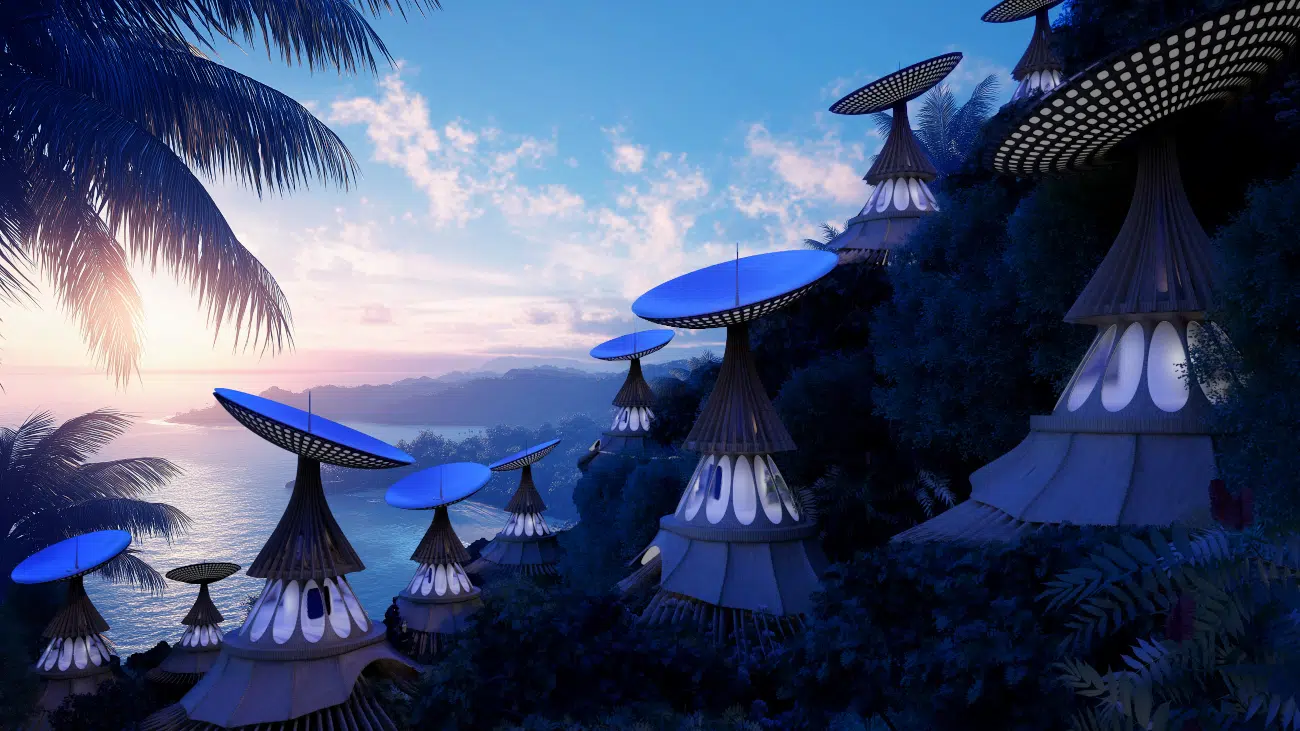
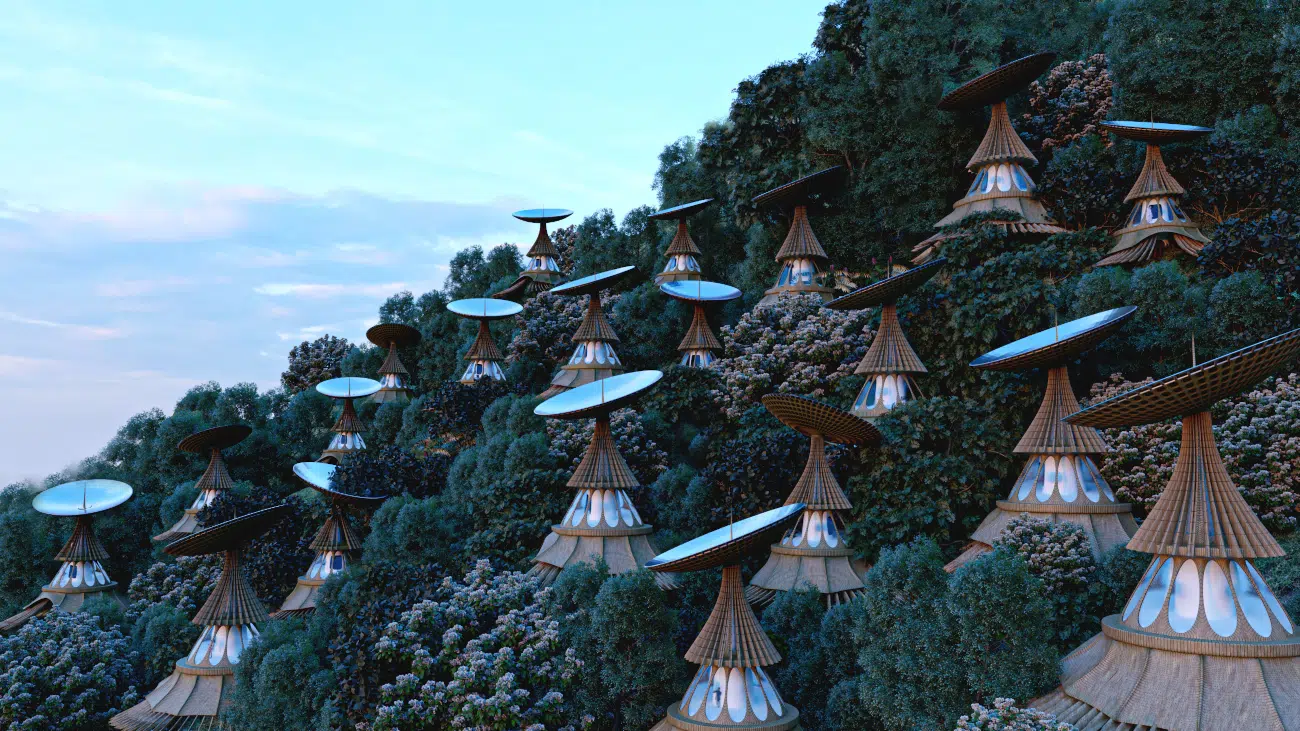
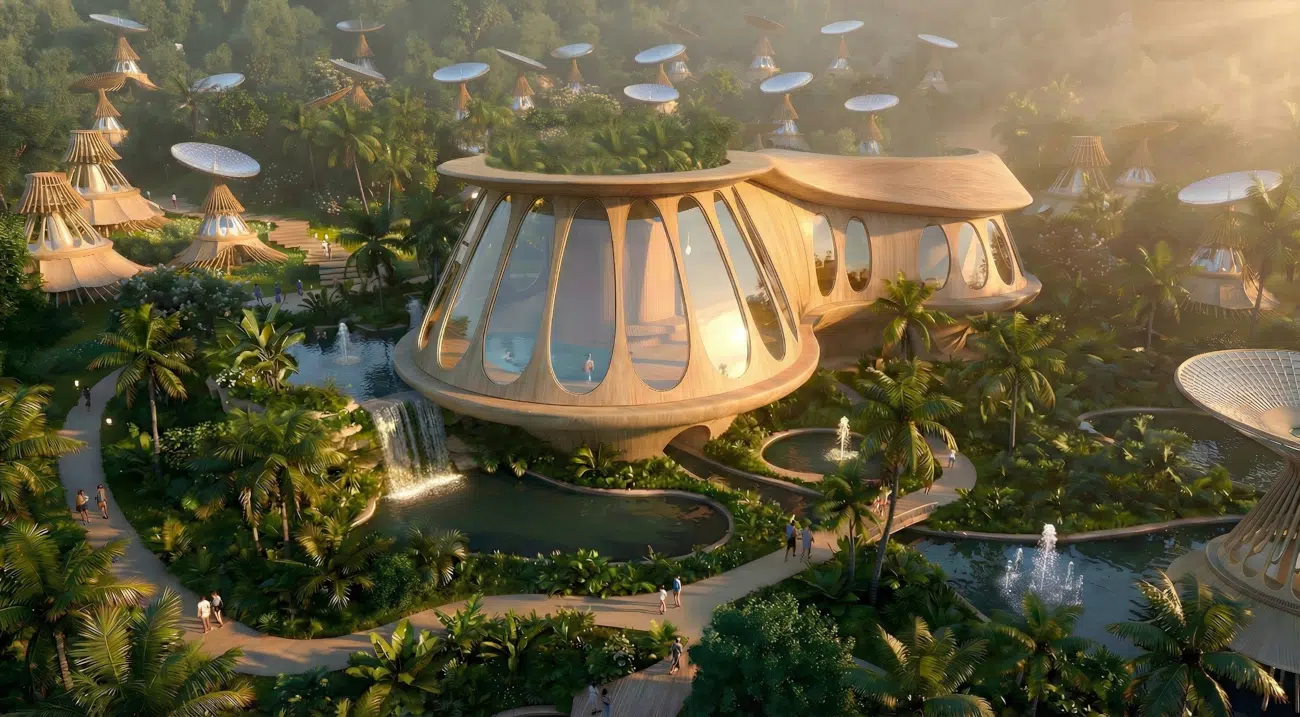
The result is the world’s first dual-axis concave parabolic solar crown living system. Made of laminated bamboo, indigenous Fijian hardwoods, bamboo-fiber composites, and geopolymer eco-concrete, the buildings are anchored to a ground base or floating foundations, depending on the conditions. The structure is capable of producing renewable energy and fresh water, all while functioning as a climate-resilient living environment.
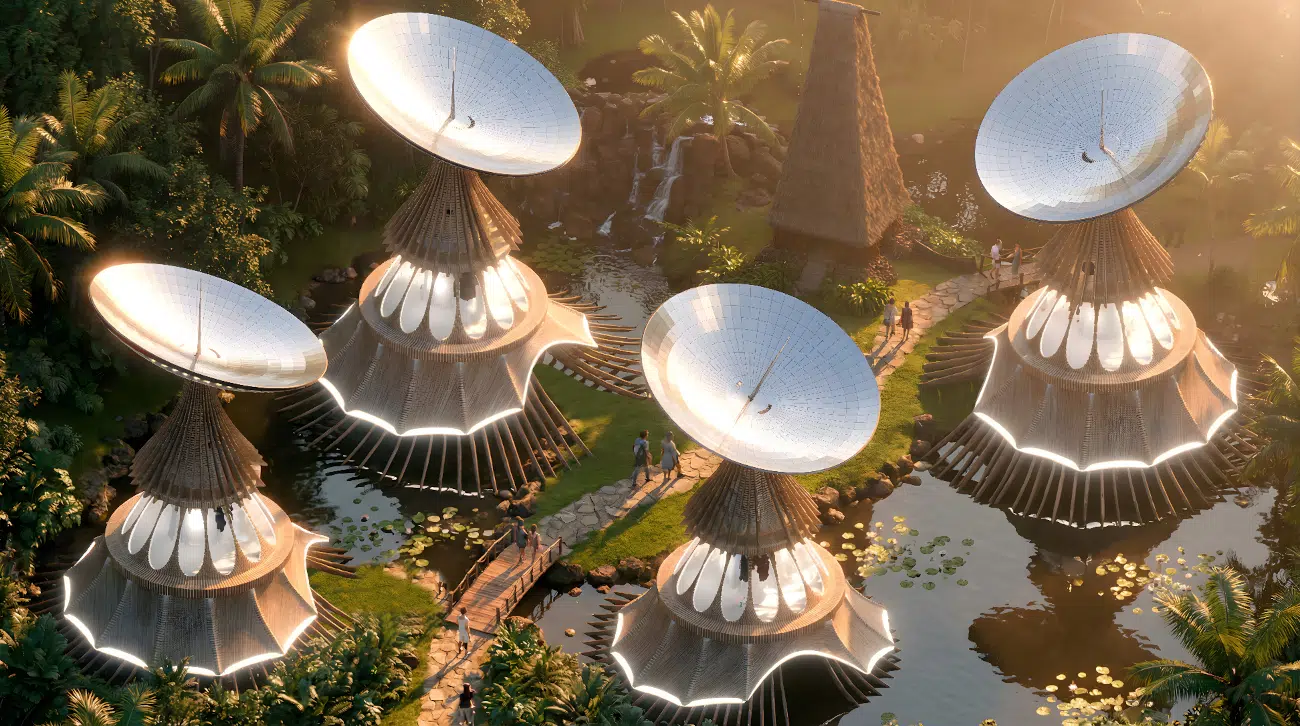
The “crown” in the name refers to the kinetic concave solar mirror that tops the living structures. These elements can rotate and tilt to track the sun and harvest energy. Their geometry also allows them to collect rainwater along their rim, which is then filtered through the central core and stored for daily use. Together, they work to keep the tropical micro-climate within the structure balanced for its dwellers.
The concave mirrors come in three diameters of 9.84 feet (3 meters), 16.4 feet (5 meters), and 22.9 feet (7 meters), with the smaller being able to power something like an off-grid shelter while the largest, which can produce up to 21,000 kWh/year, can house a multi-level residence. At night, the integrated under-glow lighting ring in each mirror makes it shine blue, easily seen from a distance.
“Beyond environmental performance, the system is strategically conceived to strengthen Fiji’s long-term resilience by supporting local employment, empowering craftsmanship, enabling new eco-tourism economies and replacing costly fossil-fuel dependency with locally generated renewable resources,” say MASK Architects.
While this is simply a concept, it sends an important message about the need for climate-aware architecture, and both authorities and creatives would be all the better by keeping these ideas at hand. To stay up to date with these designers, follow MASK Architects on Instagram.
MASK Architects designed the Fiji Solar Crown to address the challenges the island nation faces due to climate change.
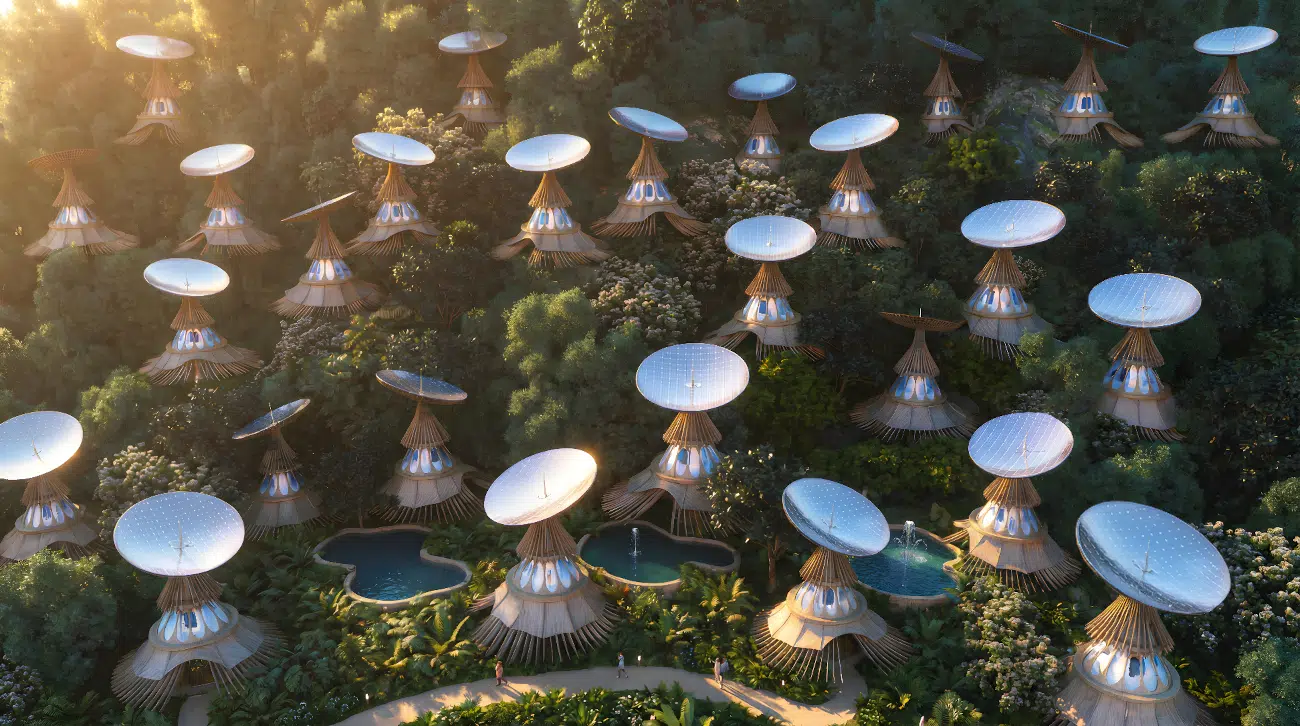
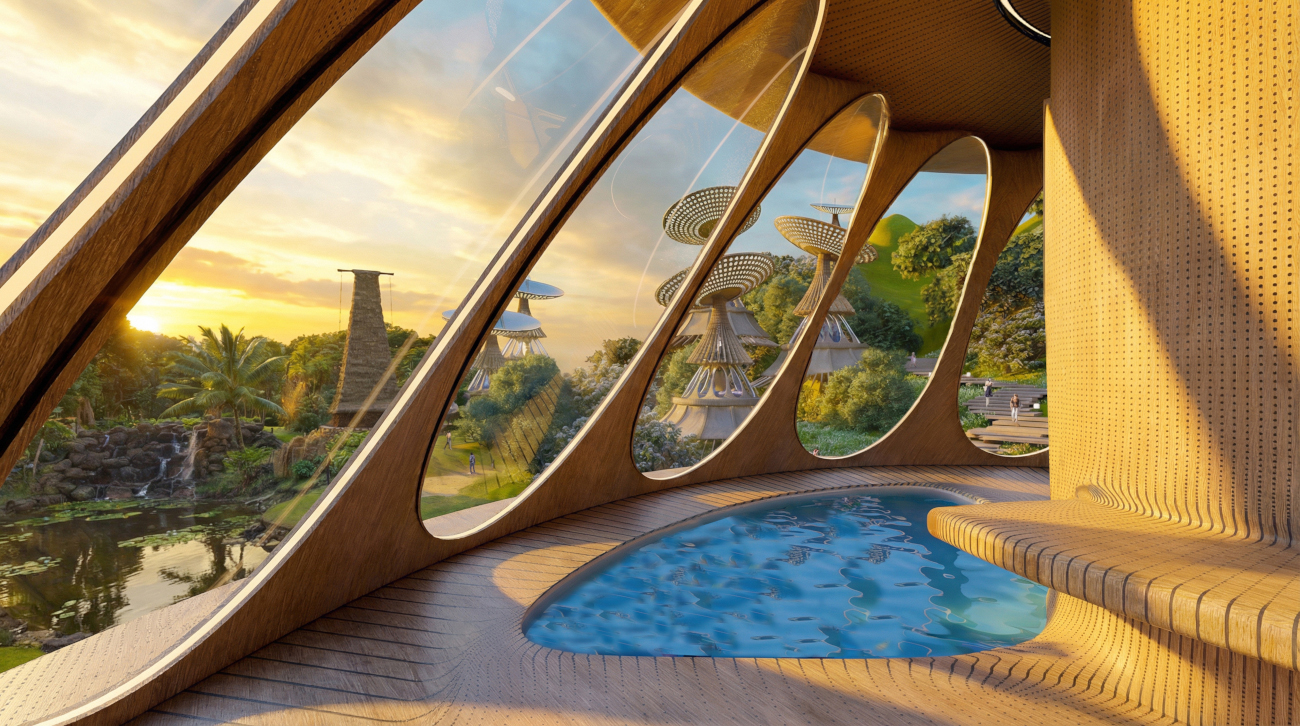
The Fiji Solar Crown is a structure that integrates everything to keep energy and water running when the existing infrastructure becomes vulnerable.
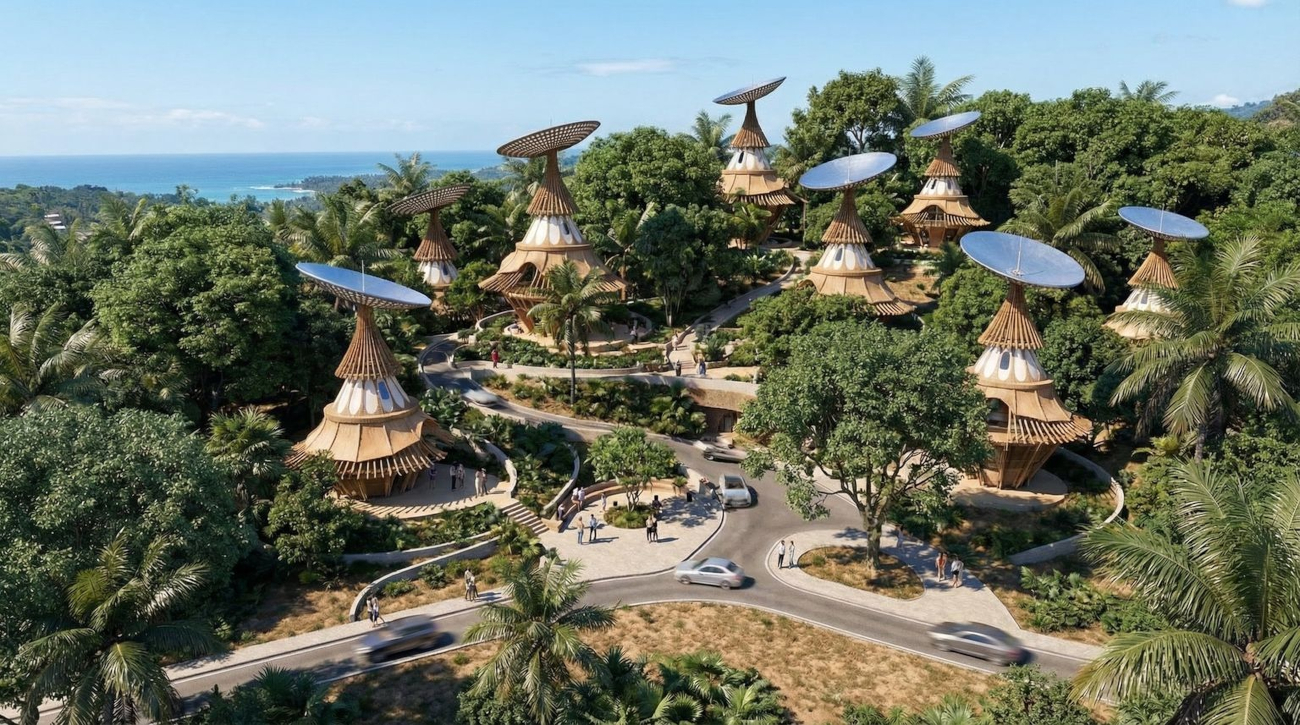
As such, MASK Architect sees the Fiji Solar Crown as a response framework, rather than an architectural object.
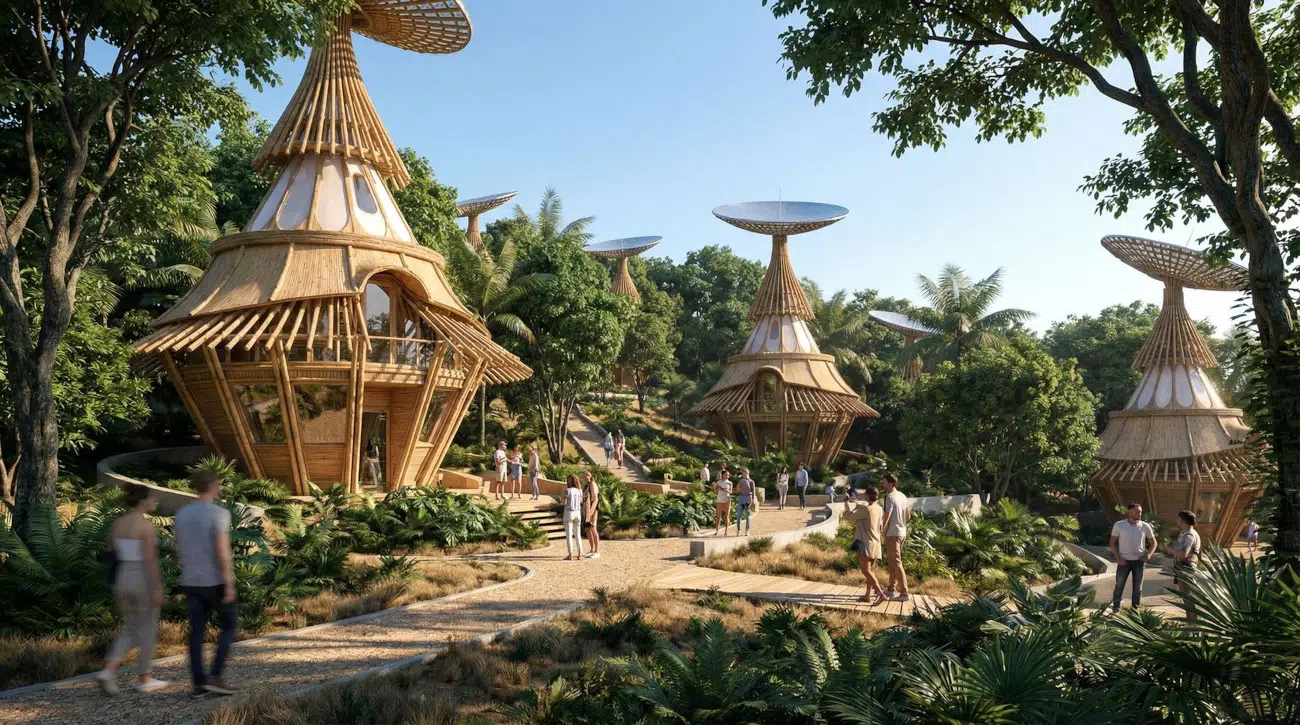
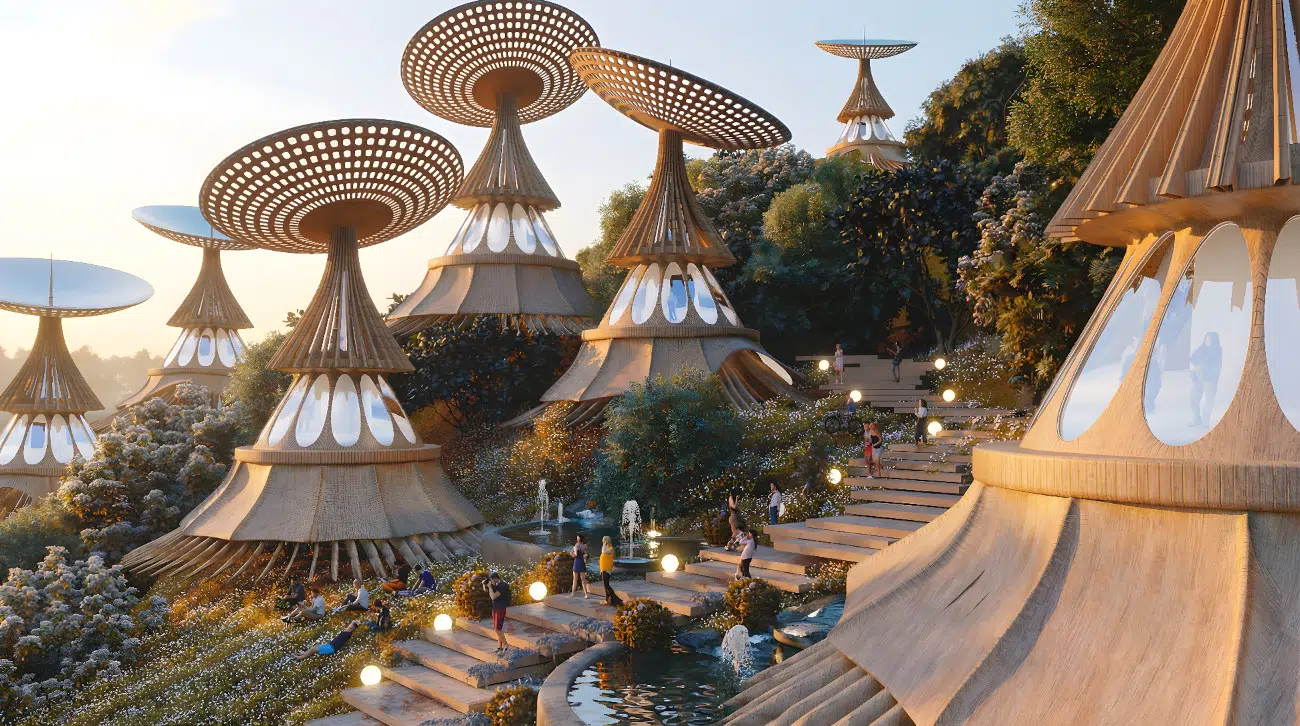
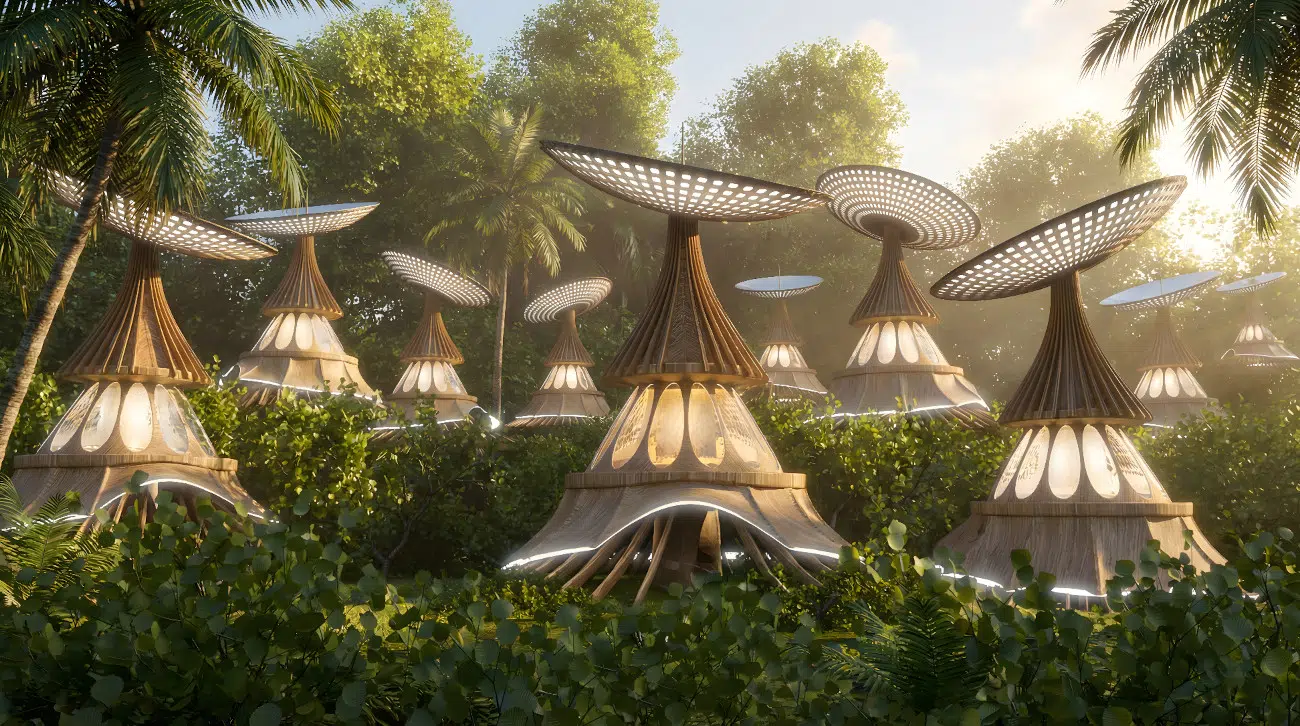
The structures can harvest solar energy and collect rainwater, which is then filtered and stored for consumption.
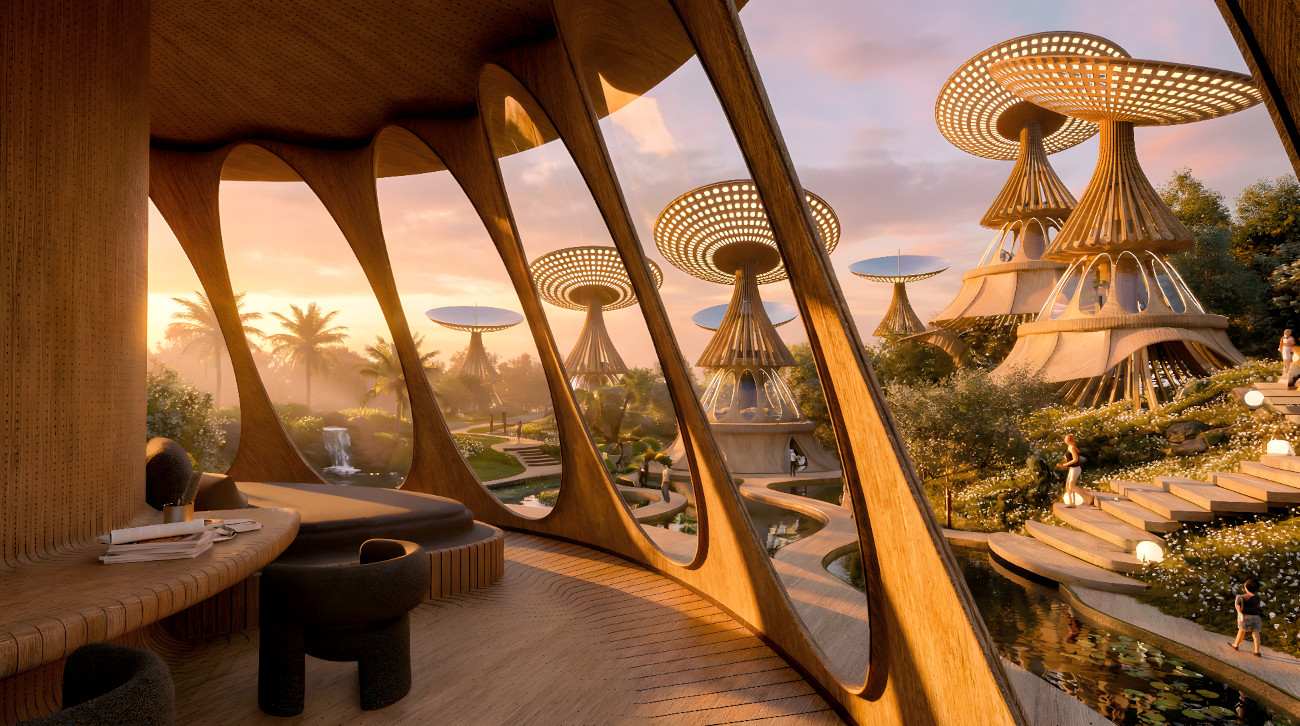
Together, they work to keep the tropical micro-climate within the structure balanced for its dwellers.

While this is a concept, it underscores the need for climate-aware architecture.