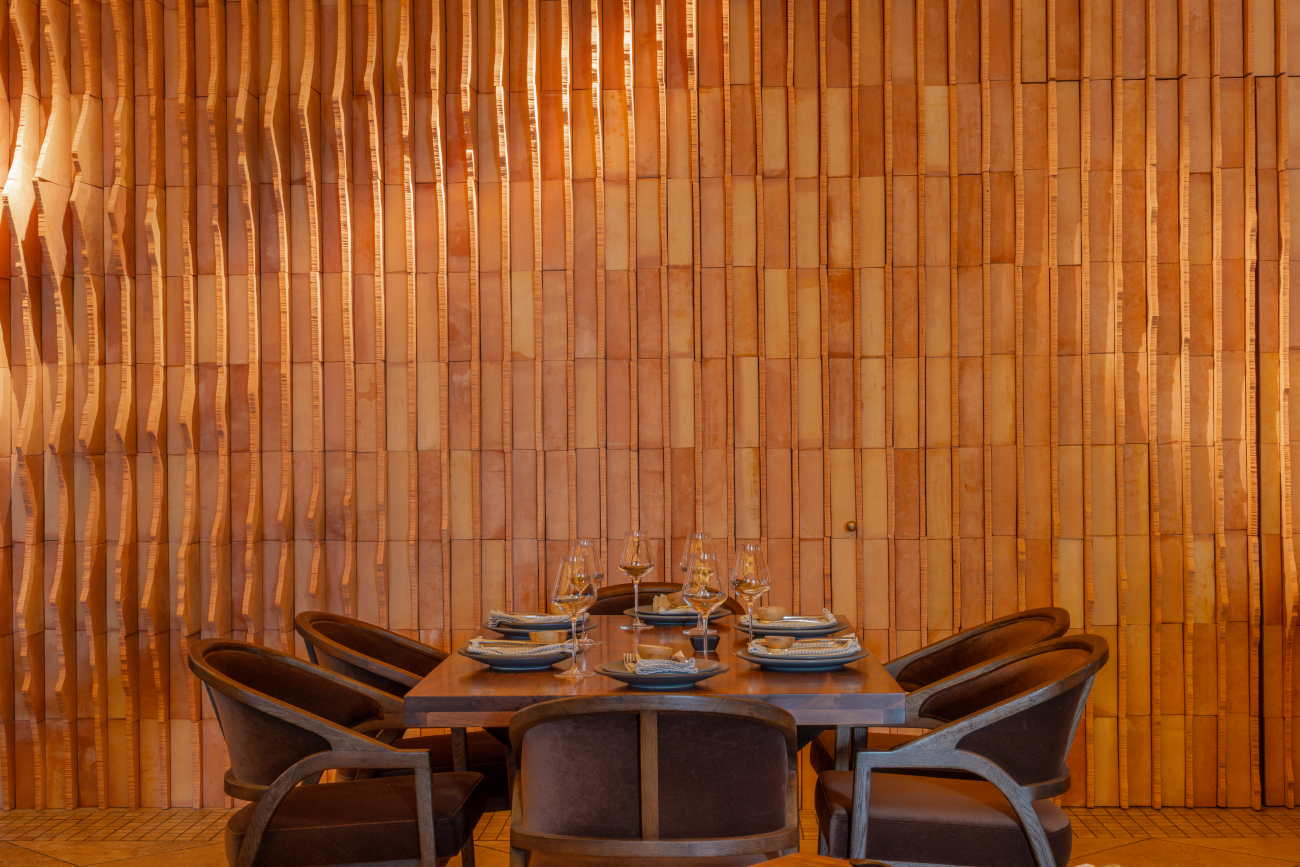
Sculptural installations are most often found in museums and galleries around the world. And yet, one of the most compelling is housed in a restaurant in northern Mexico. Don Artemio, a contemporary cuisine spot in Saltillo, has made art an integral part of the experience. At its heart is a piece titled Morfogénesis. Described as a work of “material cartography,” the striking mural brings the colors and shapes of the surrounding landscape inside.
Created by sibling artists Avelina and Alejandro Fuentes Quezada, Morfogénesis translates the topography of the Saltillo Valley, where the restaurant is located, and the larger Sierra Madre Oriental range into nearly 2,000 individually carved pieces. To make it a reality, the creatives used satellite data, digital segmentation, and laser projection to transfer the information onto clay before cutting and assembling the elements.
Made of a warm-colored clay known as Saltillo clay, the installation serves as the centerpiece of the main dining hall. “Saltillo tile is a material deeply rooted in the history of our region,” Alejandro tells My Modern Met. “But for us, its symbolic meaning is more important: it is territory, it is earth transformed by fire, it is architecture, cuisine, craftsmanship, and landscape all at once. It is, moreover, a material that bears the imprint of the place and of those who inhabit it. That connection allows us to interpret the landscape not as a distant image, but as a body, a stratum, and a memory.”
Beyond its accurate, detailed depiction of the mountains that define the Saltillo landscape, the artwork also serves Don Artemio’s larger goal. A restaurant devoted to researching, promoting, and preserving the cuisine and culture of northeastern Mexico, Morfogénesis paints an abstract yet captivating picture of the region it calls home, down to its colors, textures, and intricacies. This isn’t just mere decor; it’s a key element of the culinary experience.
The artists worked closely with Luis González Díaz de León, the architect behind the restaurant’s design, so their creation would integrate seamlessly with the rest of the building. “Collaboration is a very important and ongoing aspect of our studio’s work, especially with artists and artisans,” González Díaz de León says. “In this case, working with Avelina and Alejandro Fuentes, we were able to strike a balance—or establish a dialogue—between sculpture, weaving, and architecture, creating an atmosphere that is authentic and consistent with our context.”
From the brainstorming to the final assembly, Morfogénesis took two years of work, including an entire year of experimenting with clay. Still, Alejandro describes the creative process as very stimulating. “For Avelina and me, collaboration is essential when we take on a project, and in [Chef] Juan Ramón [Cárdenas] and Luis we found fertile ground to work on,” he adds. “Don Artemio is a place where culinary art and architecture come together, rooted in a deep respect for our region’s traditions. We simply channeled that essence, and the rest flowed naturally.”
In addition to spotlighting the beauty of the Saltillo Valley, Fuentes Quezada hopes Morfogénesis raises awareness of how a change in scale allows us to see things from a new perspective. “Ultimately, I believe what we’re aiming for is to inspire a moment of contemplation. The beauty of the Sierra is revealed in a new way.”
Eugene Kim, Editor-in-Chief at My Modern Met, visited Don Artemio over the summer and saw the beauty of Morfogénesis first-hand.
“What impressed me most about Morfogénesis is how deeply rooted it is in Saltillo. It’s visually stunning, but the more you learn about it, the more you realize how much thought went into every aspect of the work. The forms literally reflect the Saltillo Valley and the surrounding mountains, while the use of clay connects the installation back to the land, local craftsmanship, and the cultural identity of the region. I love that it isn’t simply an artwork placed inside a restaurant; it feels inseparable from where Don Artemio is and what it represents. There’s something incredibly thoughtful about using the landscape itself as inspiration and transforming it into this beautiful, immersive expression of place.
“I was honored to be invited to Don Artemio to experience the installation firsthand and especially fortunate to spend time with Chef Juan Ramón Cárdenas, architect Luis González, artist Alejandro Fuentes Quezada, and the Cárdenas family. We sat around a table together and shared an incredible meal, and what stayed with me was not only the thoughtfulness behind the installation, but the warmth and generosity of everyone I met. You could feel how deeply they care about Saltillo and how proud they are of Coahuila. There was a genuine desire to represent the very best of the region and to lift up its culture, landscape, craftsmanship, and people. That sense of pride and purpose made experiencing Morfogénesis in person even more meaningful.”
To learn more about this restaurant and plan your visit, check out Don Artemio’s website and follow Don Artemio on Instagram.
Morfogénesis is a sculptural installation and the centerpiece of Don Artemio, a restaurant in Saltillo, Mexico.
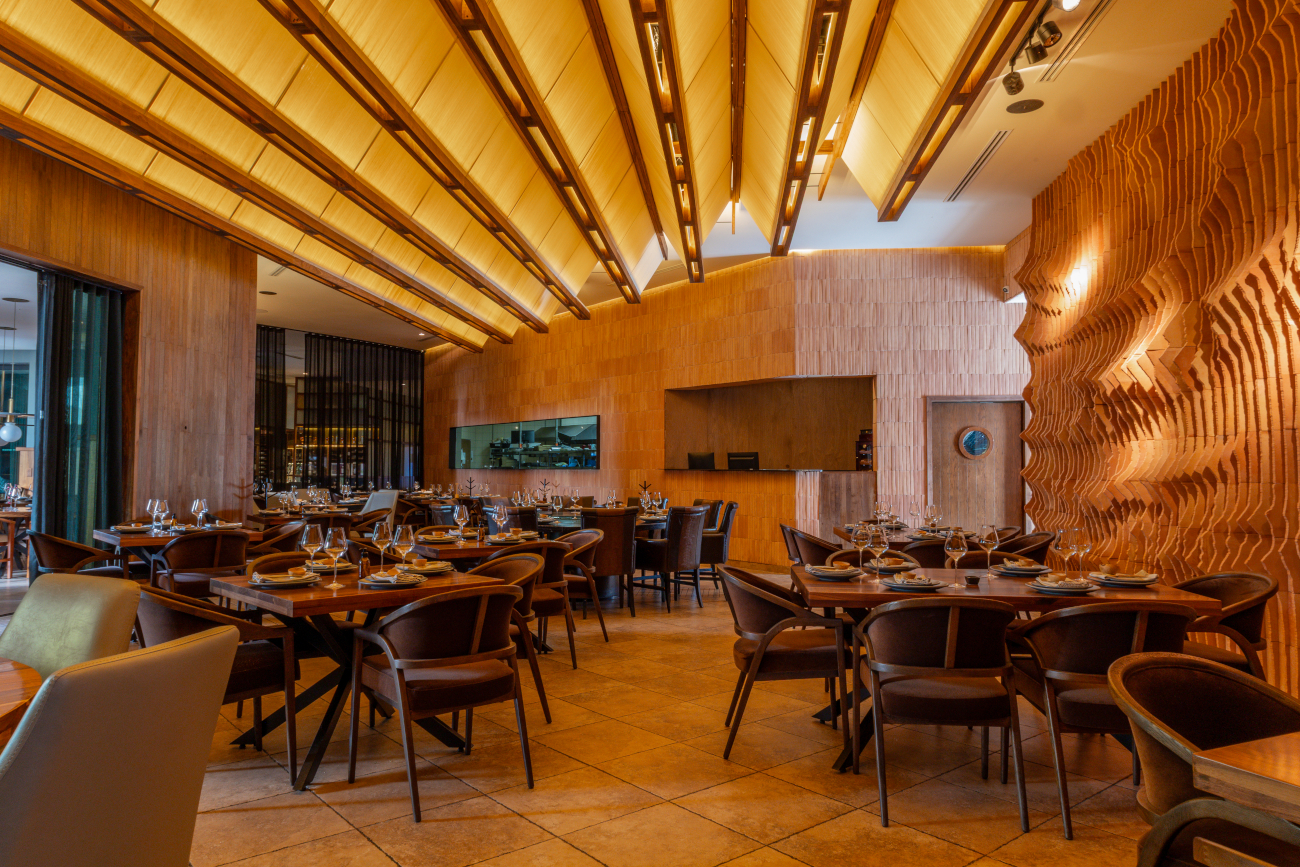
Described as a work of “material cartography,” the striking mural brings the colors and shapes of the surrounding landscape inside.
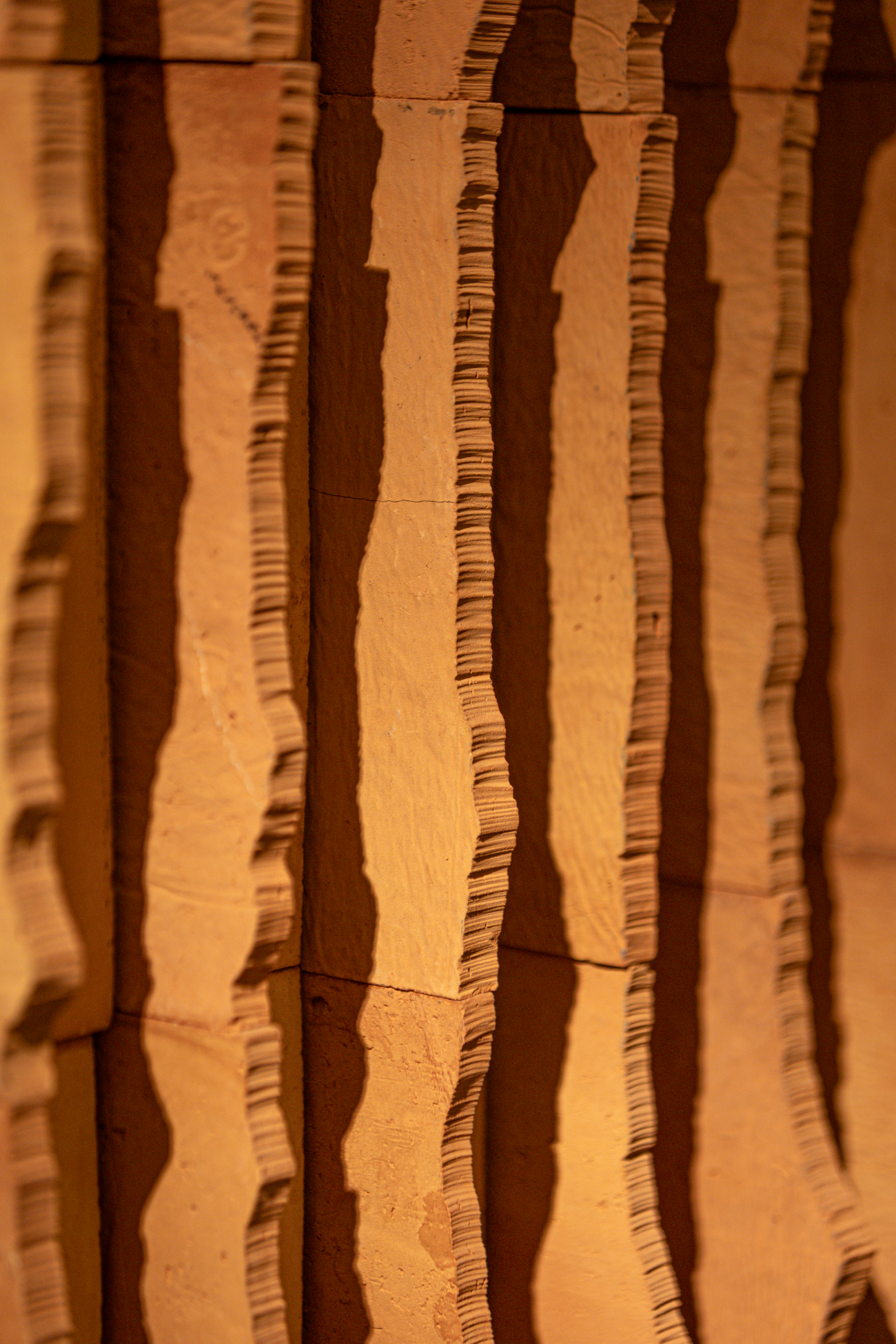
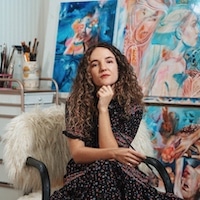
Sibling artists Avelina and Alejandro Fuentes Quezada created the artwork.
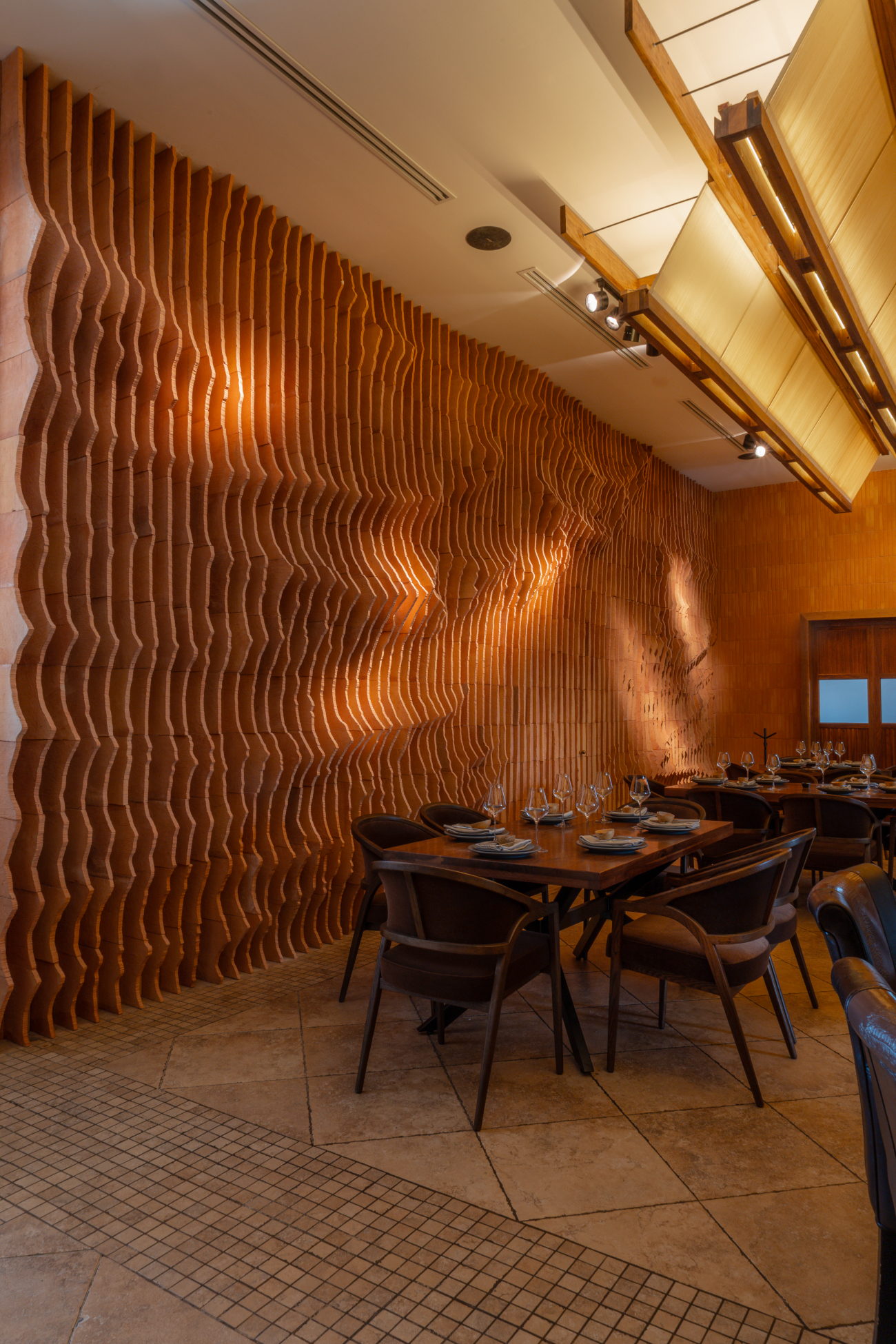
Morfogénesis comprises nearly 2,000 individually carved pieces.
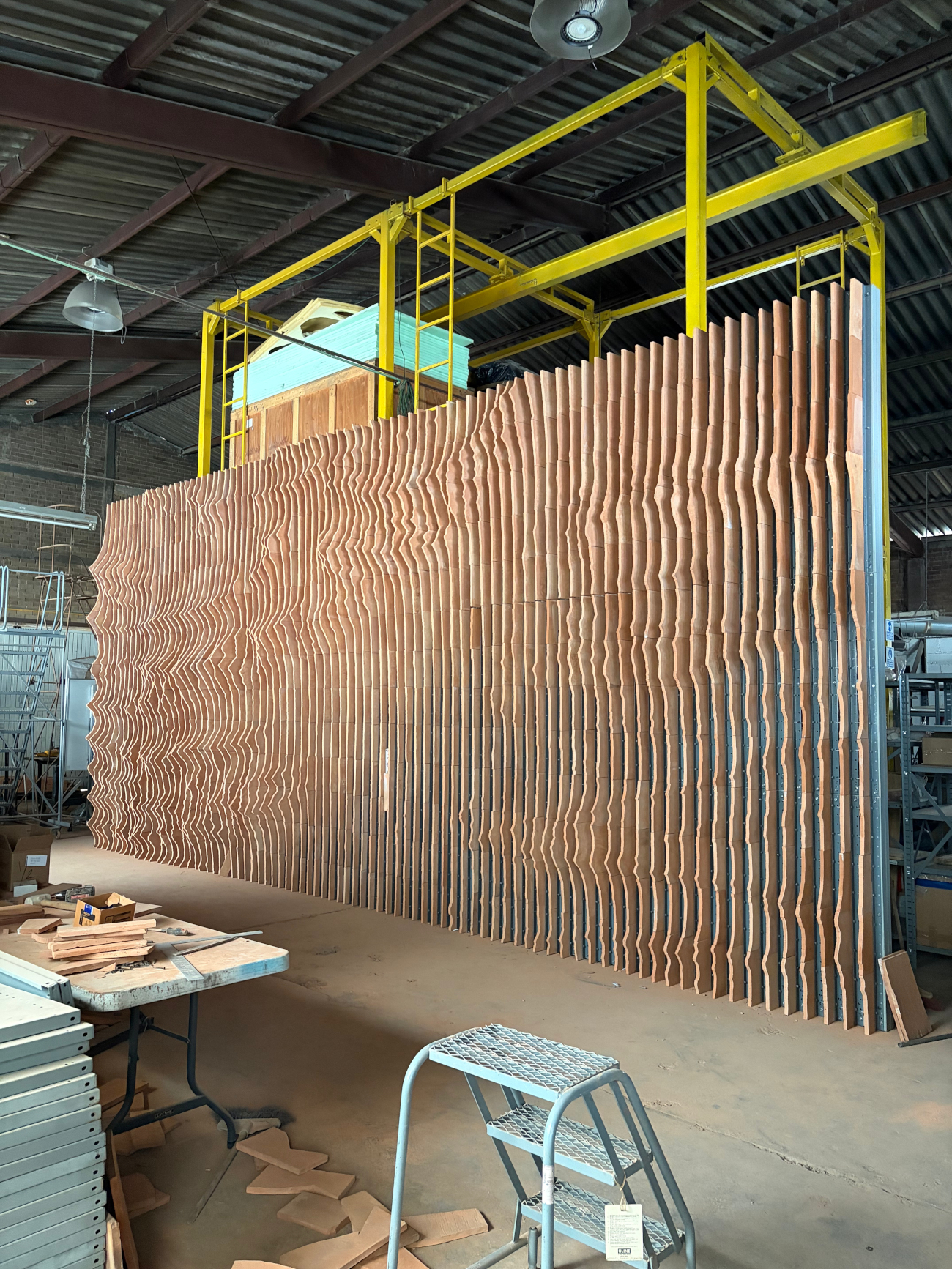
“Morfogenesis” at the workshop
The creatives used satellite data and employed digital segmentation and laser projection to later transfer the information onto clay before cutting and assembling the elements.
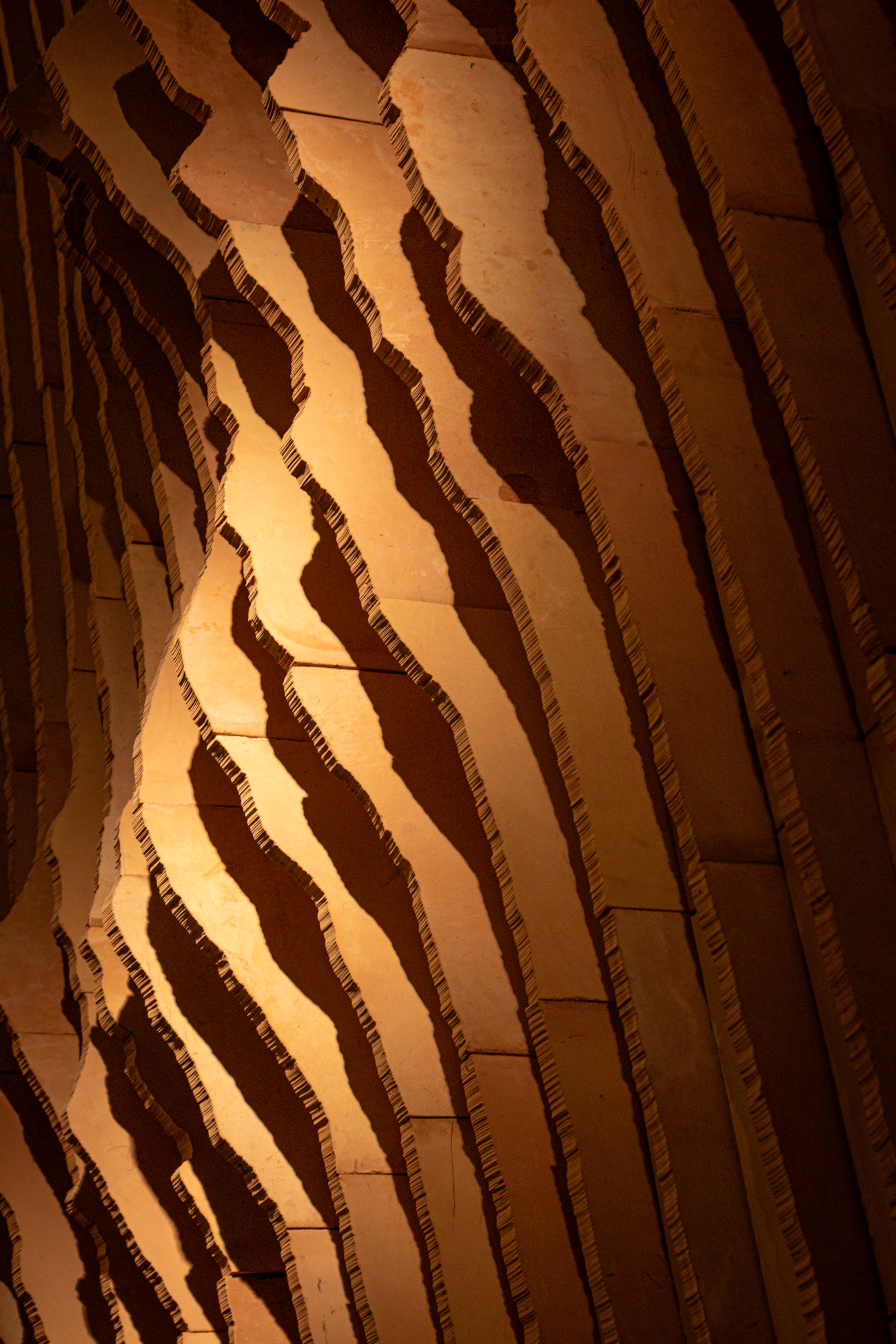
The artists worked closely with Luis González Díaz de León, the architect behind the restaurant’s design, so their creation would integrate seamlessly with the rest of the building.
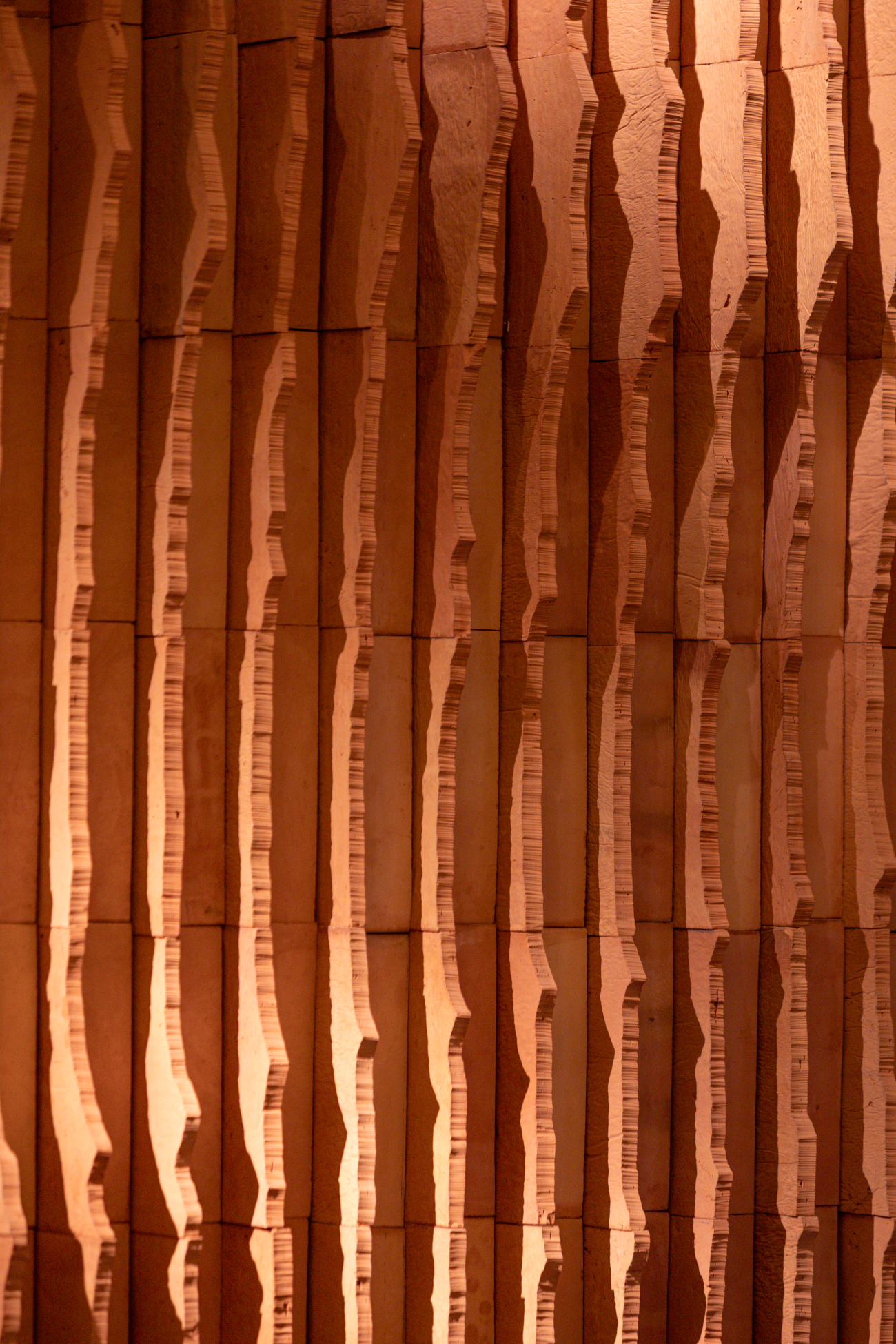
Beyond spotlighting the beauty of the Saltillo Valley, Fuentes Quezada hopes Morfogénesis raises awareness of how changing scale lets us see things from a new perspective.
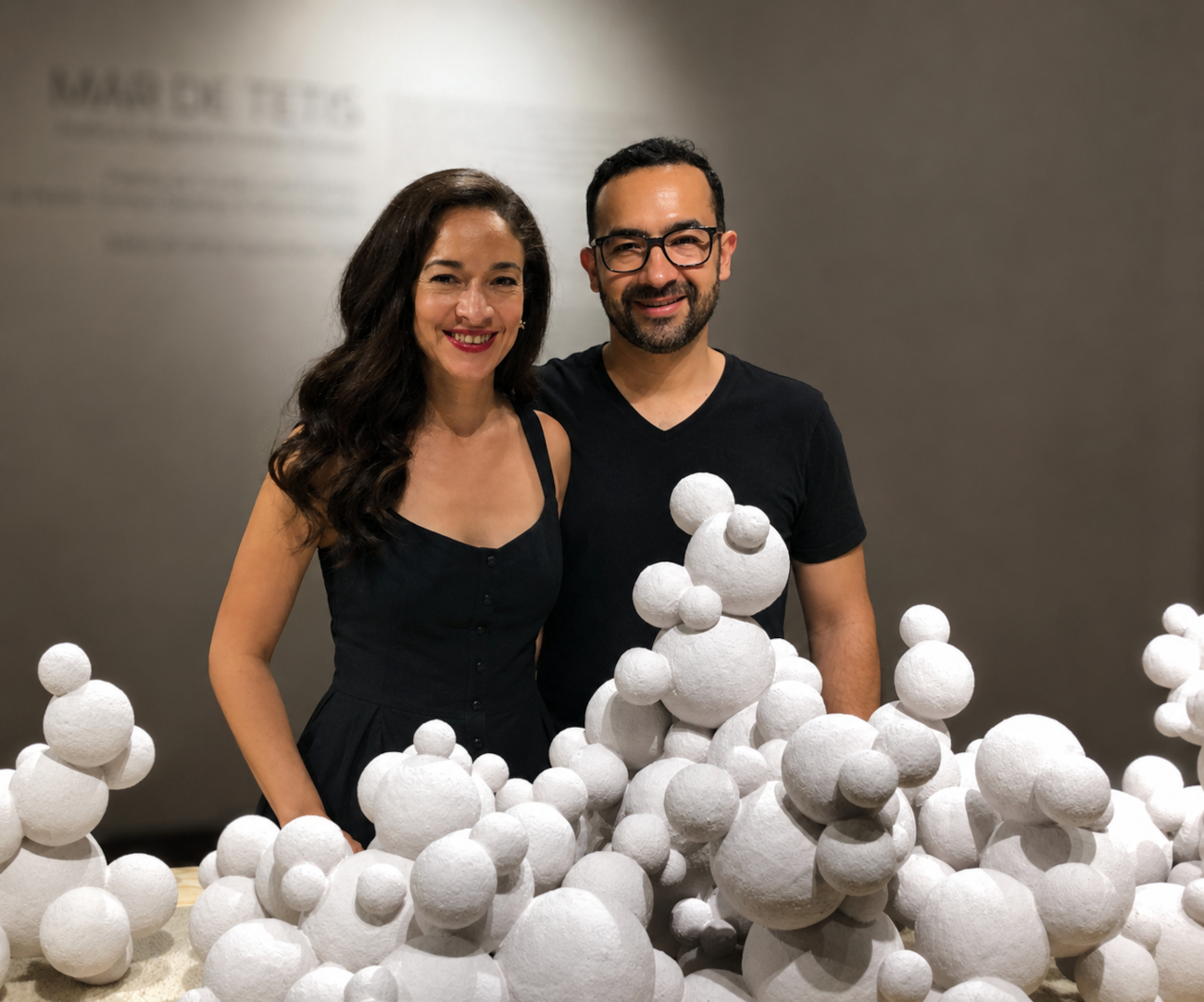
Artists Avelina Fuentes Quezada and Alejandro Fuentes Quezada