Photo: ©FlowerCarpet_MasterShoot
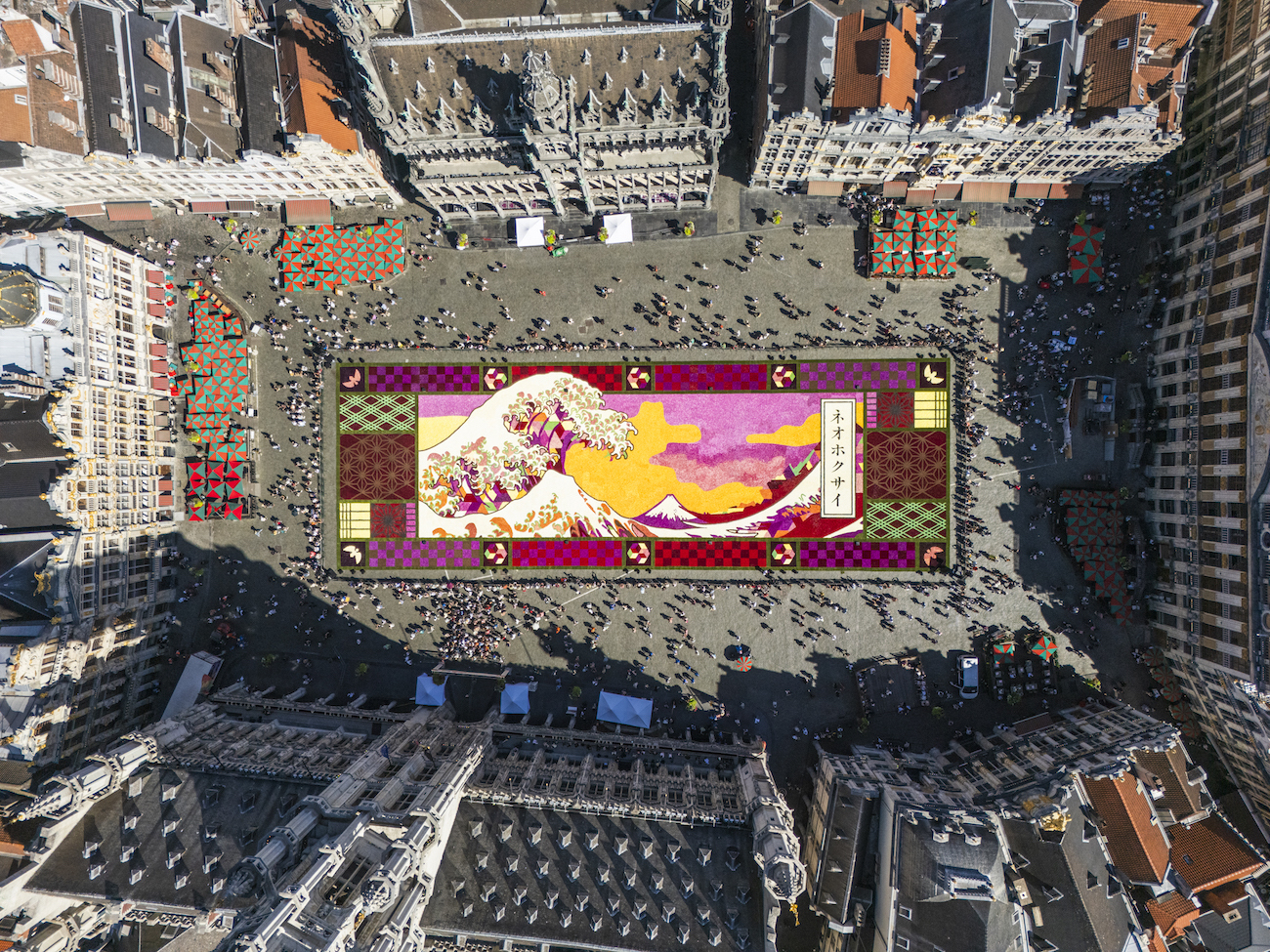
Every two years, Brussels transforms its historic Grand-Place into a monumental work of floral art. For its 24th edition, the Brussels Flower Carpet looked to Japan, recreating Katsushika Hokusai’s iconic The Great Wave off Kanagawa with more than 700,000 flowers.
Originally created in the early 1830s as part of Hokusai’s Thirty-Six Views of Mount Fuji, The Great Wave off Kanagawa depicts an enormous wave curling above three boats with Mount Fuji rising in the distance. Nearly two centuries later, the image remains one of the most recognizable works of Japanese art.
For the Brussels Flower Carpet, Japanese artist Hiro Sugiyama reinterpreted Hokusai’s composition rather than simply reproducing it. He incorporated the original work’s waves and Mount Fuji alongside other traditional motifs, then reshaped them through bold compositions, digital techniques, and a contemporary sense of rhythm. His design brings together historical Japanese imagery and contemporary art while allowing the original visual language to remain recognizable.
Sugiyama spent eight months developing the design. He ultimately worked within a palette of 16 colors, allowing the flowers themselves to determine how the familiar image would translate into a new medium.
Turning the design into a physical carpet required an extraordinary feat of coordination. Several days before the opening, organizers transferred the full-scale design onto a large organic cotton canvas spread across the Grand-Place. The enormous composition covered 1,680 square meters (over 18,000 square feet), stretching 70 meters long (almost 230 feet long) and 24 meters wide (nearly 79 feet wide). More than 100 volunteer gardeners then assembled the composition by hand in less than six hours, following a carefully prepared plan to position the flowers within the larger image.
The materials also reflect Belgium’s own floral traditions. For the first 22 editions of the Flower Carpet, begonias provided most of the color. As begonia production in Belgium became increasingly scarce, organizers turned to dahlias, another Belgian floral classic. For 2026, Belgian-grown flowers and blooms cultivated near the Dutch border formed the foundation of the massive installation.
The 2026 Flower Carpet also carries cultural significance beyond its visual connection to Hokusai. Japan returned as the event’s guest country 10 years after the first Belgium-Japan collaboration in 2016. This year’s partnership coincides with the 160th anniversary of diplomatic relations and friendship between the two countries.
From August 13 to 16, 2026, the cobblestone square became a vivid field of dahlias, arranged to evoke Hokusai’s dramatic scene. The result transformed a familiar masterpiece into something tactile, immersive, and fleeting.
Brussels’ 2026 Flower Carpet transformed the historic Grand-Place into a monumental floral interpretation of Hokusai’s The Great Wave off Kanagawa.
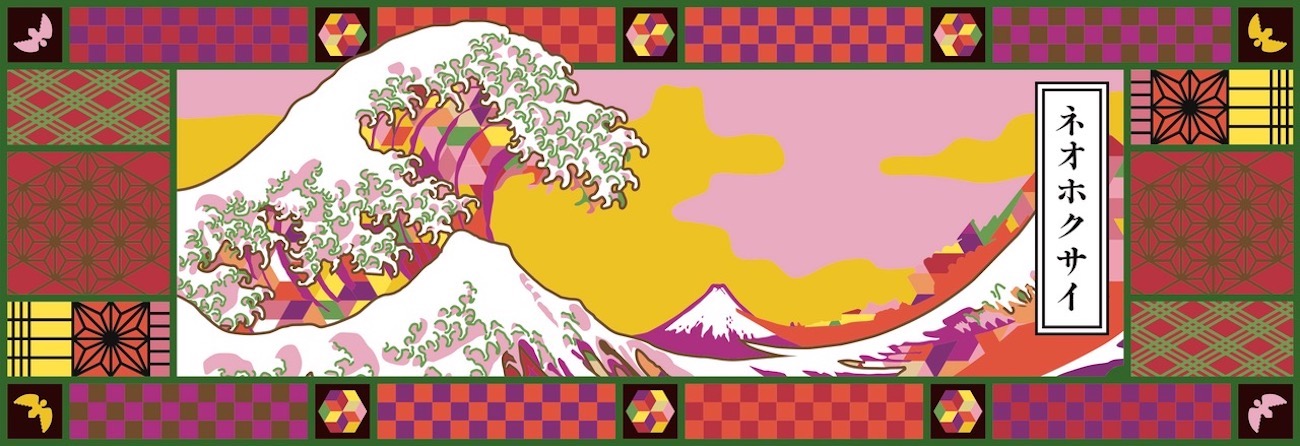
Photo: ©FlowerCarpet_MasterShoot
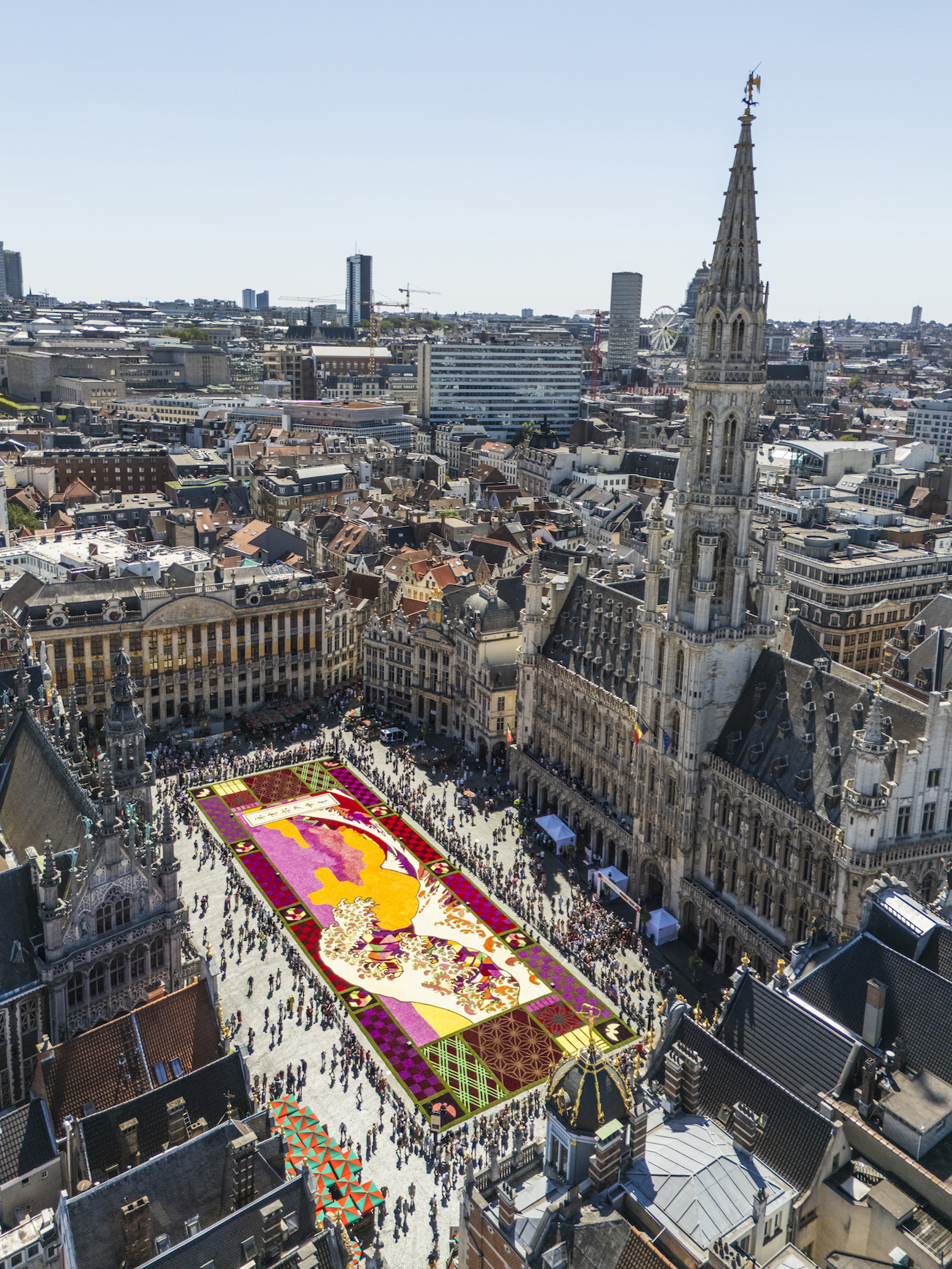
Photo: ©FlowerCarpet_MasterShoot
Designed by Japanese artist Hiro Sugiyama, the composition used more than 700,000 flowers to translate the iconic wave into sweeping fields of color and texture.
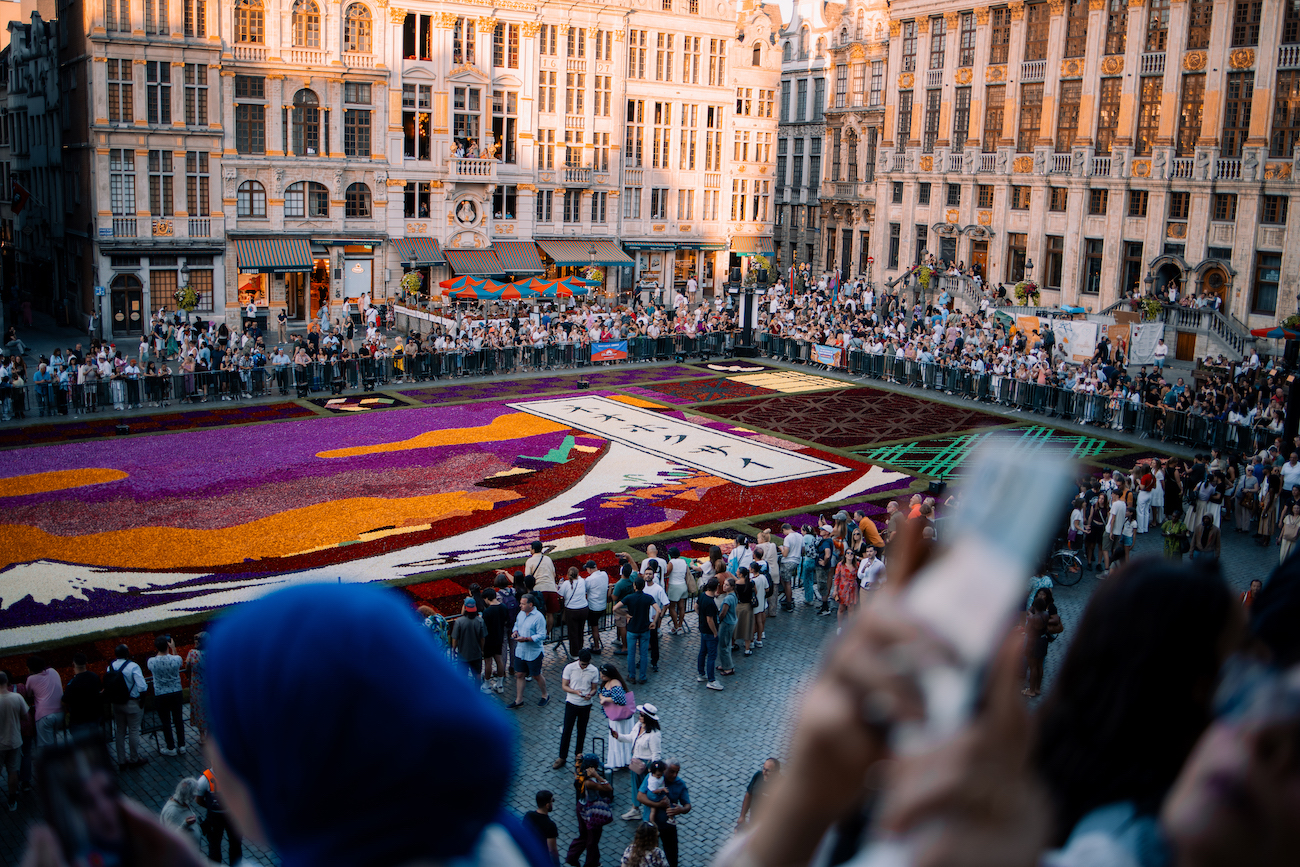
Photo: ©FlowerCarpet_MasterShoot
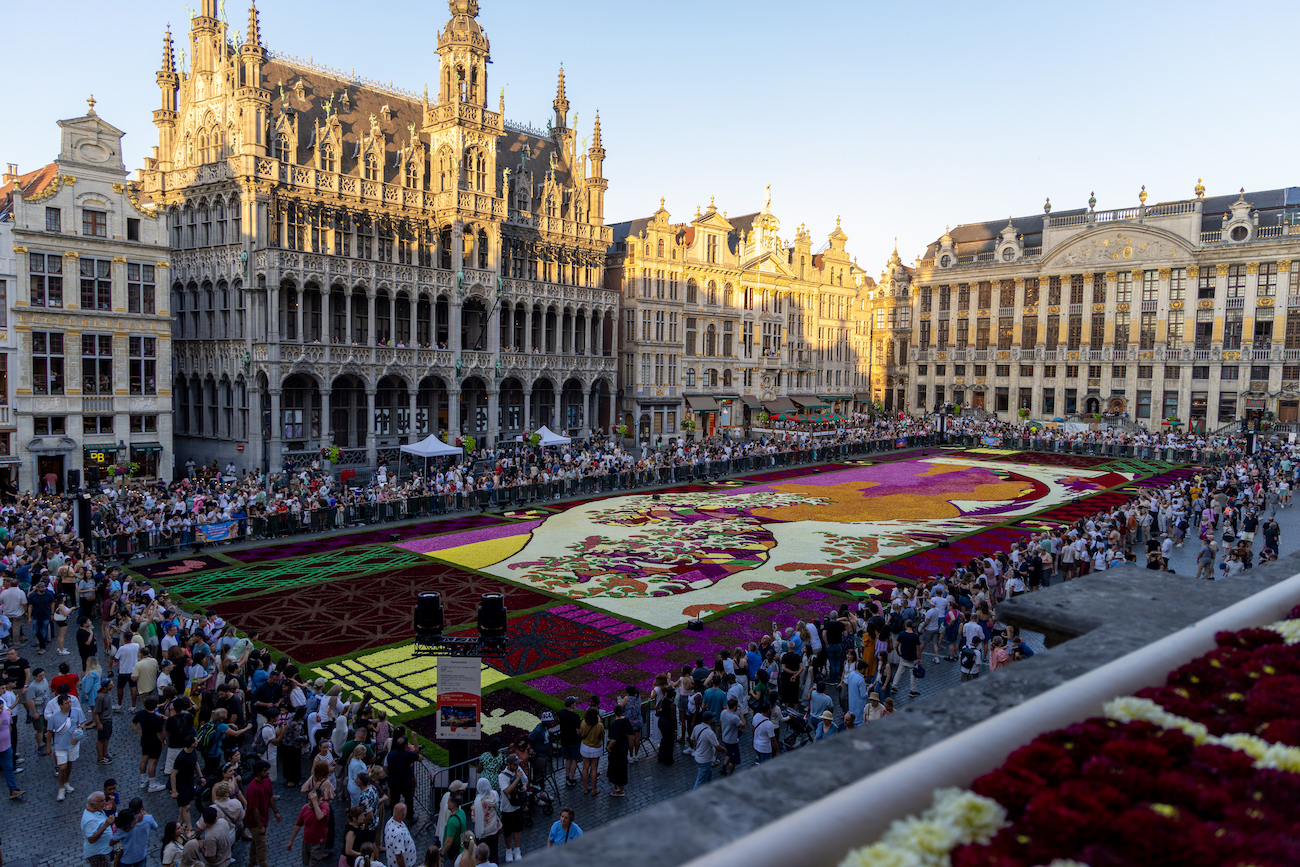
Photo: ©FlowerCarpet_MasterShoot
More than 100 volunteers arranged the blooms by hand to transform the 1,680-square-meter space into a floral canvas for the Belgium-Japan cultural celebration.
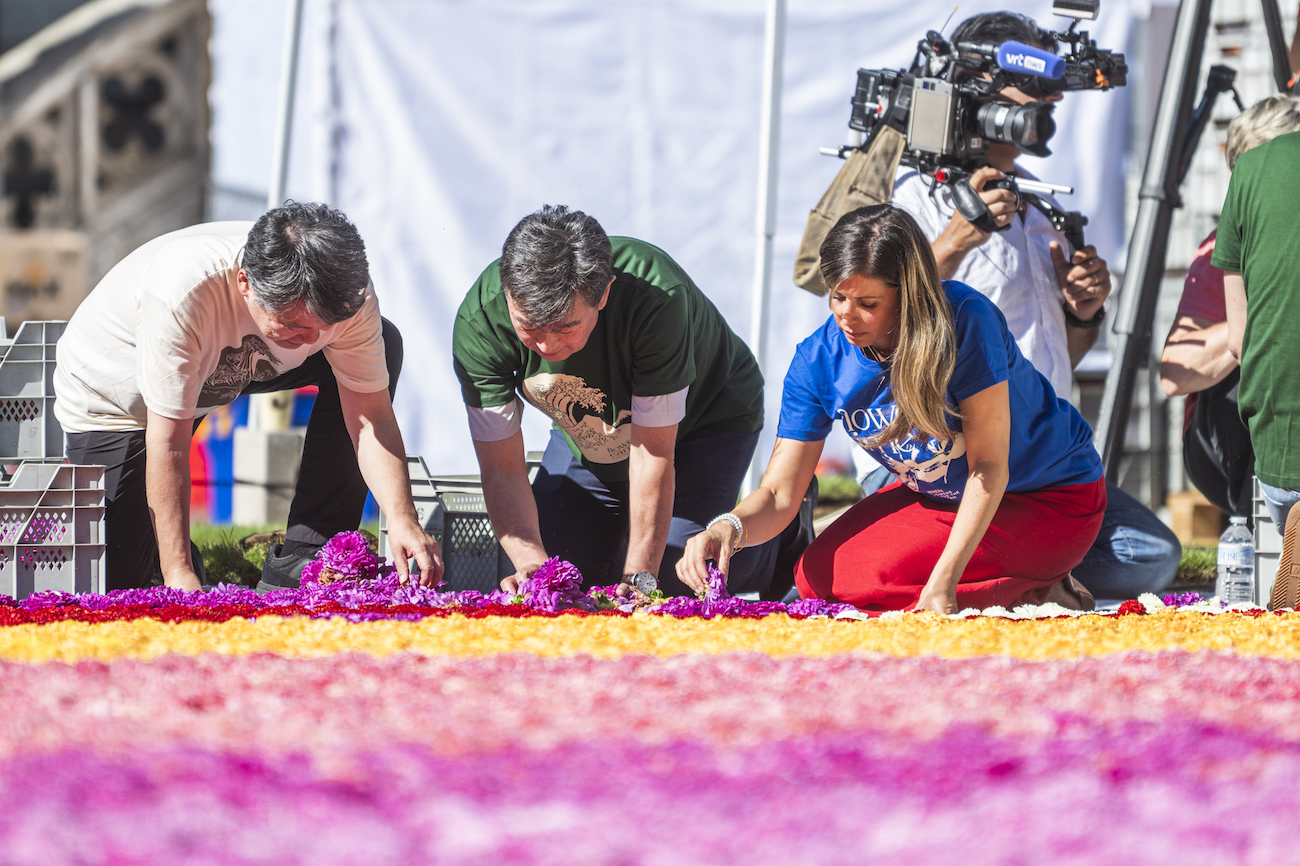
Photo: ©FlowerCarpet_MasterShoot
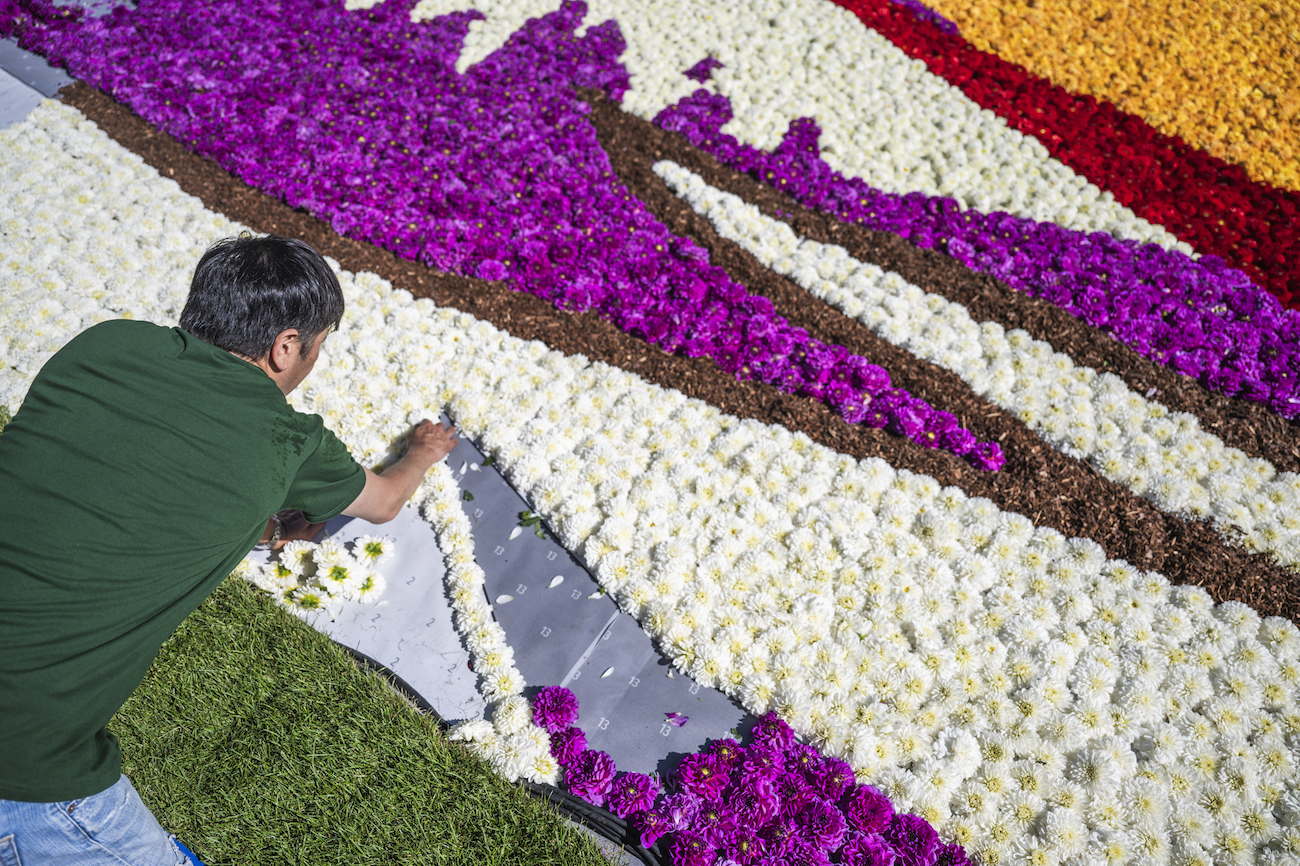
Photo: ©FlowerCarpet_MasterShoot
On view for just four days, the vibrant dahlias eventually disappeared, leaving behind photographs of an artwork that briefly brought Hokusai’s image to life.
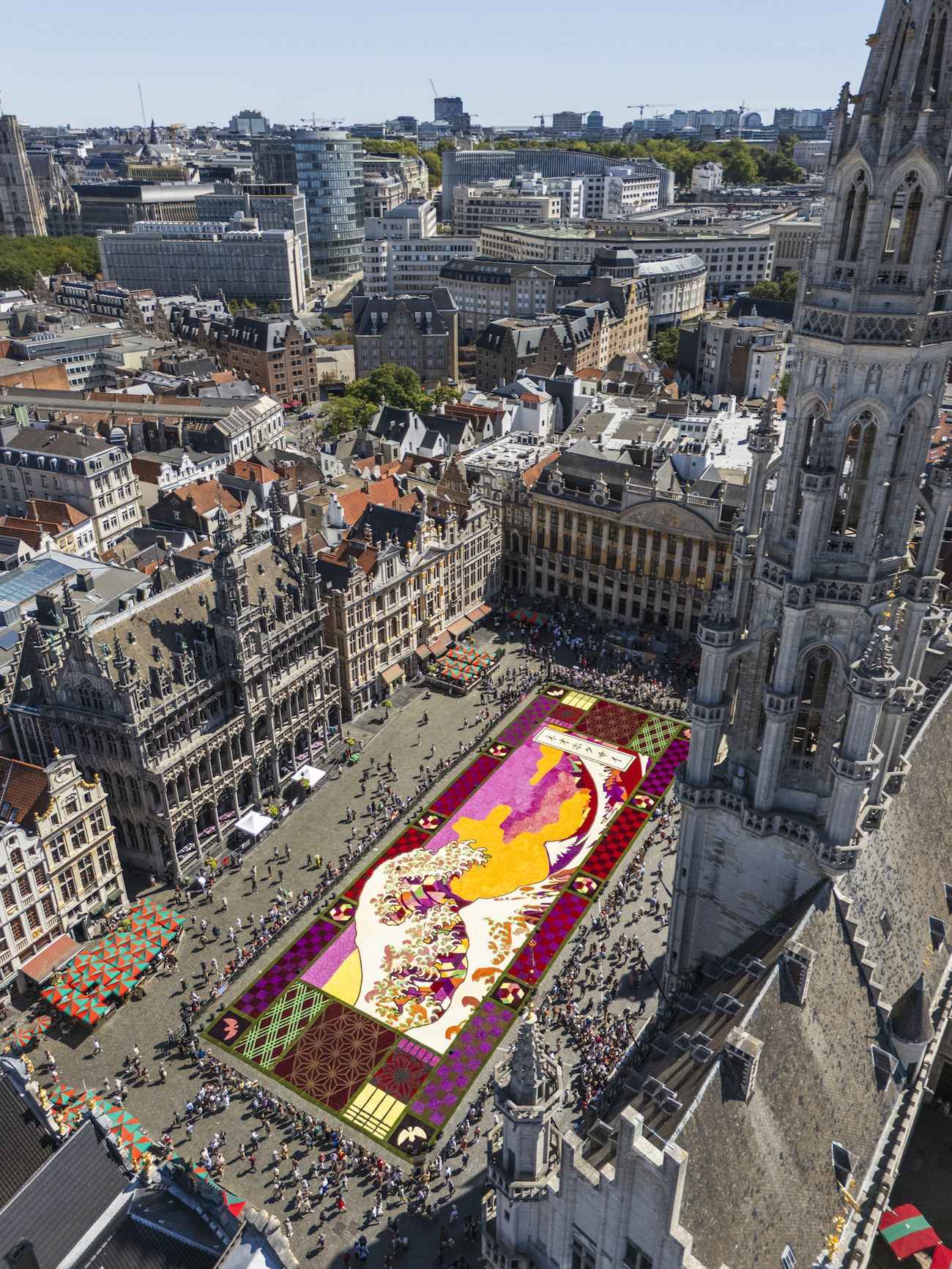
Photo: ©FlowerCarpet_MasterShoot
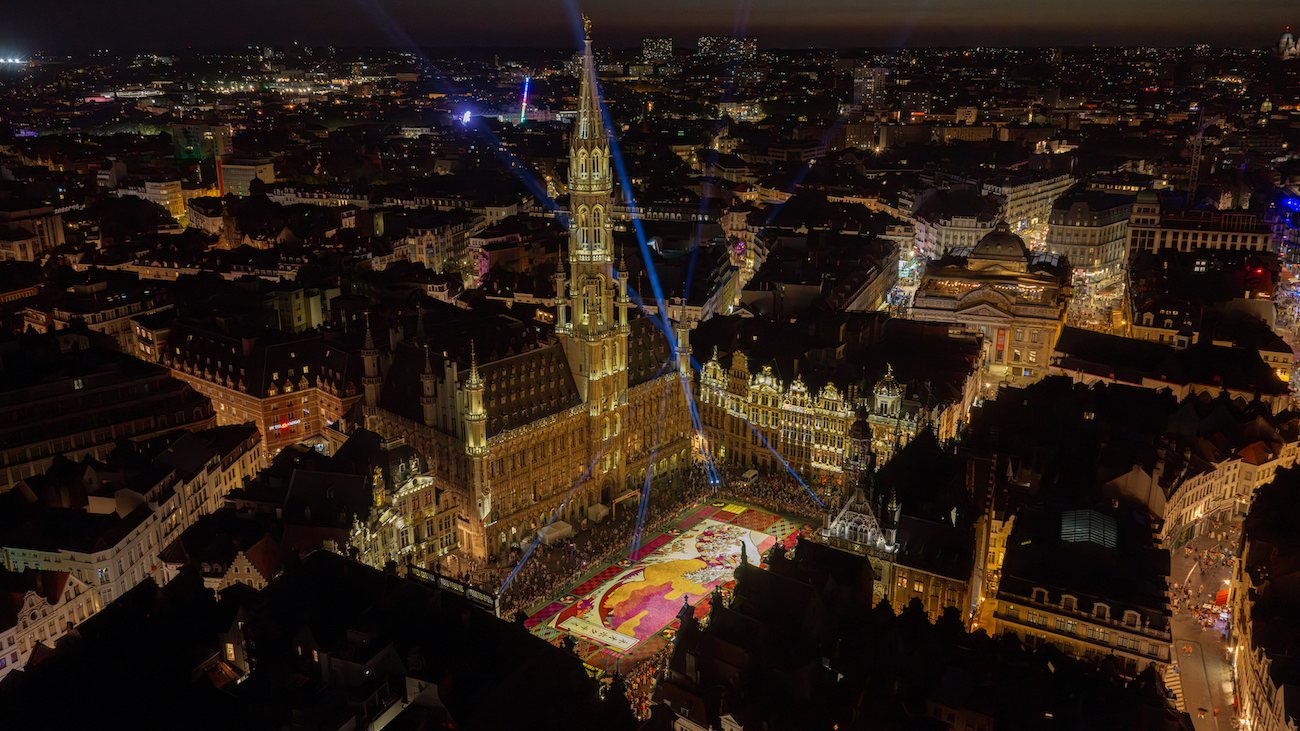
Photo: ©FlowerCarpet_MasterShoot