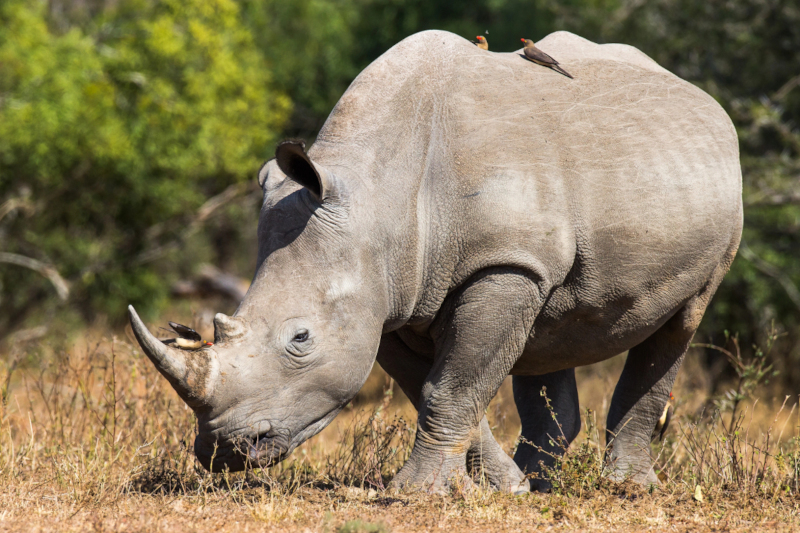
Between 1977 to 1992, Mozambique experienced a civil war, which became one of the deadliest conflicts of the 20th century. On top of the human toll, flora and fauna were also decimated—something particularly felt in Zinave National Park, home to lions, leopards, elephants, buffalos, and rhinoceros. After decades of black and white rhinos being extinct in the area, a devoted team has rebuilt a viable breeding population of these mammals.
“You could almost sense the very low levels of life with insects and birds and smells and sounds,” Antony Alexander, a regional manager for the conservation nonprofit Peace Parks Foundation told Mongabay about the times shortly after the war. “That’s changed dramatically over the last 10 years.” As managers of Zinave National Park, they began successfully reintroducing species to this 1,580-square mile protected area.
Last month, nine female white rhinos arrived in the park from from the Manketti Game Reserve in South Africa, bringing the count to 39 white rhinos and 22 black rhinos. Since then, the black rhinos in Zinave have produced five healthy calves, and hopes are that the white rhinos will follow suit.
These efforts are also having a positive impact on the ecosystem the rhinos now call home. Since overgrown grass can spread wildfires in drier conditions, rhinos keep this danger at bay by simply eating a lot of it. “You can imagine if you don’t have rhinos in the park, which was the situation in Zinave National Park when we first started 10 years ago,” Alexander says. “We were at a park that had very high grass levels, which is a very large fire hazard.” At the same time, this makes the pastures more welcoming to species like the impala, as well as several insects and birds.
Most importantly, there is hope that the rhinos of Zinave National Park will become feeder populations to establish populations in other parks around Mozambique. However, for it to come to fruition, extensive conservation efforts will be at play. “Of course, it doesn’t come easily,” Alexander says, “one’s got to spend many years preparing for it,”
Sources: Mozambique completes first white rhino breeding population in decades
Related Articles:
Indian Rhino Population in Assam Flourishes As Poaching Drops 86%
Rhinos Celebrate Halloween by “Carving” Pumpkins at the Oregon Zoo
Conservation Photographer Documents Last Two Northern White Rhinos on Earth [Interview]
World’s First IVF Rhino Pregnancy Might Save the Northern White Rhinoceros Species