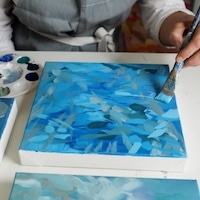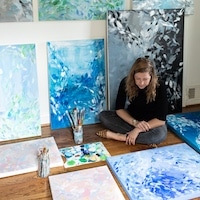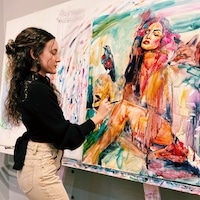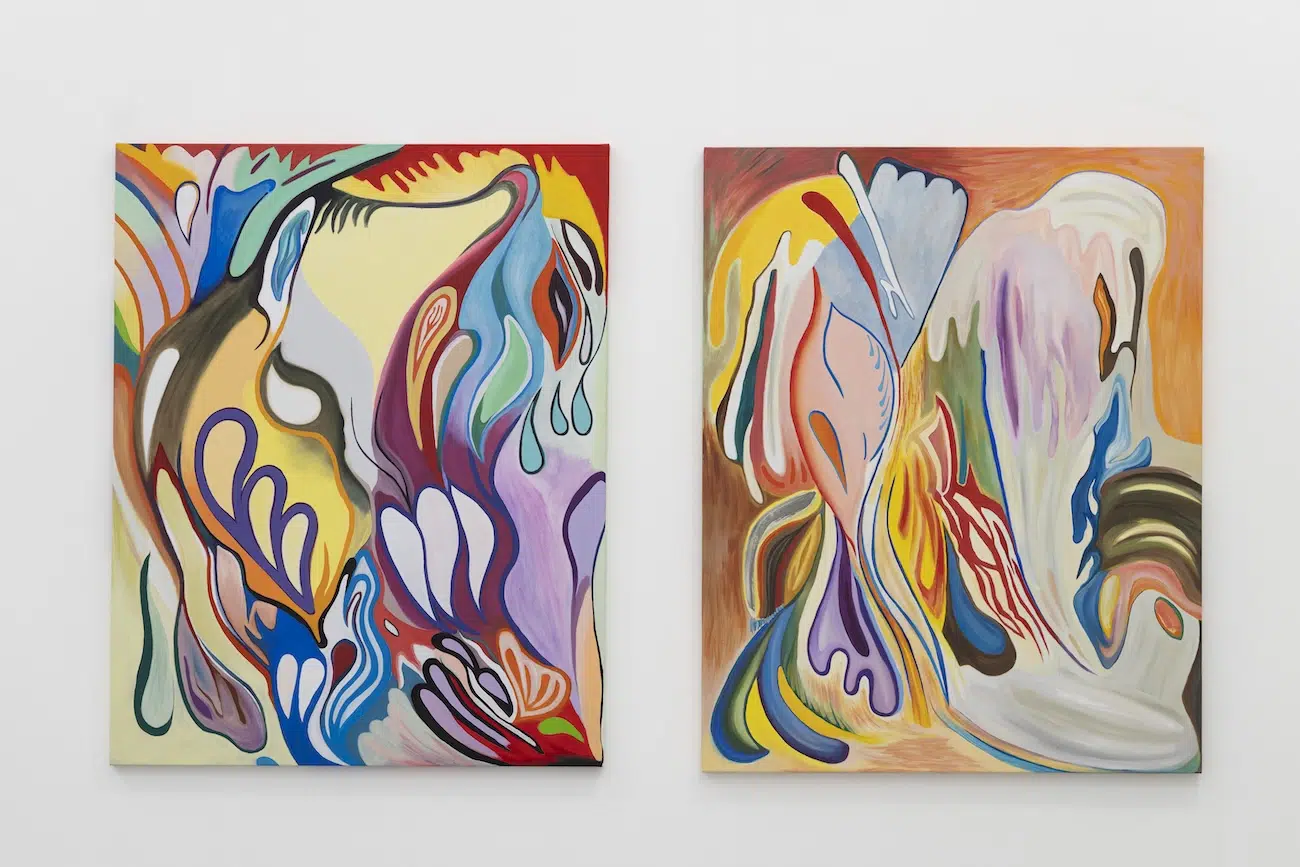
The conservation of energy law states that energy can’t be created or destroyed—it can only change forms. While this law is not explicitly stated as a catalyst for her work, it’s essentially the attitude that artist Diana Motta has when creating her abstract pieces. Her series titled Ignisflow is a revelation of movement and physical output; she produces her paintings using a continuous gesture, where drawing “functions less as a representation and more as a conduit for energy.” We can view her work as energy in changed forms.
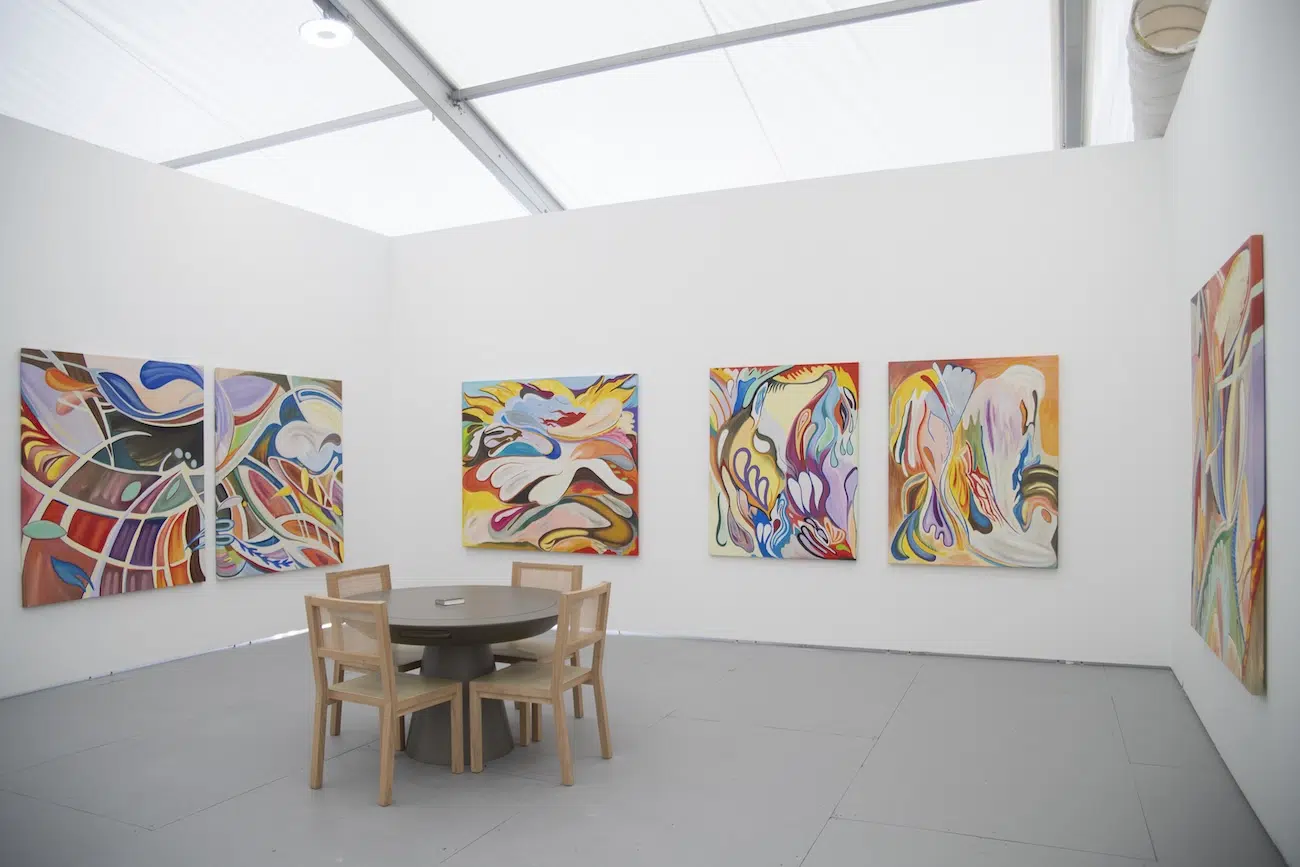
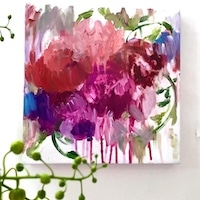
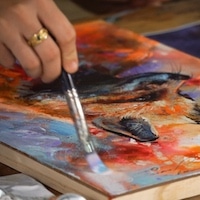
Ignisflow features large, colorful compositions of waves, flames, and other organic shapes that interact with one another. They expand, contract, and mutate. With some artists, we’re left speculating why they made these decisions and in what order they occurred. With Motta, however, we can follow the forms and almost see the path she took when composing the piece. The visual brushstrokes and on-canvas color mixing exist both aesthetically and as a record of a creative life lived, where the feelings and sensations overcome her so they must be placed on canvas. The act of creation supersedes the image itself.
Motta’s work is inspired by thinkers of many years past. She draws on the ideas of Jean-Baptiste Robinet and Gaston Bachelard. With Robinet, she evokes his 18th-century idea of the transmutation of species—the precursor to the theory of evolution by Charles Darwin. In Bachelard’s work, she draws from his 20th-century philosophy that we should view fire not just physically, but as a powerful psychoanalytic symbol that has the duality of creation/destruction and warmth/danger. Thus, the surface of her paintings is always changing, and she sees them as living organisms where, she says of Ignisflow, “the threshold between inner impulse and visible form remains fluid and unresolved.”
Scroll down to see works from Ignisflow that were recently on view at Untitled Art Miami Beach 2025 in the Ora gallery booth.
Artist Diana Motta showcased her series Ignisflow in the Ora gallery booth at Untitled Art Miami Beach 2025.
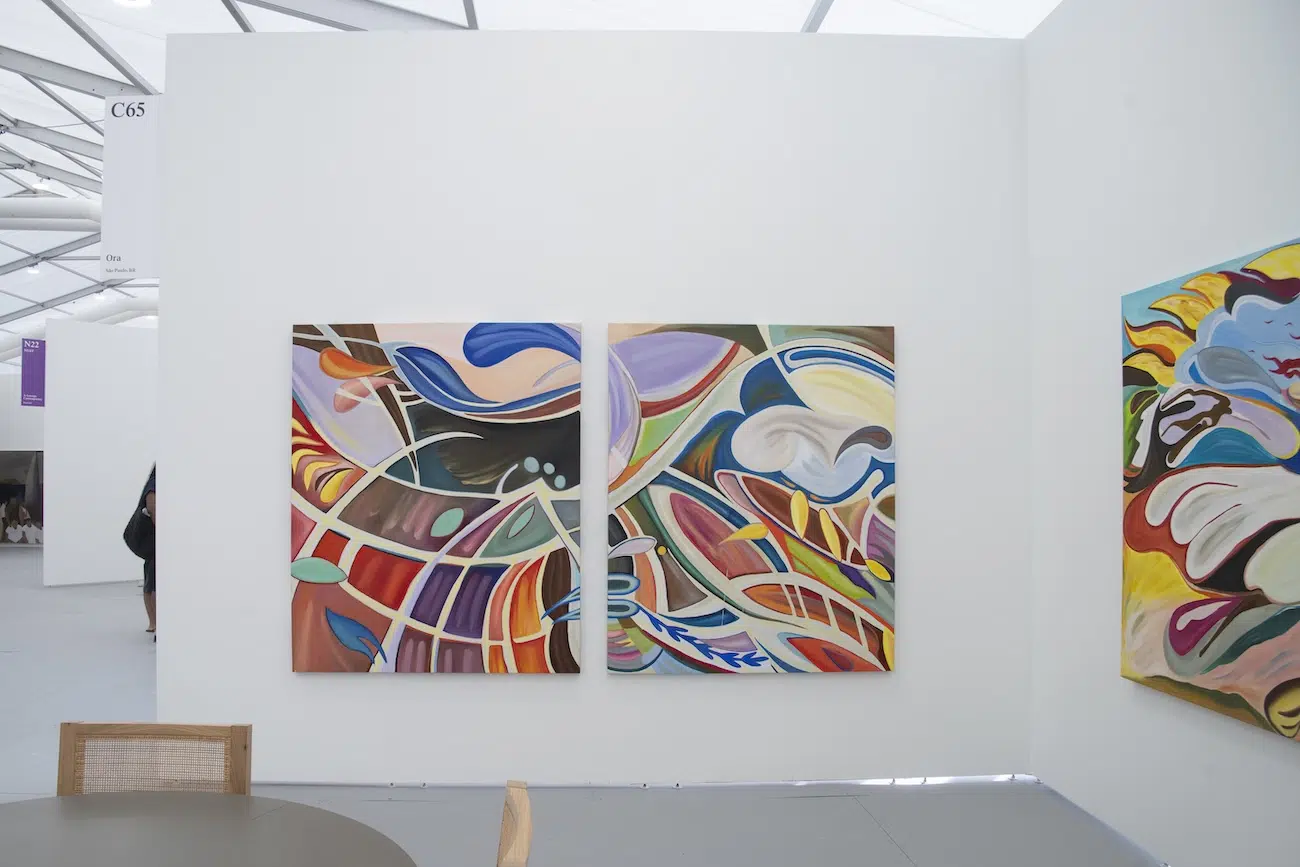
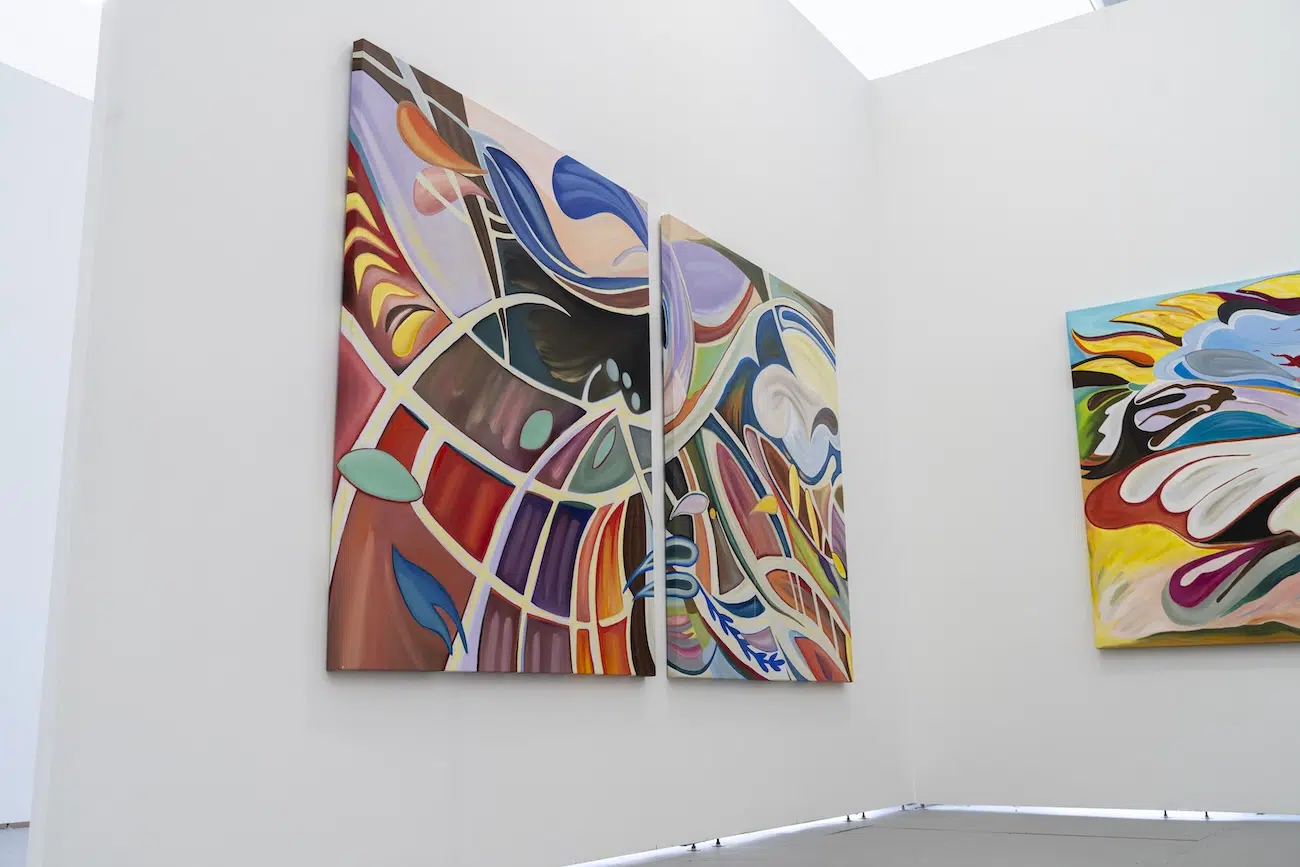
Her series is a revelation of movement and physical output; she produces her paintings using a continuous gesture, where drawing “functions less as a representation and more as a conduit for energy.”
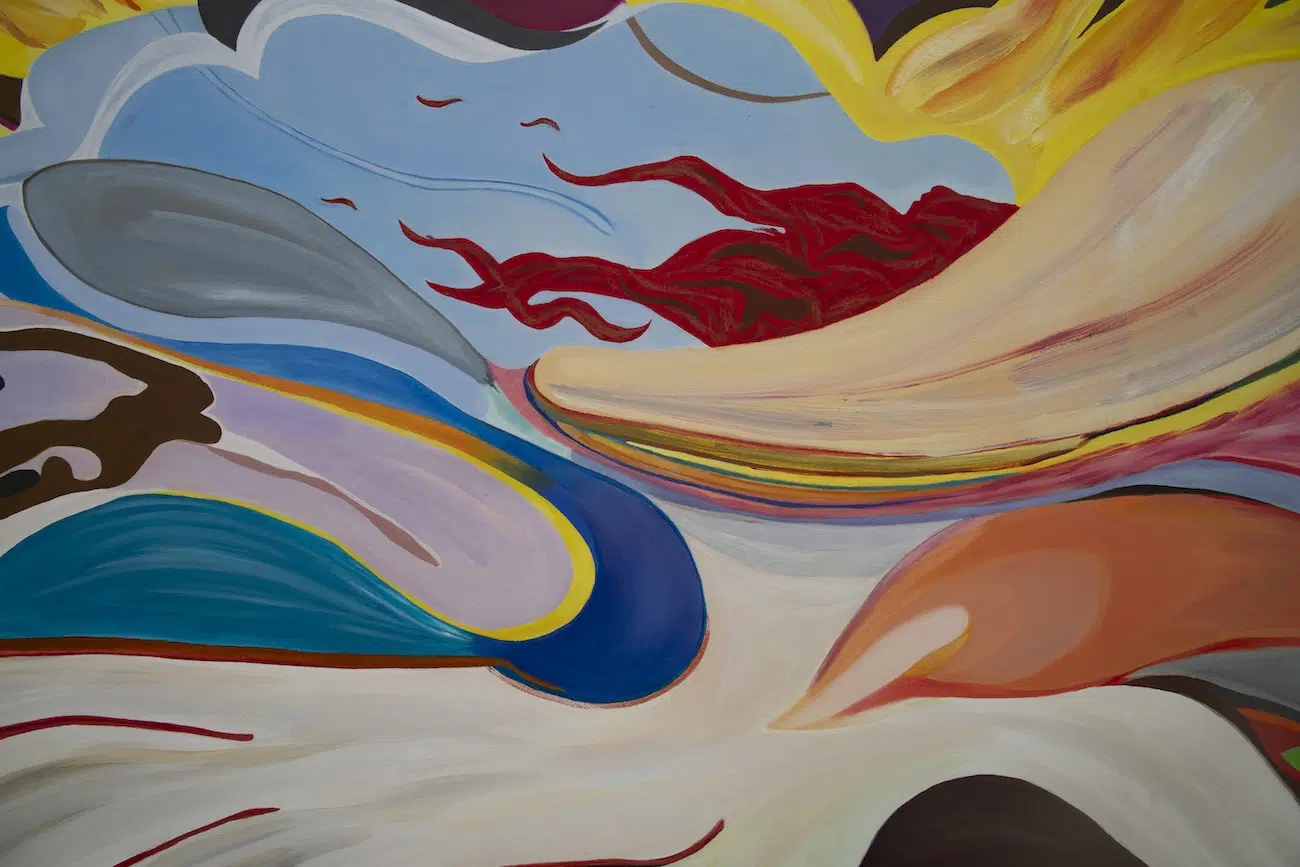
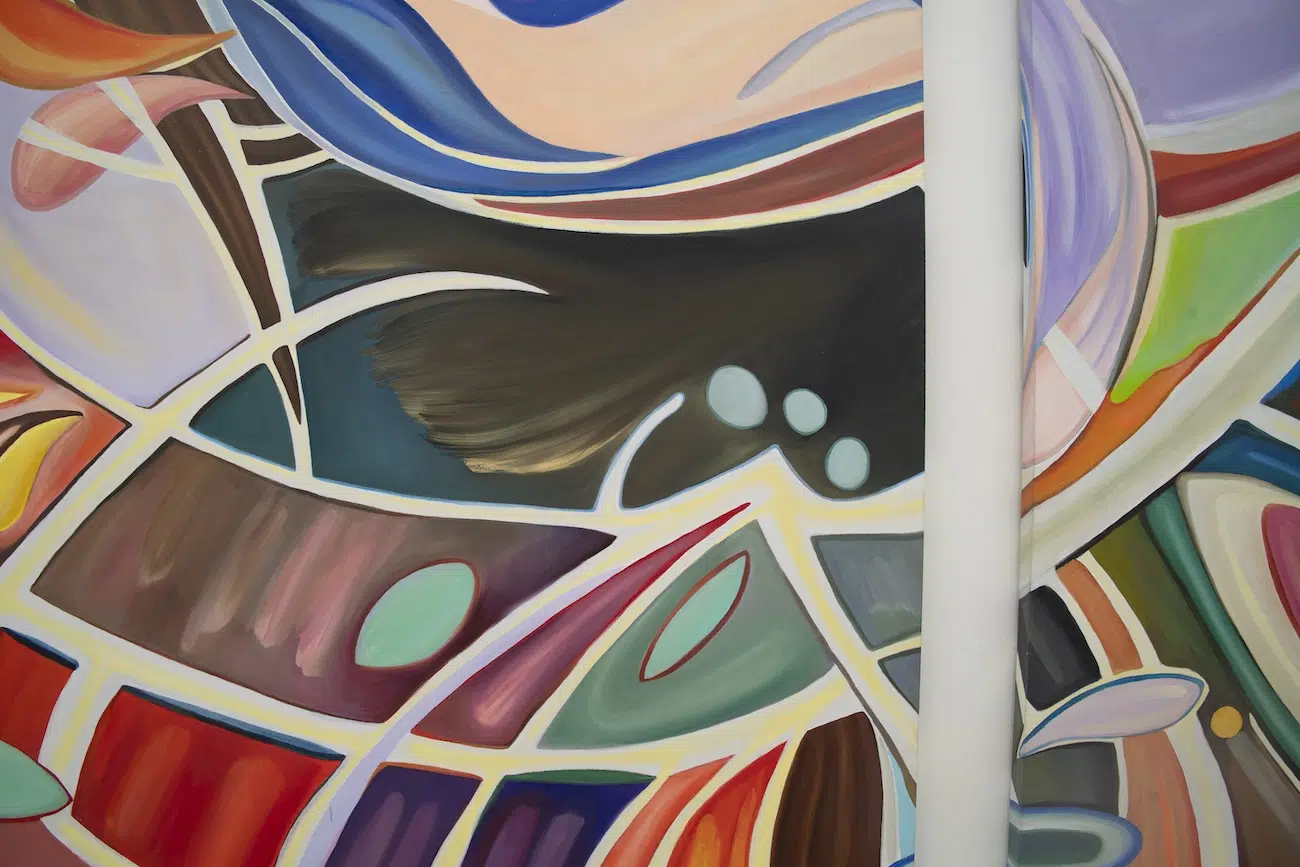
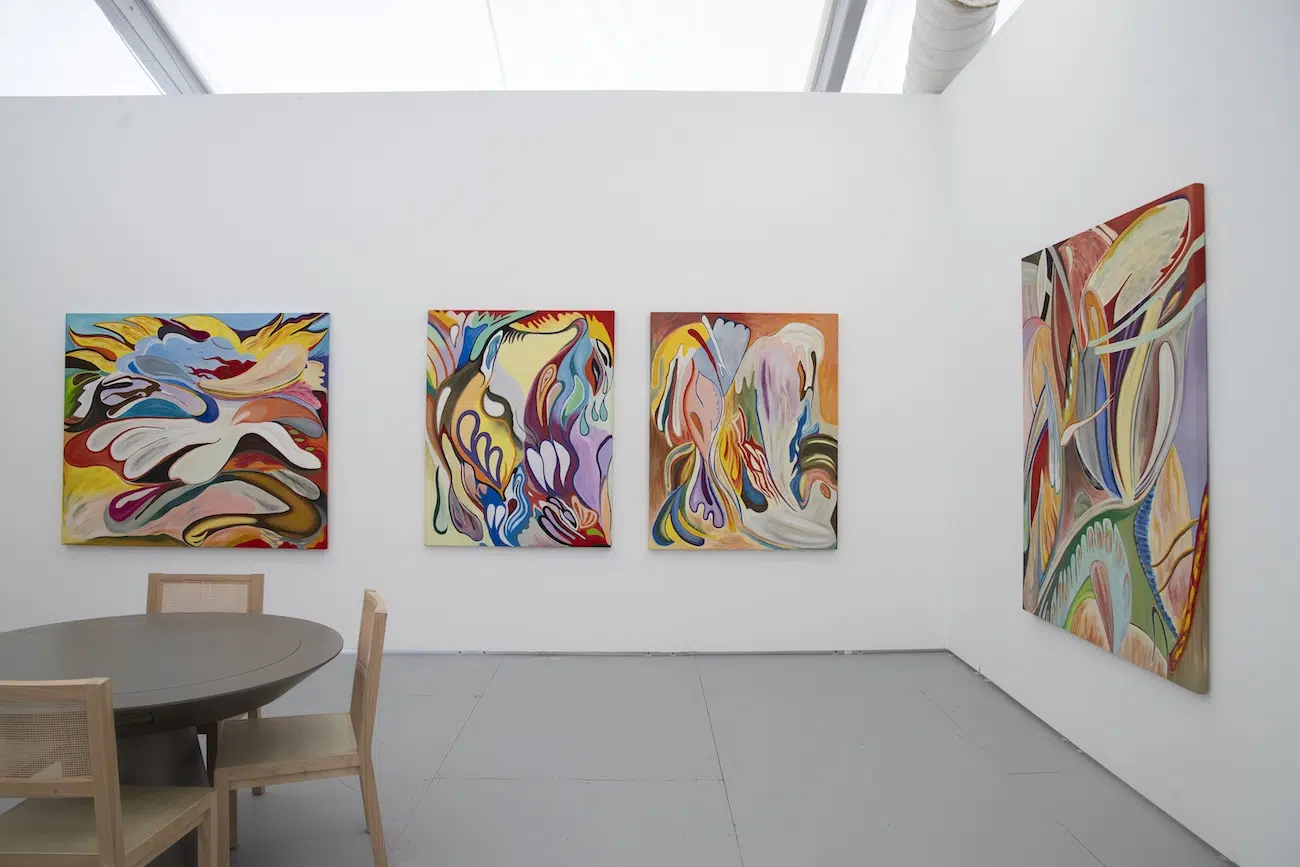
The colorful compositions of waves, flames, and other organic shapes interact with one another. They expand, contract, and mutate.
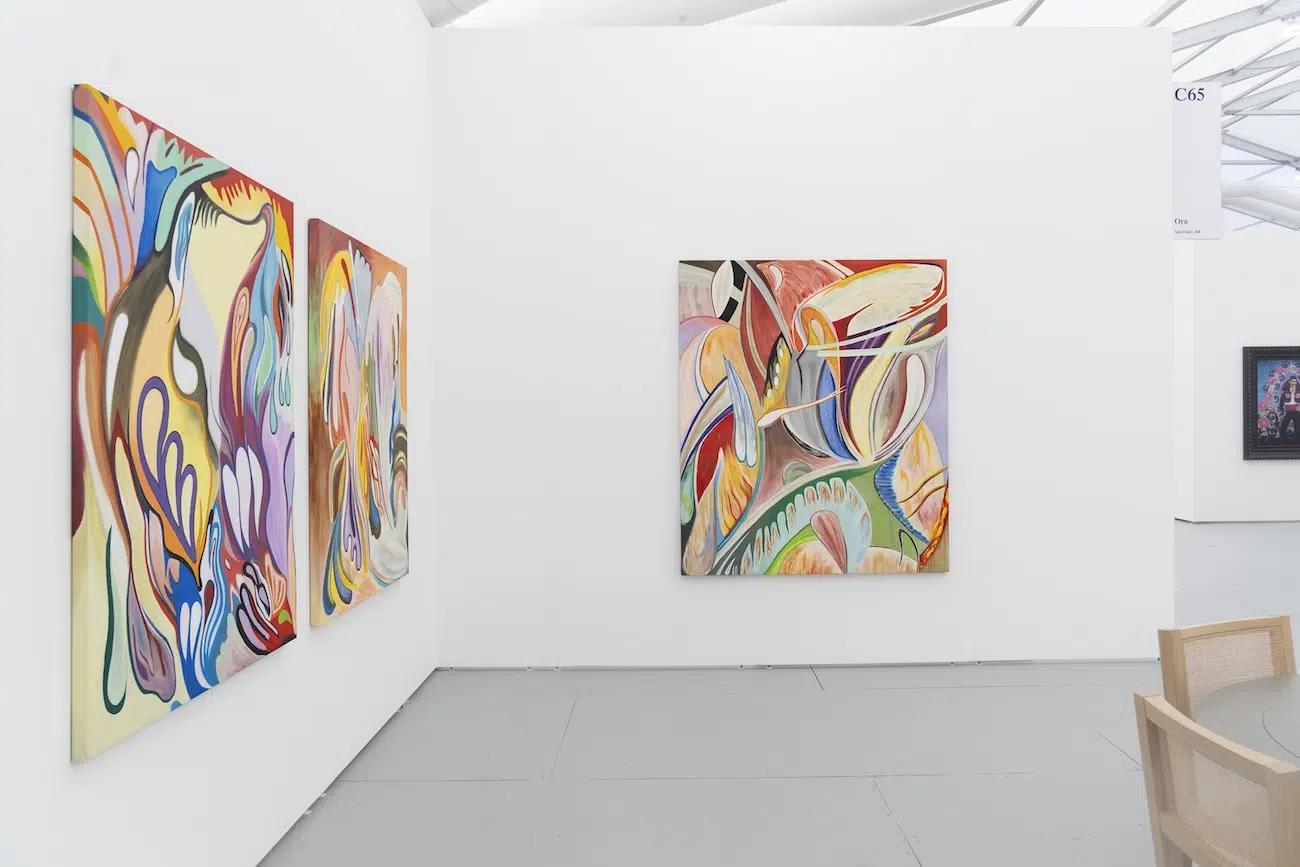

Motta sees the surface of her paintings as living organisms where, she says, “the threshold between inner impulse and visible form remains fluid and unresolved.”