British sculptor Jason deCaires Taylor has spent years turning the ocean into both gallery and collaborator, creating underwater sculptures that gradually evolve into living marine habitats. His latest work, The Solomon Siren, continues that practice while telling a deeply personal story of climate loss. Installed in the tidal waters off Kale Island in the Solomon Islands, the sculpture honors climate advocate Gladys Habu Bartlett and memorializes the island her family once called home before the sea swallowed it.
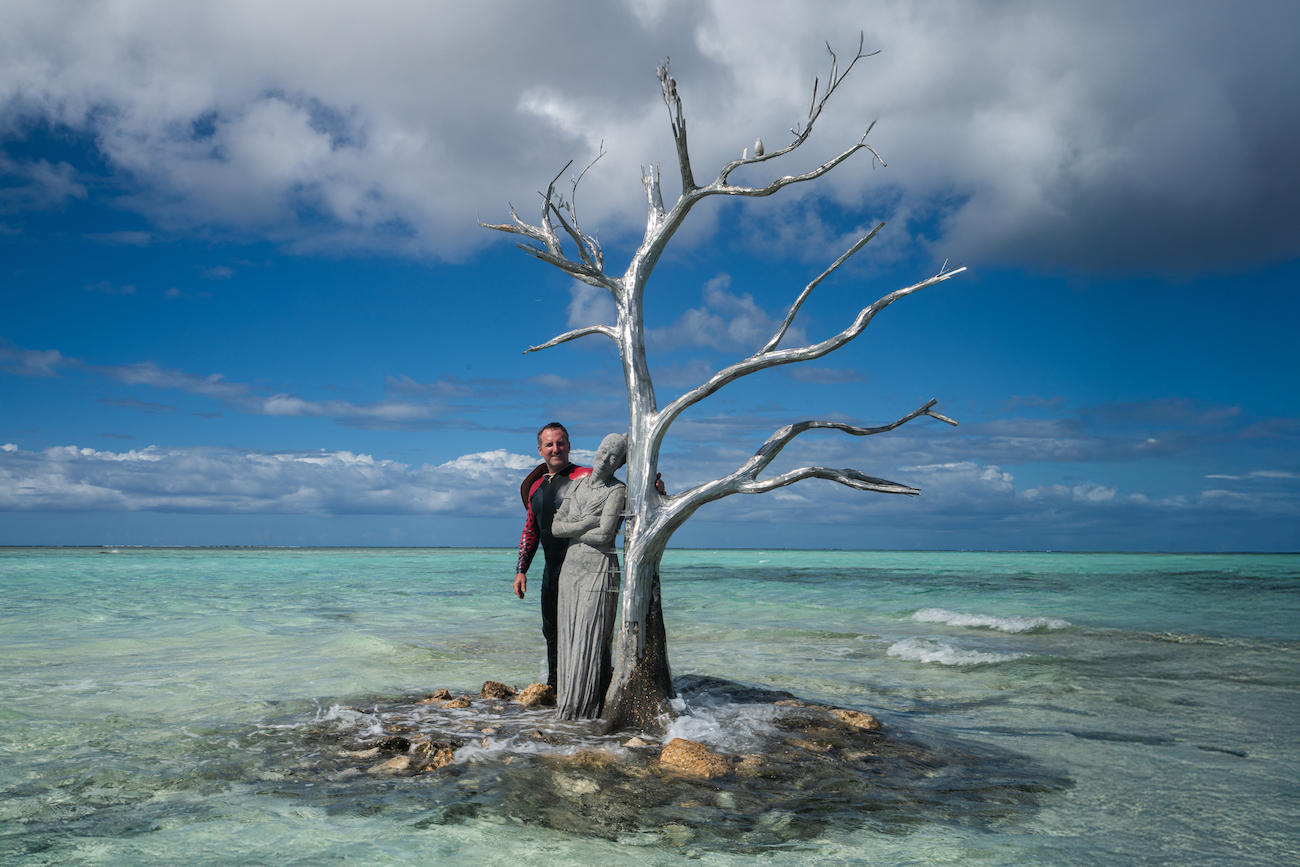
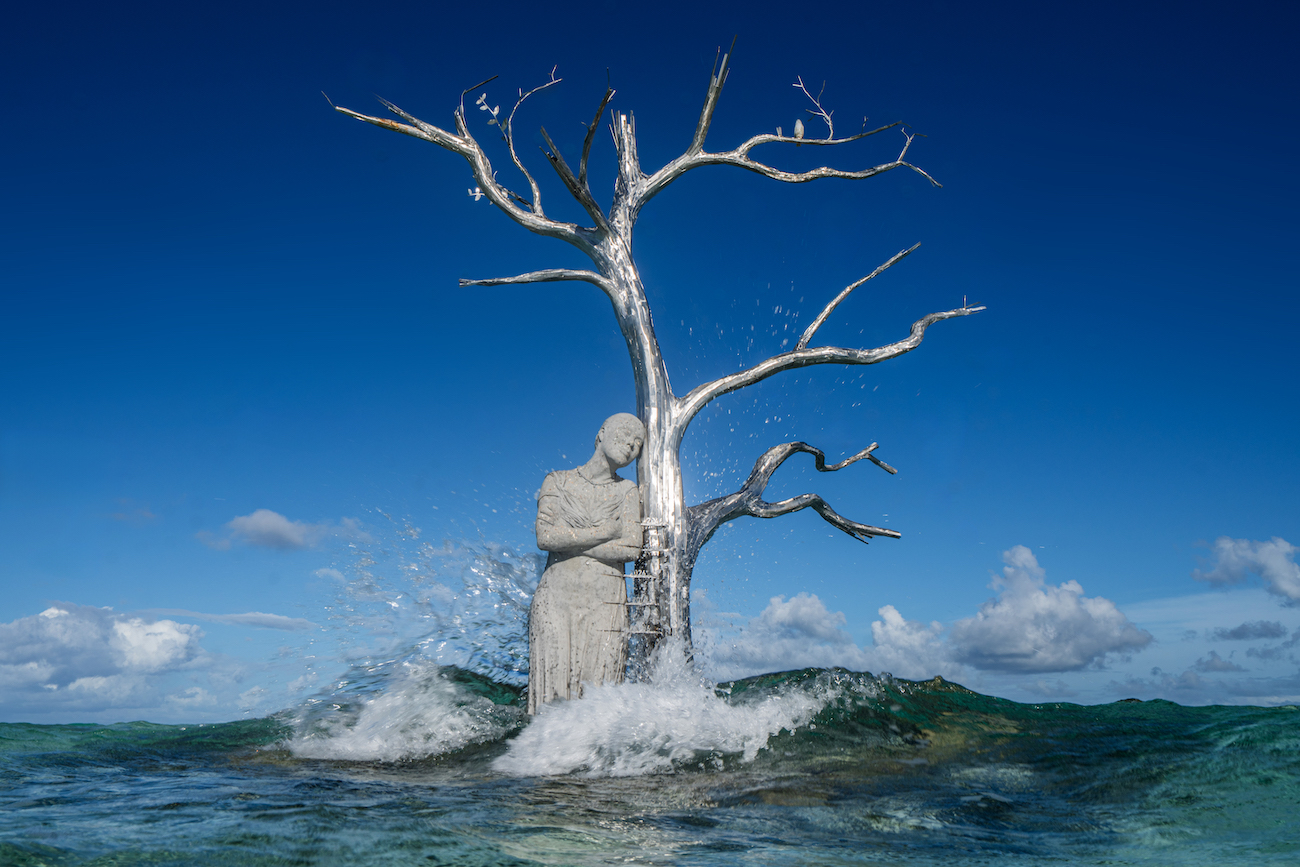
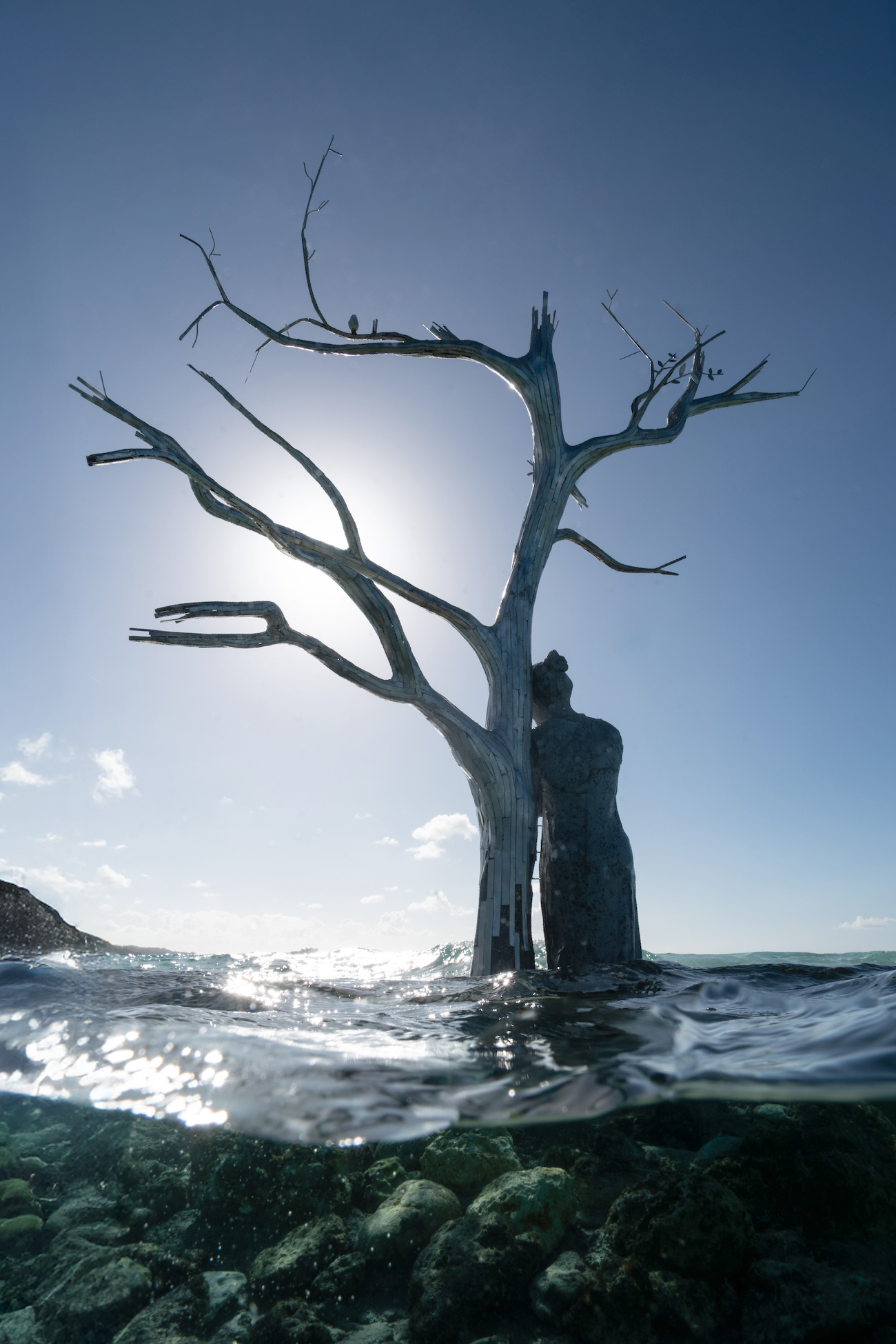
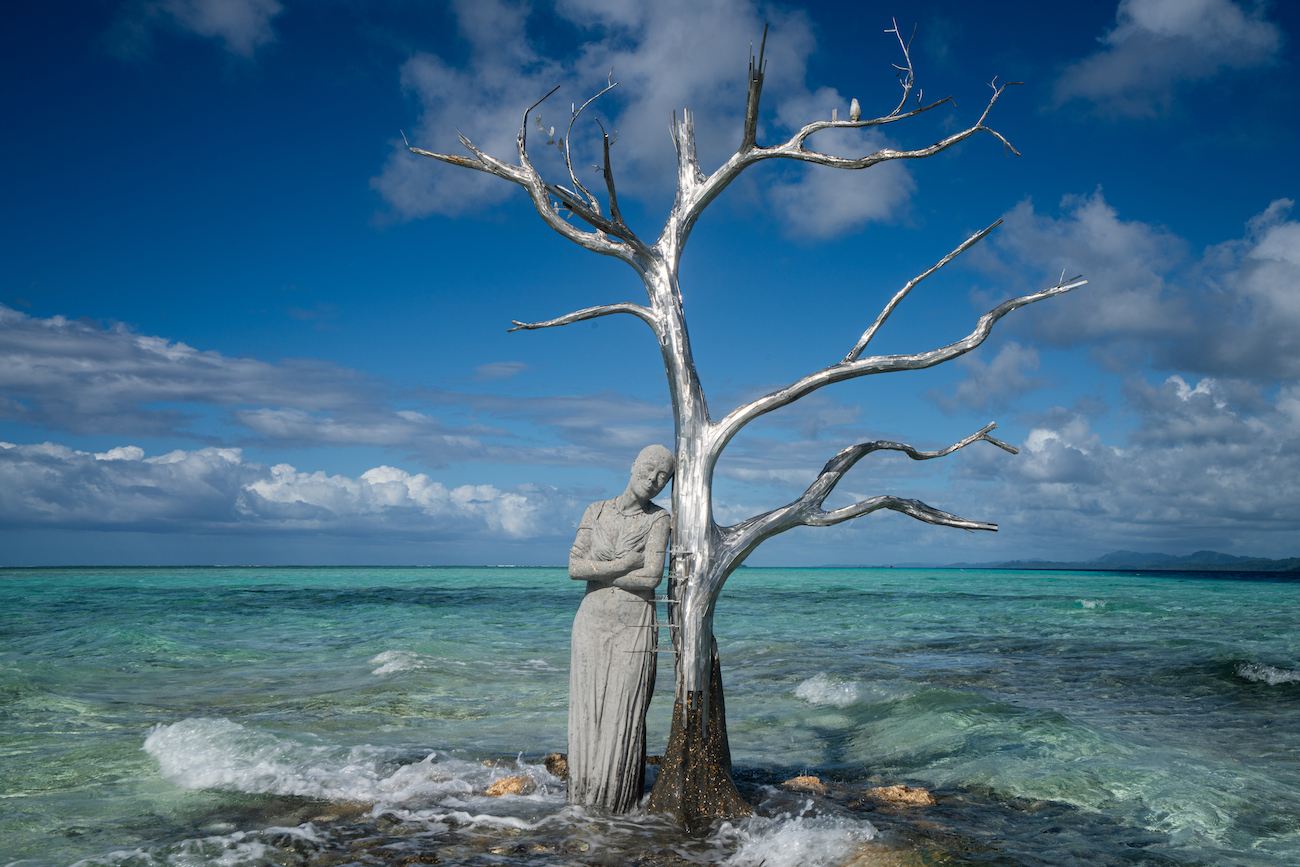
Commissioned by the British High Commission Honiara, The Solomon Siren rises from the same waters that overtook Kale Island, a low-lying island in Isabel Province that disappeared under rising seas. Taylor portrays Bartlett at life size, resting her head against a stainless-steel tree in a pose that feels both contemplative and mournful. Together, the woman and tree form a portrait of grief, resilience, and environmental witness, turning the story of one vanished island into a broader meditation on what climate change erases.
Dates inscribed across the figure and tree trace Kale Island’s disappearance. Taylor’s project page notes 2006 as the year rising sea levels around Kale became increasingly alarming and 2016 as the year the island’s complete loss was confirmed. The year 2026 marks the sculpture’s installation and a full decade since Kale vanished beneath the water. Two additional dates, 2036 and 2046, point forward rather than back, referencing projected sea-level rise in the region and underscoring that Kale’s story belongs to a much larger global crisis.
Time and tide shape the sculpture just as much as Taylor’s hand. He placed The Solomon Siren in the intertidal zone, where the sea repeatedly alters its appearance. At high tide, water covers much of the figure, echoing the disappearance of the land it commemorates. At low tide, Bartlett re-emerges.
Like many of Taylor’s sculptures, The Solomon Siren also functions as habitat. He built the base from pH-neutral cement and biochar, a carbon-rich material that creates a porous surface suitable for marine colonization. Over time, algae, corals, and invertebrates will settle across the sculpture’s surface, slowly transforming the memorial into a living reef. The stainless-steel tree also serves as a perch for seabirds, extending the work’s ecological role above the waterline.
This merging of sculpture and ecosystem has become one of Taylor’s signatures. Rather than treating art as a static monument, he creates structures that shift with their surroundings and invites natural processes to complete the work over time. In The Solomon Siren, that transformation carries particular weight. What begins as a memorial to a lost homeland gradually becomes a site of new life, suggesting a fragile coexistence between mourning and regeneration.
The figure at the center of the sculpture makes that symbolism especially powerful. Bartlett, a pharmacist and climate advocate from the Solomon Islands, has spoken publicly about the loss of Kale Island, where her grandparents once lived. She also founded the Women’s Professional Network Solomon Islands and has earned recognition for her advocacy, including the Commonwealth Points of Light Award in 2021. By basing the sculpture on Bartlett herself, Taylor resists turning climate change into abstraction. Instead, he anchors environmental loss in a person, a family history, and a place that no longer exists above water.
In the Solomon Islands, where geography and ocean currents leave many coastal communities especially exposed to sea-level rise, The Solomon Siren serves as both memorial and warning. It honors what has been lost while insisting that loss continues to unfold. As water keeps rising around the sculpture, Taylor’s newest siren does what every warning hopes to do: make the danger impossible to ignore.
British sculptor Jason deCaires Taylor unveiled his latest sculpture, The Solomon Siren, off Kale Island in the Solomon Islands.
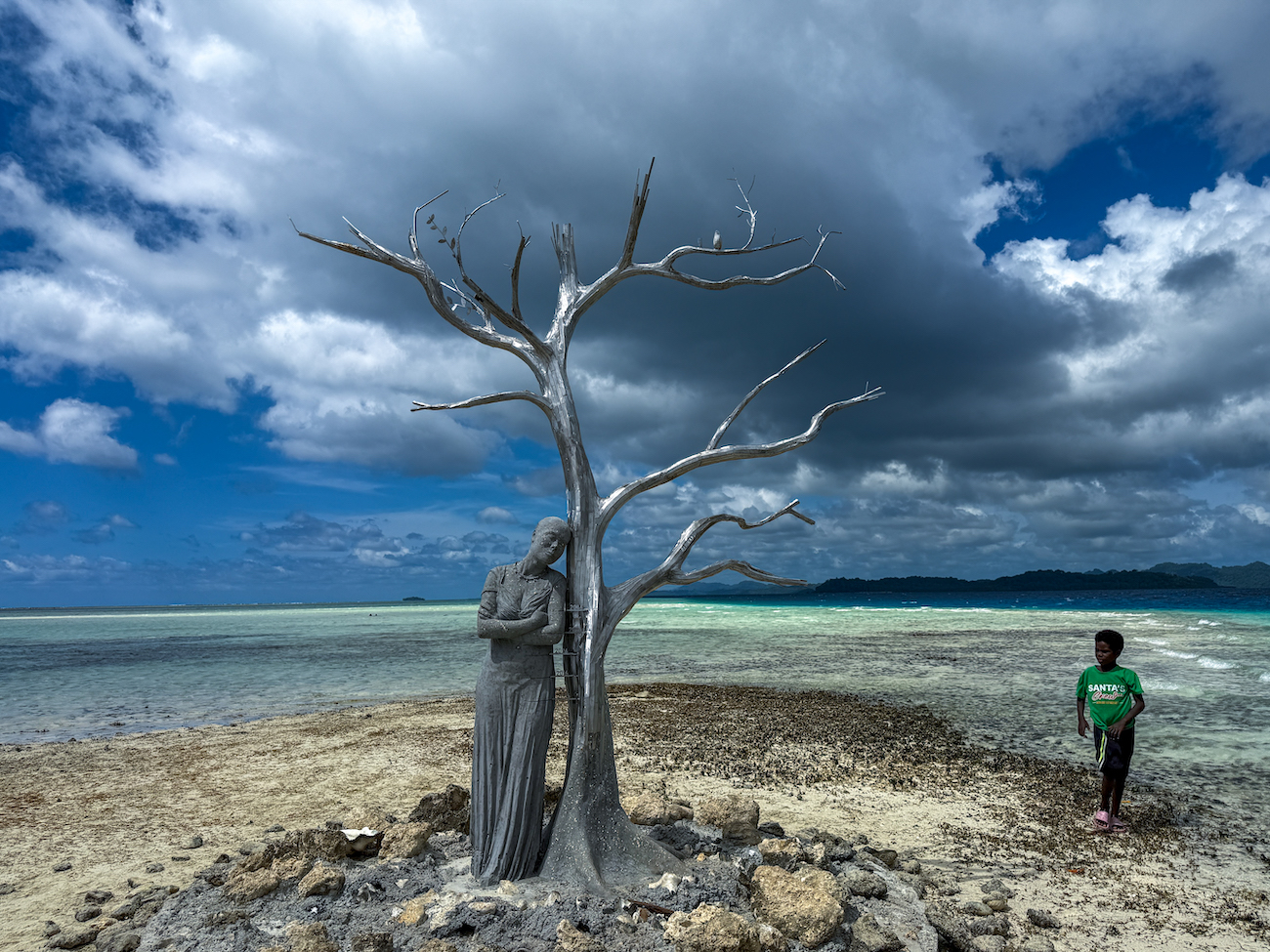
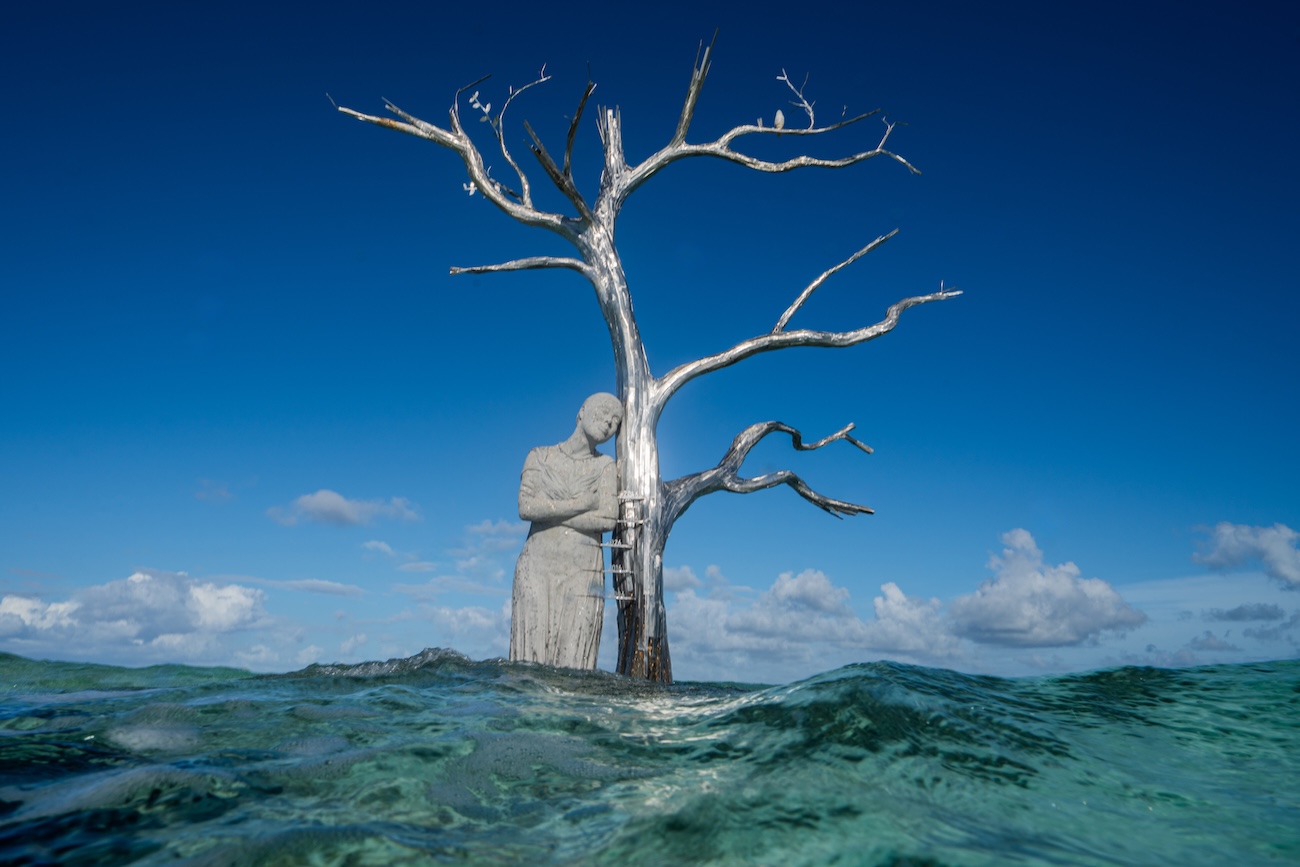
Installed in the intertidal zone where the island once stood, the figure repeatedly disappears beneath high tide and re-emerges at low tide.
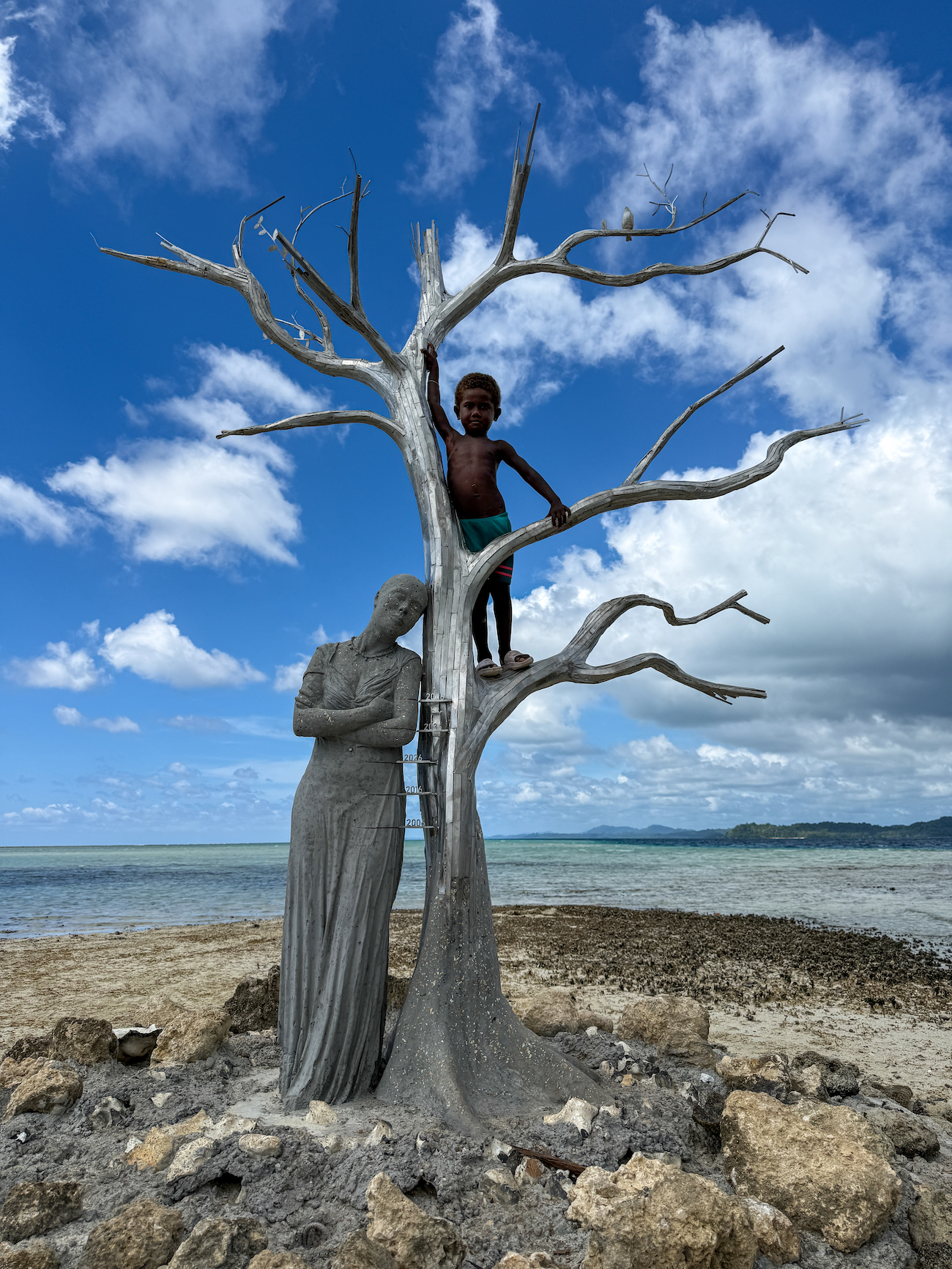
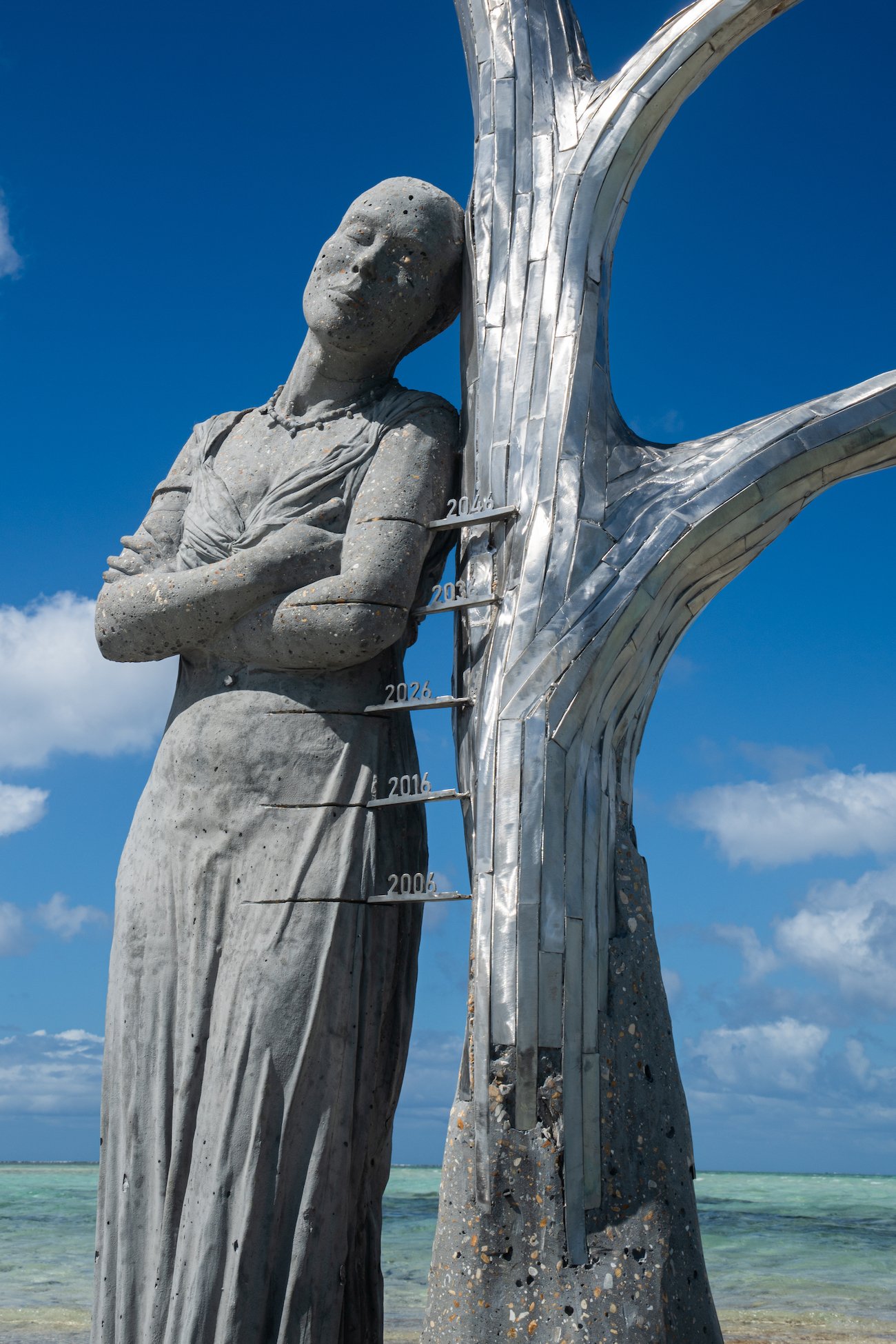
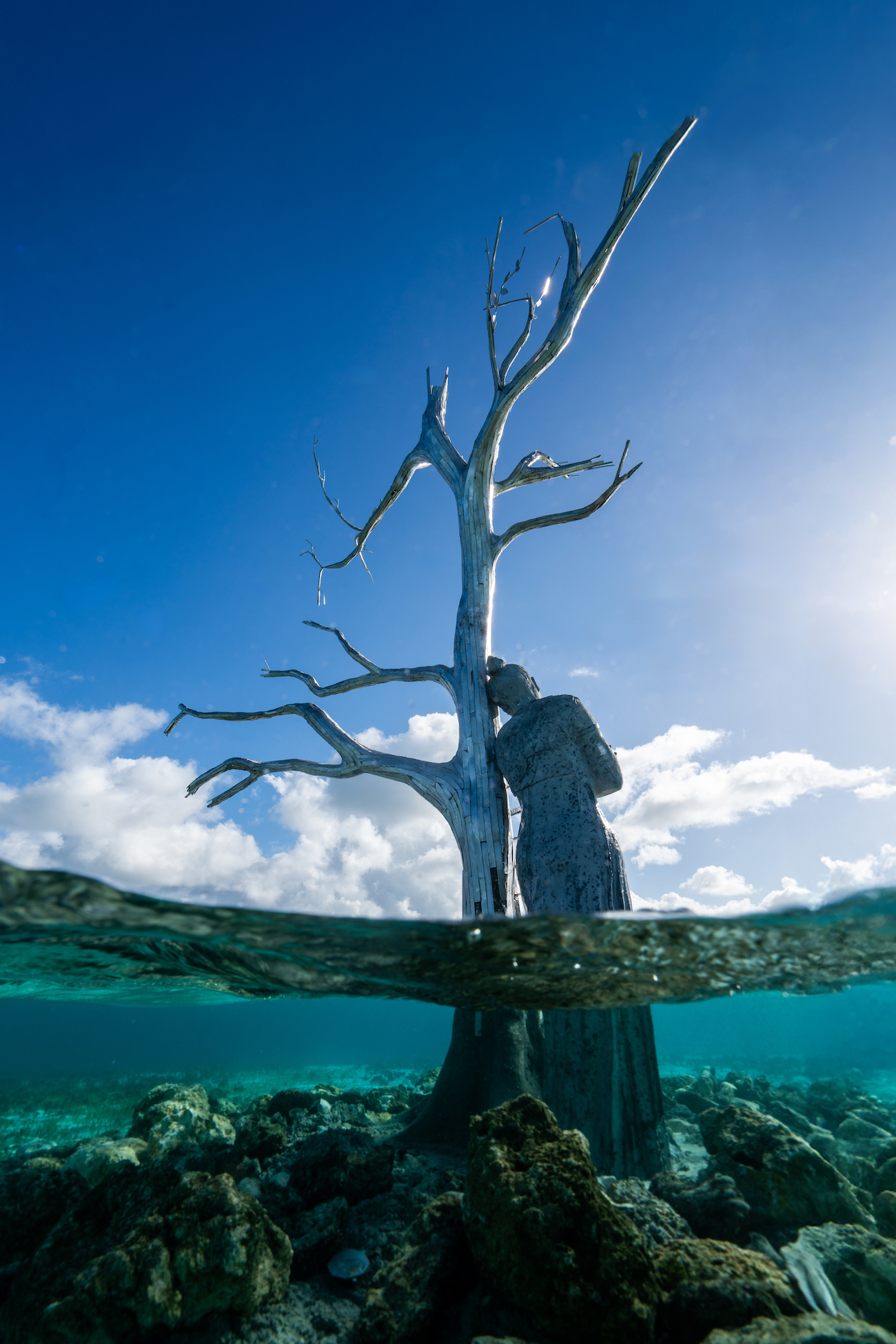
The sculpture serves as an underwater memorial to climate advocate Gladys Habu Bartlett and the ancestral island her family lost to rising seas.
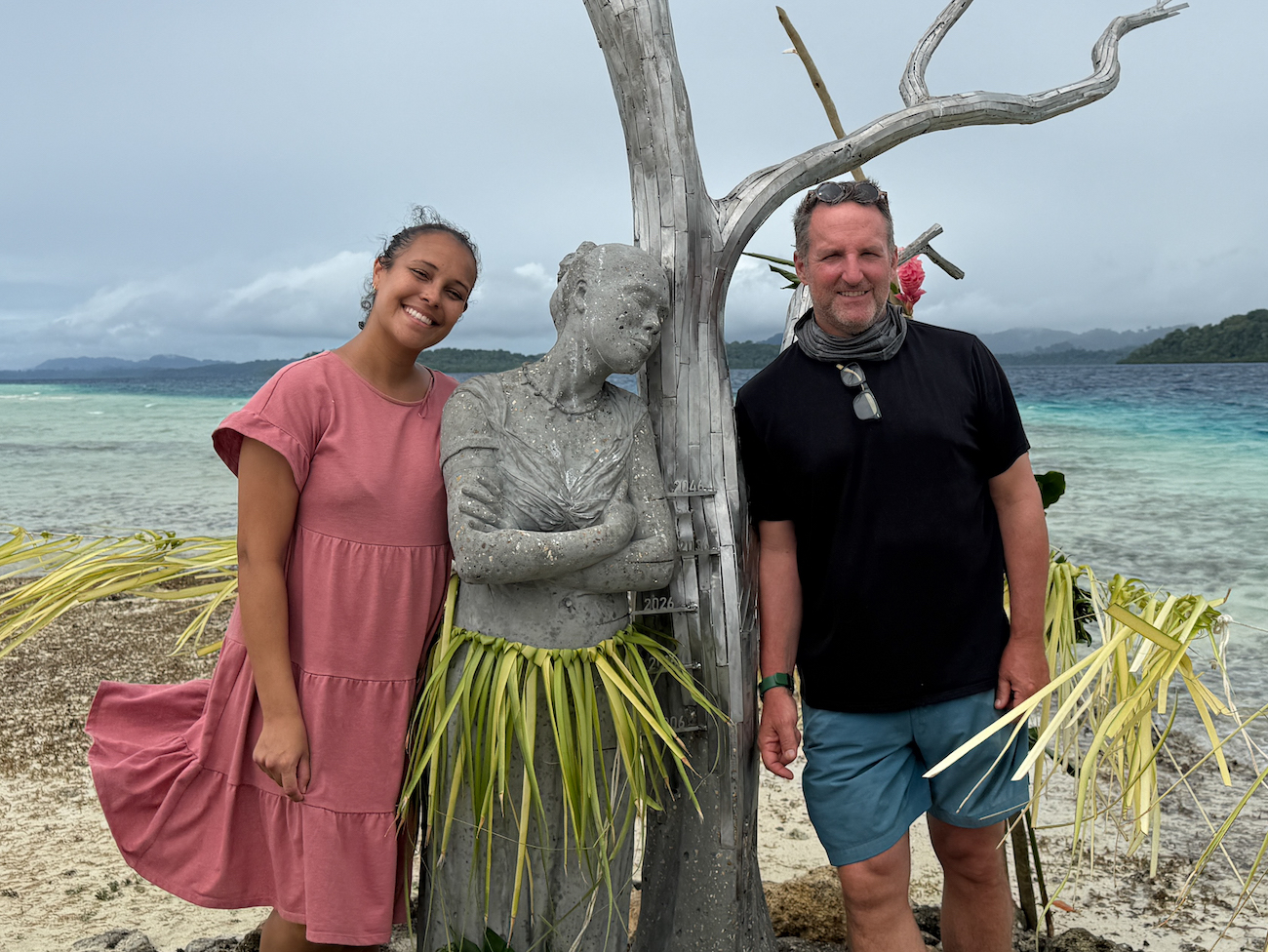
Made from pH-neutral cement, biochar, and stainless steel, The Solomon Siren will gradually transform into a living reef, extending Taylor’s vision of sculpture as both a climate memorial and a habitat for marine life.