Stock Photos from Alex Sipetyy/Shutterstock
This post may contain affiliate links. If you make a purchase, My Modern Met may earn an affiliate commission. Please read our disclosure for more info.
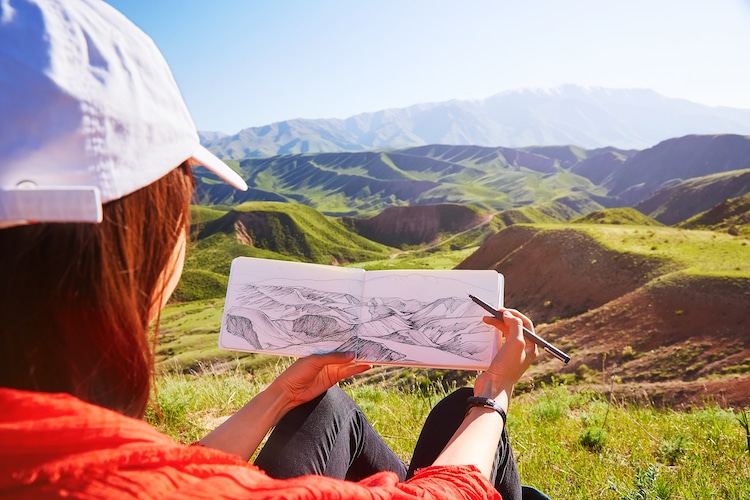
Nowadays, nearly everyone has a great camera on their phone. While you might think that would dissuade us from capturing life through sketching, it does the opposite. Take landscape drawing, for instance. Snapping a photo can certainly record the setting for you, but by recreating it through sketching, you can imbue the locale with emotion and energy that only comes from working by hand.
Landscape drawing can be daunting. Between the trees, rocks, cacti, and bodies of water, where do you start? But like many things in drawing, it’s easier than you think. All you have to do is work through a process and you’ll be able to sketch any place you want.
Want to learn easy landscape drawing? See how in our step-by-step tutorial below.
Before you put pencil to paper, make sure you have these supplies on hand:
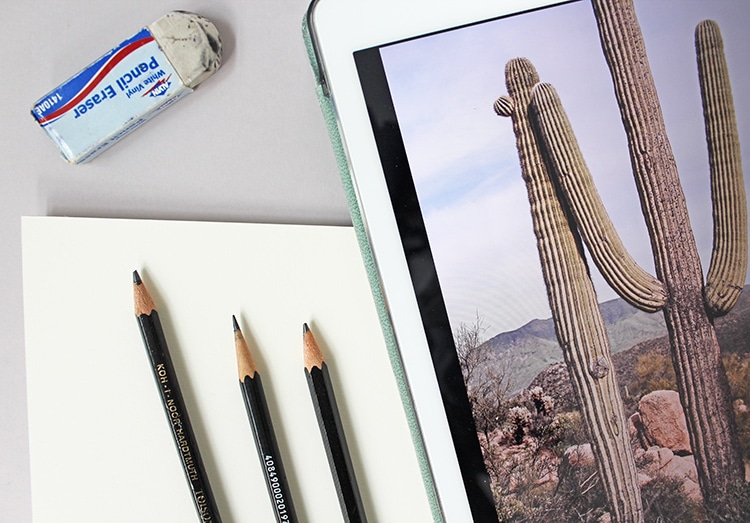
Photo: Sara Barnes / My Modern Met
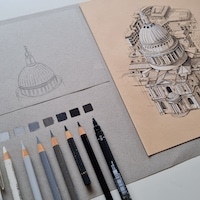
A few drawing pencils. Having at least three pencils will bring tonal variety to your drawing. Graphite comes in different grades that range from soft to hard, so the utensils you choose are important.
The softer the graphite, the darker a mark it’ll make. Likewise, harder graphite will make lighter and more precise lines. So, how can you tell the difference between the two? Just look for the labels on your pencil. Utensils labeled B denote the softer graphite. The higher the number, the darker it’ll be. (Many brands of pencils go up to 8 or 9B.) The same goes for the H pencils, although they will be harder and lighter.
You’ll want to have at least a B pencil and an H pencil in your drawing supplies. For initial sketching, the middle of the road–an HB pencil—works well.
Want our recommendations for the best drawing pencils? We made a guide for that.
A good pad of drawing paper. Paper is nearly as important as your drawing pencils. For sketching, especially in instances where you’ll be layering graphite and erasing a lot, you will want a paper that can stand up to pressure. Grab a pad of paper or a single sheet that advertises at least 70 pounds in weight. (The thicker the paper, the higher the weight. Copy paper, which is flimsy, is 20 pounds.)
Learn more about the types of paper to use in your art with our comprehensive guide.
A white plastic eraser. Erasers are your friend, especially when you’re first learning to draw. You might be used to the pink erasers at the end of your pencil, but those aren’t the best for erasing sketches. Sometimes, they can leave a mark on your page. A white eraser will ensure this doesn’t happen and they’ll last for years without getting brittle and crumbly.