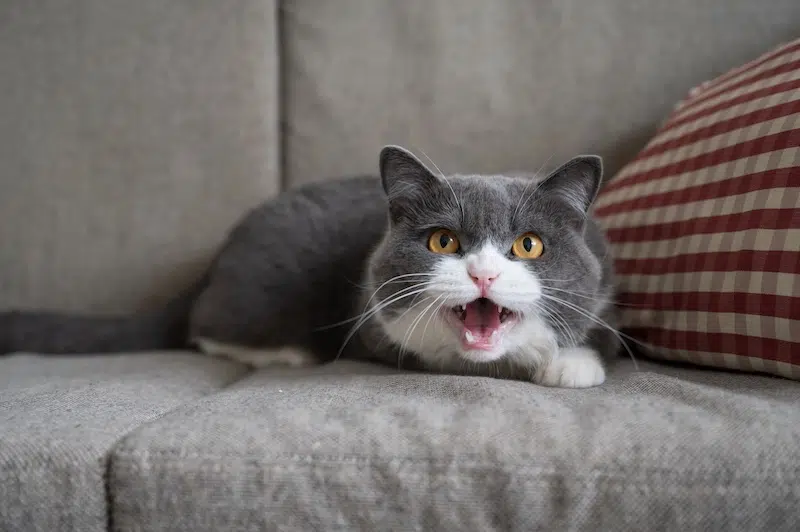
Your cat may be trying to tell you something with their meows, and you may not like what they’re saying. A new study from animal behavior researchers at the University of São Paulo in Brazil suggests that cats use their voices to actively seek help from their owners and communicate their needs. In other words, your cat might have a complaint, and you’re the one expected to fix it.
While we know cats to meow quite frequently, this is a behavior that our furry friends rarely use with one another, and feral cats meow even less. This points to the meow as a communication tool particularly suited to cat-human interactions, and the new study offers further evidence of this.
The researchers enlisted 38 pet cats who were known by their humans to be frequent meowers, particularly when food was involved. Then, the cats were given an extremely frustrating situation: their favorite treat was placed in a plastic box with holes, so they could smell the food but not reach it. Talk about torture. For one minute each, the researchers observed the cats’ behavior under two different circumstances. In one, the cat was alone with the box, and in the other, its human was present and paying attention. And this is where the behavior changed significantly.
If there was a human present watching the cat struggle, the cat was much more likely to use its voice to get their attention. The researchers recorded a total of 86 meows when a human was present, compared to just 20 when the cats were alone. Statistical analysis found that the odds of meowing were more than 16 times higher with a human present. These cats weren’t just meowing for the sake of it. They appeared to be directing their complaints toward their opposable thumb-wielding counterparts, who, conveniently, were the only ones capable of opening the box.
It wasn’t just meows that the cats used to get their humans’ attention. They also used their eyes, often looking directly at their owners or alternating their gaze between the person and the food box, as though the message wasn’t already clear enough. When the cats were alone, they spent more time staring at the door, almost as if they were waiting for someone to walk through it and offer help.
While this research doesn’t prove that cats consciously understand that humans can solve their problems, it does suggest that meowing isn’t just an involuntary feline response to frustration. Instead, it may be a form of communication that cats adjust depending on whether someone is around to listen.
The study was relatively small and focused on cats already known to be vocal around food, so more research is needed to understand whether this behavior extends to other situations. Still, the findings offer another glimpse into the surprisingly complex ways our feline companions interact with us. So the next time your cat starts meowing at you, it might be worth checking what they want. Chances are, they’ve already decided it’s your problem to solve.
A new study revealed that your cat’s meows may be their way of asking for your help.
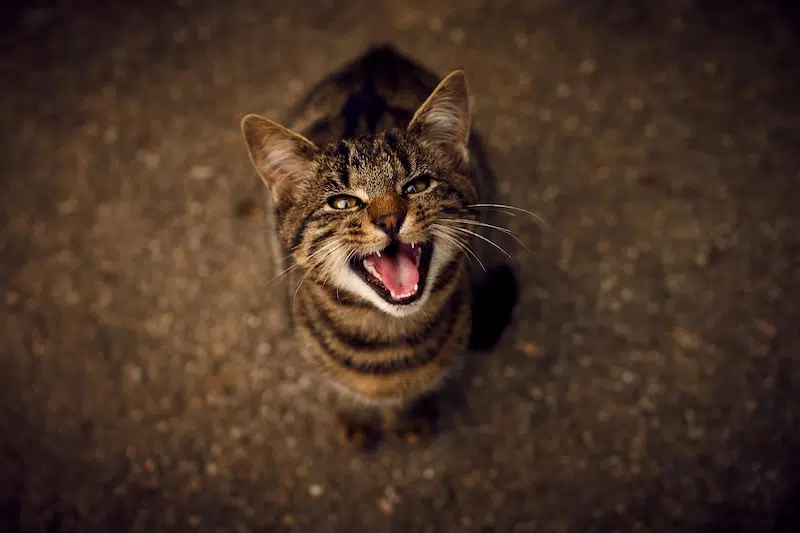
When a human was present to help the cat with their problem, they meowed much more than when alone.
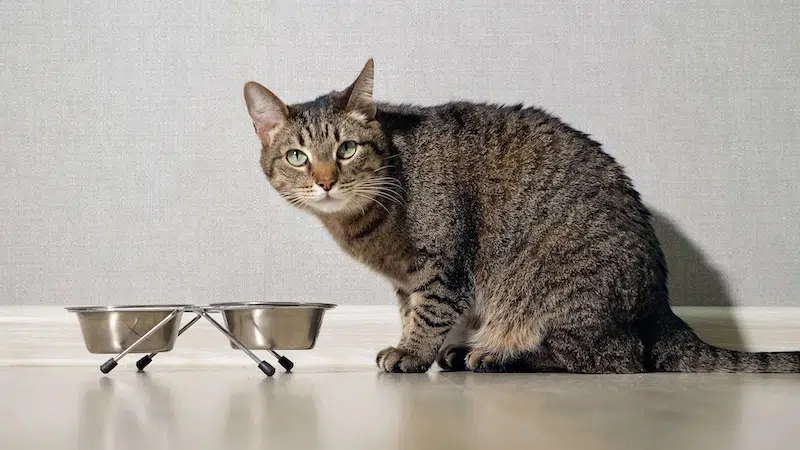
While not fully conclusive, the study’s findings show that cats will use their humans to get what they want.
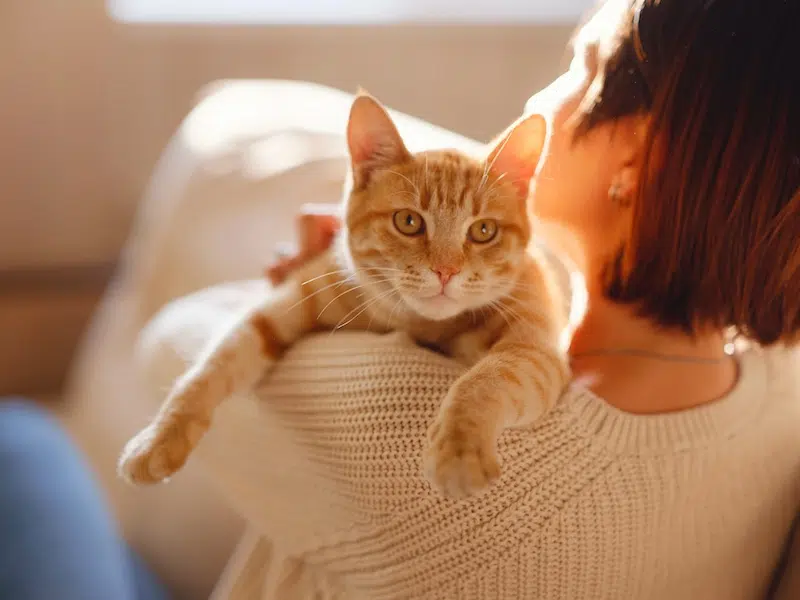
Source: The social use of meow in interaction between cats and humans
Related Articles:
New Book Celebrates the Beloved Bodega Cats That Call New York City Home
New Studies Paw at the Prevailing Theory of How Cats Became Domesticated
Researchers Use Tiny Crochet Hats to Investigate Chronic Pain in Cats