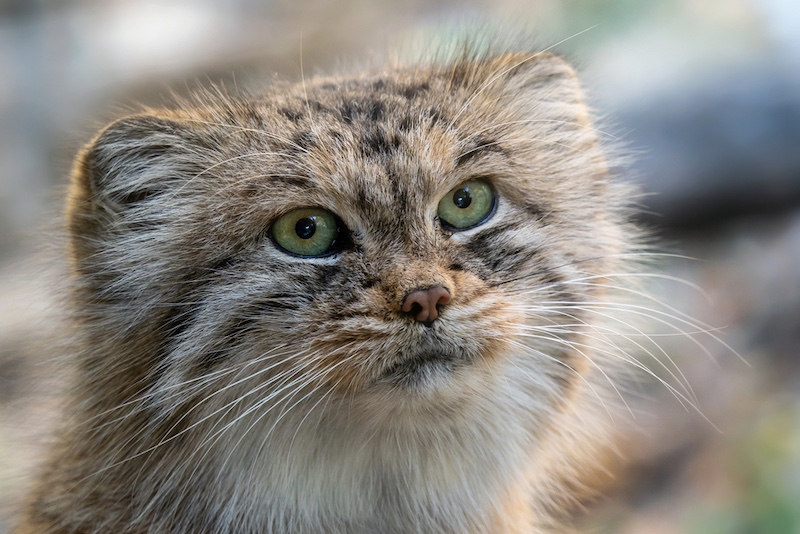
The elusive Pallas’s cat is native to the mountainous regions of Central Asia, but it’s incredibly rare to catch a glimpse of one. The small feline species with rounded ears and a grumpy face is named after Peter Simon Pallas, the Prussian naturalist who first described it in 1776. However, it wasn’t until 2012 that the Pallas’s cat was finally photographed, and we still don’t know very much about it.
Fortunately, the introduction of discreet camera traps means we’re finally able to understand a little more about the shy species. Recently, wildlife enthusiast Majid Batebi set up camera traps in the mountainous region of Mazandaran in northern Iran and recorded a rare glimpse of the Pallas’s cat. The short clip posted on August 15, 2026 shows a curious wild cat approaching the camera before cautiously heading back towards a cave.
“The Pallas’s cat is one of Iran’s rarest and least-known felids, and precise data regarding its distribution and population status within the country remain unavailable,” says Batebi (translated). “The primary habitat of this elusive cat lies in Central Asia, with Iran situated at the westernmost edge of its global range. Its sighting in Mazandaran is of particular significance, underscoring once again the importance of protecting the province’s mountainous habitats—especially those lying outside the Hyrcanian forest zones.”
Earlier this year, another camera trap in Qinghai Province, China, captured a whole family of adorable Pallas’s cats. And in 2025, cameras placed among the rocky terrain of Himachal Pradesh, India, also recorded the first-ever photographic evidence of the elusive cat—also known as manul—in the region.
There are an estimated 60,000 Pallas’s cats in the wild, but their habitat is increasingly threatened by overgrazing, mining, and herding dogs. The evasive cats shelter in abandoned marmot and fox burrows, often changing dens every few days as they move between hunting grounds. This makes them exceptionally difficult to track, and their thick winter coats provide an extra layer of camouflage, helping them blend almost seamlessly into the rocky landscape.
Check out Batebi’s video below.
Wildlife enthusiast Majid Batebi set up camera traps in the mountainous region of Mazandaran in northern Iran and recorded a rare glimpse of the Pallas’s cat.
View this post on Instagram
Majid Batebi: Instagram
Source: Instagram
Related Articles:
Rare Wild Cats Found Living on Mount Everest Have the Expressions of a Cartoon Character
Rusty-Spotted Is One of the World’s Smallest Wild Cat Species Weighing Only 3 Pounds
Adorable Caracal Kittens Grow Into Elegant Wild Cats That Roam the African Savanna
22 Photos Honoring the Triumphs and Challenges That Face Wild Cats