The average person can see around 10 million different colors. And most modern digital screens can display even more—up to 16.8 million—but our eyes aren’t able to perceive every difference between them. However, a team of scientists from the University of California, Berkeley, claim to have discovered a new color that can only be seen in a lab, with a laser shot into your retina. Just a handful of people have experienced the “blue-green of unprecedented saturation,” known as olo, using the scientific method.
The findings, published in the journal Science Advances in April 2025 describe the experiment as a “new principle for displaying color.” The human retina contains three types of cone cells that help us see color. L cones detect longer wavelengths of light, which we perceive as red; M cones detect medium wavelengths, which appear green; and S cones detect shorter wavelengths, which we see as blue.
Under normal conditions, these cone cells work together. Whenever the green-sensitive M cones are activated, the red-sensitive L cones or blue-sensitive S cones are usually activated too because the wavelengths they detect overlap. The researchers wanted to find out what would happen if they could stimulate only the M cones. To test this, they used a laser-based device called Oz which can target individual cone cells, one at a time.
Five people took part in the original study, including co-authors Ren Ng, an electrical engineer at the University of California, Berkeley, and Austin Roorda, a professor of optometry and vision science at Berkeley who helped develop the Oz system. The other participants included another member of the research team and two scientists from the University of Washington, all of whom had normal color vision. Since the study was published, more people have experienced olo using the Oz system, although the researchers haven’t said exactly how many.
To begin, the researchers created a map of each participant’s retina so they knew exactly where the different cone cells were located. They then used the laser to stimulate only the M cones and asked participants what they could see. “It was jaw-dropping. It’s incredibly saturated,” recalled Ng. “We predicted from the beginning that it would look like an unprecedented color signal, but we didn’t know what the brain would do with it.”
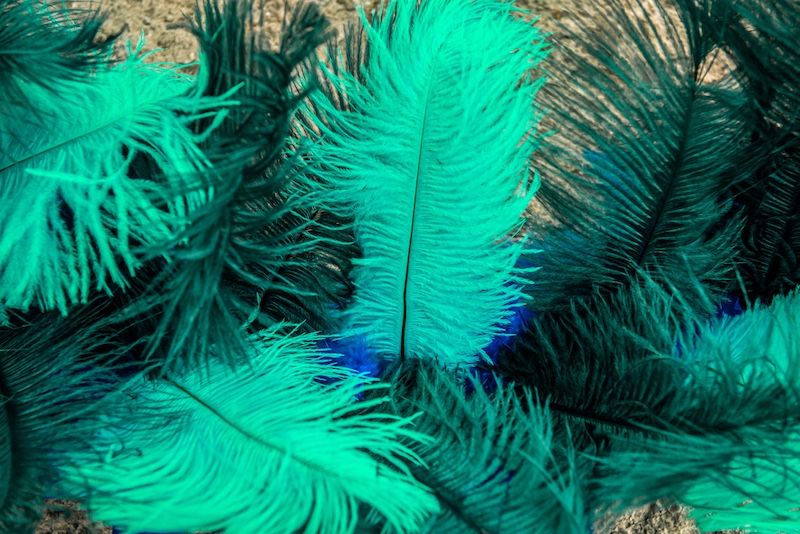
To confirm that olo was truly a new color, the researchers asked participants to compare it with an adjustable color. Although they picked a teal shade as the closest match, they said it wasn’t nearly as vivid. They had to add white light to olo to reduce its intensity until the two colors looked equally saturated.
Ng and his colleagues believe the discovery could have practical benefits beyond revealing a brand new color. The Oz technology gives researchers an entirely new way to study how we see, and could one day help scientists better understand color blindness, retinal diseases, and even expand the range of colors humans can perceive.
“It’s really about the capacity of the human brain to develop new perceptions to attribute to new sensory inputs,” said Roorda. “This could apply to any sensory inputs. It just turns out that we have a platform where we can directly manipulate the sensory inputs into the brain through the visual system in an unprecedented way.” The professor added, “If you can give someone a better quality of life by maintaining their vision, whether it’s for reading or doing your hobbies or for driving, this is really important for the individual, but also for the health benefit of the world.”
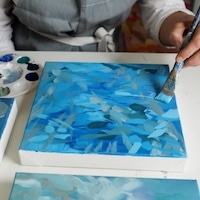
Find out more about the discovery of olo in the Science Advances journal. And if you want to see something close to olo without lasers pulsating into your eyes, check out the video below.
A team of scientists from the University of California, Berkeley, claim to have discovered a new color—called olo—that can only be seen in a lab, with a laser shot into your retina.
Sources: Novel color via stimulation of individual photoreceptors at population scale, How seeing the new color ‘olo’ opens the realm of vision science, Scientists Say They’ve Discovered a New Color—an ‘Unprecedented’ Hue Only Ever Seen by Five People
Related Articles:
The History of the Color Blue: From Ancient Egypt to the Latest Scientific Discoveries
World’s “Pinkest Pink” Color Is Being Given Away for Free to Everyone Except One Person
“World’s Blackest Black” Absorbs So Much Light It Makes 3D Objects Look Flat
Museum Offers Color-Blindness Glasses To Help Visually Impaired Visitors View Art in a New Way