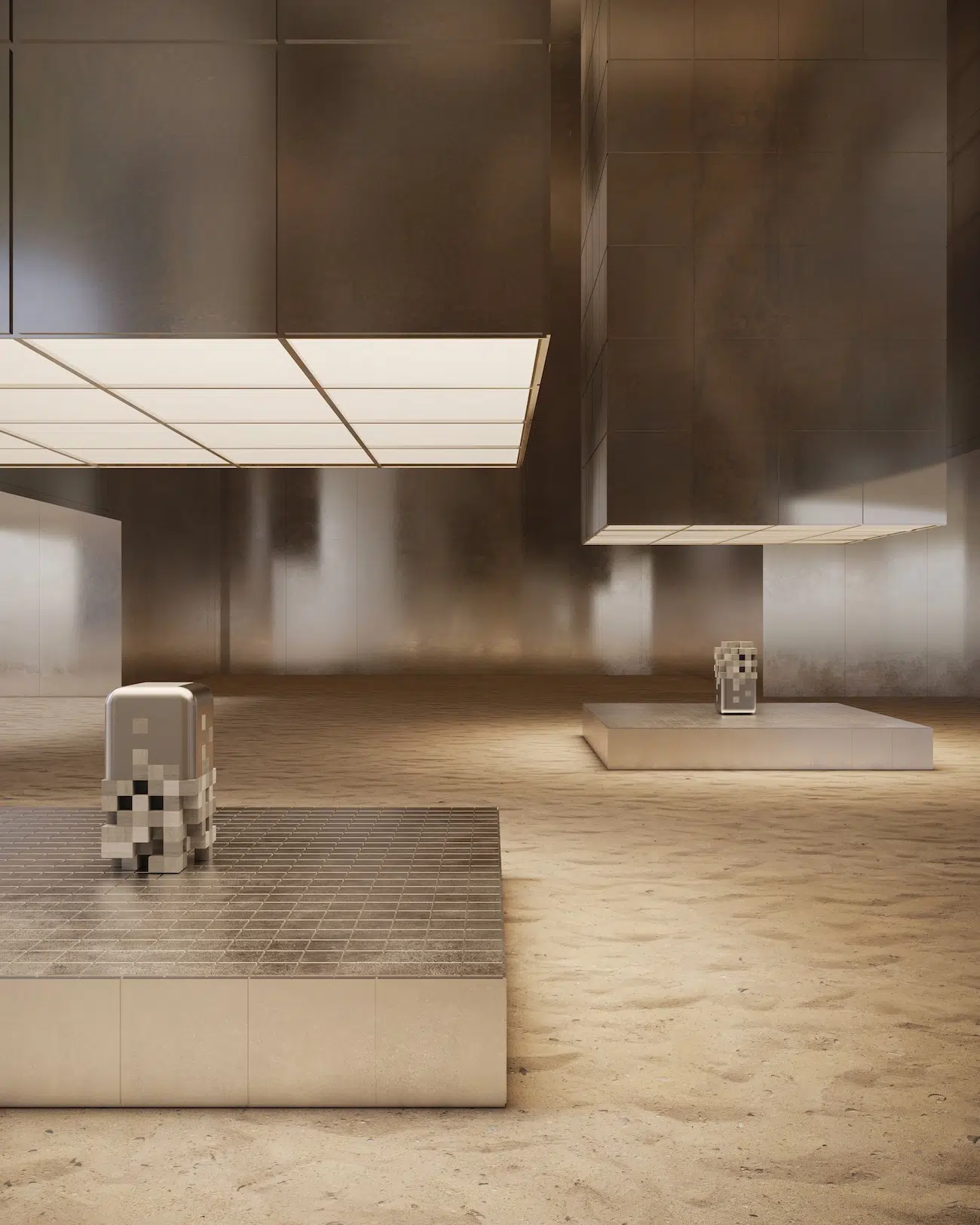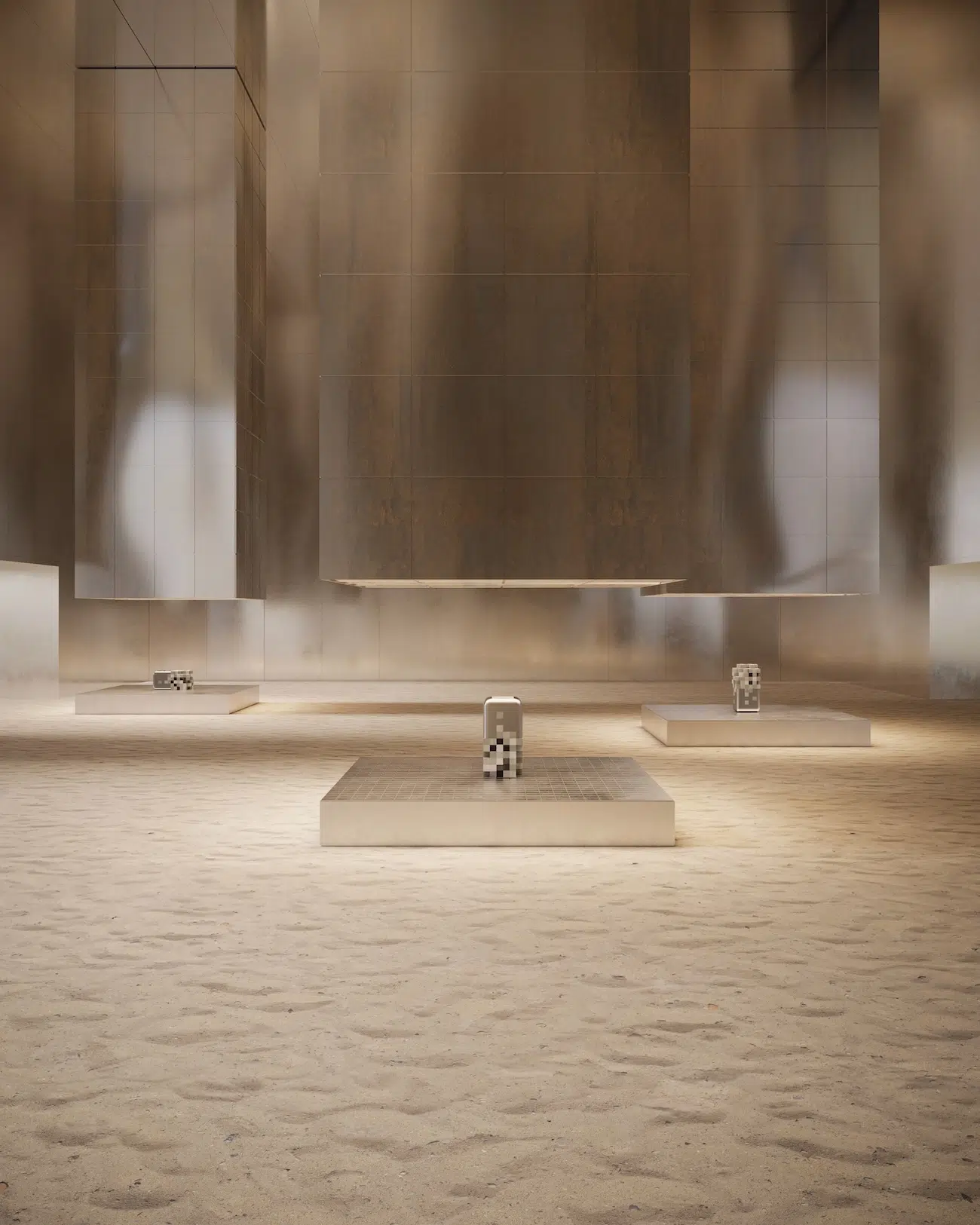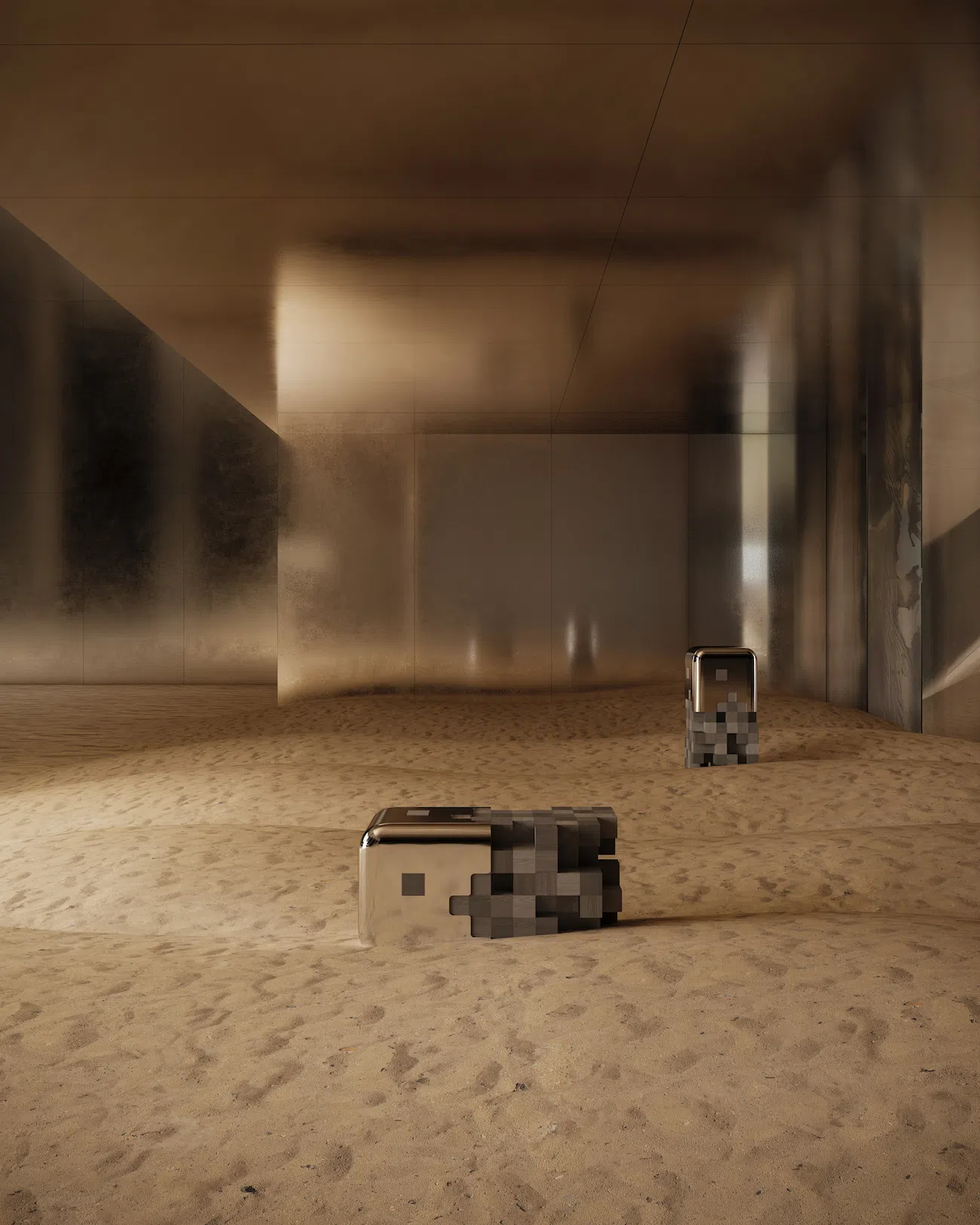
Pixels are intangible. They are the building blocks of the images we see on a screen. But no matter how realistic those images look, we can’t interact with them like we would a three-dimensional item. Spatial designer Ceren Arslan, founder of the design studio EXIT, is changing that with the launch of her furniture collection called Pixel Theory.
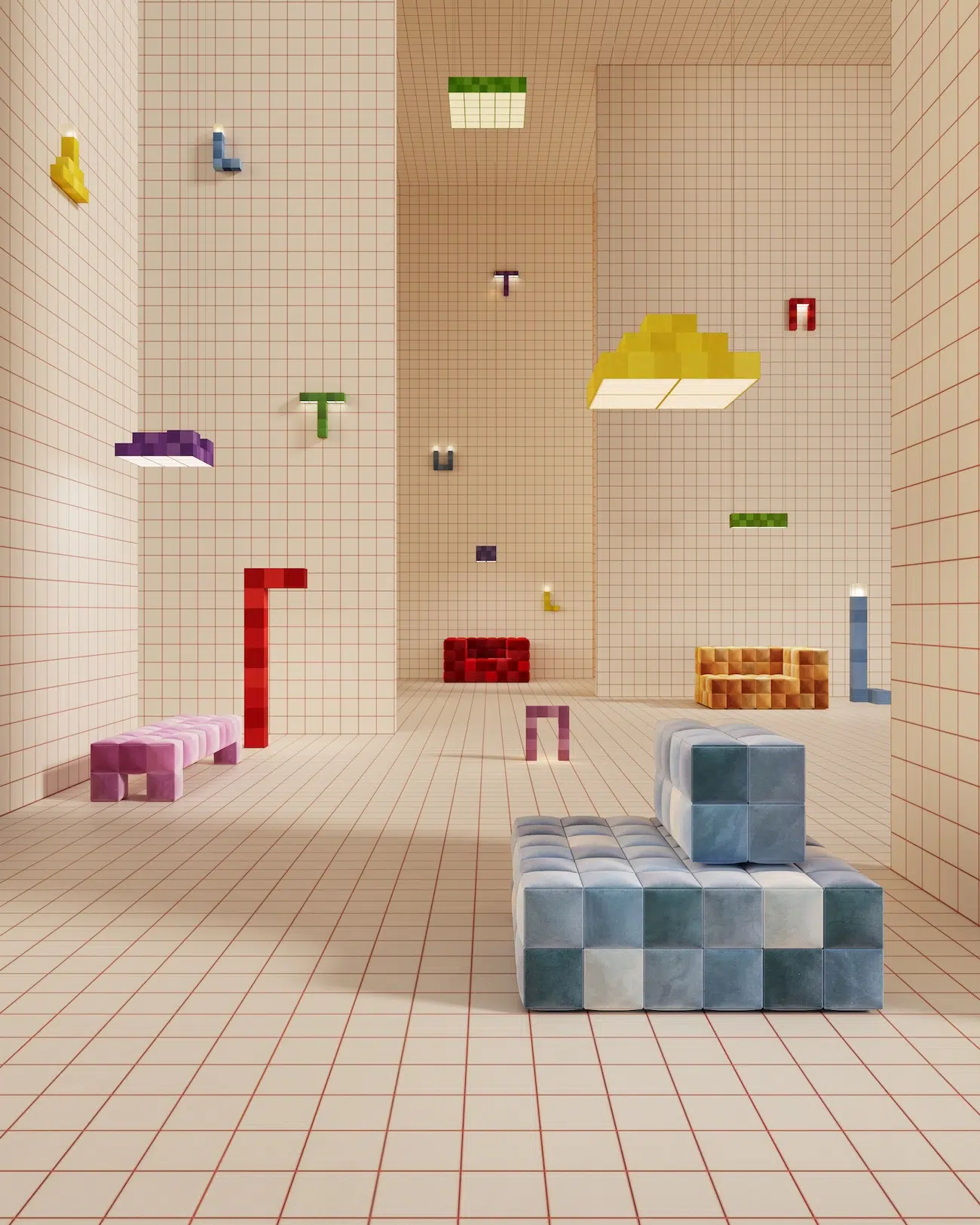
Pixel Theory sees the picture-element (the long name for pixel) as a starting point for the collection. A pixel is a square, making it the perfect building block for a modular system that can be stacked and arranged into myriad forms. Expanding this idea, each piece in the collection is one part of a larger grid and offers seemingly endless configurations.
If Pixel Theory reminds you of the video game Tetris, it’s by design. Arslan draws inspiration from early video games like Tetris, where you build an entire world from repeating elements in bright colors. The collection applies this type of systematic thinking to physical objects. It’s controlled, yet open-ended. You’ll assess your space and determine how to arrange the seating, lamps, and tables for an aesthetically pleasing layout. It’s a pixel puzzle brought from the screen into real life.
“The collection is intended as joyful souvenirs from the spaces I’ve been designing within EXIT,” says Arslan. “It’s about bringing that low-res nostalgia into the physical realm, where logic meets sentiment.”
The debut of Pixel Theory is a tiered resolution system that features the following: 20-centimeter (7.8-inch) units for seating, floor lamps, and larger forms; 10-centimeter (4-inch) units for tables and pendant lamps; and 5-centimeter (2-inch) units for side tables and table lamps.
Scroll down to see the possibilities of Pixel Theory.
Pixels are intangible. They are the building blocks of the images we see on a screen.
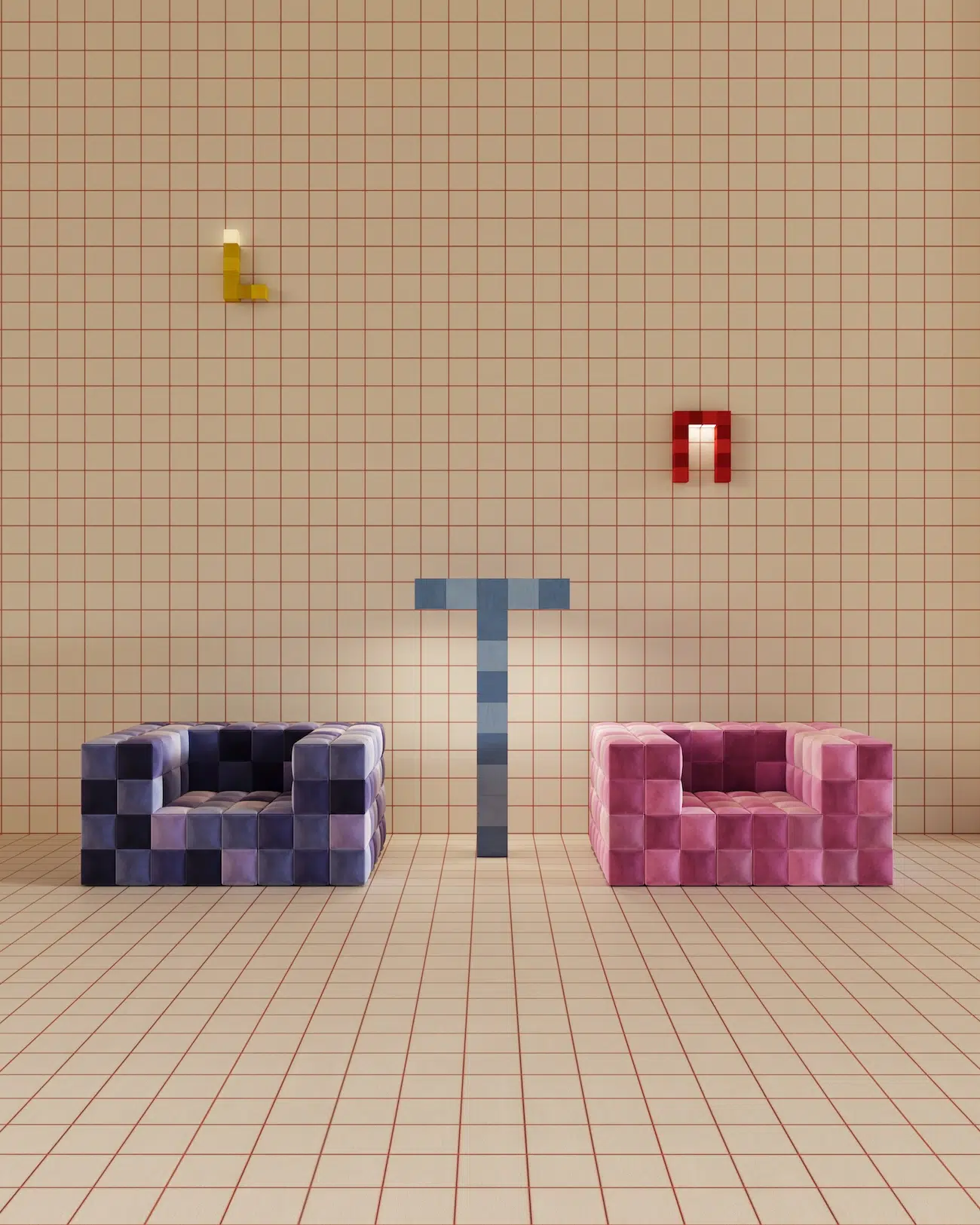
But no matter how realistic those images look, we can’t interact with them like we would a three-dimensional item. Spatial designer Ceren Arslan is changing that with the launch of her furniture collection called Pixel Theory.
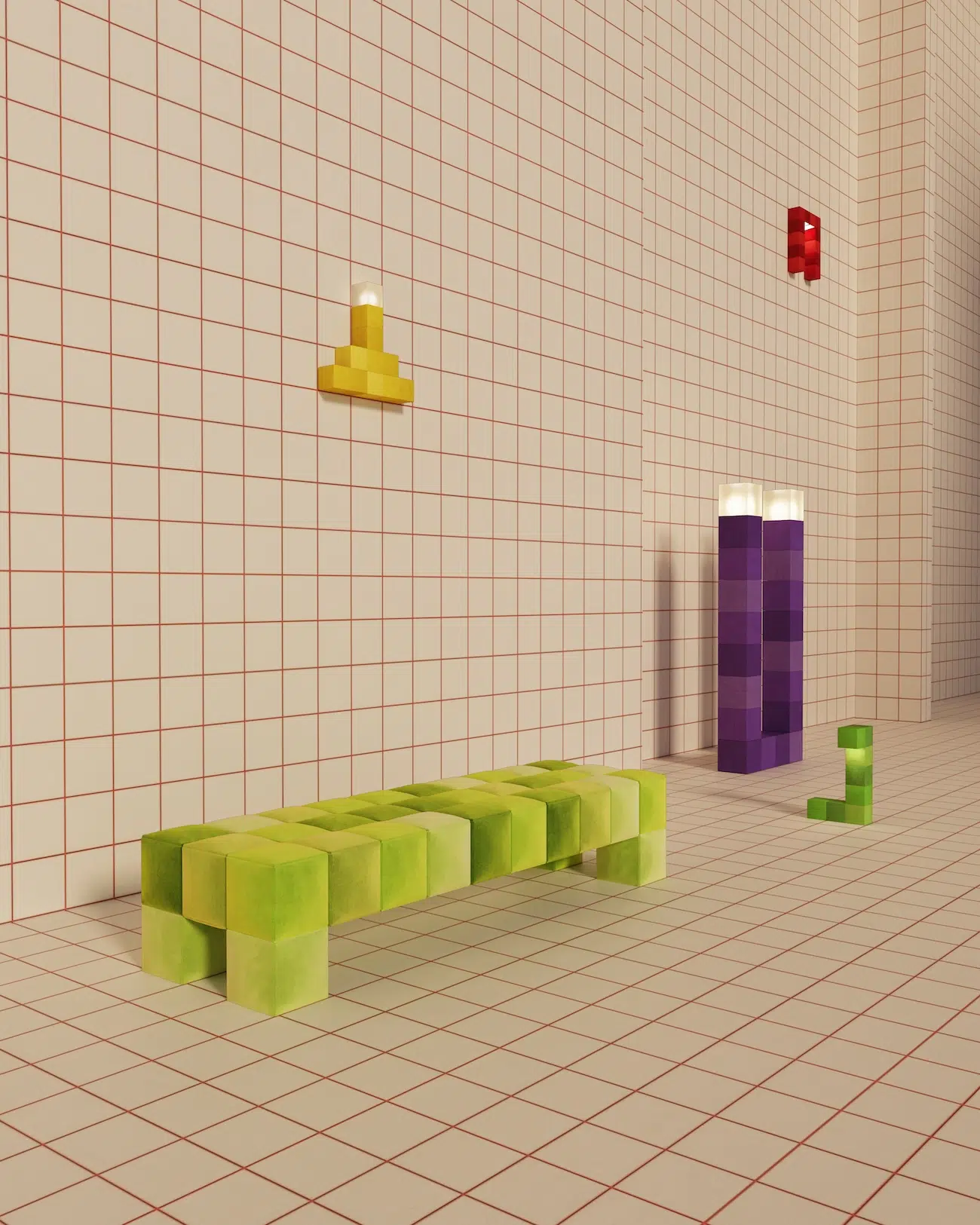
The humble pixel is seen as a starting point for the collection.
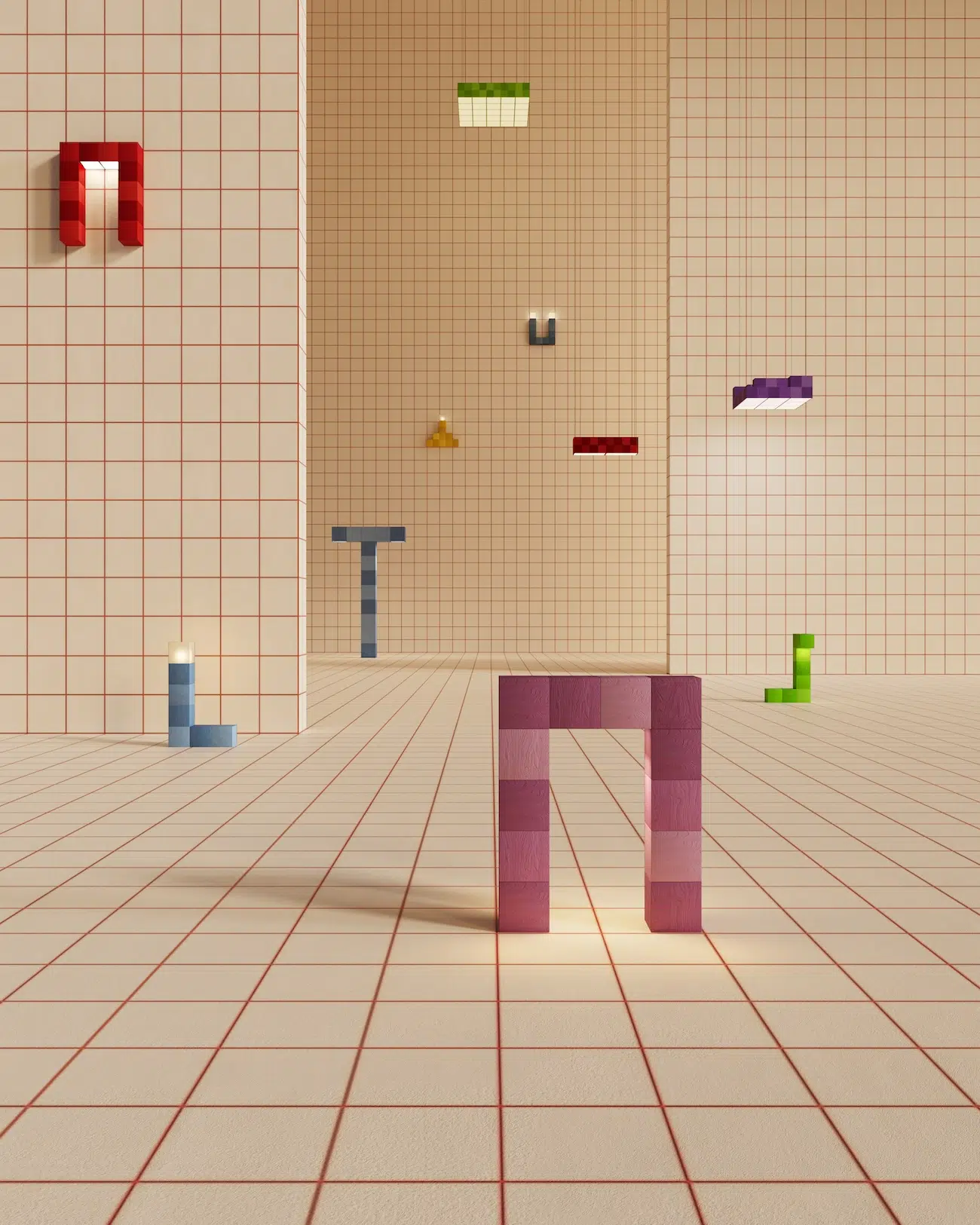
A pixel is a square, making it the perfect building block for a modular system that can be stacked and arranged into myriad forms.
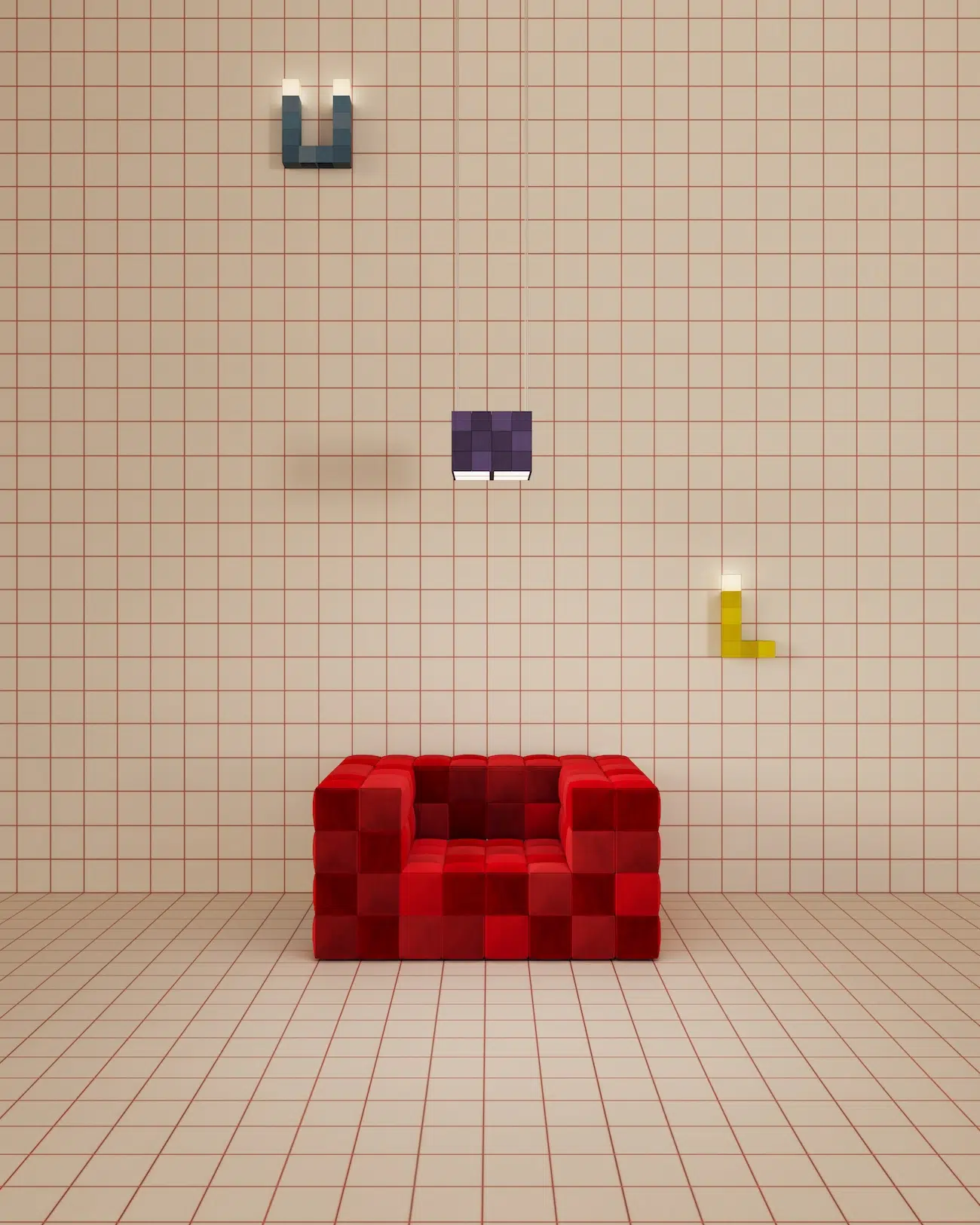
If Pixel Theory reminds you of the video game Tetris, it’s by design.
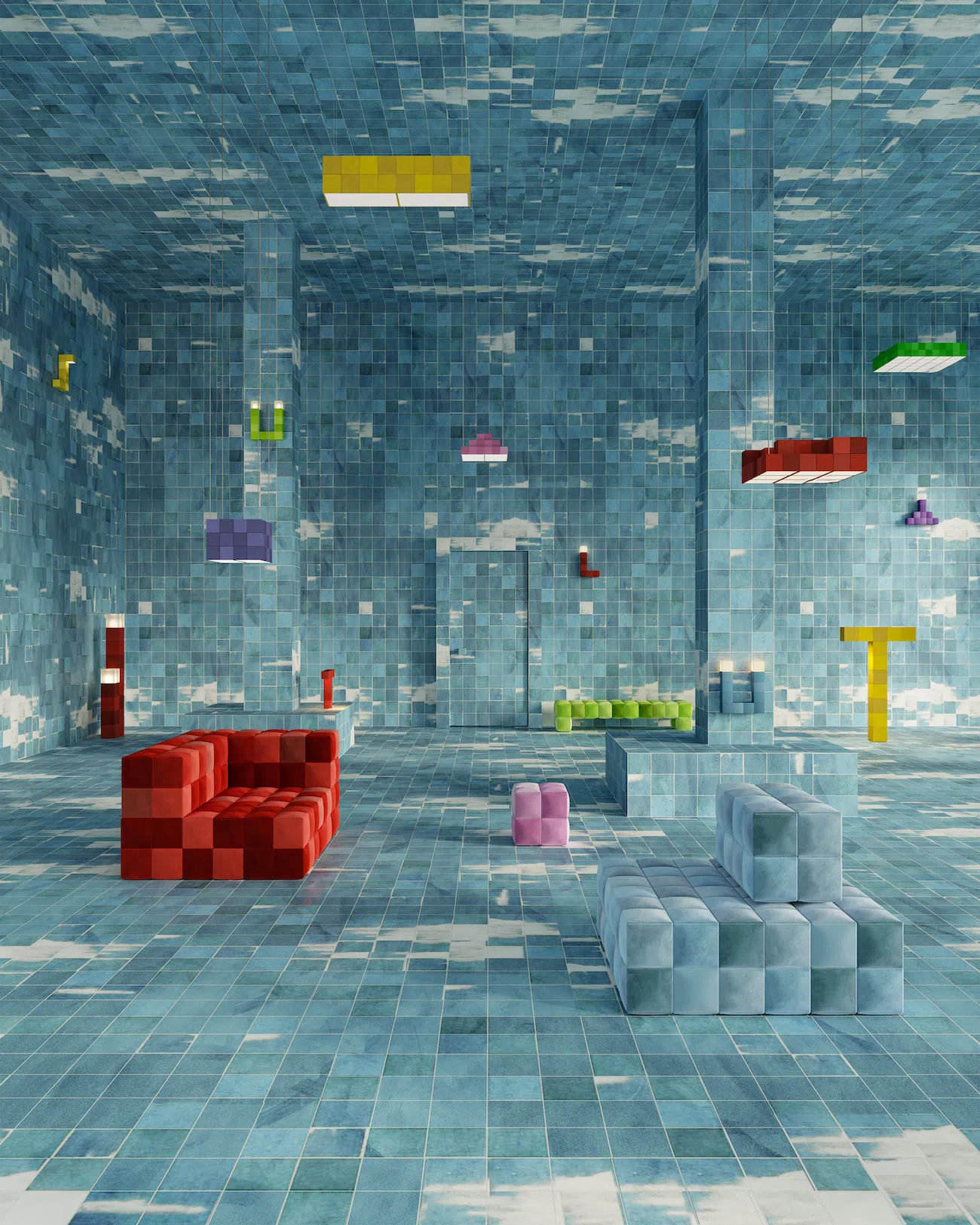
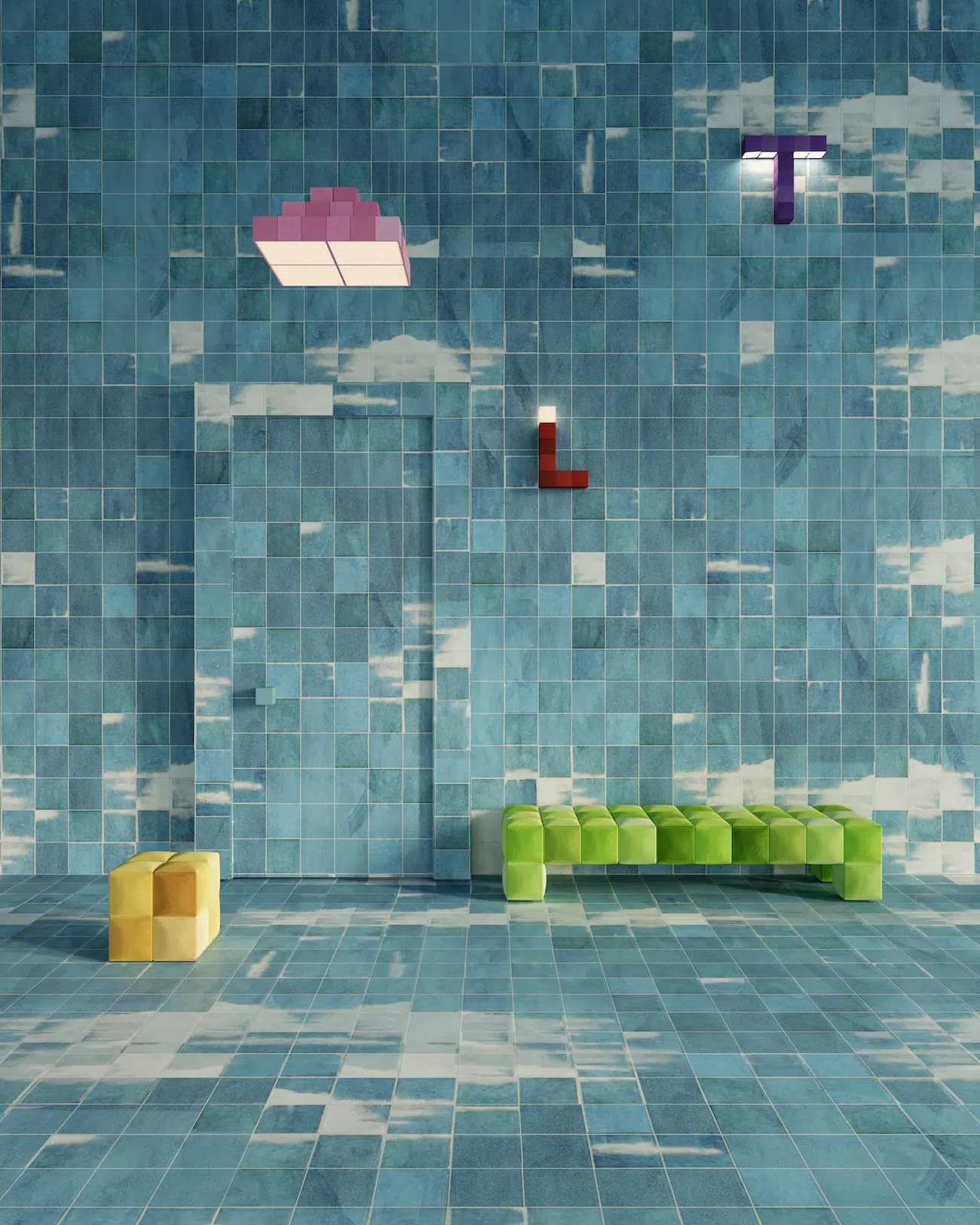
Arslan draws inspiration from early video games like Tetris, where you build an entire world from repeating elements in bright colors.
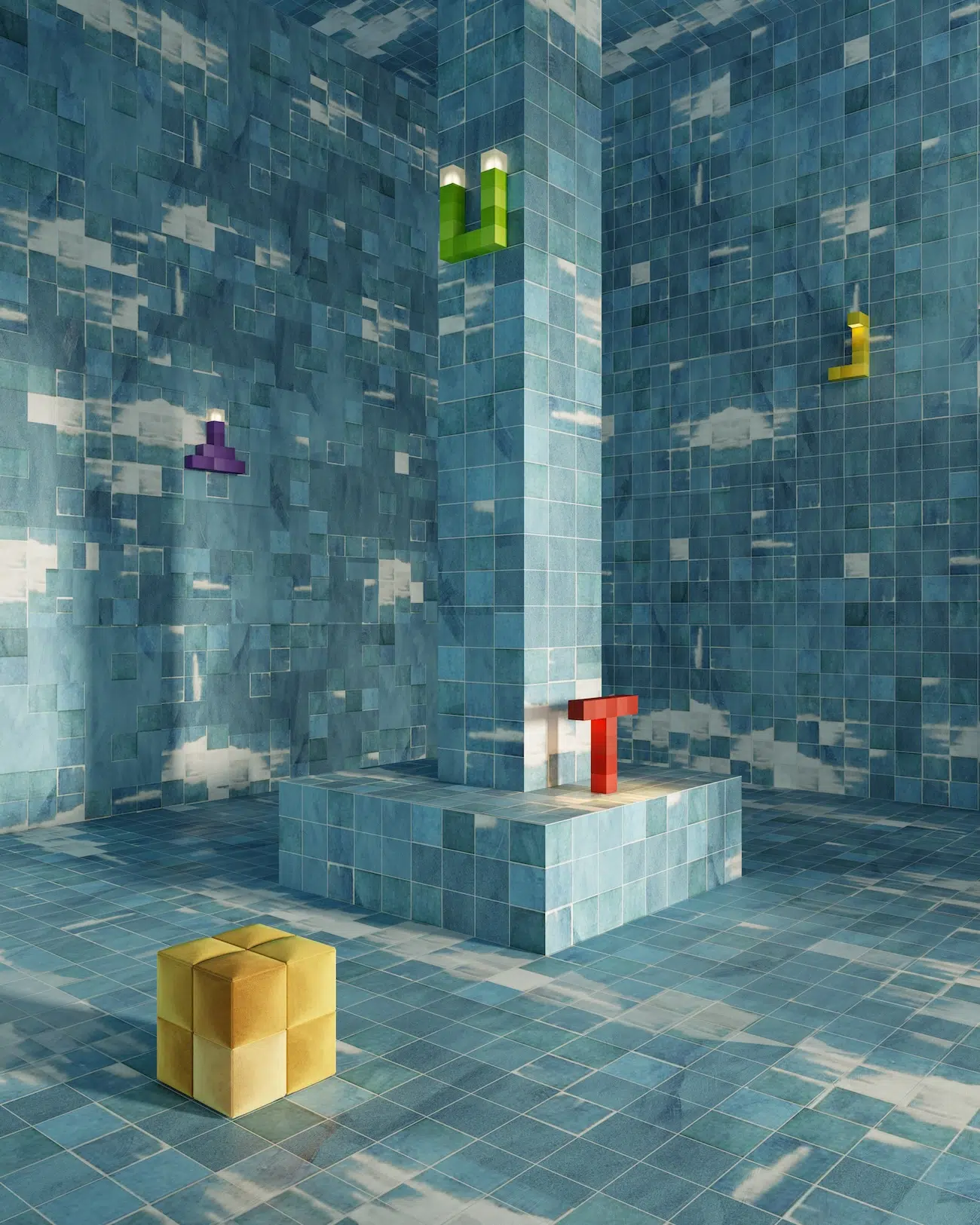
The collection applies this type of systematic thinking to physical objects.