View this post on Instagram
Scientists are baffled by the number of octopuses gathered at an underwater garden off the coast of California. This octopus garden is a major breeding ground where octopuses collect shiny objects, stones, shells, and discarded human items on the ocean floor to craft their dens.
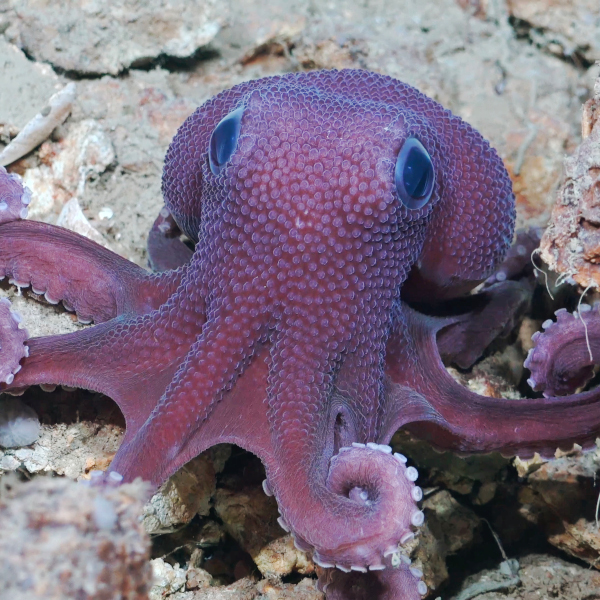
First spotted in 2018 and studied extensively by the Monterey Bay Aquarium Research Institute (MBARI), it is the largest known deep-sea octopus congregation on Earth. It is home to over 20,000 pearl octopuses (Muusoctopus robustus), which are pale purple and roughly the size of a grapefruit.
The octopuses gather here because of the warmth from nearby hydrothermal springs. According to research funded by the Monterey Bay Aquarium Foundation, the springs raise the water temperature, boosting the octopuses’ metabolism and speed up egg development. Researchers found that female octopuses spend about 1.8 years caring for their eggs here, which is much faster than expected for deep-sea octopuses.
Using underwater mapping technology, scientists counted about 6,000 octopuses in an area that is 2.5 hectares (almost 6.2 acres) wide. After reproducing, the octopuses die, and their bodies provide an important food source for other animals in the area. These findings suggest that hydrothermal springs may be important for deep-sea octopuses’ survival and reproduction.
The site is located within the Monterey Bay National Marine Sanctuary, which helps protect the deep-sea habitat and its inhabitants. The sanctuary covers more than 6,000 square miles of ocean along California’s central coast and protects against potentially harmful human interventions, such as oil and gas exploration, seabed mining, and other activities that could damage the seafloor. Keeping this fragile habitat protected can help preserve one of the largest known octopus congregations on Earth.
An unusually large number of pearl octopuses was discovered off the coast of Central California, prompting extensive research as to why they chose to gather here.
View this post on Instagram
The research found that nearby hydrothermal springs heat the water, allowing reproduction to speed up significantly and pearl octopus populations to flourish.
The area is part of a sanctuary and is protected by the Monterey Bay National Marine Sanctuary from harmful human activities.
Source: Here’s why 6,000 octopuses like to be under the sea at an ‘octopus garden’
Related Articles:
Tender Moment Between Humpback Whale and Its Calf Wins 2025 Underwater Photographer of the Year
Teacher Rescues a Stuck Octopus and the Animal Seems To Thank Her With a Simple Gesture