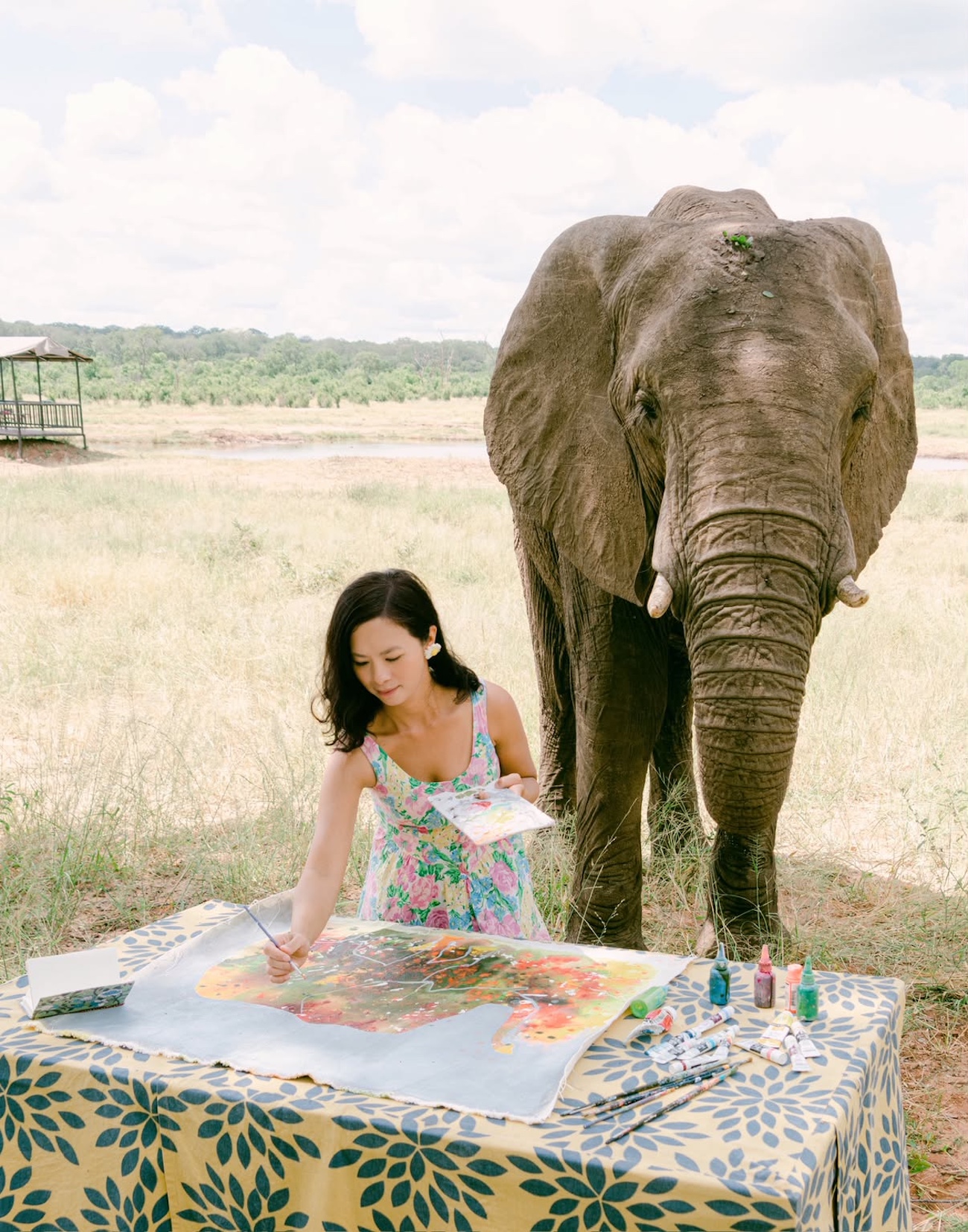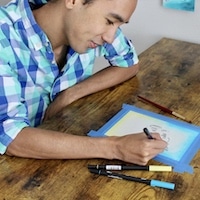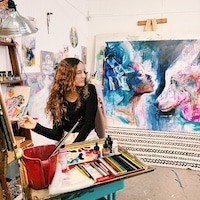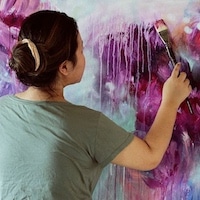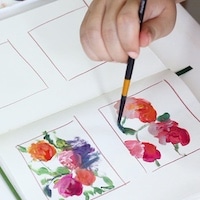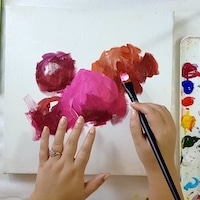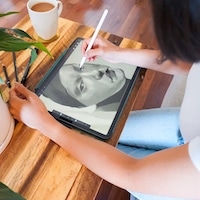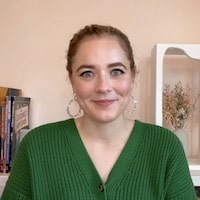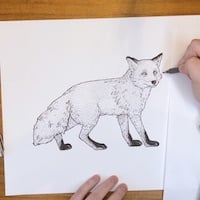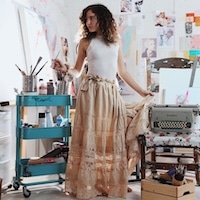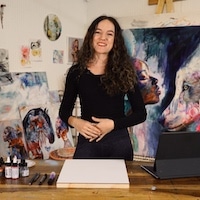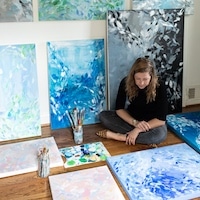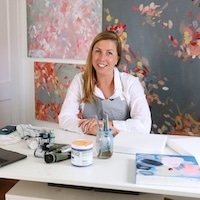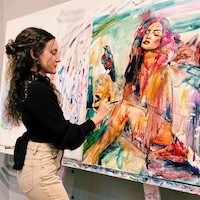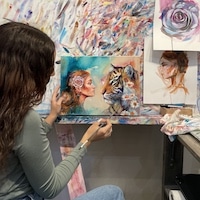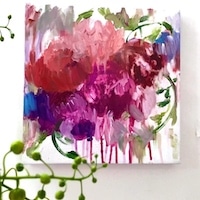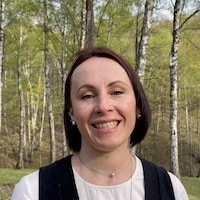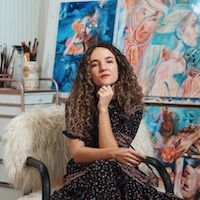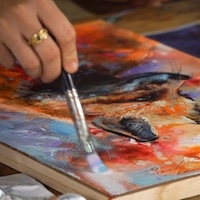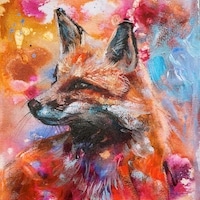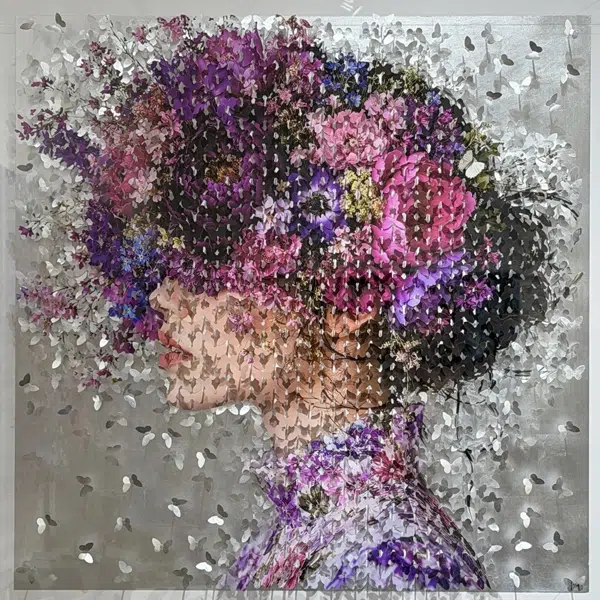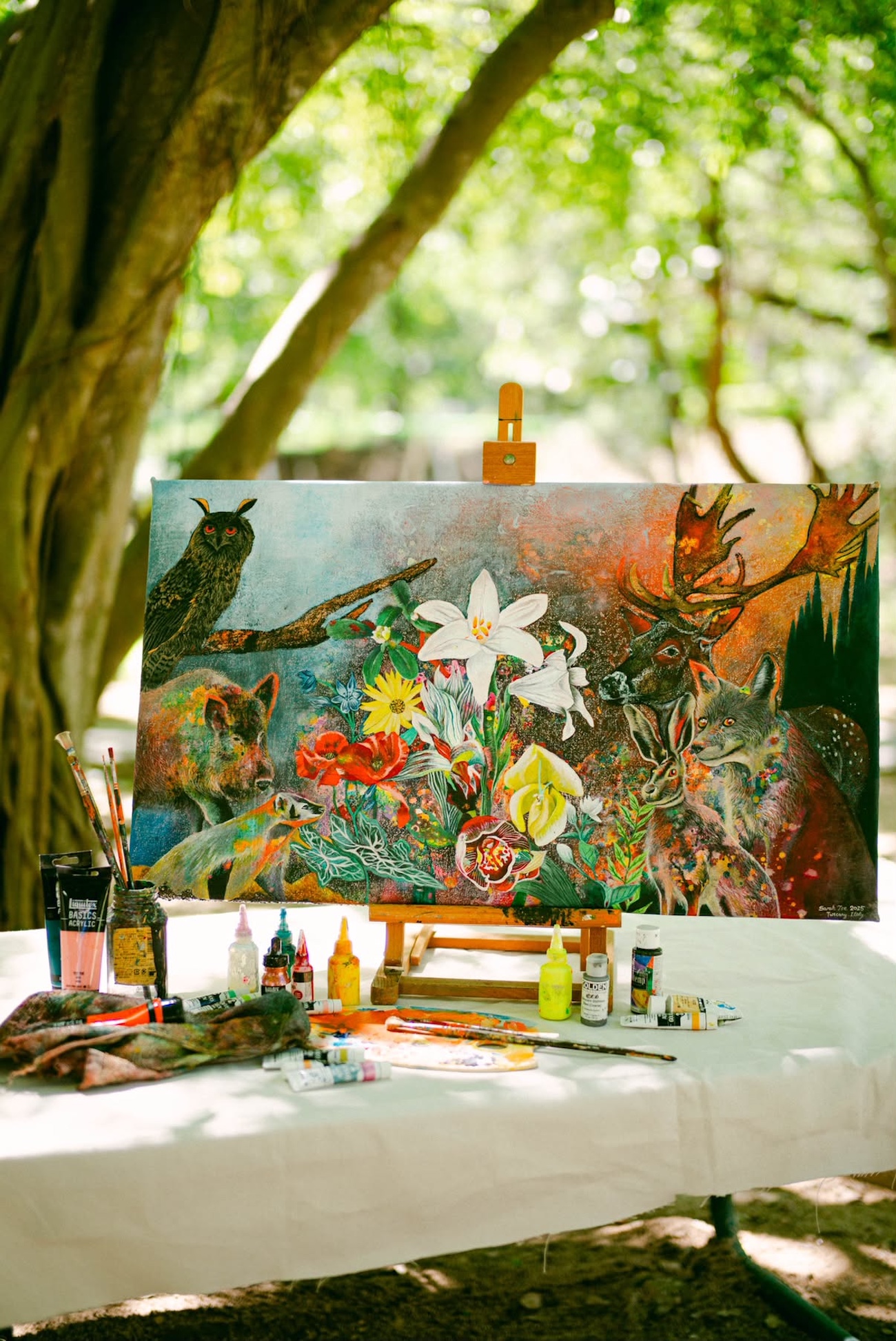
Artist Sarah Tse’s colorful mixed-media works are filled with animals, plants, female figures, and objects pulled from both real life and her imagination. Leopards and panthers appear alongside women, while flowers, landscapes, and unexpected materials come together in surreal compositions. But rather than trying to recreate exactly what she sees, Tse is much more interested in capturing how a particular animal, place, or experience makes her feel.
Travel is a major source of inspiration for the artist, who spends much of her time exploring new places and painting what she encounters along the way. From reindeer near Mongolia’s Lake Khuvsgul to wild mushrooms in Finland and the carefully arranged stones of a Japanese garden, elements of these experiences eventually find their way into her work. Tse also collects materials as she travels, incorporating everything from Japanese gold leaf and Chinese ink to dried leaves and even Scottish whisky into her mixed-media pieces.
Over the last 15 years, Tse’s work has evolved from intricate monochromatic drawings into the vibrant, layered compositions she creates today. My Modern Met had the chance to speak with the artist about how her travels influence her work, why animals have become such an important part of her practice, and how her ideas about beauty and femininity have changed over time.
Read on for our exclusive interview with the artist.
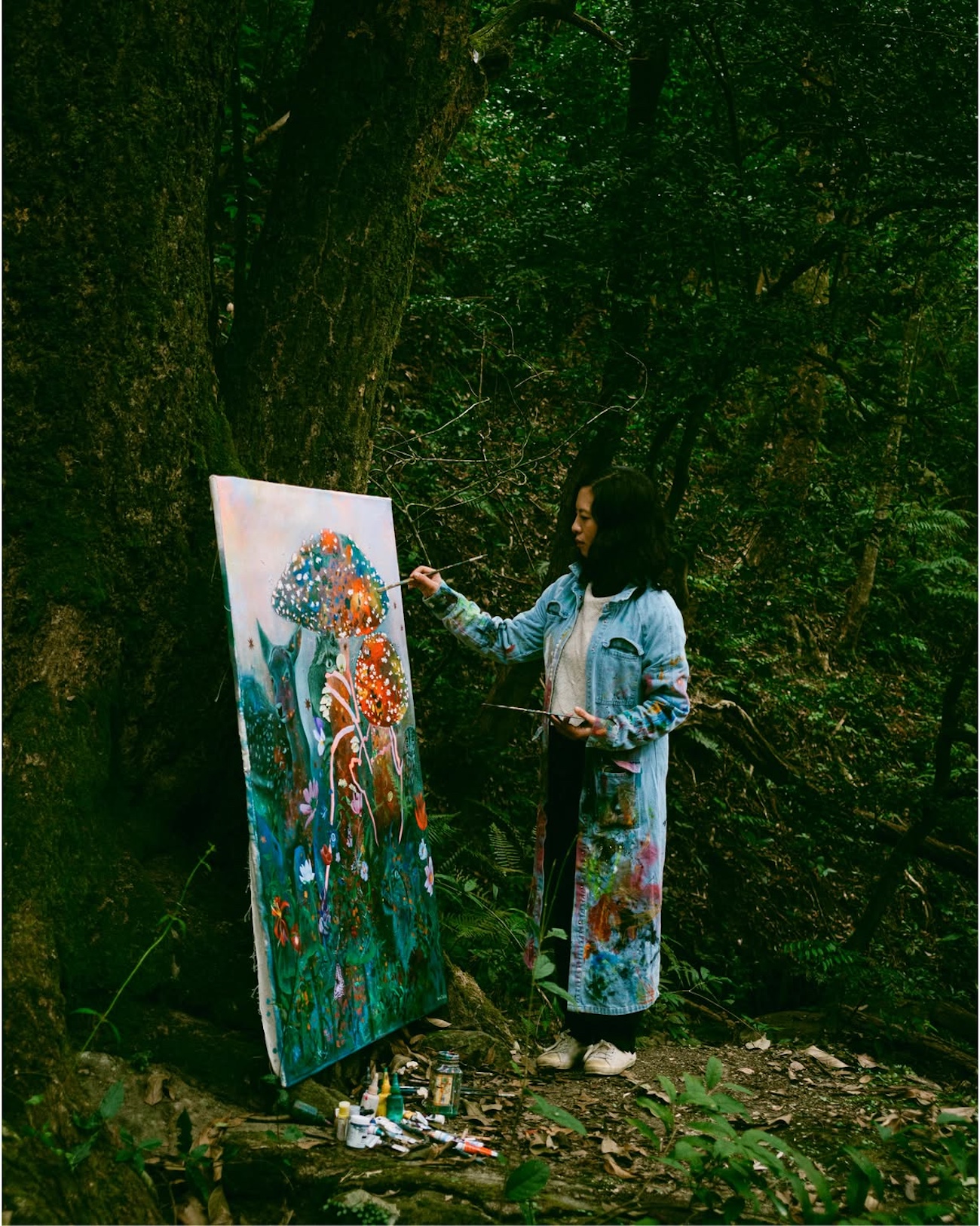
Your work often brings together elements that might not ordinarily coexist—female figures, animals, plants, machines, and found materials. How do you build these compositions? Do you begin with a particular image or idea, or does the narrative emerge as you work?
I’m drawn to the unfamiliar—experiences and objects alike—and I delight in juxtaposing found images to sculpt something entirely new. I typically begin with a central motif, a portrait, for instance, then surround it with found images until a surreal, almost grotesque atmosphere takes hold. It’s at that point the narrative begins to surface on its own. I feel the world belongs to one, and perhaps, without realizing it, I’m quietly inventing another.
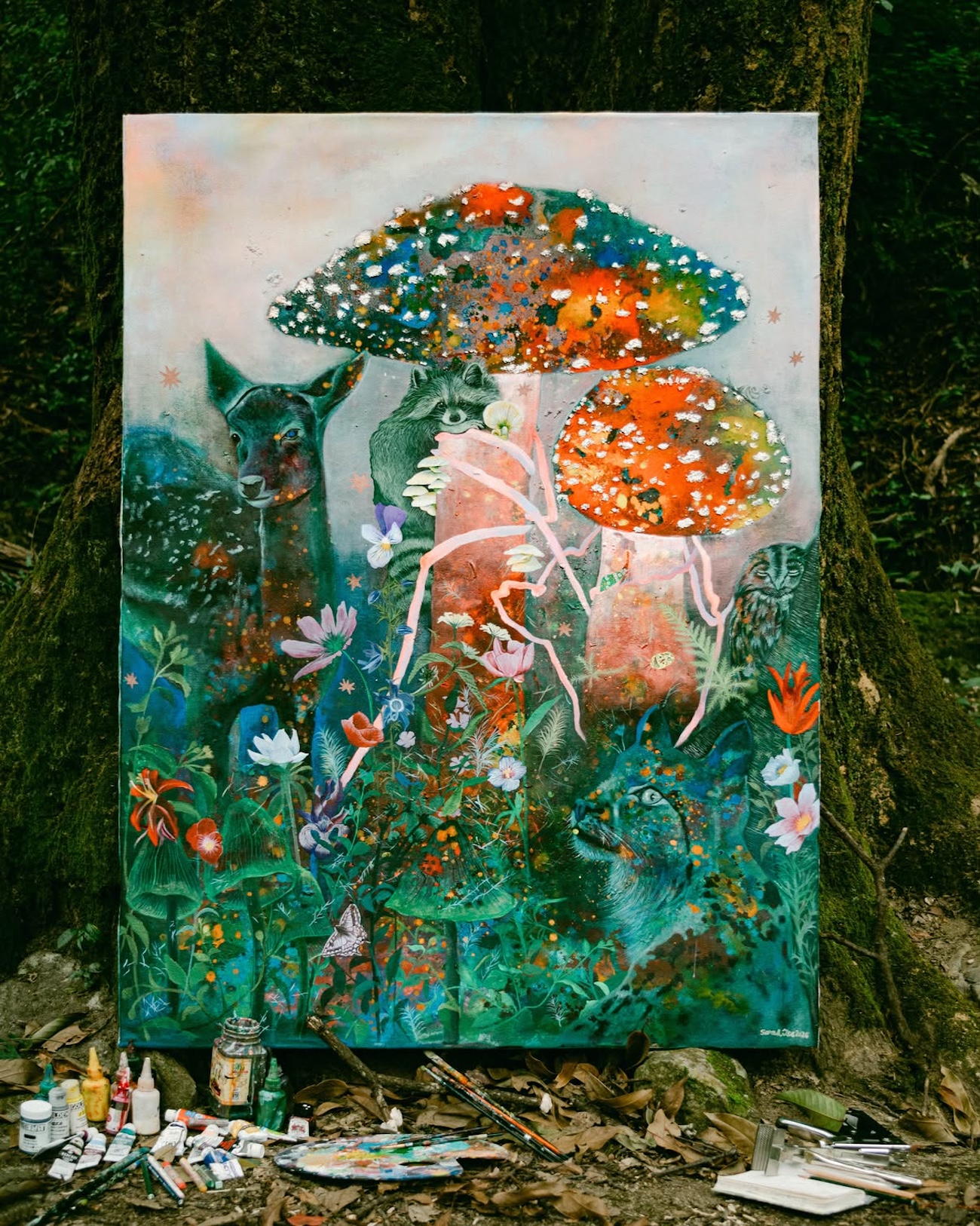
You’ve said that you’re more interested in capturing the feeling of an animal or place than depicting it realistically. How do you translate a physical encounter—whether touching leaves in a forest or seeing a leopard in the wild—into something visual?
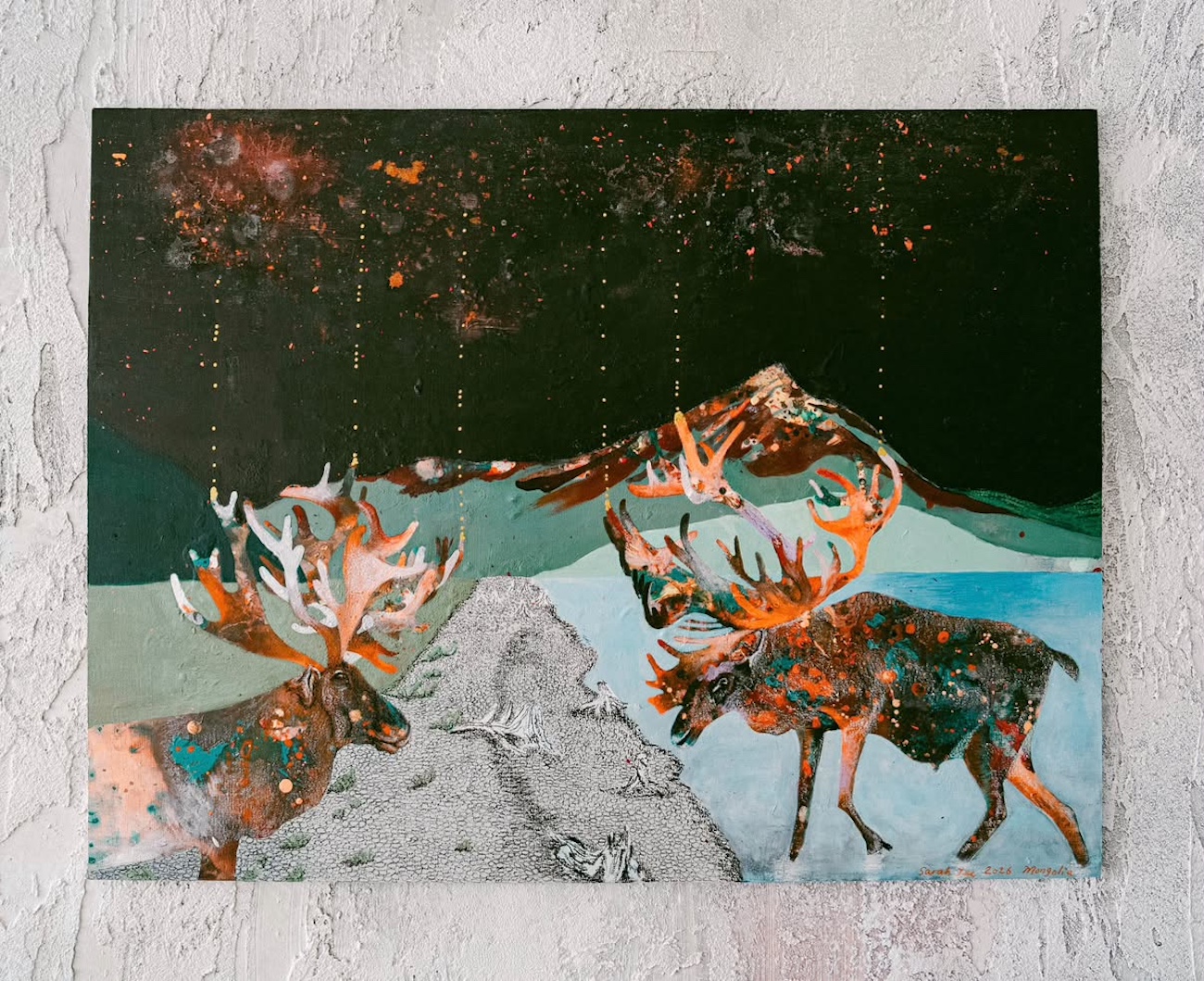
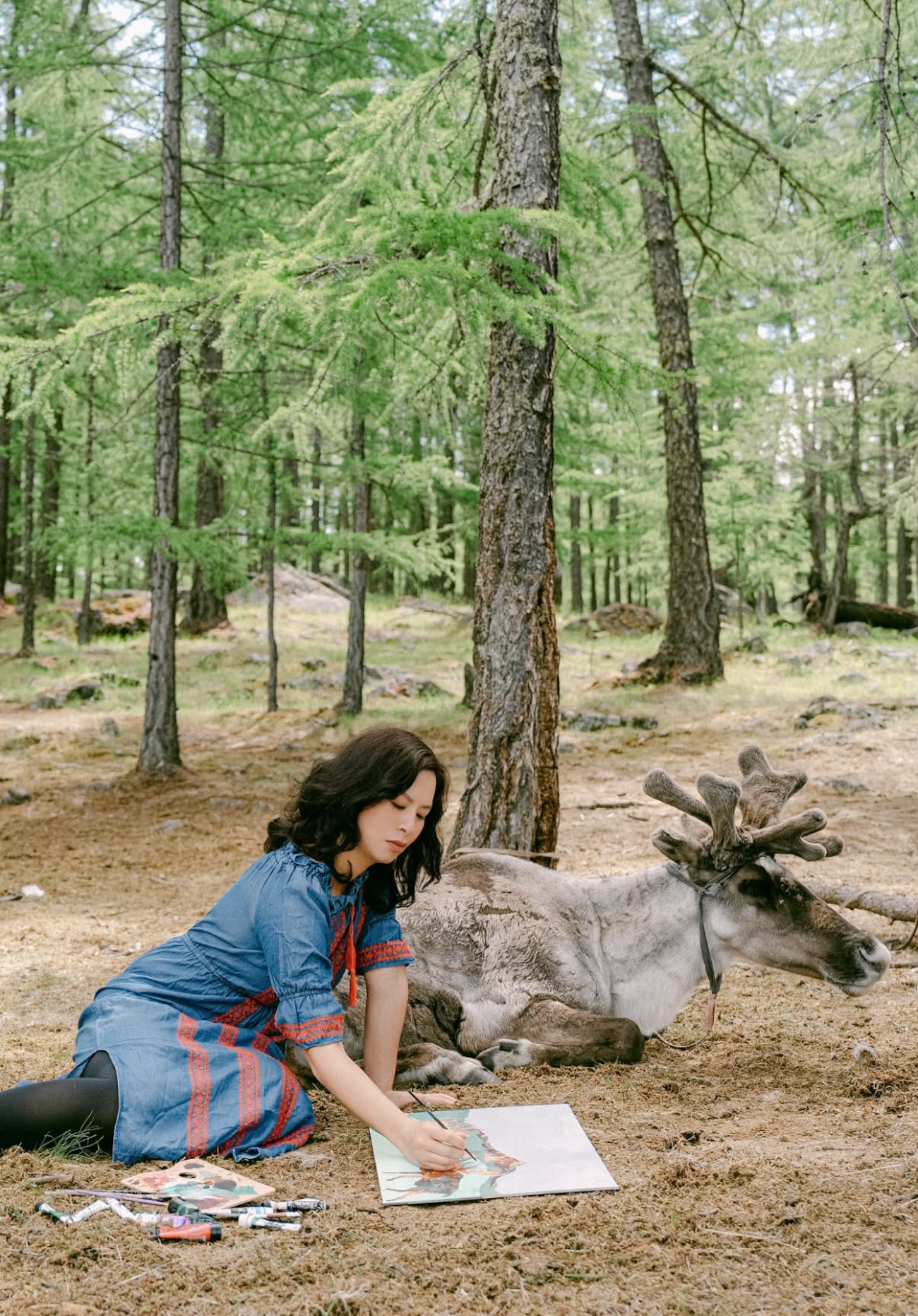
Exactly. I’m drawn to the story behind what I see; what matters to me is what I feel or experience. Recently, for instance, I traveled to Mongolia and visited reindeer herders by Lake Khuvsgul in the north, near the Russian border. I felt intensely cold as I walked close to the water, even though it was 30°C during my visit. The reindeer herders live around the lake, and I painted the reindeer while I was there. Once I began, the reindeer wandered over and settled beside me—I felt they understood what I was doing. In Mongolian culture, reindeer horns are believed to be ladders to the eternal sky. I painted the reindeer, the lake, and the Milky Way I saw every night onto my panel. The painting felt quiet, peaceful, magical, and mysterious.
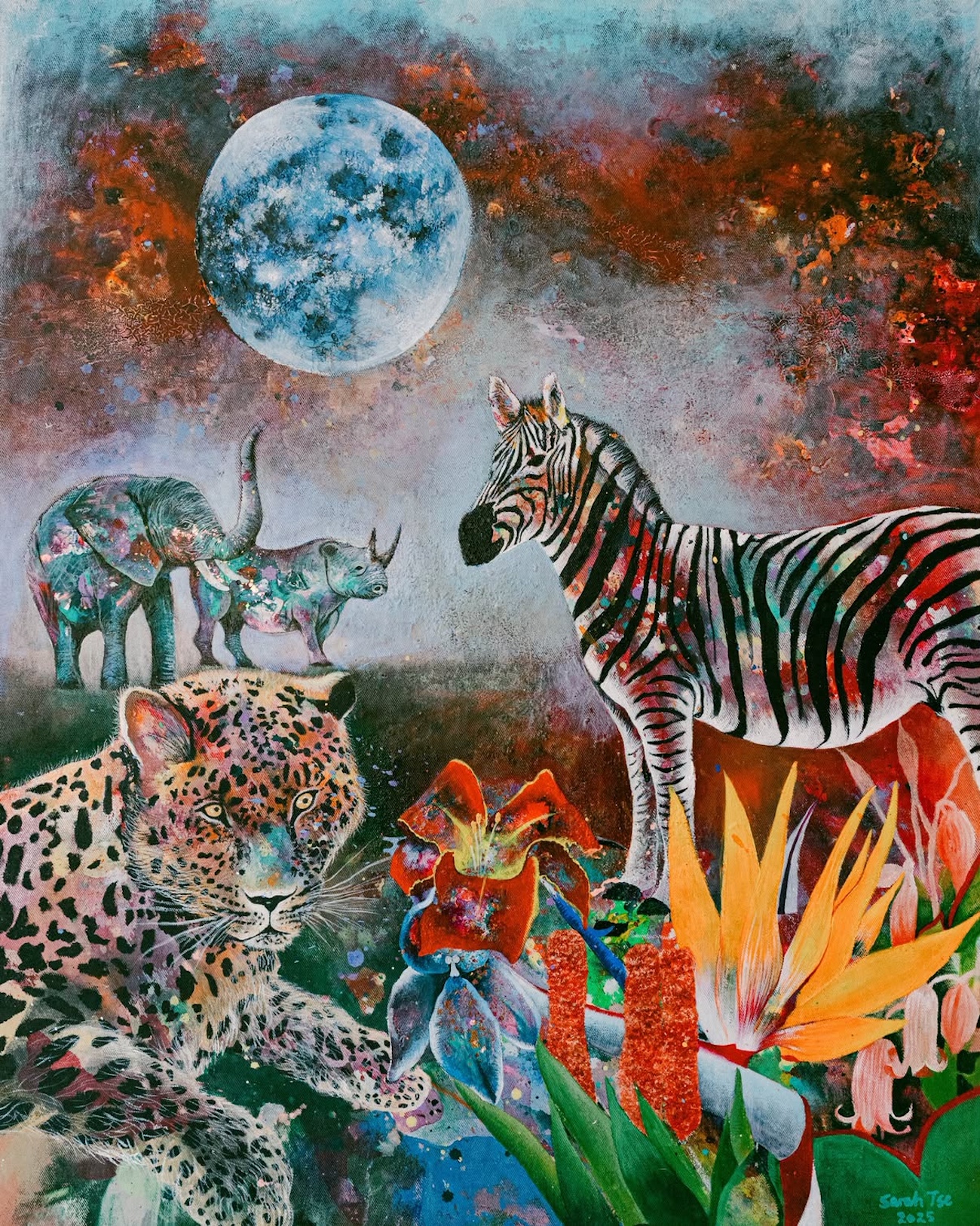
Big cats have become an increasingly important presence in your work, particularly within your female portraits. What do you see in animals like leopards and panthers that connects them to your exploration of femininity, beauty, and power?
A few years ago I did a small project with Cartier, and it taught me a great deal about panthers—Cartier’s signature motif. Panthers, leopards, and cheetahs are extraordinarily elegant, powerful, independent, and mysterious. They tend to conceal themselves, observing from a distance. I sense a profound female energy in these magnificent big cats. Animals are not merely subjects in my art; through observing and painting them, I’ve come to understand Mother Nature far more deeply. When I paint animals, I’m also painting a part of myself—the part that is courageous, curious about the world, and still believes in its beauty, even after disappointment.
When I was younger, beauty meant the beauty of a woman. As I’ve grown older, it has come to mean the kindness of humanity, the natural world around us, and my own resilience. These are all essential elements of my art, which is why I paint the radiant sunsets of Bali, the vivid wild mushrooms of the Finnish forest, the meticulously arranged stones of a Japanese garden. How animals interact with my objects within the canvas becomes the narrative of each creation.
The materials in your work seem to carry their own histories, particularly the papers and found objects you collect during your travels. How important is the physical origin of these materials to the finished piece? Do you think of them as a way of preserving memories of a particular place?
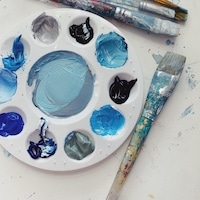
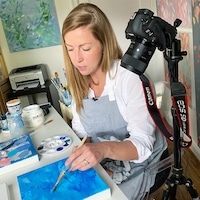
I’m captivated by the textures and histories of my materials. Creating a piece of art is itself a journey, and the materials, paints, and tools I use are the encounters and meanings gathered along the way. Because I travel full-time to paint, I relish exploring different mediums. These days I combine Japanese gold leaf, Chinese ink, cinnabar powder, and Scottish whisky with dried leaves I’ve collected. Each carries its own significance. The vermilion red of cinnabar, for instance, recalls the walls of the Forbidden City in Beijing—it evokes nobility, the Orient, luck, and femininity. Infusing whisky into my work lends a sense of relaxation, escapism, and illusion.
Your work has changed considerably over the years, from intricate monochromatic drawings to richly layered, colorful mixed-media pieces. When you look back at your earlier work now, what feels most different about the artist you were then and the artist you are today?
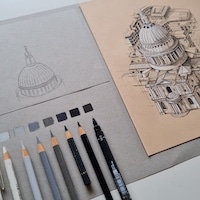
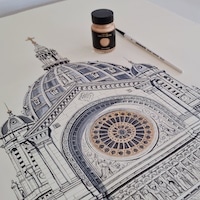
My practice has indeed transformed a great deal in the 15 years since I became an artist. When I first began, my studio practice was devoted to monochrome drawings of animals, plants, old architecture, and vintage machines. I was constructing a fantasy for myself—a world in which I could remain a child (a kind of Peter Pan syndrome). As I grew older, I moved from London to New York, then to Shanghai to open my café, and eventually became nomadic. I’m no longer that little kid; I’ve become a strong, adventurous woman who fears nothing. I can honestly say I love living outside my comfort zone, pursuing new opportunities and experiences. My art mirrors this transformation precisely—much like my nomadic life, it is colorful and wild. From the very beginning until now, I’ve simply been painting myself, only in different forms.
You’re constantly encountering new places as you travel. What are you working on right now, and have any of your recent experiences—including your visit to Museum SAN in South Korea—started finding their way into new work?
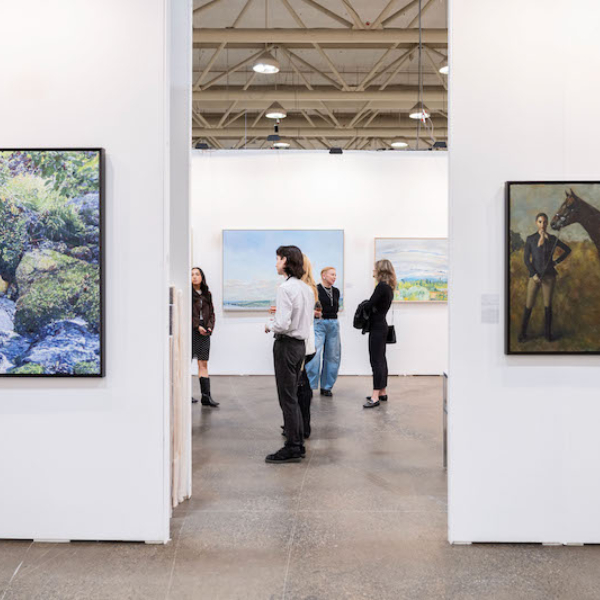
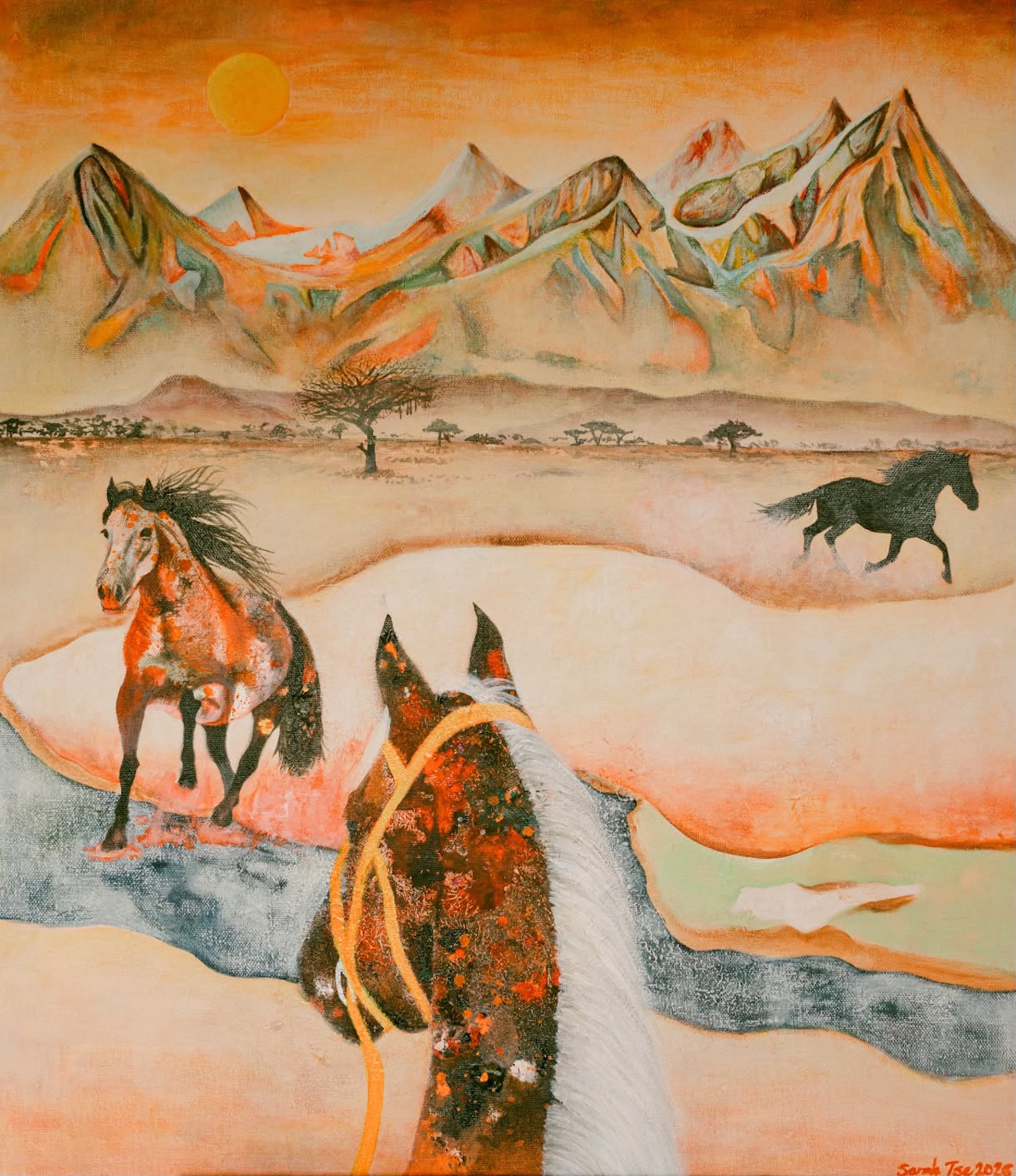
Yes, I love traveling to places I’ve never been and trying things I’ve never tried. I want my life to be full of stories and adventures—I refuse to die with regrets. Lately I’ve been working on racing horses (particularly in Hong Kong) and Mongolian horses, and next month I’ll travel to Australia to paint more. I also visit art fairs such as Frieze and Art Basel to study other artists’ work.
Visiting Museum SAN two weeks ago in Wonju, South Korea, was a profound physical and sensory journey. There, Tadao Ando’s minimalist architecture becomes the perfect canvas for natural light before surrendering the narrative to James Turrell’s light installations. I keep returning to the question of how I might bring that feeling into my studio practice.