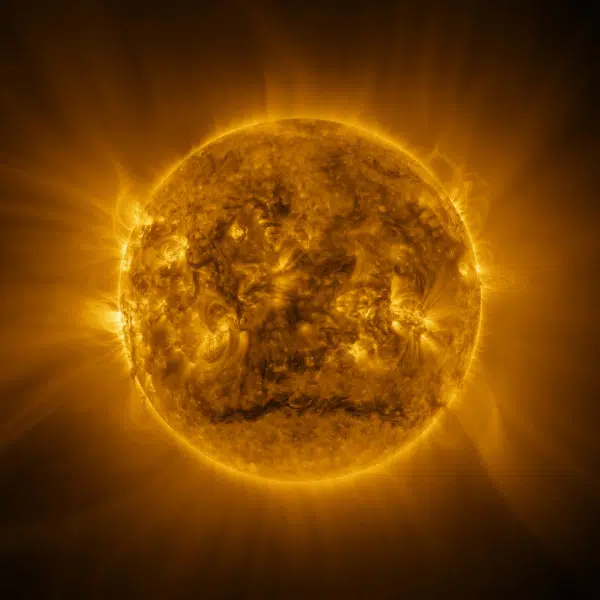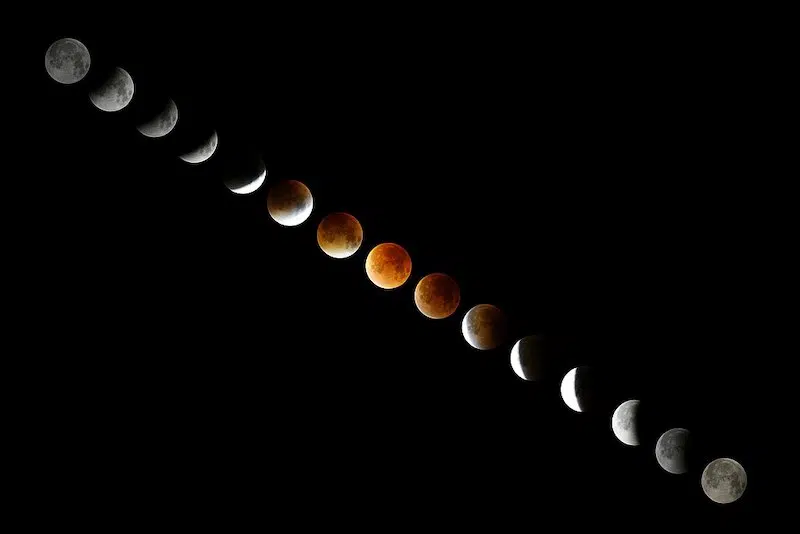
On the night of March 3, 2026, stargazers worldwide will be treated to an astronomical spectacle as the full moon drifts into Earth’s shadow, igniting a rich copper-red glow. Often called a blood moon, this total lunar eclipse occurs when Earth aligns perfectly between the sun and the moon. Sunlight filtering through our planet’s atmosphere bends and scatters, washing the moon in fiery crimson hues, like a cosmic spotlight illuminating a silent stage.
As the moon passes through the Earth’s darkest shadow, also known as the umbra. The result is a celestial ember floating in the night sky. Unlike solar eclipses, lunar eclipses require no protective eyewear. Observers can admire the transformation with the naked eye, while binoculars or a small telescope can reveal lunar craters glowing beneath the red shroud.
Total lunar eclipses are rare and mesmerizing. The March 3 eclipse is a cosmic celebration that will be visible across multiple continents. North, Central, and South America will enjoy the full show, while parts of East Asia, Australia, and the Pacific will see most phases. In Europe and Africa, the moon may already rest near the horizon or have set, but glimpses of its red cloak might still appear. The prolonged stages allow viewers to witness a dynamic celestial dance that unfolds over hours.
Watching the moon glow like molten copper is not just astronomy; it is poetry in motion, a reminder of our connection to the rhythms of the solar system. From its radiant red fire to its universal accessibility, this eclipse promises to enchant casual skywatchers and seasoned stargazers alike, creating a night that lingers long after the moon returns to silver.
The total lunar eclipse on March 3, 2026, will bathe the full moon in a rich copper-red glow visible across much of the world.
Sources: Total lunar eclipse March 2026: A complete guide to the next ‘blood moon’
Related Articles:
Iceland Eclipse Festival Announces Once-In-A-Lifetime 2026 Astronomy & Music Event
Astrophotographer Captures Stunning 440-Megapixel Photo of the Total Lunar Eclipse
Out-Of-This-World Winners of the 2025 Astronomy Photographer of the Year Contest
15 Otherworldly Finalists of the 2025 Astronomy Photographer of the Year Contest