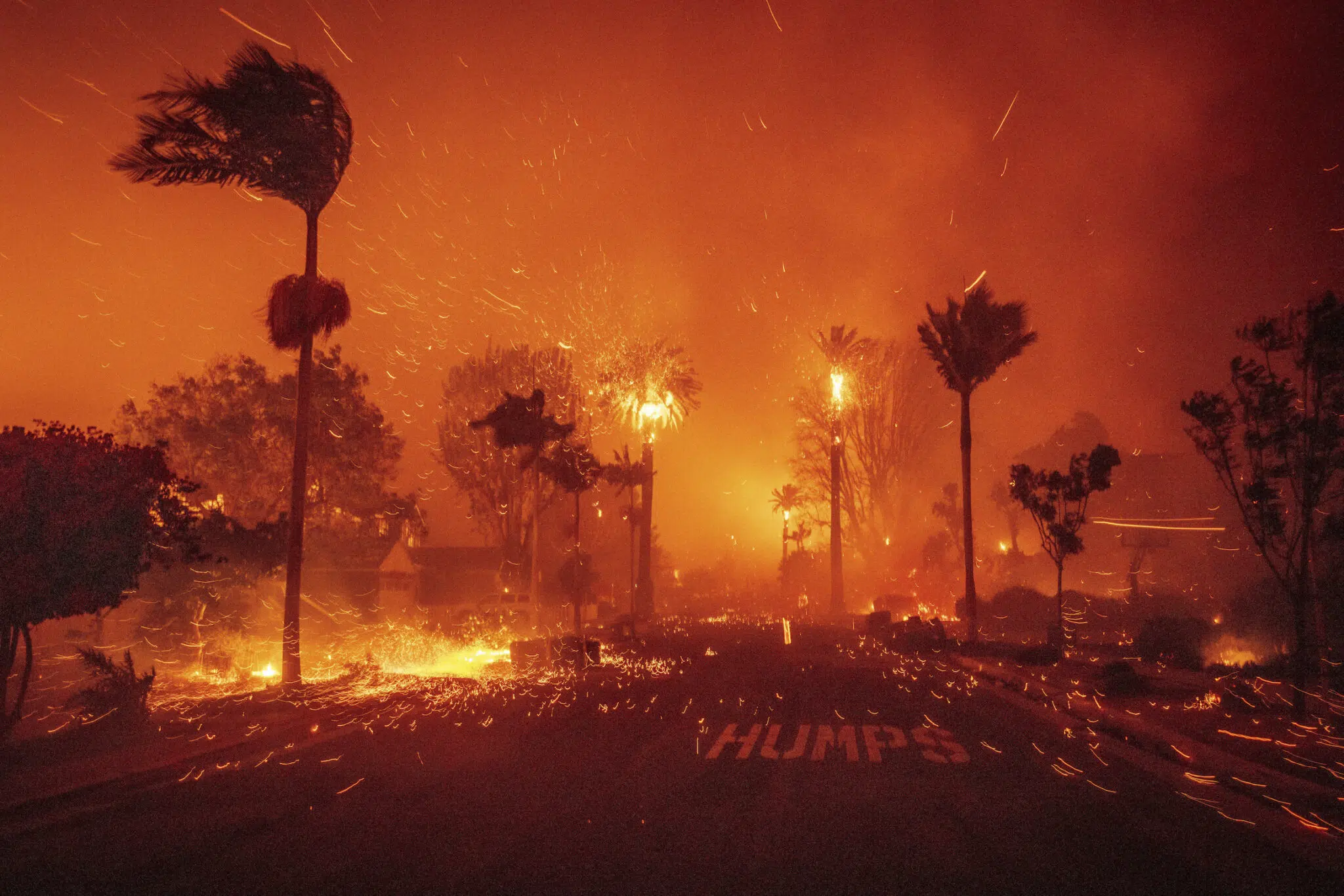
Ethan Swope, “Los Angeles on Fire,” for the Associated Press. The Palisades Fire ravages a neighborhood amid high winds. The Los Angeles blazes inflicted between $28 and $53.8 billion in property damage, disrupting thousands of local businesses. Los Angeles, Calif., January 7, 2025.
Photojournalists bear an outstanding, if not essential, duty: to document the world with clarity, accuracy, and, perhaps above all else, humanity. That ethos sits at the heart of World Press Photo’s annual competition, which provides an urgent visual record of life across almost every continent through photojournalism. Now, the nonprofit organization has officially announced the winners of its 2026 World Press Photo Contest, meticulously selected from more than 57,000 images submitted across 141 countries.
This year’s recipients have encountered everything from political revolution, climate change, and armed conflict to cultural traditions, socioeconomic disparities, and illness. Through these documentary stories, we contend with the aftermath of the 2025 Bondi Beach shootings; a polar bear preparing to devour a sperm whale’s carcass; a wedding that, despite intense floods and severe weather in the Philippines, carried on as planned; the wildfires that tore through Los Angeles and Spain last year; and the protests that unfurled across Madagascar over failing public services, corruption, and economic hardship. Taken together, each entry expertly distills the events, people, landscapes, and conditions that impact us and the resilience we must summon in response.
“This is a critical moment—for democracy, for truth, for the question of what we as a society are willing to see and call out and what we are willing to ignore,” Kira Pollack, the contest’s 2026 global jury chair, remarked in a statement. “The photographers recognized here have done their part. They have made the record. Now it is our turn to look.”
There is undoubtedly a lot to confront throughout these photographs. César Rodríguez’s Mexico, A Changing Climate, for instance, captures the environmental disasters that have ravaged the country over the last two decades, leading to vanishing coastlines, water shortages, increased flooding, and forest fires. Saher Alghorra’s Witnessing Gaza, on the other hand, catalogs the ongoing genocide in Gaza due to Israeli occupation, under which Palestinians have endured starvation, famine, and relentless bombardment. While working on this story for The New York Times, Alghorra endured immense danger and bore witness to a death toll that has now surpassed 75,000.
“Even when everything around me told me to stop, I couldn’t,” the photographer said of the experience. “Silence would mean surrender.”
In Sweden, Sanna Sjöswärd explores severe anorexia and poor treatment options through Engla Louise, a former dancer who, after decades of treatment, is now considered therapy-resistant and receives palliative care at home. In Hong Kong, Tyrone Siu reports on the devastating fire at the Wang Fuk Court housing complex, immortalizing the moment in which a man cries out in anguish after exchanging what would be his final words with his wife trapped inside the building. And in New York, Carol Guzy navigates the traumatic family separations at the hands of mass deportation operations carried out by ICE.
This is a mere glimpse into the wide-ranging stories celebrated by this year’s World Press Photo Contest. Discover more winners from this year’s competition below.
The winners of the 2026 World Press Photo Contest confront climate change, political revolution, armed conflict, illness, socioeconomic disparity, and, above all, resilience through photojournalism.
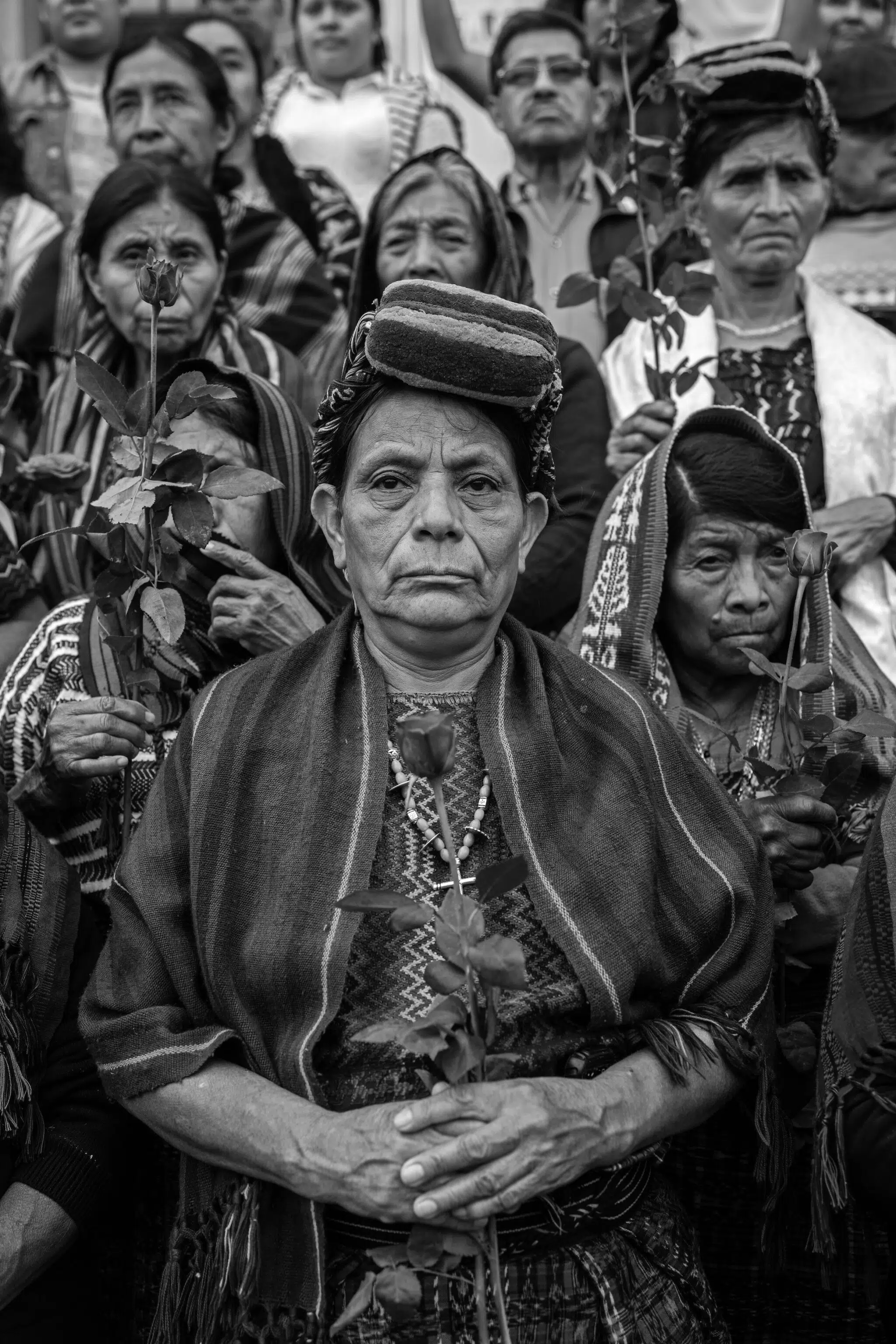
Victor J. Blue, “The Trials of the Achi Women,” for the New York Times Magazine. Doña Paulina Ixpatá Alvarado stands with other Achi women outside a Guatemala City court. That afternoon, three ex-civil defense patrollers were found guilty of rape and crimes against humanity and sentenced to 40 years in prison each. Guatemala City, Guatemala, May 30, 2025.
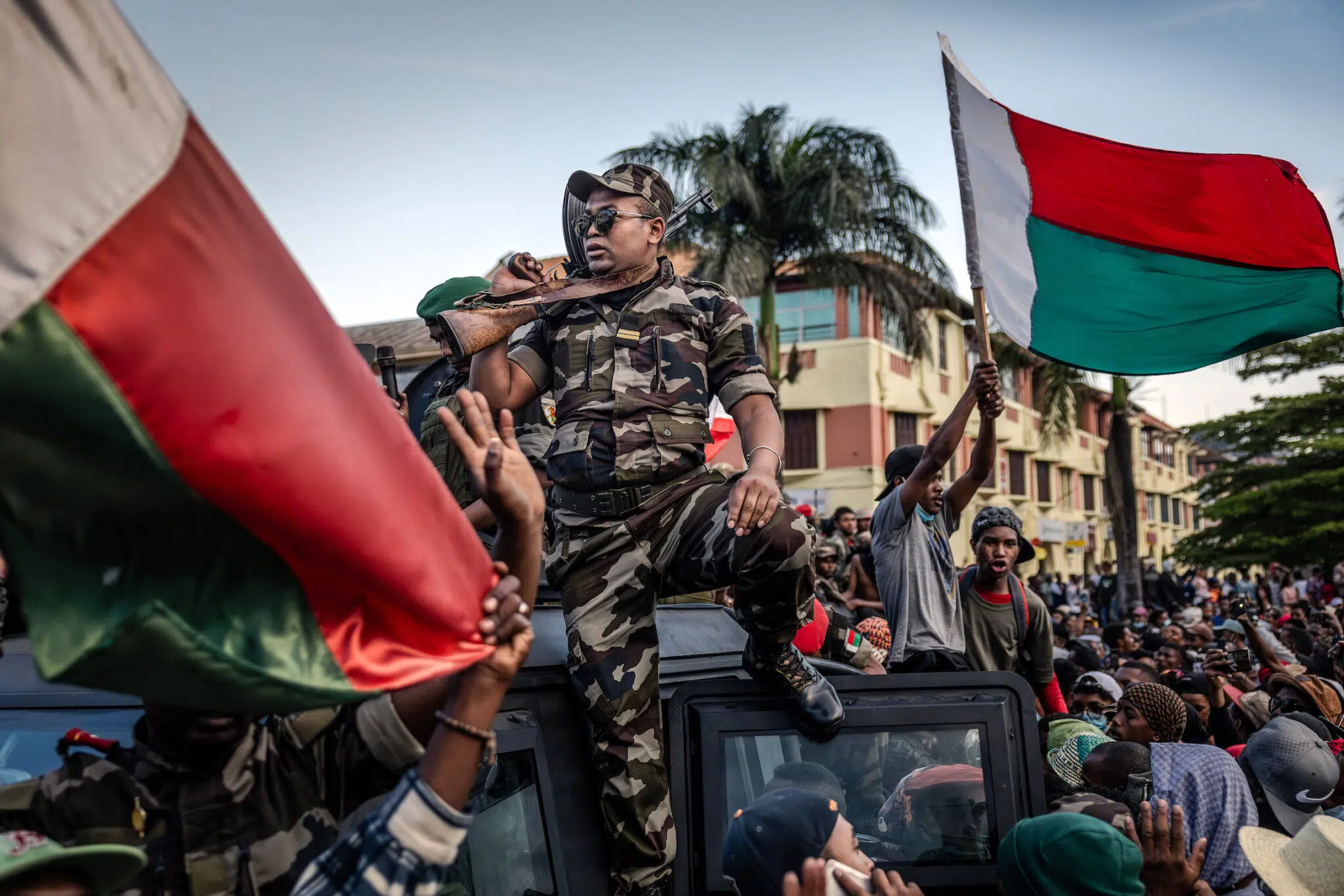
Luis Tato, “Madagascar’s Gen Z Protests,” for Agence France-Presse. Protesters cheer and wave flags outside City Hall as members of the CAPSAT military unit ride on an armored vehicle. Antananarivo, Madagascar, October 11, 2025.
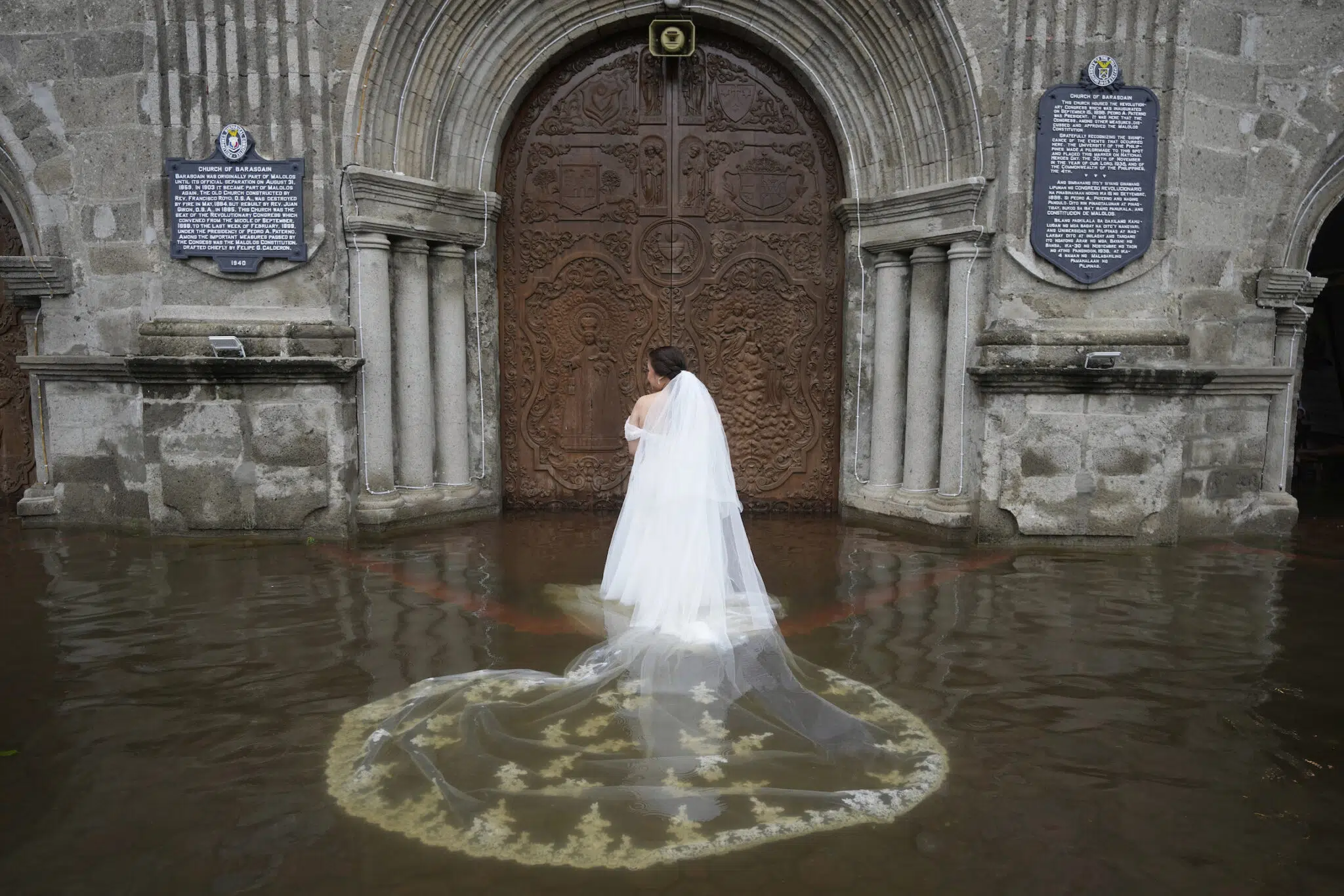
Aaron Favila, “Wedding in the Flood,” for the Associated Press. When Typhoon Wipha hit the Philippines and flooded Barasoain Church, Jade Rick Verdillo and Jamaica Aguilar faced a difficult decision: should they cancel their wedding or proceed with the marriage? The couple carried on despite high waters, a testament to love and resilience in the face of severe weather. Malolos, Bulacan province, Philippines, July 22, 2025.
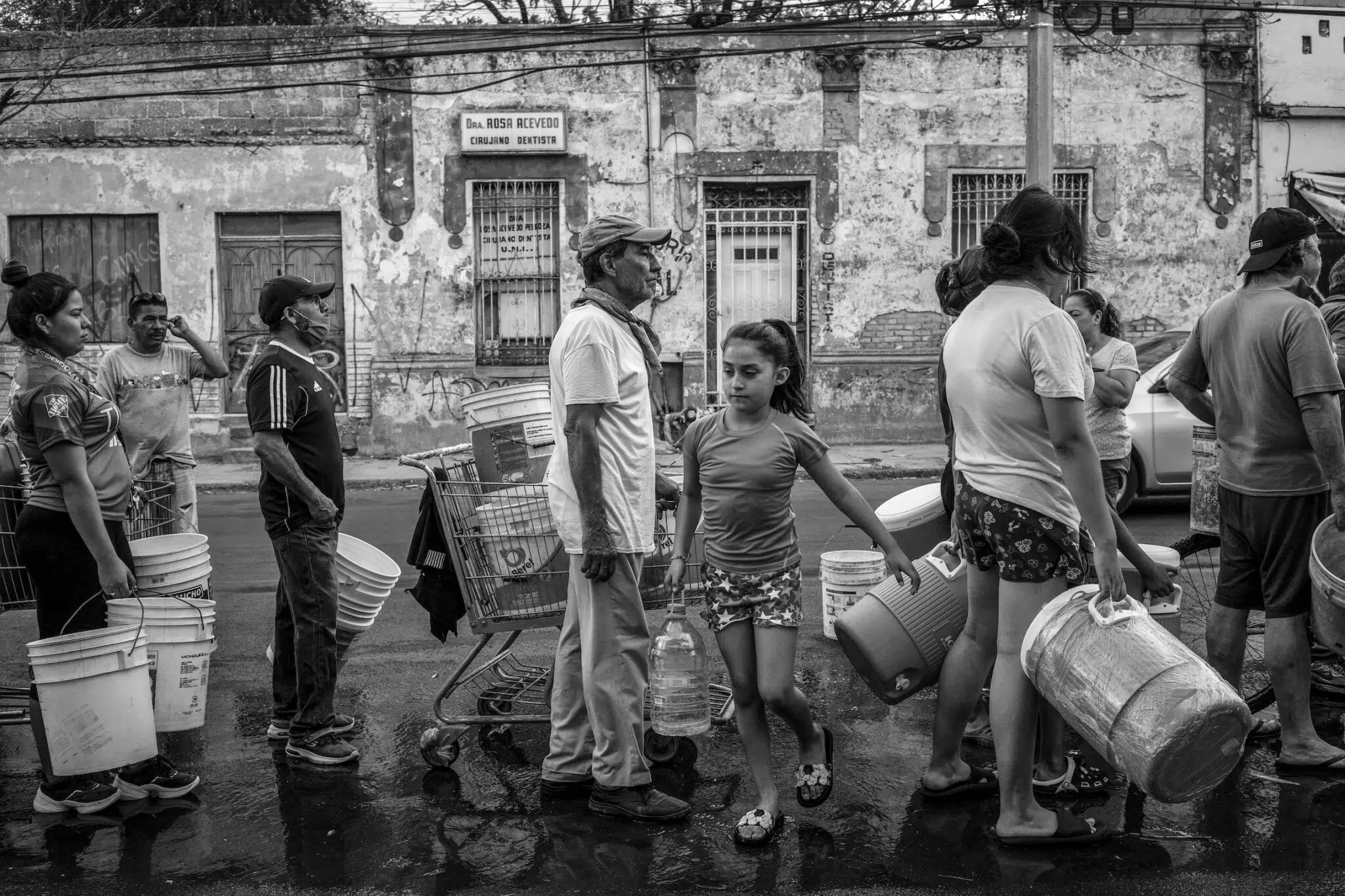
César Rodríguez, “Mexico, A Changing Climate,” for the New York Times. Residents in Monterrey line up for water. Some blocked streets to demand water service. In response, large trucks delivered water daily to the city’s most vulnerable neighborhoods. Nuevo Leon, Mexico, June 21, 2022.
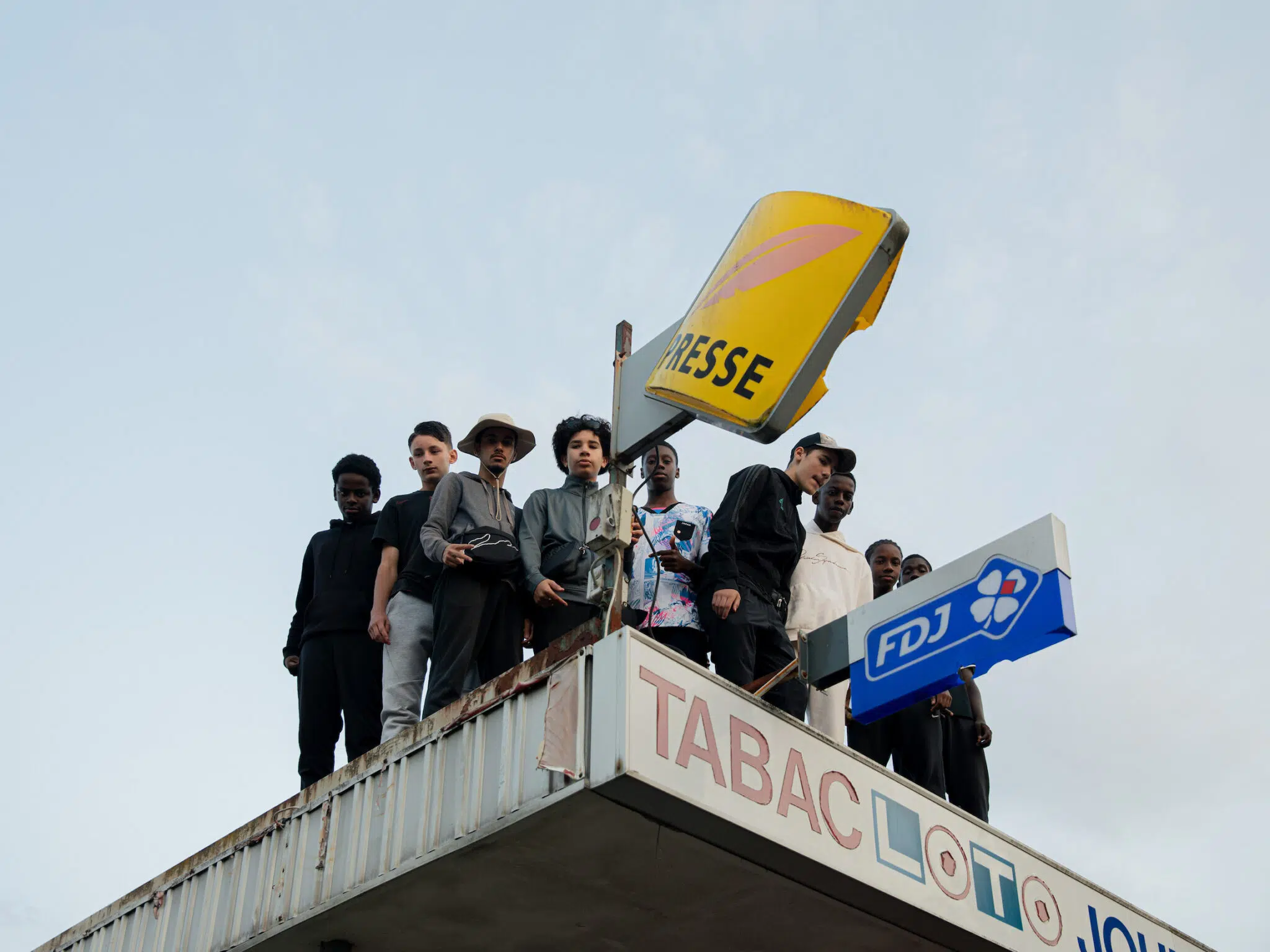
William Keo, “Extramuros,” for Die Zeit. Young men gather on a rooftop in the Briques Rouges, one of Verneuil-sur-Seine’s largest social housing projects. France, July 21, 2023.
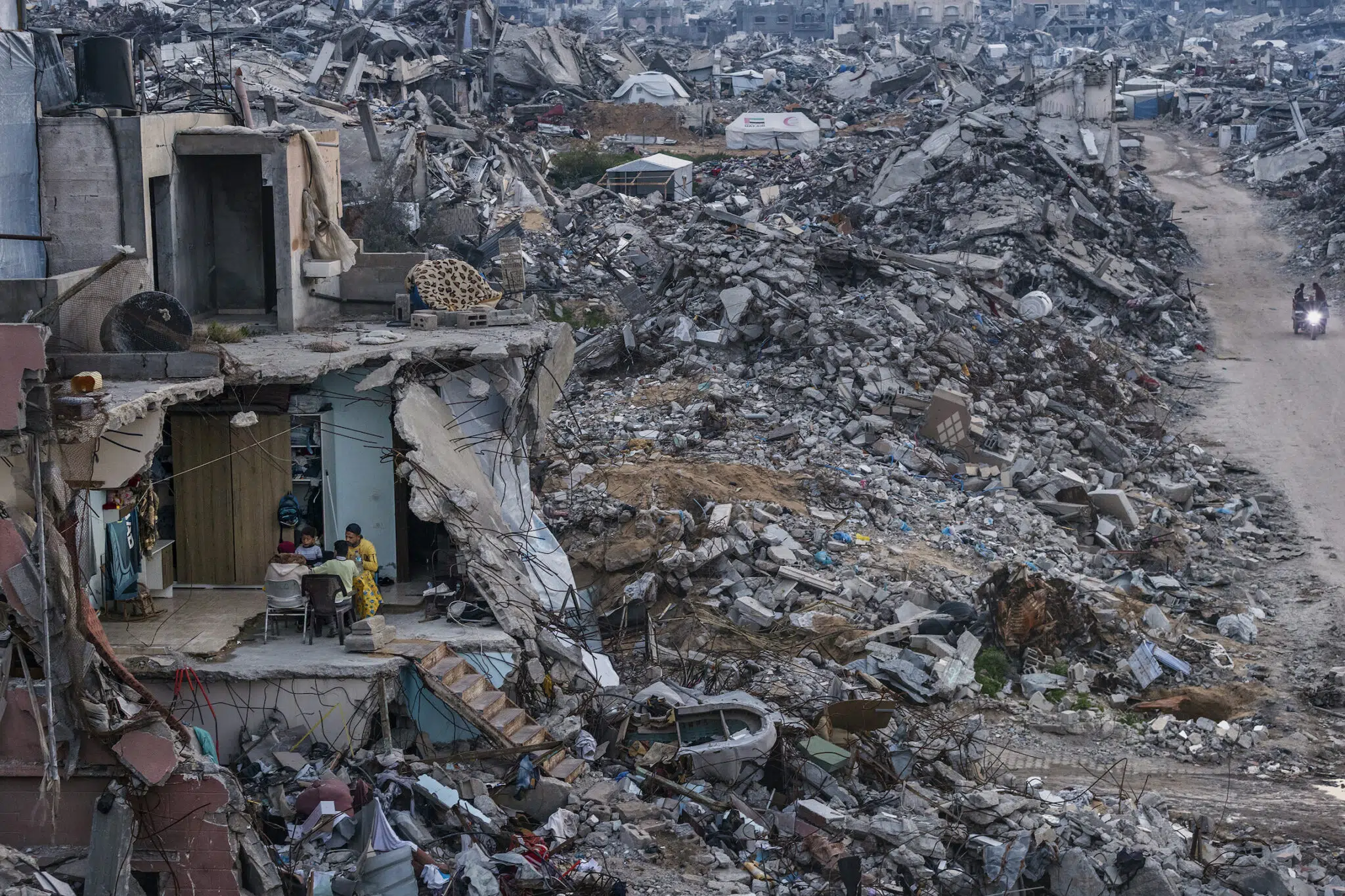
Saher Alghorra, “Witnessing Gaza,” for the New York Times. Tamer Hassan al-Shafei and his family break their Ramadan fast in the remains of their home. Food shortages meant only basics were served instead of the usual spread. Beit Lahia, Gaza Strip, March 4, 2025.
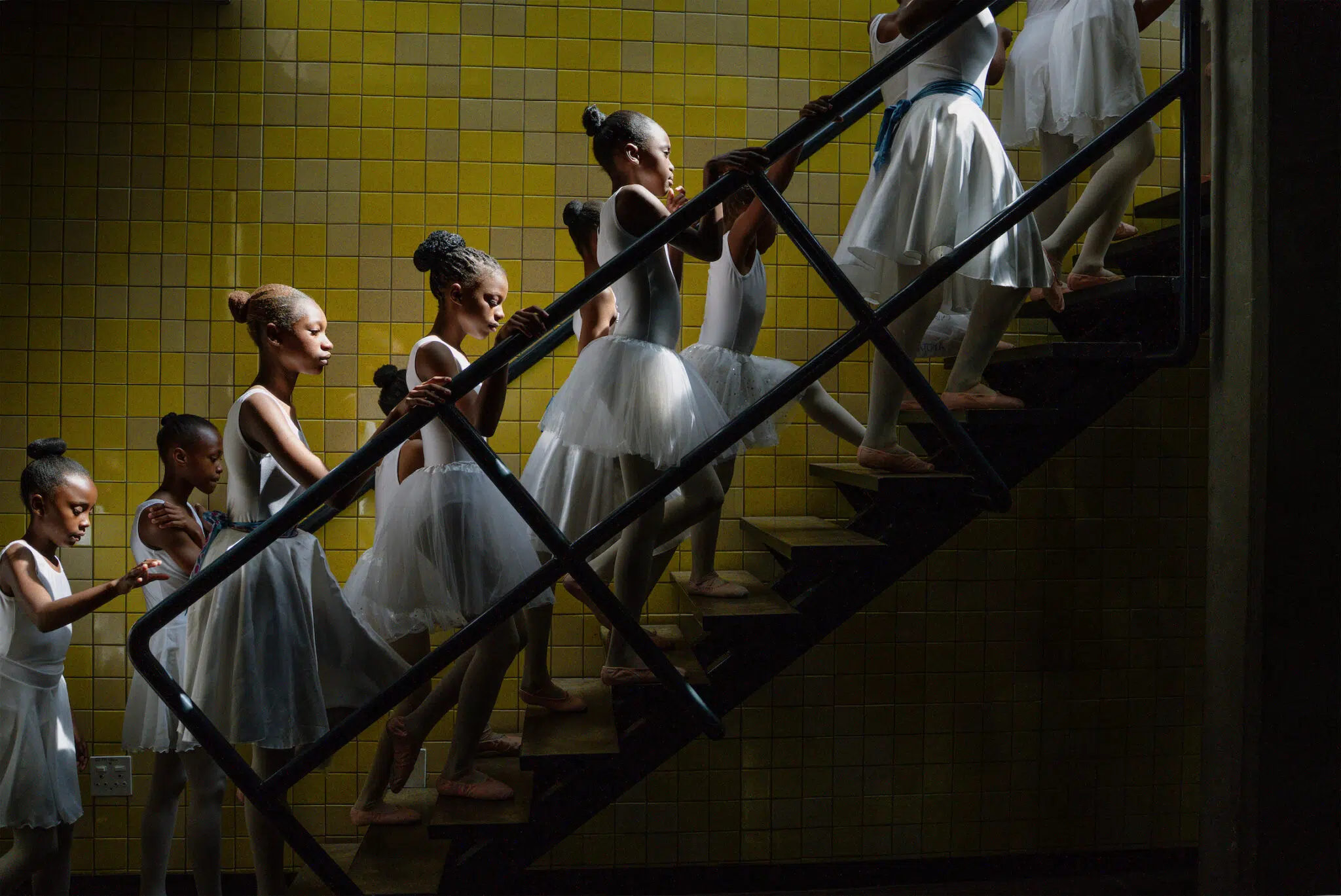
Ihsaan Haffejee, “Joburg Ballet School,” for GroundUp. Young dancers from the Joburg Ballet School backstage at the Soweto Theatre during their year-end performance. Soweto, South Africa, December 7, 2025.
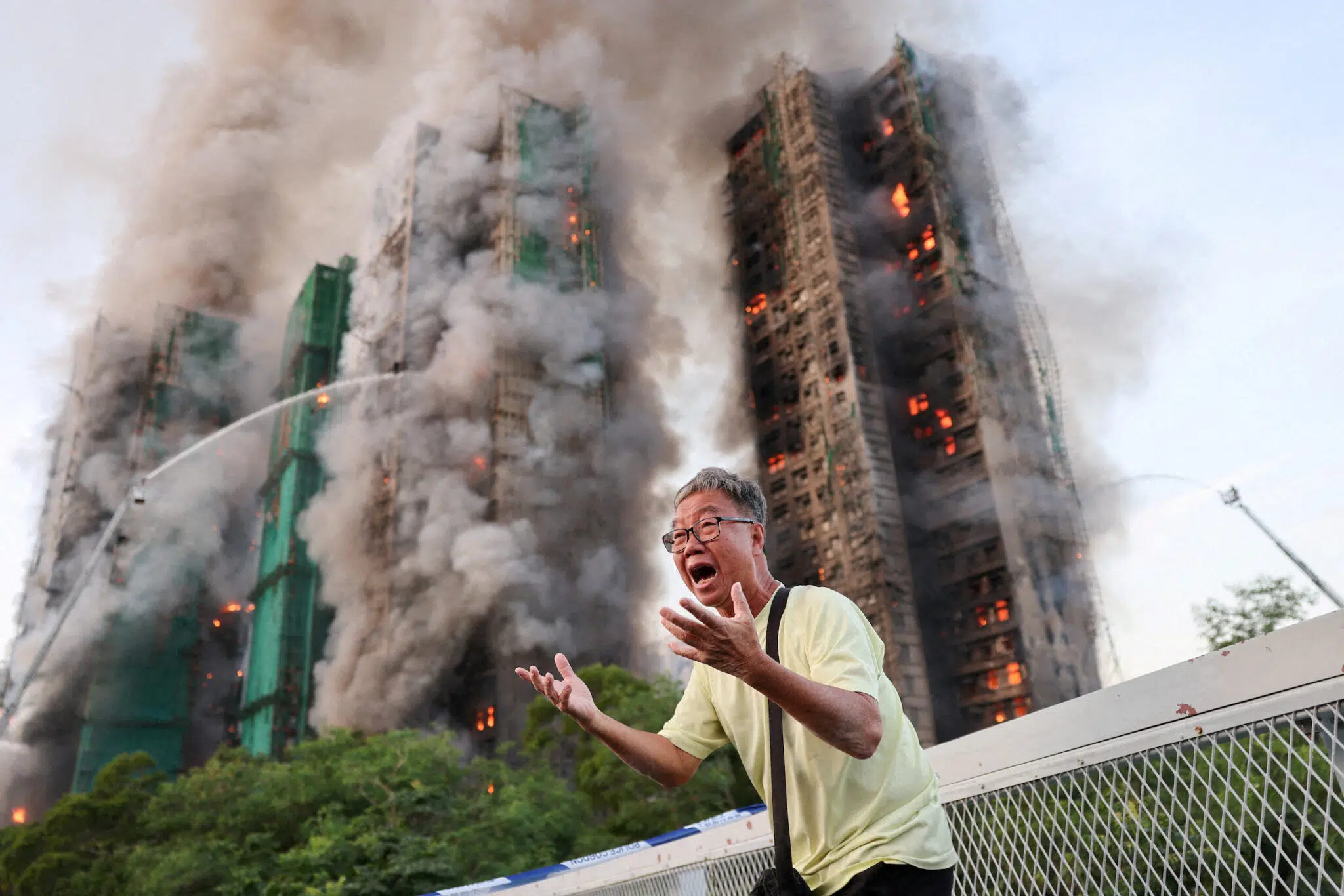
Tyrone Siu, “A Desperate Plea,” for Reuters. Mr. Wong cries out in anguish as fire engulfs the Tai Po housing complex he calls home. Moments earlier, he phoned his wife, who was trapped in the building, and they exchanged what would be their final words. Hong Kong, November 26, 2025.
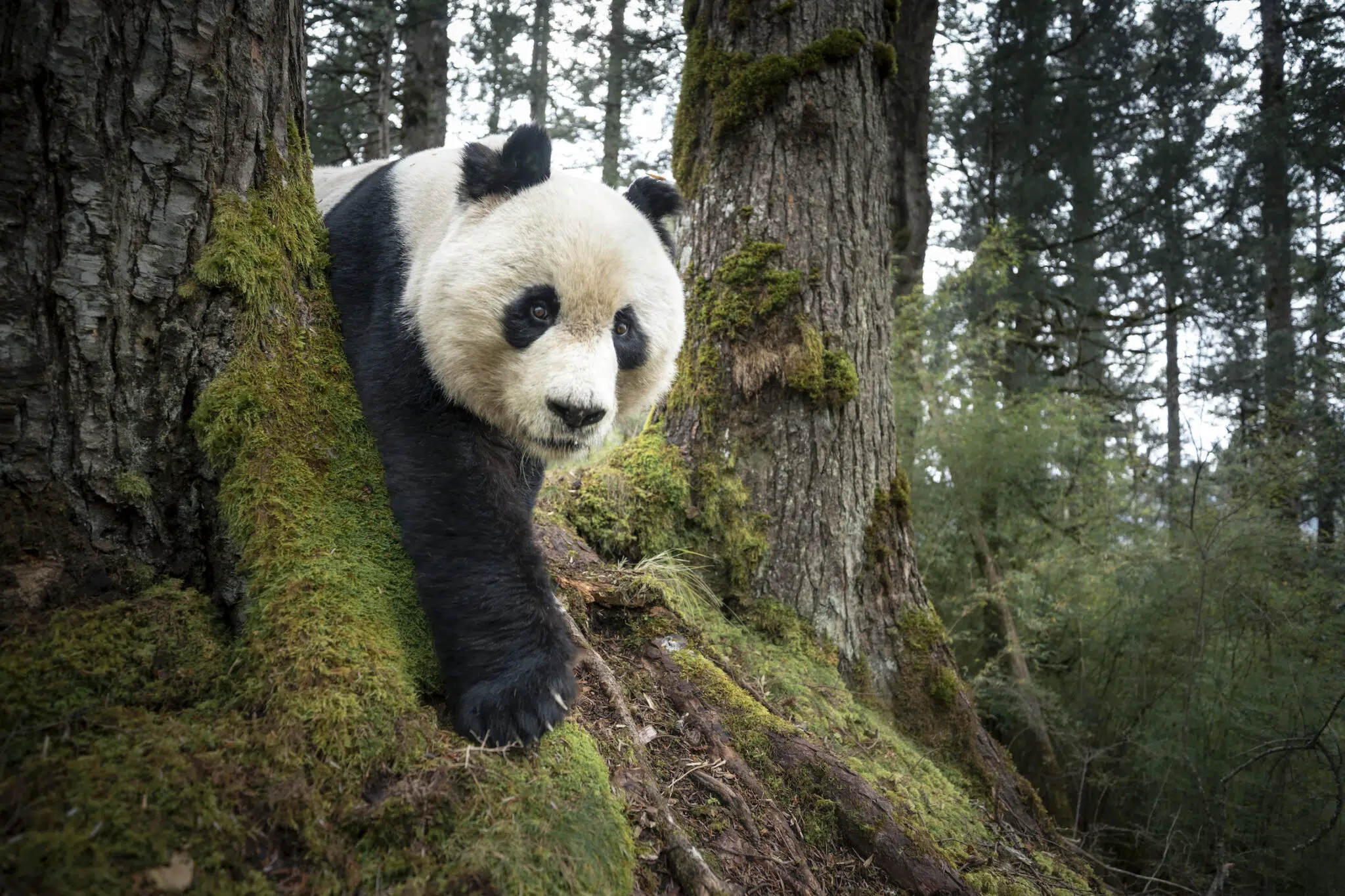
Rob G. Green, “Mountain Resident of Wanglang,” for National Geographic Society. A wild giant panda is captured by a camera trap in the Wanglang National Nature Reserve. Sichuan, China, November 11, 2025.
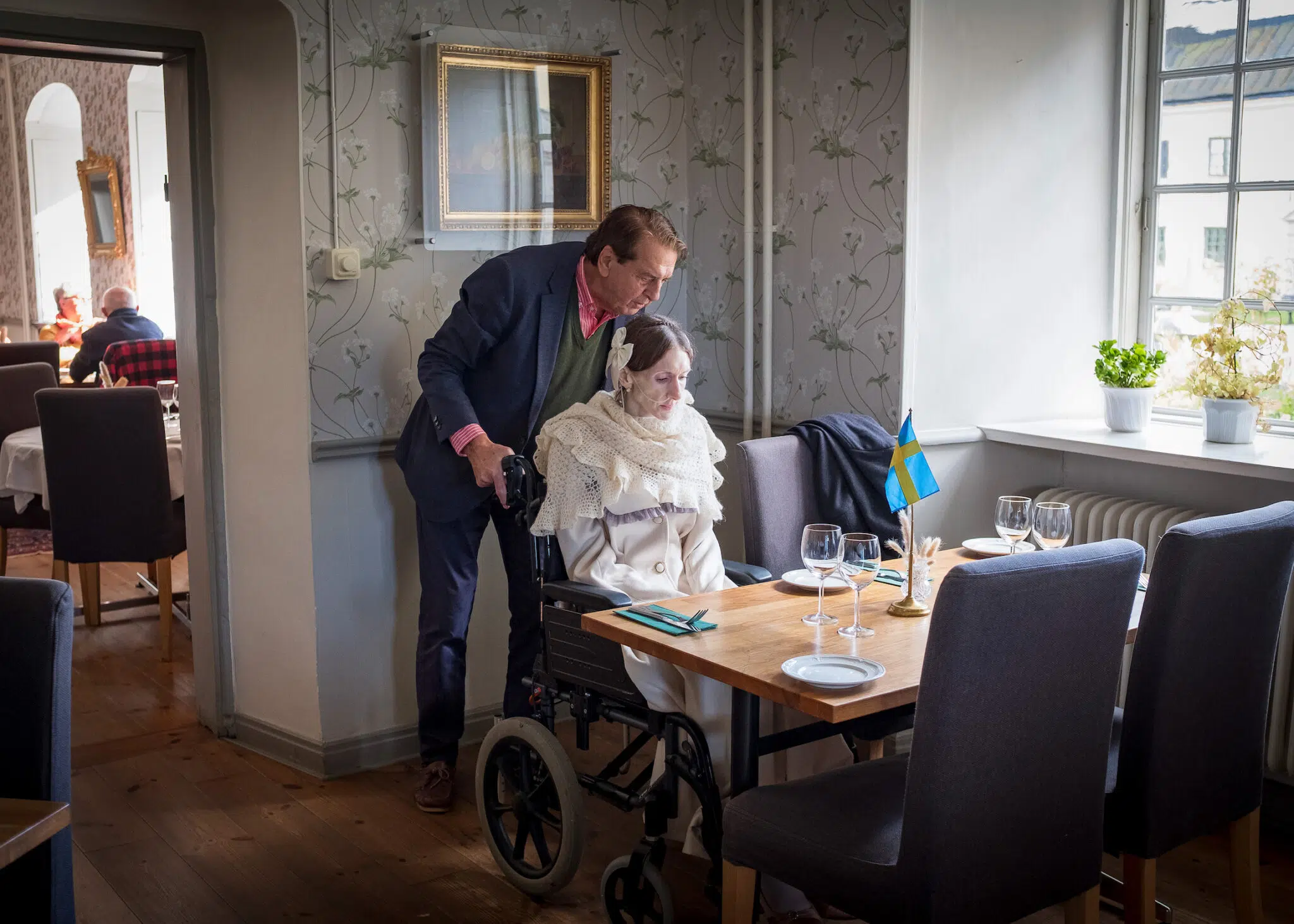
Sanna Sjöswärd, “Engla Louise,” for Corren. Engla Louise, a former dancer, has lived with severe anorexia nervosa since she was ten years old. At 46, she weighs less than 25 kilograms and has been tube-fed since 2019. After decades of treatment, Engla Louise is now considered therapy-resistant and receives palliative care at home. Norrköping, Sweden, September 28, 2025.
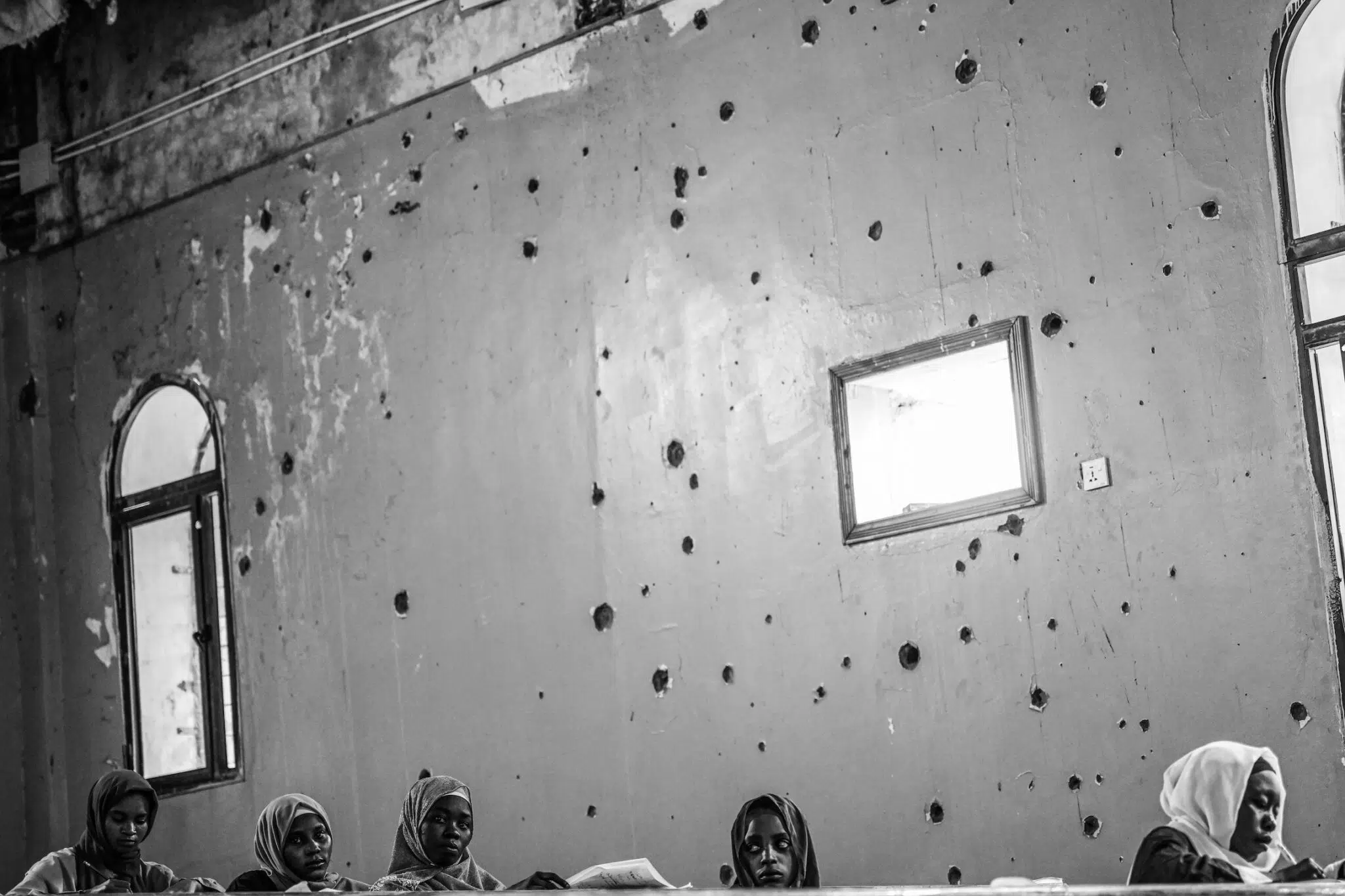
Abdulmonam Eassa, “Sudan’s War: A Nation Trapped,” for Le Monde. Students take exams at the war-damaged Omdurman Islamic University. Schools and universities have been attacked and mostly closed since fighting began. Omdurman, Sudan, December 4, 2025.
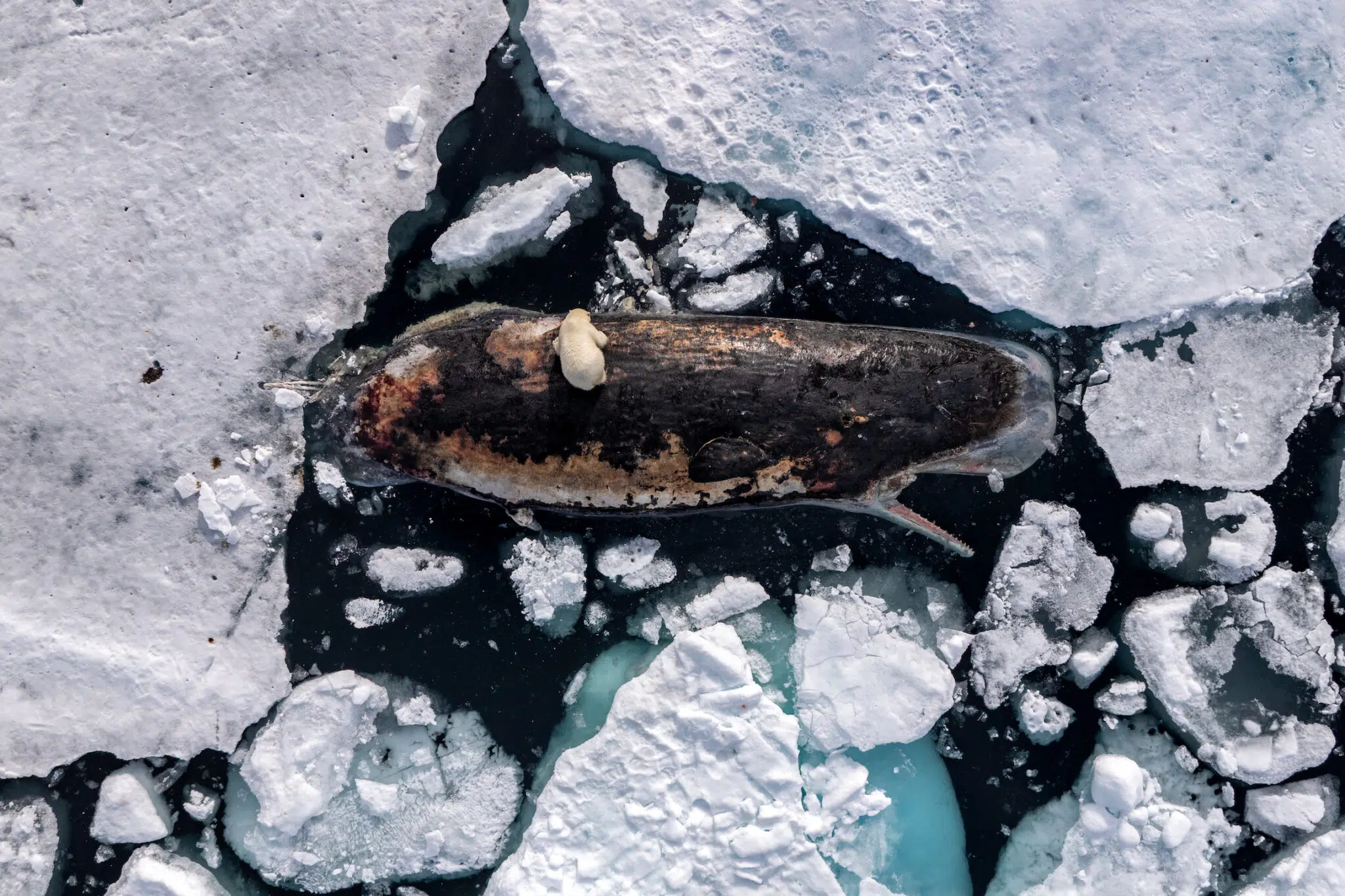
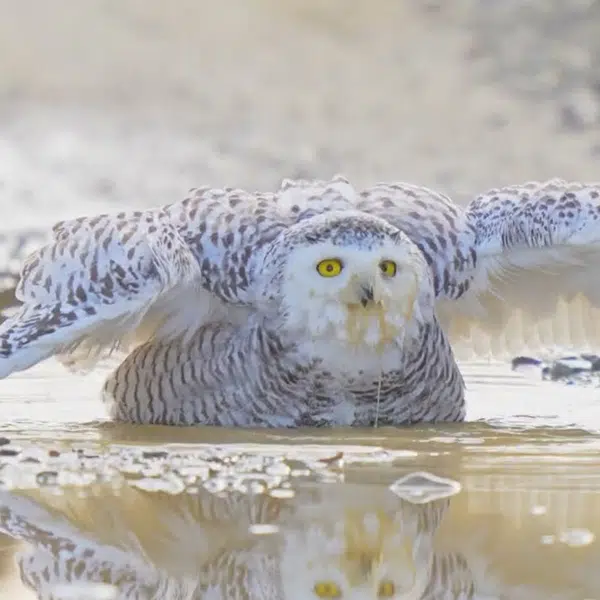
Roie Galitz, “Polar Bear on Sperm Whale.” A female polar bear feeds on a sperm whale carcass in the polar pack ice north of the Norwegian archipelago, Svalbard. 82° North, International Waters, July 8, 2025.
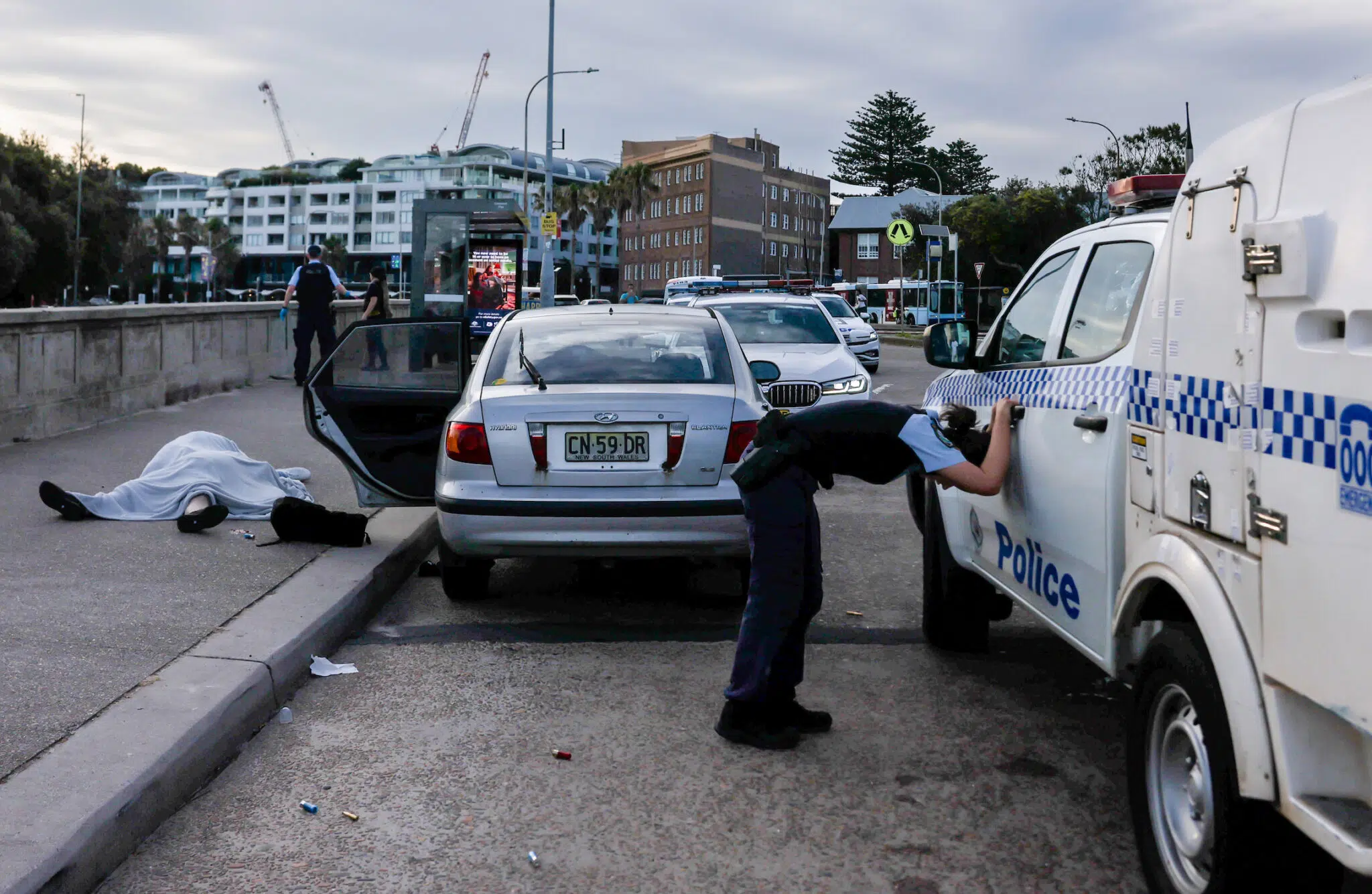
Edwina Pickles, “Bondi Beach Terror Attack,” for the Sydney Morning Herald. An overwhelmed police officer leans over near the bodies of Boris (69) and Sofia (61) Gurman. During the Bondi Beach Terror Attack, the couple were killed while attempting to disarm one of the shooters. Sydney, Australia, December 14, 2025.
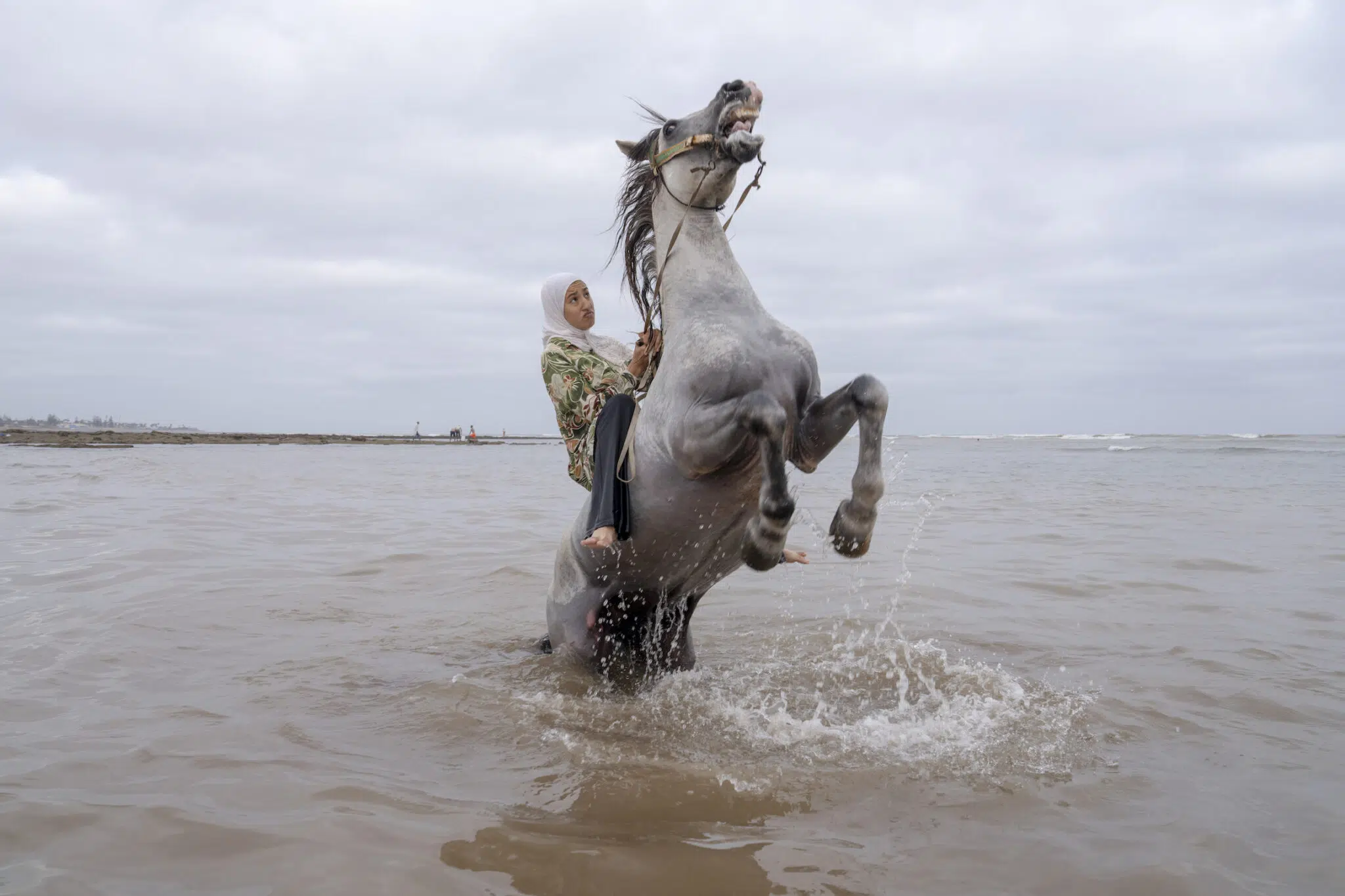
Chantal Pinzi, “Farīsāt: Gunpowder’s Daughters,” for Panos Pictures. Ghita Jhiate manages her unruly stallion. Long forbidden by her father to participate in Tbourida, she finally realized her dream of riding alongside pioneer Zahia Aboulait in 2025. Sidi Rahal, Morocco, August 6, 2025.
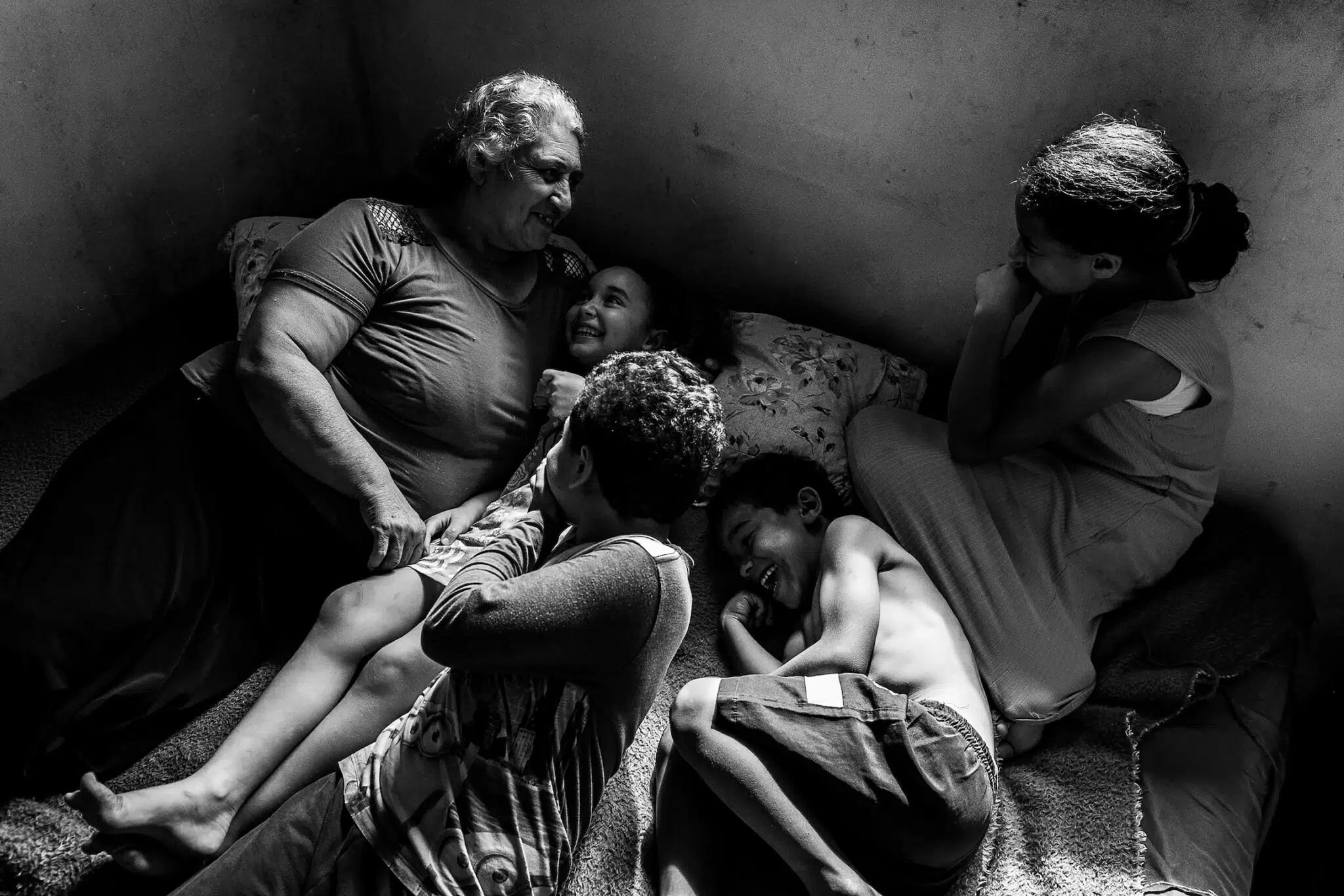
Priscila Ribeiro, “A Territory of Hope.” In the city of Colombo, Brazil, the Parque dos Lagos occupation is home to 200 families living without official access to water, sewage disposal, or electricity. Sandra Mara Siqueira rests with her grandchildren, Micael, Davi, Ana Flávia, and Vitória. Living in the Parque dos Lagos occupation since 2013, the family seeks land regularization to guarantee access to basic infrastructure. Colombo, Paraná, Brazil, November 15, 2025.
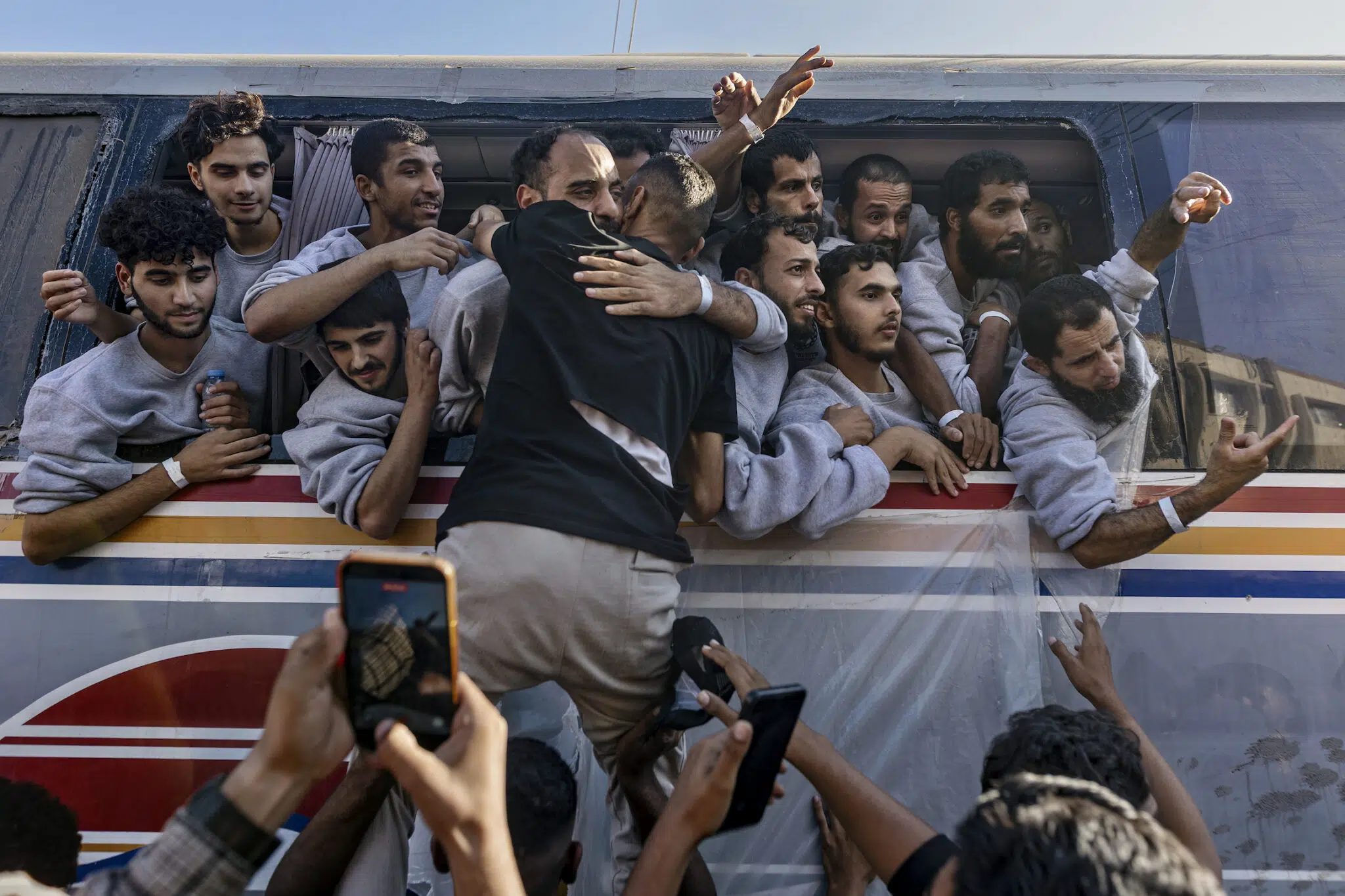
Saher Alghorra, “Witnessing Gaza,” for the New York Times. Palestinian detainees and prisoners arrive at Nasser Hospital after being released from Israeli custody as part of the ceasefire agreement. Israel freed nearly 2,000 Palestinians. Khan Younis, Gaza Strip, October 13, 2025.
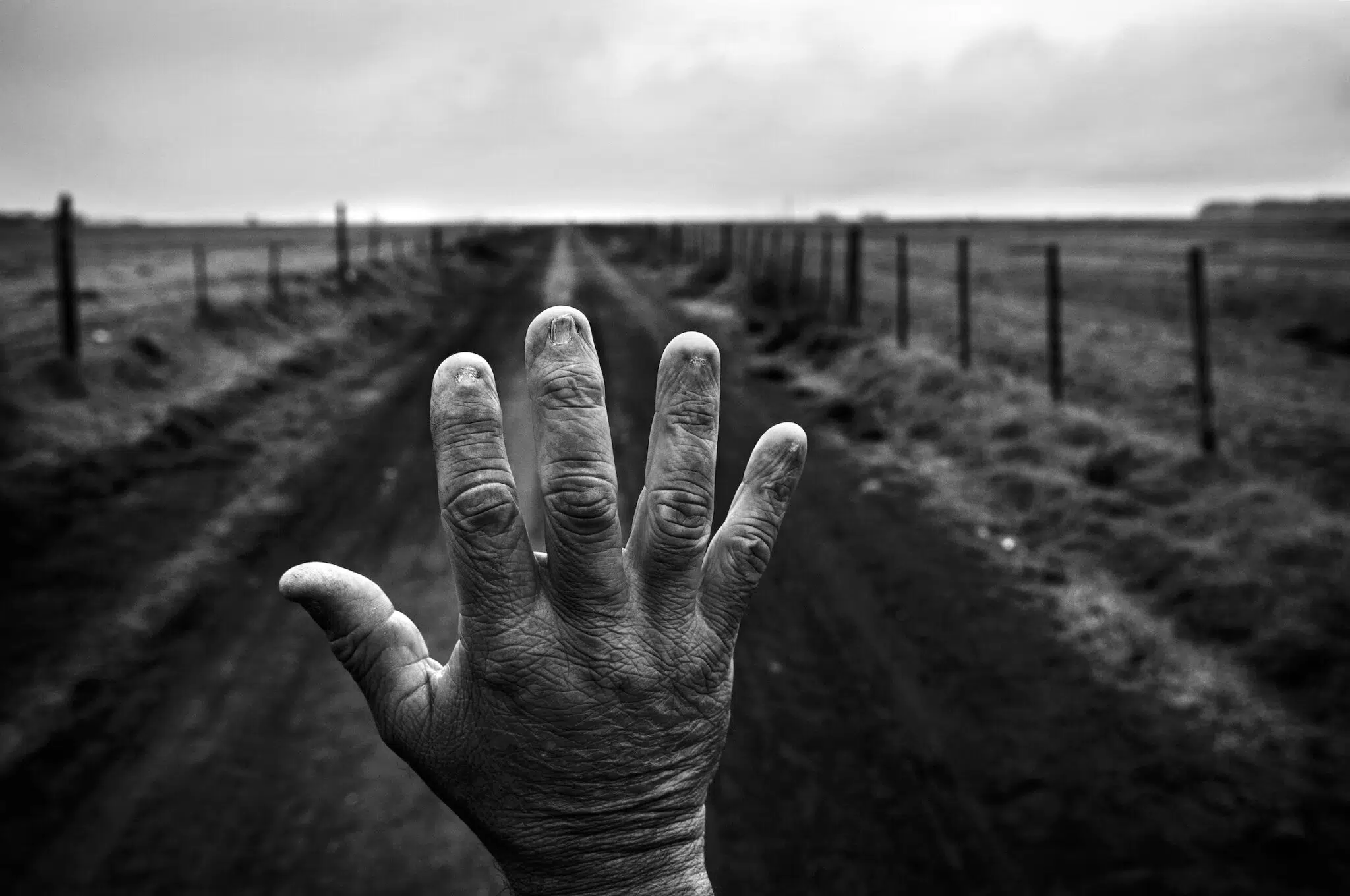
Pablo E. Piovano, “The Human Cost of Agrotoxins,” for the Manuel Rivera-Ortiz Foundation and Philip Jones Griffiths Foundation. Former land applicator Alfredo Cerán shows his burned fingernails. After years of mixing chemical products without adequate protection, he developed non-alcoholic cirrhosis and underwent a liver transplant. Cordoba, Argentina, September 23, 2015.
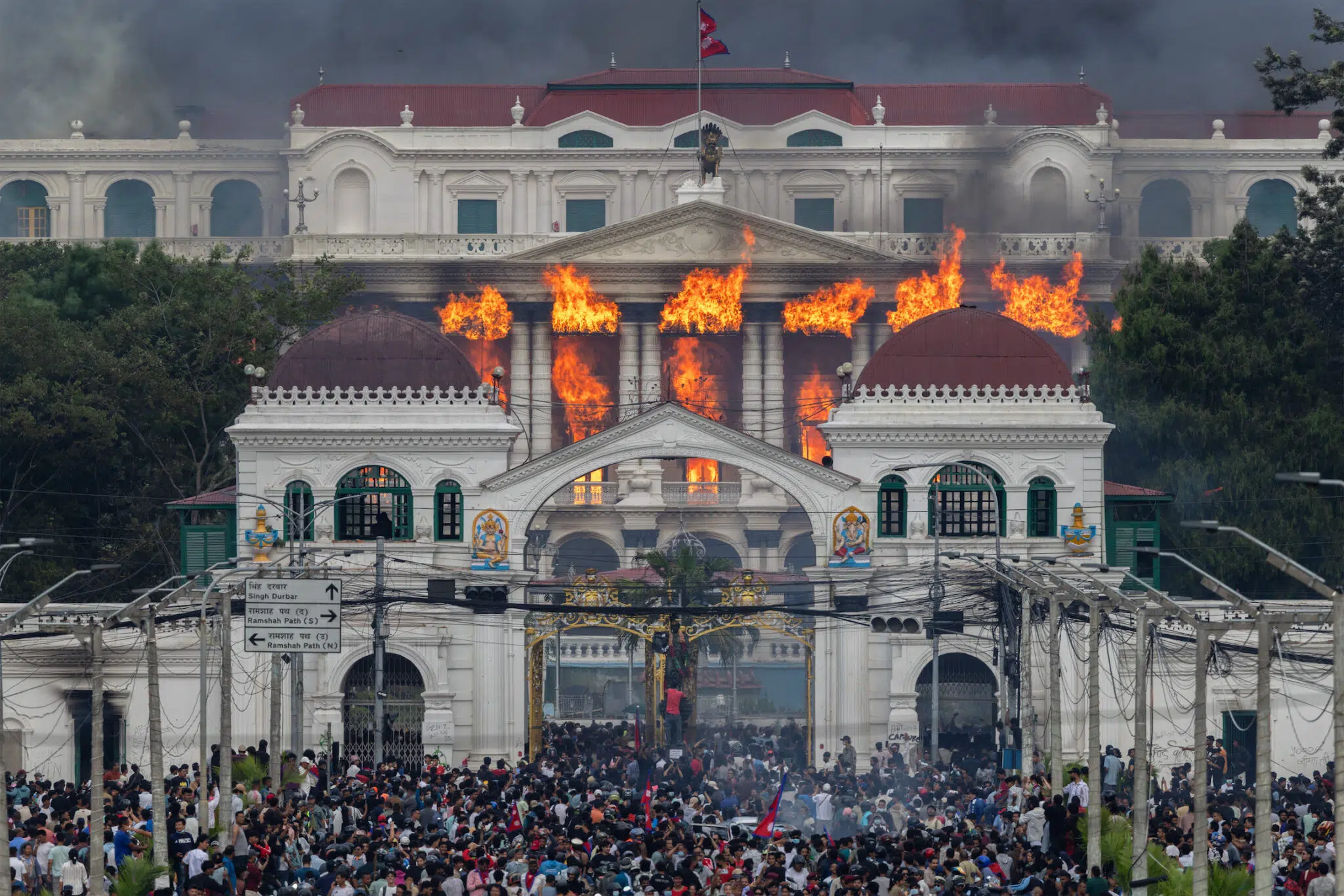
Narendra Shrestha, “Nepal’s Gen Z Uprising,” for EPA Images. Fire and smoke engulf Singha Durbar after protesters stormed and set the government complex alight during violent demonstrations. Kathmandu, Nepal, September 9, 2025.
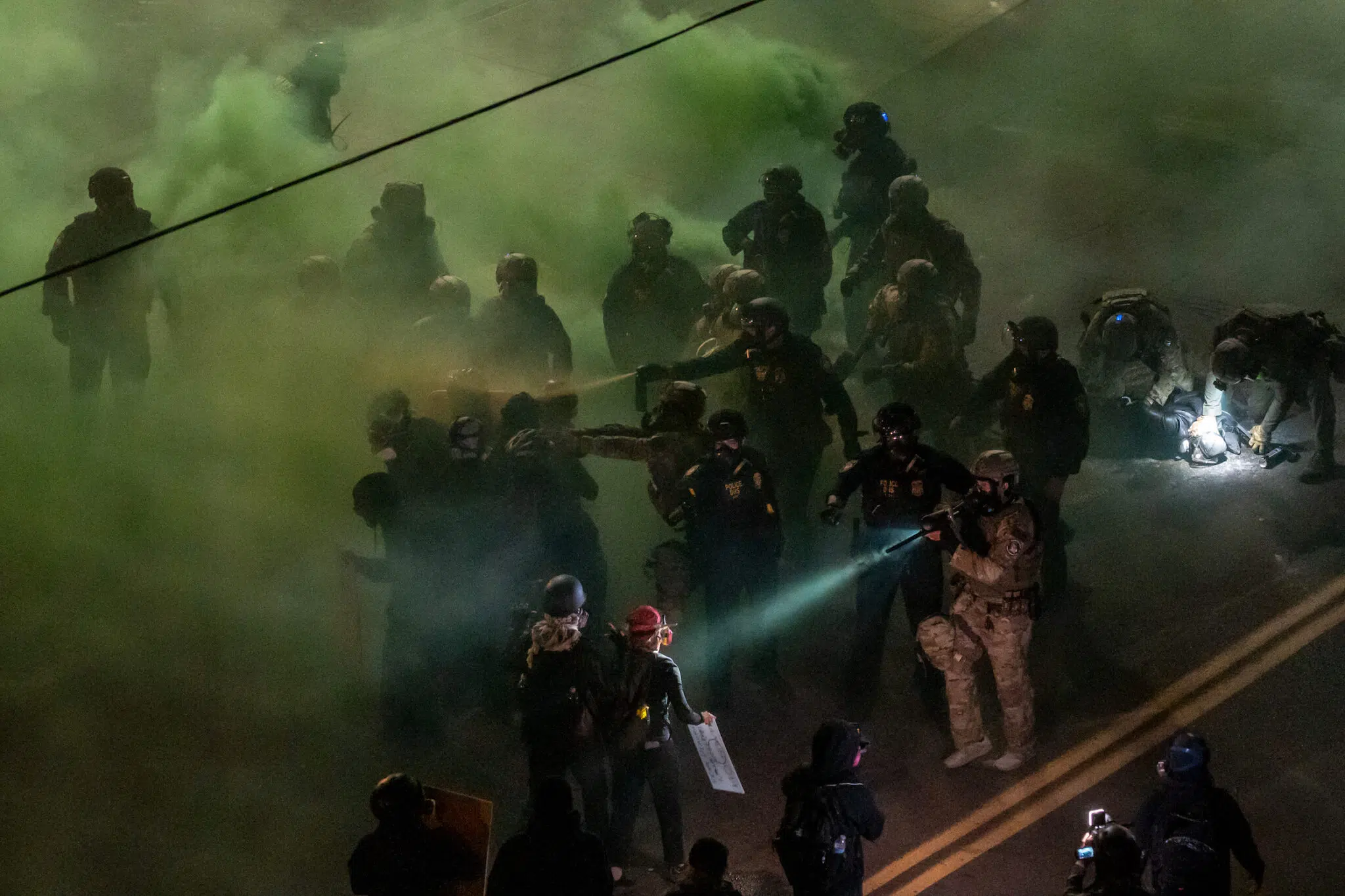
Jan Sonnenmair, “Portland Protests ICE.” Officers from the DHS and other federal agencies clash with demonstrators outside an ICE processing center. The intense summer protests centered on opposing the administration’s escalating mass-deportation agenda. Portland, Ore., June 24, 2025.
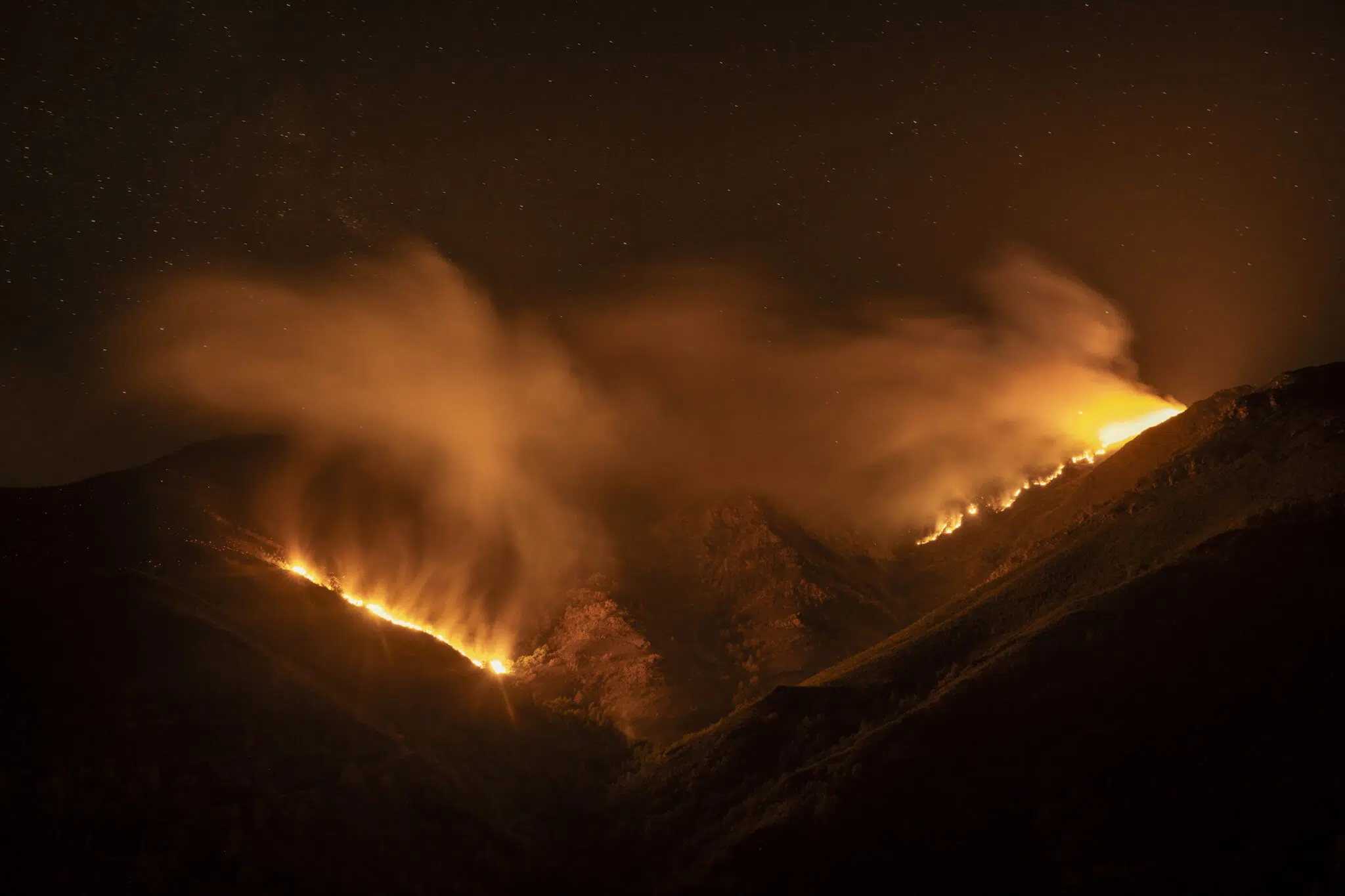
Brais Lorenzo, “Burned Land,” for El País. The Larouco wildfire, the worst in Galicia’s recorded history, burns through the night as flames reach O Courel—a mountain range of great biodiversity. Sierra de O Courel, Galicia, Spain, August 19, 2025.
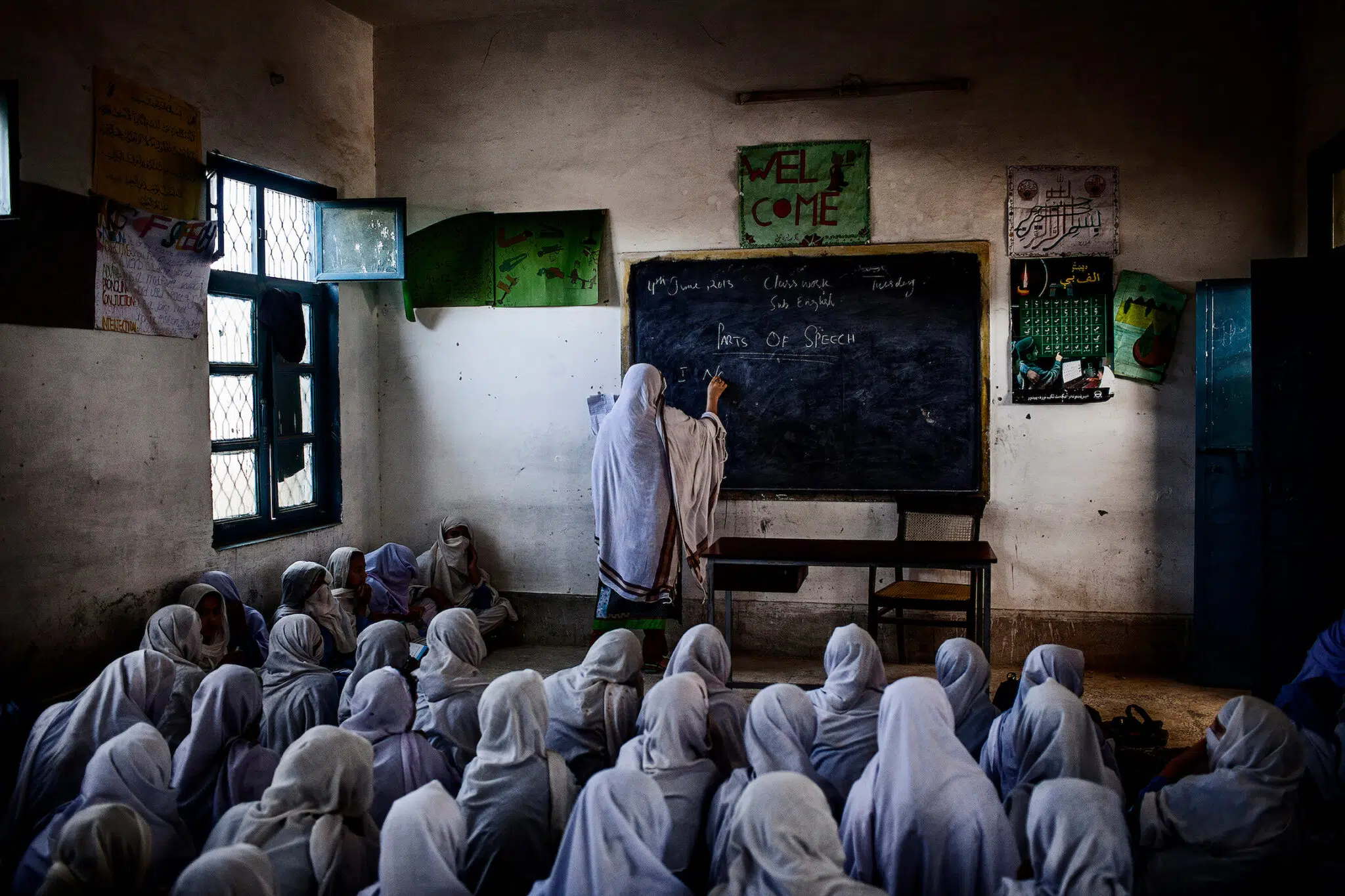
Diego Ibarra Sánchez, “Hijacked Education.” Female students attend class at their school, which was attacked by the Taliban on 21 December 2012 as part of a campaign to prevent girls from accessing education. Swabi, Khyber Pakhtunkhwa, Pakistan, June 4, 2013.
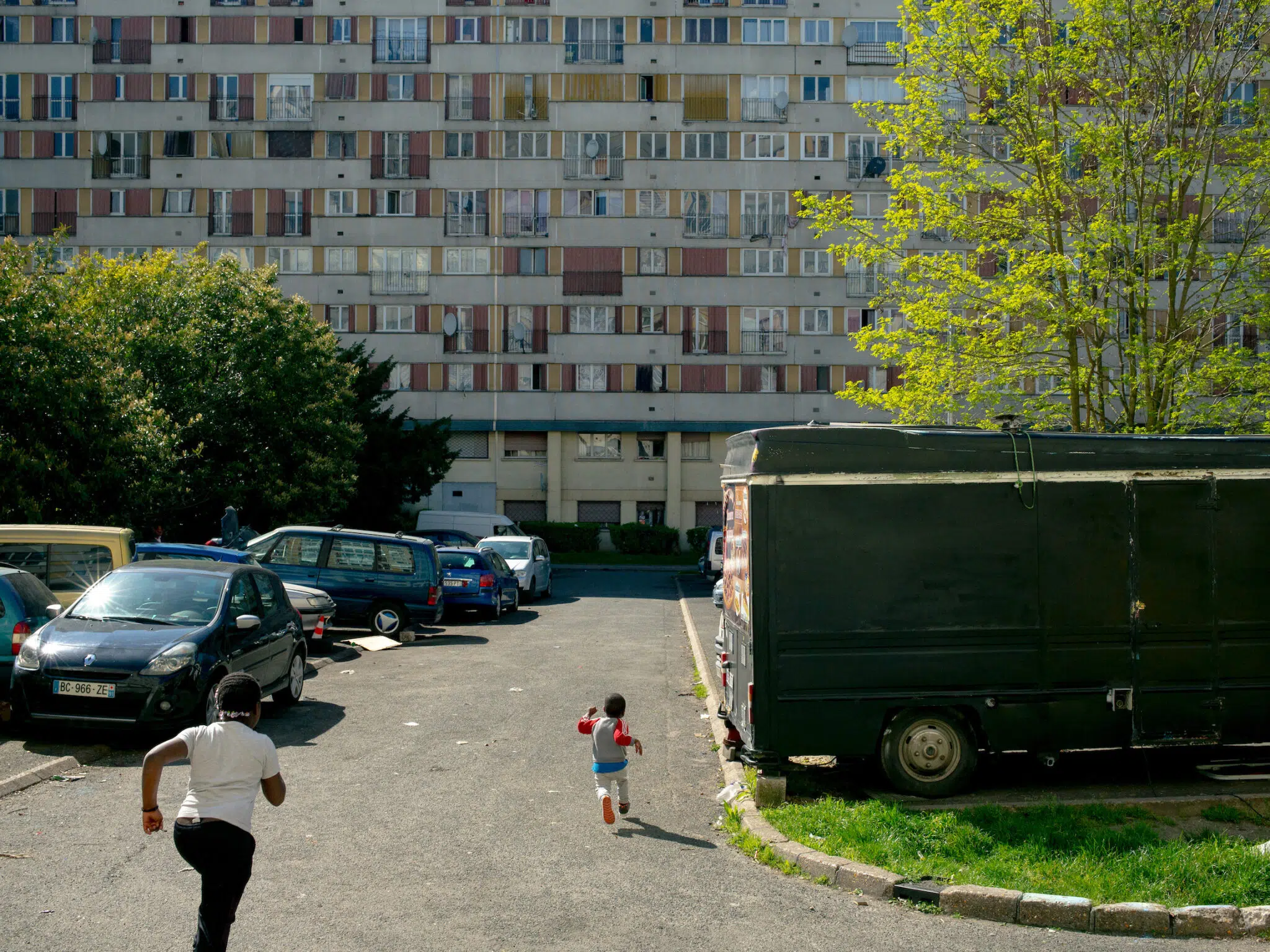
William Keo, “Extramuros,” for Die Zeit. The Chêne Pointu housing project, where riots began in 2005 following the deaths of Zyed Benna and Bouna Traoré, two teenagers of Maghrebian and West African descent who were electrocuted while fleeing police. Clichy-sous-Bois, France, April 16, 2022.
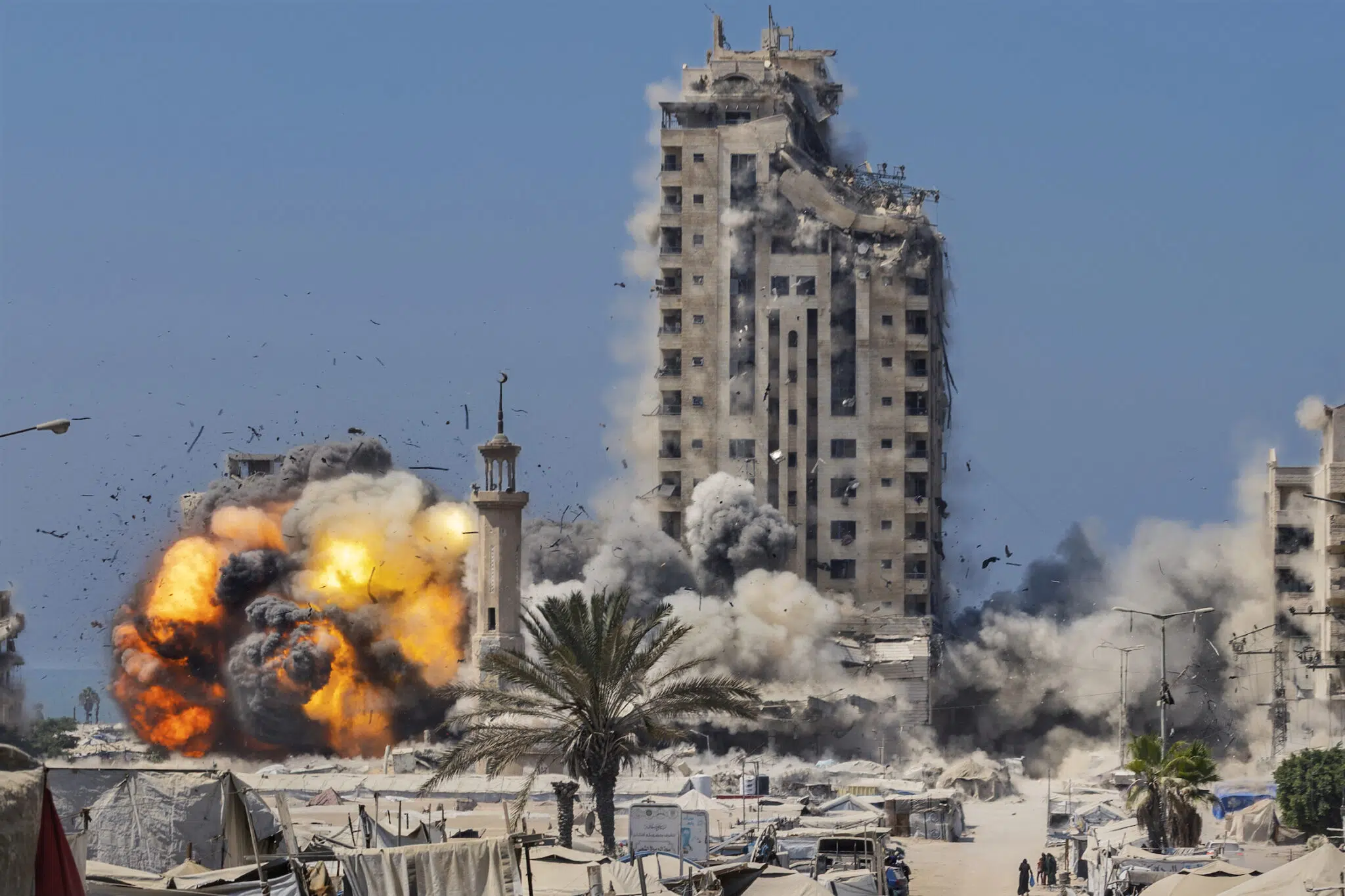
Saher Alghorra, “Witnessing Gaza,” for the New York Times. The Mushtaha Tower collapses in a military strike, amid hundreds of makeshift tents sheltering displaced Palestinians, as Israel’s offensive on Gaza City intensified. Gaza Strip, September 5, 2025.
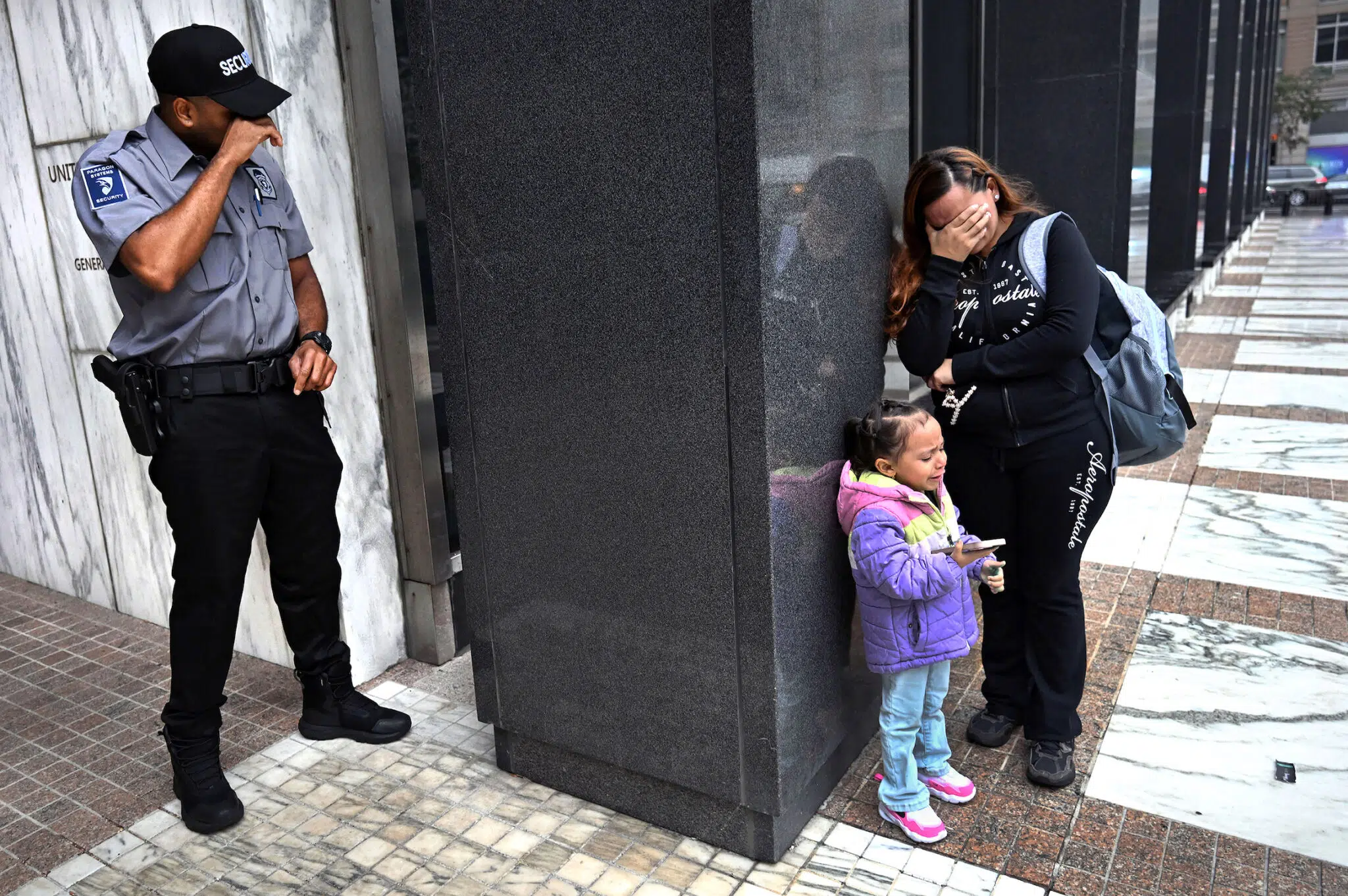
Carol Guzy, “ICE Arrests at New York Court,“ for the Miami Herald. A security guard breaks down while witnessing a family separation. Security personnel frequently find themselves caught between federal agents, desperate families, and protesters in the increasingly volatile courthouse environment. New York, N.Y., August 20, 2025.
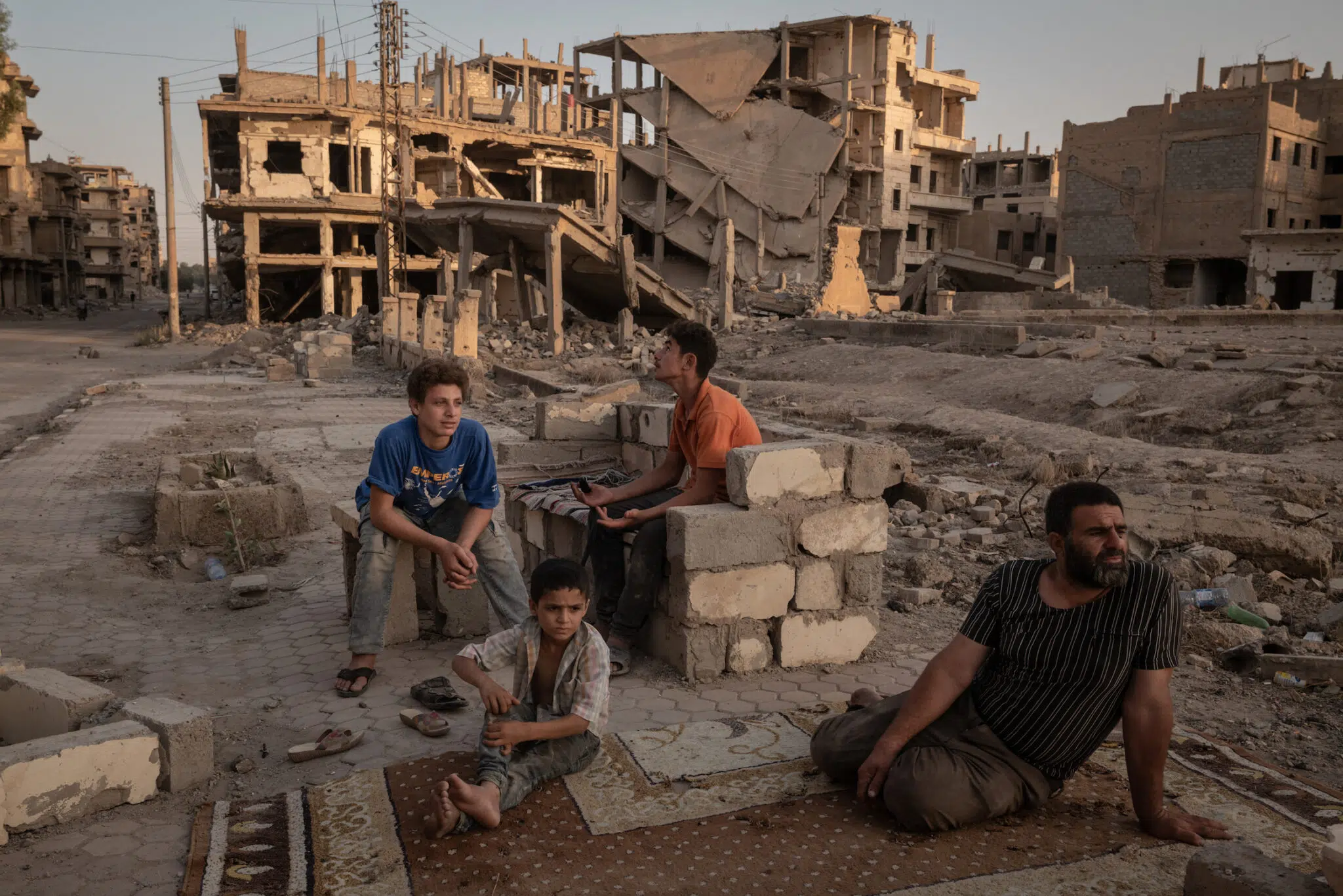
Nicole Tung, “A Syrian City Rebuilds, Still Divided,” for the New York Times. Abdelatif Daham Al Hummada (r.) sits with his sons and nephew on the street outside their heavily damaged home, where the family often sleeps. Deir al-Zour, Syria, August 20, 2025.
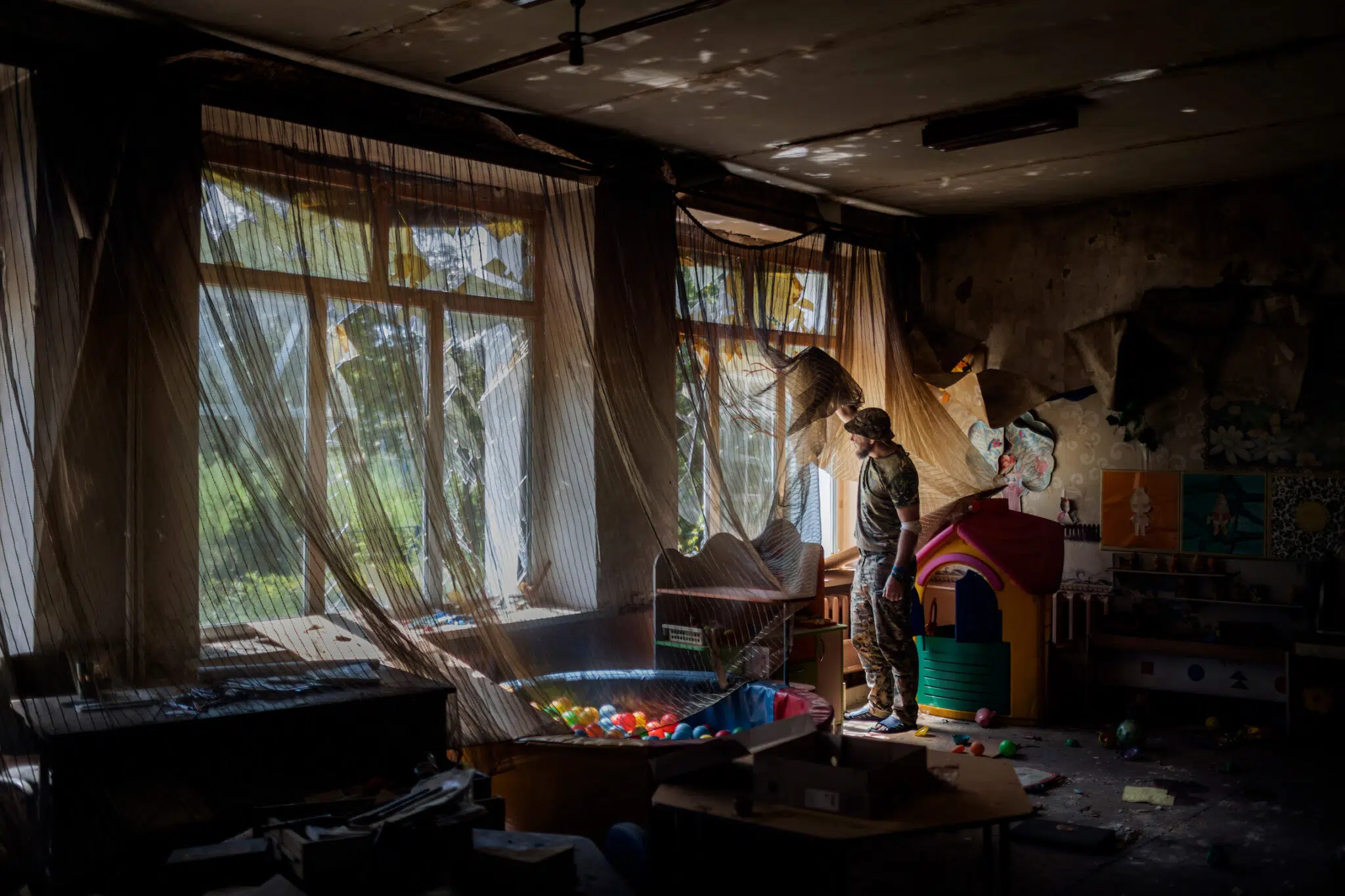
Diego Ibarra Sánchez, “Hijacked Education.” A Ukrainian soldier from the Ares battalion, 129th Territorial Defense Brigade, gazes out of a kindergarten window at the southern front. Donetsk region, Ukraine, August 2, 2023.
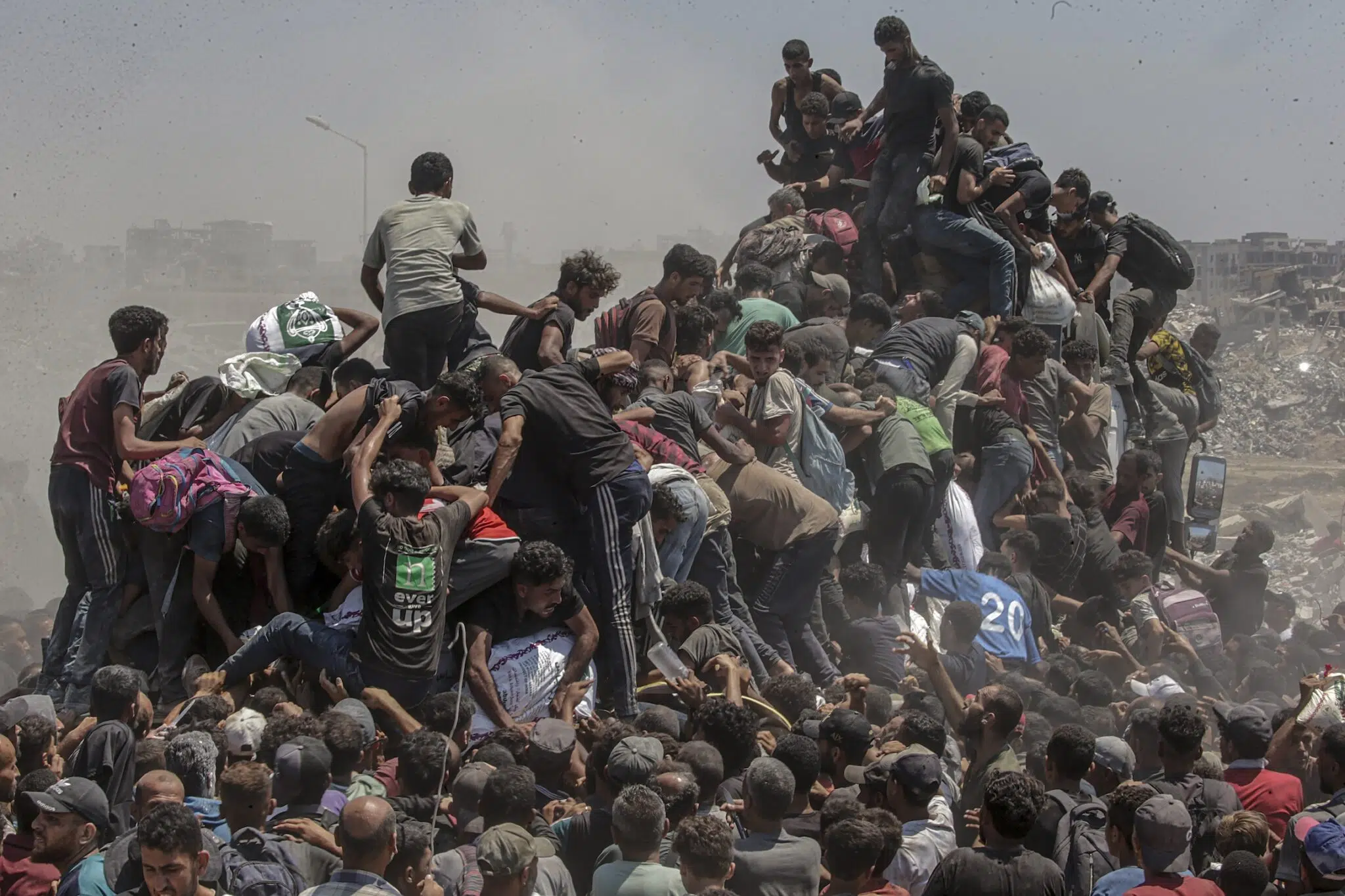
Saber Nuraldin, “Aid Emergency in Gaza,” for EPA Images. Palestinians climb onto an aid truck as it enters the Gaza Strip via the Zikim Crossing in an attempt to get flour, during what the Israeli military called a “tactical suspension” in operations to allow humanitarian aid through. July 27, 2025.
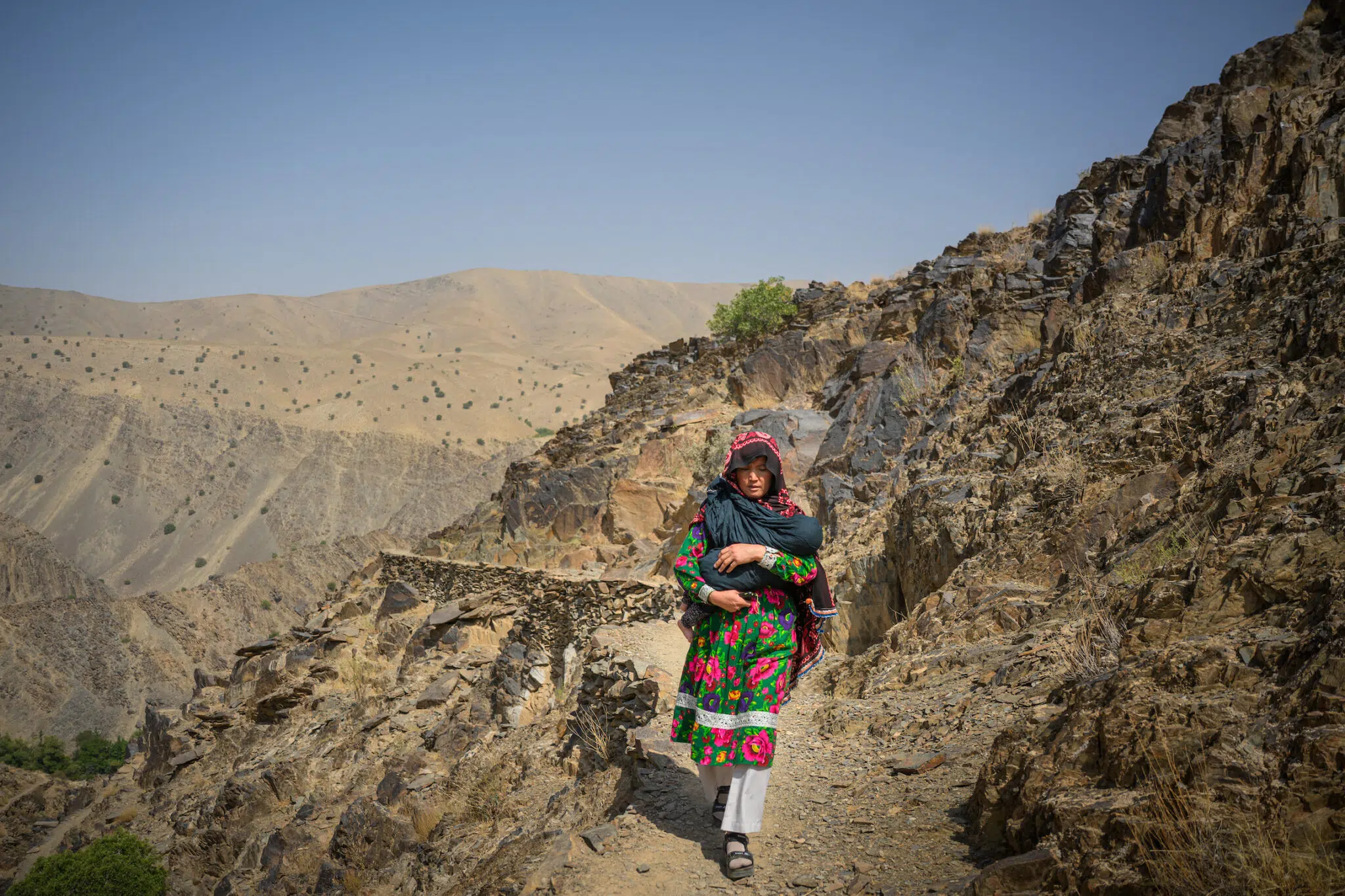
Elise Blanchard, “‘I’m Afraid’: Afghan Women Face US Aid Cuts,” for TIME. Zahira walks back from visiting a pregnant woman who is worried she might have to give birth without a midwife. Dahan-e-Tokhomak, Miramor district, Daikundi province, Afghanistan, July 24, 2025.