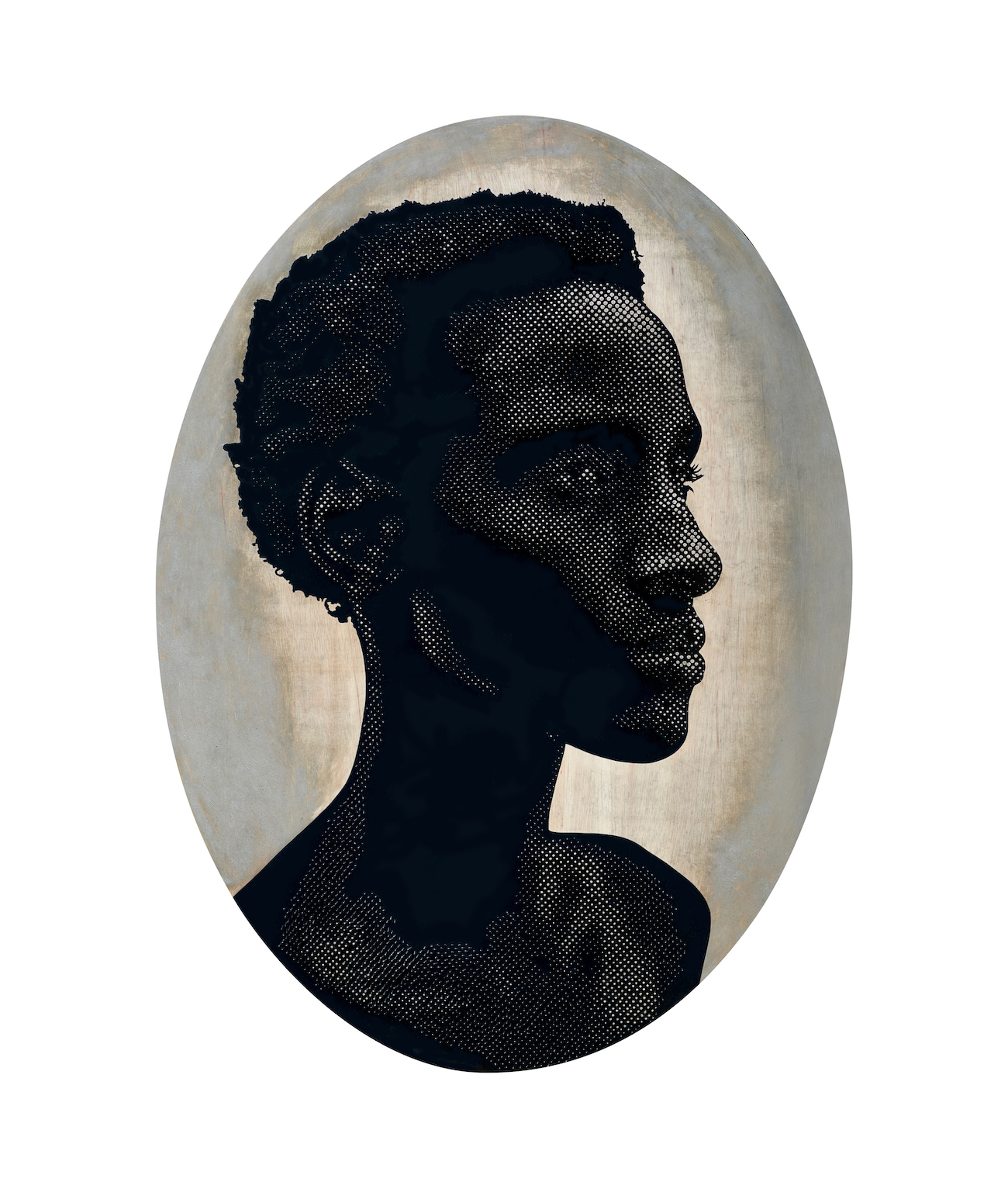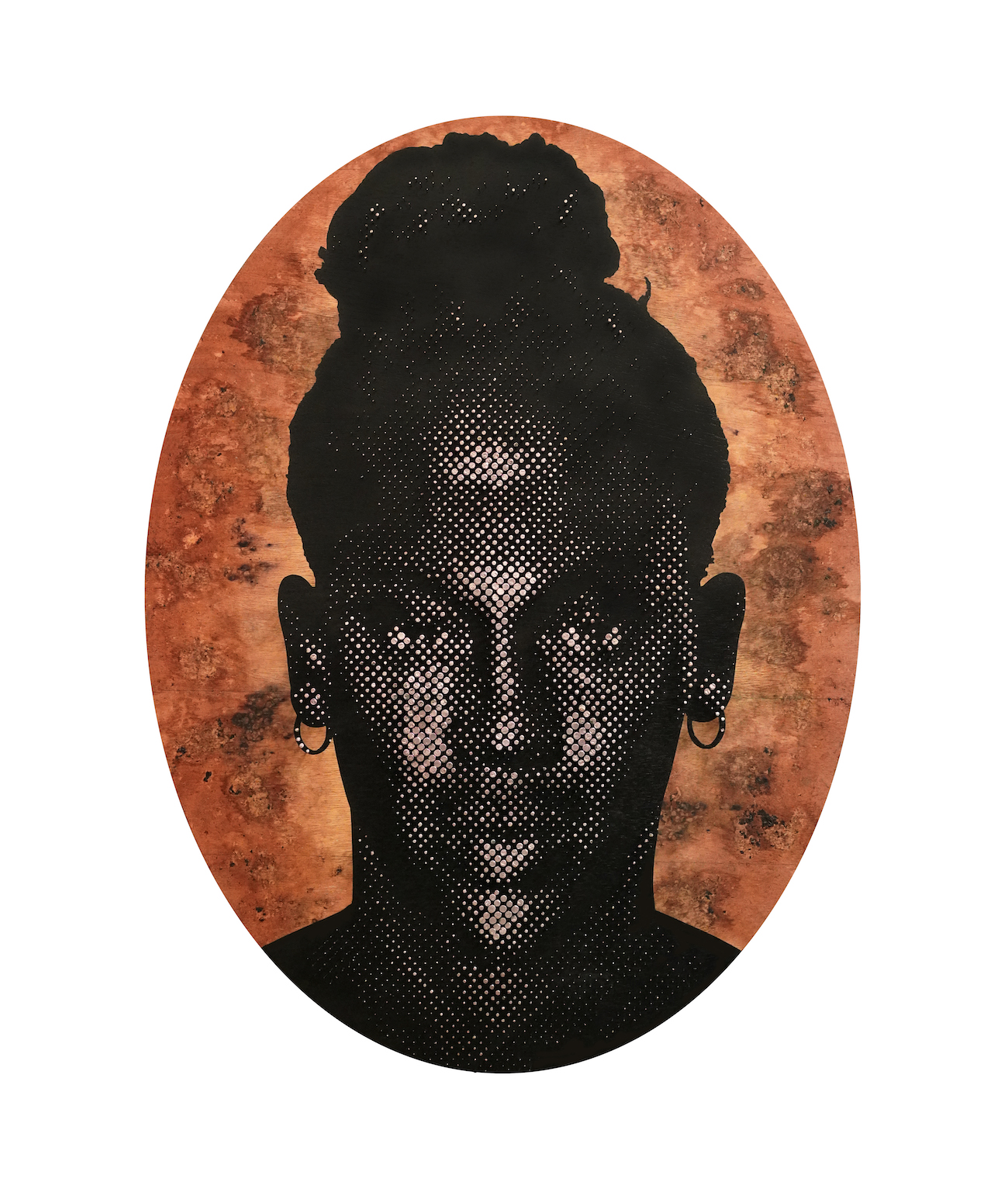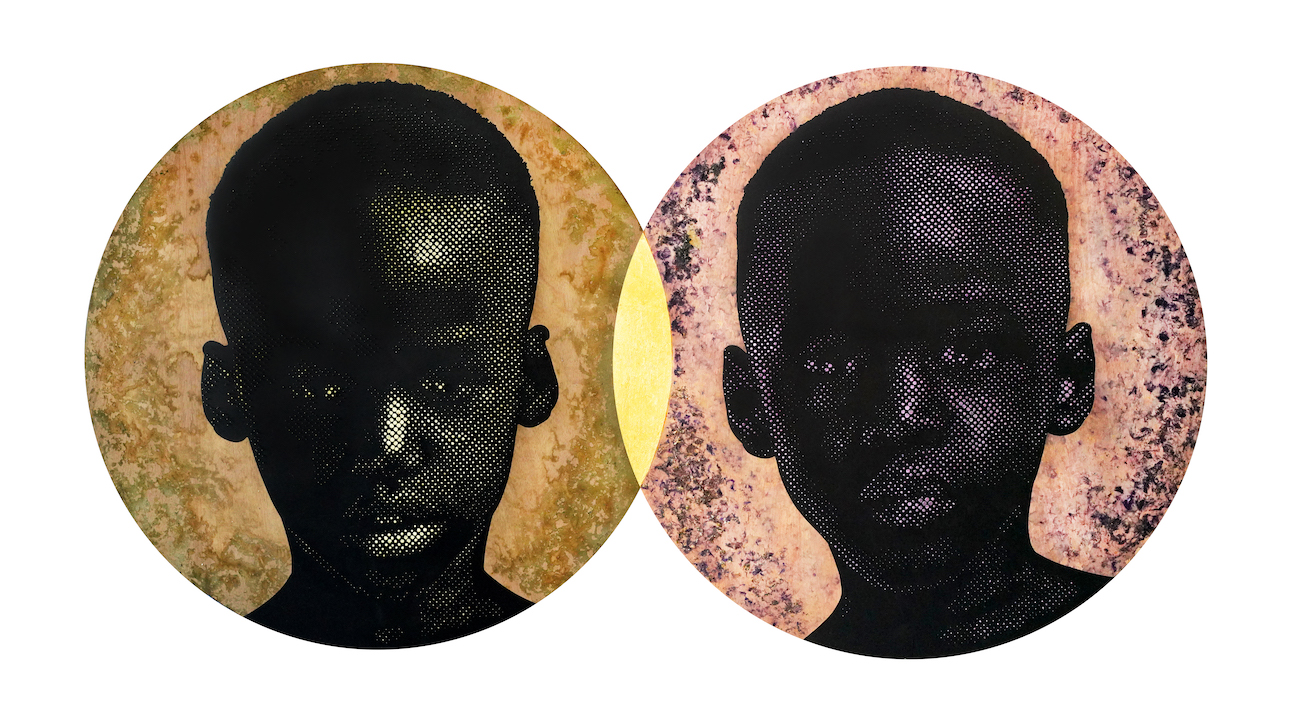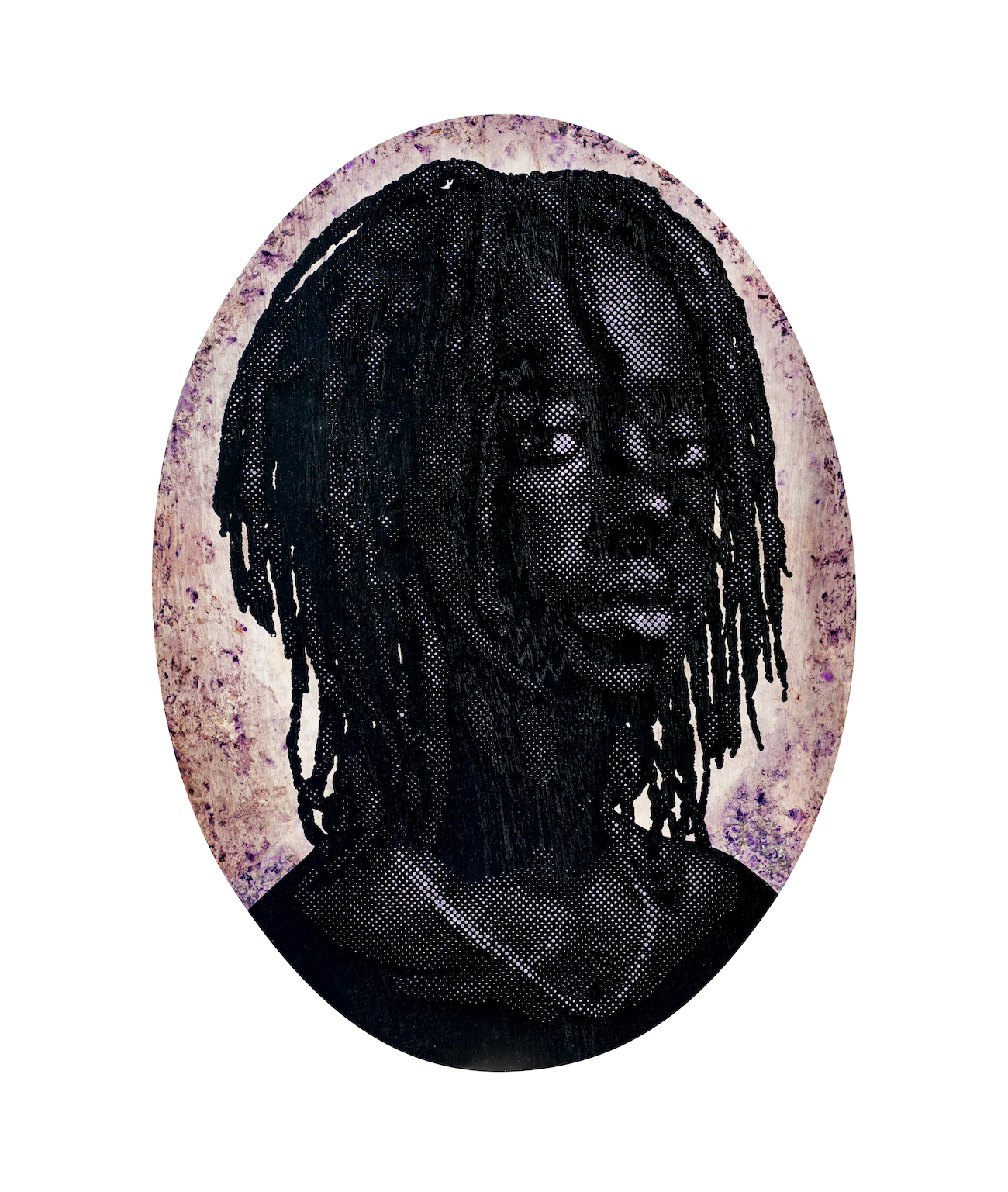
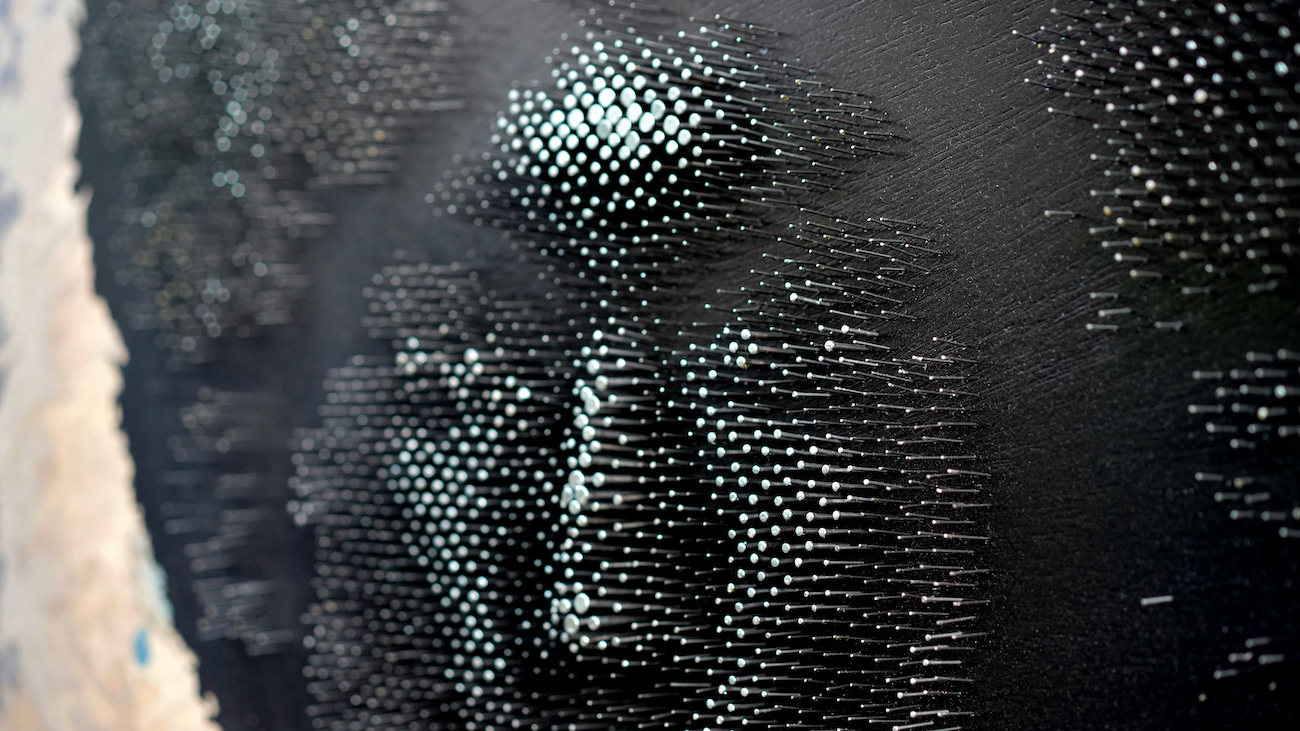
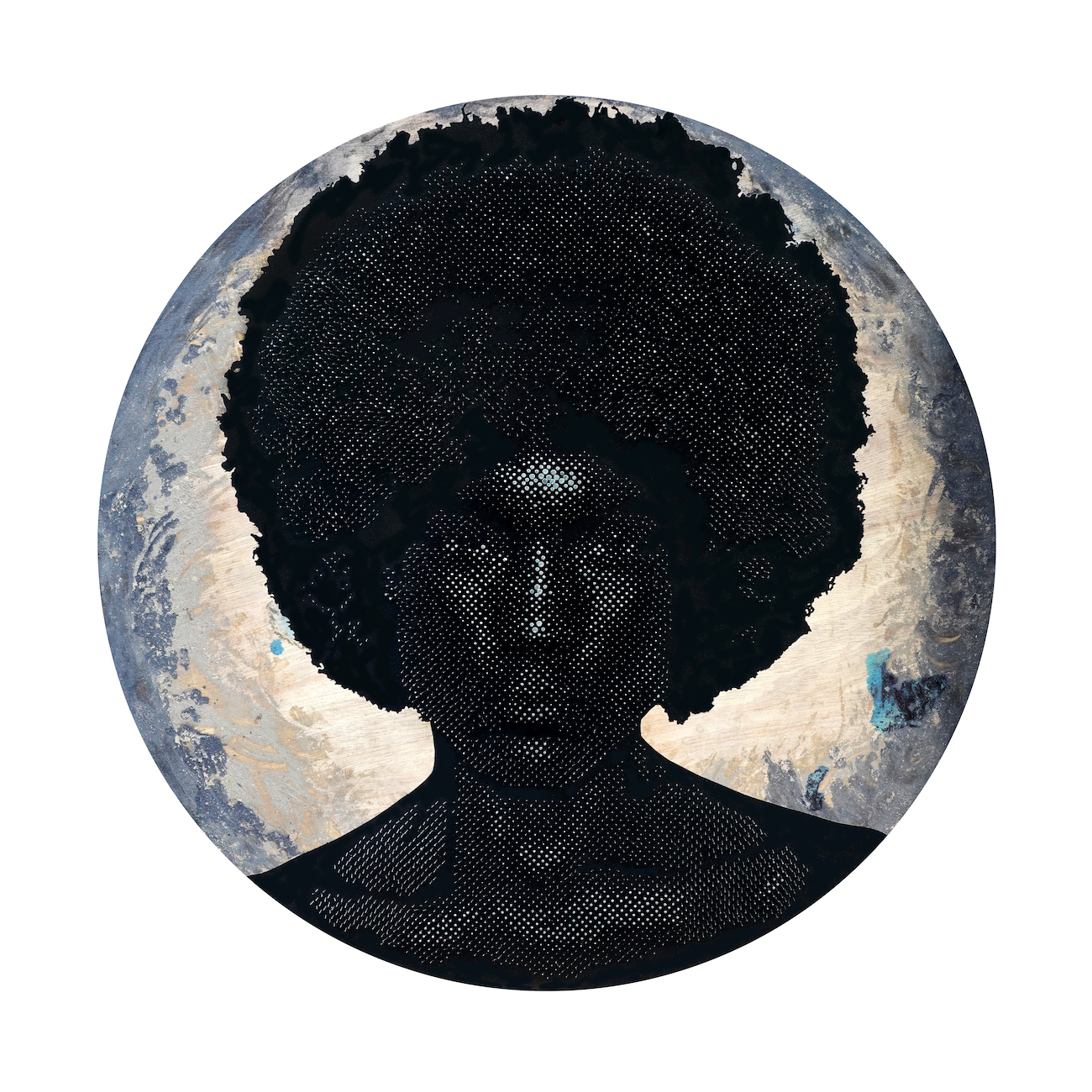
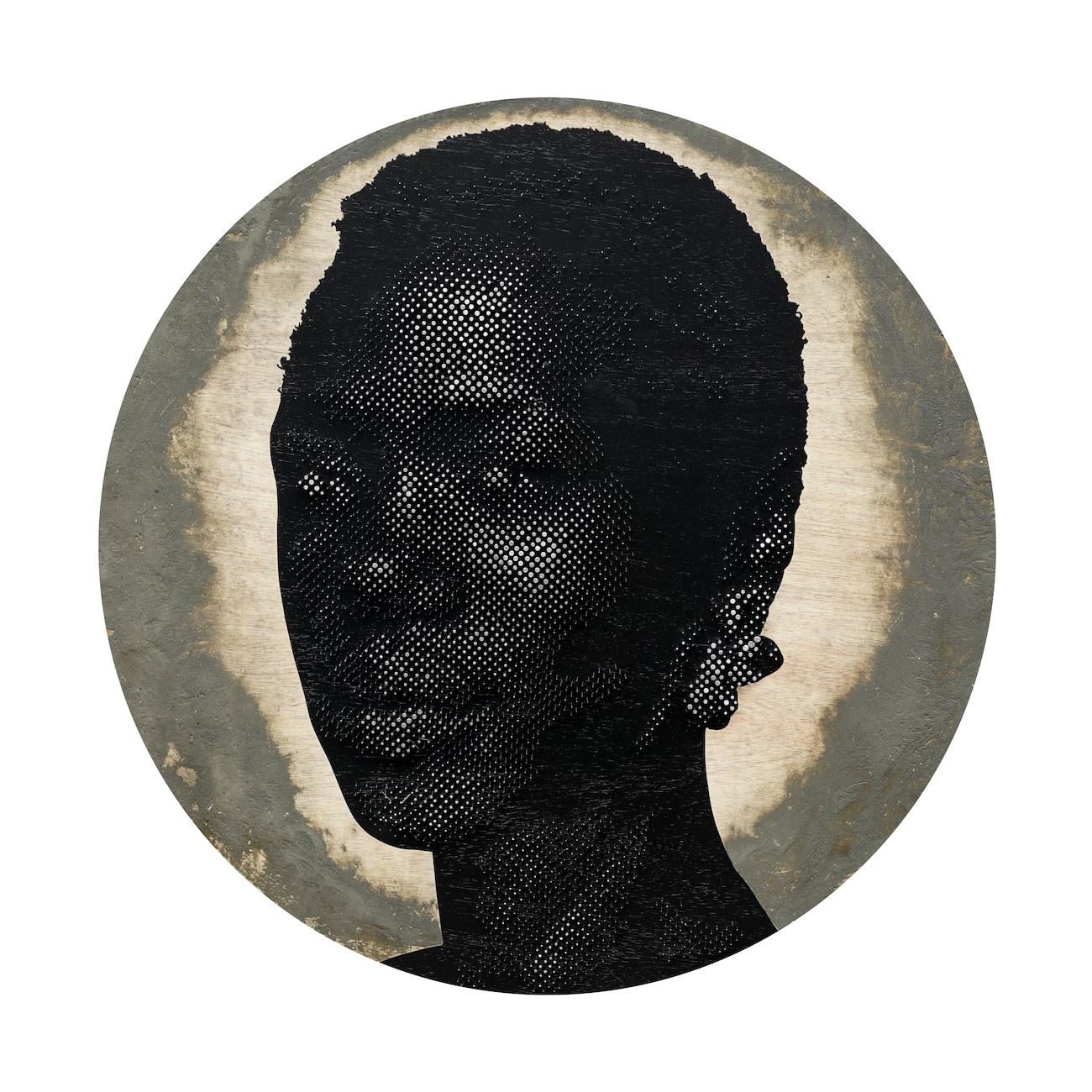
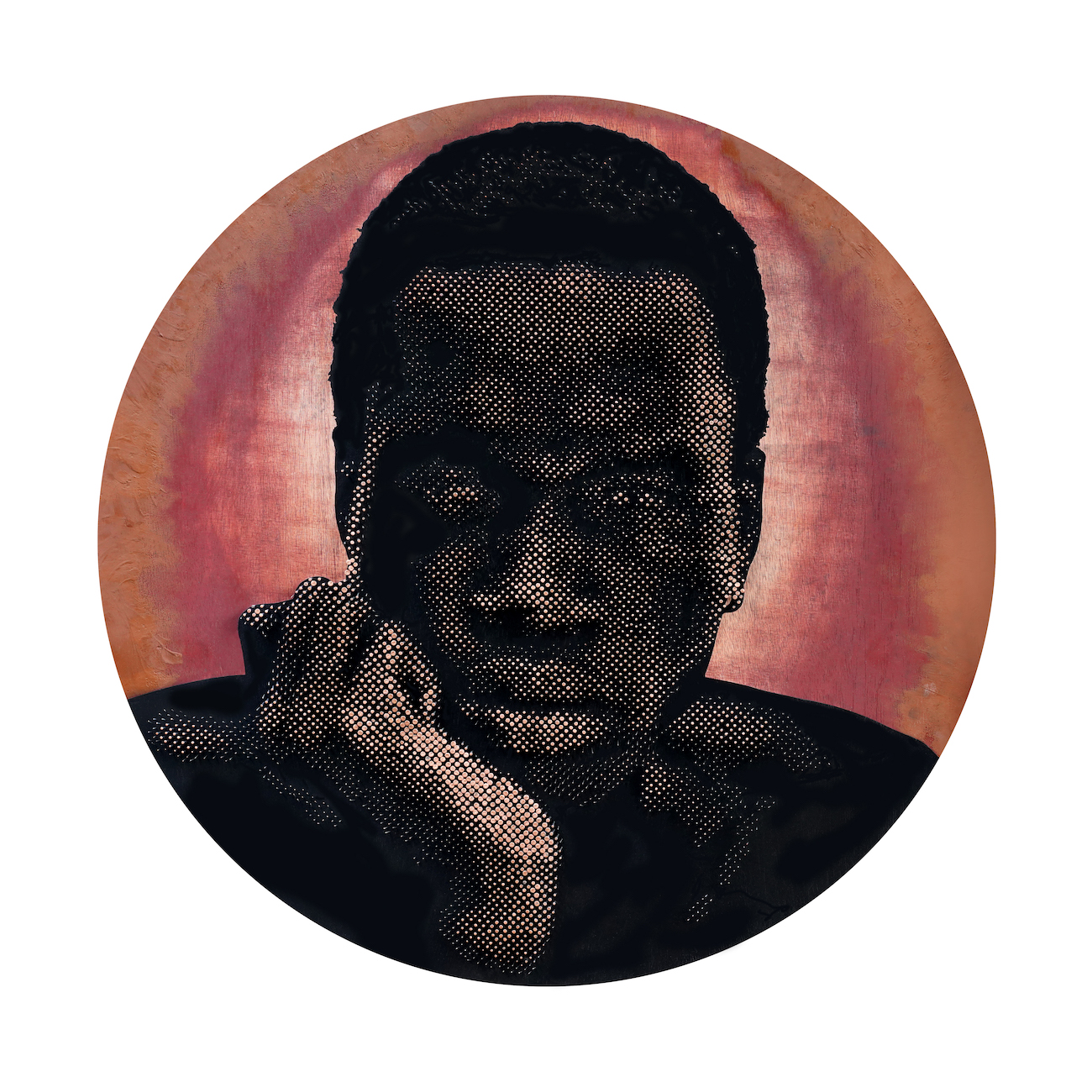
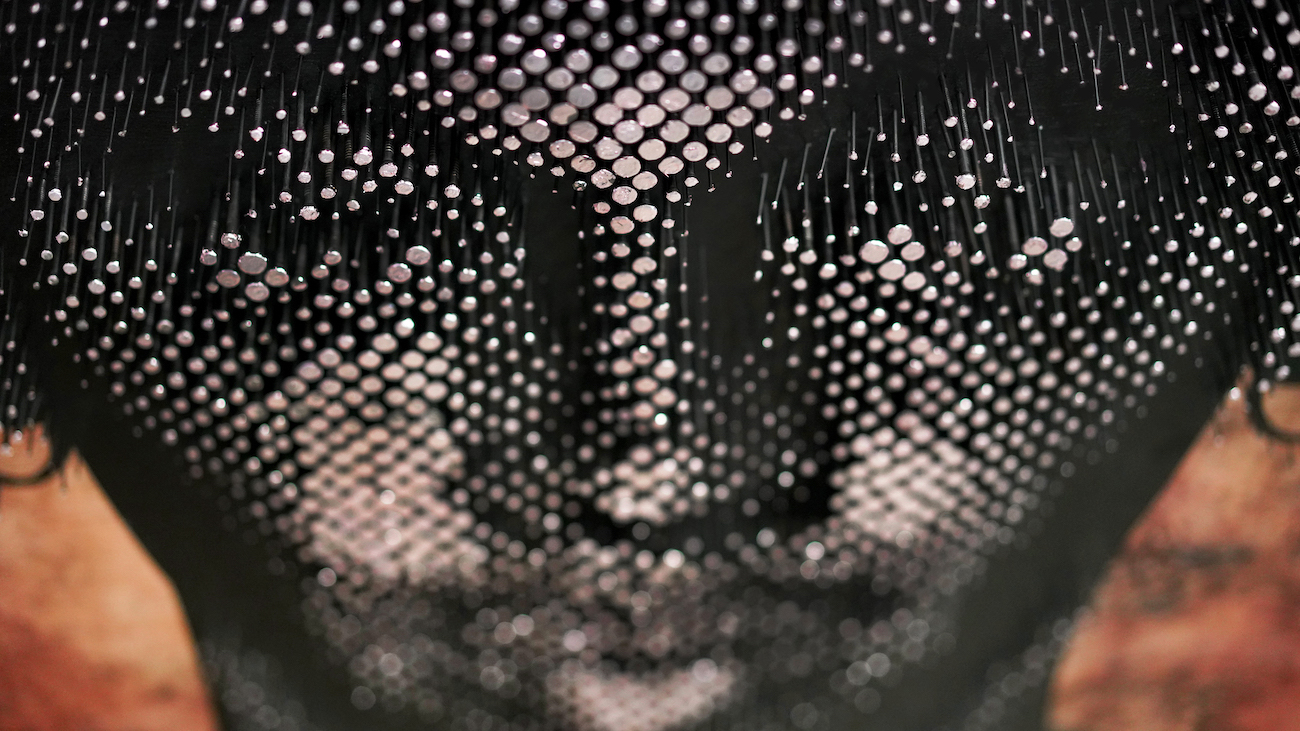
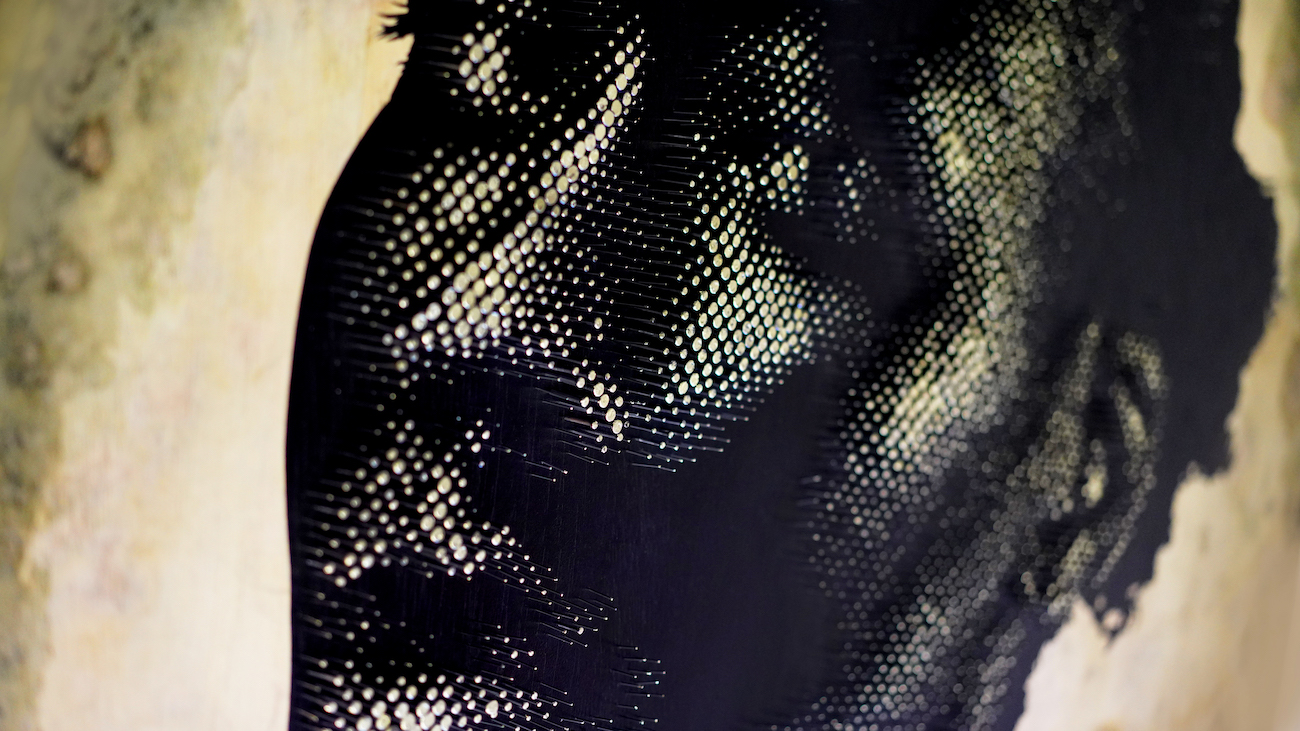
For more than a decade, Franco-Brazilian artist Alexis Peskine has transformed nails and wood into powerful meditations on resistance, healing, and Black identity. His large-scale works combine thousands of hammered nails with natural pigments and other organic materials, turning a physically demanding process into a visual language rich with symbolism.
Peskine’s practice draws from his experiences as a Black man who grew up in Paris and spent time in Brazil and the United States. It also connects to his ongoing spiritual journey toward his Afro-Brazilian roots and the traditions of the African diaspora.
The artist’s work with nails draws in part from the Minkisi power figures of the Congo, sculptures traditionally studded with nails to protect their owners. Over the years, he has expanded this visual language to explore the realities of Black life, ancestral traditions, spirituality, and healing.
After a residency in Cameroon brought him closer to nature and nearly cost him his life when he contracted cerebral malaria, Peskine’s practice began to shift. His work moved away from resistance and violence as its central focus and toward nature, spirituality, and healing. That evolution led to Forest Figures and now Ouro Verde, a body of work created for a solo exhibition at Filafriques Gallery in Geneva.
For Ouro Verde, Peskine immersed himself in the local landscape and researched traditional Swiss healing practices. He interviewed three Swiss healers and explored the use of natural, tinctorial materials, including plants and flowers used to create dyes. The resulting works incorporate elements such as mauve flowers and petals, mud from the Rhône River, and locally sourced plants, connecting the artist’s ongoing exploration of ancestral knowledge with the landscape of Switzerland.
My Modern Met had the opportunity to speak with Peskine about the evolution of his practice, the research behind Ouro Verde, and the physical process of hammering nails into wood. Scroll down to read our exclusive interview.
Can you tell us about the concept behind your latest body of work and how it developed?
My work with nails has always been about resistance. It reflects my life as a Black man who grew up in Paris and spent time in Brazil and the United States. My first show at October Gallery, Power Figures, in 2017, was about protection. It referenced the Minkisi power figures of the Congo, sculptures studded with nails to protect their owners. My second show there, in 2020, was called Fire Figures. It came right in the middle of lockdown, when the world felt especially violent toward Black people. George Floyd, Breonna Taylor, and Ahmaud Arbery. It’s not new; that violence has gone on for centuries.
I was a victim of police violence myself. But being confined at home while watching those images made everything feel even more intense, and there was a sense of rebellion in the air. The colors in that show were much more fiery.
After that, I went on a residency in Cameroon, in the middle of the forest. I’d already been on a spiritual journey back to my Afro-Brazilian roots for about 15 years, and being surrounded by nature there pulled me even closer to it. I started experimenting with raw wood and tree trunks instead of manufactured wood, which gave me a much deeper reverence for nature and for the trees that were sacrificed for the work.
While I was there, I caught cerebral malaria, ended up in a coma, and spent three weeks in the hospital. It nearly took me out, but it accelerated my spiritual journey and pulled me further from resistance and violence as the center of my work, toward nature and healing instead.
That shift led to Forest Figures, and now Ouro Verde continues that thread. It’s about what Black people create independently of the violence of white supremacy: nature, healing, ancestral and contemporary ritual, and tradition.
How did the residency and your recovery from malaria change the direction of your practice?
The violence never stops, and I think the accumulation of it, especially around 2020, put me in a state of sadness I was trying to work through. Getting closer to nature during that time, and later surviving the malaria, is what pushed the work toward spirituality and nature rather than resistance. Forest Figures and now Ouro Verde are both part of that continuation: healing, and what we do as Black people beyond the violence directed at us.
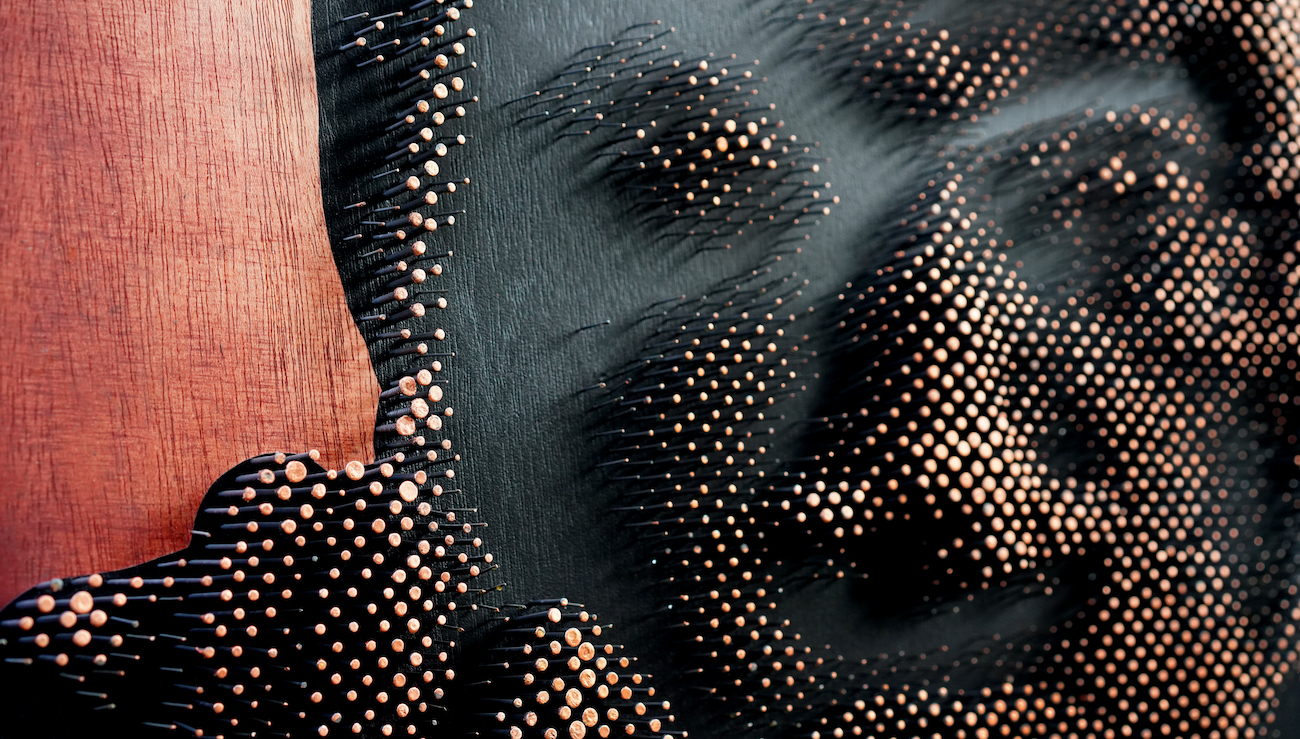
What drew you to research traditional Swiss healers for Ouro Verde, and how did that shape the work?
I was invited by gallerist Carine Biley to create a body of work for a solo show in Geneva, and whenever I have a show, I try to be embedded in the place I’m showing in rather than just researching it from a distance. She invited me to Geneva a few times to soak in the place, and while I was there I got interested in consulting traditional Swiss healers.
My work is usually rooted in African cultures, Babalaos and healers from Yoruba, Fon, or Congo traditions, so it was interesting to remember that Europe has its own healing traditions too. These traditions were suppressed by the same Western powers that marginalized healers in Africa and the Americas by burning people as “witches,” when really they were healers. I interviewed three different Swiss healers to understand their practices and how they connect to nature and to source.
My work is made of nails on wood, but it’s often infused with natural elements that carry symbolic weight. Earlier pieces in Power Figures used earth and coffee to speak about displacement and exploitation. For Ouro Verde, I wanted to know what natural, tinctorial materials—plants and flowers used for dye—these healers worked with. I ended up using mauve flower or mauve petals, which gave me purple tones, mud from the Rhône River, and pastel-colored plants, staining the wood directly with them. I’m really grateful for that knowledge.
I also watched an RTS documentary on the role of traditional Swiss healing called Les Guérisseurs Face À La Science – Temps Présent. Everything about the trip felt aligned. I even found out one of my brother’s closest friends was living in Geneva while training to become a healer herself, and she connected me to a registry of practicing healers. I also want to shout out Elsa Reduto and Jaky Roland from Mamajah’s farm, who generously let us pick tinctorial flowers and plants that ended up in most of the works in this show. The whole path felt ancestrally guided.
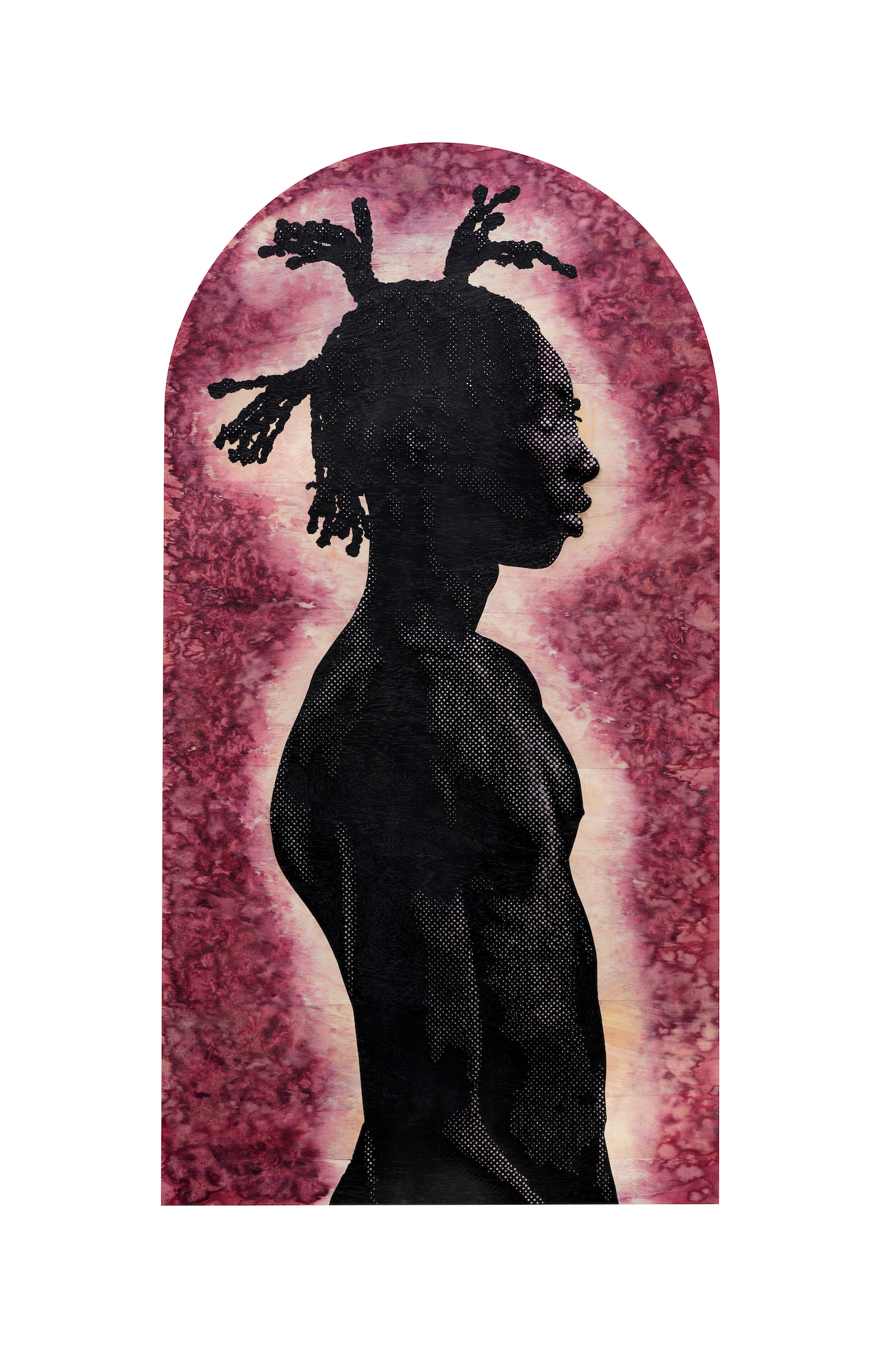
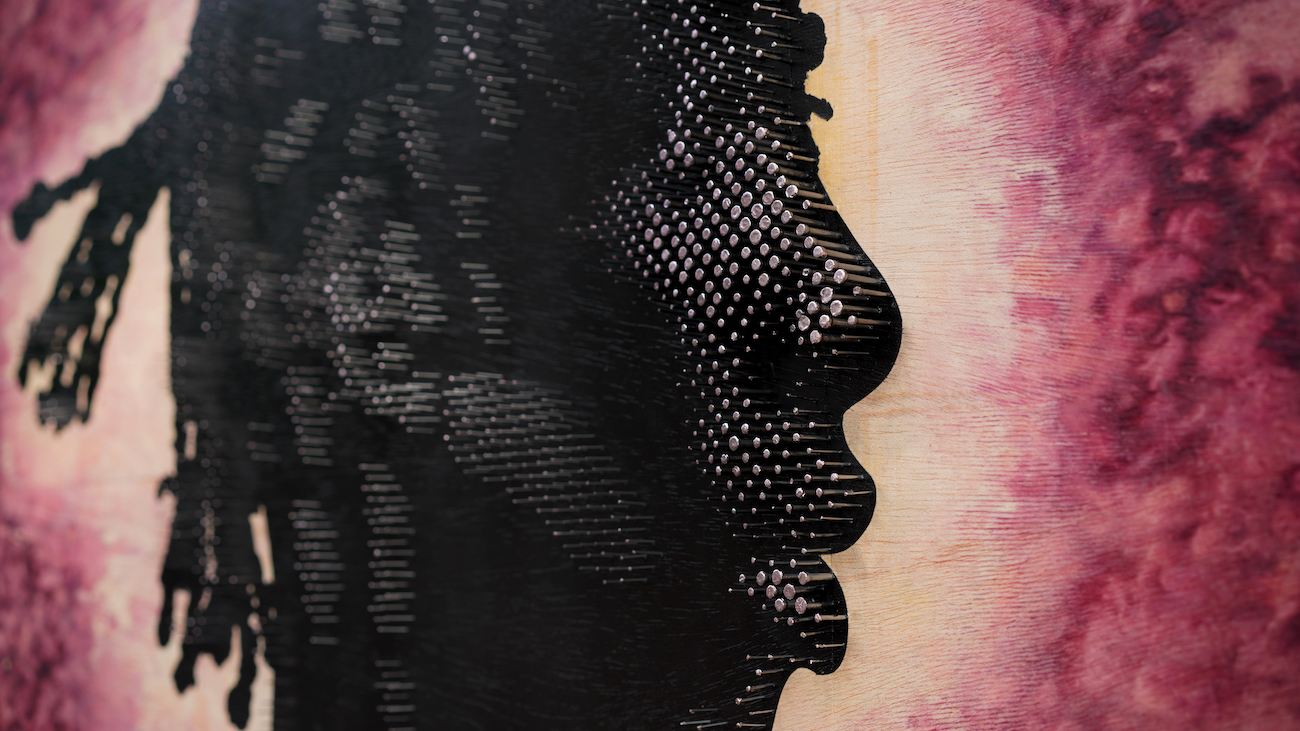
Walk us through the physical process of your work. What does hammering nails into wood feel like, and what does it represent?
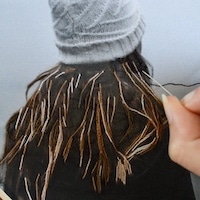
There’s a certain violence in bringing metal, this sharpened mineral, into the wood, which is itself so giving, so noble, a life force. In Afro-Brazilian culture, I think of it in relation to Ogun, the orixá associated with iron and metal, who brought that technology into the world and also opens the path. There’s a duality in that gesture: violence, but also creation, because that same force is used to build.
To me, it’s a metaphor for our experience as Black people, how we’ve turned resistance into beauty, and traumatic experience into technology, science, and art, things that move the world forward. We’ve recycled negative energy into a gift.
There’s an explosive quality whenever humans get close to something mineral, whether it’s fossil fuels, petrol, or gold, that seems to drive us a little crazy. But that same iron technology let humans till soil, garden, and cut food to sustain life. It’s the same knife used to sustain life and to take it, the same powder used for both. That duality, between destruction and construction, between taking life and sustaining it, is something I keep coming back to, in the work and in life. I don’t think I have a finished thought on it yet, but it fascinates me.