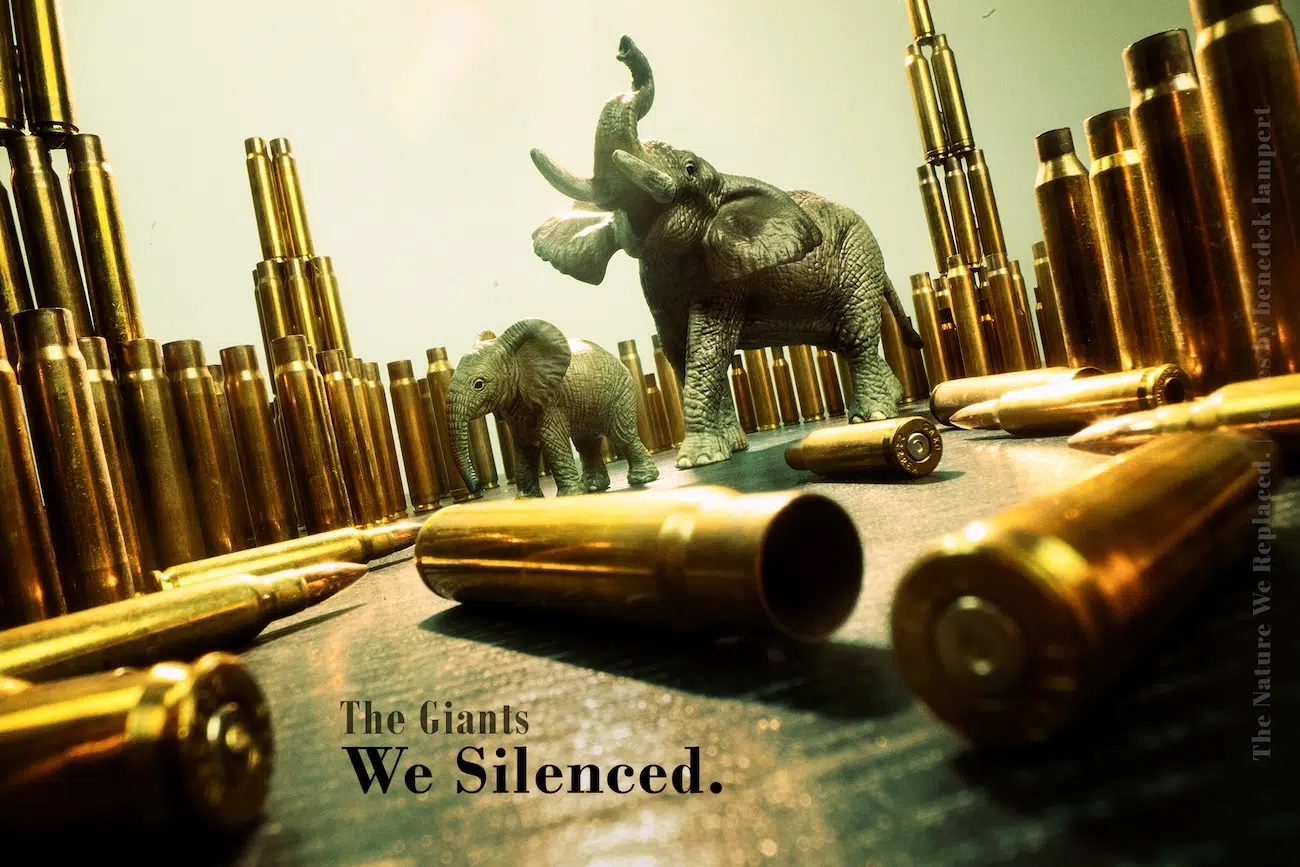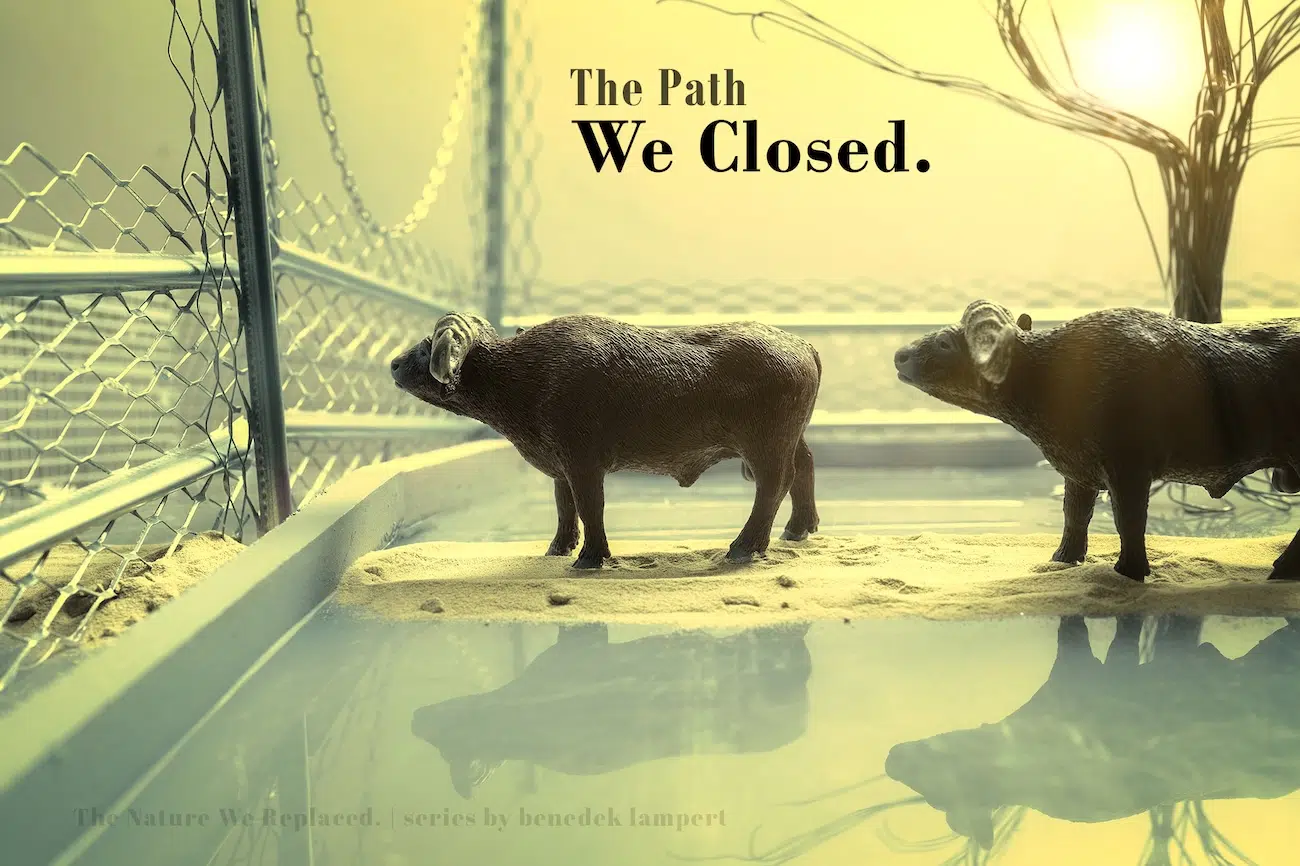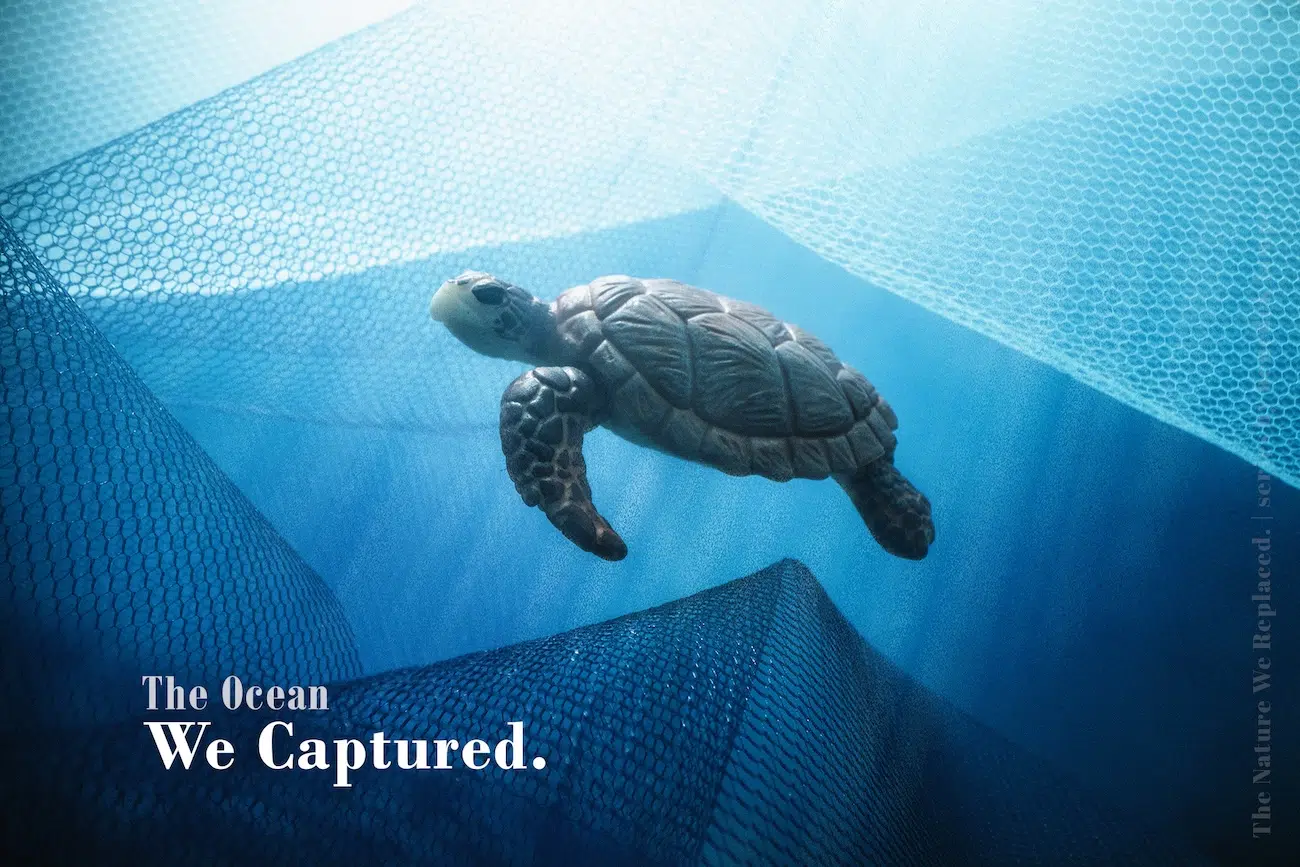
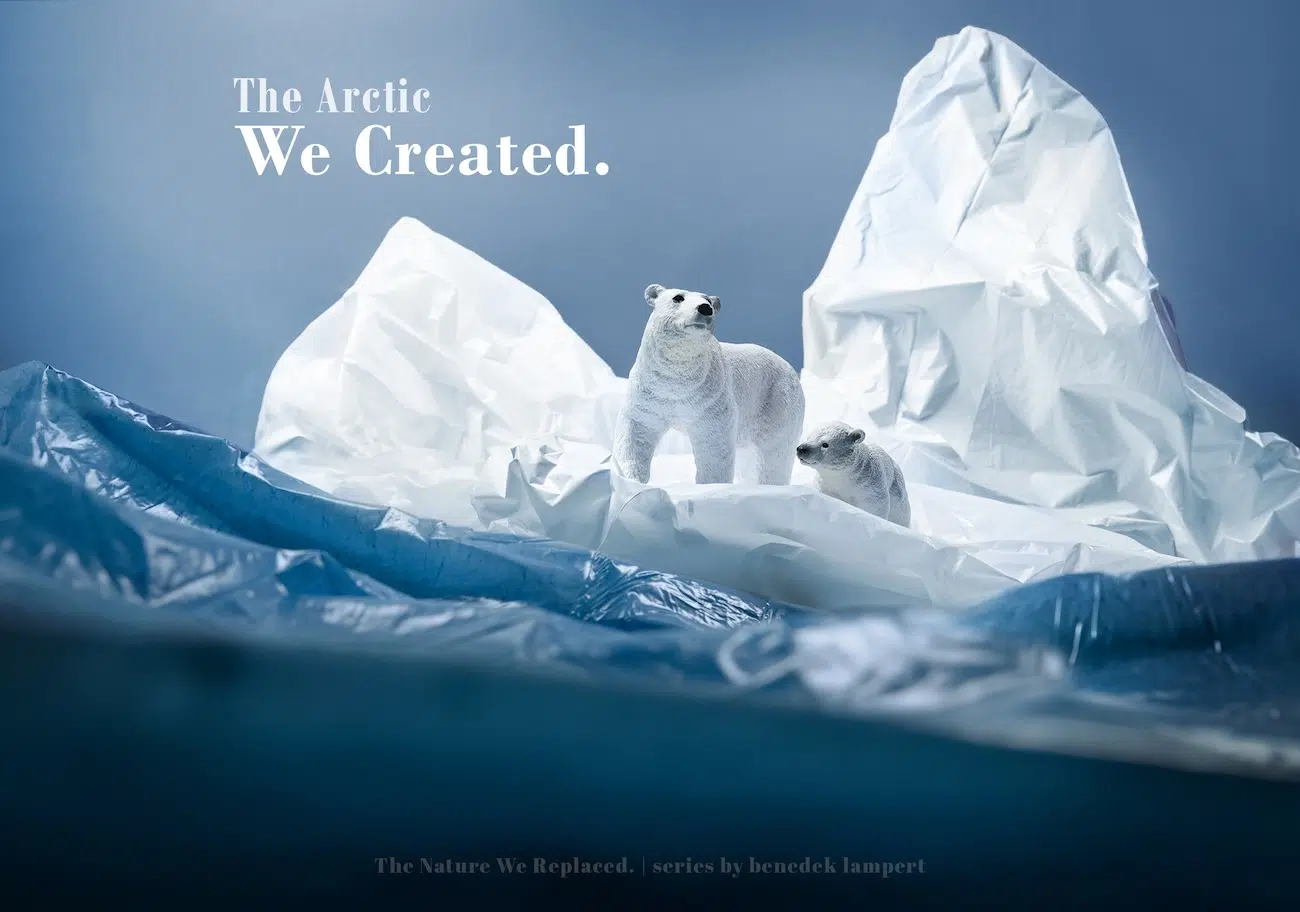
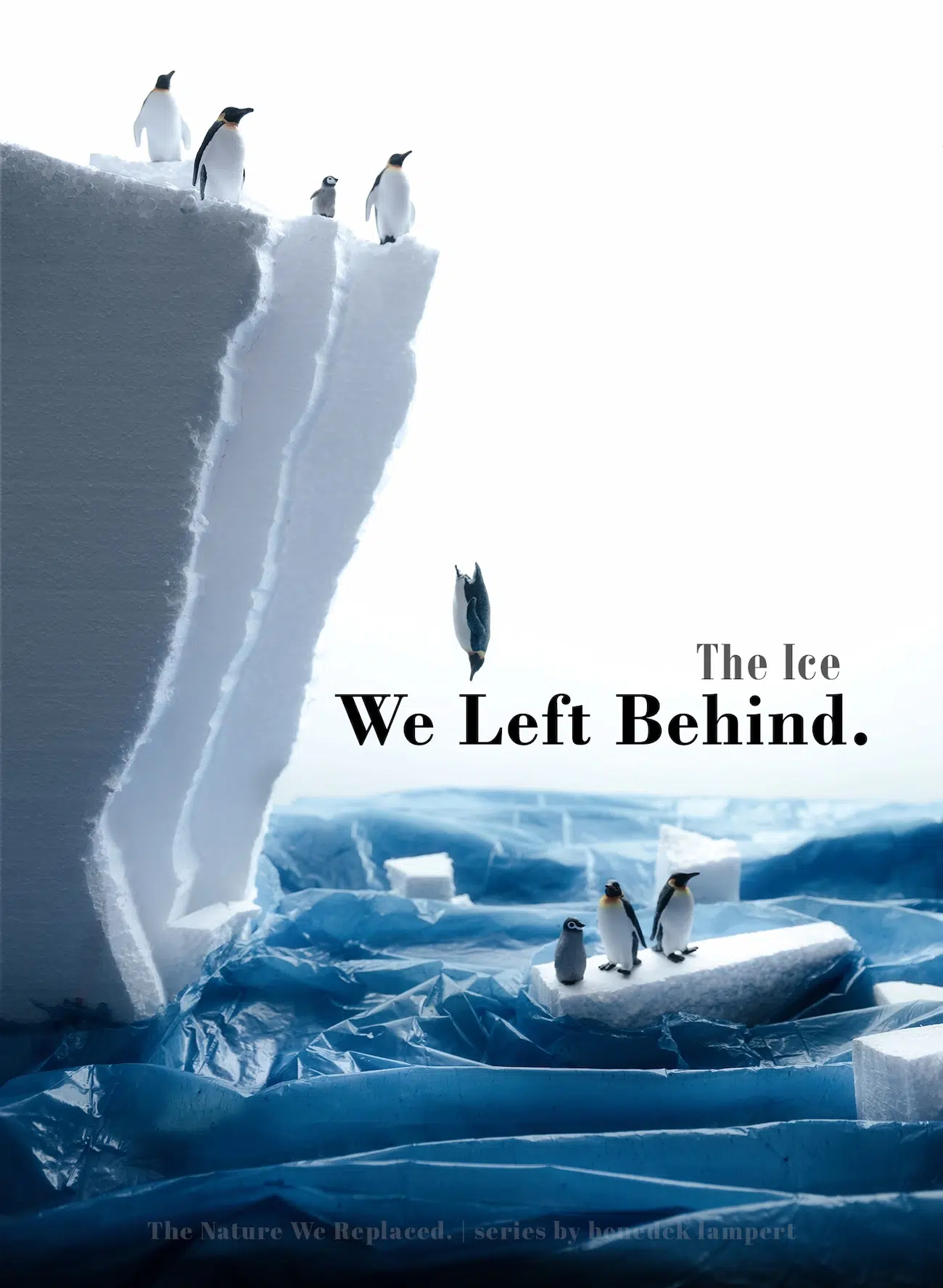
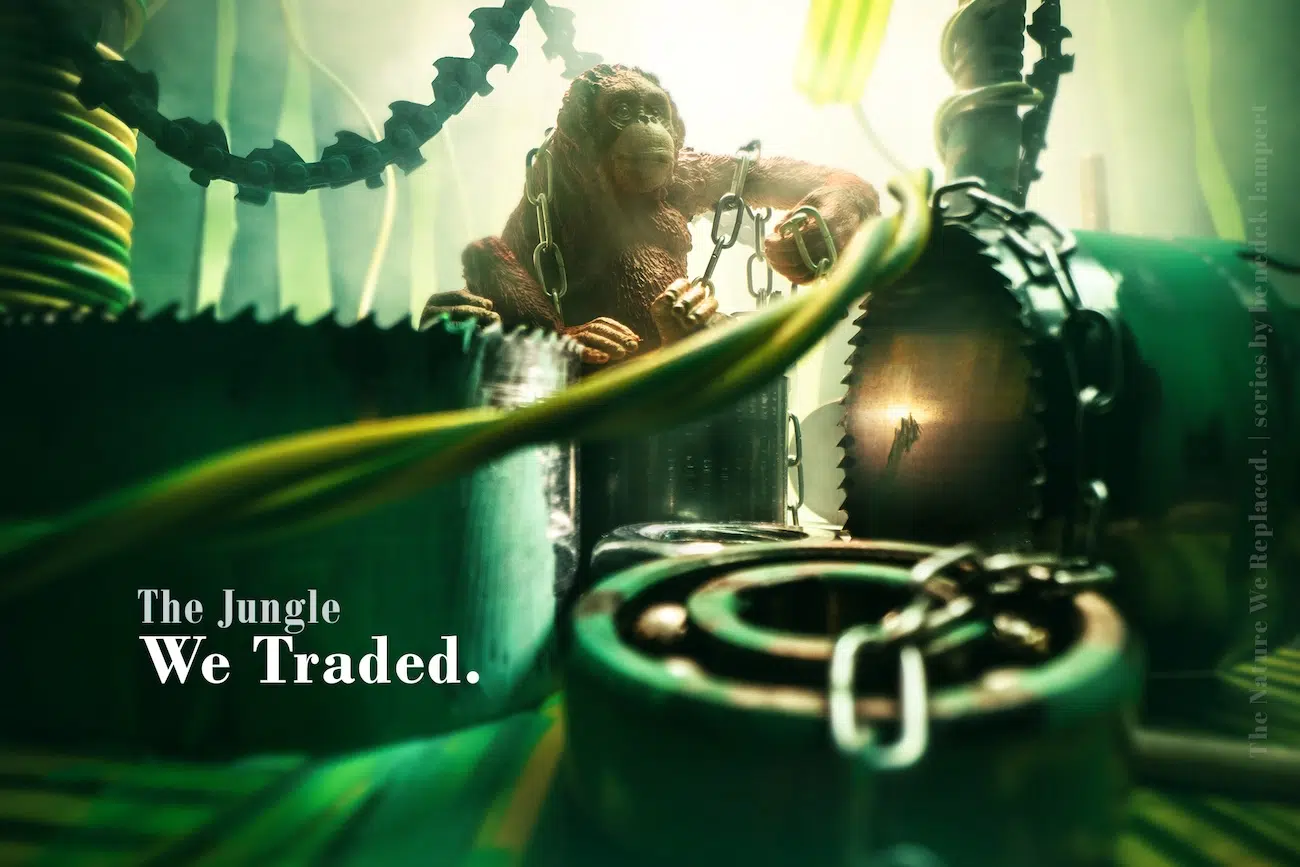
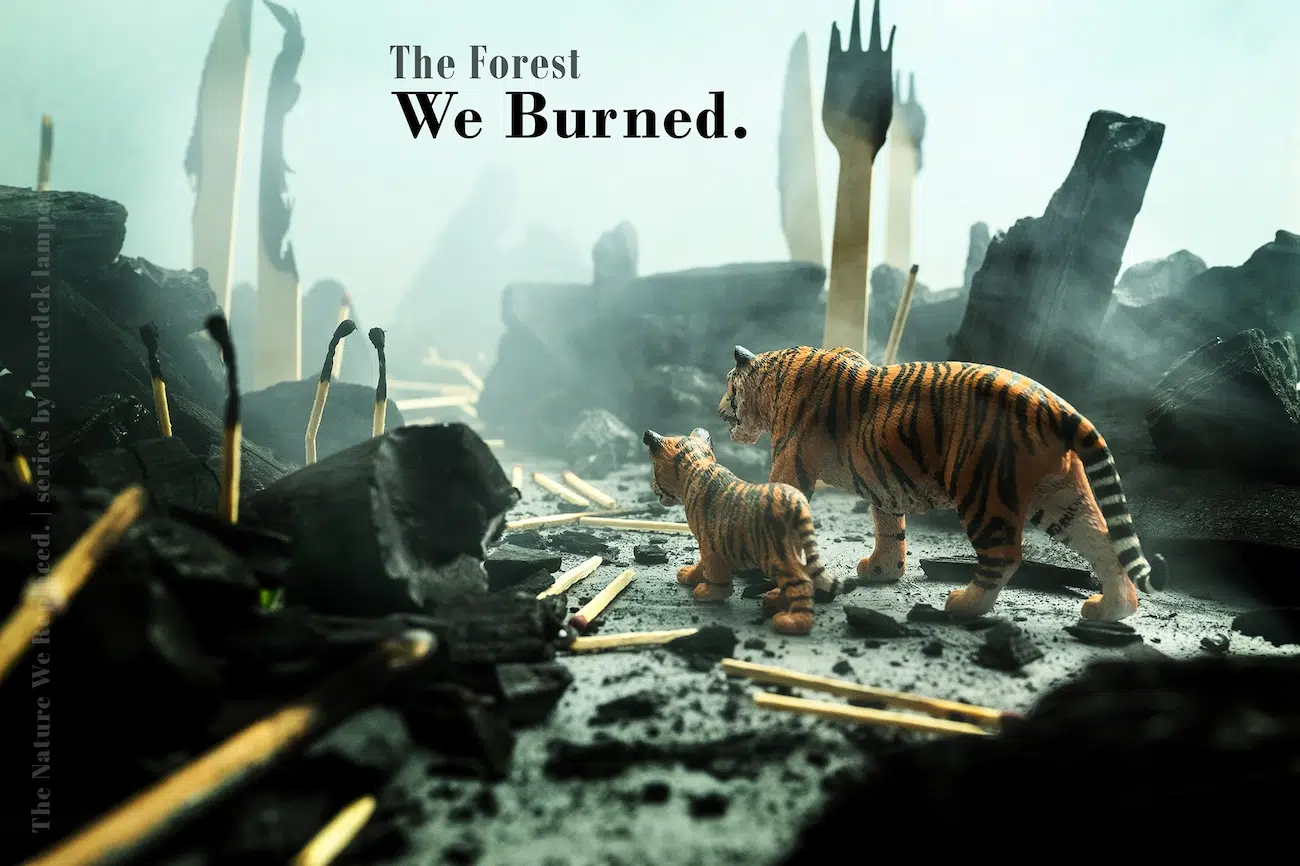
Photographer Benedek Lampert gathered straws, burnt matches, and plastic netting to create his latest series of striking miniature photography. His visually impactful project is titled The Nature We Replaced, and it focuses on the effects humans have had on the environment and, by extension, the creatures that inhabit Earth. In short: it’s not great. Adding text alongside his macrophotography, he laments what we’ve lost, adding phrases like “The Ice We Left Behind” and “The Ocean We Captured” to the images. Lampert illustrates this poignant messaging using materials that threaten real-life habitats, placing miniature toy animals in the built environment.
Lampert’s previous toy photography series focused on realism. In 2025, he created strikingly lifelike photos of F1 LEGO racers as they tore up the track. “The goal was often to create scenes so realistic that, for a brief moment, viewers questioned whether they were looking at a photograph of a real place or a carefully constructed miniature,” Lampert says. “With The Nature We Replaced, I wanted to take that idea in a completely different direction. This time, realism was no longer the goal. Meaning was.”
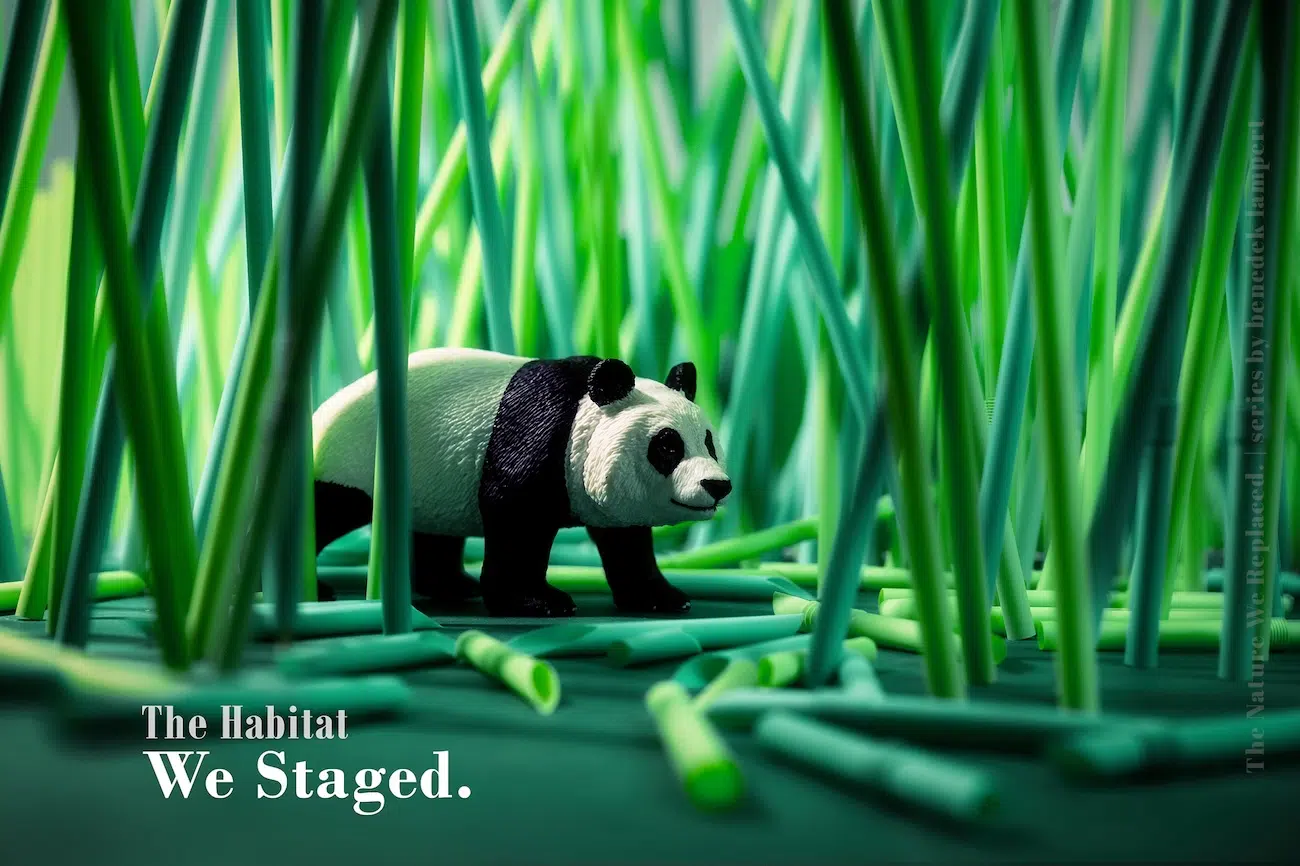
In Lampert’s worlds, plastic bags become Arctic ice. Plastic straws are bamboo. Fishing nets are the expansive ocean. The photographer has masterfully built and lit each scene, and the miniatures sit at the center of it all. The images are not subtle; the tiny toys are dealing with human-caused destruction. But for a message this urgent—and for our waning attention spans—Lampert knew he had to make an immediate impact.
“Today, if something takes too long to understand, we tend to scroll past it,” he tells My Modern Met. “These images are designed to connect each animal with the human activity affecting it in a way that’s immediate and easy to read, while still rewarding a closer look.”
We spoke with Lampert about his series, including why miniatures are integral to his work and how The Nature We Replaced helped him change some of his habits. Scroll down for our exclusive interview.
How did the idea for this series come about?
Interestingly, it actually started with an internet meme. There was a nature documentary clip about a penguin that kept wandering off toward the mountains and leaving its colony, even though the filmmakers repeatedly brought it back. Social media picked it up, and everyone started projecting their own story onto it.
I decided to join in for once, bought a penguin figure, and recreated the scene as a miniature photograph. I really enjoyed working with an animal figure, and the idea quickly grew from there. I had already been thinking about making a miniature wildlife series, but this project gave me the idea to take it in a more conceptual direction.
You say that miniatures “have the power to tell bigger stories.” Why do you think that is?
I think miniature worlds work so well because they’re much easier to control. Everything fits on a table, and I can decide almost every aspect of the scene myself. That opens up a lot of possibilities for ideas that would be impossible—or completely absurd—in the real world.
In this case, saying that I’m photographing toy animals surrounded by plastic straws and garbage bags doesn’t sound particularly serious. But from the right angle, with the right lighting and composition, those same everyday objects can become an entirely different world.
Every habitat is built from the materials that contribute to its destruction. How did this challenge you in your construction of each set?
The main challenge was that I had to build believable environments from materials that often look nothing like the habitats they were supposed to represent, while still making the meaning clear.
I had to figure out things like how to fold a garbage bag so it looked like water, how many plastic straws were needed to create a convincing bamboo forest, or how to light a turtle through layers of tulle fabric so the scene actually felt underwater.
Did this project shift any of your habits in your work moving forward?
Absolutely. I already took littering and leaving waste in nature very seriously, but this project made me even more conscious of it.
I also love making campfires in the forest, but during the current heat I avoid doing it even in places where it would normally be considered safe, especially after researching the damage caused by major wildfires. Another important realization was how many positive conservation results there actually are. I have enormous respect for the people who dedicate their lives to protecting the planet, because their work really does make a difference.
Which landscape do you have the deepest tie to?
I’ve always loved northern landscapes, snow, and remote Arctic environments. I can’t really explain why, but if you asked me whether I’d rather travel north or south, I’d choose north without hesitation. Because of that, both the polar bear and penguin images feel especially close to me.
I’m also very happy with how the turtle image turned out—it ended up feeling much more like a real underwater scene than I expected. And the elephant photograph was memorable for a completely different reason: finding suitable spent cartridge cases for the set was a challenge in itself.
What do you think is something people miss at first glance when they see this series?
I actually think the series became quite straightforward, and that was intentional. I didn’t want to overcomplicate the message—I wanted to simplify it.
Today, if something takes too long to understand, we tend to scroll past it. These images are designed to connect each animal with the human activity affecting it in a way that’s immediate and easy to read, while still rewarding a closer look.
What do you hope people take away from this series?
My goal was to show our impact on wildlife and their habitats in a way that can’t really be photographed in the real world.
The scenes are deliberately exaggerated, almost like visual caricatures. They’re not meant to show reality exactly as it is, but like any caricature, they’re based on something very real. By pushing those problems to an extreme, I hope the message becomes easier to understand.
What are you working on next? Anything exciting you can tell us about?
I don’t know exactly what comes next yet, but I’m pretty sure this won’t be my last series involving animals.
One idea I’d really like to explore is almost the opposite of The Nature We Replaced: a series focused on positive change and successful conservation efforts. We hear a lot about threats and destruction, but the work of conservationists is not pointless—there are real success stories, and I think those deserve to be visualized too.