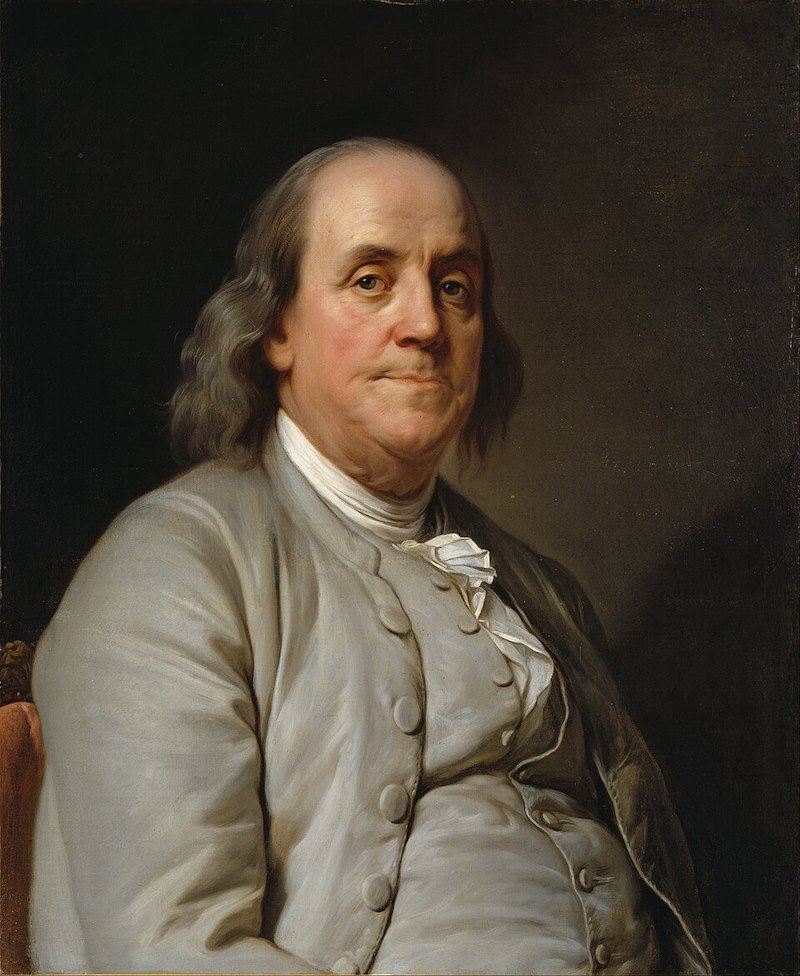
Benjamin Franklin’s legacy can be traced throughout American history, from the institutions he helped establish to the inventions and ideas that continue to bear his name. However, one of his most remarkable contributions was designed to unfold long after his lifetime.
Franklin allocated £1,000 to Boston, where he was born, and another £1,000 to Philadelphia, where he spent much of his adult life. Rather than treating the bequest as a conventional charitable donation, the cities had to wait 200 years before they could fully use it.
He placed the money into trusts designed to provide loans, accumulate interest, and grow over generations. By the time the trusts reached their 200-year mark in 1990, the modest original gifts had become millions of dollars.
The unusual arrangement reflected Franklin’s broader approach to philanthropy. Throughout his life, he supported institutions intended to provide lasting benefits to his communities. This includes Philadelphia’s first public library, volunteer fire company, and hospital. He also helped establish the Academy of Philadelphia, which eventually became the University of Pennsylvania.
Franklin divided the trust into two stages. After 100 years, each city could use three-quarters of its accumulated funds for public projects, while the remaining quarter would continue earning interest for another century. After 200 years, the cities could finally use the remaining money without the original restrictions.
Franklin estimated that Boston’s original £1,000 could grow to £131,000 after the first century, with the remaining funds potentially reaching more than £4 million after another 100 years. The precise outcome depended on economic conditions and how the trusts were managed, but the larger experiment was remarkably forward-looking.
The world changed considerably during those two centuries. Franklin’s original requirements for borrowers eventually became difficult to maintain as the economy evolved. Nevertheless, the trusts continued supporting education and civic projects.
In Boston, the money helped establish the Franklin Union, a trade school that opened in 1908 and later became the Benjamin Franklin Institute of Technology. Philadelphia also directed its share toward educational and civic purposes. The city’s trust supported The Franklin Institute, the science institution founded in 1824.
By 1990, Boston’s trust was worth approximately $4.5 million, while Philadelphia’s had grown to about $2 million. The figures were a striking transformation from the original £1,000 contributions, but the financial return was only part of Franklin’s achievement.
The bequest offered a practical demonstration of Franklin’s belief that philanthropy could create opportunity rather than simply provide immediate assistance. He could not predict what Boston and Philadelphia would need two centuries into the future, so instead of dictating a specific outcome, he created a financial foundation that could adapt with time.
Sources: Benjamin Franklin’s Donor Story; How a 200-Year-Old Gift From Benjamin Franklin Made Boston and Philadelphia a Fortune; Did Ben Franklin Leave $2,000 Each to Boston and Philadelphia?
Related Articles:
Why 1,200 Bone Pieces From 28 People Were Found in Benjamin Franklin’s Basement
How American Benjamin West Became London’s Preeminent Painter During the American Revolution
30 Million People Today Are Descendants of Passengers on the Mayflower
Mural Honors Ona Judge’s Escape From George Washington’s Household and Fight for Freedom