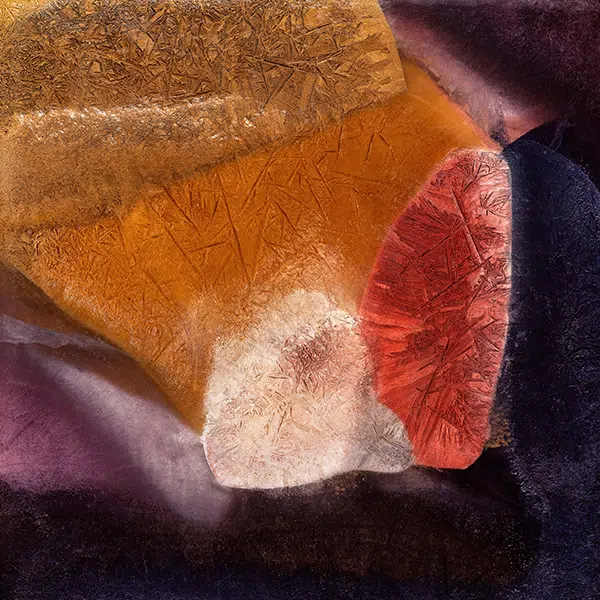
Gabriel de la Mora: La Petite Mort. MARCO 2026. Photo by Arthur Mora.
Mexican artist Gabriel de la Mora turns discarded materials into meticulously crafted works that explore transformation, time, pleasure, and death. His exhibition La Petite Mort at Museo de Arte Contemporáneo de Monterrey (MARCO) brings together more than two decades of his practice.
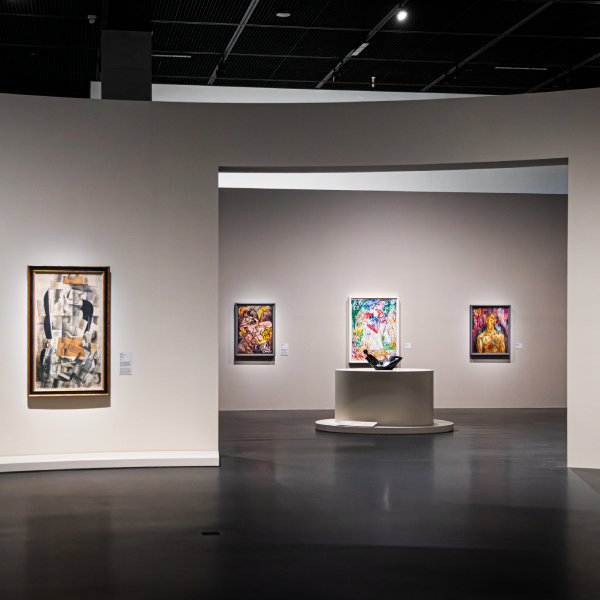
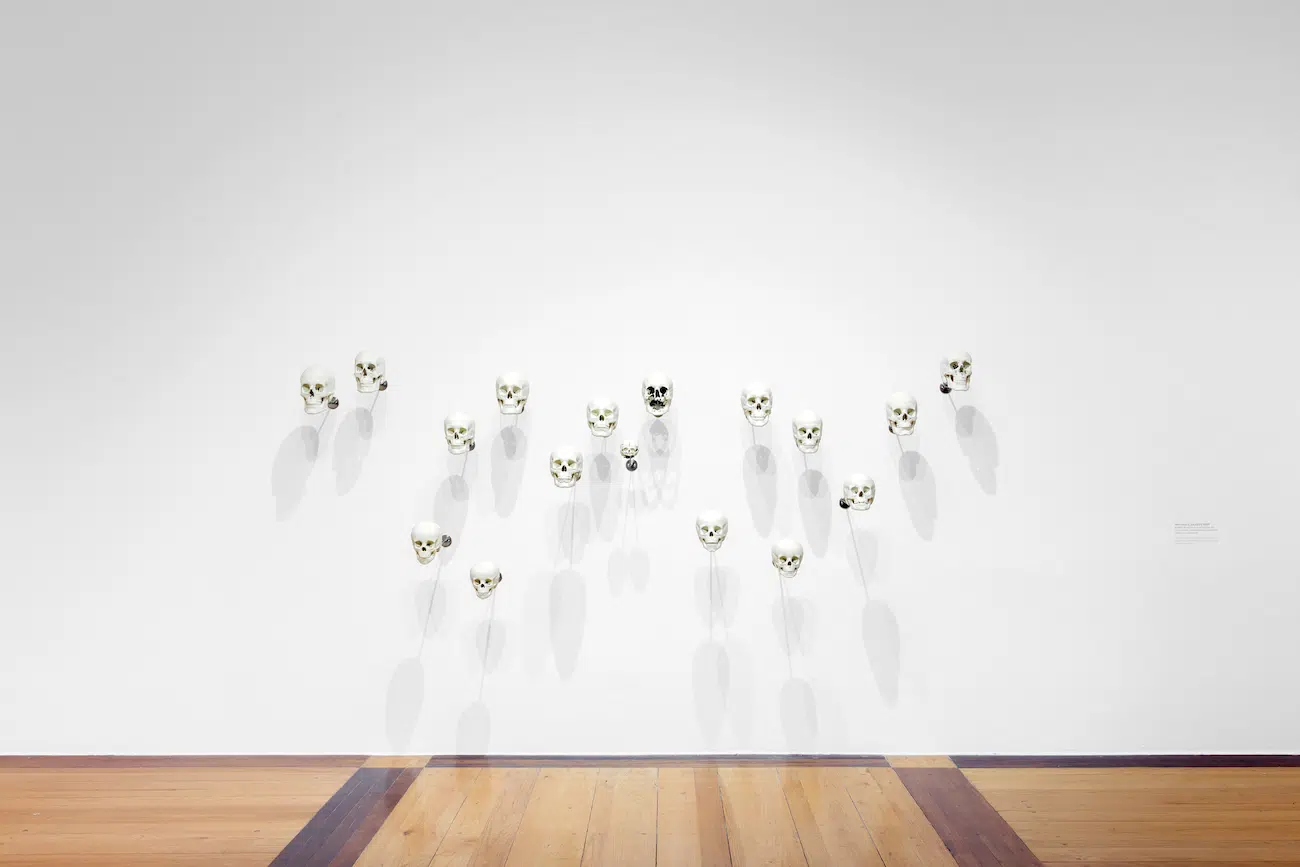
Curated by Tobias Ostrander, the exhibition presents works made with materials including eggshell, human hair, and butterfly wings. Rather than following a chronological order, the show is divided into six thematic sections that trace different ideas within de la Mora’s practice.
The title La Petite Mort refers to the connection between pleasure and death. It also reflects the artist’s interest in transformation. Materials that have reached the end of their original purpose become something new through his process.
My Modern Met spoke with de la Mora about the exhibition, his unusual materials, and the ideas that have shaped his practice. Read on for our exclusive interview.
Gabriel de la Mora: La Petite Mort. MARCO 2026. Photo by Arthur Mora.
The show is built around six sections: the body, erasure, heat, the edge of desire, touch, and the pleasure of the viewer. How did that structure come about?
Tobias Ostrander, the curator, can speak to this better than I can, but from my side: we worked on this exhibition for close to three years. I gave Tobias access to files from all my work between 1996 and 2022, and later sent him some newer series I’d been working on. In the end, he selected 87 works spanning 2003 to 2025—covering 22 of my 30 years as an artist.
From that material, he chose the exhibition’s title and decided not to present the work chronologically, but instead organized it into six thematic groups: the body, erasure, heat, the edge of desire, touch, and the pleasure of the viewer.
I really loved the result—the museography, and the visual and conceptual dialogues it creates between works from different periods, materials, and series. Brilliant.
What drew you to the title La Petite Mort as a way of reading two decades of your work?
I like the title because it holds so many different readings. Tobias tried to explore a new reading of my work and my proposal as an artist—one that hadn’t been done before—around the sensuality and eroticism present in some works across different series. There’s also the connection between the title and orgasm, as a form of visual and aesthetic pleasure.
For me, La Petite Mort is also connected to the line between pain and pleasure, and to the idea of both life and death—of something appearing or being born alongside its opposite: something disappearing or dying. That tension runs through the monochrome, the abstraction, and the image, through light, through time, through control and its absence.
La Petite Mort, then, is a line between the formal and the conceptual.
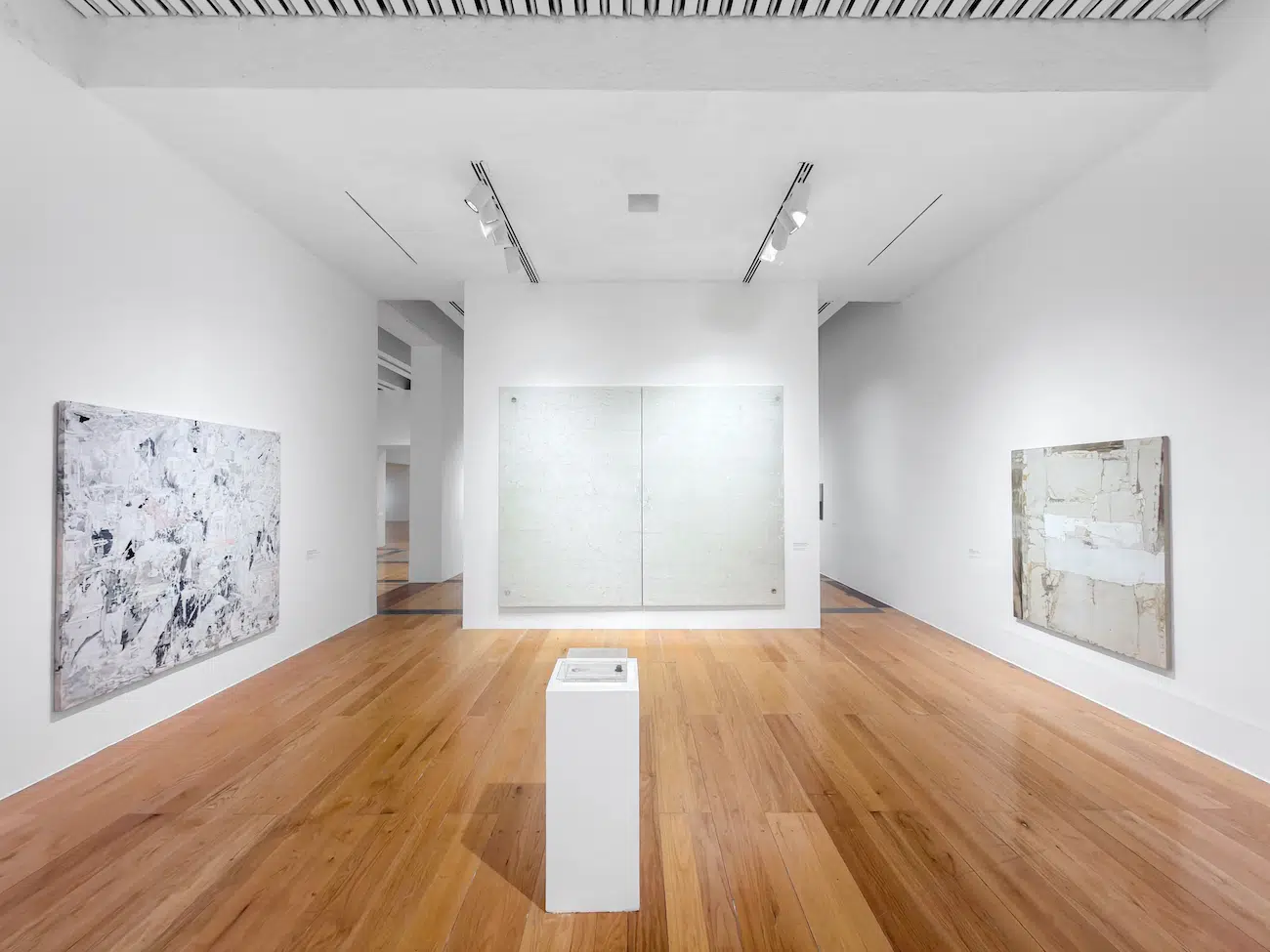
Gabriel de la Mora: La Petite Mort. MARCO 2026. Photo by Arthur Mora.
You often use intimate materials like human hair, butterfly wings, and eggshell. What draws you to materials that carry the trace of a body or a life?
Everything is created and is here to accomplish a function and a service. When this happens, and becomes what remains, the end of something transforms into the beginning of something else through art…
Everything is changing all the time, in constant transformation, until the end. And from that new end, it will become something else—over and over again—until it disappears. And with that disappearance, it will be reborn as something else once more.
If I could reduce art to just one word, it would be transformation.
Can you walk us through your process for one piece, from finding the material to the finished work?
The beginning of any work starts with an idea, written in my notebook. Sometimes the same idea appears over and over on different pages and dates, in different notebooks, in different years… until this idea goes through research. Once I find the material to do it, I ask restorers for advice, to see what will happen to the selected materials through time, and if it’s possible to use them, and how to use them to create a piece—testing tools, support materials, etc. Then we practice the process a lot before starting piece number 1. After checking everything about that first piece, if everything is fine, we start the second one and start a new series. Sometimes the idea creates a piece, the piece creates a series, and in the end this new series usually creates a new medium.
We document the process of each piece through written information, videos, and photos, and it is part of the archive of the work and the series.
The titles of the works are amounts — numbers — and these numbers are the counting fragments of each work. Numbers do not need translation; they are pure information. They are global, universal, the same everywhere.
Your work seems to balance obsessive, controlled labor with materials that are naturally fragile or decaying. Is that tension something you think about consciously?
A teacher told me once that there is no art without obsession. This teacher was Robert C. Morgan, during my MFA at Pratt (2001–2003).
I work on some series with total control, and other series without any control. I work with organic and synthetic materials.
I tried this with the burnt paper series: something as ephemeral as burnt paper becoming eternal… and I did it!
Making the impossible possible, through repetition and difference.
Sometimes I do things with consciousness and sometimes without consciousness, with and without control—something so precise and perfect, sometimes so free and imperfect… always exploring in opposite directions: forward and backward, over and over…
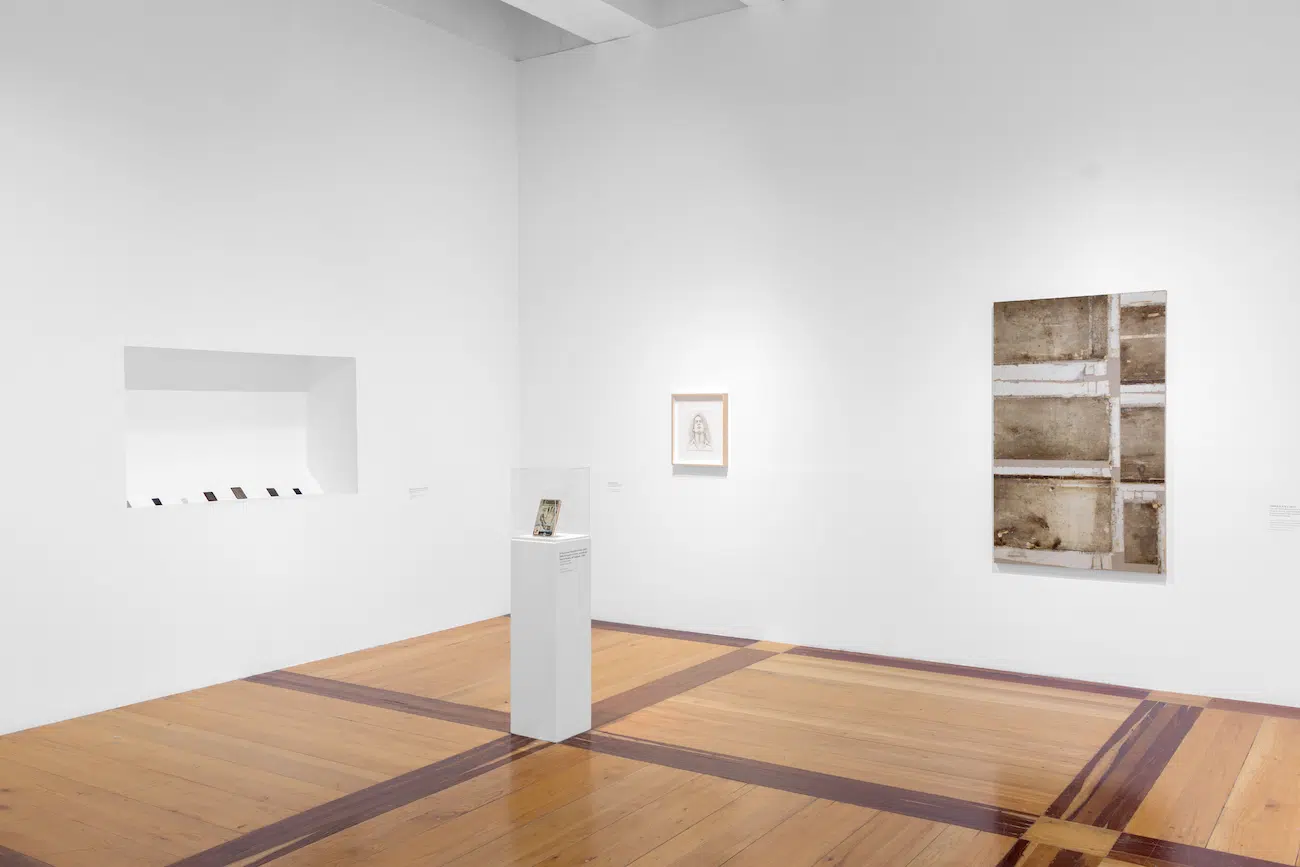
Gabriel de la Mora: La Petite Mort. MARCO 2026. Photo by Arthur Mora.
What connects the organic pieces to your pieces made from eroded architectural surfaces?
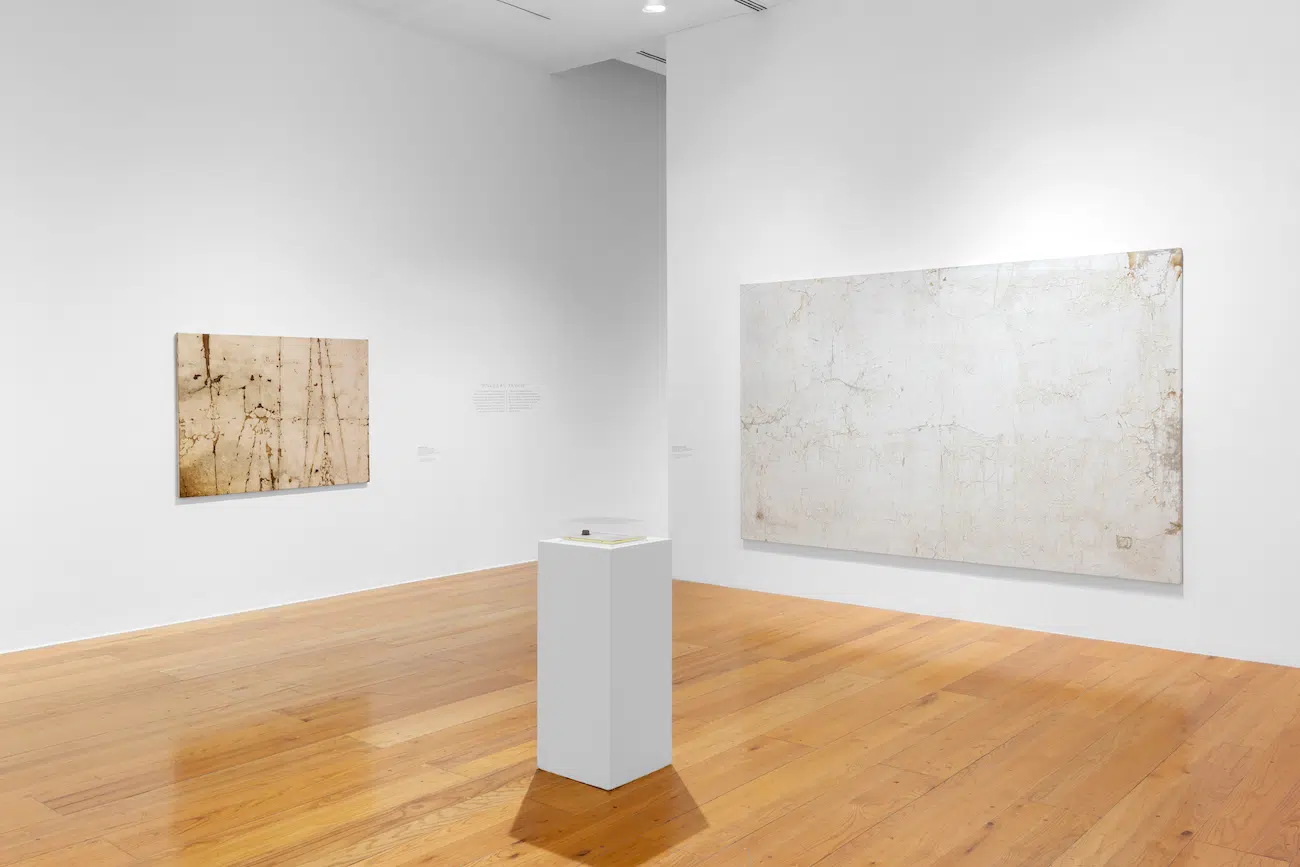
The connection runs in several directions, both bodies of work are experiments in painting without paint.
This was also a breaking point in my career, I quit painting in February 2004, then returned to it in 2006 and again in 2013, not as an architect, but as an artist returning to architecture through material.
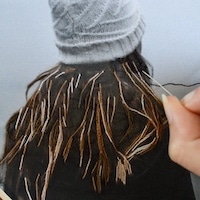
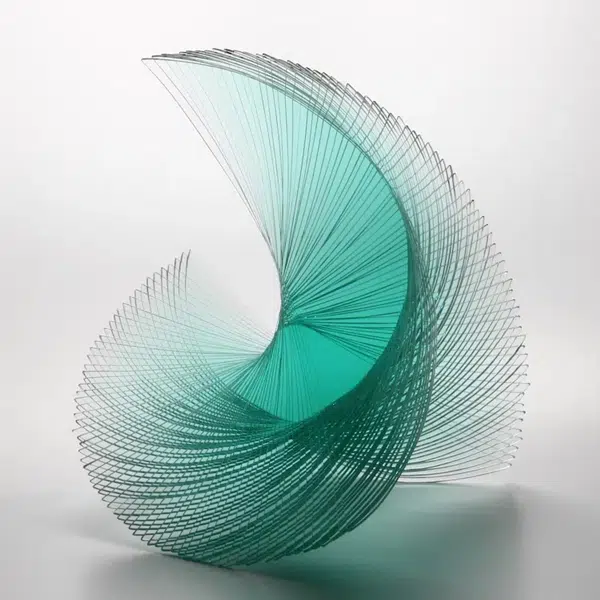
The CaCO3 series uses fragments of white eggshell from chickens, echoing the ceilings, walls, and floors of houses from the late 19th century, architectural surfaces eroded and discarded after decades or centuries of accomplishing their original service and function. The butterfly wings series comes from that same impulse, extended into organic material: eggshells, then human and horse hair, then feathers, and finally butterfly wings, arrived at on August 19, 2019, a few months before COVID.
Both bodies of work take something built to serve a function architectural or biological and let it become a surface for painting once that function is over. As a child, I always dreamed of painting with colors and patterns taken directly from nature, because there are no colors and patterns better than nature, not even with the best technology or artificial intelligence.
The accompanying publication ties your work closely to themes of death and eroticism. How do you feel about your work being read through that lens?
The first time Tobias presented me with the title of the exhibition and the book, La Petite Mort, I felt a little uncomfortable, because of the connotation with orgasm on one hand—and on the other, I liked the connection between death and pleasure.
I read that the only instant a human doesn’t think is during orgasm; there’s also the connection with aesthetic pleasure, which has been present since the beginning and continues to this day in my artistic proposal.
I see metamorphosis as a double birth and a double death: a butterfly born from an egg, then a caterpillar, then a cocoon, and then a butterfly… a double birth and a double death.
Always in opposite directions—forward and backward.
An idea, a work of art, everything can generate beauty, pleasure, eroticism, knowledge, emotions. For me, beauty and knowledge—the formal and the conceptual—cannot exist without one another.
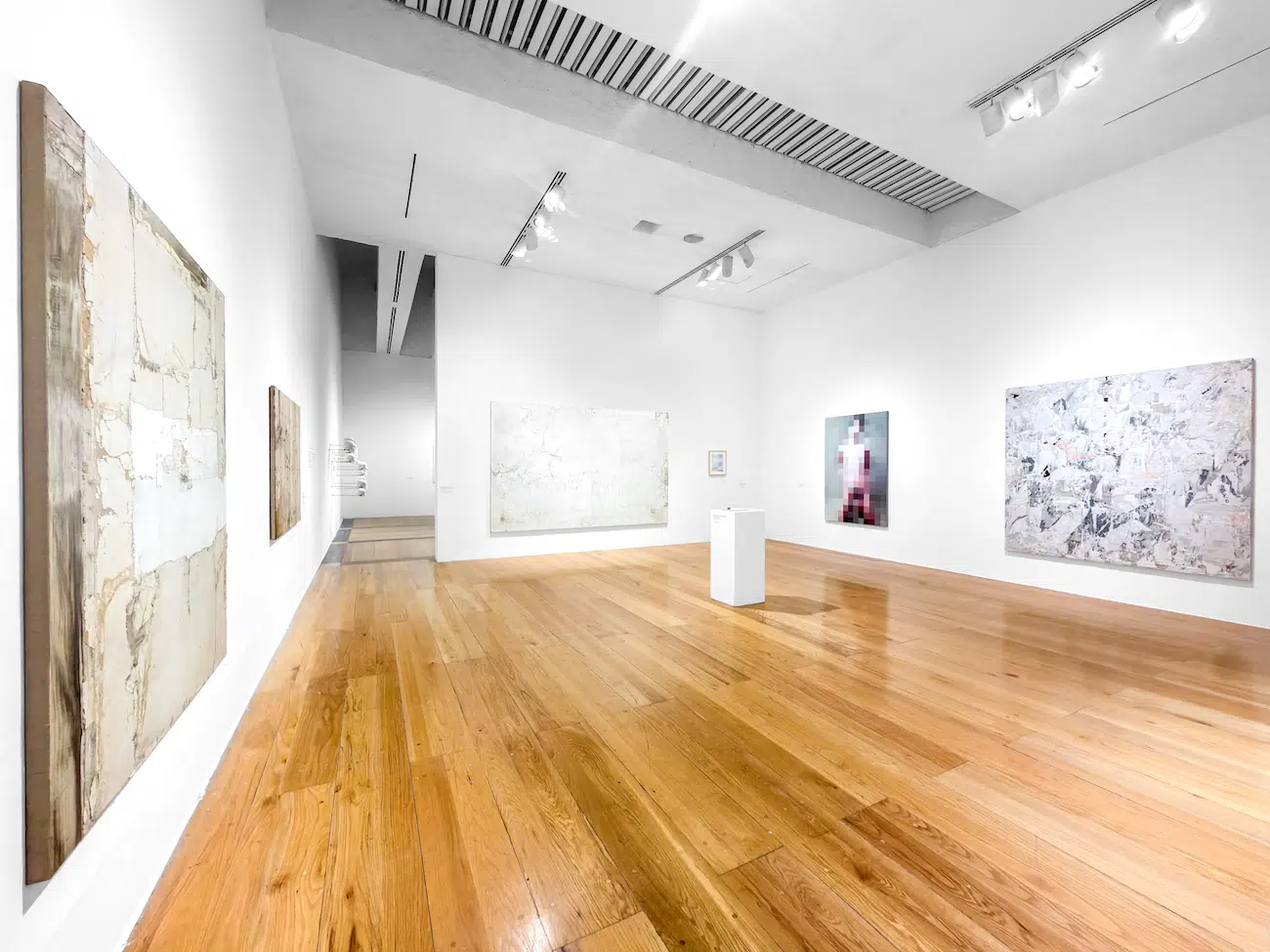
Gabriel de la Mora: La Petite Mort. MARCO 2026. Photo by Arthur Mora.
Some works date back almost twenty years. Seeing them now alongside recent pieces, has your understanding of your earlier work changed?
Everything looks different and is the same idea over and over, each material gives a different answer, a different result.
My first piece shown there is from 1972, when I was 4 years old, in kindergarten: a letter “M” exercise, forward and backward, showing my dyslexia. If you look at this first piece and all my work up until the last one, it’s the same.
The only way to be different is by being yourself, something that sounds so easy but is the most difficult thing to do and to be.
This raises a question: when does an artist’s career start?
What do you hope visitors feel or realize by the time they reach the end of the exhibition?
The exhibition at Museo Marco in Monterrey could be seen from beginning to end, or from end to beginning, forward and backward. A dyslexic museography?
Each visitor will experience the exhibition, and each piece, in a different way—with or without information.
I have received so many comments, in person and through social media, from people I know, followers, and people I don't know in person. Their comments are amazing. Many of them have seen the exhibition “La Petite Mort” at Marco several times, and there are so many comments going in different directions.
To me, art is for everyone. The first impact of any art piece is visual, through the eyes. Then, after contemplation, it starts raising questions. And when something starts with emotion, and then makes you think—that's the best thing that could happen to art.
Beauty and knowledge as equals.
View this post on Instagram
View this post on Instagram