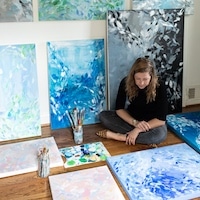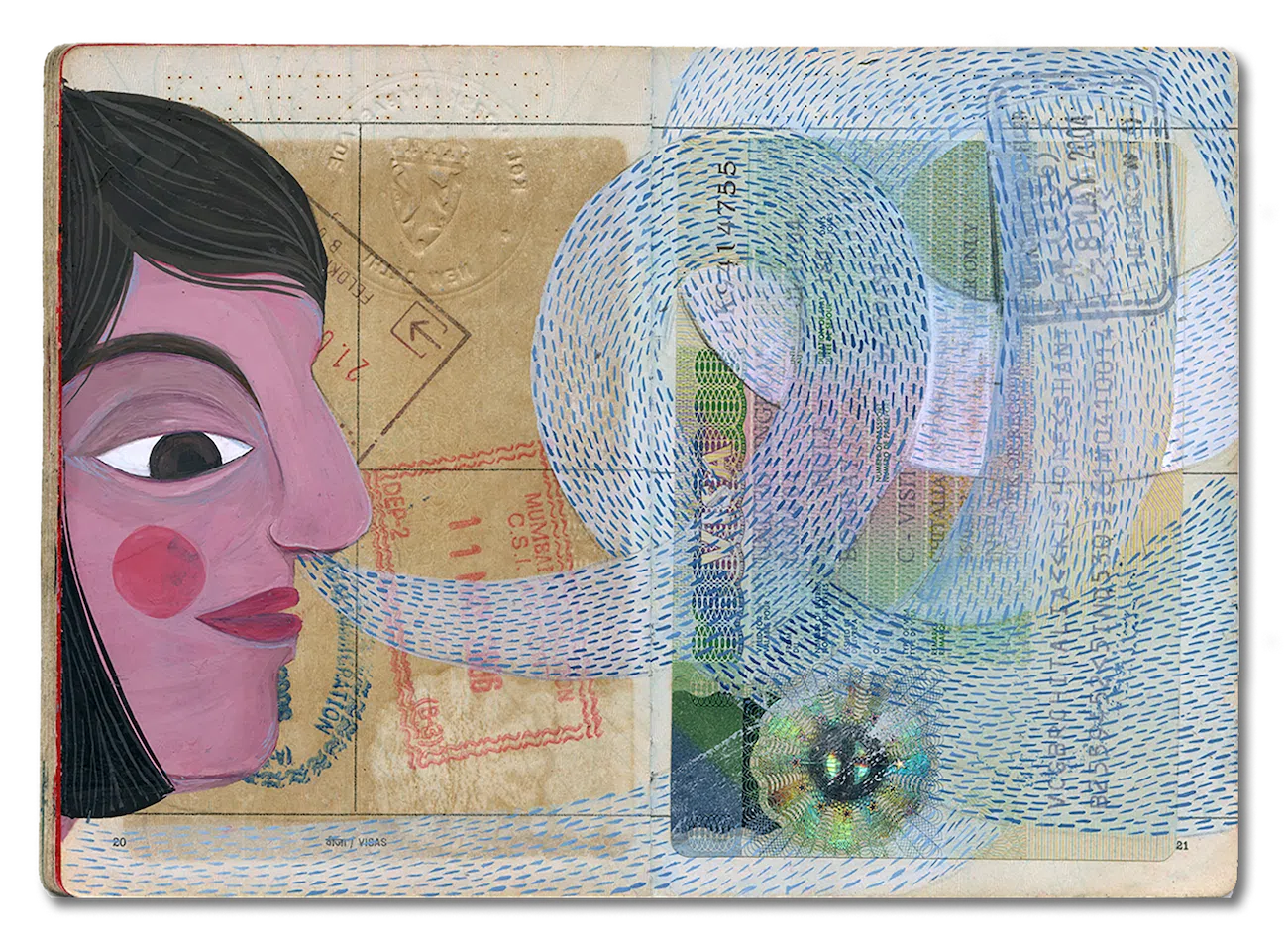
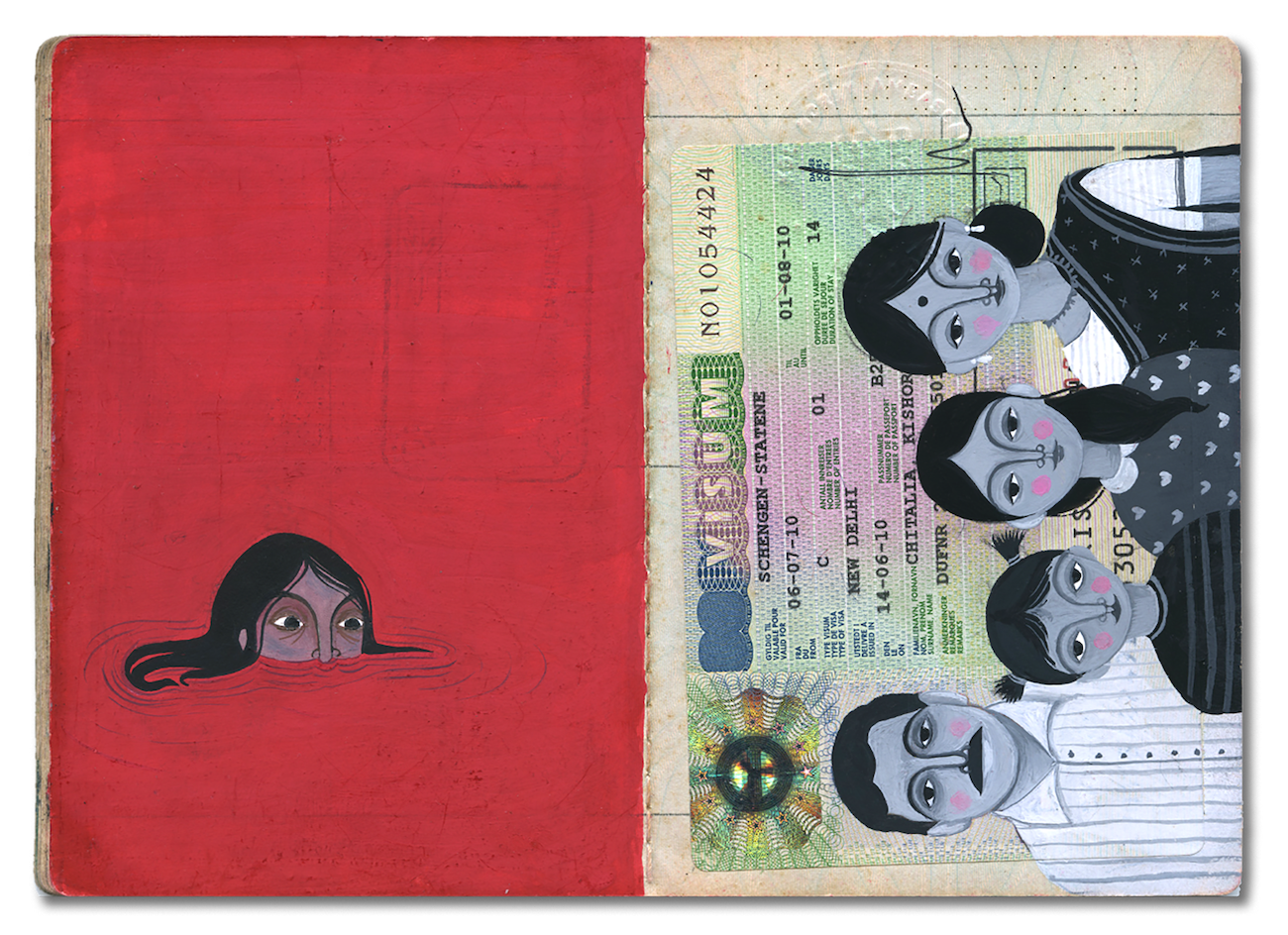
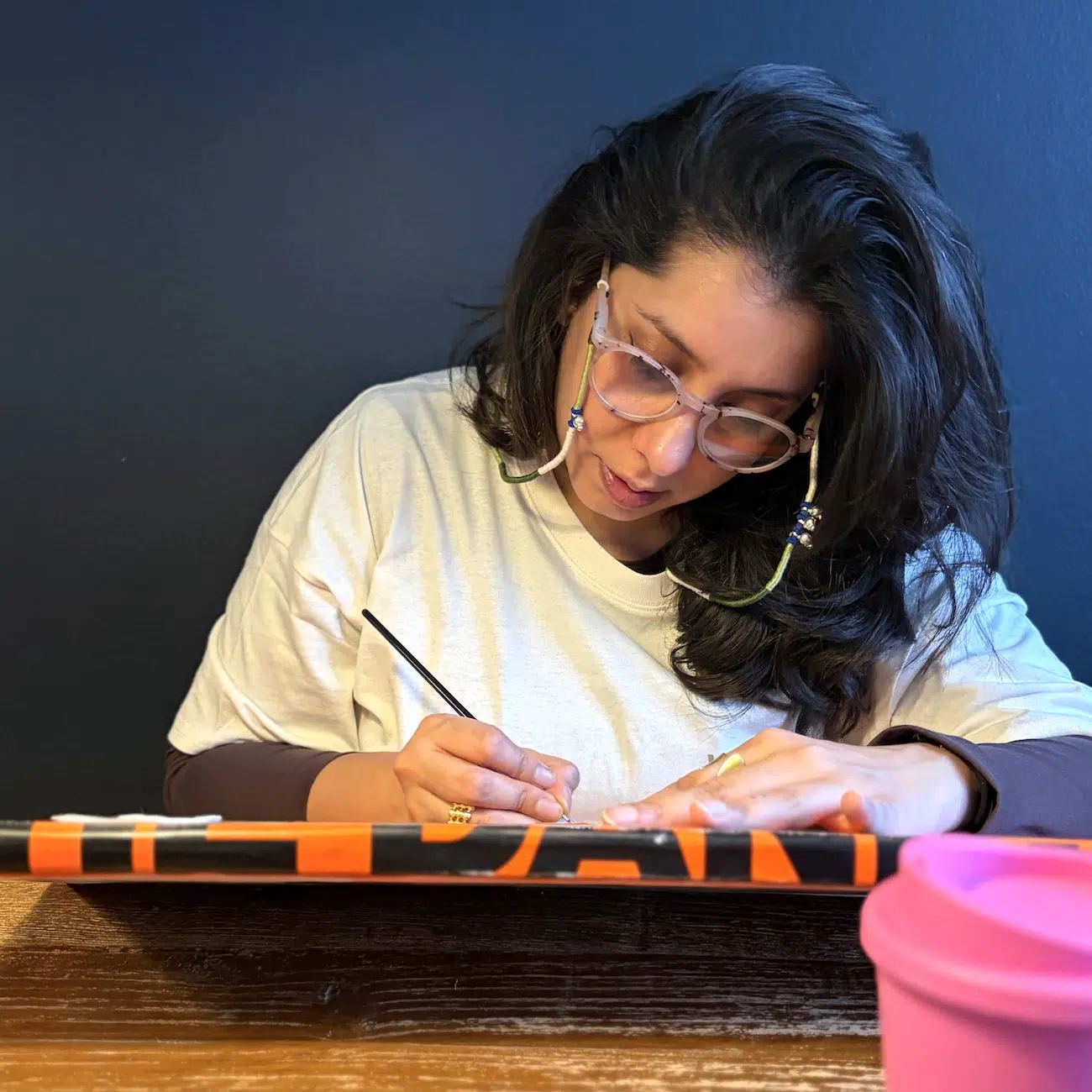
Copenhagen-based illustrator, designer, and artist Radhika Chitalia creates work that draws from Indian visual traditions, including Mughal and Pahari miniature painting. One of her most personal projects began with an object she had held onto for years: her late father’s expired passport. After his death, the document remained tucked away with his belongings, too meaningful to throw out but difficult to revisit. Eventually, Chitalia began painting directly onto its pages with gouache, working around the existing visas, stamps, and other traces of his travels.
What began without any larger plan eventually became P455P0RT, a series of 16 paintings that Chitalia describes as a kind of grief diary. Rather than illustrating the places her father never got to visit, the images reflect songs, quotes, memories, humorous moments, and other thoughts that stayed with her as she worked. As she began sharing the project, it also connected her with others who had held onto objects belonging to people they had lost.
My Modern Met had the chance to speak with Chitalia about how her father’s passport became a canvas, the influence of miniature painting on her work, how the project changed her relationship with grief, and why she plans to continue painting on the documents he left behind. Read on for our exclusive interview with the artist.
What made you hold onto your father’s passport after he passed away, and when did you first realize you wanted to turn it into an artwork?
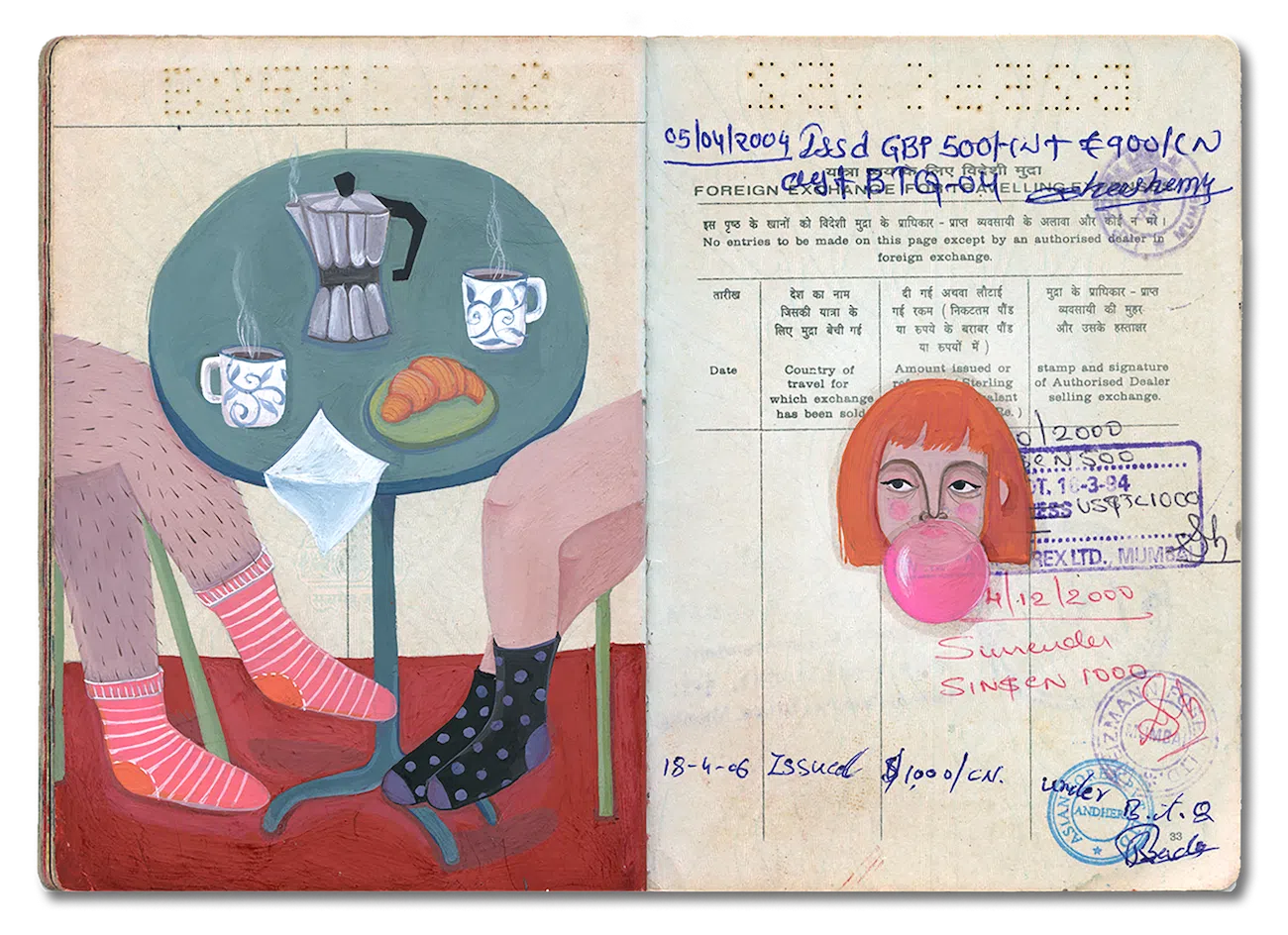
After my father passed away, his documents sat in a drawer. They were too precious to throw away, but too painful to look at. He had dreamed of traveling with my mother after retirement, but never got the chance. I felt compelled to do something with his passport, to not let it sit there alone. I began painting on the pages he never got to use, without a plan or even the thought that it might become a larger body of work. I just needed somewhere to put what I was feeling.
How did the places your father never got to visit shape the images you chose to paint on the empty pages?
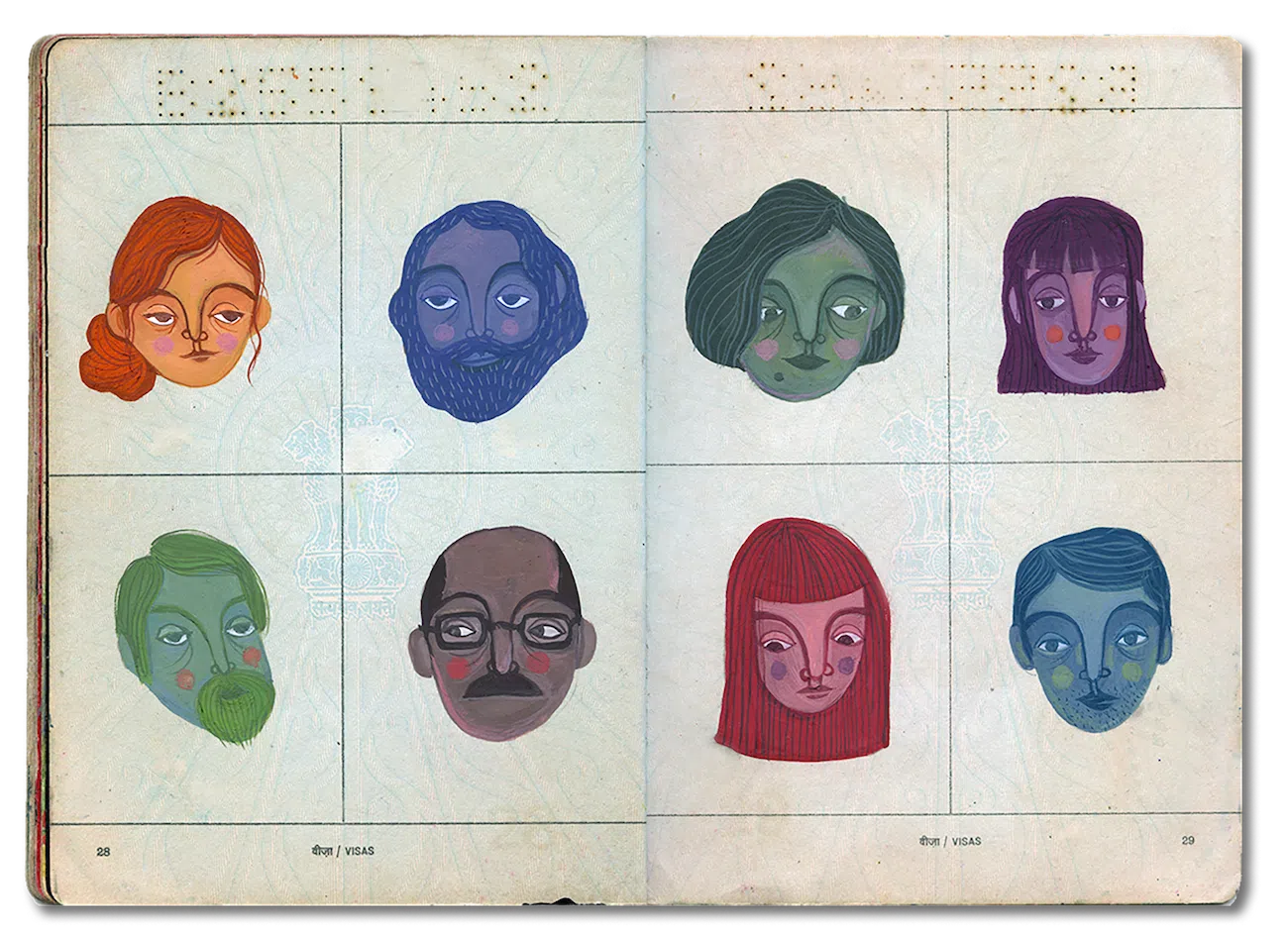
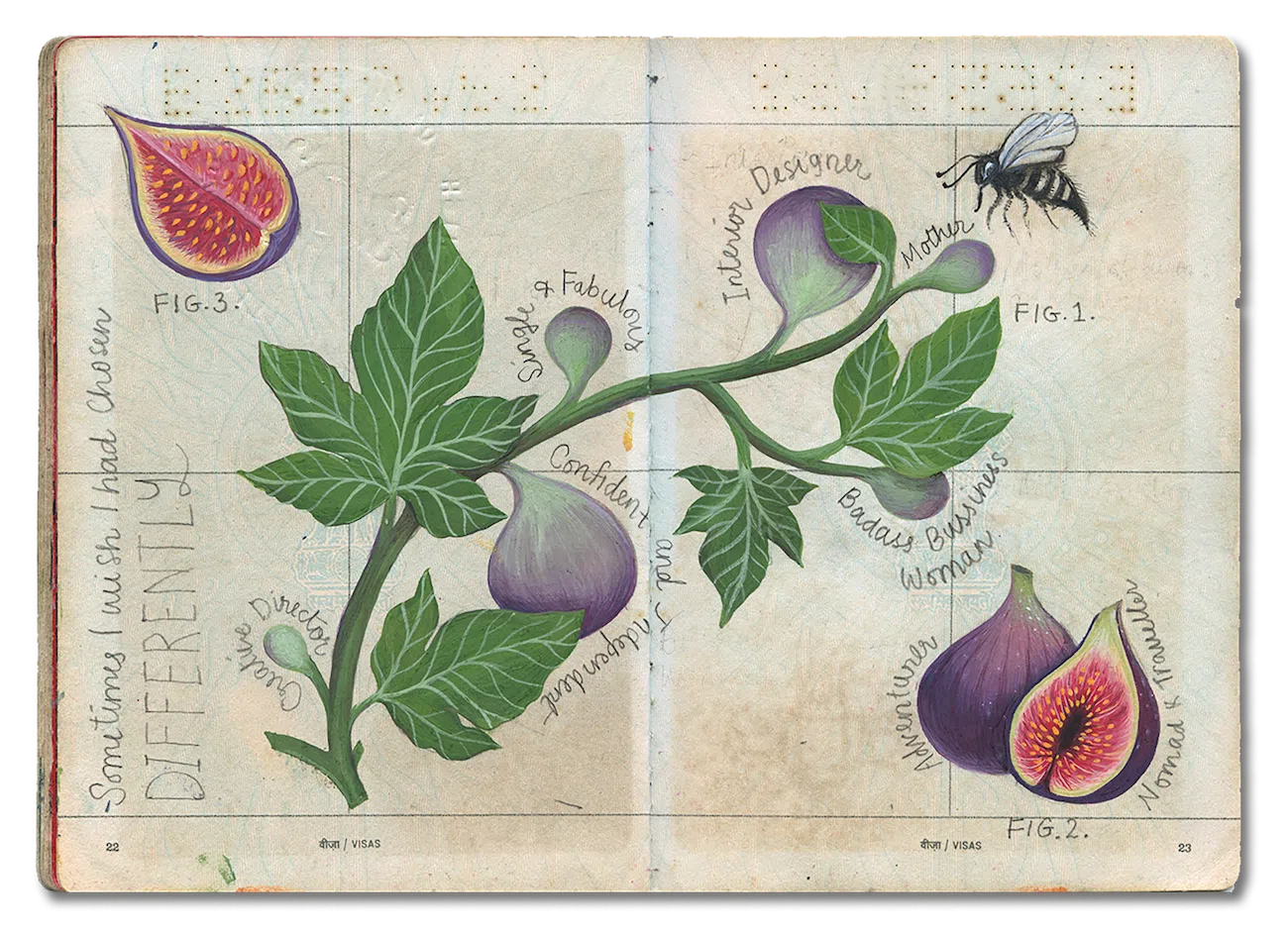
The images weren’t really about my father or the places he hadn’t visited. Looking back, the passport became a kind of grief diary before I even realized it. I painted things that stayed with me: a song I’d heard, a quote I’d read, a lingering thought. I was trying to understand myself through painting, with his passport as a safe space. It became a form of active writing, but painting instead which is probably why the work moves between the humor, silliness, grief, and the absurd.
How did you approach painting around the existing stamps and visas without losing what made the passport personal?
The stamps and visas often became part of the story. Sometimes a stamp made a lovely base to sit a monkey on; other times, a mark would peek out from behind a painting. They sometimes informed what I drew and how I approached the page. It was a lovely challenge to weave them in. The paintings and the original markings coexist, rather than one completely replacing the other.
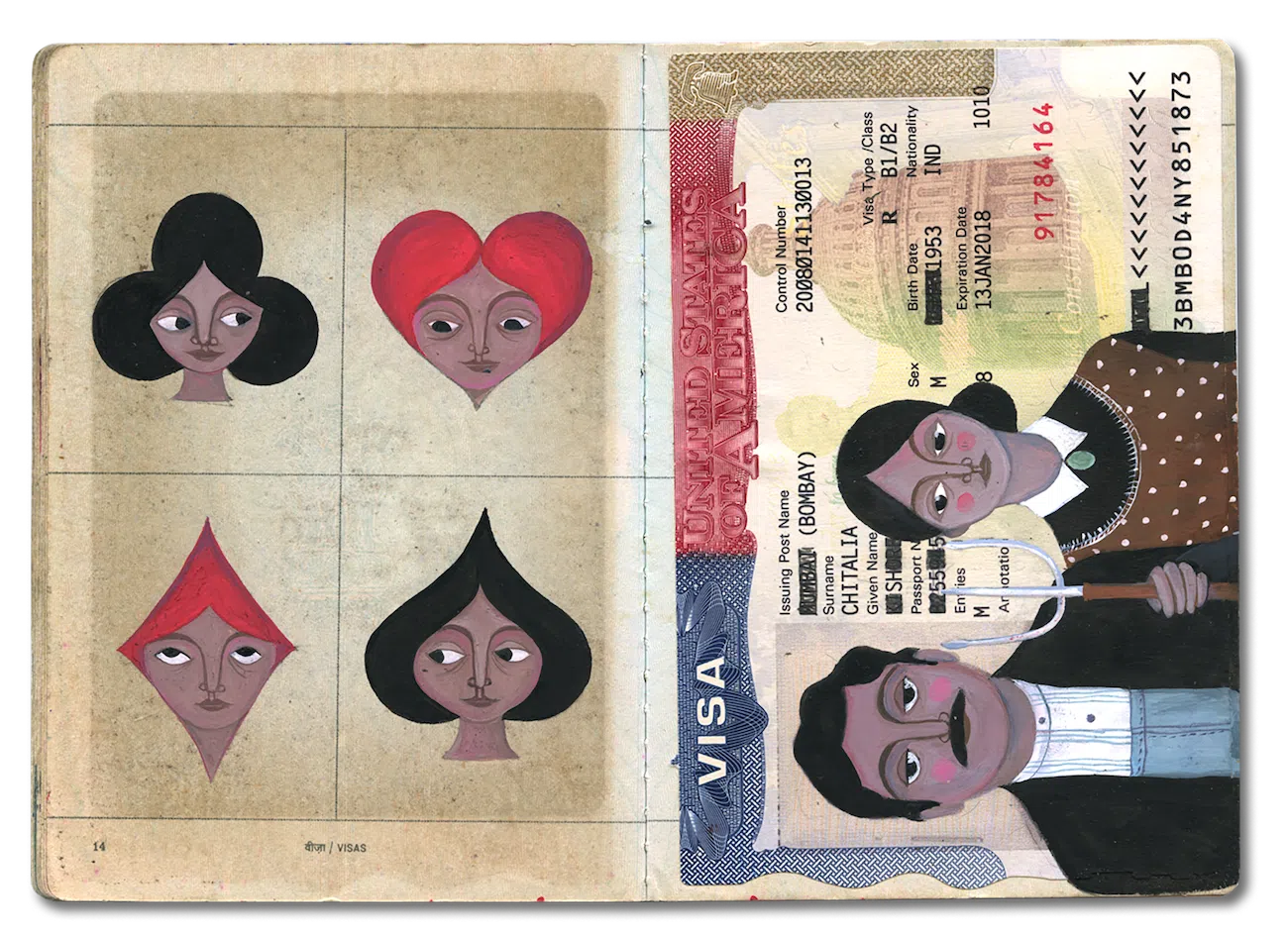
What was the process of painting all 16 pages like emotionally? Did your relationship to the passport, or to your grief, change?
Initially, I didn’t think of it as healing. I was simply compelled to paint, without a plan or an audience. The passport gave me a safe space to work through feelings I didn’t fully understand. The healing became clearer when I started sharing the work and people who had lost someone began reaching out. Being seen in my grief, and helping others feel less alone in theirs, became part of the process. The passport slowly became something I could look at without looking away.
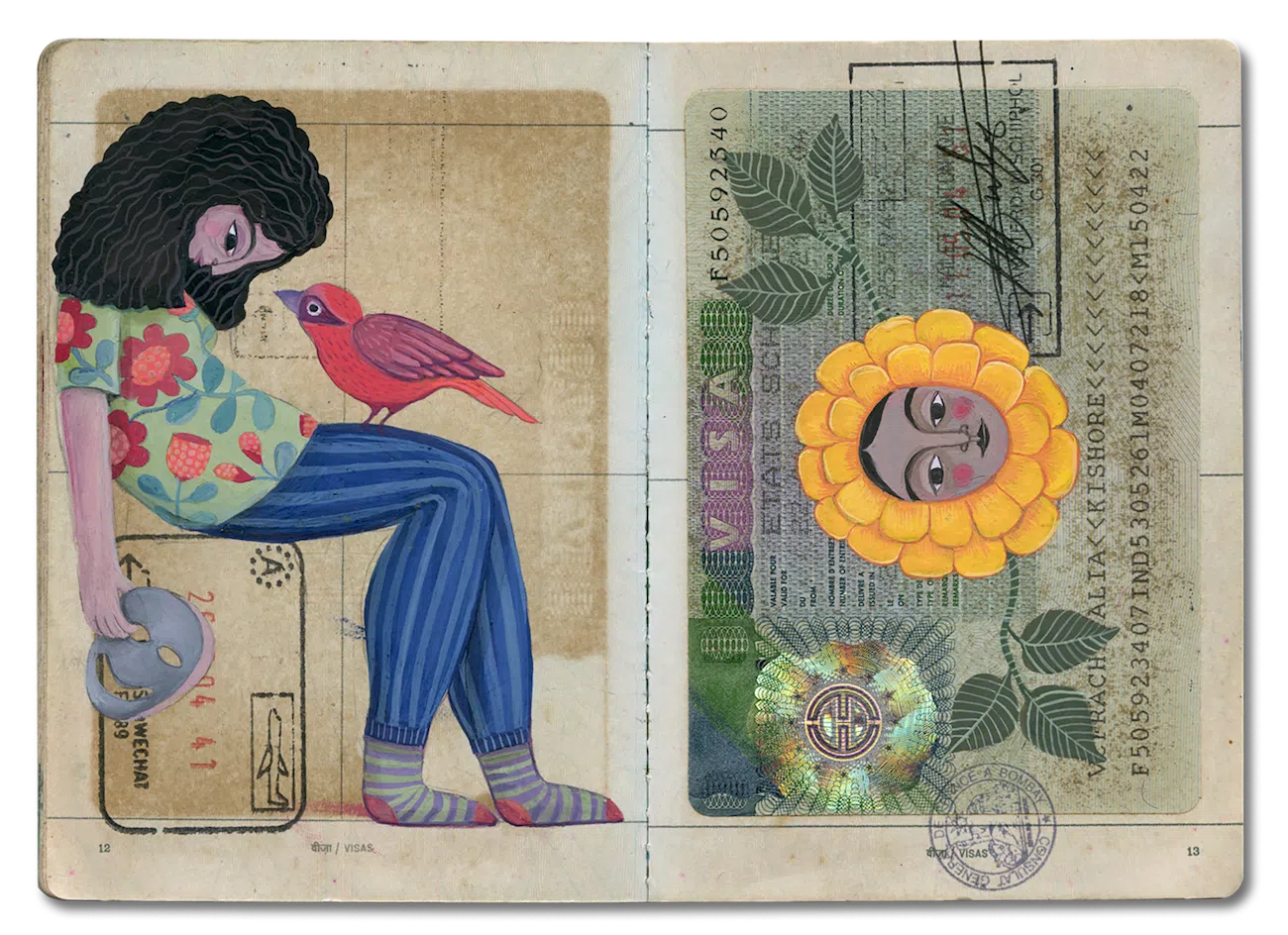
What drew you to Mughal miniature painting for such a personal project, and how did it help you tell this story?
I’ve been drawn to Mughal and Pahari miniature painting for years. I love the stylized trees, delicate flowers, and animals full of character. Besides, the process of miniature painting is therapeutic in itself. Layer upon layer, stroke by stroke, you build an image slowly and deliberately. There is something meditative about that repetition. Working this way on my father’s passport gave me a process to return to, page after page, while I was trying to make sense of my own feelings.
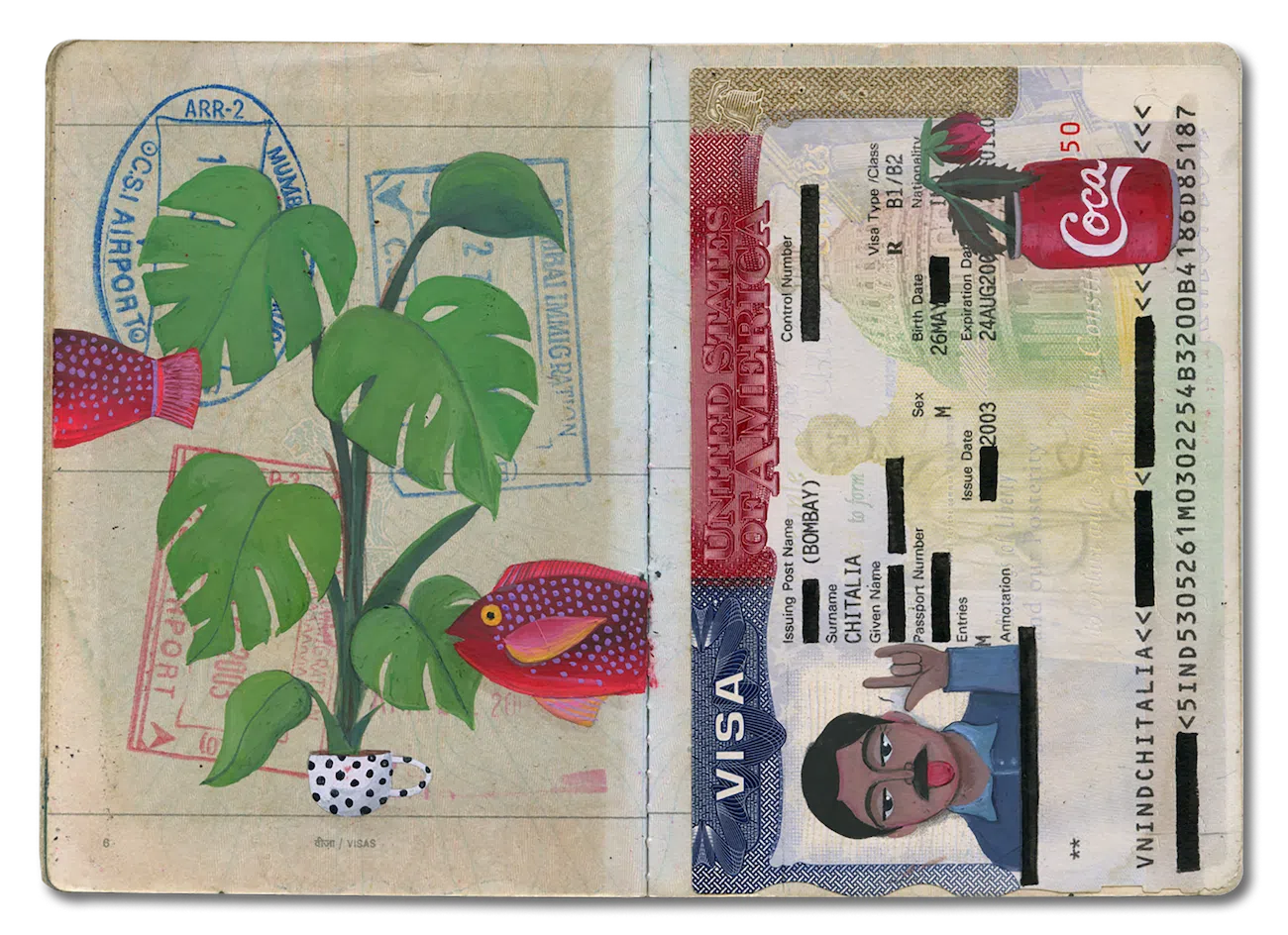
What has it meant to you that the project has resonated with people who have also held onto objects belonging to loved ones?
I never expected the work to reach people quite like this! When people began sharing their own stories of loss and the objects they couldn’t bring themselves to part with, it made the project feel less solitary. It showed me that something deeply personal can also be deeply universal. We may hold onto different things, but often we’re trying to do the same thing: find a way to stay connected to someone we’ve lost.
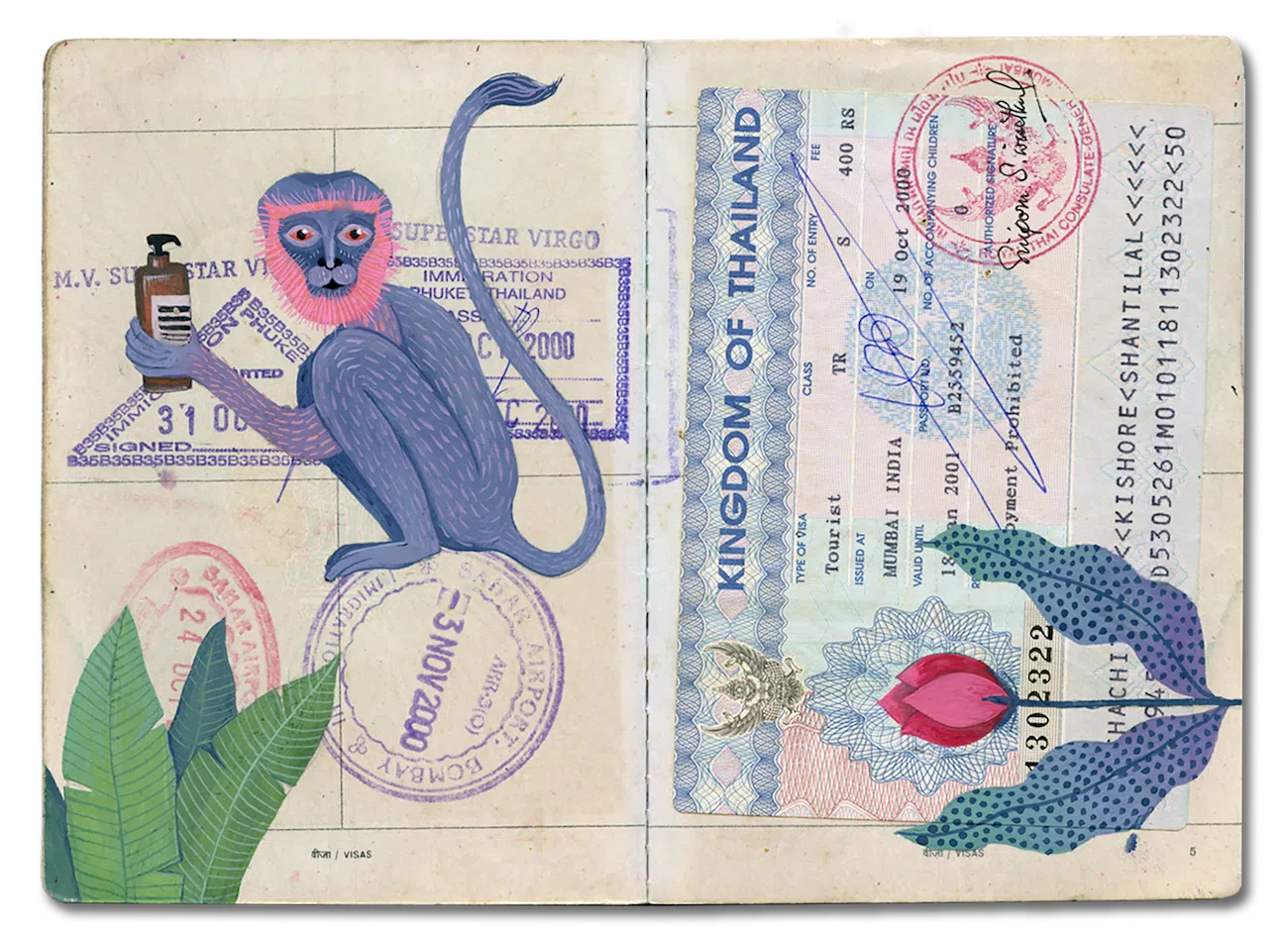
What interests you about continuing to paint on your father’s documents, and where do you see this body of work going next?
I’ll continue painting on these documents. I like the surfaces they provide, and the fact that they already carry a story. They may be meaningless to anyone besides me, my mother, and my sister, and that’s fair. But I see beauty and possibility in them. I want to keep painting on them and give my feelings a place to live, turning these ordinary records of a life into something else.
Rahdika Chitalia: Website | Instagram
My Modern Met granted permission to feature photos by Rahdika Chitalia.
Related Articles:
How This Artist Uses Light and Time To Transform Photographic Paper Into Luminous Art [Interview]
How This Artist’s Travels Inspire Her Stunning Works of Animals and Nature [Interview]