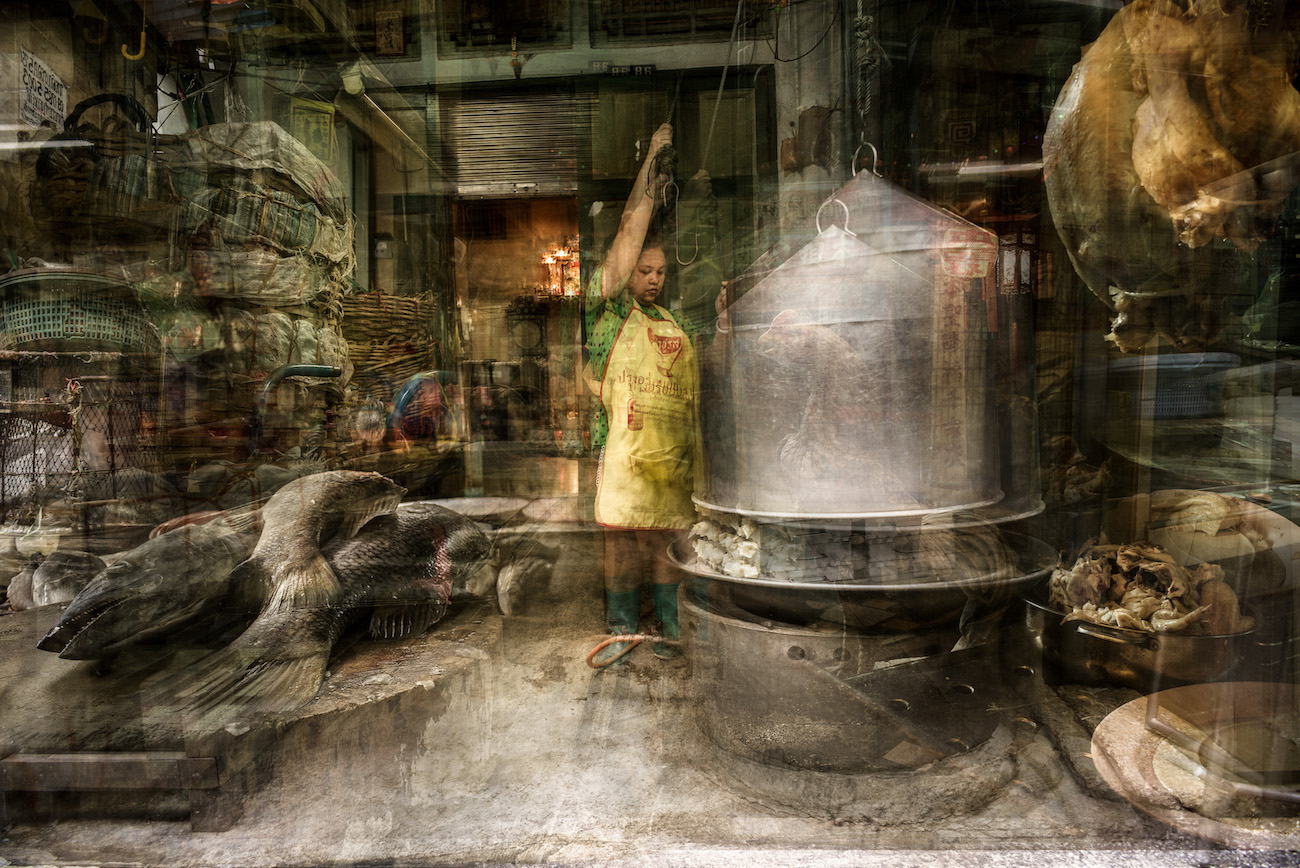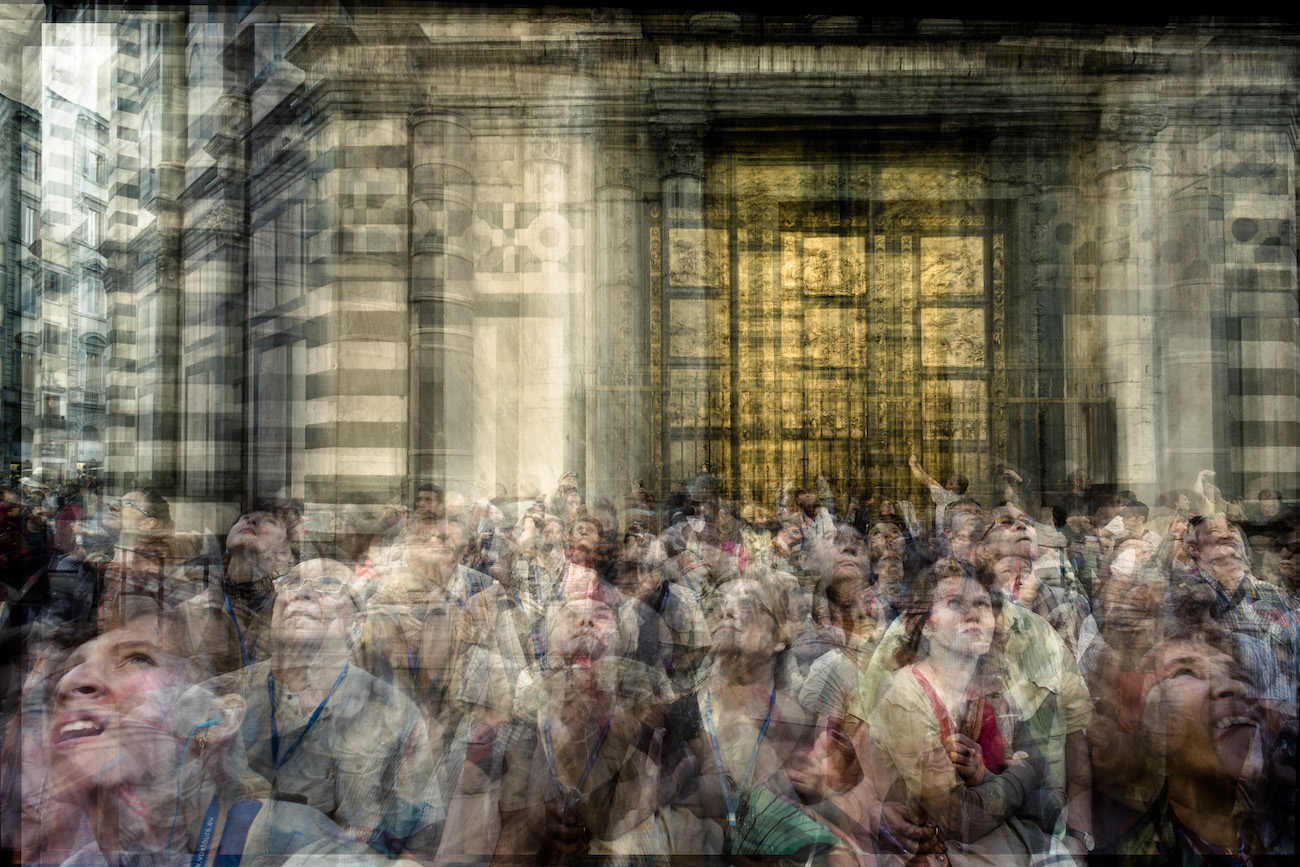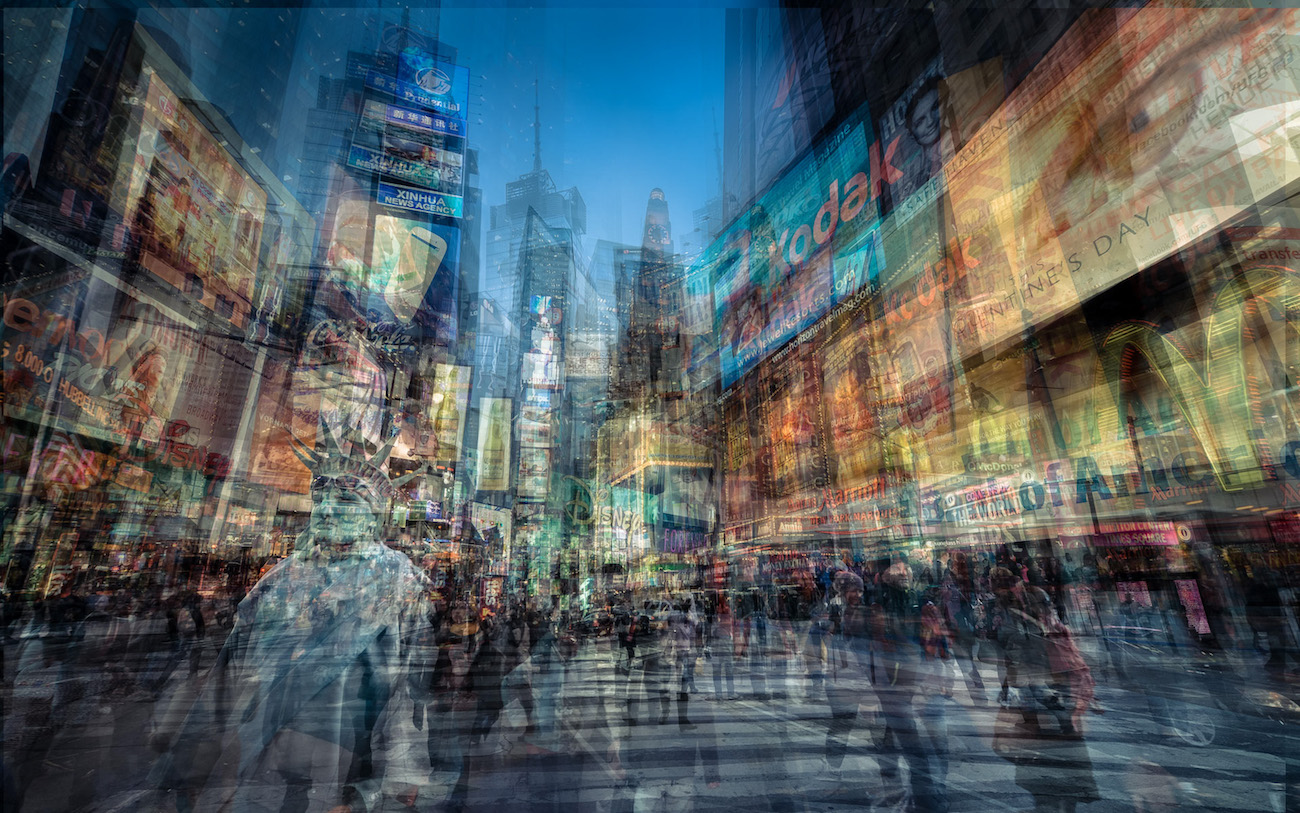
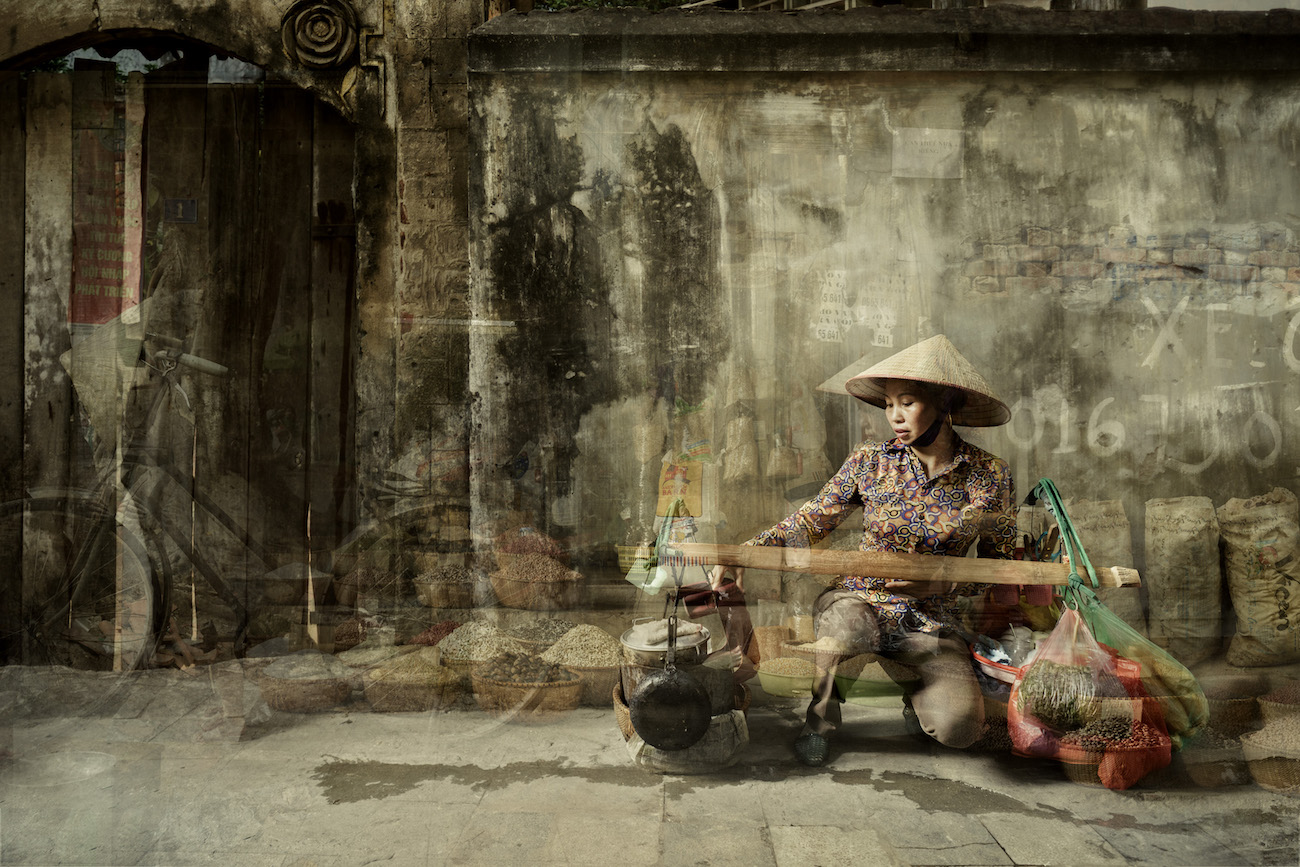
Italian photographer Riccardo Magherini has spent 15 years exploring how we remember the places we visit. His ongoing project, The Shape of Memories, brings together photographs taken across cities including Tokyo, Hong Kong, Bangkok, and Hanoi. He layers different moments into a single image, combining street scenes, architecture, and human figures to reconstruct his experience of each place.
Magherini develops these compositions in the studio weeks or months after taking the photographs. He draws on the fragments that remain in his memory rather than trying to reproduce a scene exactly. The result is a body of work that challenges the idea of photography as a record of one moment in time.
In this interview with My Modern Met, Magherini discusses his creative process and how his approach to photography has evolved over the years. Scroll down to read.
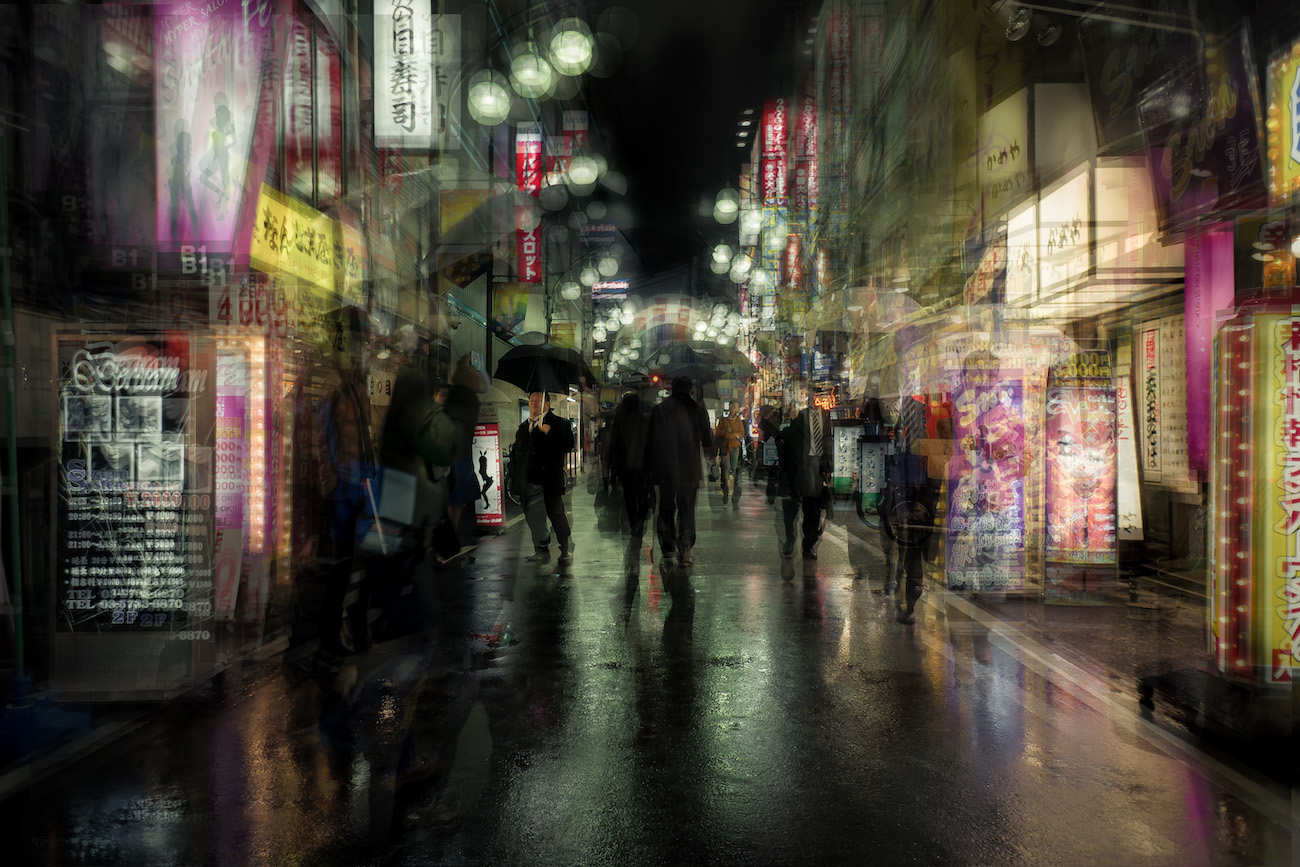
How has spending 15 years photographing cities like Tokyo, Hong Kong, and Hanoi shaped your understanding of photography as a way of remembering?
We have the ability to distill life through memory. We manage to produce the extract of an experience through sedimentation over time. We choose, consciously or unconsciously, which elements will go on to make up the recollection. And it is a process in constant becoming, one that never solidifies, but continually distills itself.
For a long period of my life, when photography had already become my profession, I never took a camera with me on my travels.
The reason was that framing and recording a small portion of a moment of life would have meant creating a landmark in the landscape of that memory, simplifying it. In the future, that small portion would have ended up representing and summarising that moment, taking over and replacing the thousands of small things that surrounded me.
What I wanted instead was for the inevitable process of distillation to be able to use all those fragments without any one of them standing out, so that the experience as a whole would become, over time, something soft and personal, aged undisturbed, so to speak.
For the first time, on the trip to Tokyo in 2011, I decided instead, deliberately, to take a camera with me. The intention was to allow myself to capture all those fragments that surround an experience, a moment.
I did not yet know how I might use that material; I would discover it in the years to come, journey after journey, along a personal path in which I learned to look at the things of life in a different way.
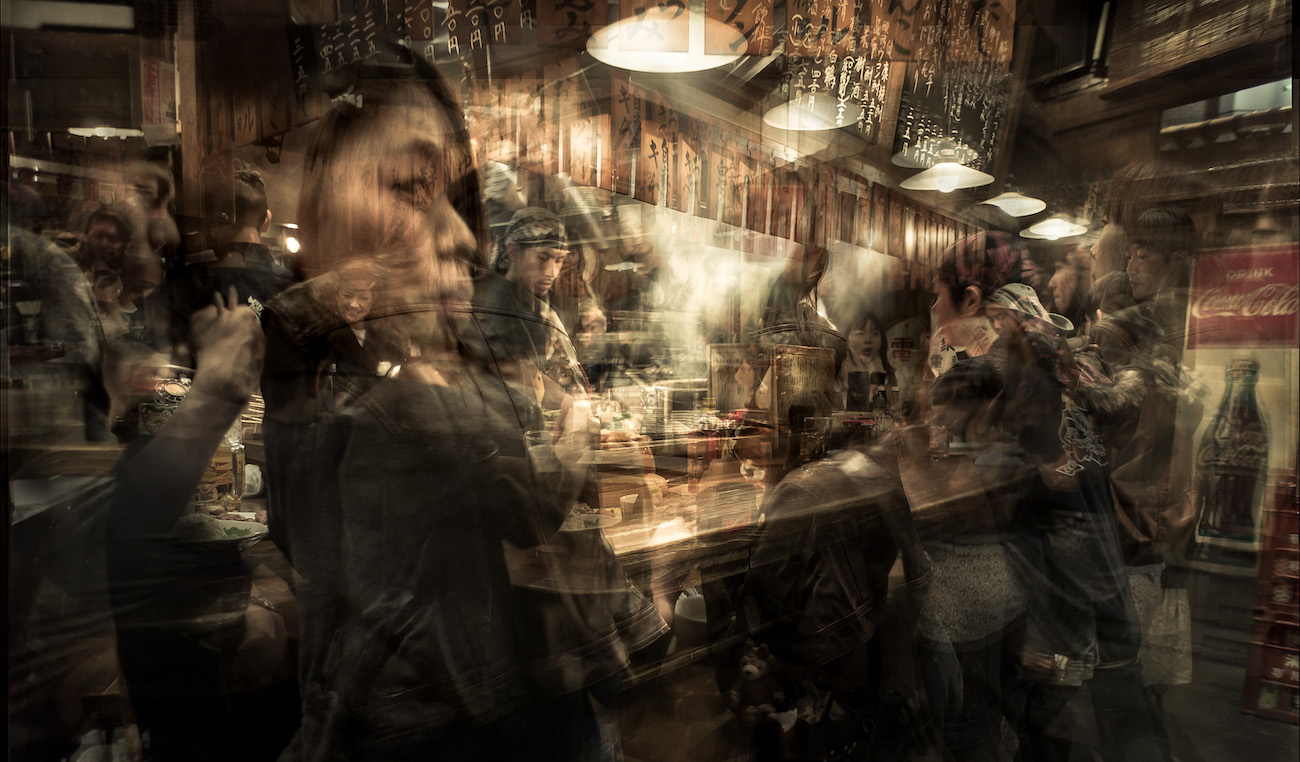
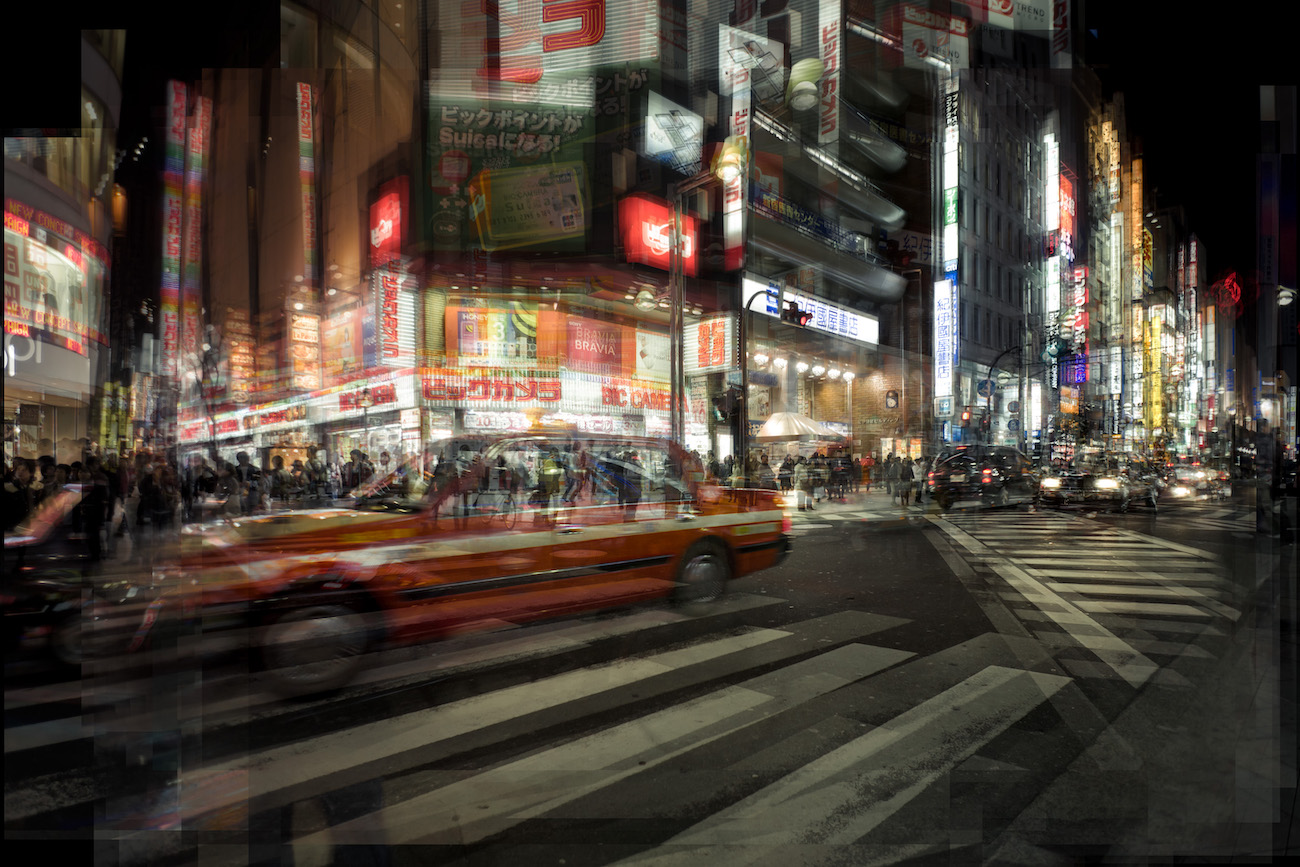
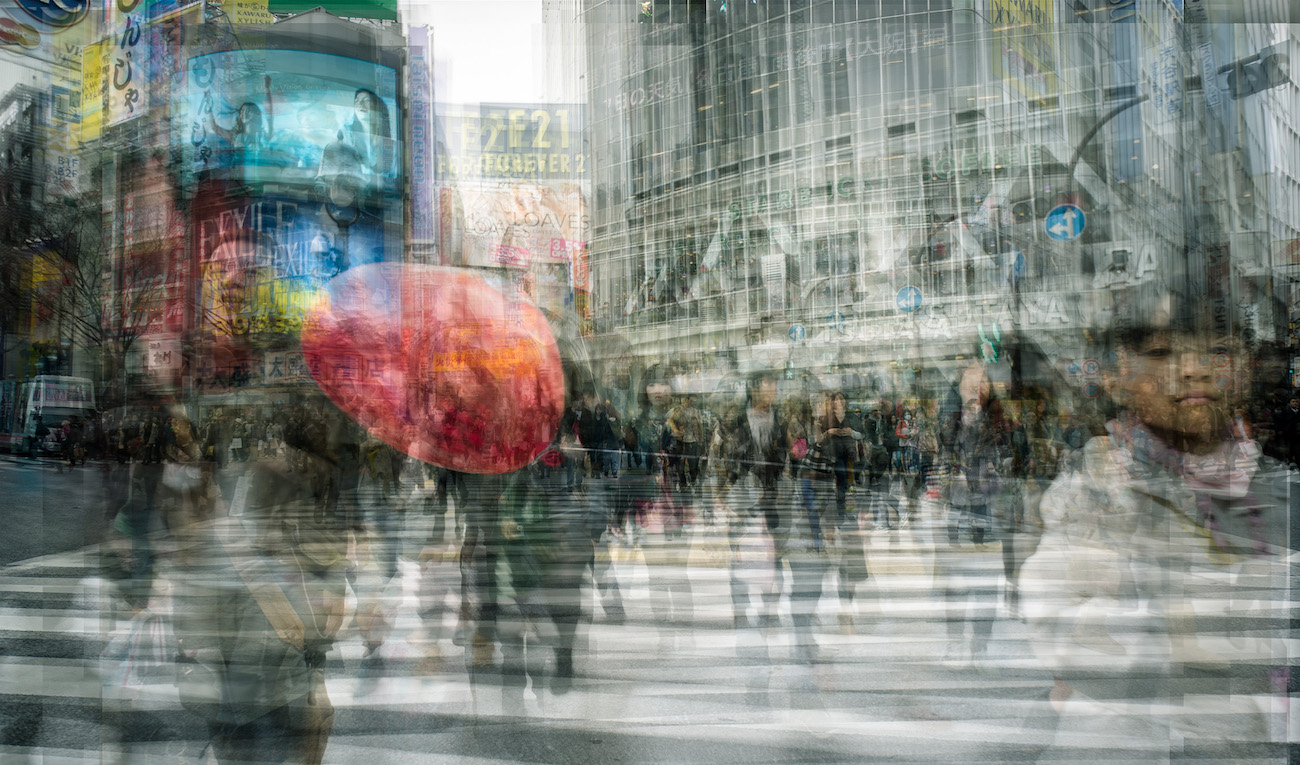
Your work challenges the idea of a photograph as a singular, fixed moment. What possibilities opened up when you began layering time, movement, and memory within a single image?
My first body of work, the Tokyo series, was an immersion in a new vision of space and time, one I did not know. In that work I allowed myself for the first time to bring together different times of the same space, approaching, gradually and with great emotion, the possibility of expressing myself in a way different from photography as traditionally understood.
I admired and, in a certain sense, envied the ability some people have to express the reality they perceive in a very personal way, like those who can paint or draw.
I was fascinated by the idea of bringing the same approach as painting into my world made of photography, of being able to express more freely what I saw and felt.
It was, and still is, an experimental path, made up of phases that have followed one another, changing according to the experiences I lived.
To answer your question, infinite are the possibilities that open up before me when I begin to work on a theme, on a subject, bound as they are to, and sustained by, my imagination, granting me the possibility of freely composing the elements of recollection.
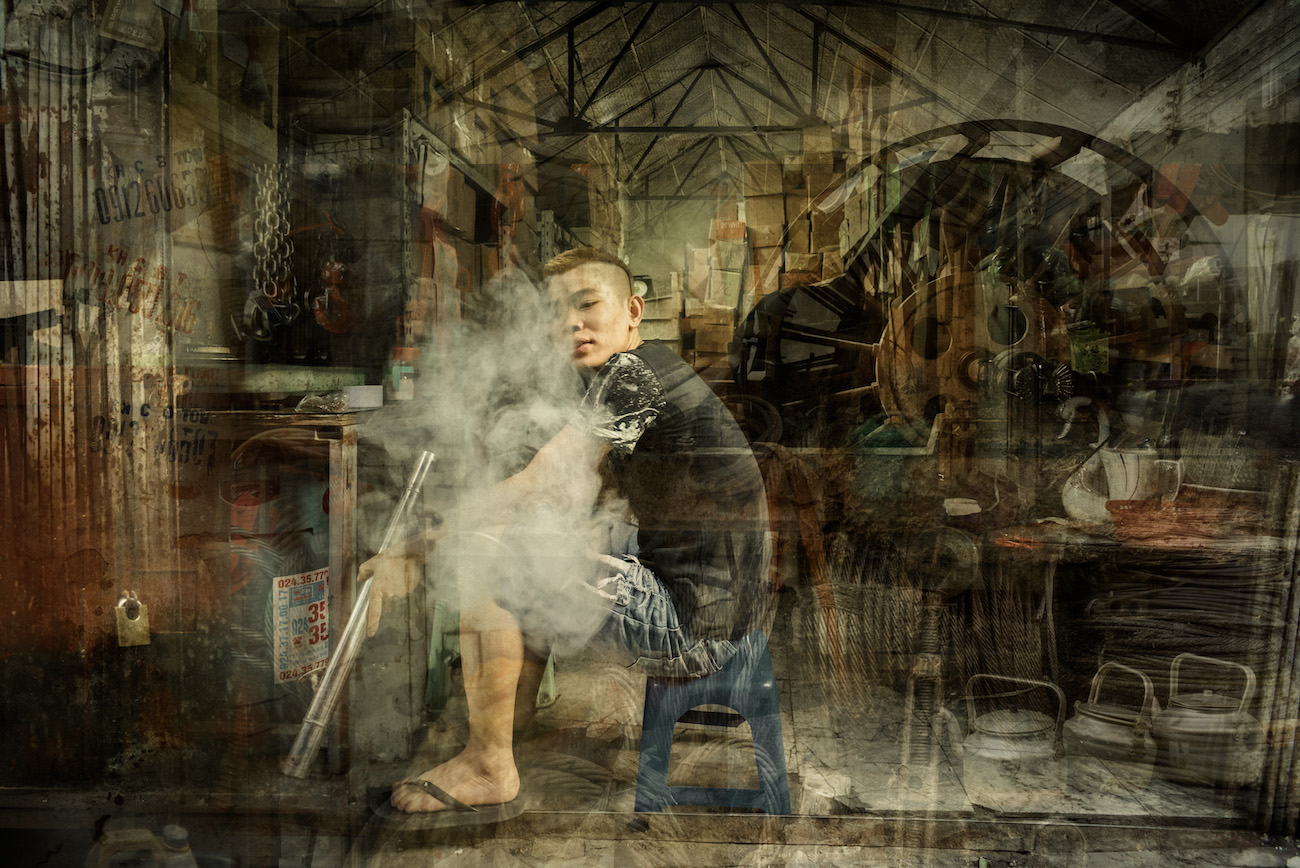
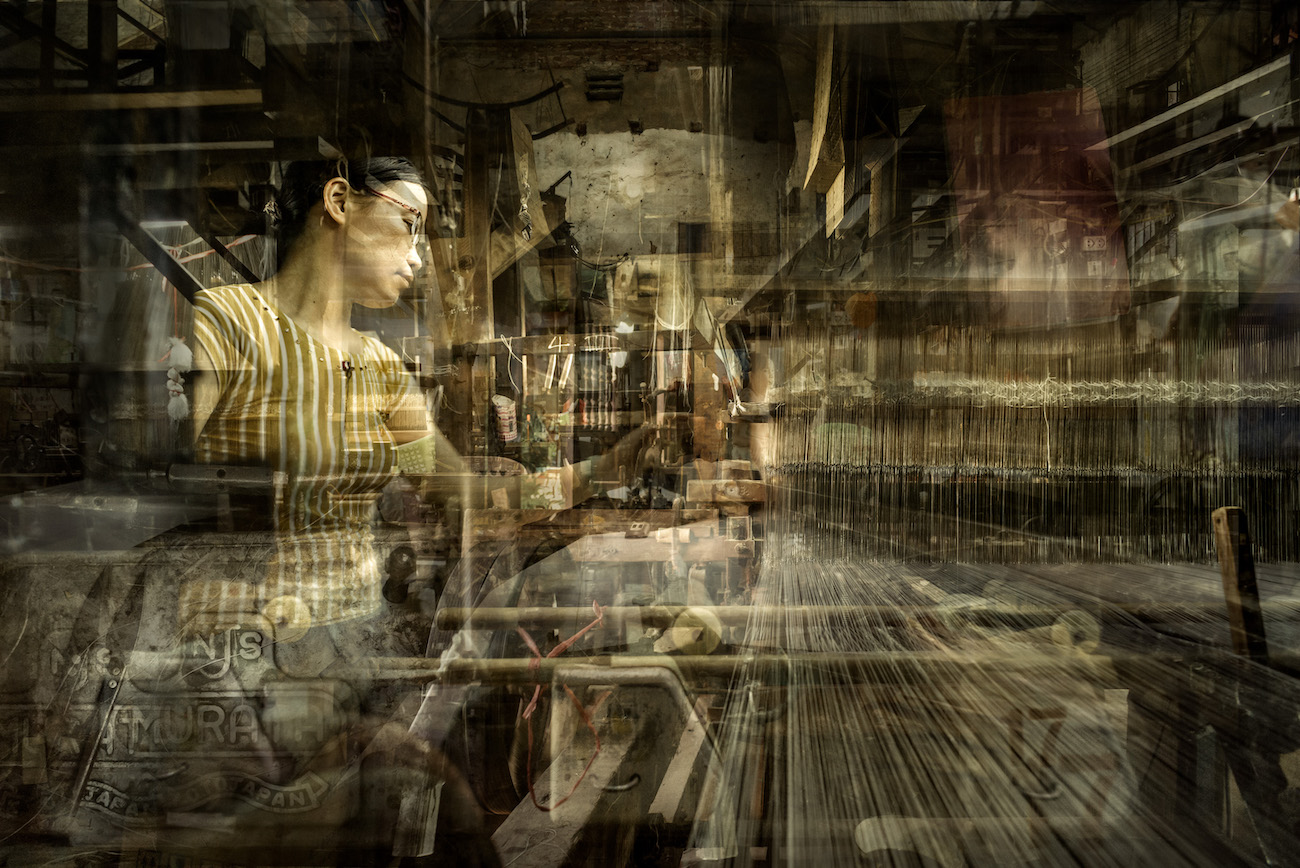
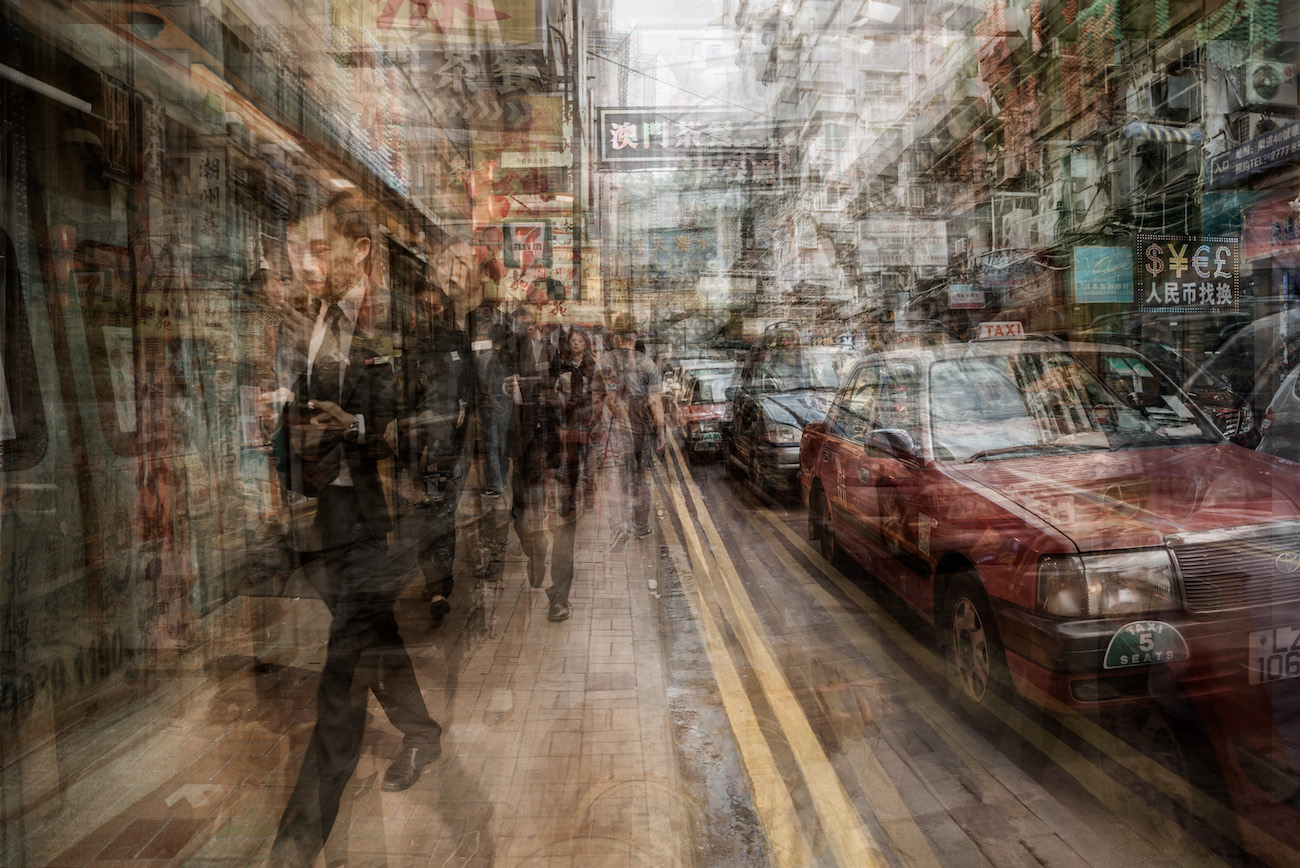
How do you approach the relationship between the photographs you make in the field and the images you construct later in the studio?
The relationship between the moment in which I gather the images and the moment in which I begin working on them, between which several weeks or even months may pass, rests on the bed of recollection, joined and enriched by the sensations gathered in that moment, and therefore by fragments of memory.
It is through this means that I reconnect with the moment I lived and construct it through the deeply personal filter of recollection, composing the image with the elements needed to bring my story to life.
One could say that, in the syntax of my images, the lemmas are fragments of memory, memories.
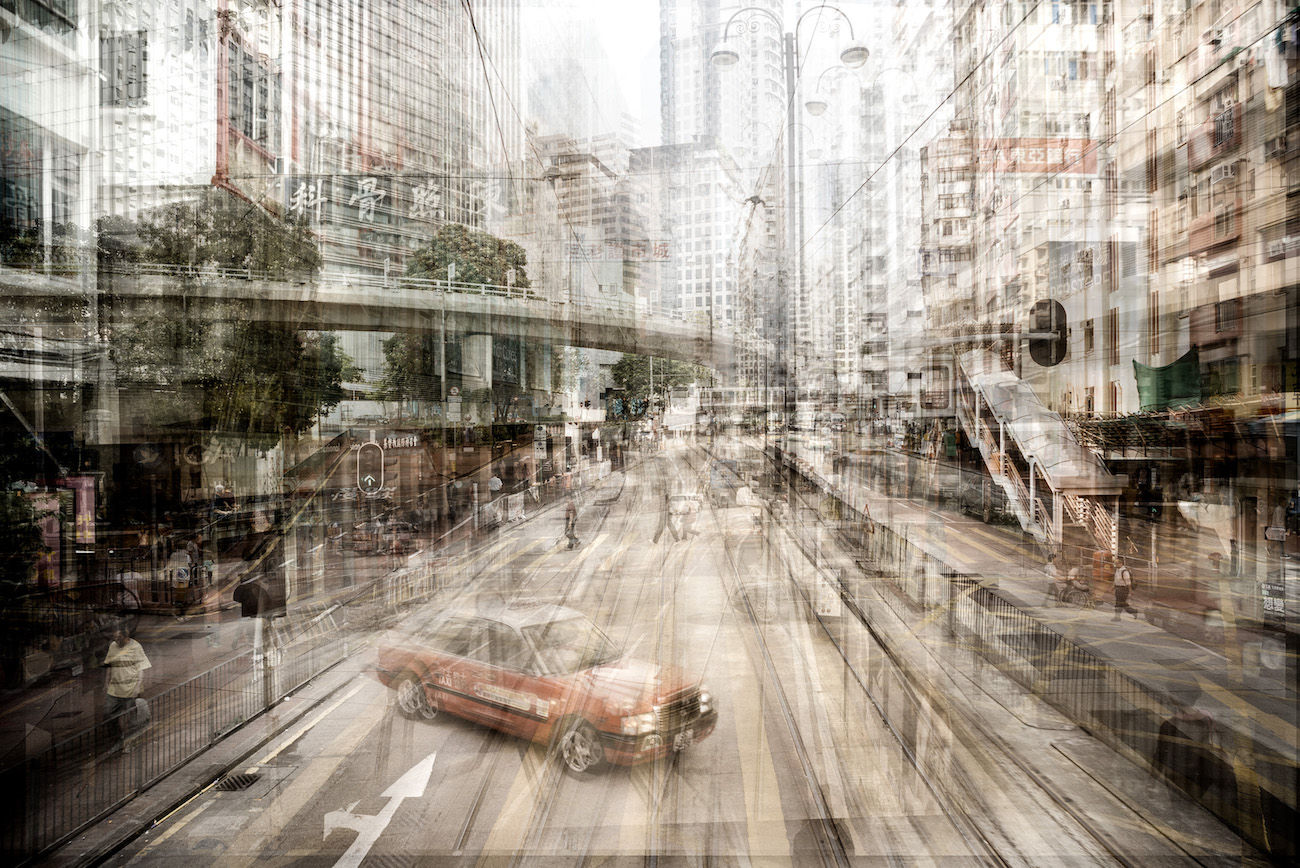
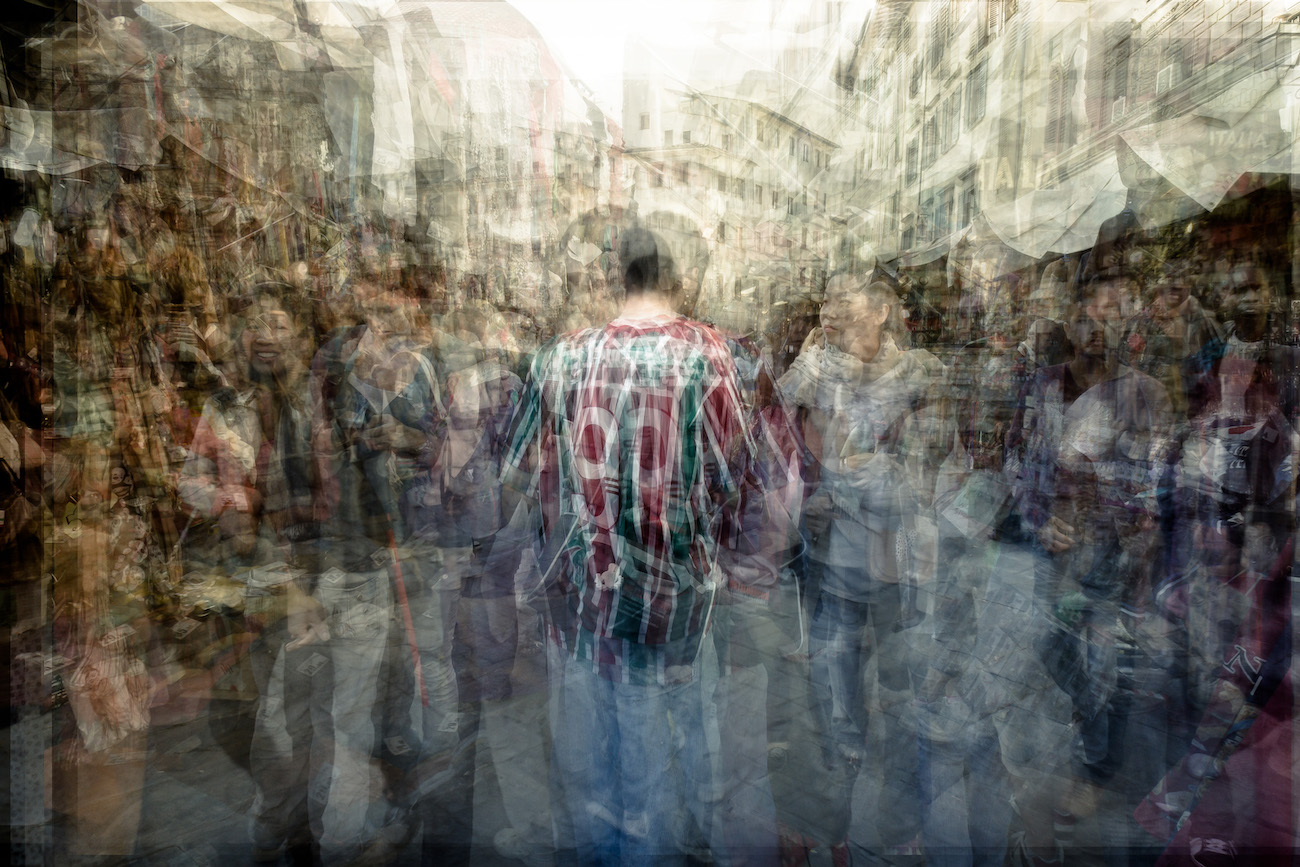
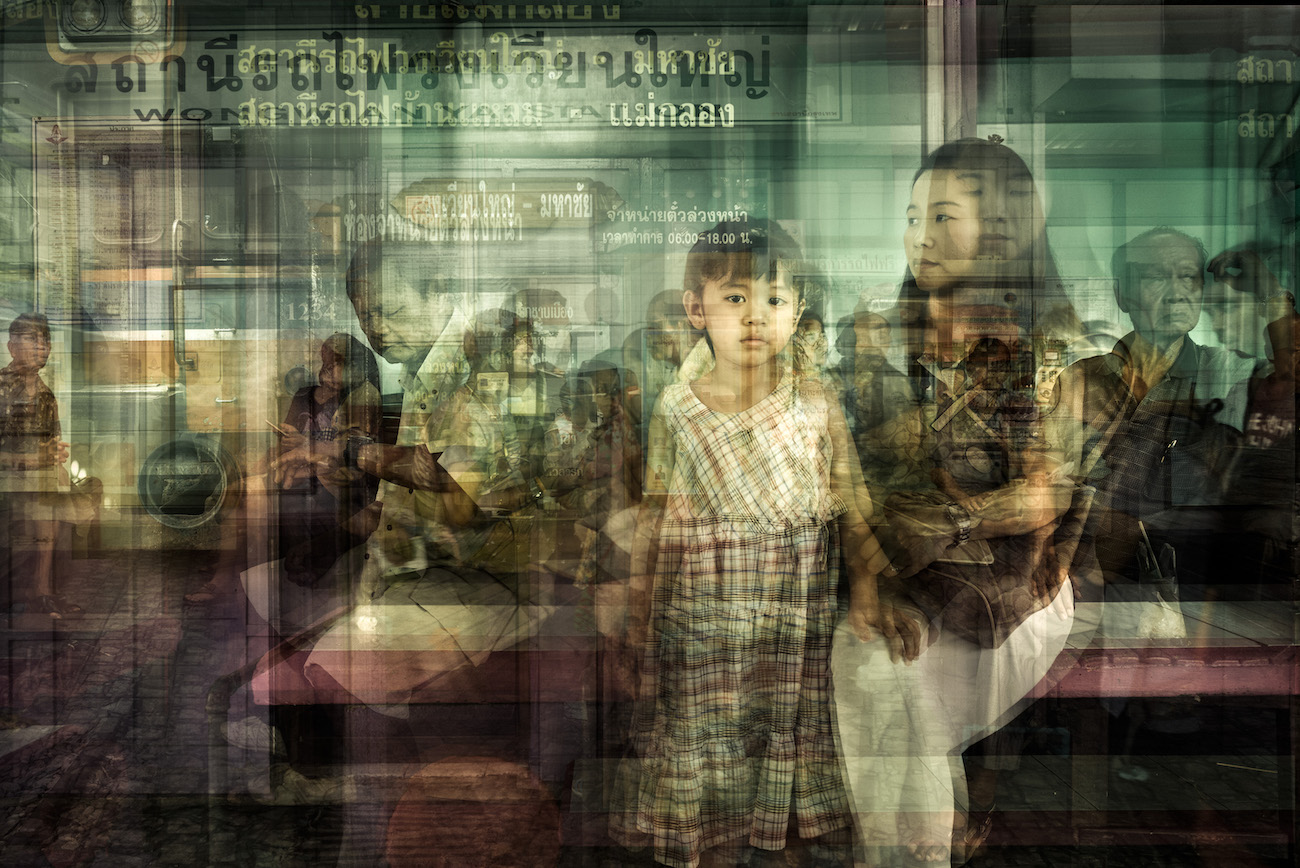
Memory is often fragmented, subjective, and unreliable. How do you translate these qualities into your visual language without trying to recreate a place too literally?
With my approach it is almost impossible for me to recreate a place too close to reality.
From the moment I choose the canvas, that is, the base image, the one containing the figure or the situation I want to tell and on which I will build the work, and begin to search among the images I gathered during that moment for the elements that will help me tell the story I am imagining, reality ceases to be reality and becomes a personal world, a vision closely bound to the memory I have of that moment.
And exactly as you say, it is exactly because memory is fragmented, subjective and unreliable that the image being constructed is no longer reality. It draws on reality through the elements that compose it, but it takes shape by resting on memory.
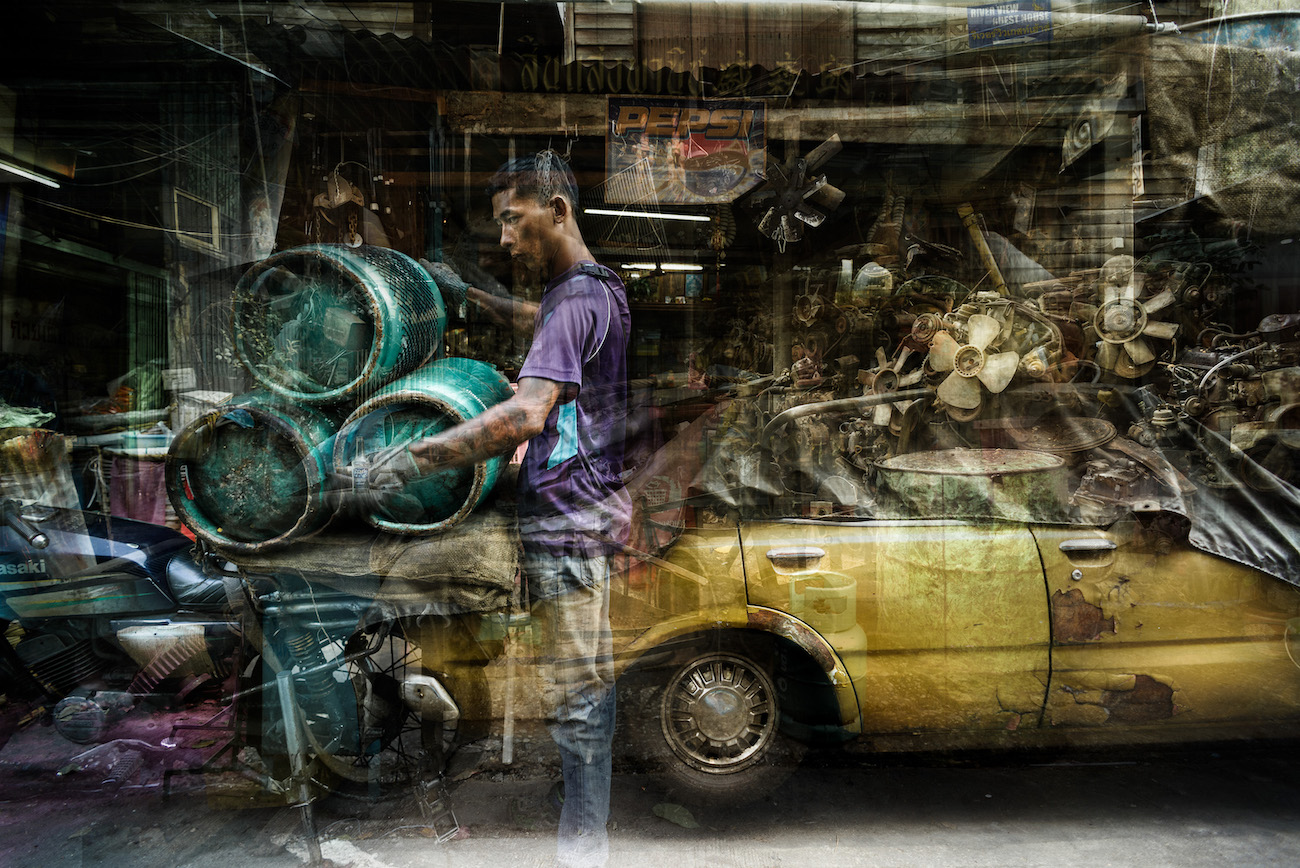
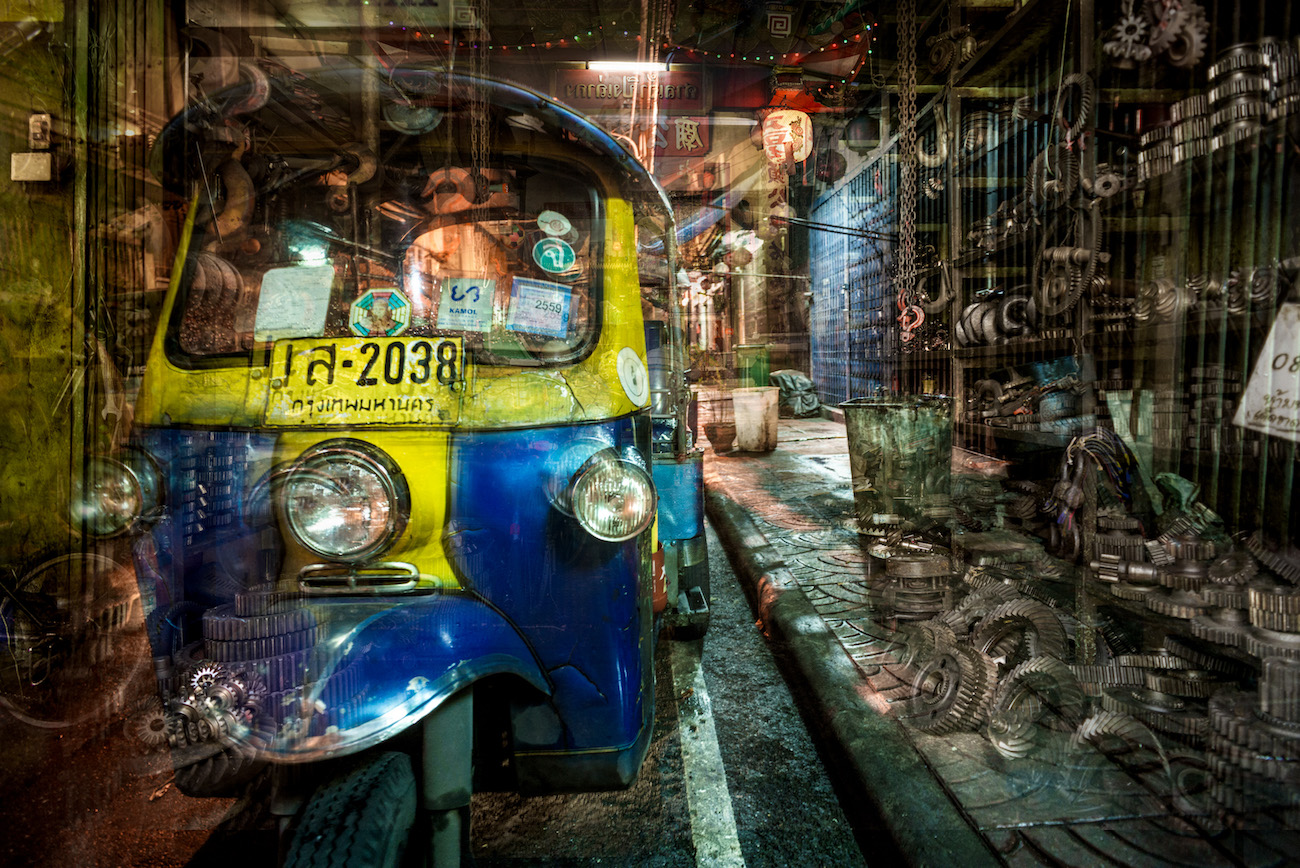
How do color, gesture, and visual rhythm inform your compositions, and how do you know when an image has reached its final form?
There’s no such thing. My images are never finished, potentially.
There is a moment, though, when what I see fills and satisfies me, gives me that pleasure, gives me back what I remember of that moment.
That said, I am a photographer with a classical and artistic training, who has therefore imprinted in his way of looking the elements that contribute to forming an image, and the relationship between them in terms of composition. Colors, shapes, materials all contribute to composing the “discourse” I am creating.
And it is a non-linear approach. I return to an image many times, even long afterwards, until I find what I am looking for. I take away, I add, I bring to the surface or push back, as if I were modeling clay. Mine is an approach very similar to modeling matter; it very much recalls it.
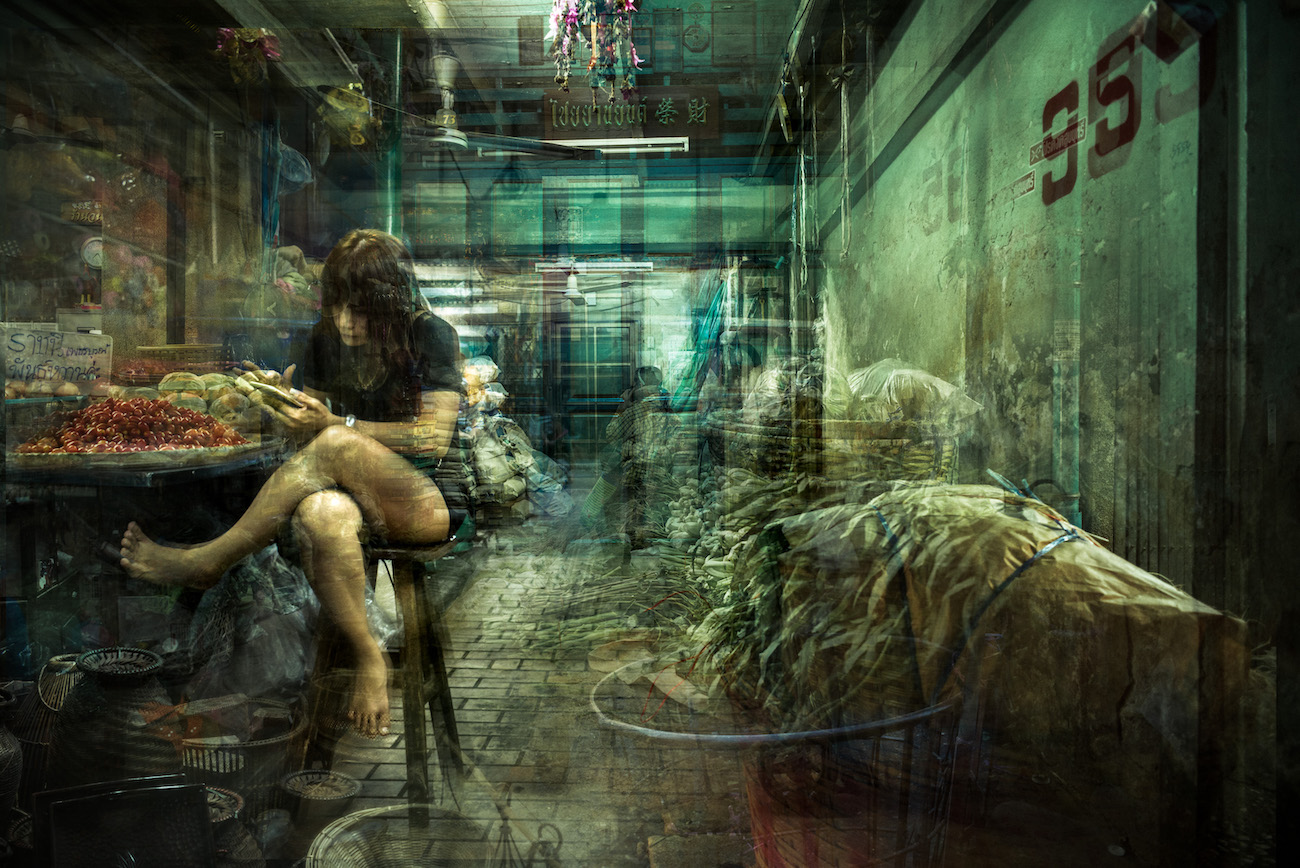
Your photographs exist somewhere between documentation and abstraction. How do you navigate that tension, and how important is it for viewers to recognize the places you photograph?
For me it is not important that the place is recognised exactly, but I am sure that the atmosphere of the setting comes across and, for those who know it, the place too. This comes from anchoring myself to memory, which is not only visual but also multisensory. When I work, I certainly try to put all this information into what I do, and so I am fairly sure that one can perceive the kind of environment in which my images are set.
The images in the series set in Asia have a great many connotative elements that, indirectly, by contributing to the atmosphere, also speak of the place.
One of the things that gives me a strong creative impetus is feeling a stranger to the place I am in. One of the reasons I prefer, and am fascinated by, Asian metropolises is precisely this. I do not know the language, I do not understand the signs, and this puts me in the position of the perfect observer, an alien. It allows me a unique creative detachment, which certainly embodies the tension you ask about in your question.
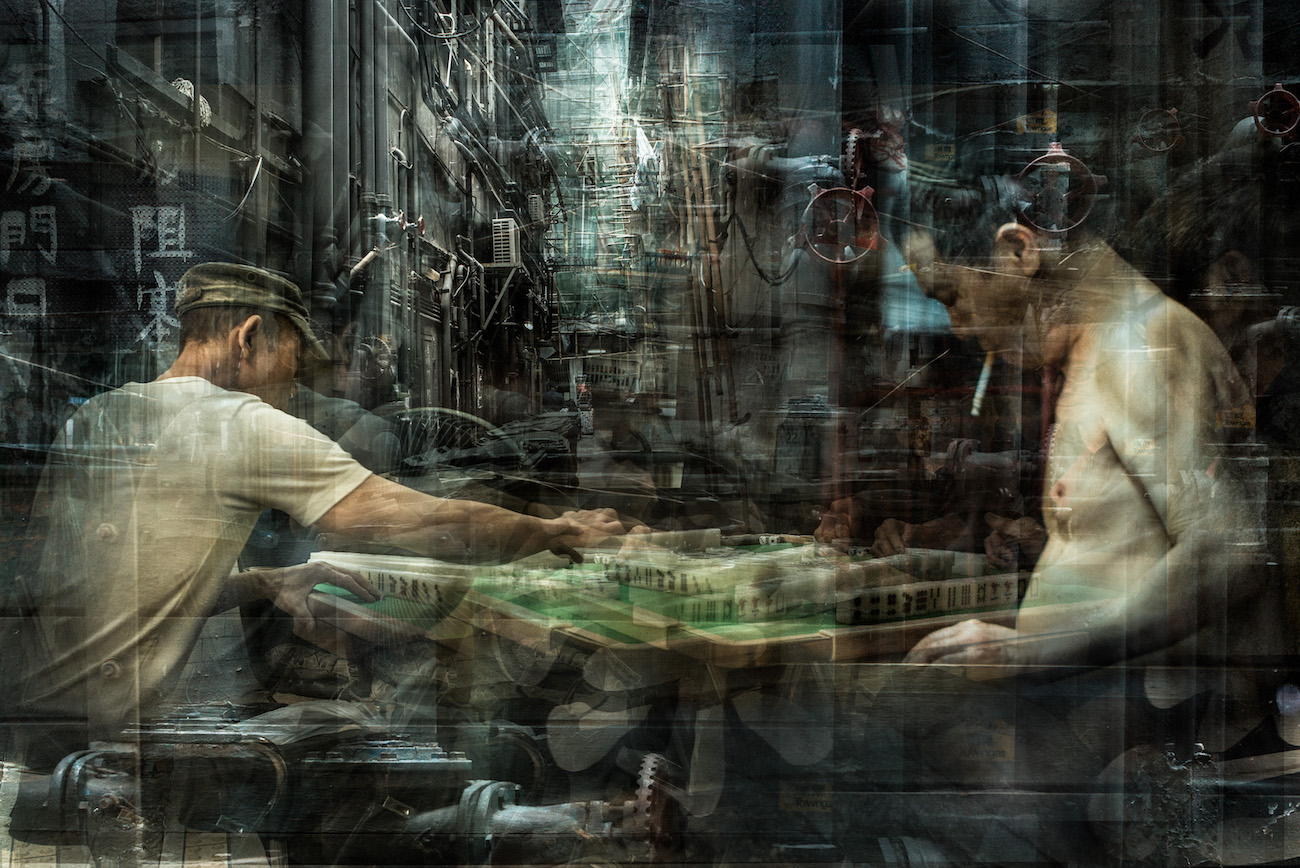
How has your relationship with these images evolved over time? Do they function differently for you now than when you first made them?
Totally.
And it is mainly because of the transformation my making has lived through.
As I mentioned, it has been a path in steps. Each new series offered me a different vision of the world in front of me, for two reasons: one deriving from the experience of the previous work, the other shaped by the environment I was in.
Over time, already from the first works and gradually developing on its own, my gaze became increasingly drawn to the individual people who lived the metropolises I visited. From project to project, street portraiture became progressively more and more dominant. The turning point was probably the BKK series. For the period I spent in the city, I had chosen to live in Talat Noi, one of Bangkok’s oldest Chinese neighbourhoods, a place incredibly dense with life.
There I began to look at people as single individuals, no longer as the mass that moves a metropolis. I began to gather images that spoke of the person, not only, and maybe not any more, just of the setting or the city. In BKK I believe I achieved, at least in my own vision, a portrait of the city through the people who live it.
In the following work, the Hanoi series, the portrait became definitively predominant; everything revolves around the figure. Hanoi is the portrait of the people, of the singularities, who give life to the city.
So yes, to answer your question, my approach has changed over time and my vision now is different from that of my early work, and when I look at those works I see the path I have travelled; I recognize its transformations.
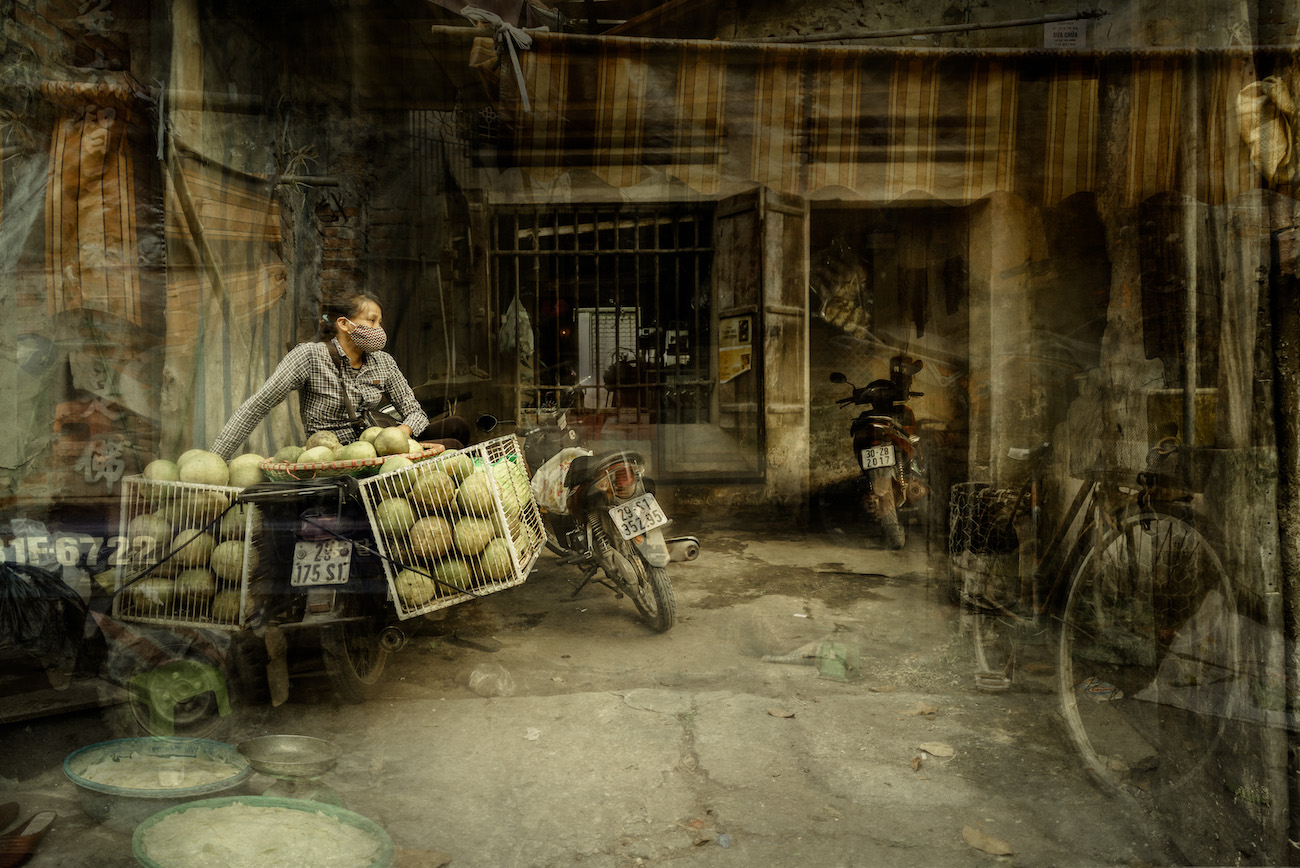
What does photography allow you to understand about memory, place, and perception that you might not be able to access through another medium?
Photography, the image, are my media. It was therefore natural for me to choose photography as the means to explore the aspects of perception linked to memory, to time, and to the possibility of telling both.
Certainly other forms of expression, such as music, painting, sculpture, give access to all of this, and perhaps to other things, and more, but photography is mine; it is the one I use.
Over time I have built a “making” around the idea that memory is distillation, selective layering.
In the same way that a perfume changes over time, its top notes merging with the base and altering its character in a slow, continuous becoming, memory is constantly generated, transforming itself, joining time and space.