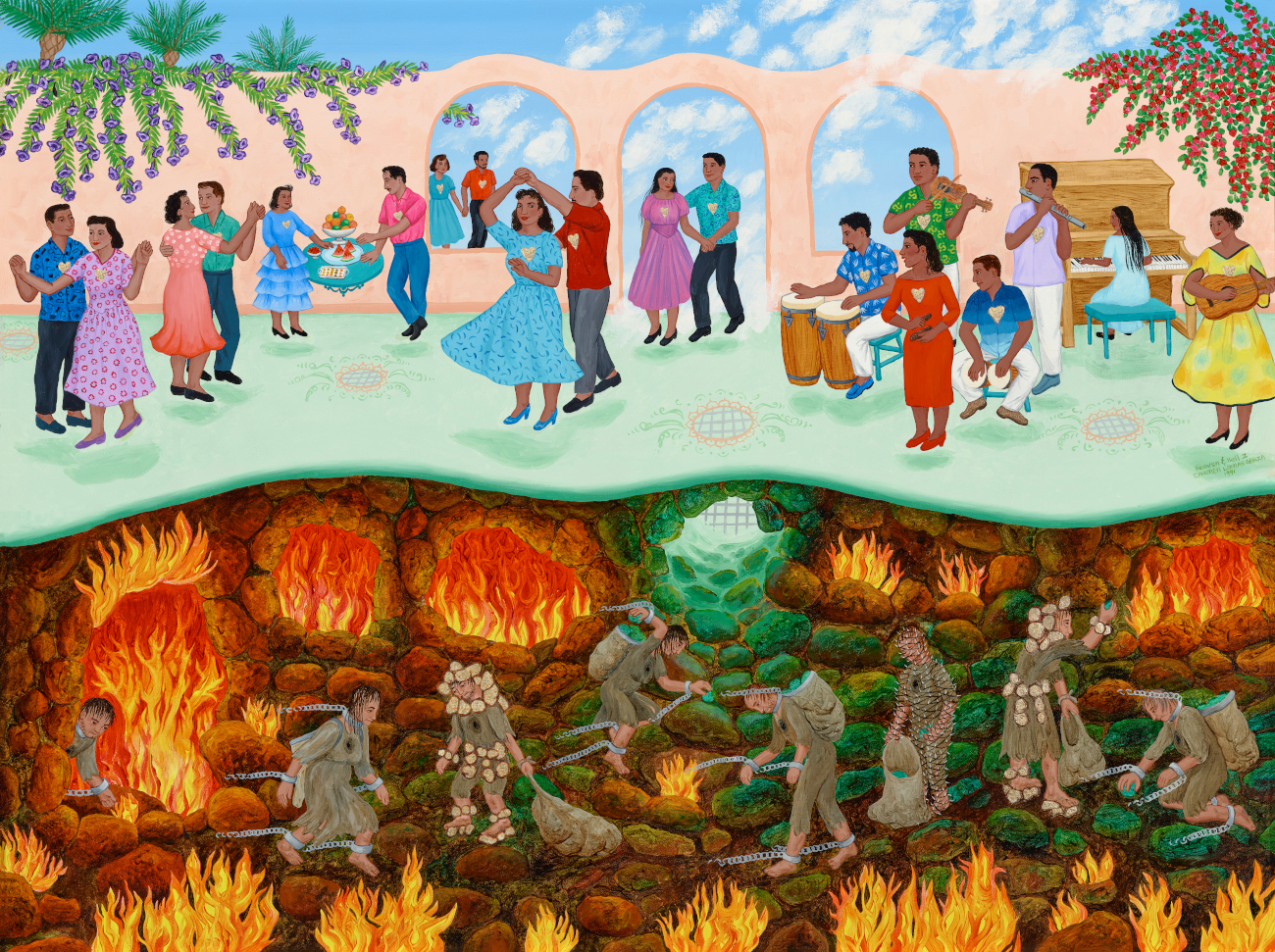
Carmen Lomas Garza, “Heaven and Hell II,” 1991. Alkyd and oil on canvas, 36 x 48 in. (91.4 x 121.9 cm). Collection of the artist. Courtesy Carmen Lomas Garza. © 1991, Carmen Lomas Garza
The colorful, richly layered work of Carmen Lomas Garza has earned her a spot in the pantheon of great Chicano artists. Her bustling compositions depict what look like familiar scenes for those of Mexican ancestry. But beyond the surface of family gatherings and people hard at work, stories of identity, resilience, and survival unravel.
This sentiment is at the heart of Carmen Lomas Garza: Picturing the Familiar, a retrospective that recently opened at The Cheech Marin Center for Chicano Art & Culture, part of the Riverside Art Museum. Spanning over 50 years of artistic practice, the exhibit explores Lomas Garza’s keen eye to turn personal experiences into universal emotions, as well as her overall influence in Chicano and American Art.
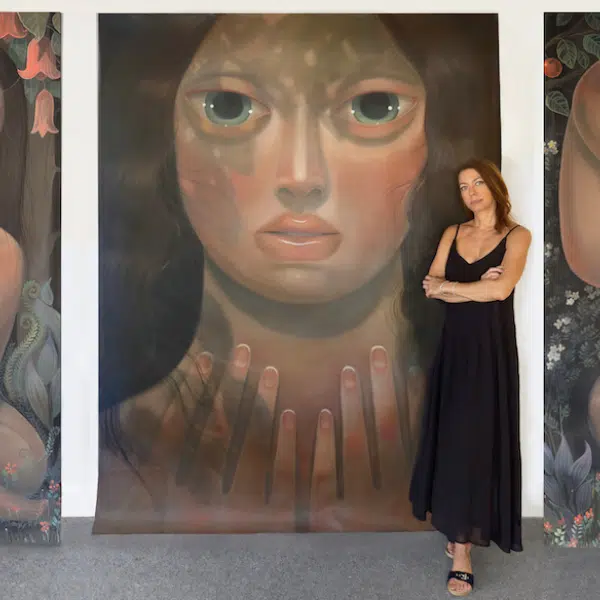
To achieve this, curator Alana Hernandez weaved a larger, creative network, showcasing Lomas Garza’s paintings alongside works by 17 other artists who were either inspired by or have been influenced by the artist’s legacy. After all, if there’s a thread running through all of Lomas Garza’s portfolio, it’s that community is the ultimate vehicle for support and endurance.
Carmen Lomas Garza: Picturing the Familiar arrives at the The Cheech following a stint at the Arizona State University Art Museum. Once its time in Southern California comes to a close, it will open at El Paso Museum of Art in fall 2027.
My Modern Met had the opportunity to speak to both the artist and the curator about the work behind this exhibition, its unique approach, and what they hope the public will take away from it. Read on for our exclusive interview with Carmen Lomas Garza and Alana Hernandez.
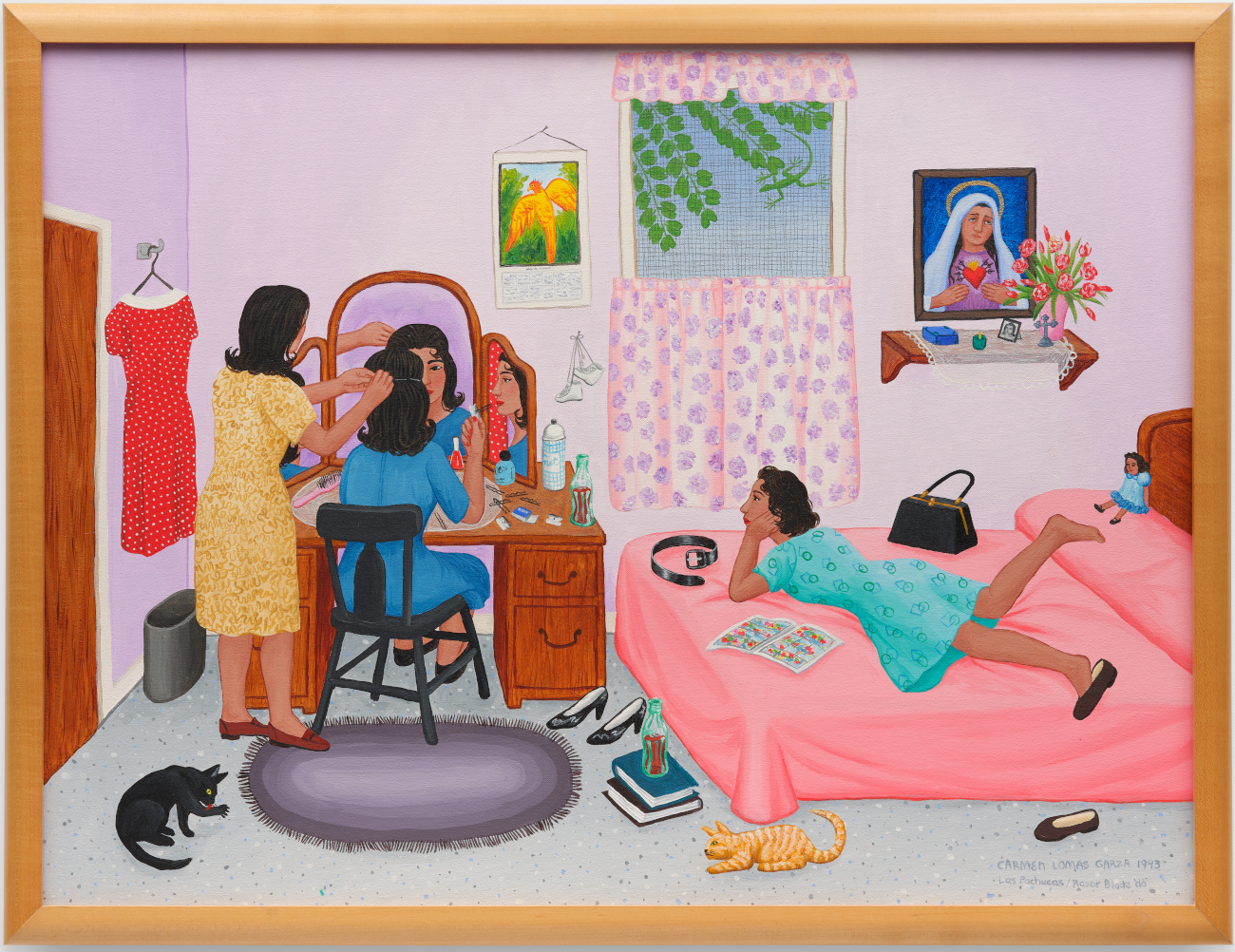
Carmen Lomas Garza, “Las Pachucas, Razor Blade ’do,” 1993. Alkyd oil on canvas, 25 x 33 in. (63.5 x 83.8 cm). Private Collection. Courtesy Carmen Lomas Garza. © 1993, Carmen Lomas Garza
Looking back at over 50 years of your career, do you remember where the spark to become an artist and spotlight your Mexican American heritage came from?
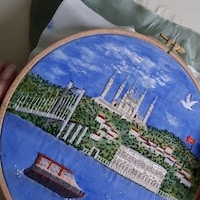
Carmen Lomas Garza (CLG): Yes. I was always very impressed with my mother, who did drawings for different purposes, and my grandmother, who did embroidery and drew images on cloth to embroider later. So I had direct inspiration from my mother and grandmother. I was always very interested, and I would do my own drawings while they were doing theirs.
It became really obvious to me when my mother was making lotería cards, which are like bingo game cards, for fundraising activities organized by the American GI Forum, an organization my father belonged to. They were raising money to help Mexican American World War II veterans. My father had served in the Navy during World War II.
The organization was especially concerned with helping veterans and their families. It started with the case of a Mexican American soldier who was killed toward the end of World War II. His body was sent back to his hometown of Kingsville, Texas, where I was born and raised, for funeral services.
The Mexican American funeral home in town wasn’t large enough to accommodate the number of people expected to attend. When the family approached a funeral home on the other side of town, which primarily served the white community, they were refused services.
They eventually contacted people in Corpus Christi, including Dr. Héctor García, who spoke with Lyndon Johnson, then a representative from Texas. Johnson arranged for the soldier to be buried at Arlington National Cemetery.
The American GI Forum became involved in raising money to support Mexican American veterans and provide college scholarships for Mexican American students.
I was very inspired by what my parents were doing, and I wanted to make drawings and be involved in that kind of work.
When I graduated from high school, my parents encouraged me to go to college and become an art teacher. I thought that would be a fantastic thing to work toward. So I earned an undergraduate degree in all-level art education and became certified by the state of Texas to teach art in public schools at all grade levels.
During college, and even before I started, there was a lot of organizing happening beyond the American GI Forum. I was hearing more and more about Chicanos organizing to support farmworkers in the Rio Grande Valley.
When the farmworkers marched through Kingsville on their way to Austin, Texas, we university students decided to meet them in front of City Hall. We were able to do that.
I became very involved in working with other Chicanos to promote Mexican American students, heritage, cultural activities, and political activism. I learned a lot from those experiences and devoted much of my energy to them.
When I moved to the San Francisco Bay Area in 1976, there was also a lot of activity surrounding the Chicano Movement. I fit in perfectly because I understood what was going on.
I began working at Galería de la Raza, a nonprofit community art gallery in San Francisco’s Mission District, a Mexican American neighborhood. I worked there for five years, and we became very involved in activities throughout the community.
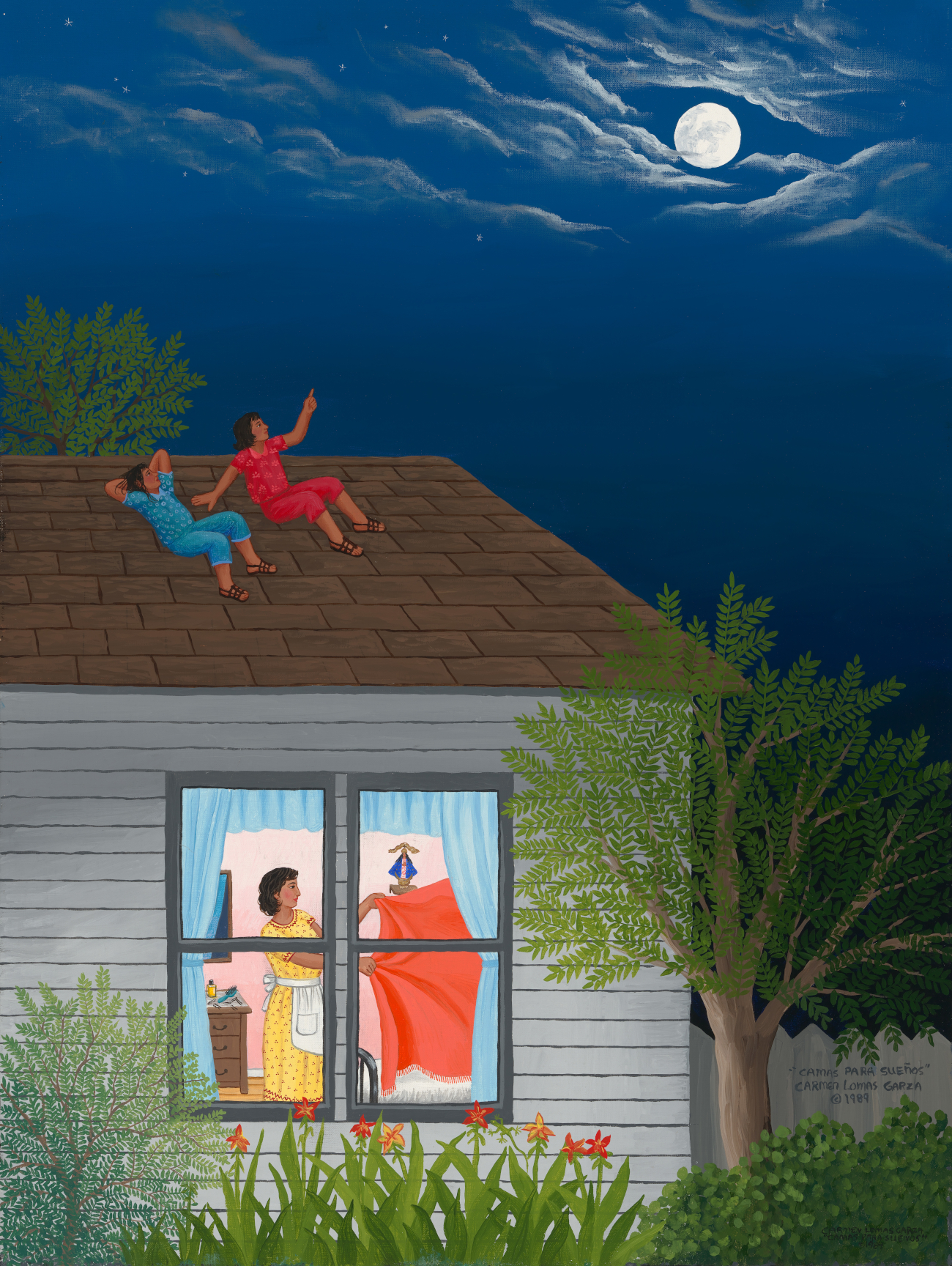
Carmen Lomas Garza, “Camas para Sueños,” 1989. Oil on linen, mounted on wood, Image: 32 x 24 in. (81.9 x 61 cm). Collection of the artist. Courtesy Carmen Lomas Garza. © 1987, Carmen Lomas Garza
How has it been for you to take personal scenes and turn them into art?
CLG: I have very good memories of my childhood in Kingsville and the activities we participated in. There were the lotería games, which are similar to bingo, but also all kinds of family activities.
The tamalada, or tamale-making gathering, was one of the first scenes I remember really wanting to depict because it involved everybody in the family.
My immediate family, aunts, uncles, cousins, and grandparents were all involved in making tamales. If you wanted to eat tamales, you had to help make them!
Everybody had to learn how to spread the masa, add the meat, roll the tamales, and arrange them in a pot to be steamed or cooked in the oven. We also helped prepare the corn husks by washing and trimming them so they were ready to use.
There are also a lot of curandera scenes in my artwork. It was very common to see curanderas working because not everybody had access to medical services, doctors, or hospitals. We relied a lot on curanderas, or traditional healers, to help treat illnesses and take care of our medical needs.
Then there are also fun scenes, like eating watermelon on the porch.
My grandfather had retired from working on the railroad in Kingsville, but he would occasionally work in the fields picking cotton, fruits, or vegetables from local farms.
My favorite times were when he worked at a watermelon farm and brought home lots of watermelons for us to enjoy in late summer.
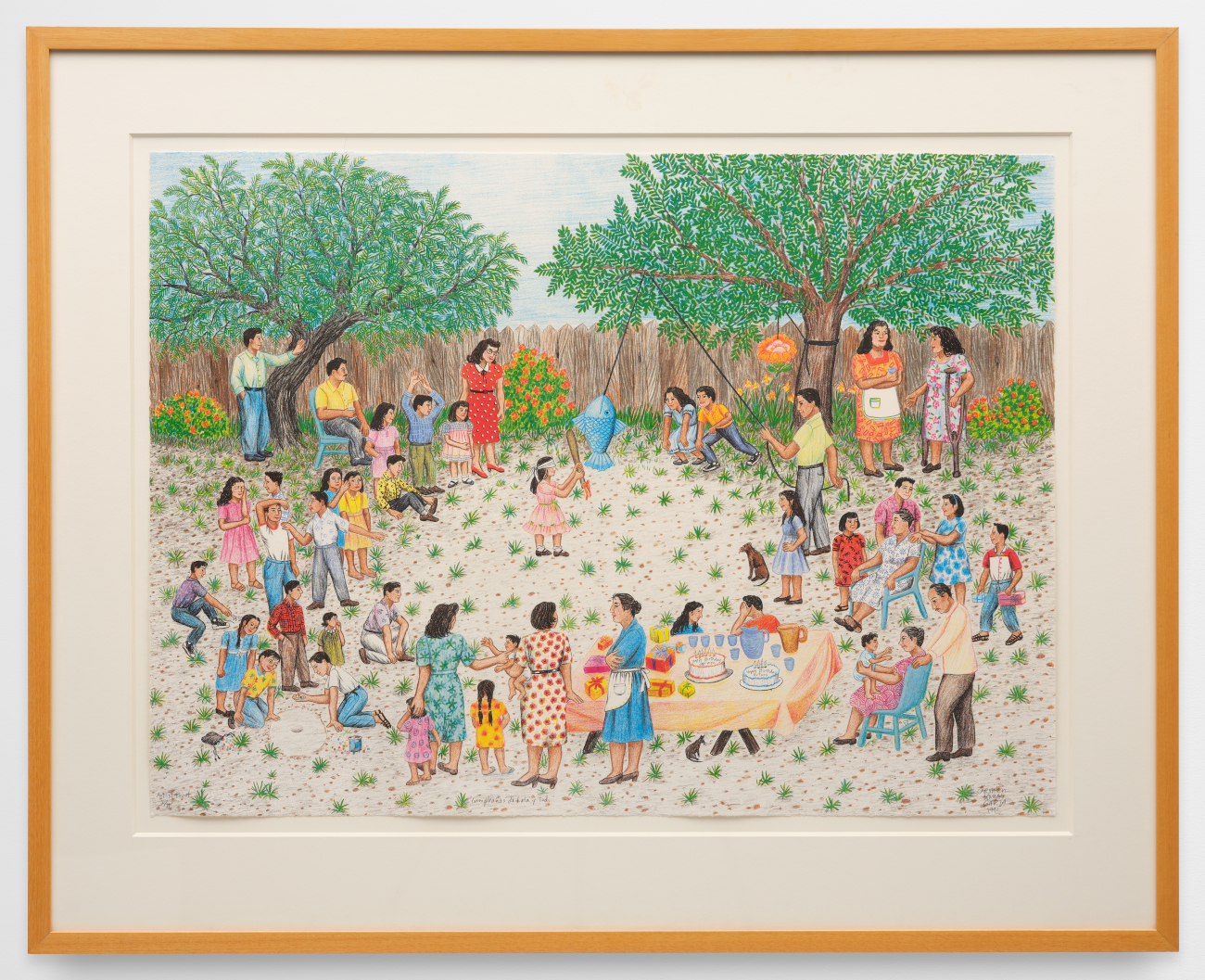
Carmen Lomas Garza, “Cumpleaños de Lala y Tudi,” 1991. Lithograph, 30 1/2 x 38 in. (77.5 x 96.5 cm), A.P. 1/2. Collection of the artist. Courtesy Carmen Lomas Garza. © 1991, Carmen Lomas Garza
What inspires your compositions?
CLG: The format I eventually developed came from several different influences.
As an art student, I studied art history and how art was created, including theories of perspective and vanishing points, which help artists position objects correctly within a scene.
But I also studied the development of children’s art, Japanese art, and art from other cultures.
I was really amazed by how children go through a similar phase in their artistic development, where they elevate surfaces so that you can see what’s happening on a tabletop, a dance floor, or another surface.
Japanese artists also do something similar, and I really liked that approach because it gave me the opportunity to show what was happening on a table or within a particular space.
That’s something I learned and intentionally incorporate into my artwork. I elevate surfaces so viewers can see what’s going on.
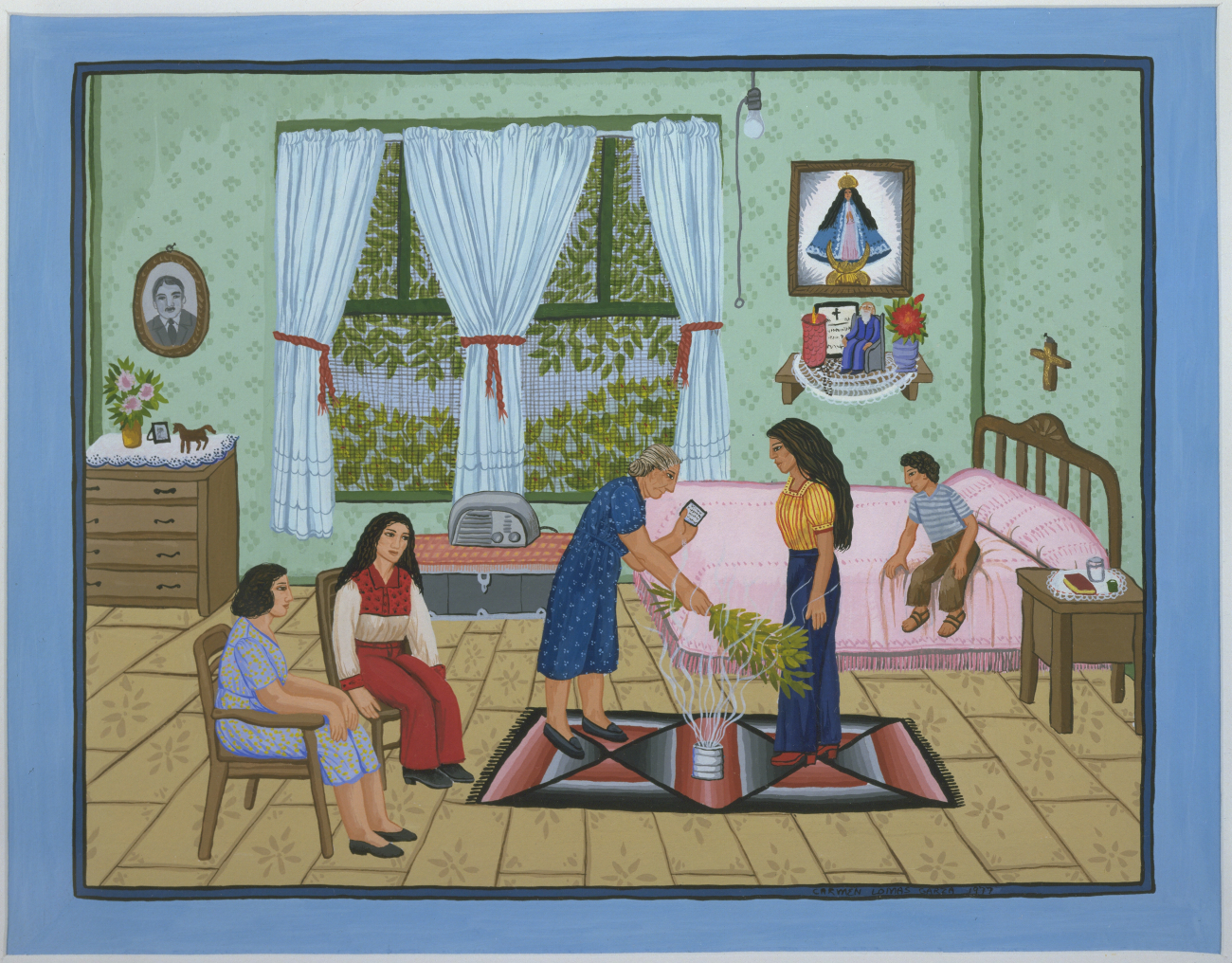
Carmen Lomas Garza, “Curandera,” 1977. Gouache on cotton paper, 11 x 14 in. (27.9 x 35.6 cm). Collection of the Arizona State University Art Museum, Gift of Lenore and Lewis Ruskin by Exchange, 2026.001.001. Courtesy Carmen Lomas Garza. © 1977, Carmen Lomas Garza.
What is your creative process like? Has it evolved over time?
CLG: Sometimes an idea comes to me because of something interesting I’ve heard or experienced.
For example, one day I was painting in my studio in San Francisco while listening to salsa music on public radio. The DJ suddenly stopped the music and announced that the musician Tito Puente had passed away. He had a friend at the radio station who knew Tito and could talk about his life as a musician.
The friend mentioned something he vividly remembered Tito saying: that he was going to be the first musician on the moon.
Of course, I thought, “Well, he never got to go to the moon, so I’m going to give him his dream.”
I decided to paint a scene of Tito Puente on the moon with his musician friends who had already passed away. They’re all floating because they’re spirits, so there are no cast shadows.
They’re gathering to dance at Birdland, one of the nightclubs where Tito Puente used to perform in New York. That became my idea for Tito’s Gig on the Moon.
Another example is my painting of Mrs. Romero’s Retirement Party in her Parents’ Backyard.
This was a commission for Highland Hospital in Alameda County, near Oakland. The commissioners wanted me to depict people from different cultures because that’s representative of the community in that area. They also wanted festivities taking place.
I decided to combine two events I had attended. One was a birthday party in a backyard in Oakland, and the other was a retirement party for a teacher here in San Francisco.
I combined those experiences to create Mrs. Romero’s Retirement Party in her Parents’ Backyard.
I included scenes based on things I had witnessed at different times: boys breakdancing, people bringing food, Chinese dancers performing a fan dance, children dancing ballet folklórico, and Indian women wearing traditional clothing for a performance.
It gave me a format where I could just have fun.
Highland Hospital has the painting hanging in the family waiting room so that parents and children can enjoy the artwork and, hopefully, forget about the pain or difficulties that brought them there.
That’s another way I like to work. I enjoy creating artwork inspired by things that have entertained me, impressed me, or stayed in my memory.
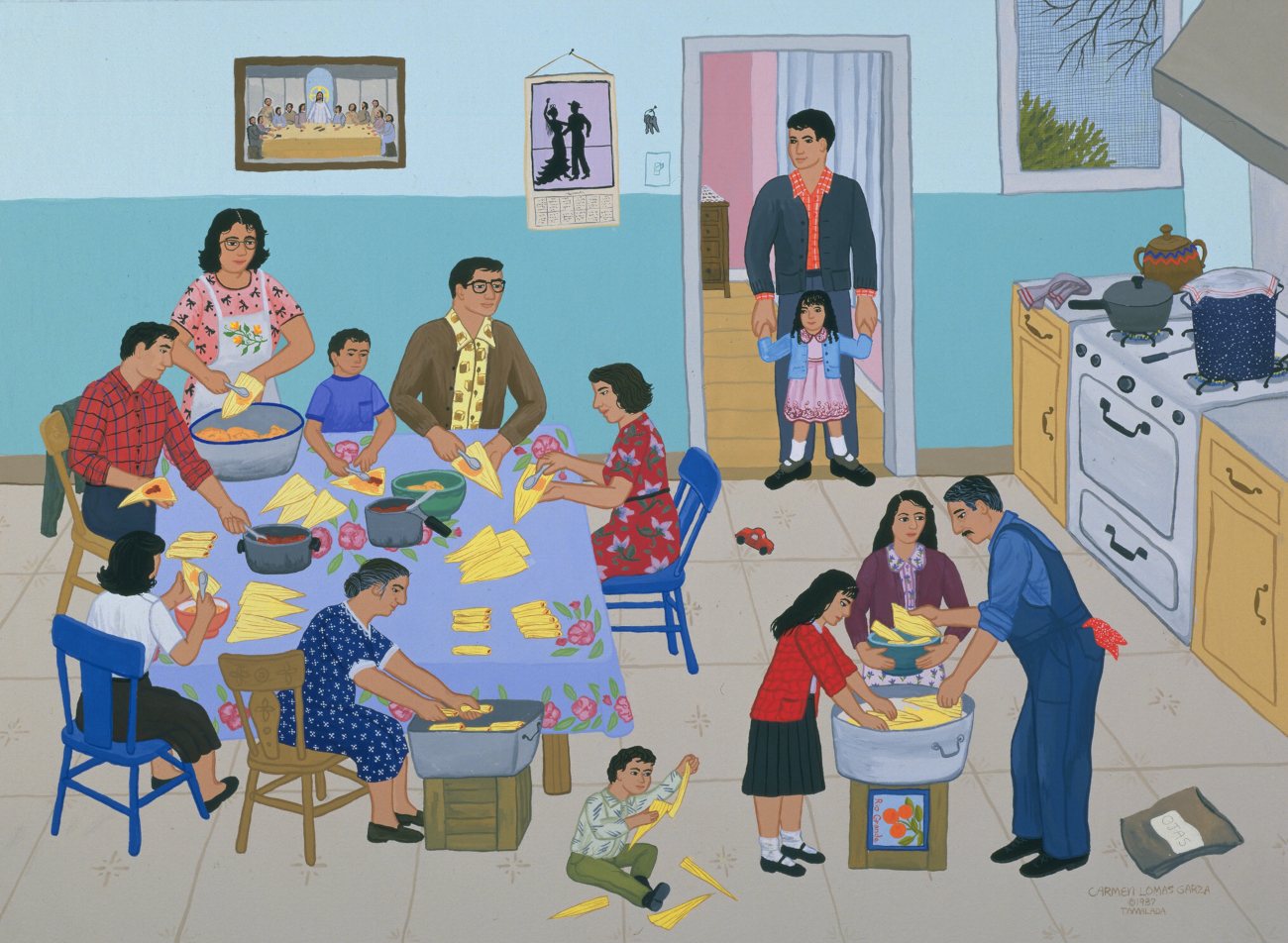
Carmen Lomas Garza, “Tamalada,” 1987. Gouache, 27 1/2 x 34 in. (69.9 x 86.4 cm). Collection of the artist. Courtesy Carmen Lomas Garza. © 1987, Carmen Lomas Garza
You’ve worked with different types of painting and canvases. What do you like about each one?
CLG: I started out making gouache paintings. Gouache is a type of watercolor paint that is opaque.
Then I would create oil paintings on canvas. This is actually a very old method. It goes back to the time when artists had to grind and prepare their own oil paints, which was very time-consuming. They wanted to make sure they weren’t wasting paint, so they would first create a painting in watercolor or gouache. Once the entire image was figured out, they would recreate it in oil on canvas.
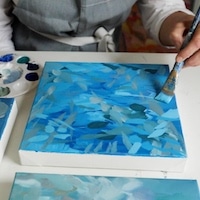
Oil is a fantastic medium. It’s much easier to obtain now because you can simply buy it in tubes and work directly on canvas. But oil painting also involves fumes from the solvents used to clean brushes and thin paints. Because of that, I prefer not to use oil paints anymore. I’d rather paint with acrylic on wood.
Wood is much more stable. Canvas can tear, but wood is pretty solid. Acrylic paint also dries quickly, and you can clean it up with just water.
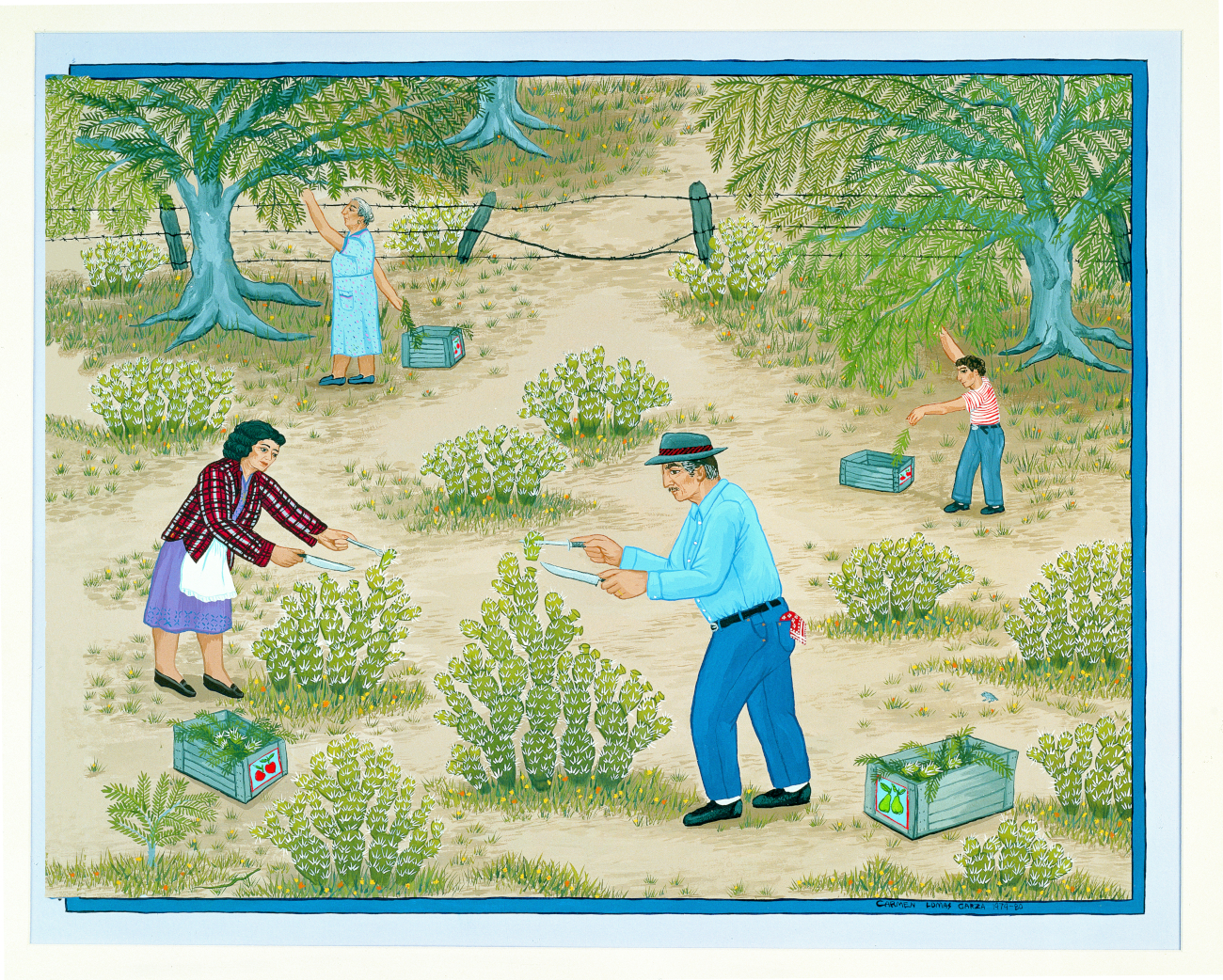
Carmen Lomas Garza, “Abuelitos Pizcando Nopalitos (Grandparents Cutting Cactus),” 1980. Gouache on cotton paper, 11 x 14 in. (27.9 x 35.6 cm). Collection of Amalia Mesa-Bains and Richard L. Bains. Courtesy Carmen Lomas Garza. © 1980, Carmen Lomas Garza
In your opinion, how has the Mexican American art scene changed since you first started compared to today?
CLG: It has definitely changed.
Back when the Chicano Movement started, much of what we were doing was depicting issues affecting the Mexican American and Chicano communities, including discrimination and racism.
Of course, I wanted to make sure my scenes brought back pleasant memories and helped people feel proud of our culture. I wanted to celebrate our culture and history.
Today, Mexican American artists have much more freedom to create whatever kind of artwork they want.
They can create abstract artwork, collages, or works without any figures at all. There’s all kinds of activity happening among Mexican American and Latino artists.
And that’s a freedom we should all have.
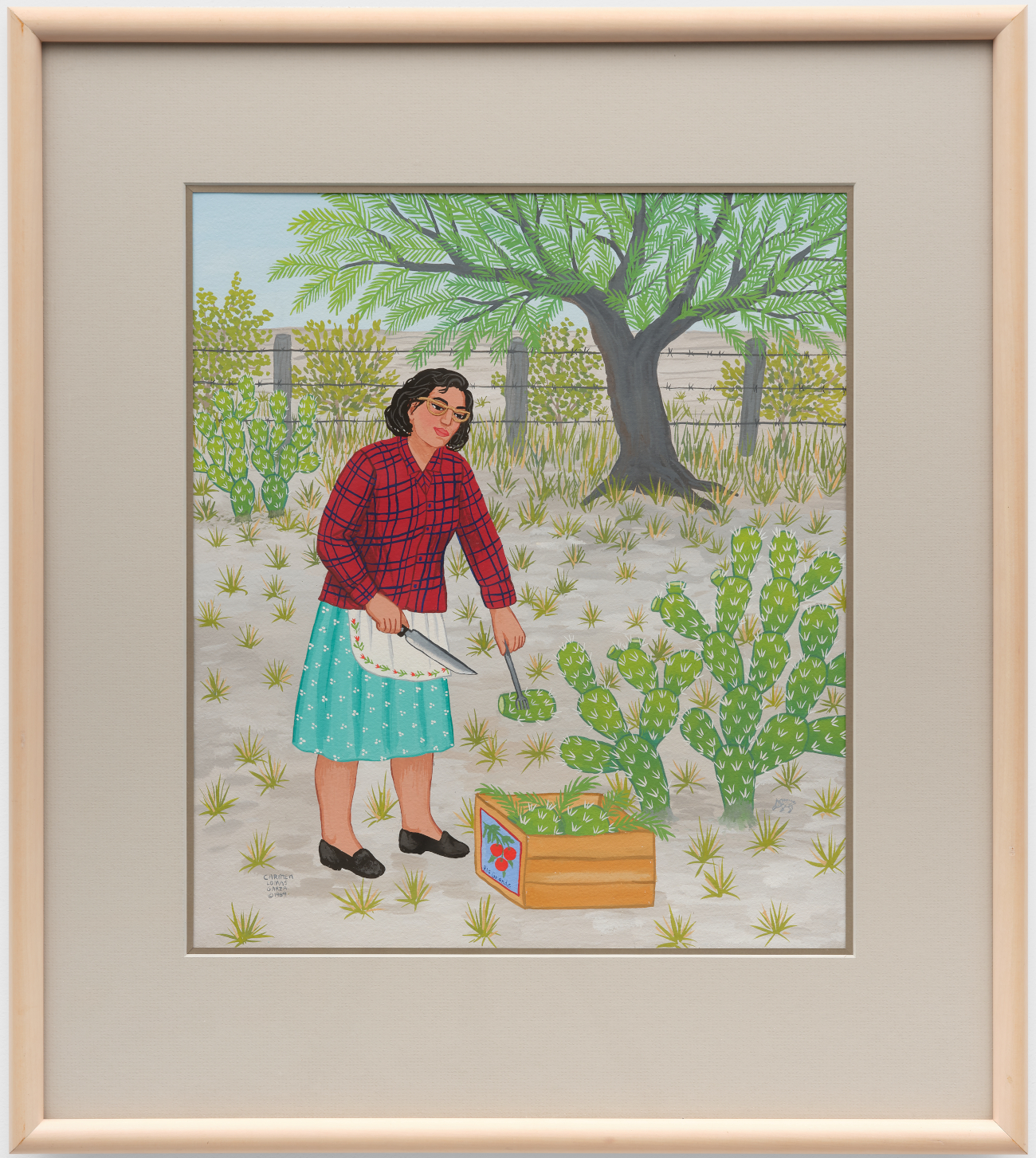
Carmen Lomas Garza, “Nopalitos para Ti,” 1989. Gouache on cotton paper, 15 x 13 in. (38.1 x 33 cm). Collection of the artist. Courtesy Carmen Lomas Garza. © 1989, Carmen Lomas Garza
What’s the story behind the curatorial work of this exhibit? What inspired it?
Alana Hernandez (AH): There is an urgency to honor the stories and careers of our elders while they are still with us and able to participate in how their work is researched, interpreted, and celebrated. Too often, artists receive major career retrospectives only after they have passed. From the beginning, my goal was to offer a rigorous examination of Carmen’s extraordinary career while she could remain an active collaborator in the process. Working closely with Carmen to develop the checklist and think through the arc of the exhibition has been invaluable.
Her work remains remarkably prescient. Her depictions of communities of color experiencing joy, celebration, rest, family, and the rhythms of everyday life were radical when she began making them, and they remain so today. At a moment when the country continues to debate who is American, what an American life looks like, and whose experiences belong within our shared history, her work insists upon the value and complexity of Mexican American life.
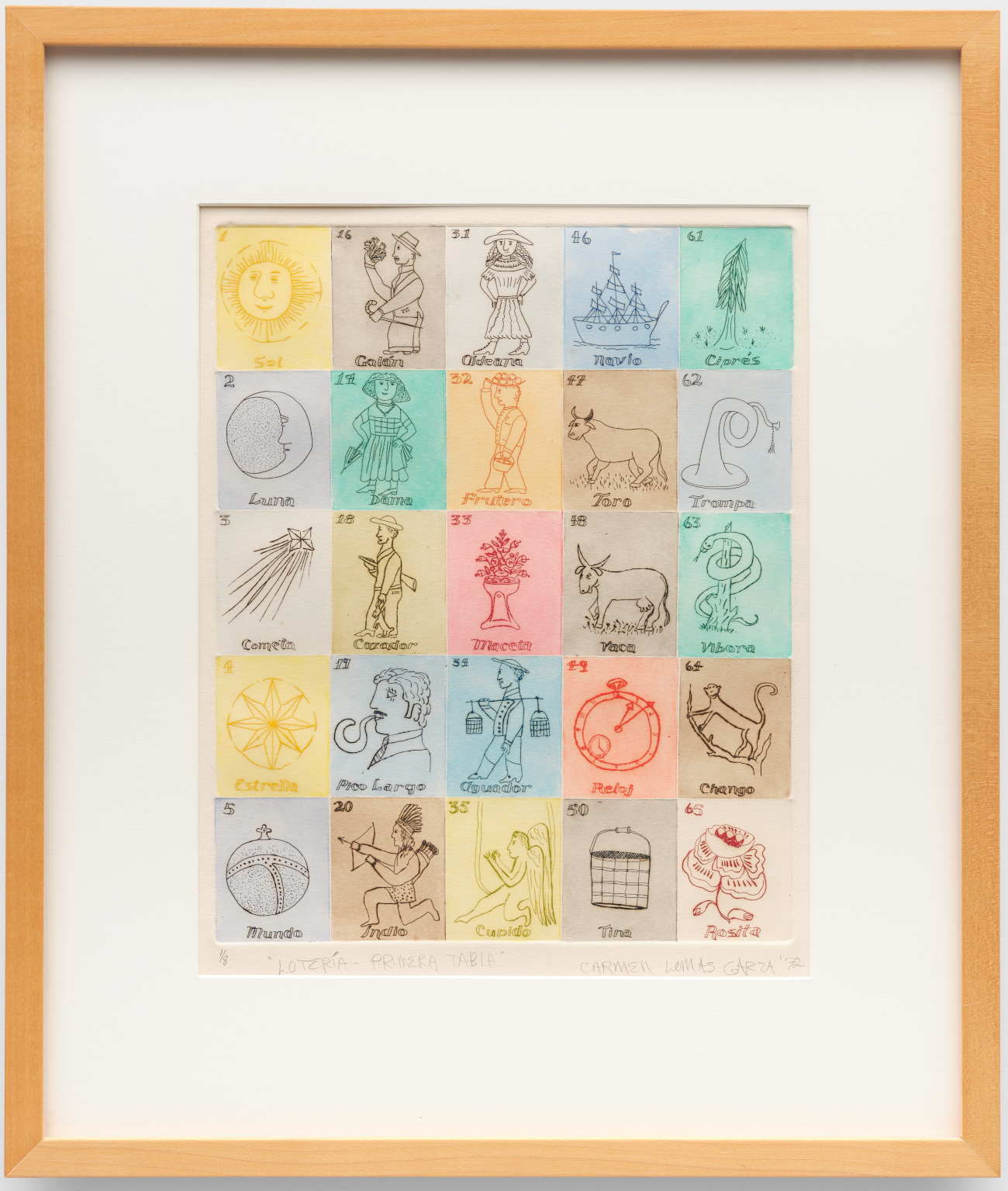
Carmen Lomas Garza, “Lotería-Primera Tabla,” 1972. Etching, Image size: 12.5 x 10 in. (31.8 x 25.4 cm), Frame size: 20 x 17 x 1 7/8 in. (50.8 x 43.2 x 4.8 cm), Edition 1/8. Collection of the artist. Courtesy Carmen Lomas Garza. © 1972, Carmen Lomas Garza
How did you find and select the works by other creatives?
AH: This exhibition was always conceived as a contextual retrospective. I did not want to present Carmen as though she developed her practice in isolation. Artists are shaped by communities, conversations, friendships, political movements, and sustained exchanges of ideas. The additional works help illuminate the artists Carmen worked alongside, learned from, inspired, and was inspired by in turn.
The selection process grew from close conversations with Carmen, as well as research into her artistic communities, the broader histories surrounding her practice, and the places where she lived and worked, particularly South Texas and the San Francisco Bay Area. I considered the relationships among the artists, the ideas they were exploring, and how their work expands our understanding of the cultural, political, and geographic contexts in which Carmen’s practice developed. In some instances, this also meant locating works that had not been exhibited for many years or collaborating with artists to restage projects that had not been seen since their original presentation.
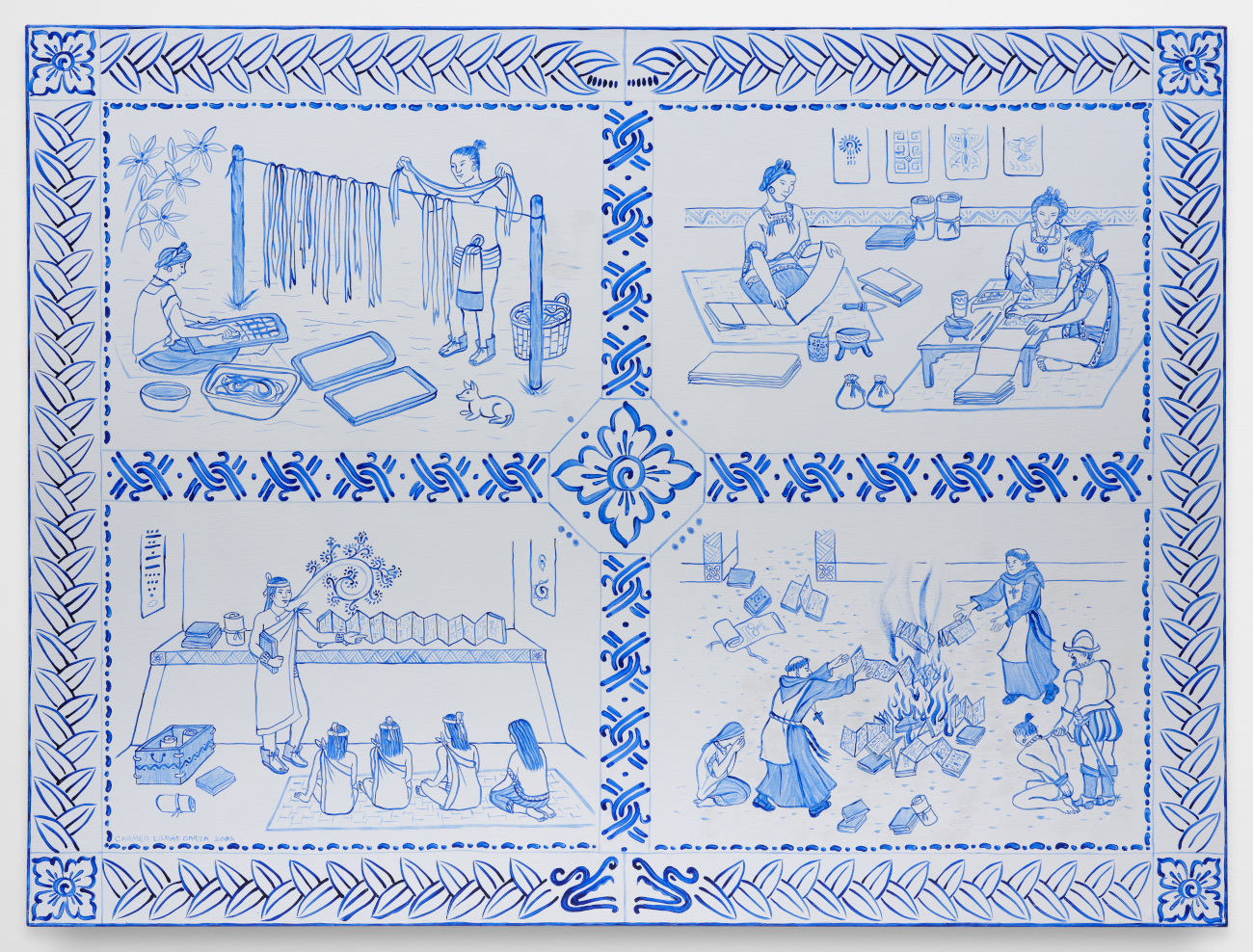
Carmen Lomas Garza, “Burning of the Codices,” 2002. Acrylic on canvas, 36 x 48 in. (91.4 x 121.9 cm). Collection of the artist. Courtesy Carmen Lomas Garza. © 2002, Carmen Lomas Garza
As a curator, does bringing in works by other artists make building a narrative easier, or is it more challenging?
AH: It makes the exhibition more complex, both curatorially and logistically, but it also makes the narrative more truthful. A traditional retrospective can create the impression that an artist’s career developed in a silo. Bringing in the work of peers allows us to show artistic practice as relational and to make visible the exchanges, affinities, and communities that shaped Carmen’s career.
Of course, that approach requires coordinating with more lenders, locating works across public and private collections, and, in some cases, reconstructing works that no longer exist in their original form. Yet those challenges are essential to the exhibition’s argument. The works by other artists are not supplementary. They reveal the rich creative ecosystem in which Carmen participated and demonstrate how influence moves in multiple directions.
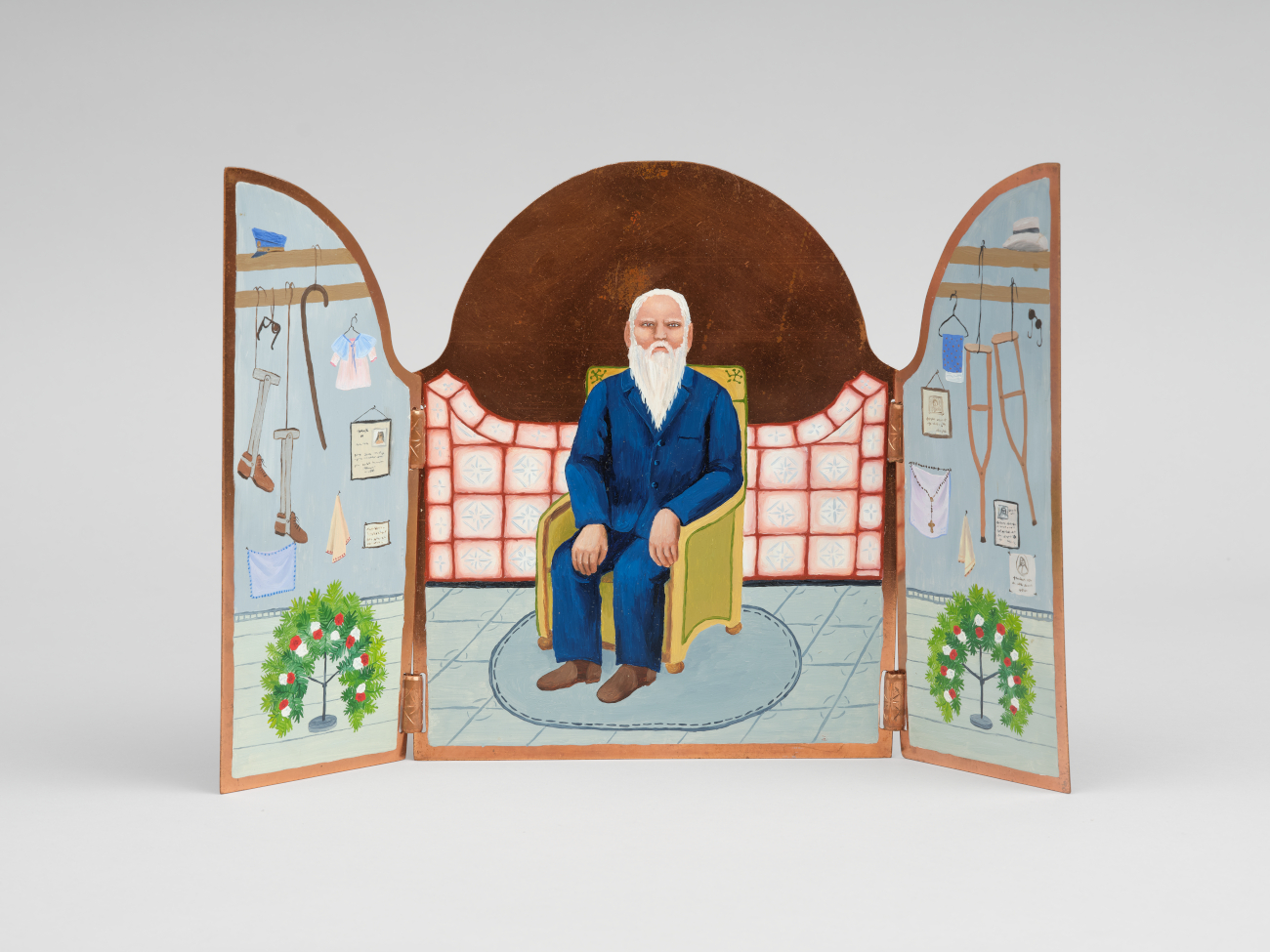
Carmen Lomas Garza, “Don Pedrito Jaramillo, Falfurrias, Texas 1829–1907,” 1976. Copper plate etching with paint, triptych, Overall (open): 10 x 16 in. (25.4 x 40.6 cm). Collection of the artist. Courtesy Carmen Lomas Garza. © 1976, Carmen Lomas Garza
What do you hope people will take away from this exhibition?
CLG: Fun!
I just want people to have fun looking at the artwork and remembering their own experiences.
I also hope they’ll bring their children with them and explain what’s happening in the scenes, or let the children talk about their own experiences.
For example, if a child has helped make tamales, they might recognize what’s happening in one of my paintings and talk about what they remember.
Once children begin telling their own stories inspired by the stories in my paintings, it can encourage them to write those stories down and eventually read them aloud.
It’s a way of encouraging children to develop their literacy skills, to write and read more.
AH: I hope visitors come away with a deeper understanding of the breadth, rigor, and enduring relevance of Carmen’s practice. I also hope they recognize that everyday life is worthy of serious artistic and historical attention. The intimate moments she depicts are never merely personal. They speak to larger questions of identity, belonging, memory, labor, family, and what it means to claim space within American life.
Most importantly, I hope people see themselves, their families, or their communities reflected in the many stories presented here. For those encountering experiences different from their own, I hope the exhibition creates a sense of connection and recognition. Carmen’s work reminds us that joy, care, celebration, and rest can carry profound cultural and political meaning.