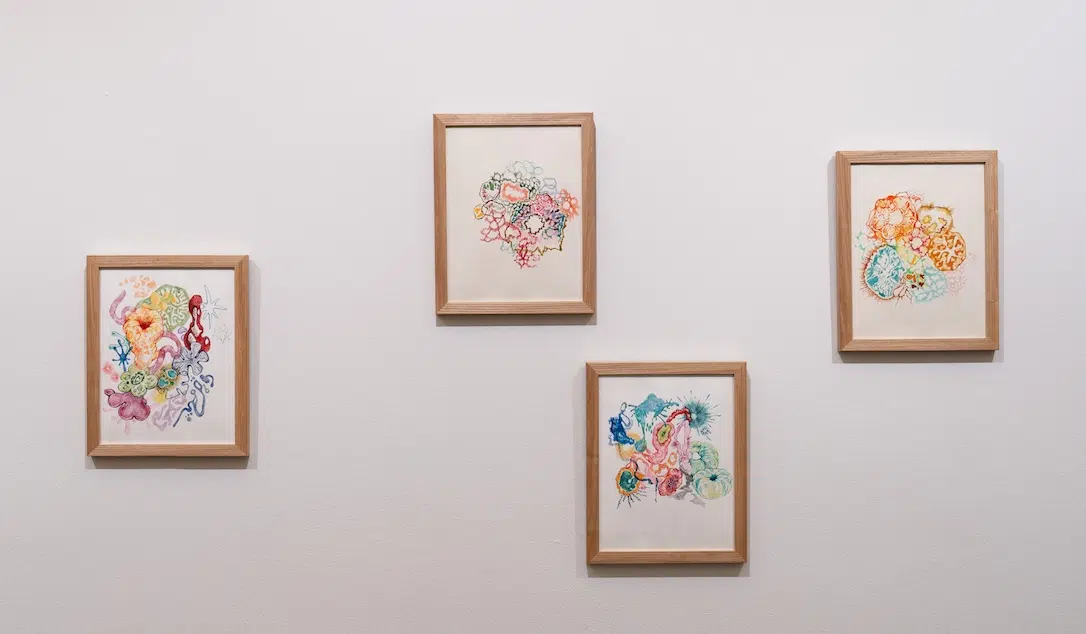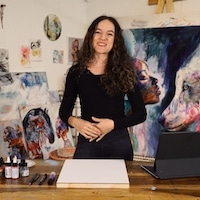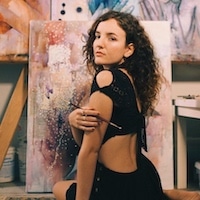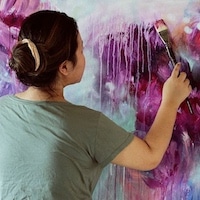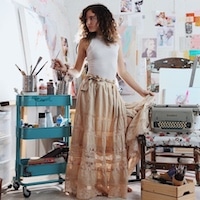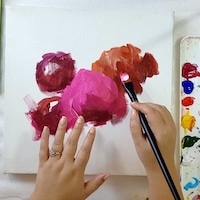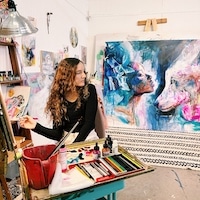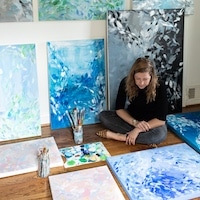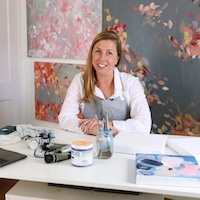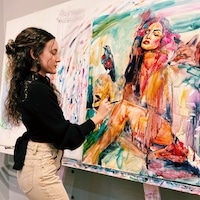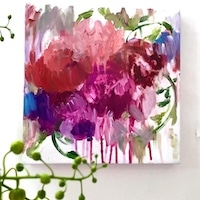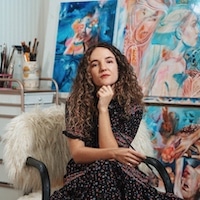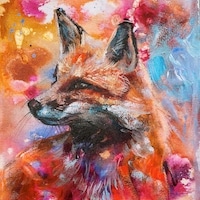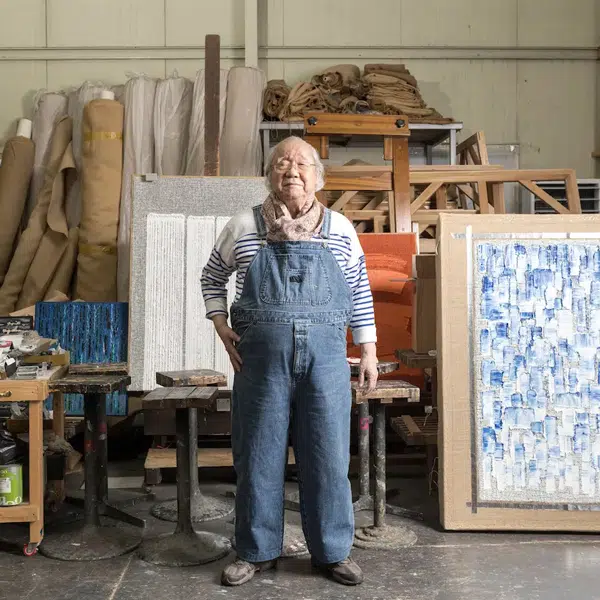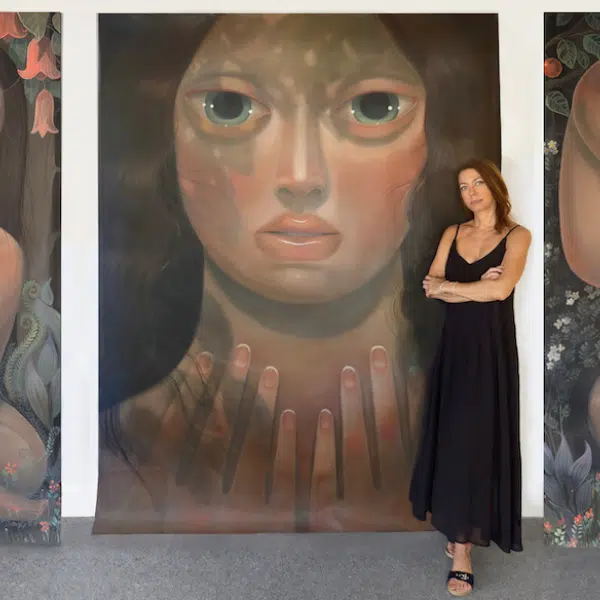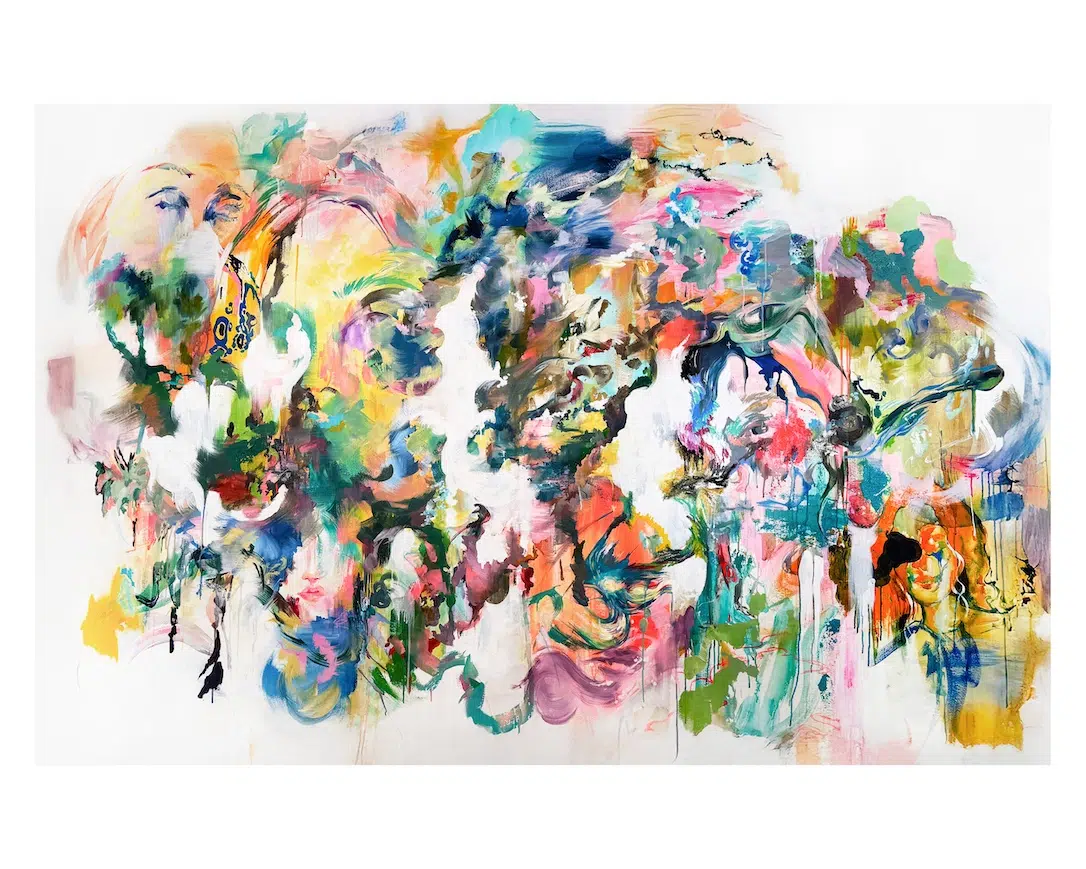
New York-based multidisciplinary artist Yoorim Ko (aka Korchive) visualizes her inner world with expressive color and fluid forms. Her layered work—spanning painting, installation, and mixed media—explores emotion, memory, and the subconscious experience, translating deeply personal experiences into vivid abstract forms.
Ko describes her practice as “examining the tension between surface and inscape, the visible self and an inner essence that resists capture.” Her dreamlike artworks feature fragmented imagery and intuitive mark-making, capturing her busy mind and how memories and emotions shift in our psyche.
Since moving to New York, Ko has found herself navigating the uncertainty of leaving behind the familiar and starting again somewhere new. That transformative experience has inspired her to explore that in-between state of having stepped beyond your comfort zone without knowing what comes next.
Ko’s latest work aims to capture that feeling of instability and disorientation, while also embracing the exciting possibilities that come with it. The artist’s colorful, multilayered works beautifully capture that feeling of nervous excitement. Even looking at her work is enough to give you butterflies.
We recently interviewed Ko to find out more about her artistic practice. Read on for My Modern Met’s exclusive interview and find more of the artist’s ever-evolving work on Instagram.
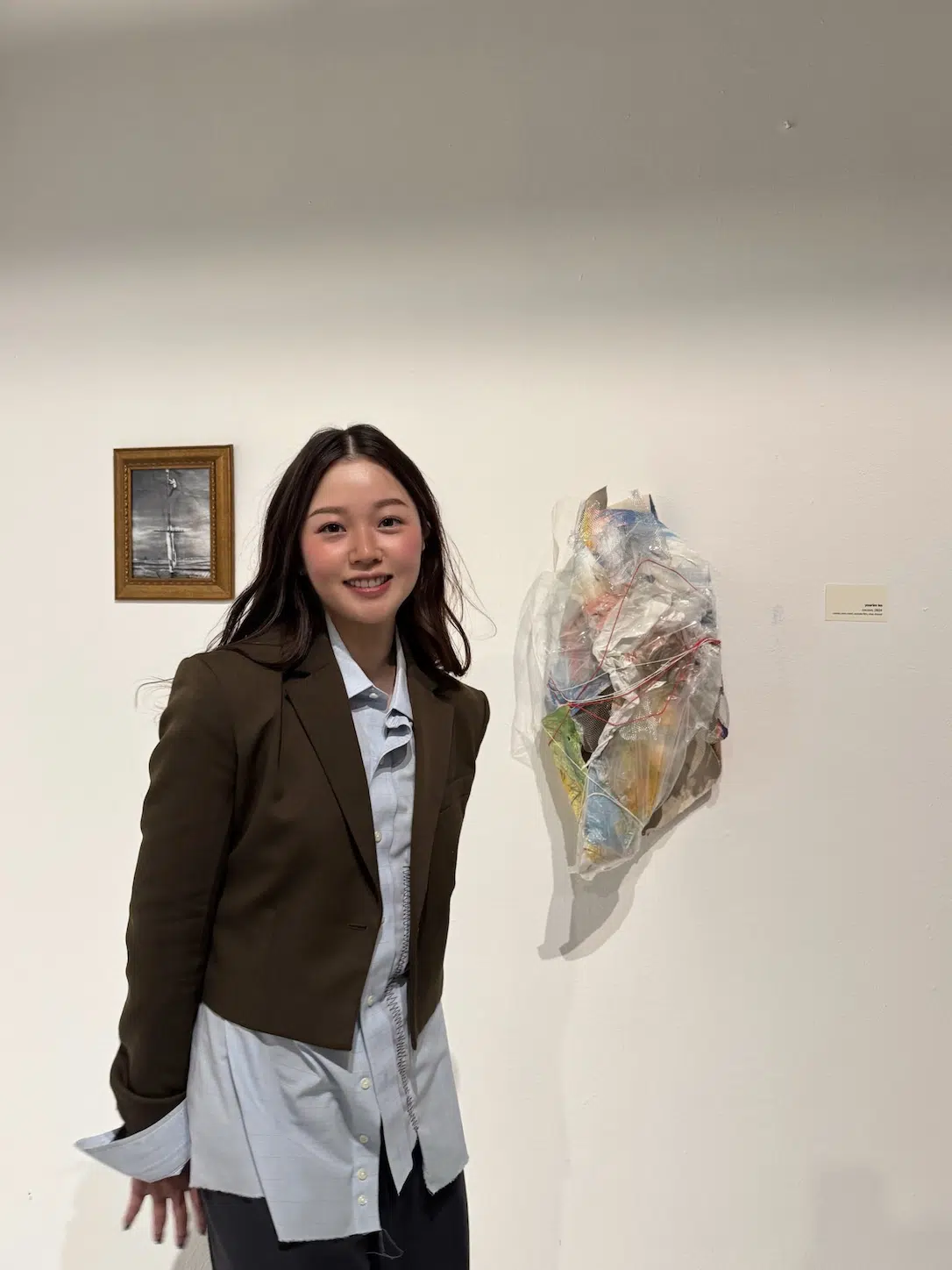
How did you first get started with your art, and what continues to inspire your creative process?
I’ve been drawn to drawing and making things for as long as I can remember, and I studied ceramics as an undergraduate. At first, I was especially interested in the physical process of making, working with my hands, understanding materials, and building forms. Over time, though, I became more interested in how I could visualize things that are not physically visible, such as emotions, thoughts, and internal states.
That interest eventually led me to expand my practice into fine art in graduate school. I still carry with me the sensitivity to material and physicality that I developed through ceramics, but now I work across painting, drawing, and installation to explore inner experiences through a broader range of forms.
The biggest source of inspiration for my work is ultimately my own experience and emotions. My work often begins with memories, relationships, changes in my environment, or questions that emerge from things I am going through personally. I’m particularly interested in emotions that are difficult to define through language, or in moments when contradictory feelings exist at the same time. Making work becomes a way for me to look more closely at those internal states and understand them differently, and that process is what continues to drive my practice.
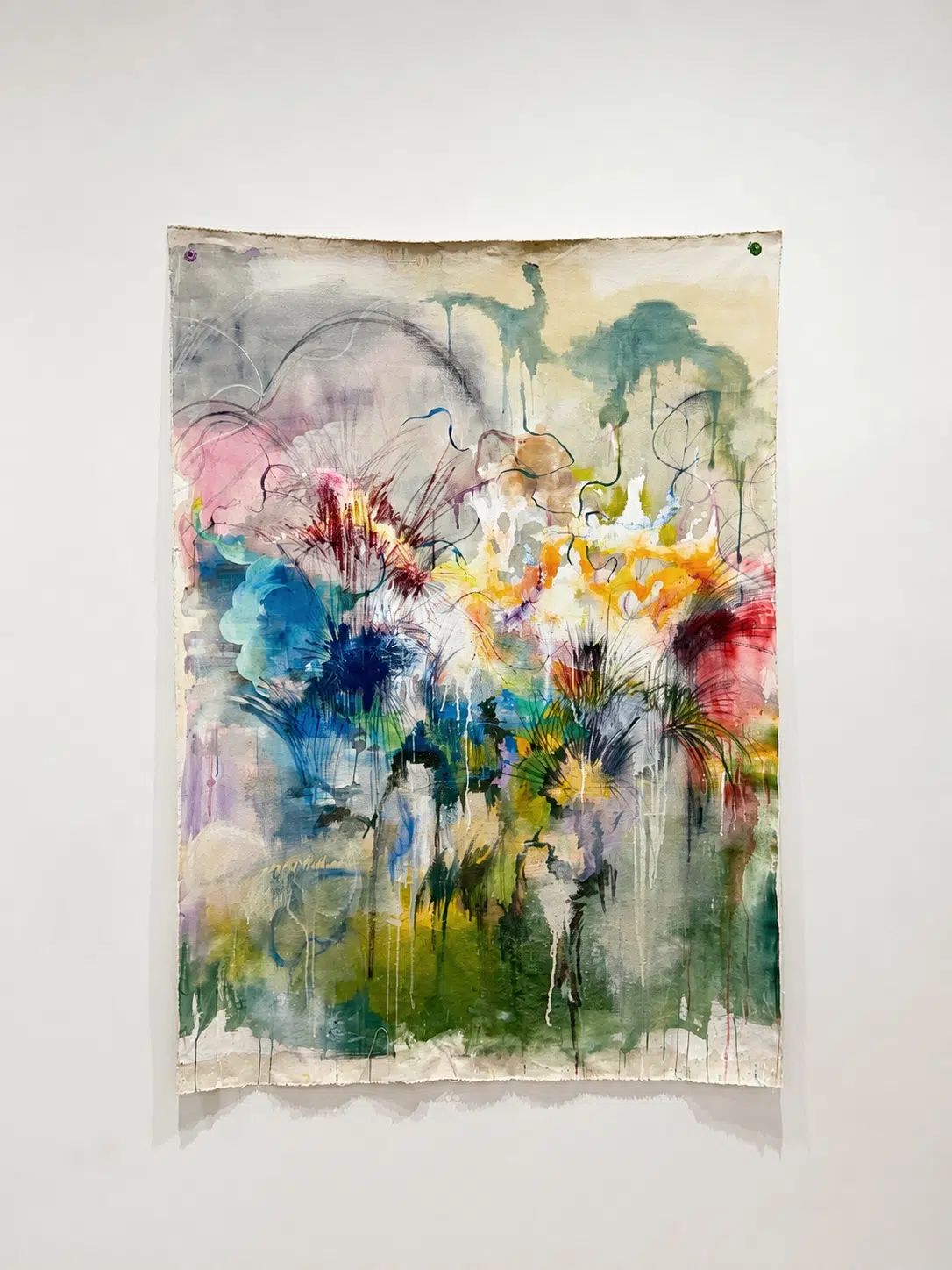
How did moving from Seoul to New York influence your work?
Moving to New York significantly shifted the direction of my work. In Seoul, I was surrounded by family, friends, a familiar language, and an environment I had known for most of my life. Coming to New York was the first time I had been physically separated from all of those things and placed on my own in an unfamiliar environment.
When I was living in Seoul, I don’t think I was fully aware of how much I existed within a familiar and comfortable structure. In New York, I had to rebuild so many parts of my life from the beginning, from language and everyday routines to relationships. That experience made me much more conscious of the edges of my own comfort zone.
Stepping outside of that edge brought a sense of freedom and release, but it also came with tension, loneliness, and anxiety. Over time, I began to realize that those uncomfortable and unstable experiences were also making me more independent and allowing me to grow. A familiar environment can protect you, but it can also keep you within certain boundaries. Leaving it can be unsettling, but it can also open up possibilities you may not have been able to see before.
That experience naturally led me toward themes of comfort zones, separation, independence, tension, and freedom. Independence can offer freedom while also creating loneliness. Leaving somewhere familiar can feel liberating while producing anxiety at the same time. For me, moving from Seoul to New York was more than a geographical transition. It made me realize that safety and growth do not necessarily move in the same direction. The unstable state that follows separation from something familiar, and the process of forming a new sense of self within that instability, continues to be an important starting point for my work.
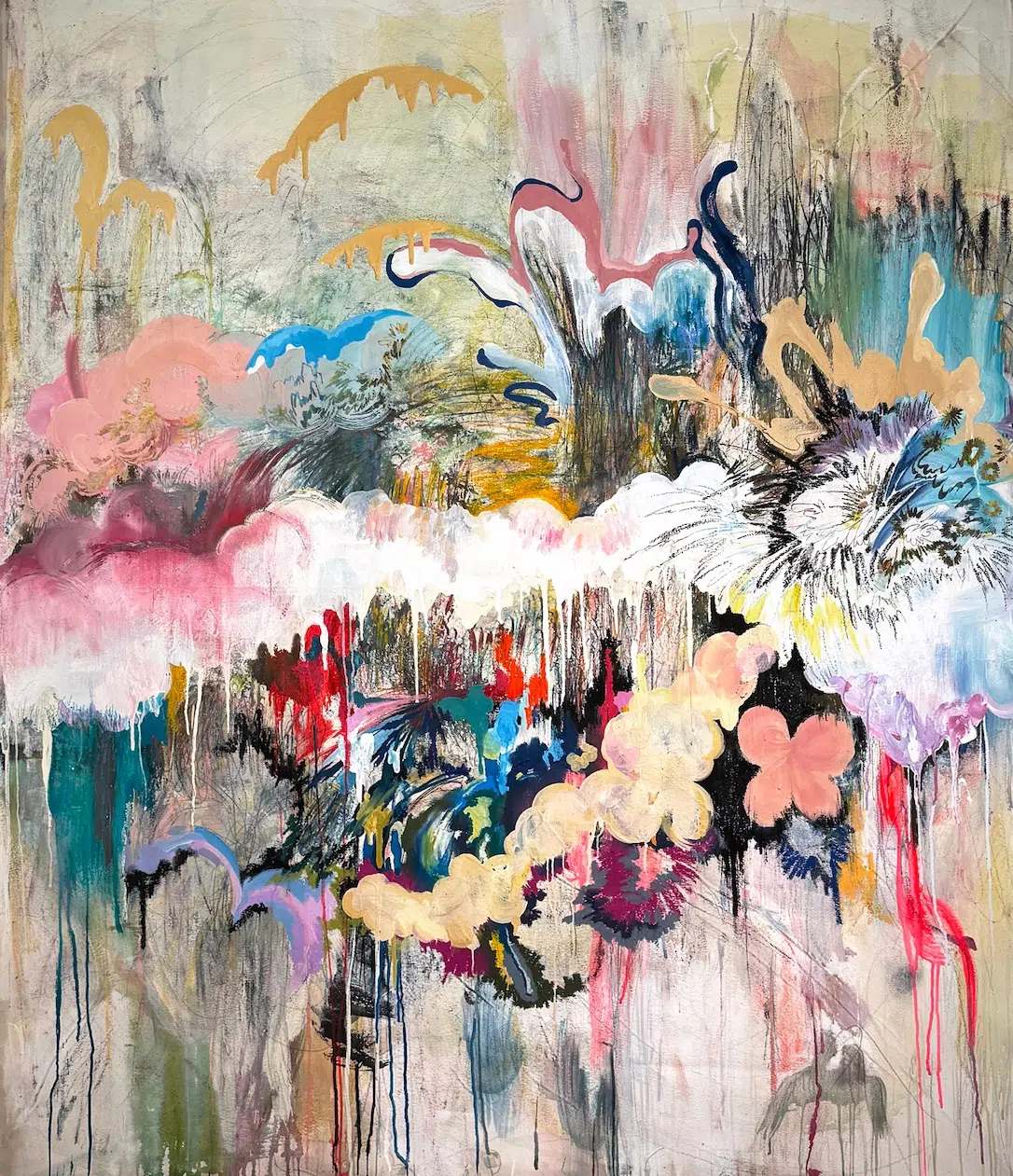
Your work often draws on memory, emotion, and the subconscious. How do you begin turning something so internal and personal into a visual piece?
Rather than directly illustrating an emotion or memory through a specific image, I tend to translate those internal experiences through a visual language I’ve developed over time.
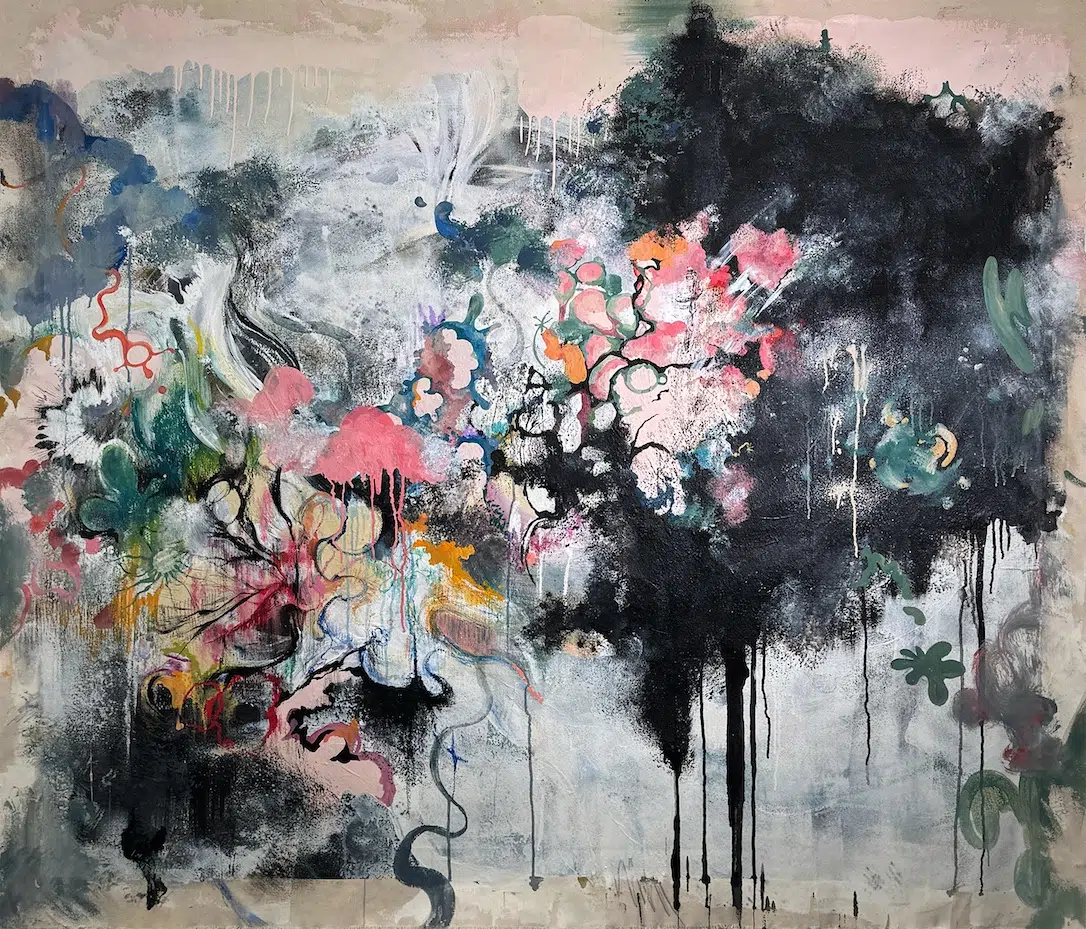
Layering is especially important to my process. I repeatedly build up images, erase or cover parts of them, and allow certain elements to reappear, leaving traces of different moments within the same surface. For me, this is more than a formal technique. It relates to the way memories and emotions accumulate, fade, become obscured, and sometimes unexpectedly return.
I don’t usually begin a new work with a fully resolved image in mind, but that doesn’t mean the process is random. Over time, I’ve developed a vocabulary of forms, gestures, and ways of layering that recur throughout my work. I reconfigure and transform those elements according to the emotions or questions I'm dealing with at a particular moment.
I also allow unexpected marks or forms to enter the process, but I don’t simply leave them as they are. I select, erase, reconnect, and adjust the relationships between them. So for me, working intuitively doesn't mean working without intention. It’s more about constantly making decisions within a visual language I’ve already built.
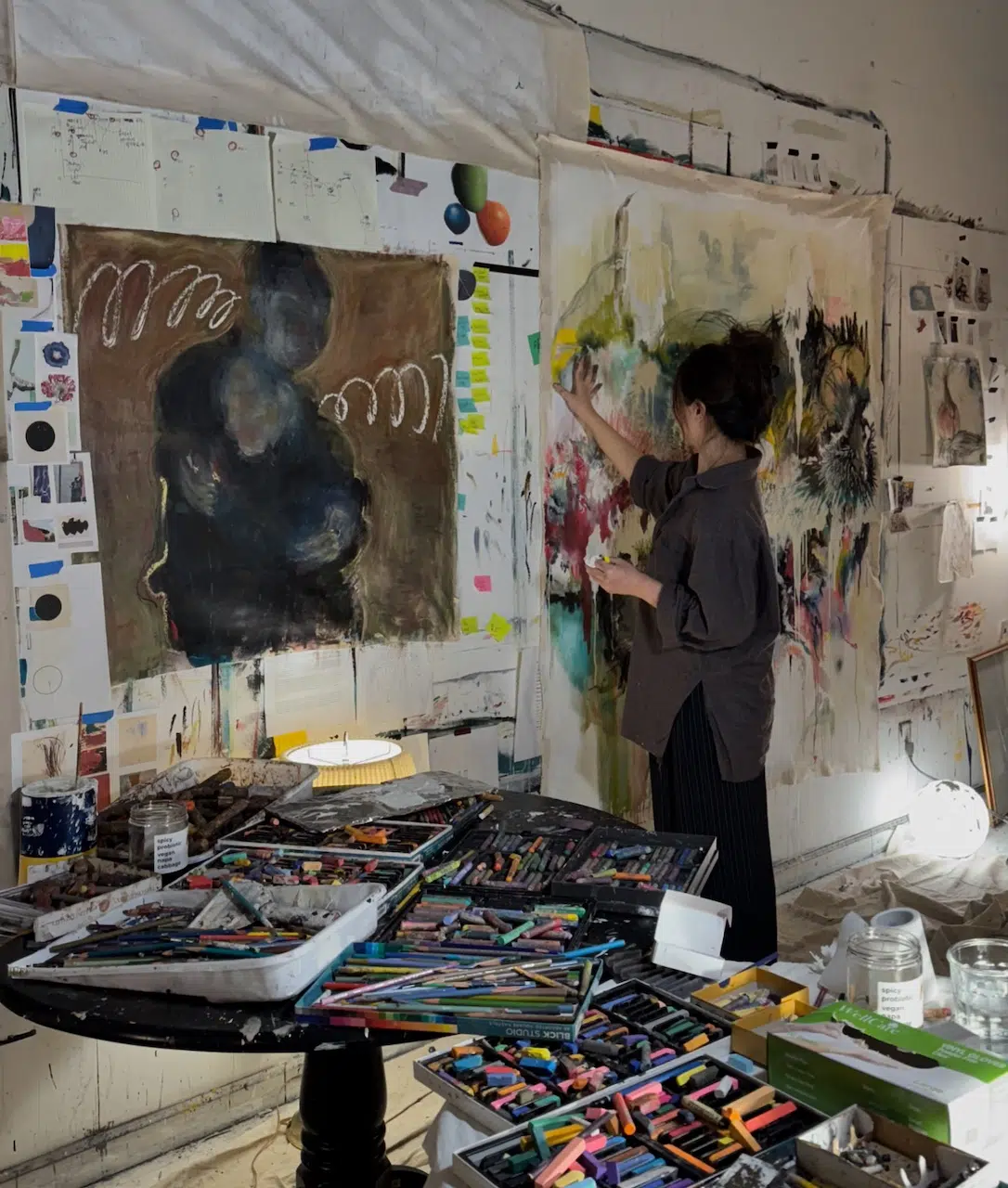
Are there certain colors or shapes that have very specific emotional associations for you?
I don’t assign one fixed emotion to a particular color. I don’t necessarily use red for anger or blue for sadness, for example. I’m more interested in the relationships colors create with one another. The same color can carry a completely different emotional weight depending on the colors surrounding it, the density of the surface, or how many layers it’s been placed within.
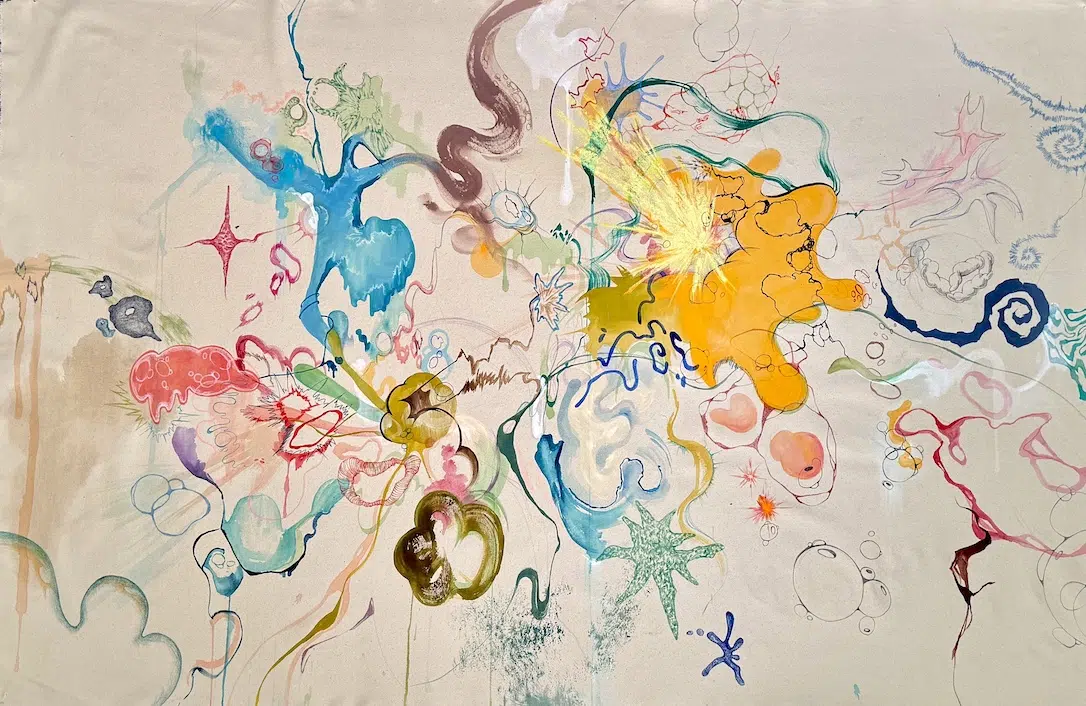
With form, a more specific visual language has developed throughout my practice. Lines that resemble cracks or wounds, root-like or thread-like forms that connect different areas, and gestures that suggest falling, dripping, or downward movement appear repeatedly in my work.
For me, these images function less like symbols with fixed meanings and more like a vocabulary for states that occur at a boundary. A crack, for example, exists between a surface that is intact and one that has completely broken apart. A thread or root suggests connection, but that same connection can also restrict movement. An image of falling suggests separation from one place while describing a moment before arriving anywhere else.
I think about connection and separation, protection and confinement, rootedness and departure as forces that can exist at once. Cracks, roots, threads, and falling forms aren't separate symbols so much as a shared vocabulary for exploring those ambivalent states.
How do you know when one of your paintings is finished?
This is always difficult for me because my process involves repeatedly covering, erasing, and repainting. If I wanted to, I could probably continue revising a work indefinitely.
Rather than stopping when a painting feels perfect, I tend to stop when I become convinced by the image as its first viewer. There’s a moment when I feel the image can hold itself without needing anything more added or removed.
It’s also important to me that a certain degree of unresolved tension remains. When everything becomes too resolved or too easily explained, I often feel something has been lost. I’m more interested in a painting when conflicting elements or a sense of instability still remain, because that tends to be closer to the emotional state I’m trying to reach.
If you could change one assumption people bring with them when looking at abstract or semi-abstract art, what would it be?
I’d like people to feel they don’t necessarily have to find the correct answer to the question, “What is this supposed to be?”
My work comes from personal experiences and has meanings specific to me, but I don’t expect viewers to understand it exactly the way I do. They can try to identify what they see, or connect the work to their own memories and emotions. What matters more to me is that, regardless of how they approach it, they spend a little more time with the work.
My paintings contain overlapping images, traces, and layers, so forms that aren’t visible at first can begin to emerge through longer looking. I’m interested in the gap between someone’s first impression of a work and what they experience after spending more time with it, and in the possibility that they might discover something of their own through that process.
What are you currently working on, and do you have any upcoming projects that you’re particularly excited about?
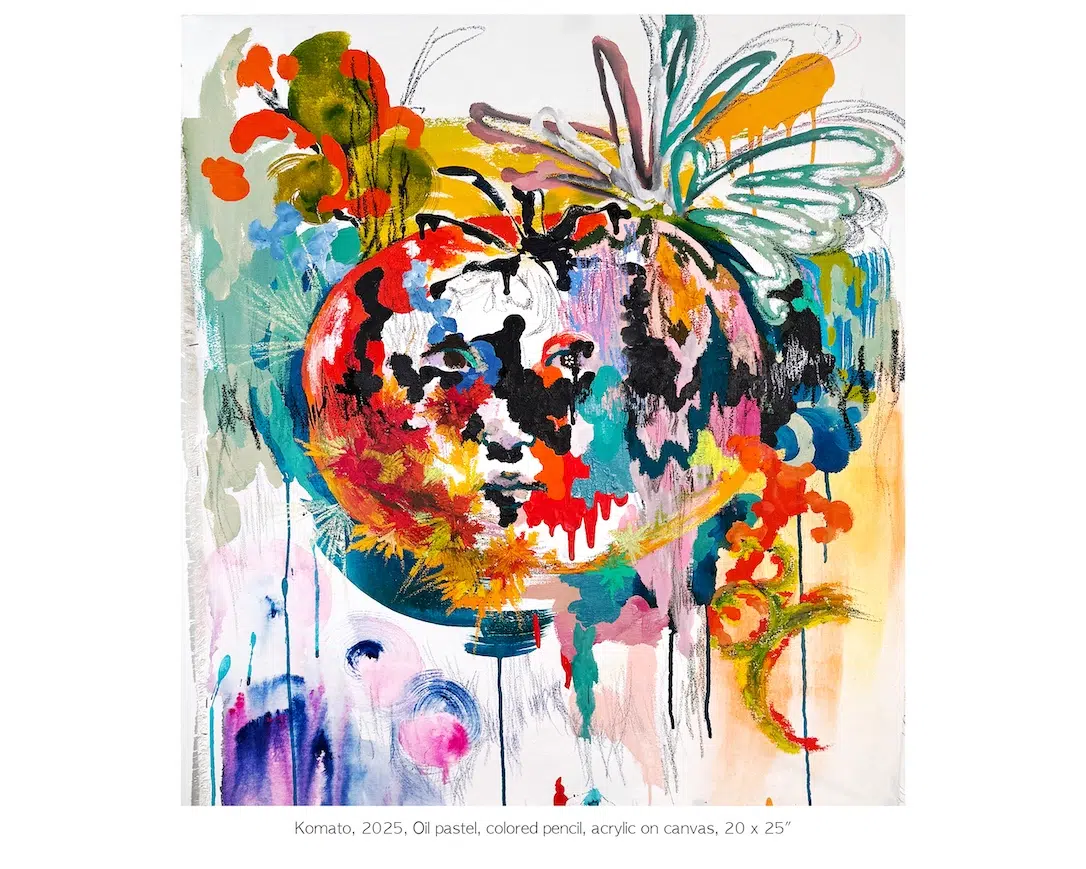
Recently I’ve been working around the idea of Freefall, a state where you’ve left something familiar but haven’t yet rooted yourself somewhere new. Earlier work focused on the comfort zone as something that protects while also limiting. Now I’m drawn more to the freedom and instability that emerge after crossing that boundary.
I’m also expanding the physical form of my work. I’ve worked with unstretched canvas for a long time, and recently I’ve been hanging the canvases using grommets and thread. What began as a method of installation has started to feel connected to the imagery and ideas within the paintings themselves.
I want the thread to move beyond its function of simply supporting the canvas and enter the painting as part of the image itself. A painted line on the surface might continue into actual thread, extending beyond the edge of the canvas and into physical space, so that connection, separation, tension, and falling exist not only as images but through material and spatial relationships.
Ultimately, I want to move beyond painting as a fixed image on a wall. I want to suspend multiple canvases within a space so viewers can move between them and experience not just the fronts of the works, but their backs and the spaces in between, where the unstable states I explore in the image can also be felt physically.