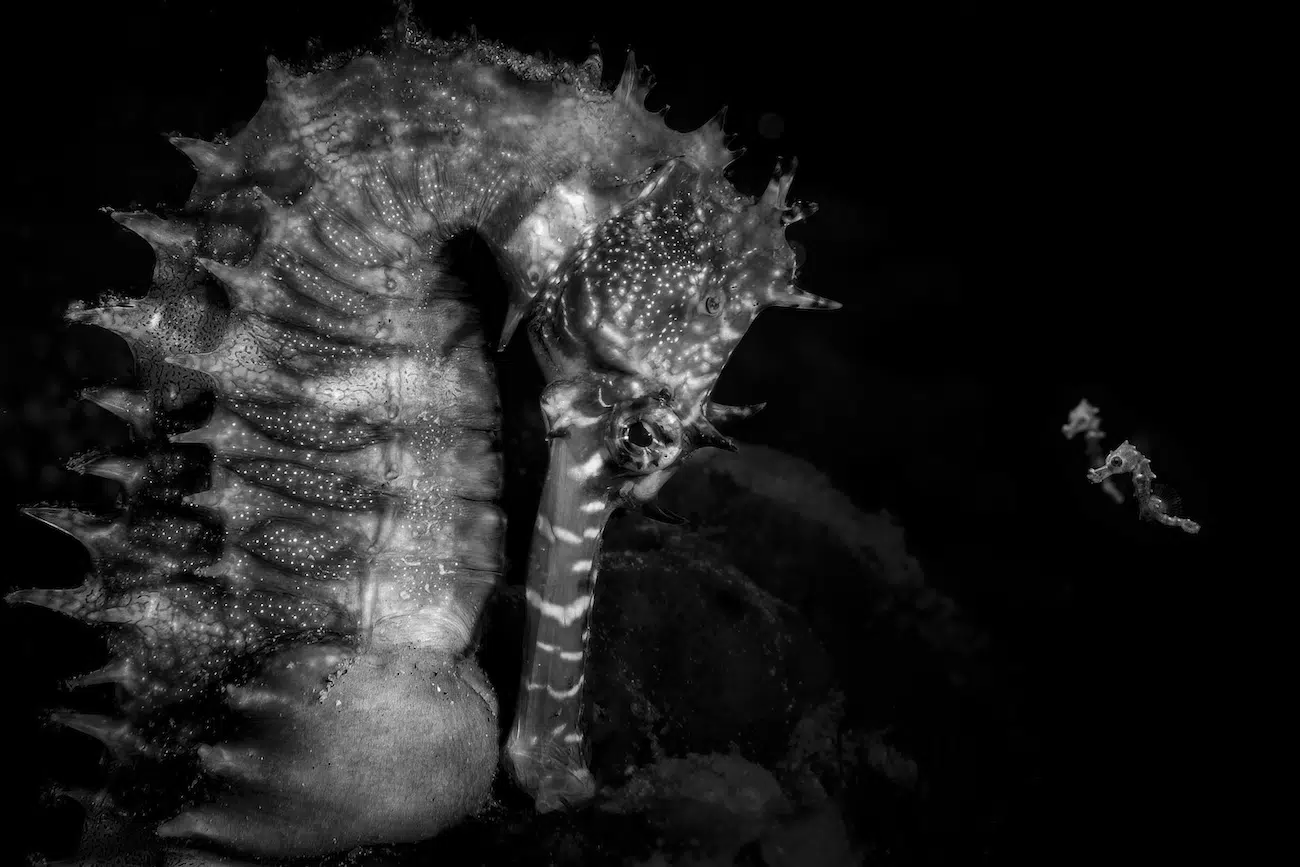
Julien Anton, Ocean Photographer of the Year. Location: French Polynesia
An adult seahorse pictured with newly born juveniles in the shallow seaweed-filled waters of Moorea, French Polynesia. While it is not known if these seahorses are related, their arrangement creates the impression of a farewell, as if the tiny seahorses have gathered around their father after he has released them into the world. Seahorses are now rare in French Polynesia so this image was the result of long hours of searching among the seaweed.
Only 5% of the ocean has been explored, and that number is even smaller for the deep ocean seafloor. Explorers have seen just 0.001% of the deep ocean seafloor (roughly the size of the state of Rhode Island). Its vastness makes it an ideal subject for photographers; there are just so many things to capture. The Ocean Photographer of the Year 2026, presented by Oceanographic and Blancpain, showcases the ocean’s ecological and emotional range, leaving us in awe of this facet of our incredible planet.
The 2026 competition was fierce. With more than 15,000 images submitted by photographers worldwide, the judges had many great entries to consider. They chose Julien Anton’s photograph of an adult male seahorse alongside two tiny juveniles in the waters around Tahiti and Moorea. The three creatures are the only ones visible in the photo, which is set against a nearly black background. The scene is one that humans can relate to. Although it’s unknown if the three creatures are related, the slight bow of the adult seahorse’s head toward the smaller duo makes it seem as though he’s bidding them farewell—like a parent would do to their children.
The judges had a similarly emotional response to Anton’s photo. “When Julien Anton’s image first appeared on screen, the judging panel fell silent,” recalls Ocean Photographer of the Year founder and director, Will Harrison. “It is an image that demands reflection, pause for thought, and it certainly got that from us. The image is full of quiet energy, even if some of that comes from us humans imprinting our own emotions on the photograph: the bow of the father’s head, the juveniles turning back towards him, the generational gap and the unknown futures of the newborns. What kind of ocean are we leaving for those who come after us? It is ocean photography at its most powerful: intimate, urgent and impossible to ignore.”
In addition to the title of Ocean Photographer of the Year, Jenny Stock received the 2026 Female Fifty Fathoms Award, which recognizes pioneering and boundary-pushing women in ocean photography. Winners were also awarded in categories including Adventure, Conservation Hope, Conservation Impact, Fine Art, and Wildlife.
Scroll down to see the winning images, and be sure to check out the full winners’ gallery on the Oceanographic website.
The Ocean Photographer of the Year 2026 has just announced its 2026 winners.
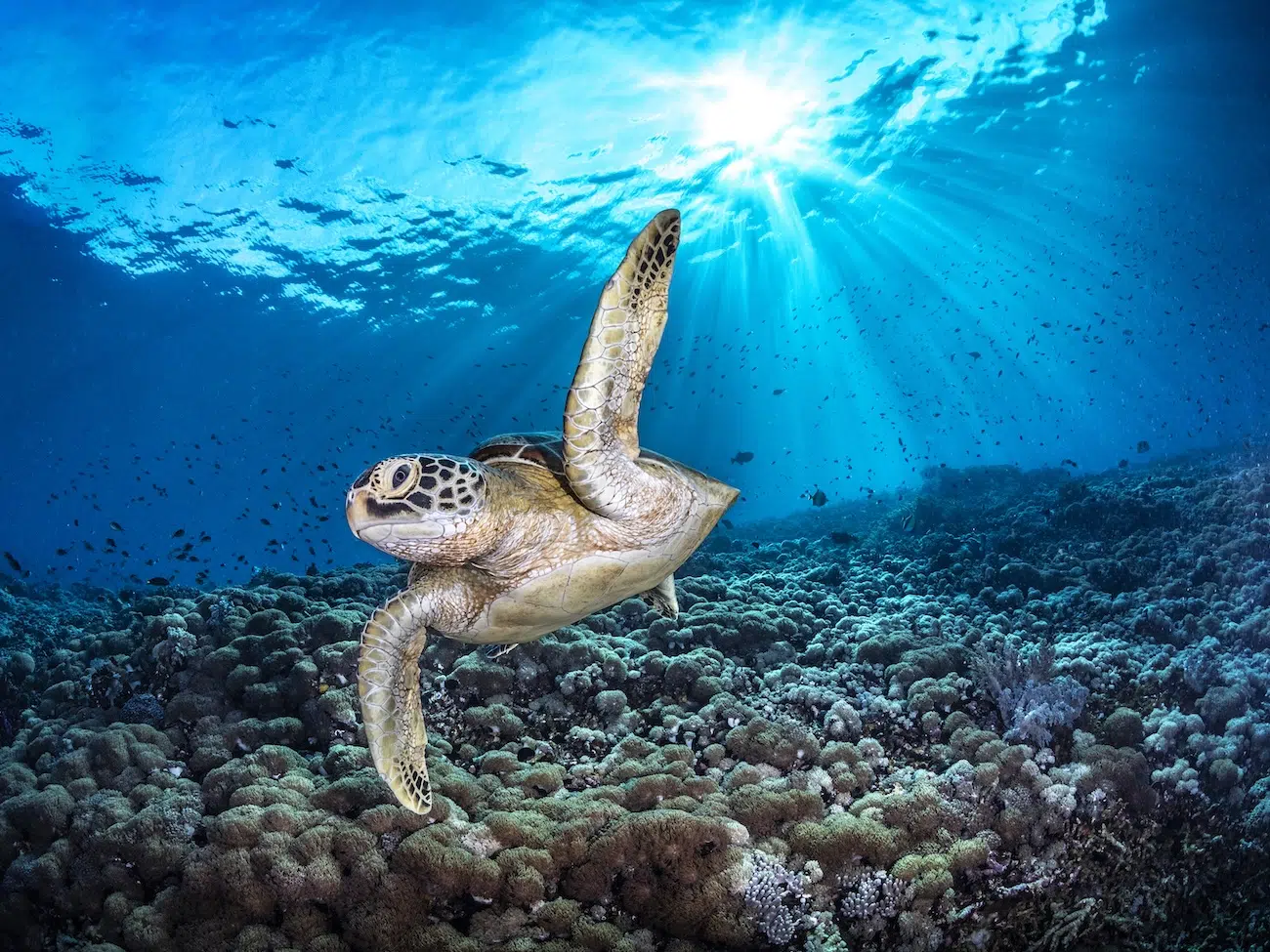
Jenny Stock, Female Fifty Fathom Award. Location: French Polynesia
A green turtle approaches the camera, appearing curious about her reflection in its dome port. The photographer positioned the camera just below her eye level to create a more intimate portrait; staying within 3-10 metres of the surface kept the sunlight sharp, creating distinct rays through the water. A fast shutter speed and small aperture controlled the intense brightness, while a small amount of strobe light revealed the turtle’s details.
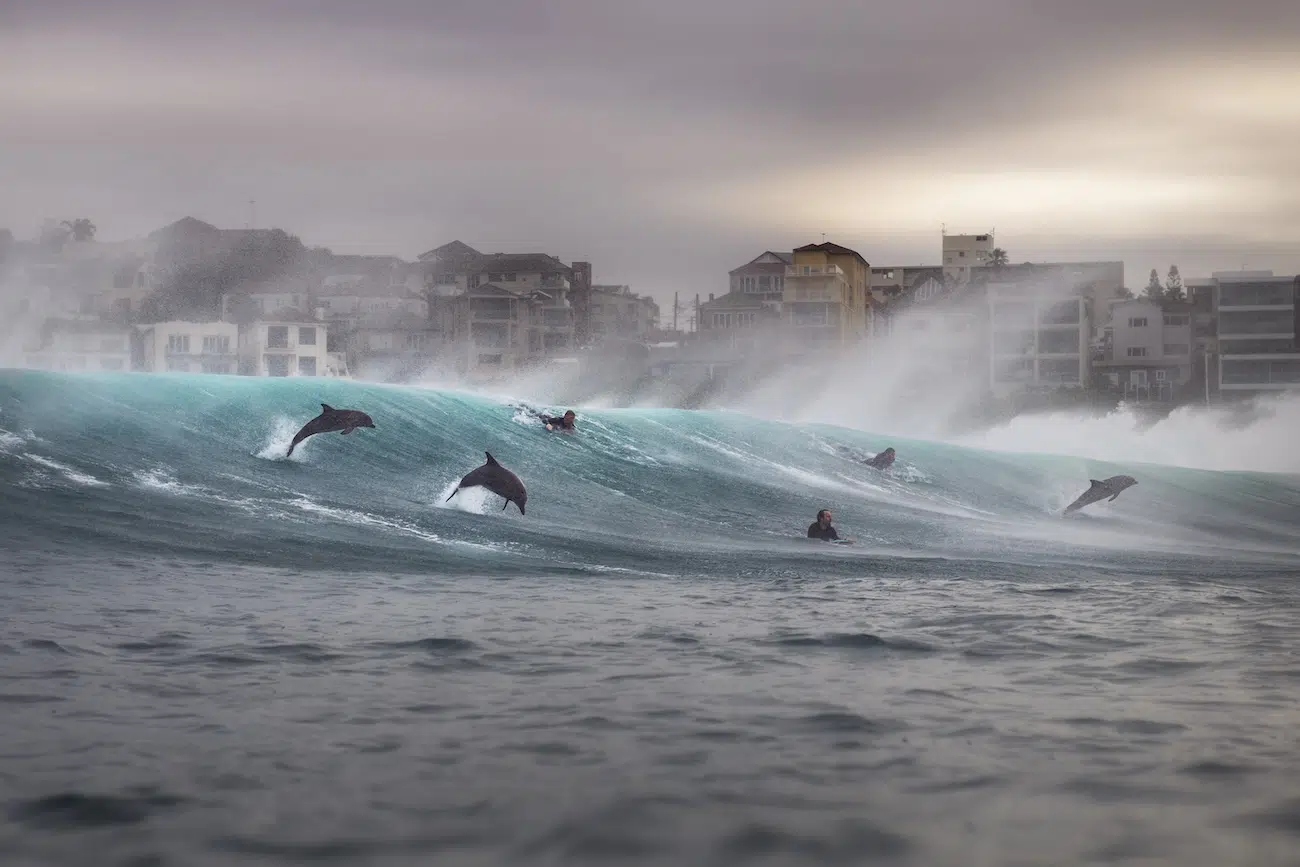
Georgo Rugli, Winner, Adventure. Location: Tamarama Beach, Australia
Dolphins ride the waves alongside surfers at Tamarama Beach, Sydney, during a powerful swell and offshore winds. The pod stayed with the surfers for more than an hour, moving through the lineup as naturally as the people around them. Captured from the water, this image shows the ocean as a shared space, where humans and wildlife briefly move together within the same powerful coastal environment.
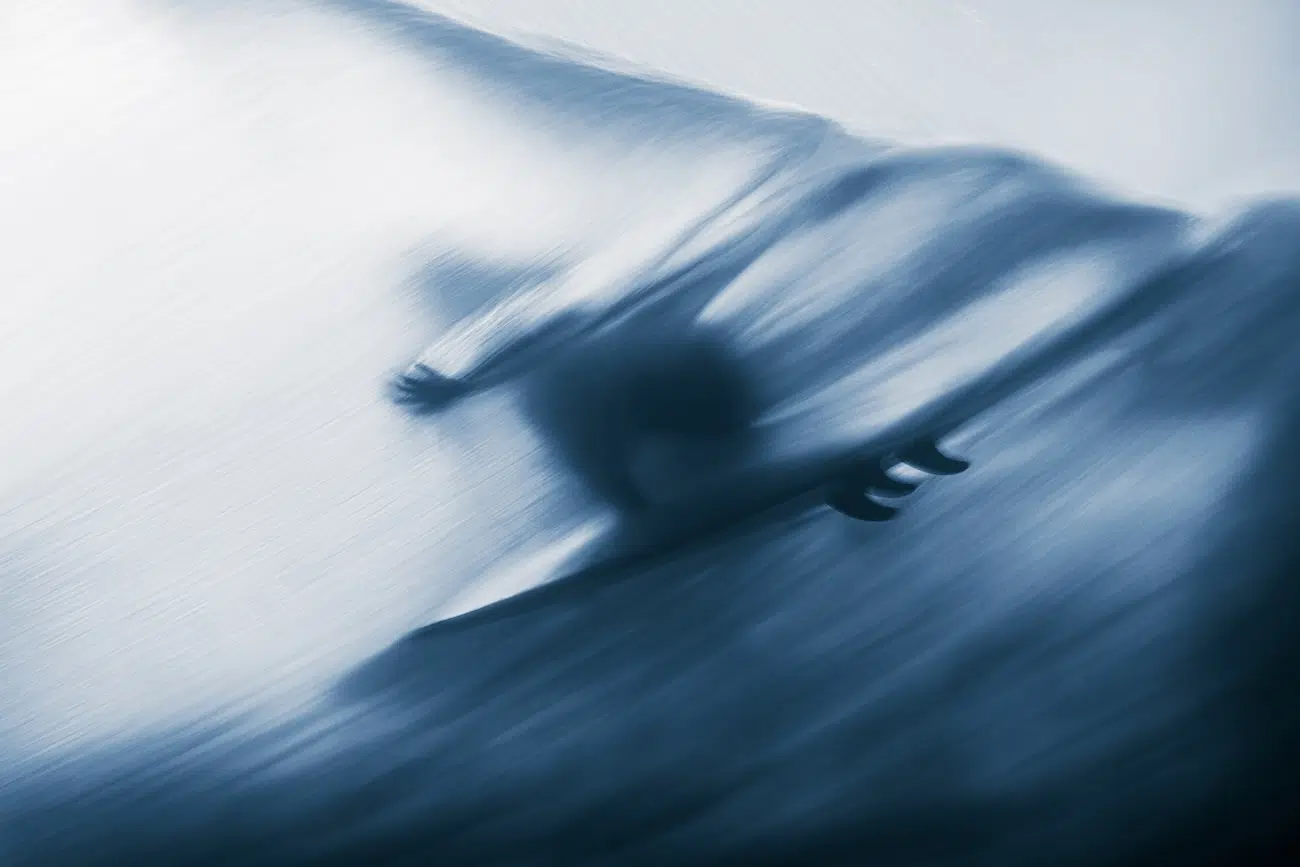
Ben Thouard, Runner-up, Adventure. Location: Teahupo’o, French Polynesia
A surfer races through the barrel of Teahupo’o, French Polynesia, photographed from beneath the wave using a slow shutter speed. Rather than freezing the action, the technique blurs the rushing water while keeping the surfer as the focal point, conveying the incredible speed inside the wave. Teahupo’o is a busy surf spot, yet the photographer has managed to capture an isolated surfer at this iconic location.
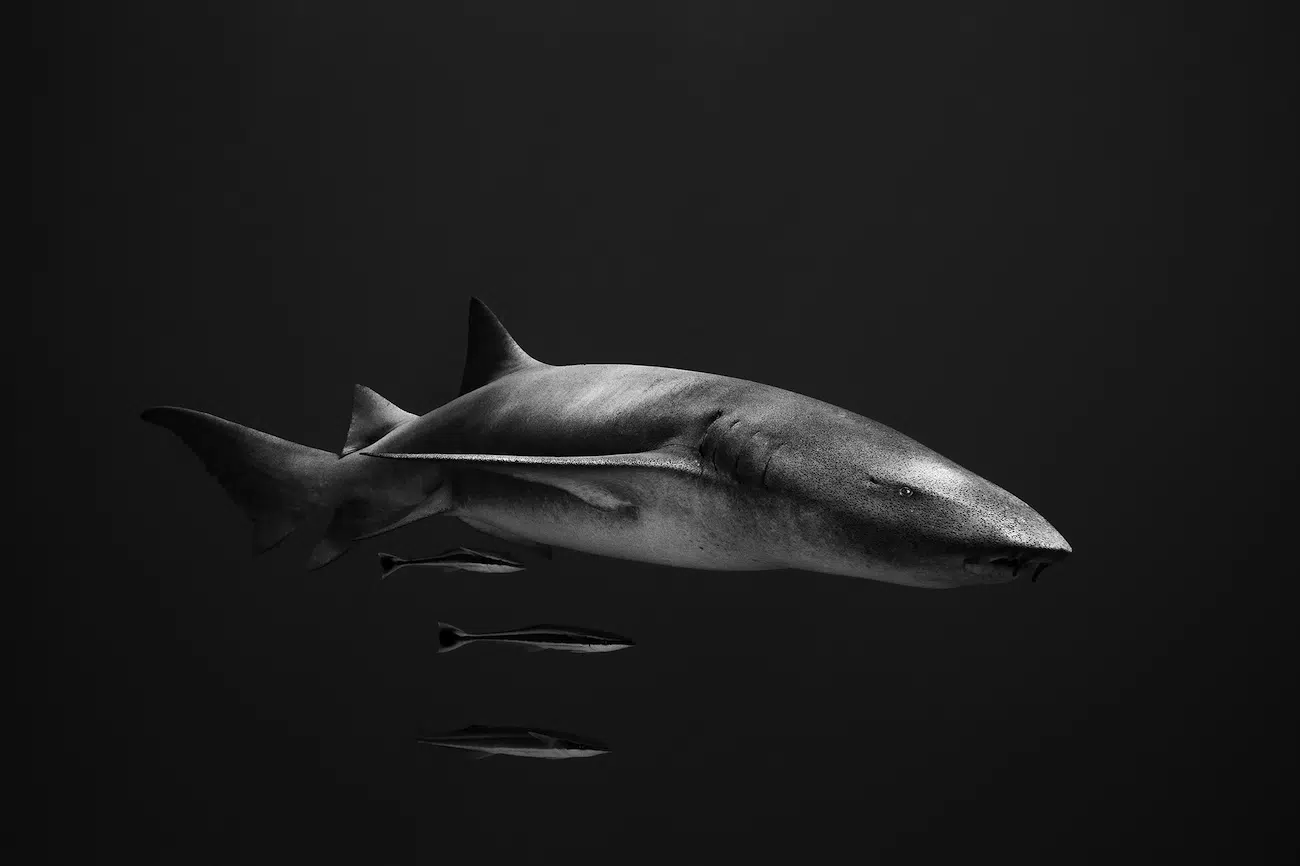
Matty Smith, Winner, Fine Art. Location: Alimathaa Island, Maldives
A tawny nurse shark glides through the warm waters of the Maldives as the se ng sun filters through the ocean surface. Beneath it, remoras travel alongside their host, illustrating a common partnership in which the smaller fish gain transport, protection and feeding opportunities. Often perceived as fearsome predators, nurse sharks are slow-moving, bottom-dwelling animals that play an important role in maintaining healthy marine ecosystems. The shark’s direct gaze creates a sense of connection with the viewer.
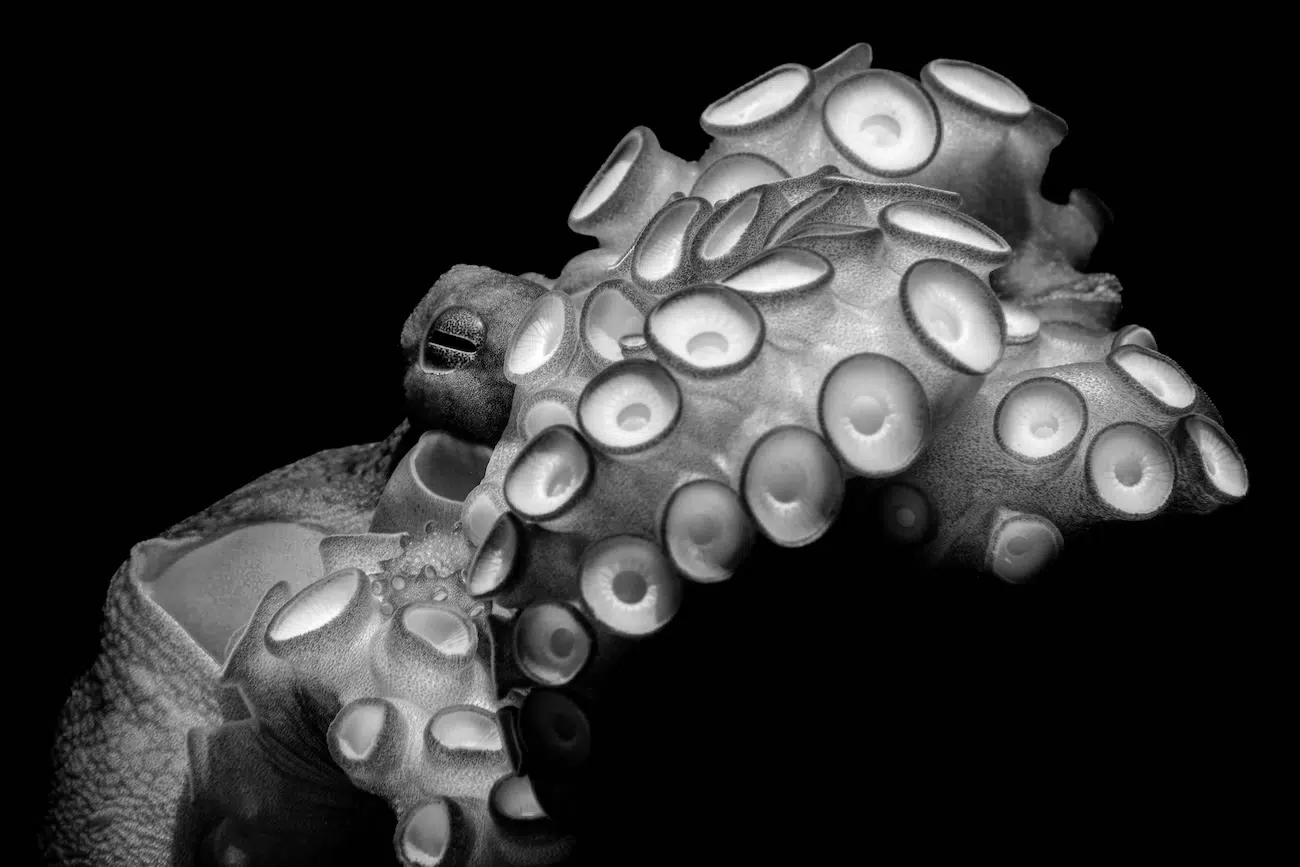
James Ferrara, Runner-Up, Fine Art. Location: Florida, U.S.A.
A common octopus reveals its intricate suckers, textured skin and watchful eye in the waters of Blue Heron Bridge, Florida. Known for its rich marine life, this shallow dive site provided the setting for a close encounter with one of the ocean’s most intelligent animals. Focused lighting highlights the octopus’s anatomy, including its open siphon, which moves water through its body for breathing and movement.
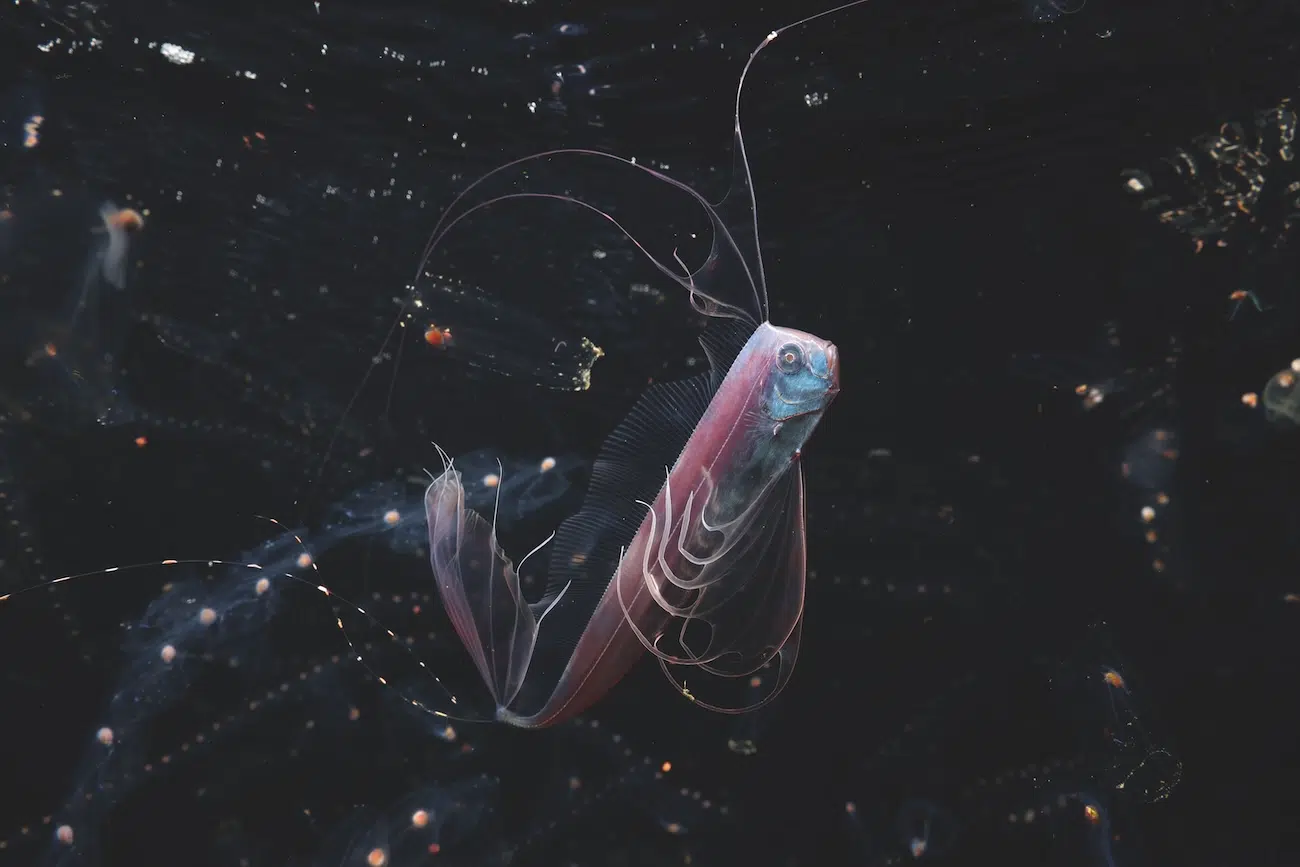
Mitsuna Kawai, Winner, Ocean Unseen. Location: Osezaki, Japan
A ribbonfish rises vertically through the dark waters of Osezaki, Japan. Its long, silver body and delicate fins are adapted for life in the open ocean. This image was captured during a winter blackwater dive. Around the ribbonfish, a swarm of salps—small, jelly-like animals that feed on tiny particles in the ocean—creates a glimpse of life moving through the deep sea.
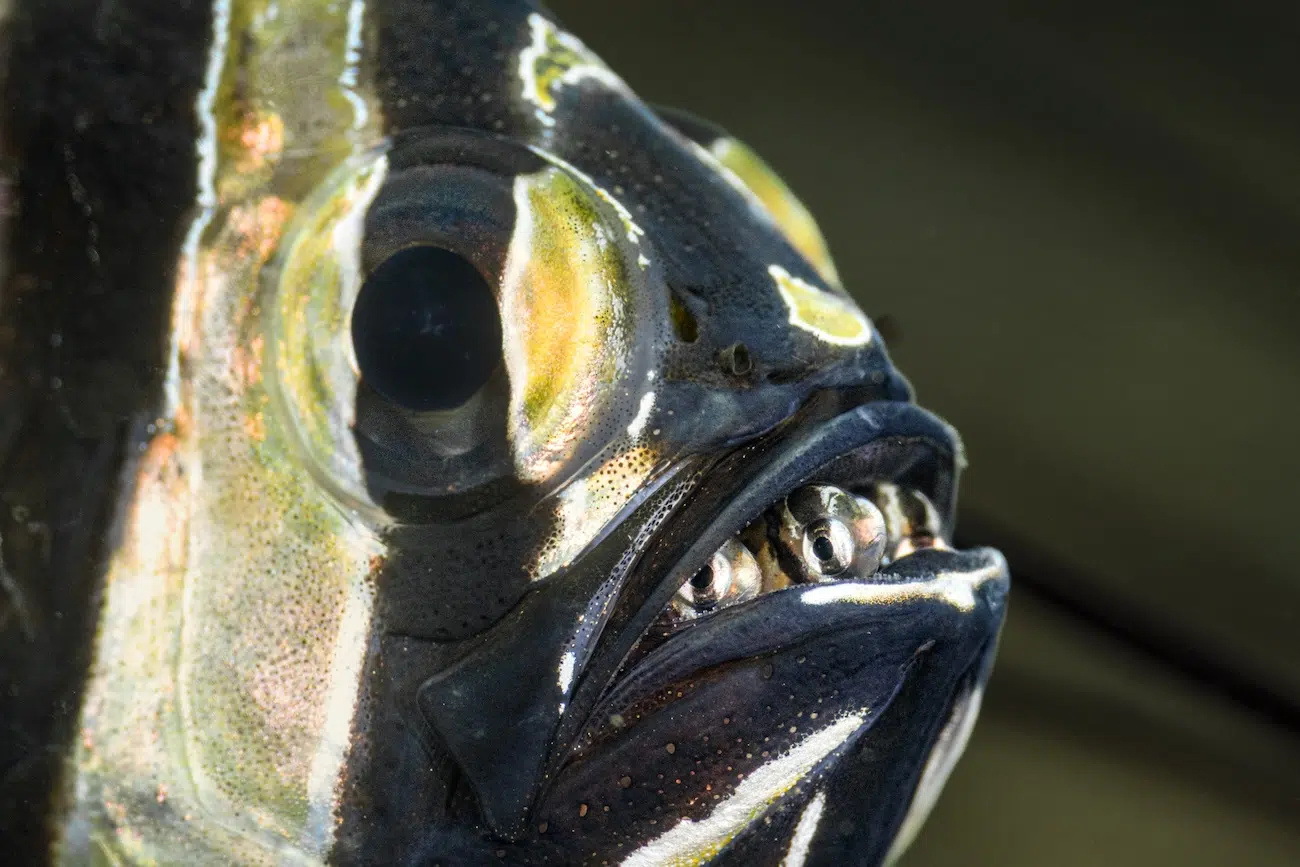
Suliman Alatiqi, Third Place, Ocean Unseen. Location: North Sulawesi, Indonesia
A male Banggai cardinalfish shelters newly hatched juveniles inside his mouth, continuing the parental care that follows a three-week incubation period. After hatching, the male may brood the young for another 10 days without feeding, protecting them from predators until they become more independent. This image captures two juveniles peering from their father’s mouth, revealing the specialised mouthbrooding strategy that helps this species increase the survival of its young.
These are the top picks from the over 15,000 images entered into the competition.
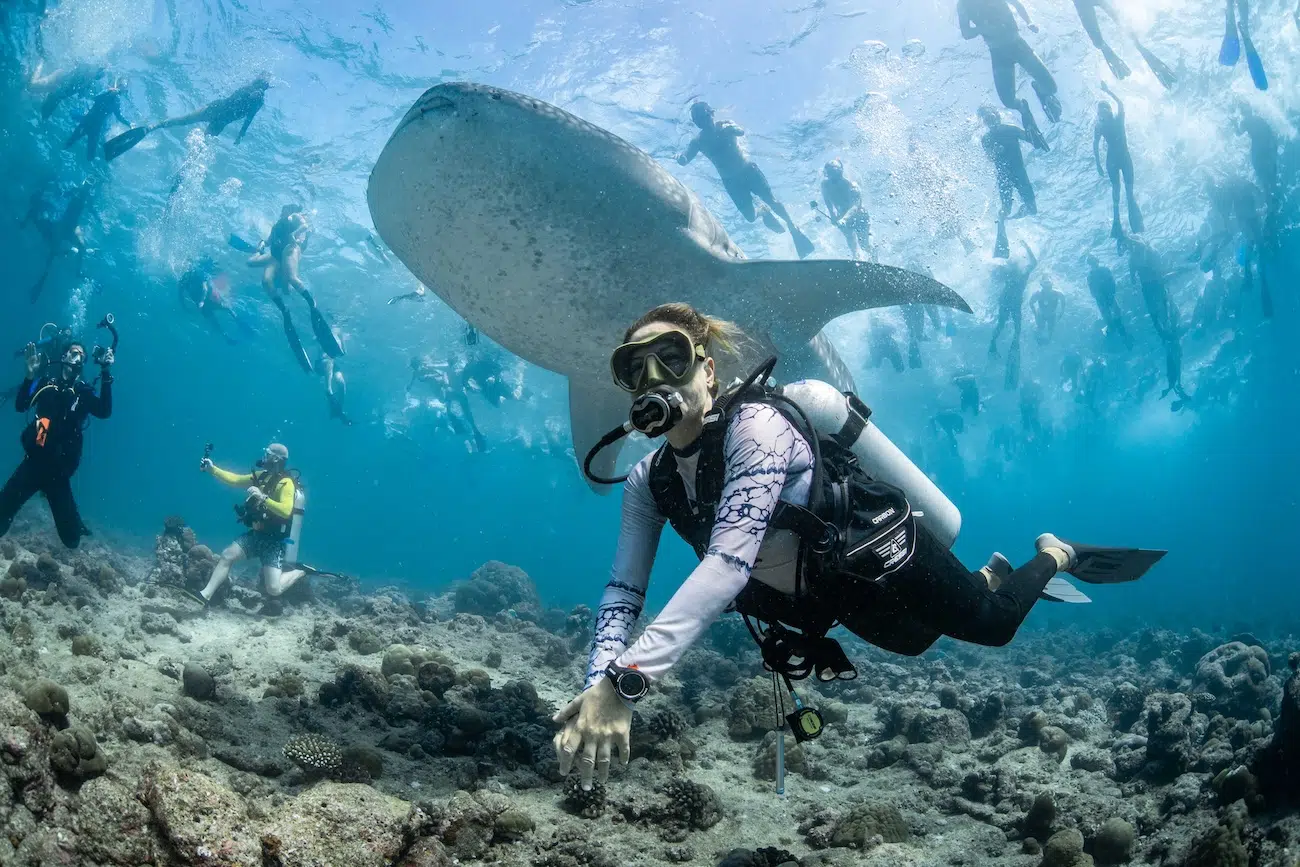
James Ferrara, Winner, Conservation (Impact). Location: Raa Atoll, Maldives
A whale shark is surrounded by divers and snorkelers in the Maldives, revealing the overwhelming pressure crowded wildlife tourism can place on marine animals. With almost 50 people visible in the frame, this image captures the reality behind some popular wildlife encounters: an animal seeking space while people compete for a closer view. It challenges us to rethink how we experience and protect the species we admire.
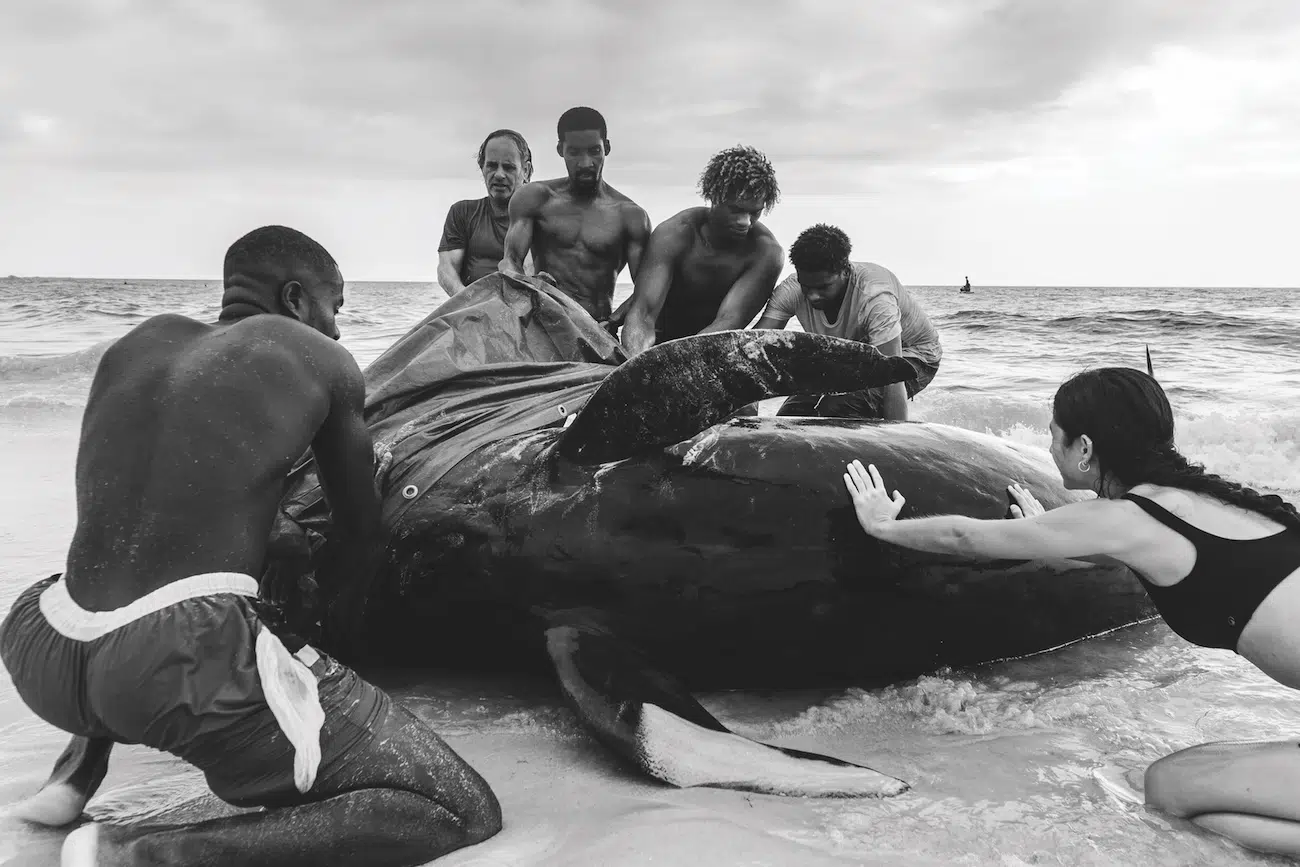
Rui Filipe Cardoso Duarte, Winner, Human Connection Award. Location: Boa Vista, Cape Verde
Volunteers, surfers, lifeguards and conservation groups work together to refloat stranded short-finned pilot whales. While many animals initially returned to the sea, the pod stranded again further along the coast, highlighting the complexity of mass strandings. The image captures compassion in action, but it also reflects how wildlife rescue continues to evolve. In the months that followed, international experts trained the local community in safer, science-based stranding response techniques, strengthening future rescue efforts.
The lauded photos showcase the ocean’s ecological and emotional range, leaving us in awe of this facet of our incredible planet.
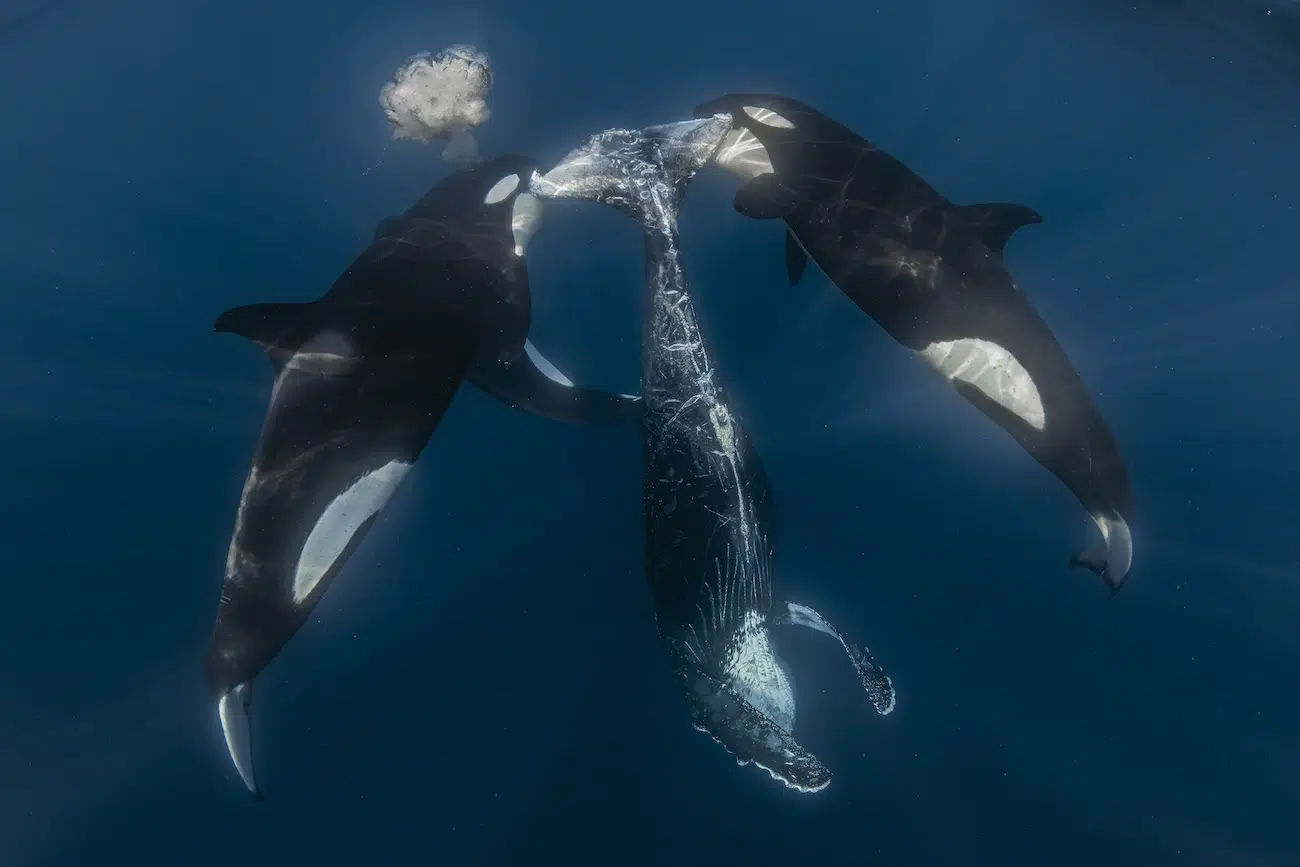
Rafael Fernandez Caballero, Runner-Up, Wildlife. Location: Baja California, Mexico
In the Pacific waters of Mexico, this photograph captures the aftermath of a successful orca hunt. Nearly an hour after a pod separated a humpback whale calf from its mother, the orcas resurfaced carrying their prey between them. The event reveals the cooperative hunting strategies of orcas, where multiple individuals work together to isolate and subdue large prey. What the image doesn’t show is that after the kill, other scavengers, including silky sharks, were drawn to the remains, showing how one event can influence an entire marine food web.
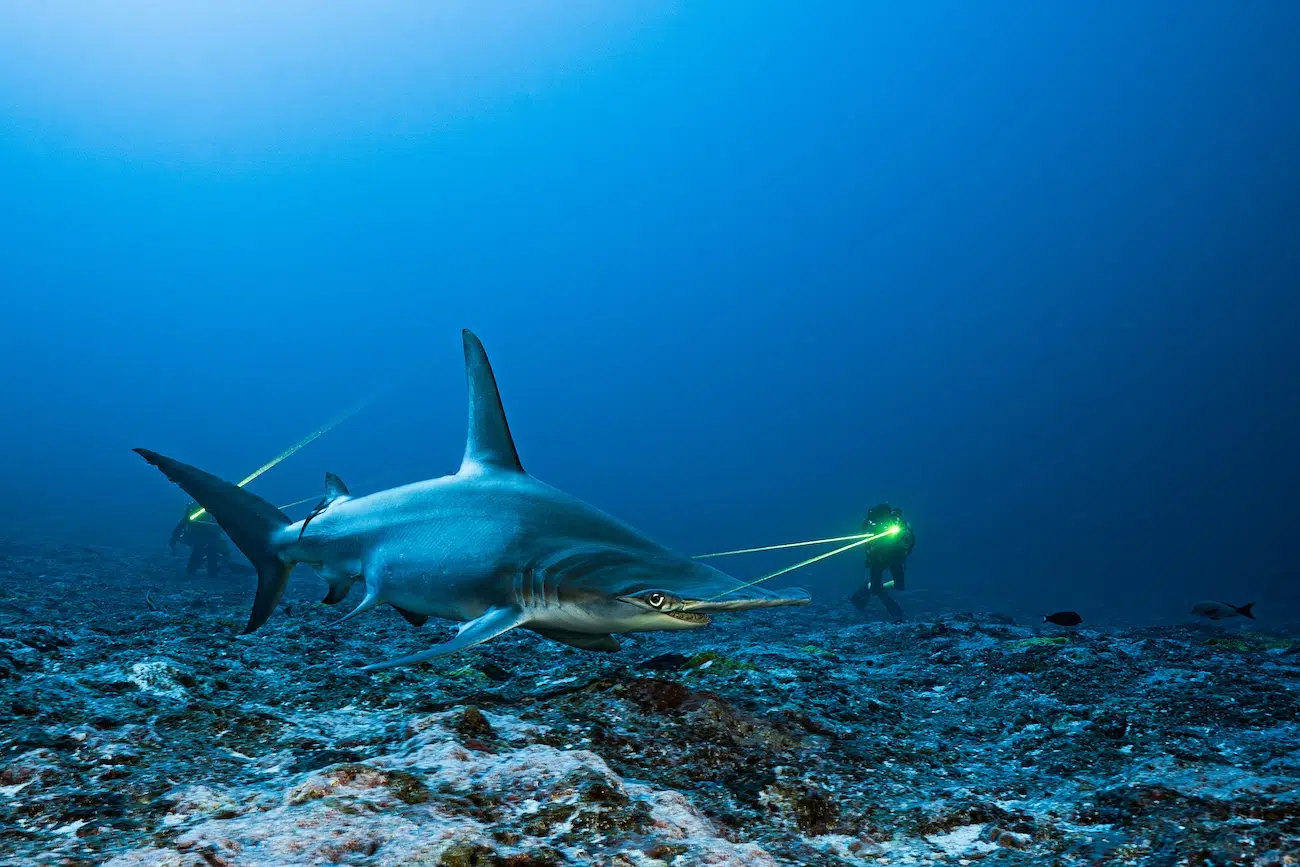
Thomas Pavy, Winner, Conservation (Hope). Location: Rangiroa, French Polynesia
A great hammerhead shark – known as Tamataroa in French Polynesia – is photographed at 55 metres depth in Tiputa Pass, Rangiroa Atoll, during a population survey. This image represents the moment an anonymous shark becomes a known individual. Through photo identification and laser-calibrated video photogrammetry, scientists can track sharks over time, measuring size, sex and population trends. Conducted without bait or attractants, this research helps reveal the lives of Tamataroa, a culturally respected species protected in French Polynesia.