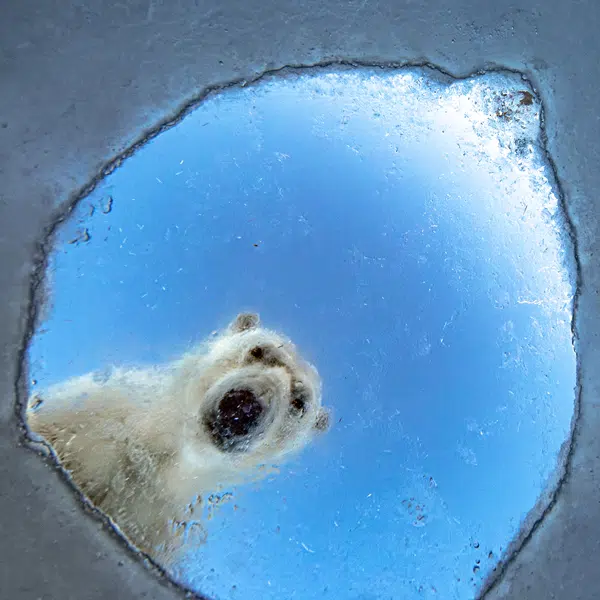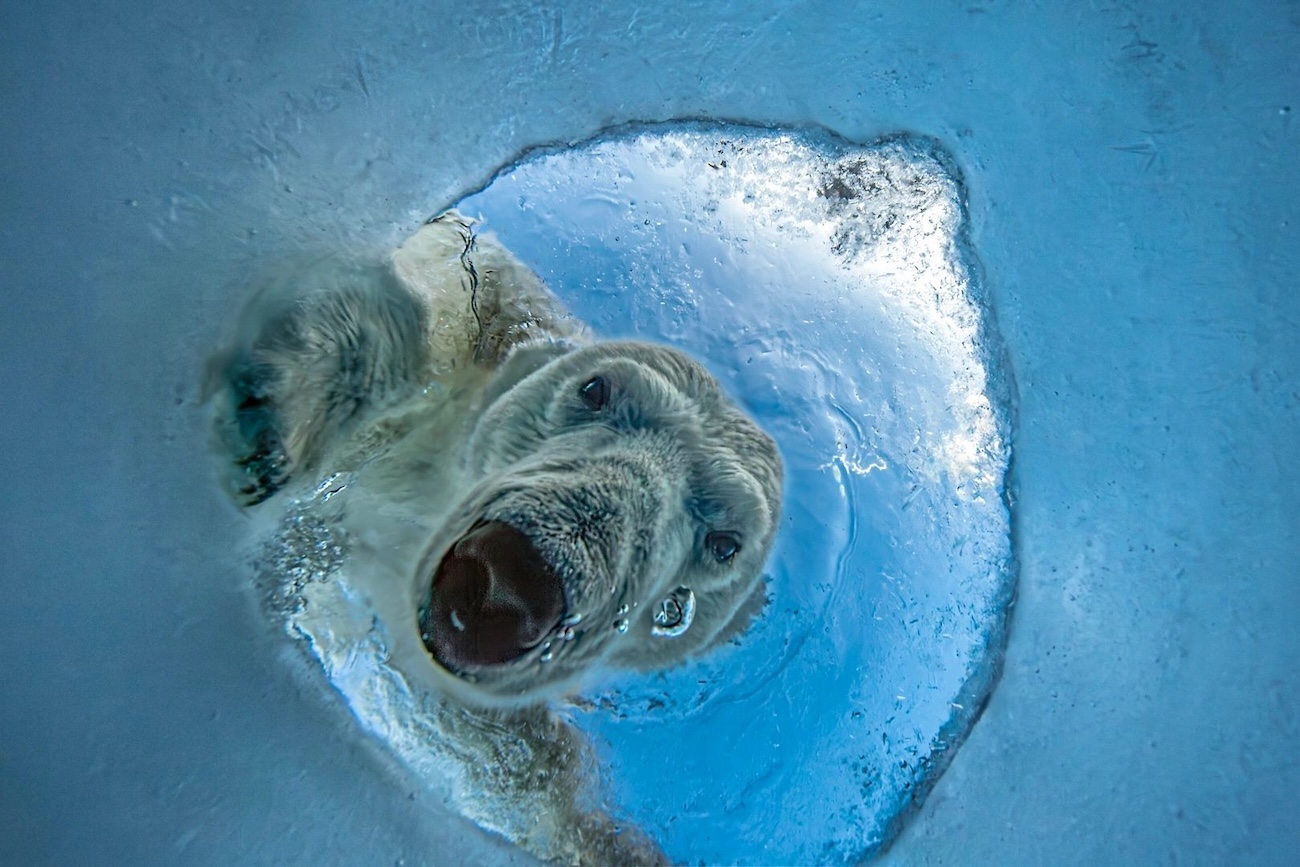
“A Seal’s Nightmare” by Audun Rikardsen (Norway). 1st Place, Pure Nature – Water and OurNature – Image of the Year
A polar bear peers through a seal’s breathing hole in the ice, looking straight into the camera positioned below. For years, I had dreamed of photographing a polar bear’s hunting technique from a seal’s perspective. At 83°N, among the dense drift ice, I placed my camera beneath a seal’s breathing hole. After eight hours of waiting, a polar bear appeared, broke through the thin layer of ice covering the hole and looked directly into my camera. It then lay down and slept for nine hours, leaving me unable to retrieve the camera. When I finally saw the image, I knew I had captured the polar bear photograph I had dreamed of for years.
Photography is a powerful force, revealing truths that both inform and help us empathize. When the lens turns toward nature, this creative field reveals parts of our world that often go unseen. It’s fascinating, but it also shows what we stand to lose if we don’t act now to preserve and protect it. Now in its third year, the OurNature Environmental Photo & Video Award explores the relationship between humanity and the natural world. Storytelling is at the heart of its mission, visually documenting our impact on Earth, conservation efforts, and sustainable solutions.
OurNature Environmental Photo & Video Award has announced its overall winner and category winners for the 2026 competition. Norwegian wildlife photographer Audun Rikardsen won the top prize for his arresting image, A Seal’s Nightmare. The dramatic photo is taken from an underwater perspective and shows a polar bear looking through a hole in the Arctic ice, which doubles as a seal’s breathing hole.
Rikardsen had dreamed for years of capturing a polar bear’s hunting technique from the prey’s point of view. He situated his camera among the ice, and the time finally came, albeit not right away. “After eight hours of waiting, a polar bear appeared, broke through the thin layer of ice covering the hole and looked directly into my camera.” But the photographer couldn't review the footage until much later. “It then lay down and slept for nine hours, leaving me unable to retrieve the camera.”
The 2026 winners of the OurNature Environmental Photo & Video Award were honored at a ceremony at the Robert Capa Contemporary Photography Center in Budapest, Hungary. A selection of winning and finalist photographs is on outdoor display at Széna Square in central Budapest for a month.
Scroll down to see the winning category images and learn the stories behind them.
OurNature Environmental Photo & Video Award has announced its overall winner and category winners for the 2026 competition.
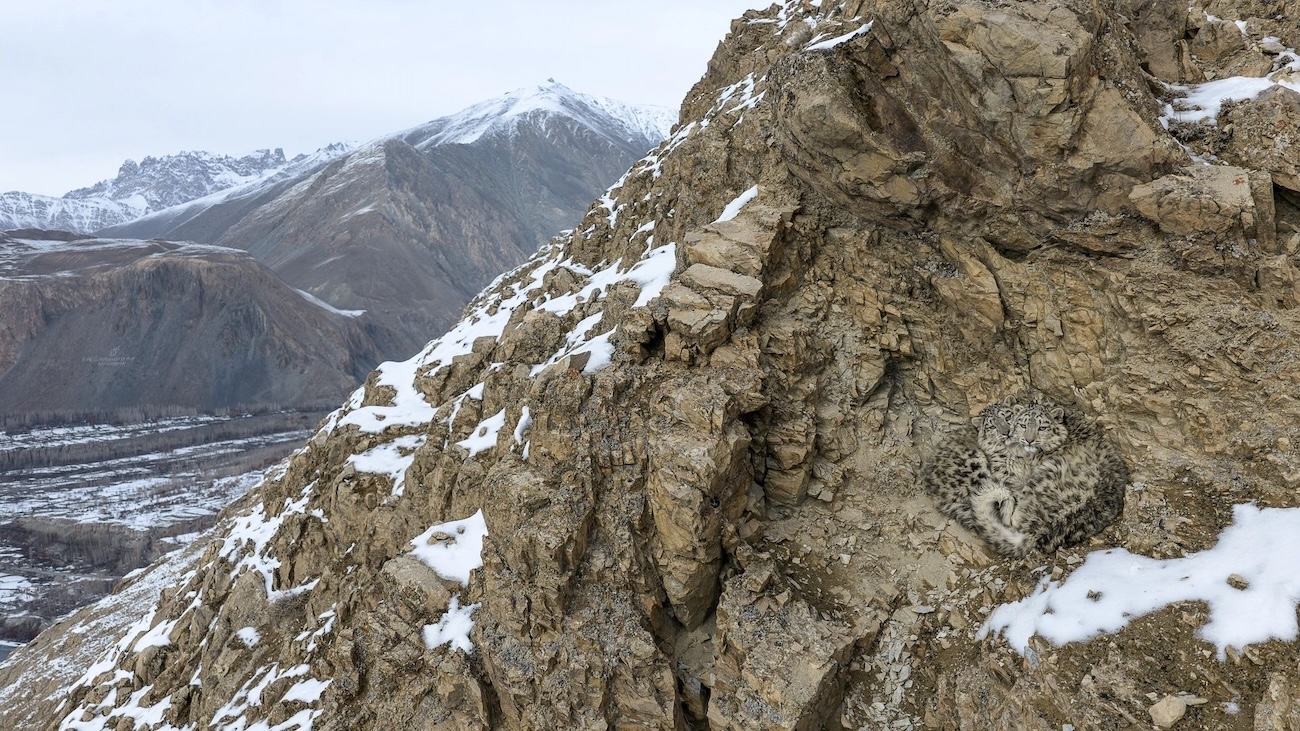
“Hidden In Plain Sight” by Awais Ali Sheikh (Pakistan). 1st Place, Pure Nature – Land
Two snow leopard cubs rest quietly among the rocks of the Himalayas. Perfectly camouflaged in their rugged habitat, they are almost invisible at first glance, their spotted coats blending seamlessly into the surrounding stone. Only after a few moments does the mountain reveal its secret.
The lauded images explore the relationship between humanity and the natural world.
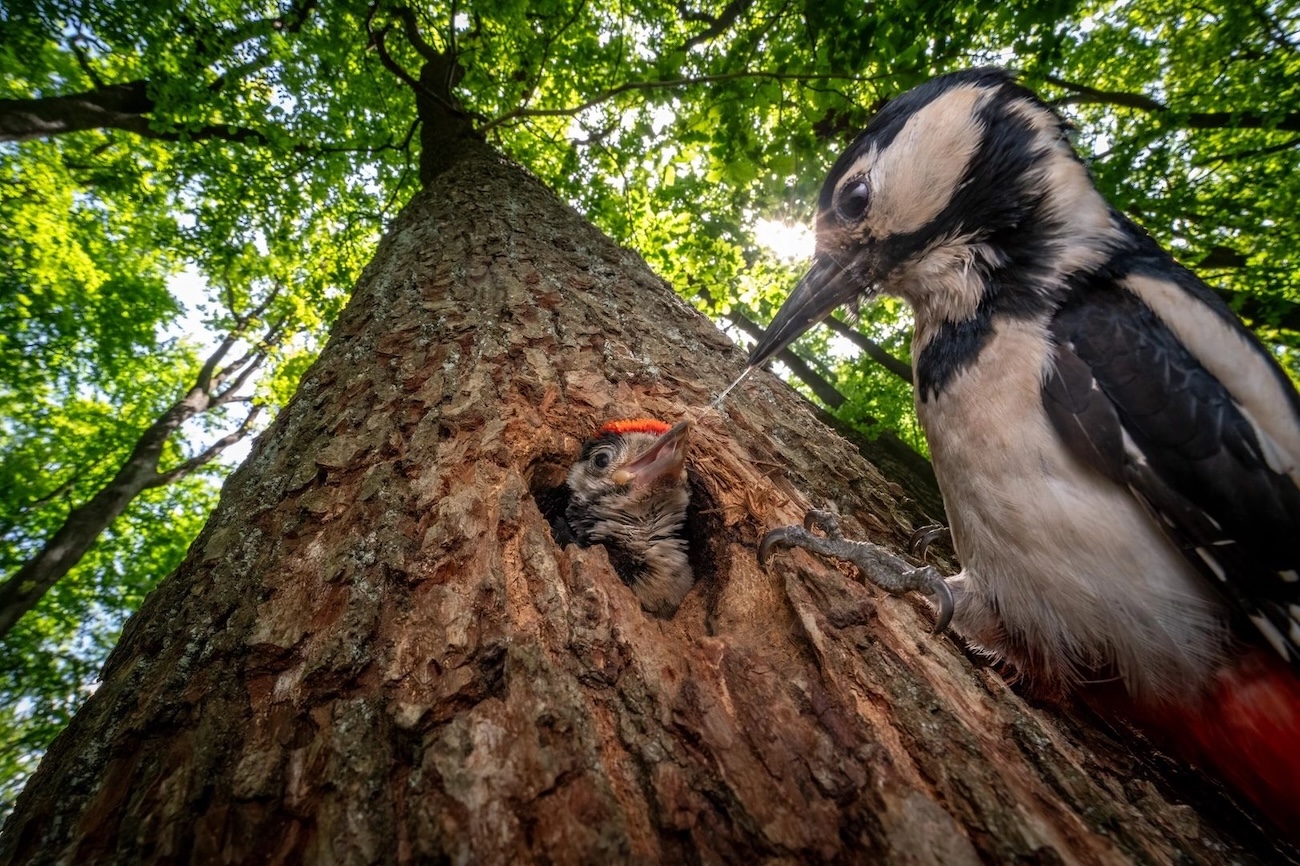
“The Busy Feeder” by Jan Pokluda (Czechia). 1st Place, Pure Nature – Air
A great spotted woodpecker returns to feed its chick in an unusually low nesting cavity in the trunk of an old oak tree. The low position of the nest offered a rare perspective on the intimate moment between parent and chick. I carefully positioned my camera beneath the cavity and observed the birds before continuing. As their feeding behaviour remained unchanged, I used a remote trigger and photographed from a respectful distance. The entire session lasted only about ten minutes, allowing me to capture this natural behaviour with minimal disturbance.
Storytelling is at the heart of its mission, visually documenting our impact on Earth, conservation efforts, and sustainable solutions.
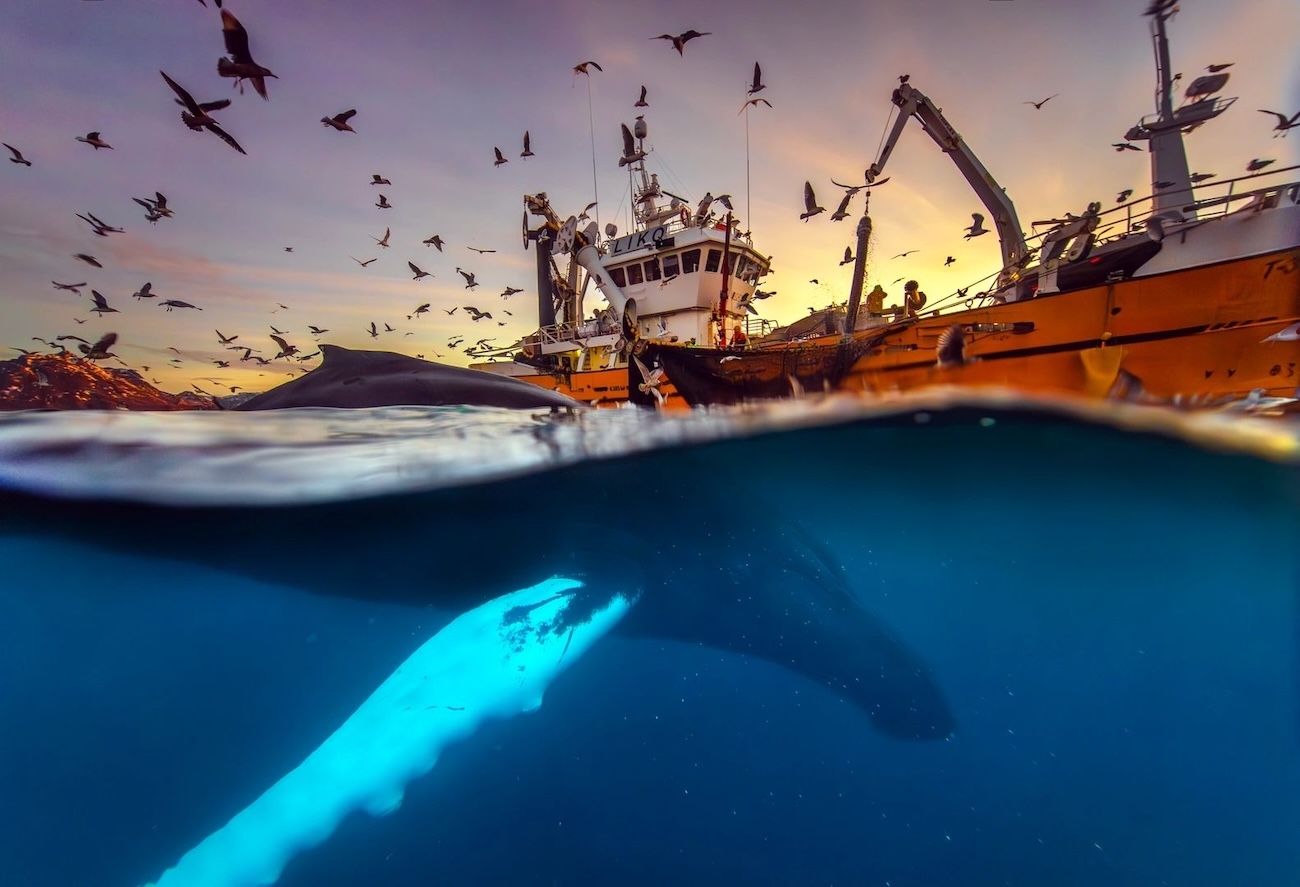
“Dinner is Served!” by Audun Rikardsen (Norway). 1st Place, Our Footprints
A humpback whale feeds beside a herring fishing vessel during the polar night, captured in a split image showing the scene both above and below the surface. Each winter, vast schools of Atlantic herring gather in the fjords of Northern Norway, attracting hundreds of humpback whales and orcas. The whales have learned that fishing vessels can provide an easy meal, allowing them to feed on concentrated herring without having to hunt. But this opportunity comes with serious risks: humpback whales can become entangled in fishing nets, causing injuries or drowning, while also damaging fishing equipment.
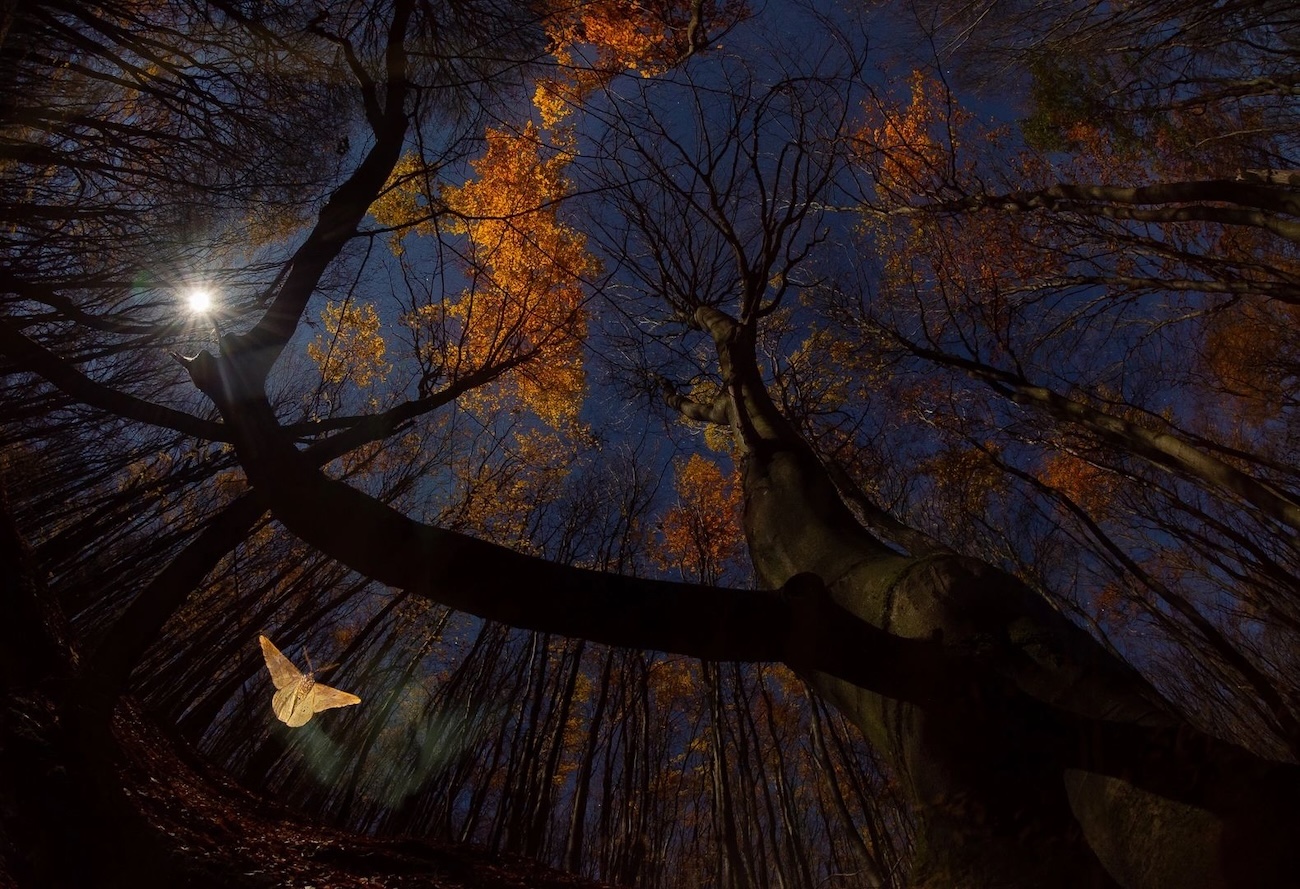
“Moonlight” by Imre Potyó (Hungary). 1st Place, Carpathian Basin
The flight paths of winter moth trace delicate lines through a moonlit forest during a single 108-second exposure. Surprisingly, these moths can be found in the cold, dark forest in late autumn and winter, sometimes even flying during light snowfall. I have been photographing winter moths since 2016, but had never encountered conditions quite like these. I set up my camera beneath a huge beech tree just as the Moon moved into the right position, illuminating the last reddish leaves from behind and creating a remarkable backdrop for the flying moths. Only one successful image was made. The following night the Moon rose later, temperatures dropped, clouds arrived, and within days the last leaves had fallen.
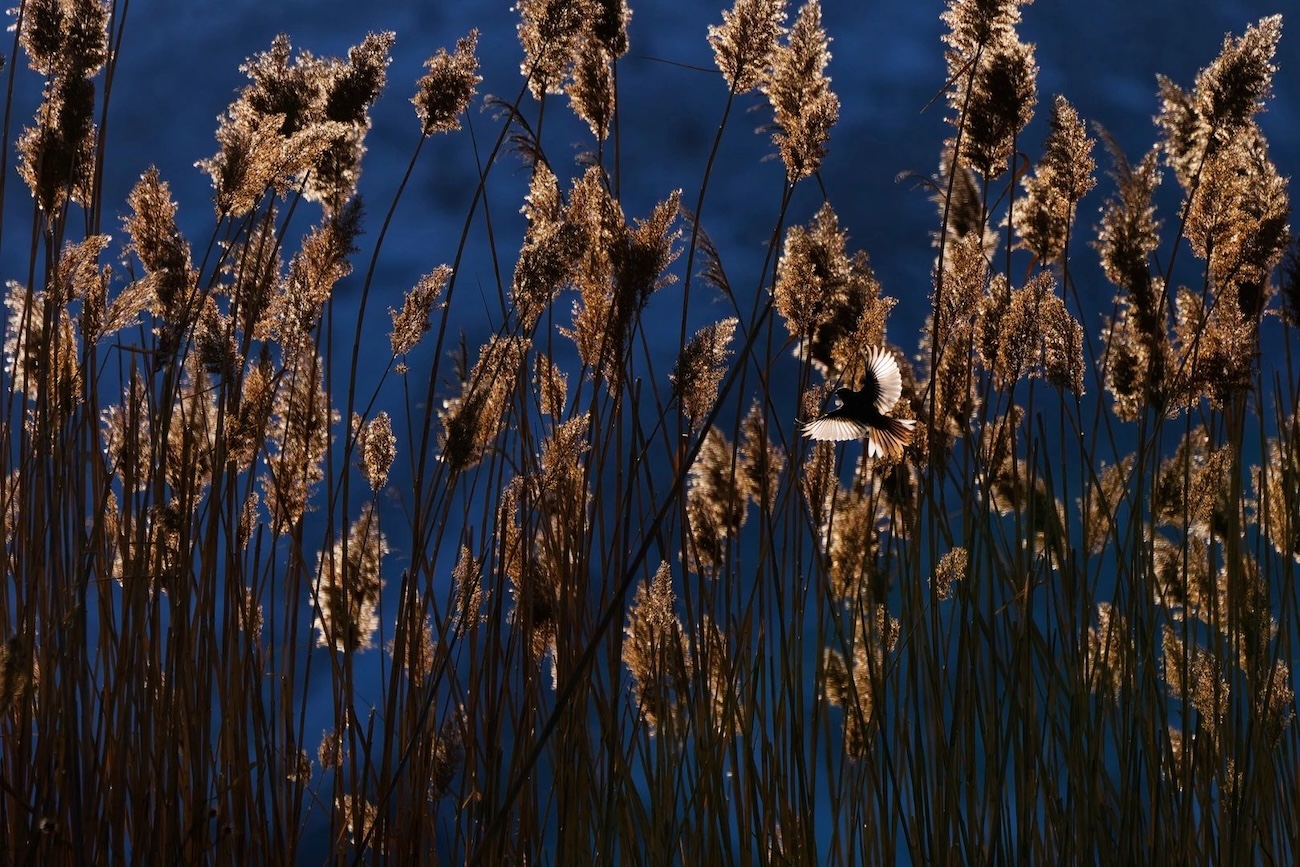
“Among the Tall Reeds” by Marina Gavrikova (Russian Federation). 1st Place, Young Photographers
A rock bunting flies through tall, dry reeds in the golden backlight of sunrise. In the background, the cold, deep blue tones of a snow-covered mountainside create a striking contrast with the warmly illuminated reeds and the bird’s feathers. Walking along the lake, I noticed a flock of rock buntings feeding among the reeds, constantly moving as they searched for seeds. Before the restless flock moved on, I managed to capture the brief moment when one bird flew through the glowing reeds.
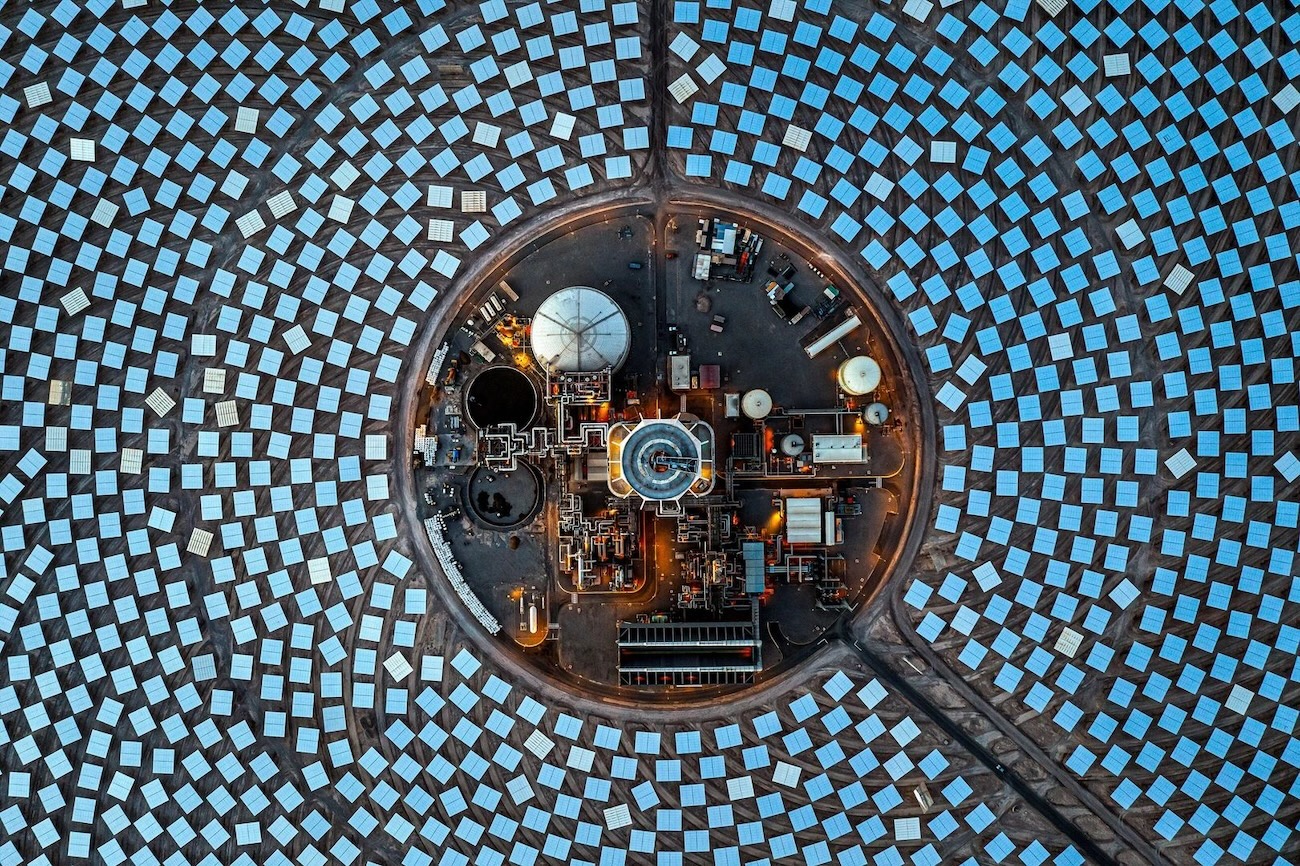
“Cerro Dominador” by Matjaz Krivic (Slovenia). 1st Place, Solutions
Aerial view of the Cerro Dominador solar power plant, its central tower surrounded by a vast field of mirrors reflecting sunlight towards it. The geometric pattern of the heliostats transforms the Atacama Desert into an extraordinary technological landscape. The 210 MW complex was the first project in South America to combine concentrated solar power (CSP) with photovoltaic technology, harnessing the intense solar radiation of one of the driest and sunniest regions on Earth.
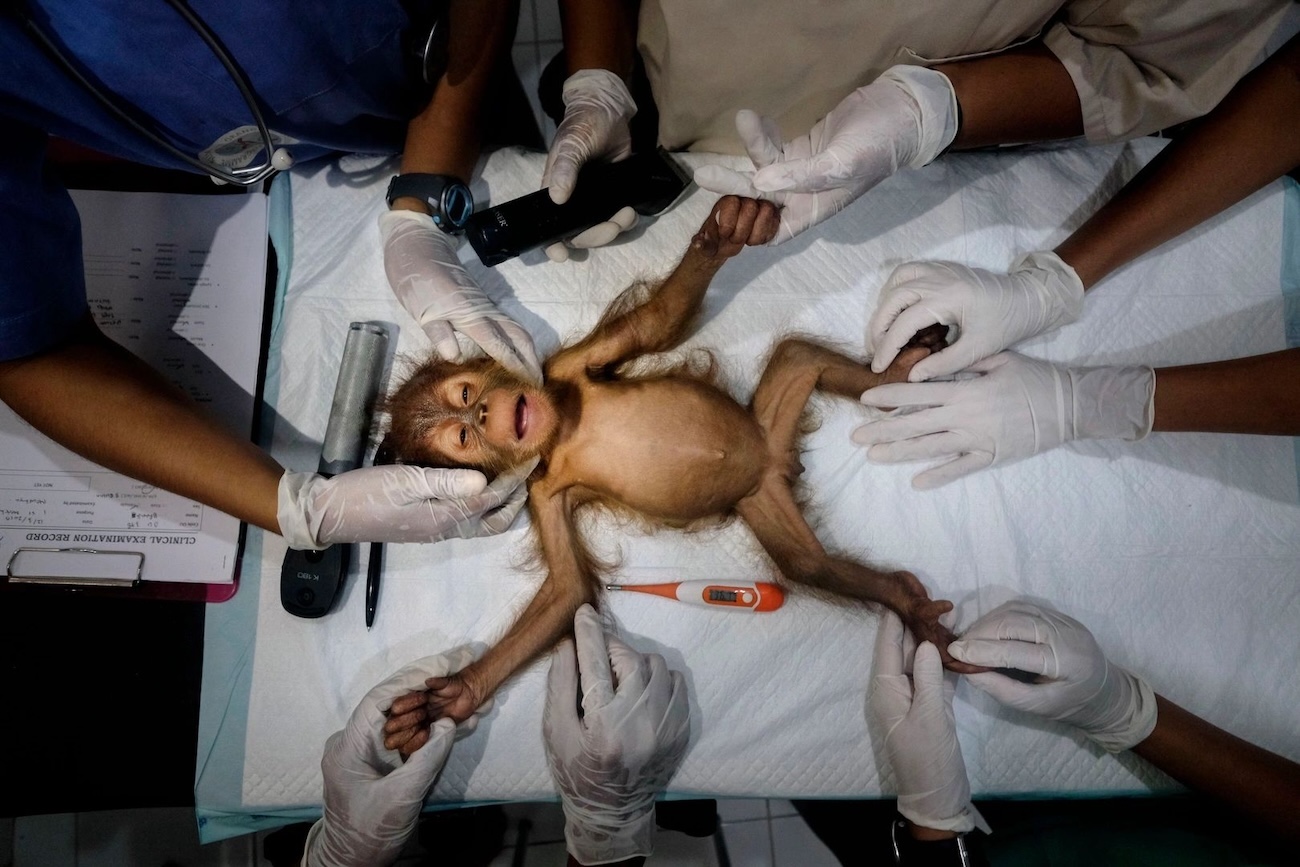
“Saving Orangutans” by Alain Schroeder (Belgium). 1st Place, Stories or Portfolio
Sumatran orangutans are under severe threat from the continuing loss and fragmentation of their rainforest habitat. The expansion of palm oil and rubber plantations, logging, road construction, mining and hunting are forcing increasing numbers of orangutans out of their natural environment. The Sumatran Orangutan Conservation Programme (SOCP) cares for, rehabilitates and prepares rescued, injured and formerly captive orangutans for a return to the wild. This series documents daily life at its clinic and quarantine centre, where the ultimate goal is to reintroduce orangutans and establish viable populations in protected forests.
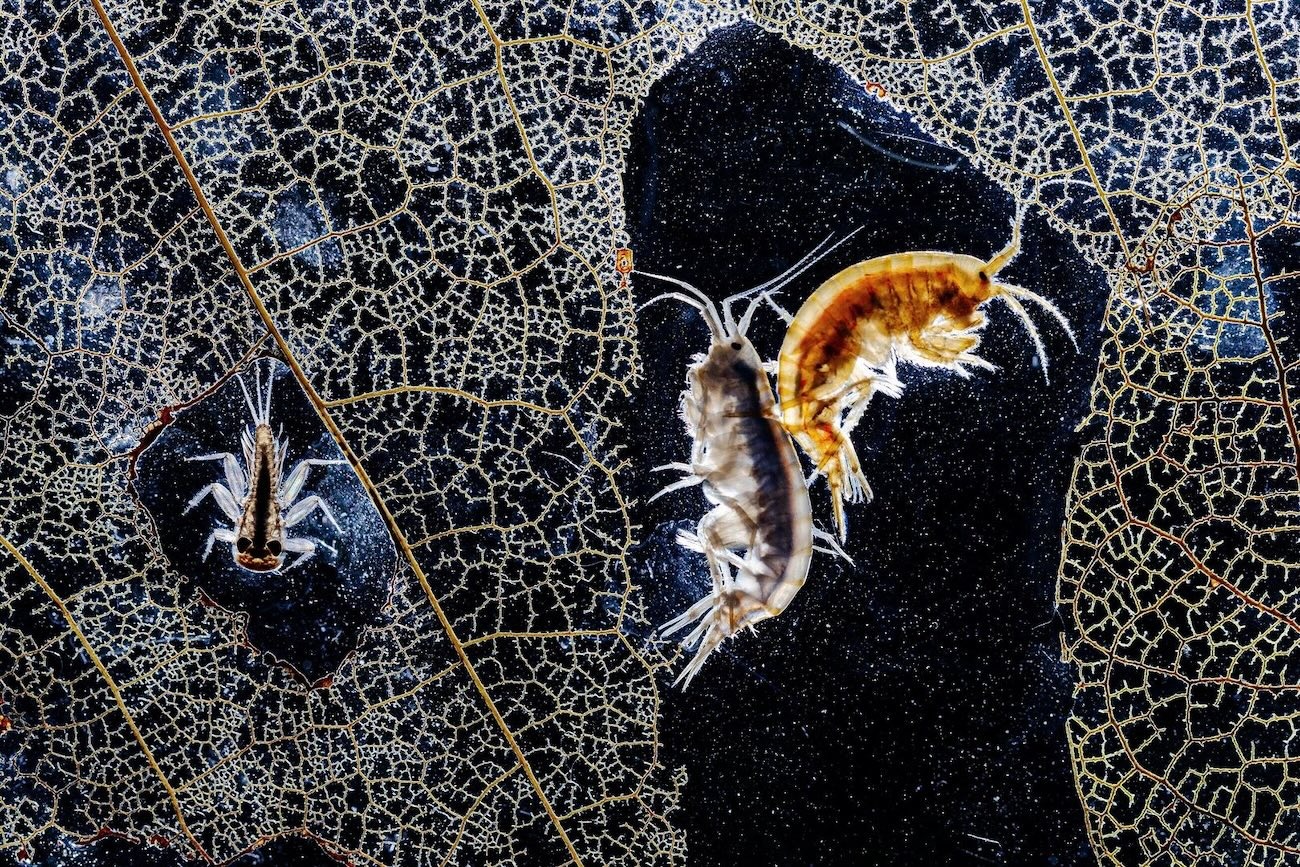
“At the bottom of the stream” by István Hogya (Hungry). 2nd Place, Pure Nature – Water
Amphipods move among the veins of a decaying leaf, while a mayfly larva appears in the small “window”. These tiny creatures play an important role in the stream’s ecosystem: they feed on organic debris while also providing food for larger animals, including fish and birds. A miniature world, barely visible to the naked eye, yet essential to life in the stream.
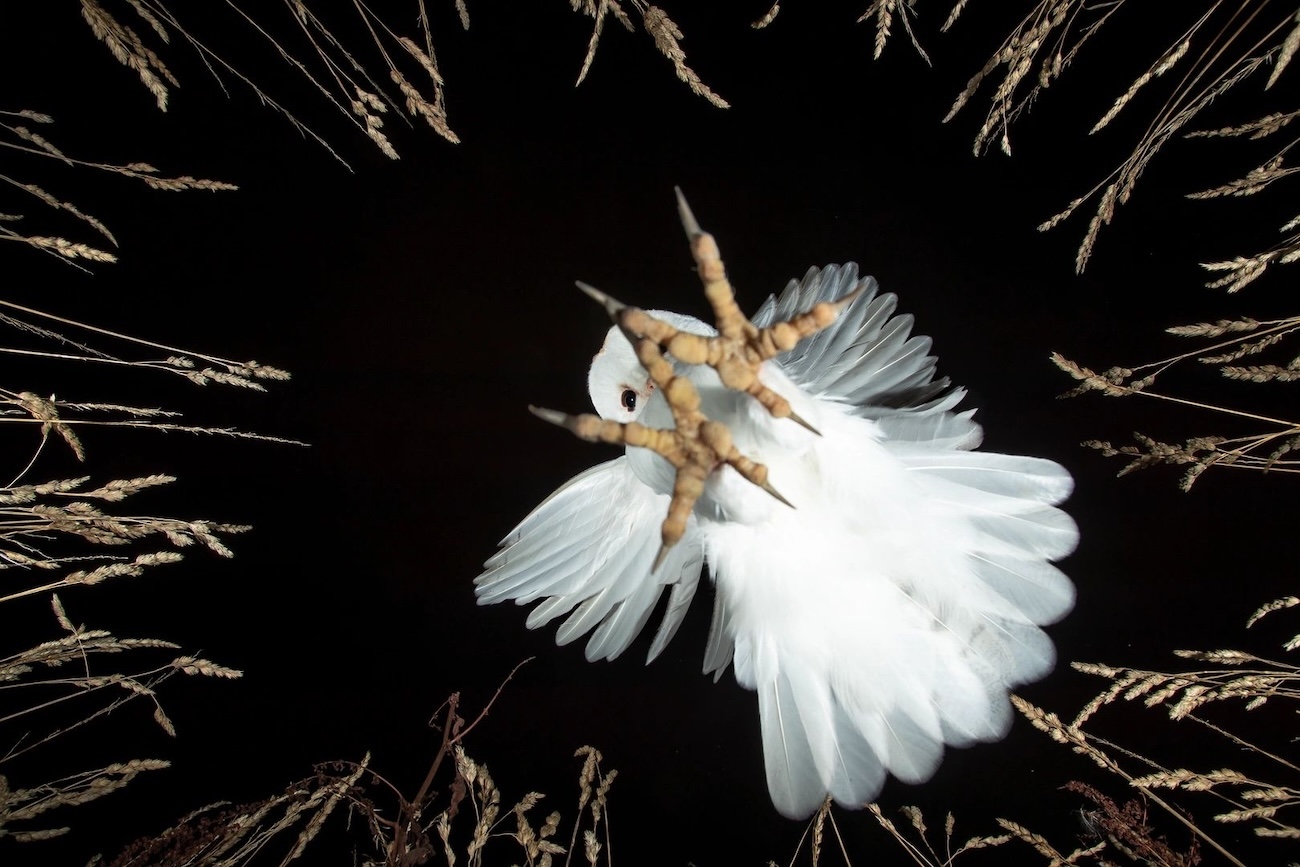
“Eye on the Prize” by Vince Burton (United Kingdom). 2nd Place, Pure Nature – Air<br/ >A barn owl dives towards the camera, seen from the perspective of its prey. The image is part of my ongoing project photographing local barn owls at night. My aim was to capture the moment of attack from an unusual viewpoint—looking up at the approaching predator.
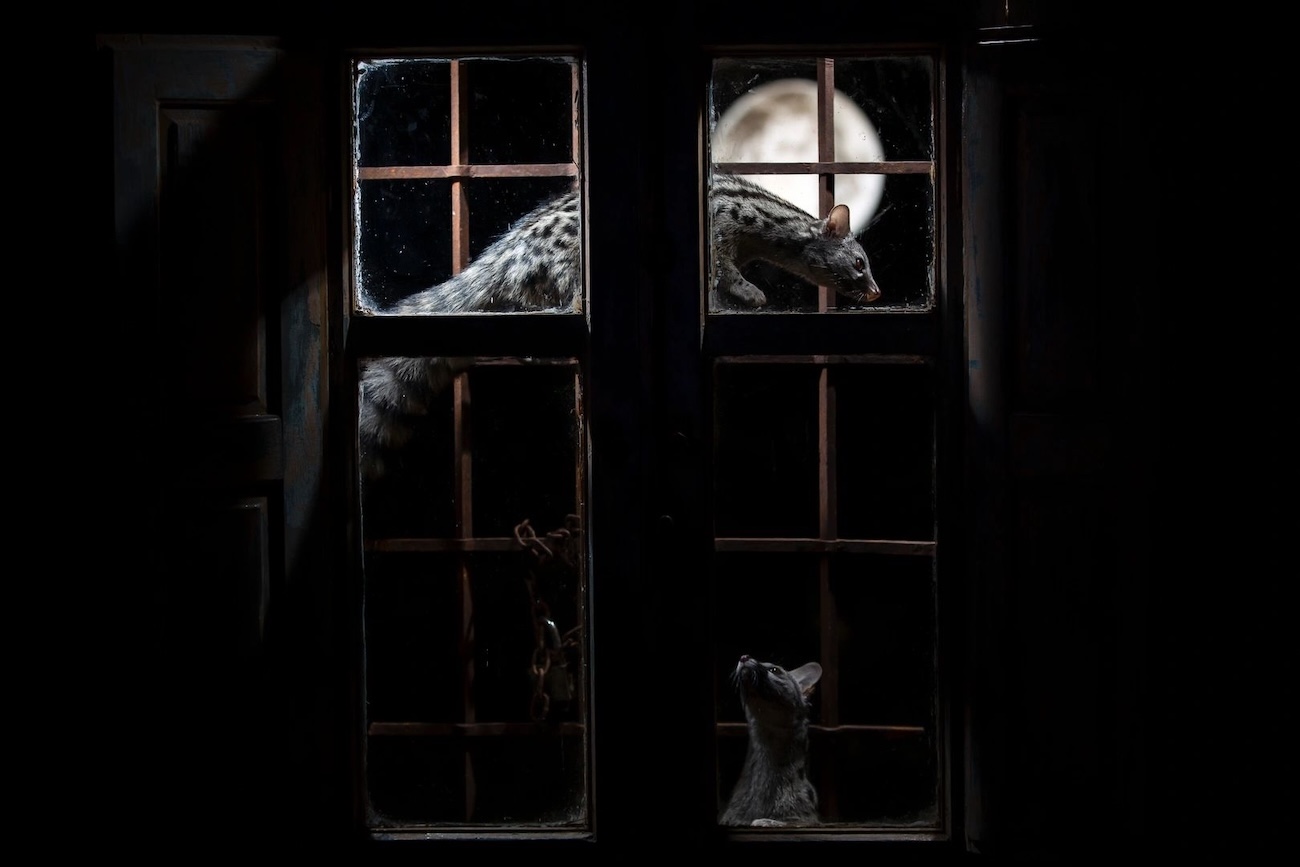
“Midnight Whispers” by Julián Fernandez Quilez (Spain). 2nd Place, Our Footprints
Two common genets prowl at night, moving along the bars of a window in search of food. Behind them, an enormous Moon fills the background, creating an almost surreal setting for the nocturnal scene. The photograph is a single exposure, with no compositing or multiple exposures. The Moon’s unusual size and position are the result of perspective, distance and the optical effect of the lens.
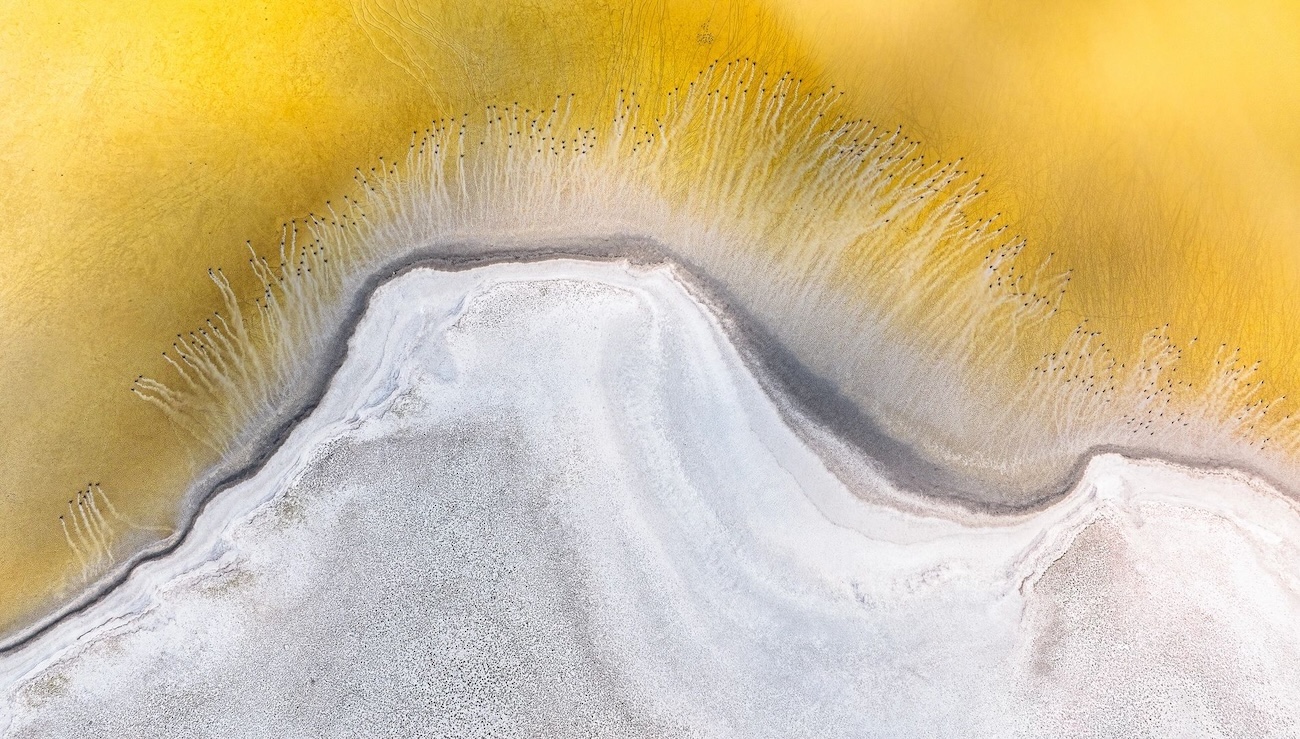
“Mountain Peak” by Tímea Ambrus (Hungry). 2nd Place, Carpathian Basin
At first glance, it resembles a snow-covered mountain peak, but the image actually shows the shoreline of a salt lake from above. It was captured on a scorching summer day, when temperatures exceeded 40°C. Hundreds of greylag geese gathered in the shallow water, their movements drawing delicate lines across the surface. I photographed the scene from an altitude of more than 260 metres using a 3× zoom, allowing the drone to remain at a safe distance without disturbing the birds.
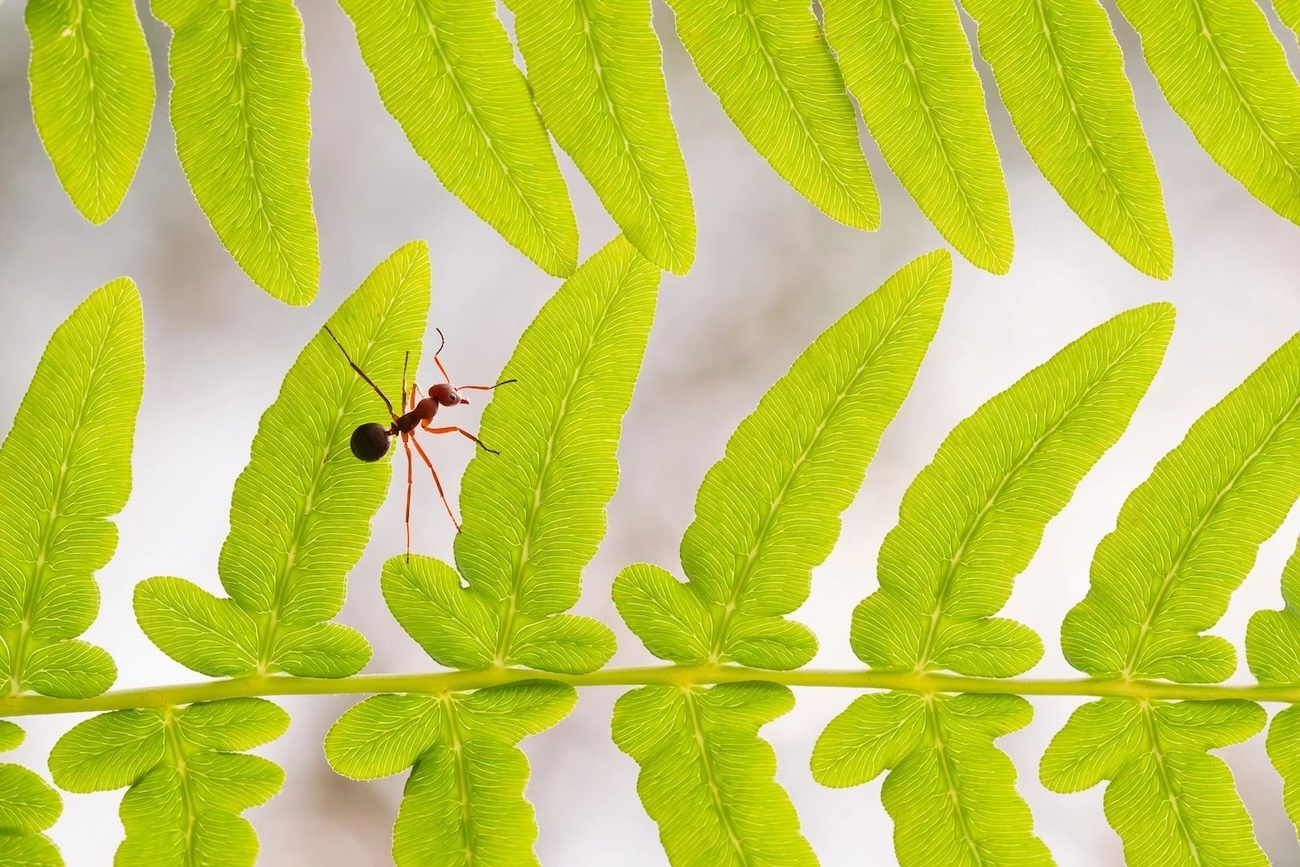
“Watching” by Marina Gavrikova (Russian Federation). 2nd Place, Young Photographers
An ant clings to a fern leaf, pausing for a moment in an unusual pose. I was watching the activity around an anthill when I noticed it on the fern directly in front of me. It remained motionless for a few seconds before moving down the stem. Just before disappearing, it paused briefly in this peculiar position—the moment captured in the photograph.
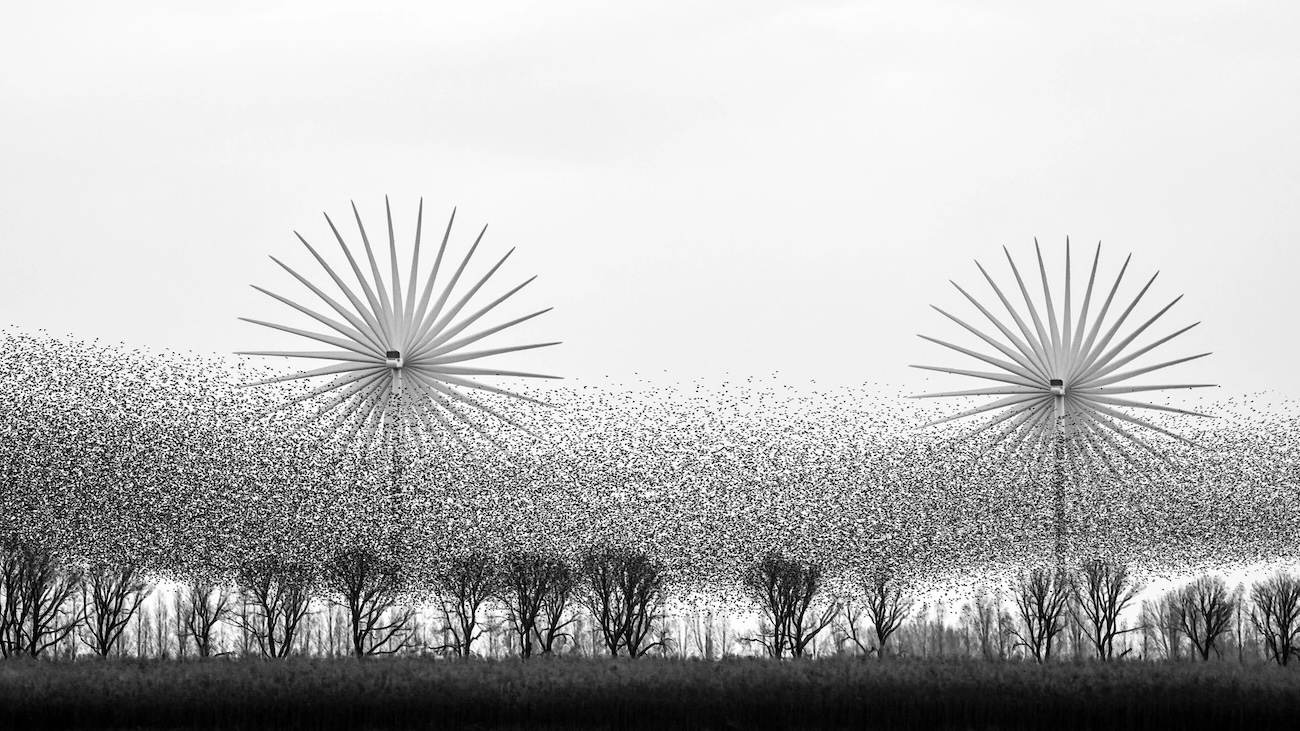
“Blade Barrier” by Alex Pansier (Netherlands). 2nd Place, Solutions
The long exposure traces the full movement of the wind turbines’ rotating blades, revealing huge, saw-like circles that show the space repeatedly swept by them. In front of the turbines, a vast flock of starlings moves above the line of trees. The image makes visible one of the potential conflicts between renewable energy and birdlife. While the transition to green energy is essential, these enormous structures become part of the same airspace used by birds.
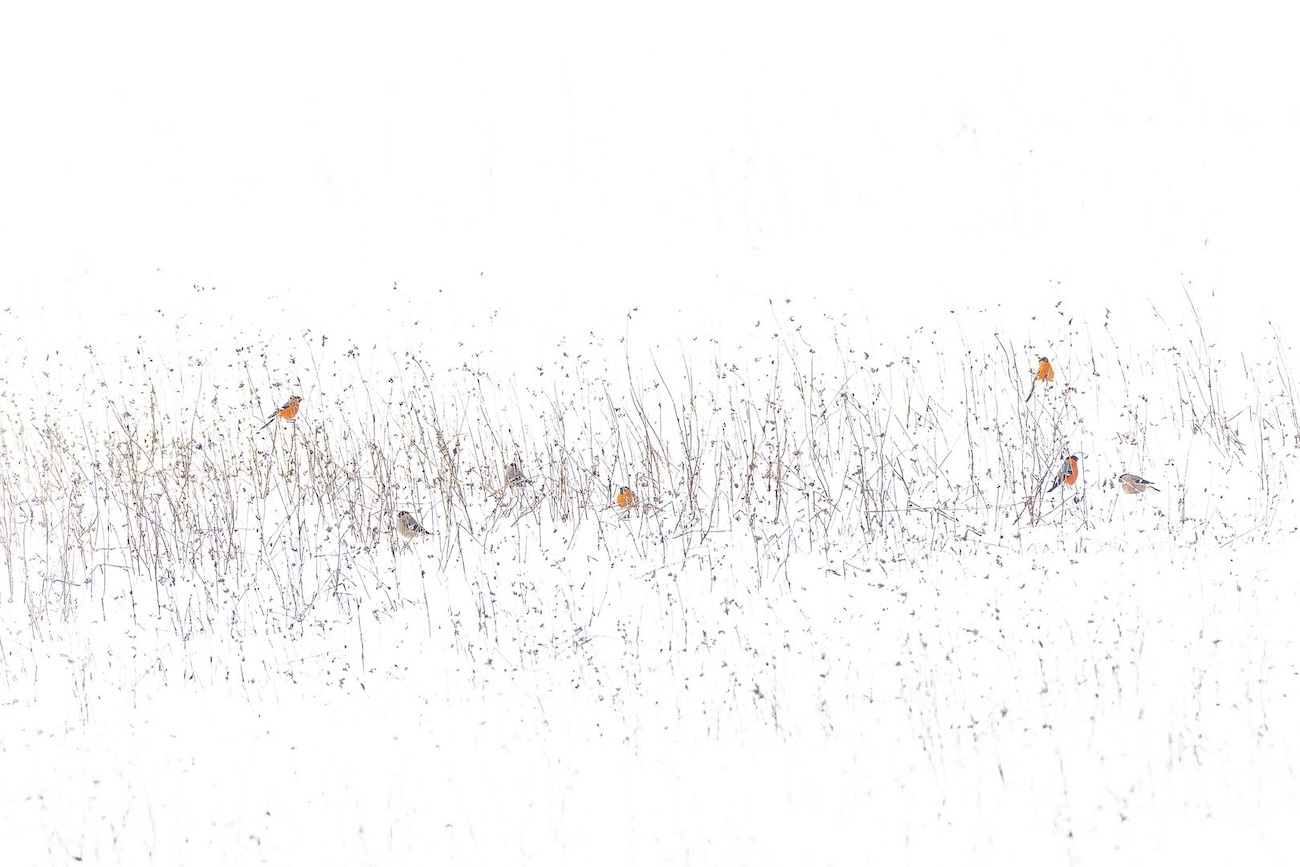
“Winter Canteen” by Pawel Smolik (Poland). 2nd Place, Pure Nature – Land
Bullfinches move among dry grass stems in a snow-covered winter landscape. That day, the temperature was around –20°C. From the window of my car, I watched the small flock having breakfast, repeatedly shaking the dry plants to release their seeds before quickly devouring them. The small, colorful birds stood out beautifully against the muted tones of the snowy meadow. What captivated me most was the graphic, almost painterly quality of the scene.