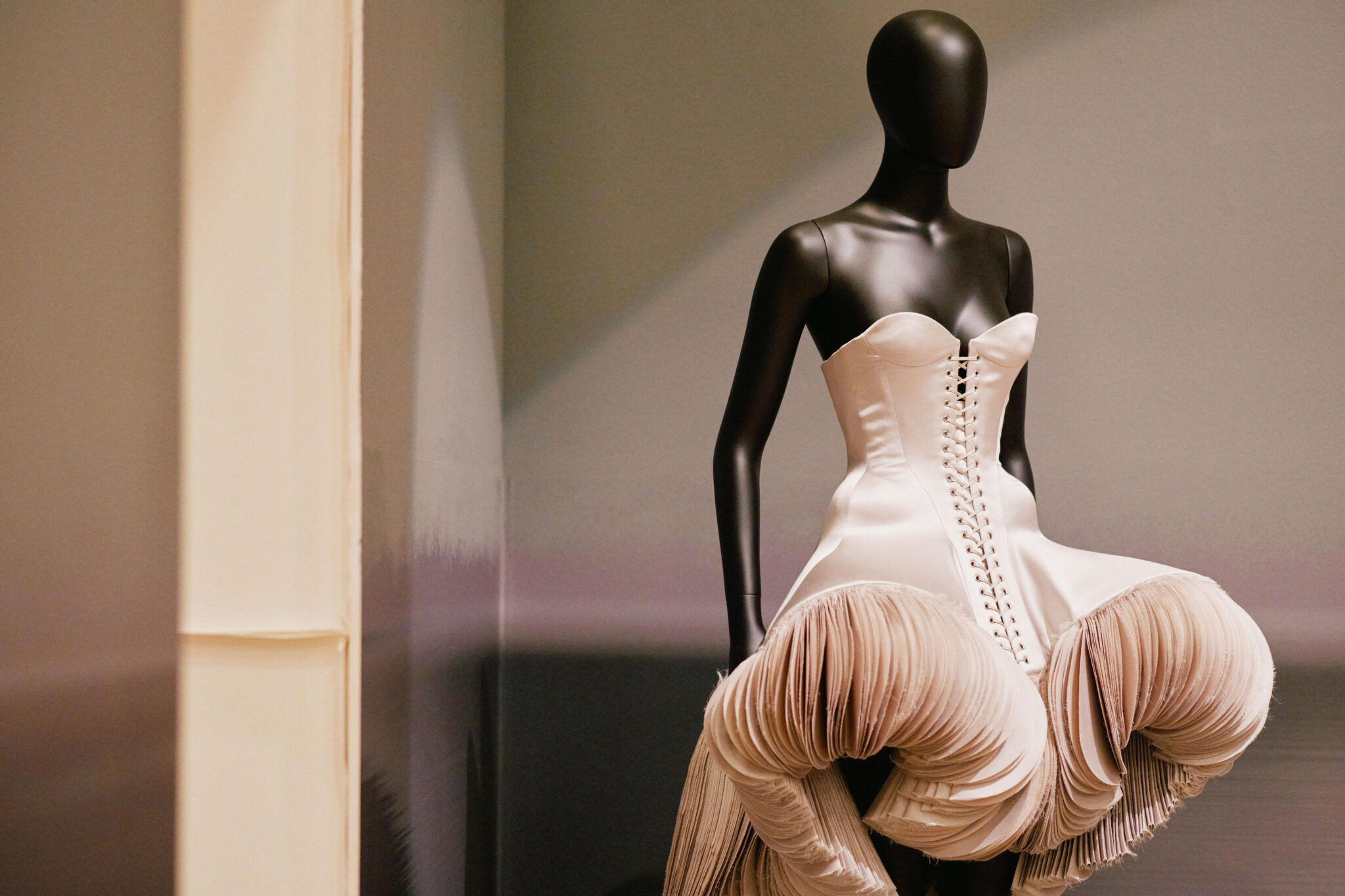
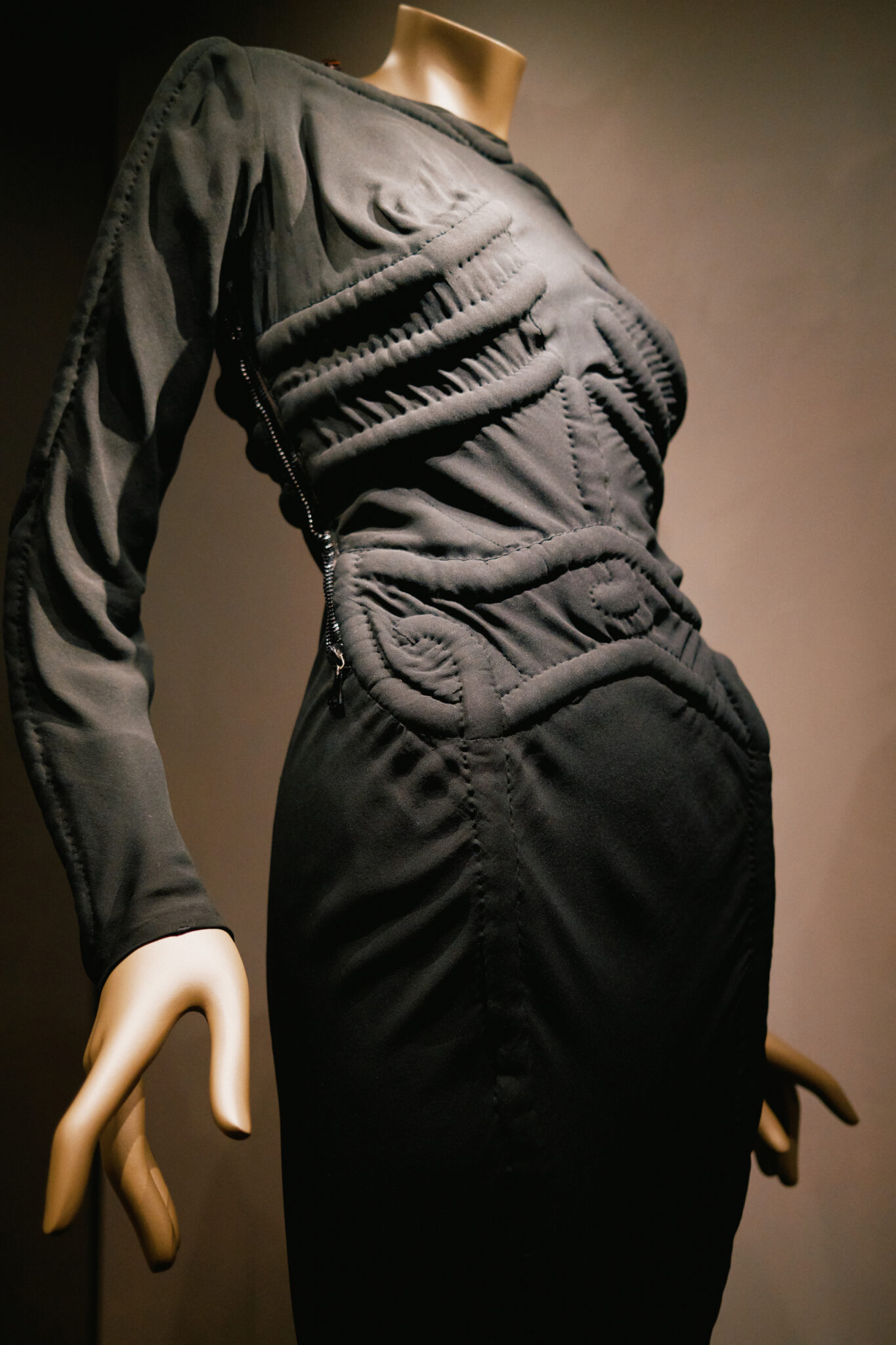
Installation view of “Schiaparelli: Fashion Becomes Art,” at the V&A Museum in London. (Photo: Jamie Stoker)
It’s a self-evident truth that fashion and visual art circle one another closely. But for Elsa Schiaparelli, it wasn’t simply about these two disciplines co-existing. In her mind, it was about fundamentally uniting them, so much so that the boundaries between them vanished entirely. This philosophy is traced with expert precision in a new exhibition dedicated to Schiaparelli and her legendary fashion house.
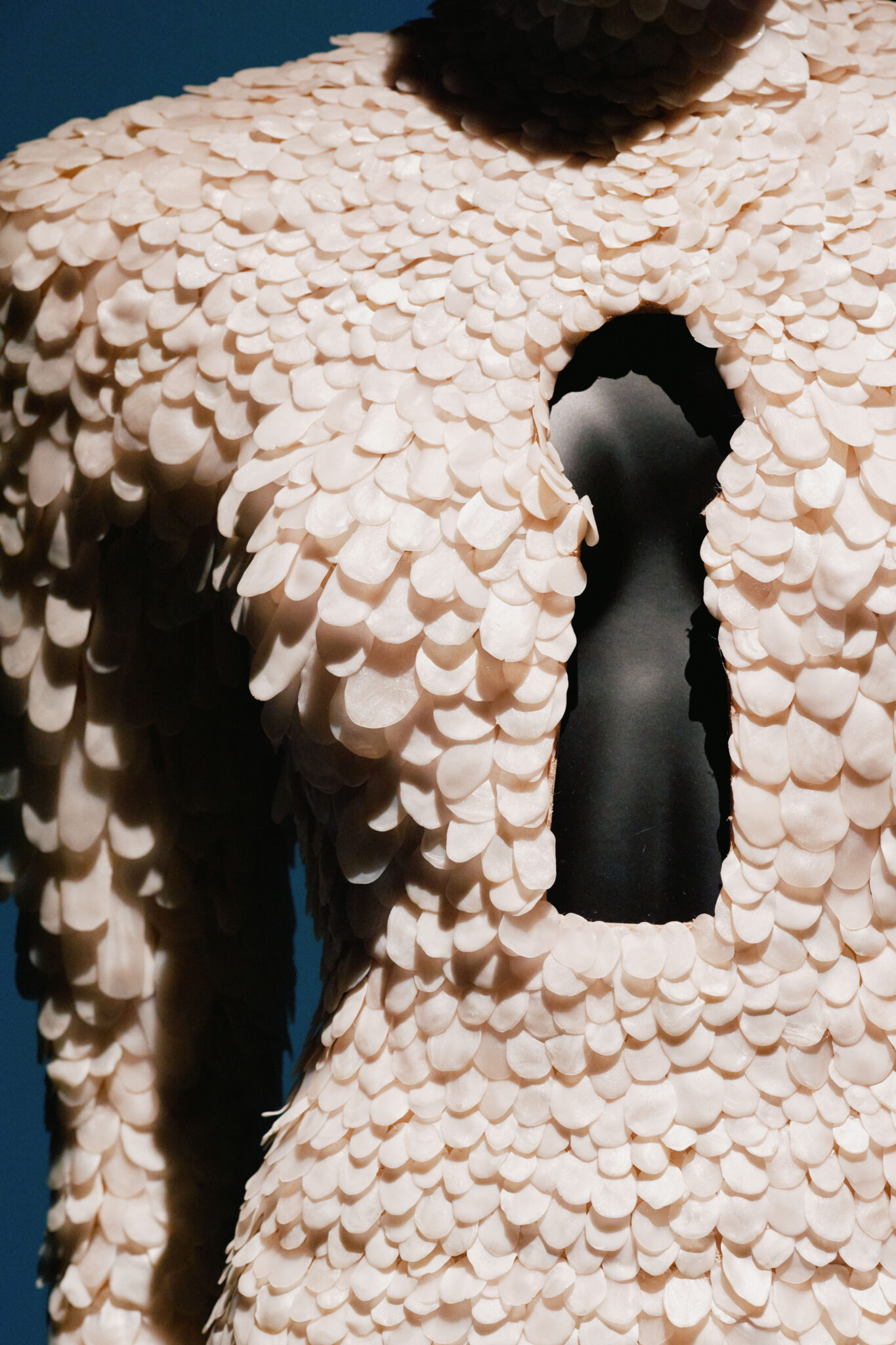
Now on view at the V&A in London’s South Kensington neighborhood, Schiaparelli: Fashion Becomes Art brings together more than 400 objects, including 100 ensembles as well as accessories, jewelry, paintings, photographs, furniture, perfumes, and archival materials. Taken together, this range offers an exhaustive portrait of Schiaparelli’s design ethos and the evolution of her haute couture brand, even after her death in 1973. Original garments from the early- to mid-20th century, for instance, complement newer innovations produced under the direction of the house’s current creative director, Daniel Roseberry. The ultimate effect is staggering: visitors witness just how ambitious and visionary a house Schiaparelli is and has been throughout time.
Above all, though, the exhibition highlights Elsa Schiaparelli’s deep connections with the art world during her lifetime. She surrounded herself with contemporaries like Man Ray, Jean Cocteau, and Salvador Dalí, with whom she collaborated on garments several times. One such piece is the iconic Skeleton dress from 1938. “Dear Elsa, I like the idea of ‘bones on the outside’ enormously,” Dalí had written in a letter. Complete with a padded ribcage and spine that jut out from the black silhouette just like bones would, the dress was based on a Dalí sketch and is the only known surviving example of its kind. What’s more, Skeleton is so fragile that the V&A’s conservation team estimates that this exhibition is the last time it will be displayed for the public.
Considering her fascination with and involvement in surrealism, it should come as no surprise that Schiaparelli incorporated its aesthetics across her own work. A sweater from 1927 features a trompe l’oeil bow-knot on its chest, while a dinner suit shimmers with appliquéd circus horses. Shoes transform into hats, and naked mermaids and gilded elephant trunks are reimagined as buttons. Even so, Sonnet Stanfill, the V&A’s senior curator of fashion, cautions that it “wasn’t just Schiaparelli appropriating Surrealist images and sticking them on her clothes.”
“She was someone who was embedded in the creative process,” Stanfill continues, “and there was a true collaborative, creative exchange with these artists and creatives.”
That reciprocity is made evident through the exhibition’s artworks. Guests can encounter everything from Man Ray’s painting of a lit candle adorned in a harlequin coat, to Dalí’s famous Lobster Telephone from 1938, which was inspired by Schiaparelli’s so-called Lobster dress from 1937. Portraits of Schiaparelli also dot the show, capturing what the V&A calls her “eclectic taste.” All these elements condense into an elegant conclusion, one that Schiaparelli clearly arrived at herself: fashion is art, and vice versa.
“For me, dress designing is not a profession,” she once remarked, “but an art.”
Schiaparelli: Fashion Becomes Art is currently on view at the V&A South Kensington through November 8, 2026.
A landmark exhibition celebrating Elsa Schiaparelli and her iconic haute couture brand has landed at the V&A in London.
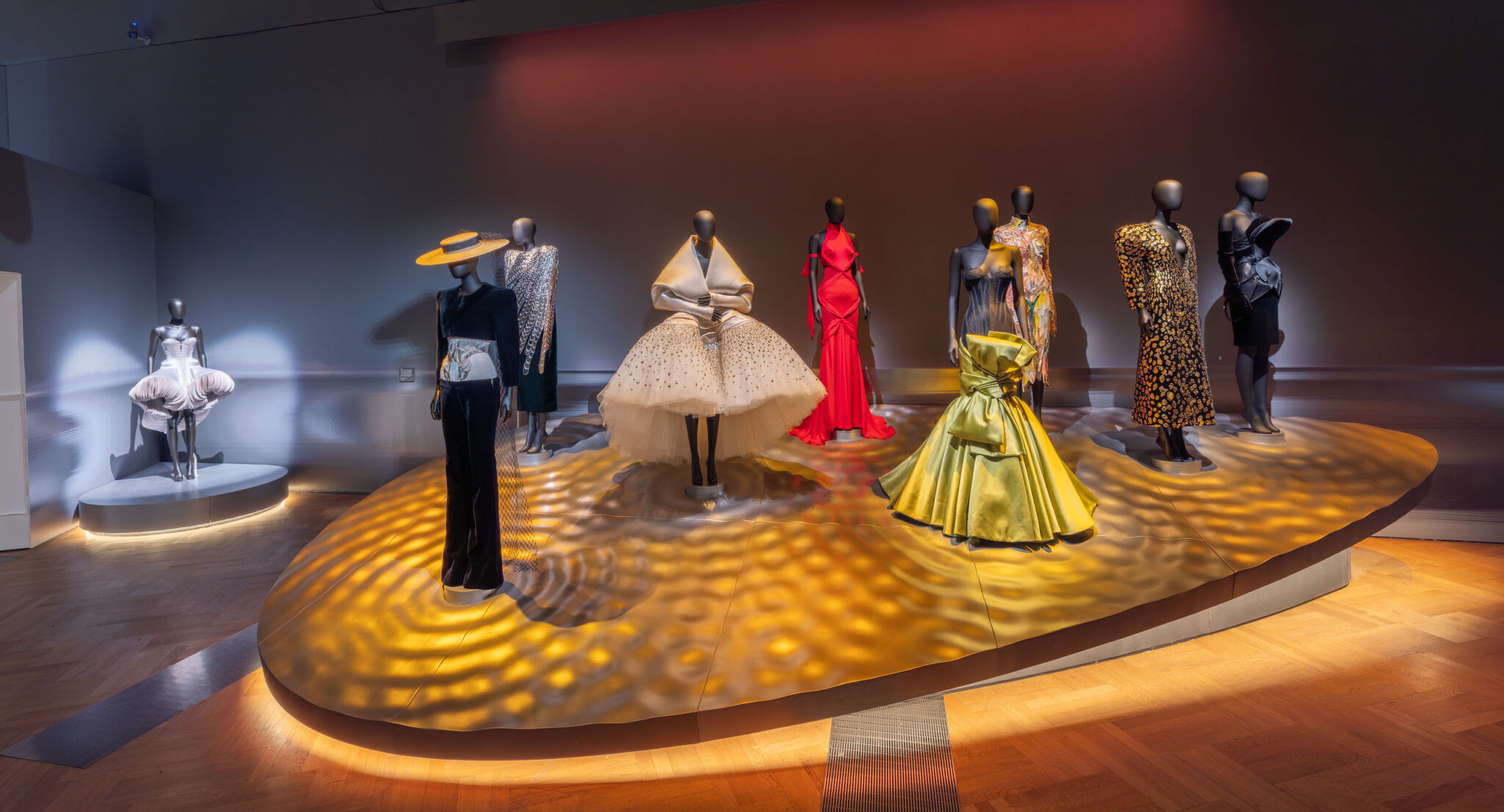
Installation view of “Schiaparelli: Fashion Becomes Art,” at the V&A Museum in London. (Photo: Jamie Stoker)
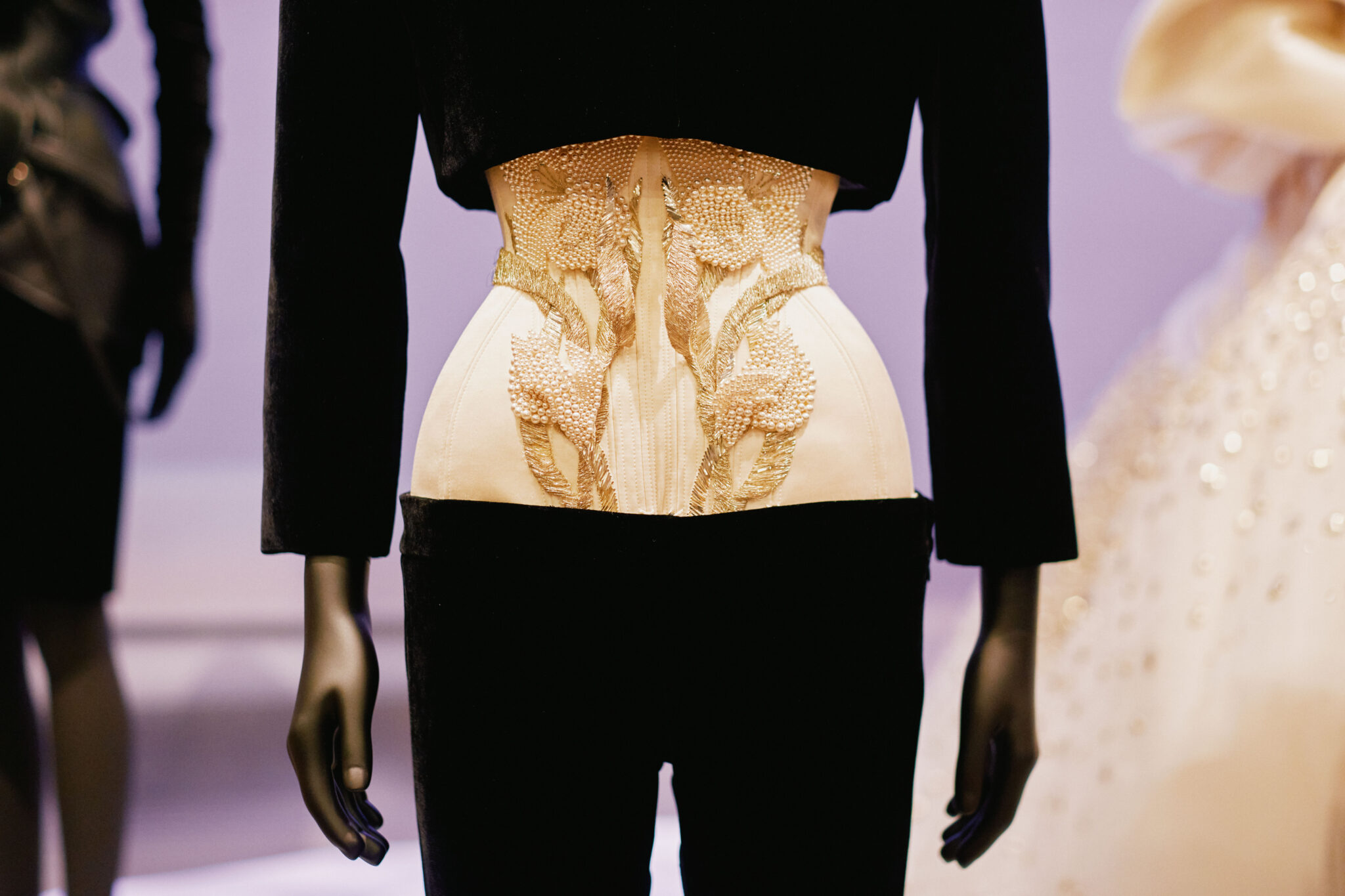
Installation view of “Schiaparelli: Fashion Becomes Art,” at the V&A Museum in London. (Photo: Jamie Stoker)
Installation view of “Schiaparelli: Fashion Becomes Art,” at the V&A Museum in London. (Photo: Jamie Stoker)
Installation view of “Schiaparelli: Fashion Becomes Art,” at the V&A Museum in London. (Photo: Jamie Stoker)
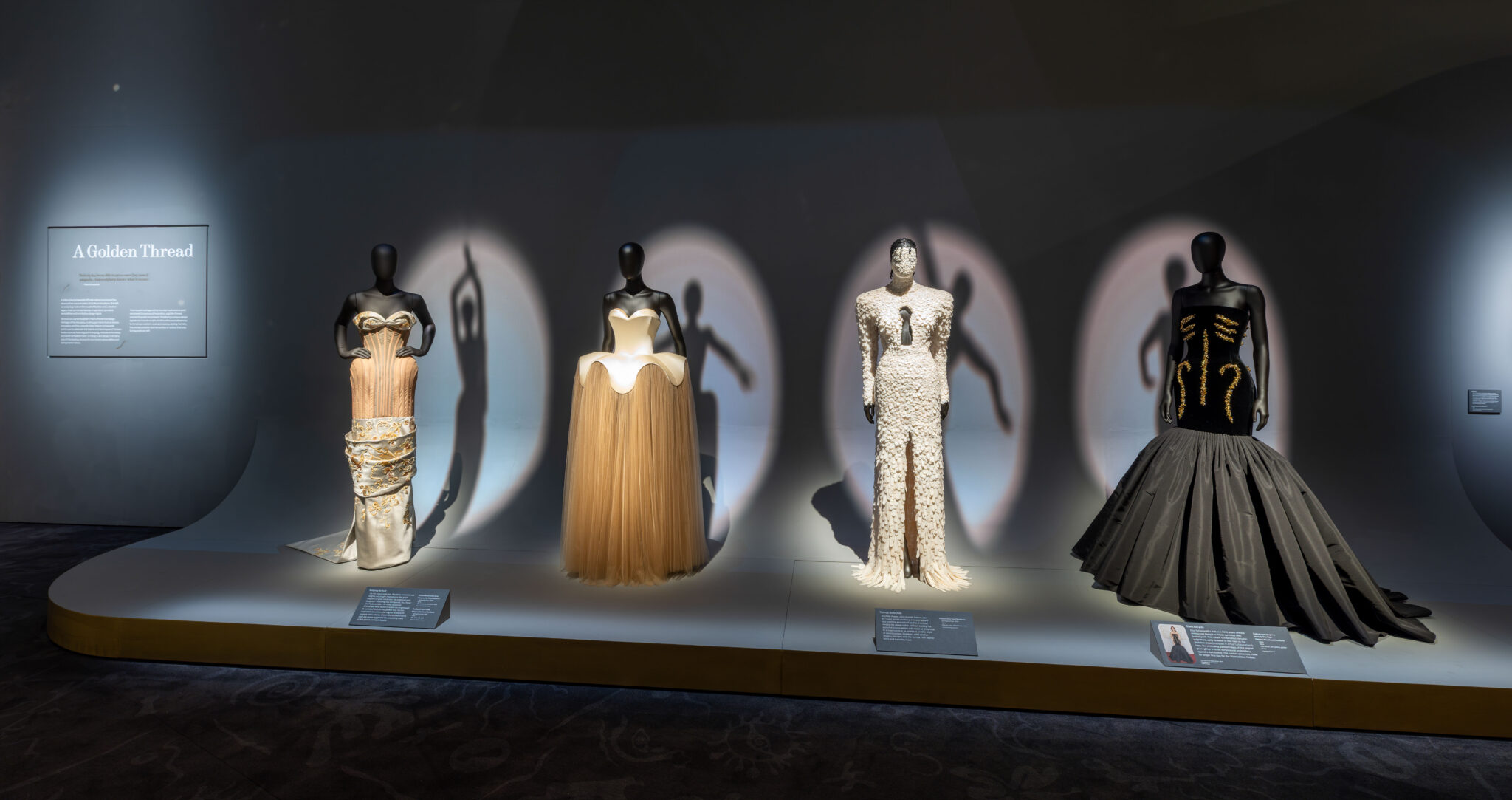
Installation view of “Schiaparelli: Fashion Becomes Art,” at the V&A Museum in London. (Photo: Jamie Stoker)
On view through November 8, 2026, Fashion Becomes Art celebrates Schiaparelli’s enduring commitment to surrealism and subverting expectation through innovative garments.
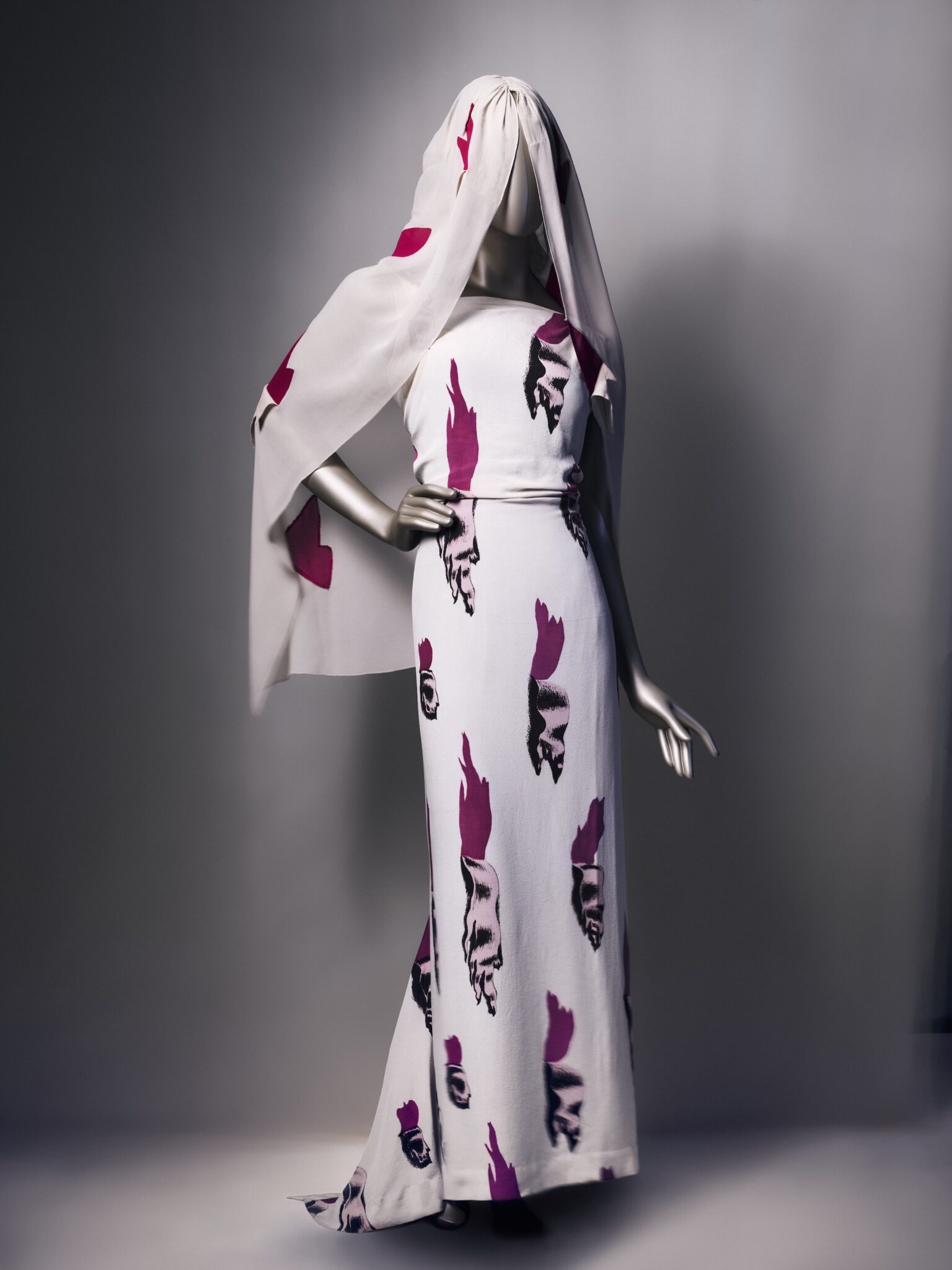
Tears dress with veil, designed by Elsa Schiaparelli and Salvador Dalí. Summer 1938. (Photo: Emil Larsson)
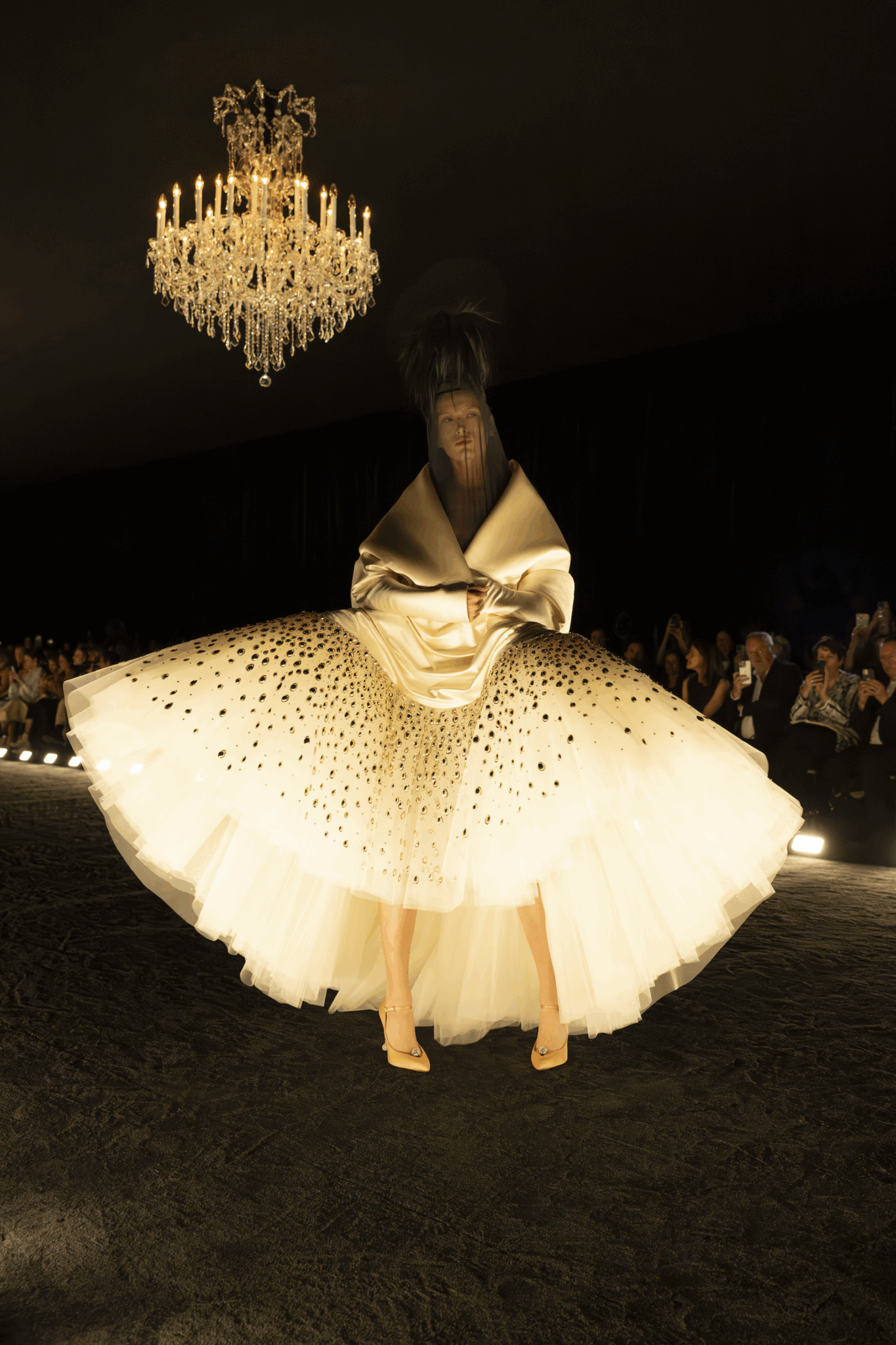
Schiaparelli Haute Couture F/W 2024, Look 30. (Photo: Giovanni Giannoni, courtesy Patrimoine Schiaparelli, Paris)
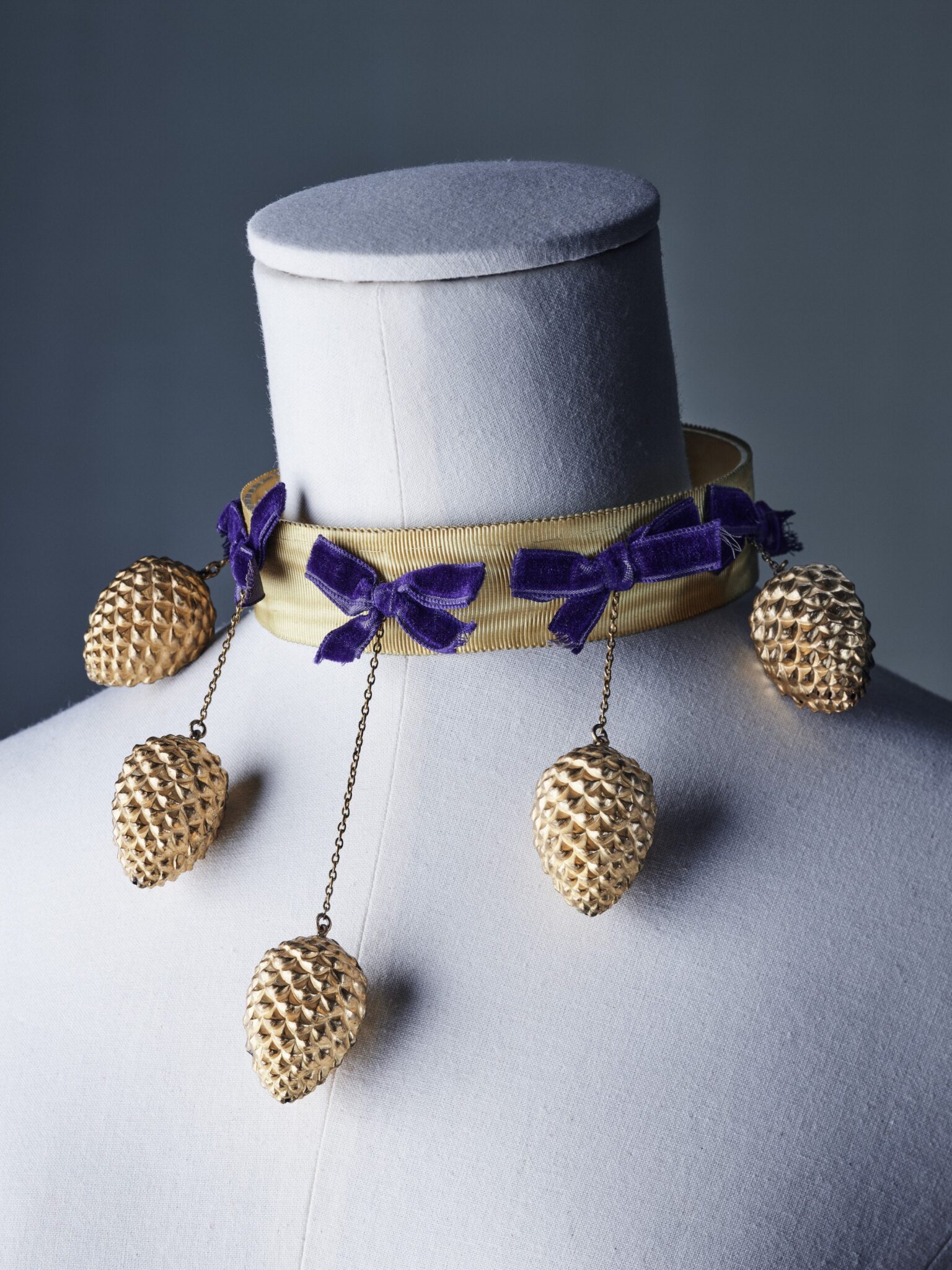
Choker by Schiaparelli from the Pagan collection, Fall 1938. (Photo: Emil Larsson)
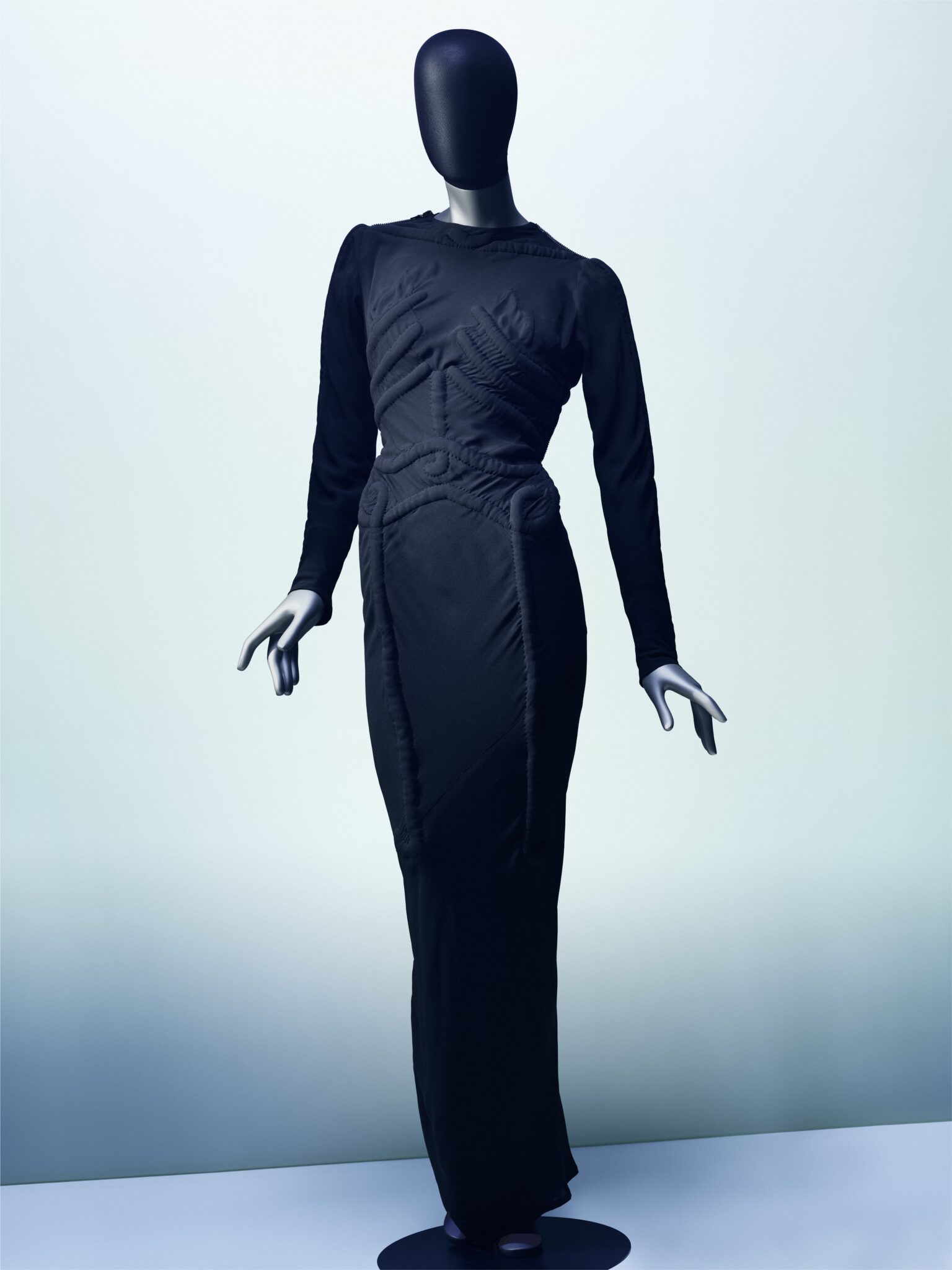
Skeleton Dress, designed by Elsa Schiaparelli and Salvador Dalí, 1938. (Photo: Emil Larsson, © 2025 Salvador Dalí, Fundació Gala-Salvador Dalí, DACS. Courtesy of V&A)
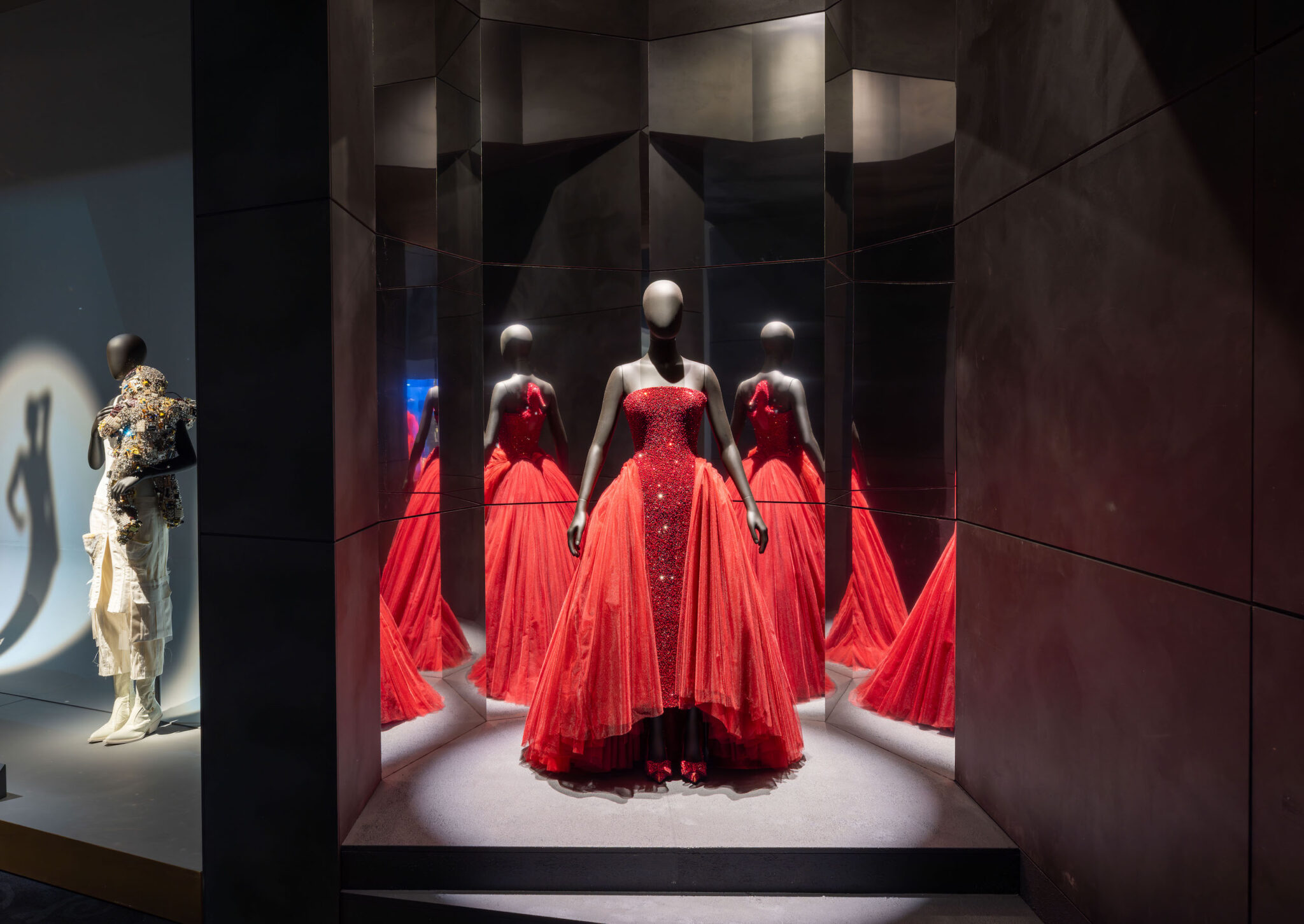
Installation view of “Schiaparelli: Fashion Becomes Art,” at the V&A Museum in London. (Photo: Jamie Stoker)
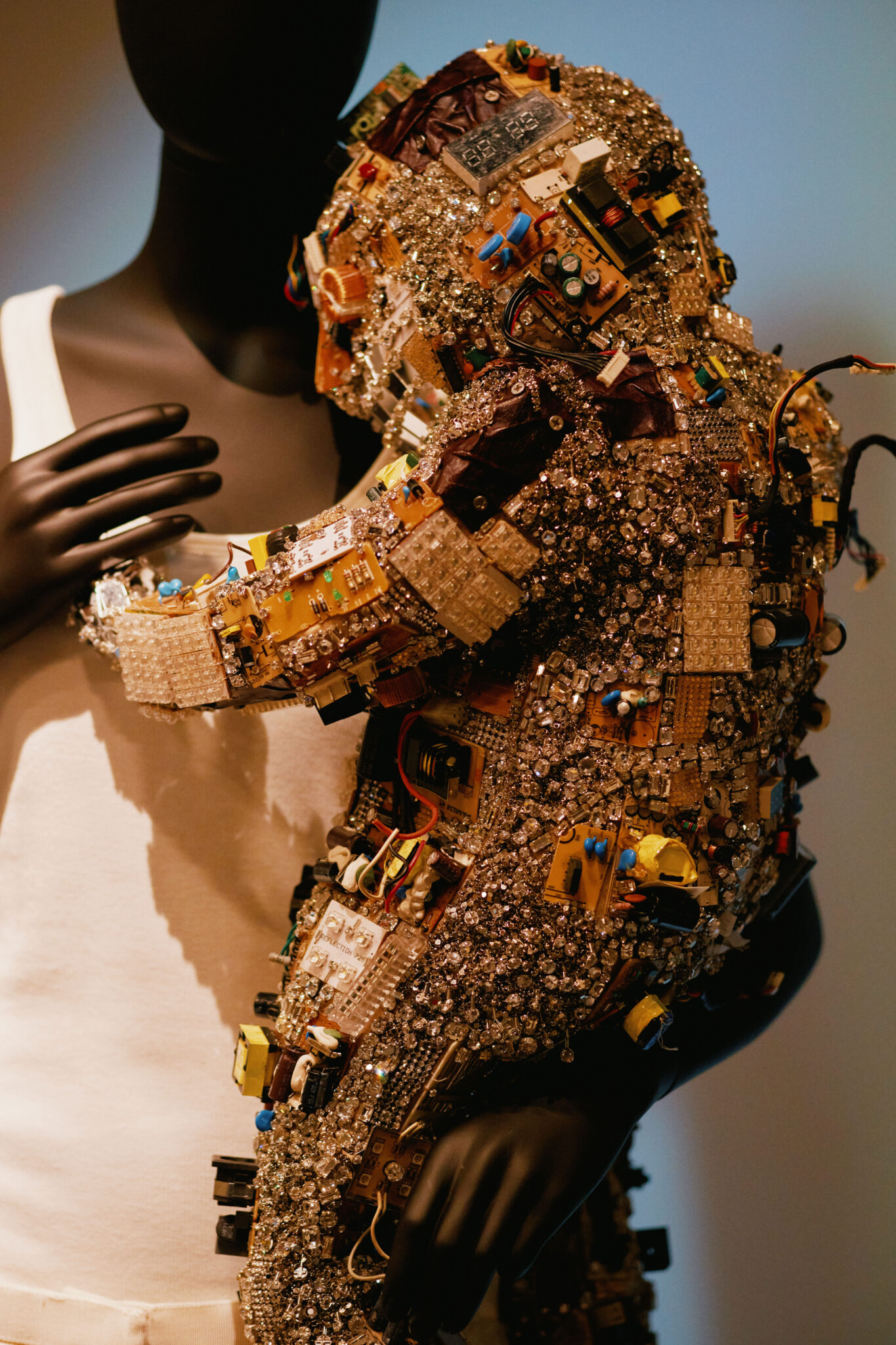
Installation view of “Schiaparelli: Fashion Becomes Art,” at the V&A Museum in London. (Photo: Jamie Stoker)
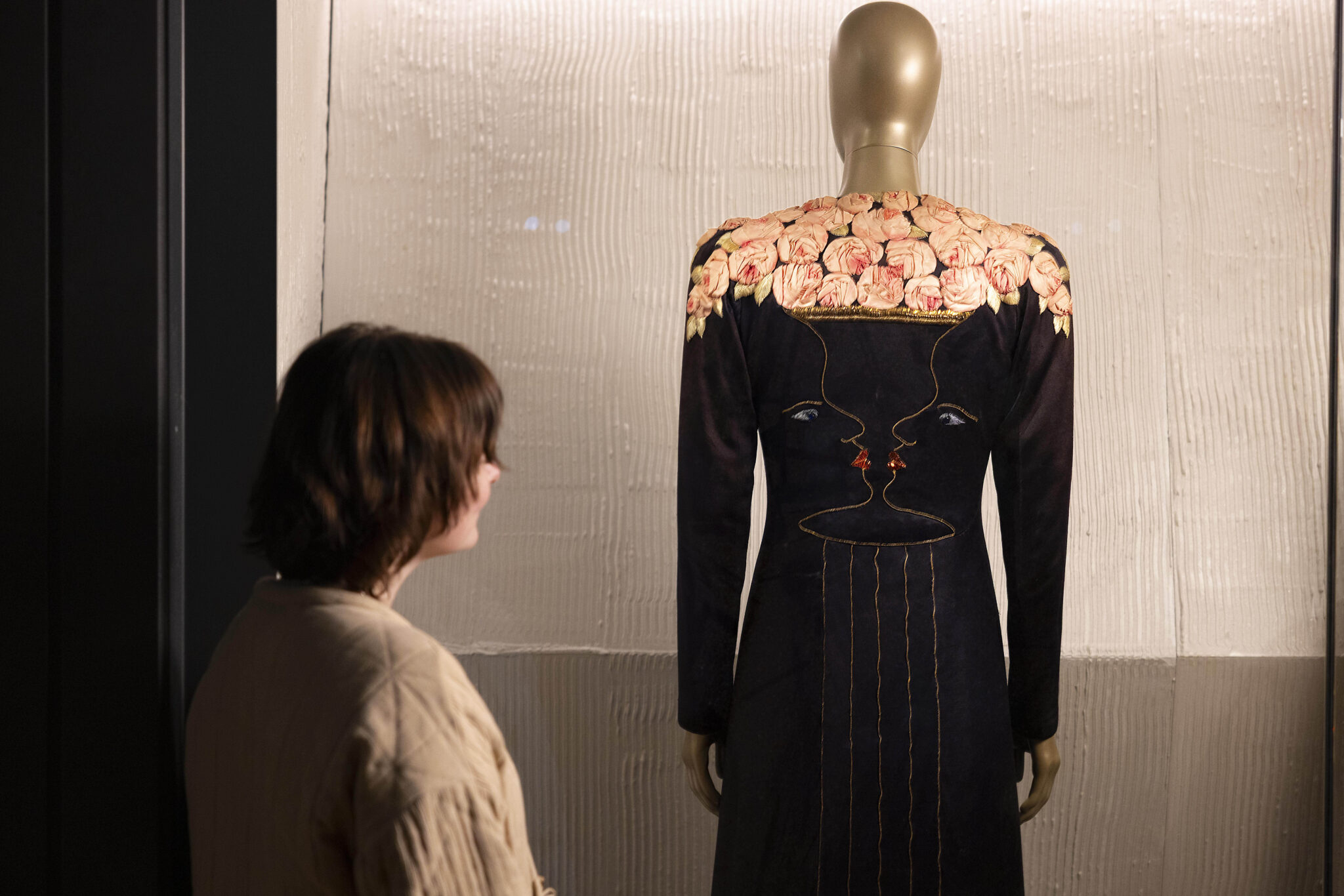
Installation view of “Schiaparelli: Fashion Becomes Art,” at the V&A Museum in London. (Photo: Jamie Stoker)
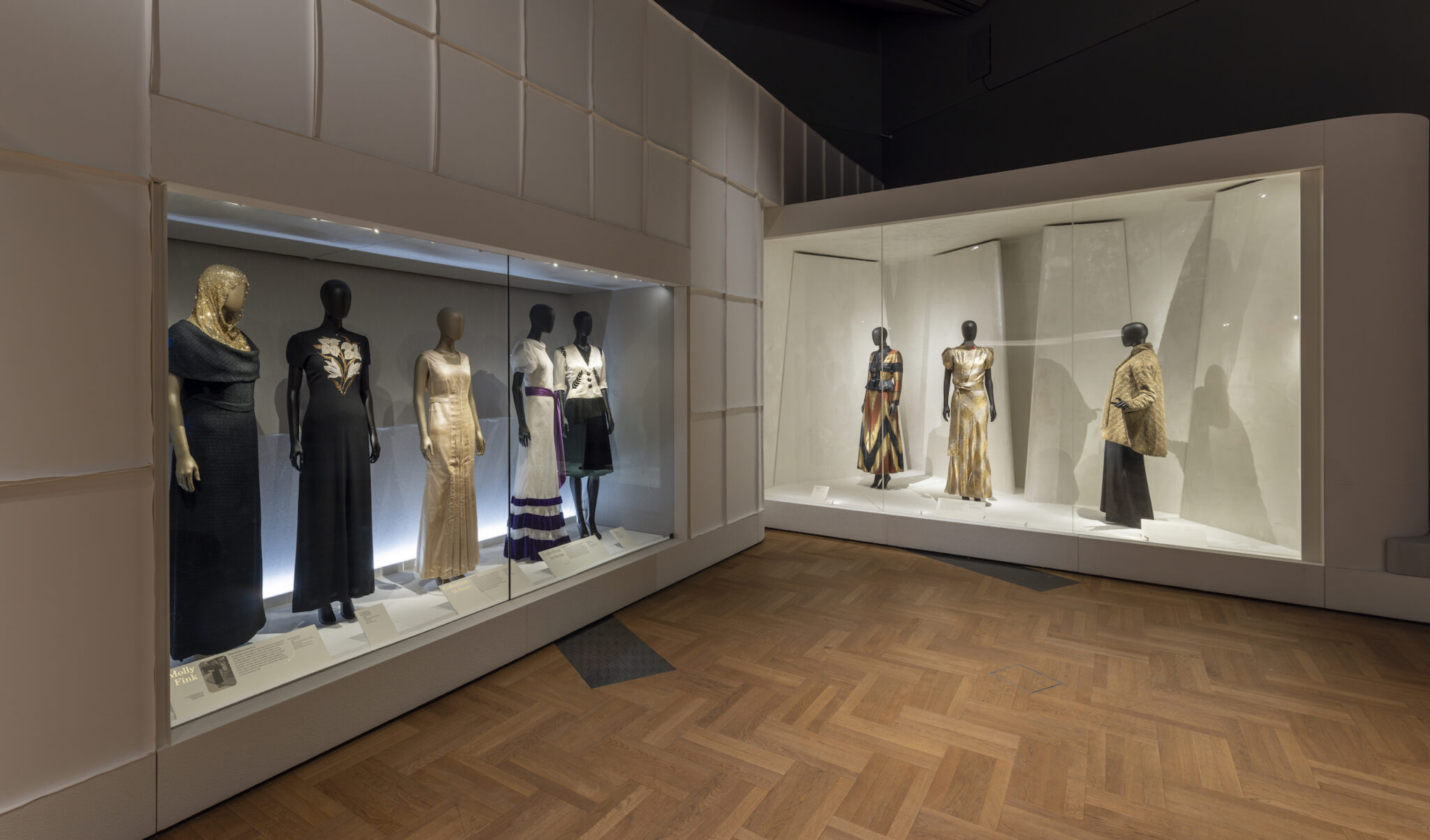
Installation view of “Schiaparelli: Fashion Becomes Art,” at the V&A Museum in London. (Photo: Jamie Stoker)
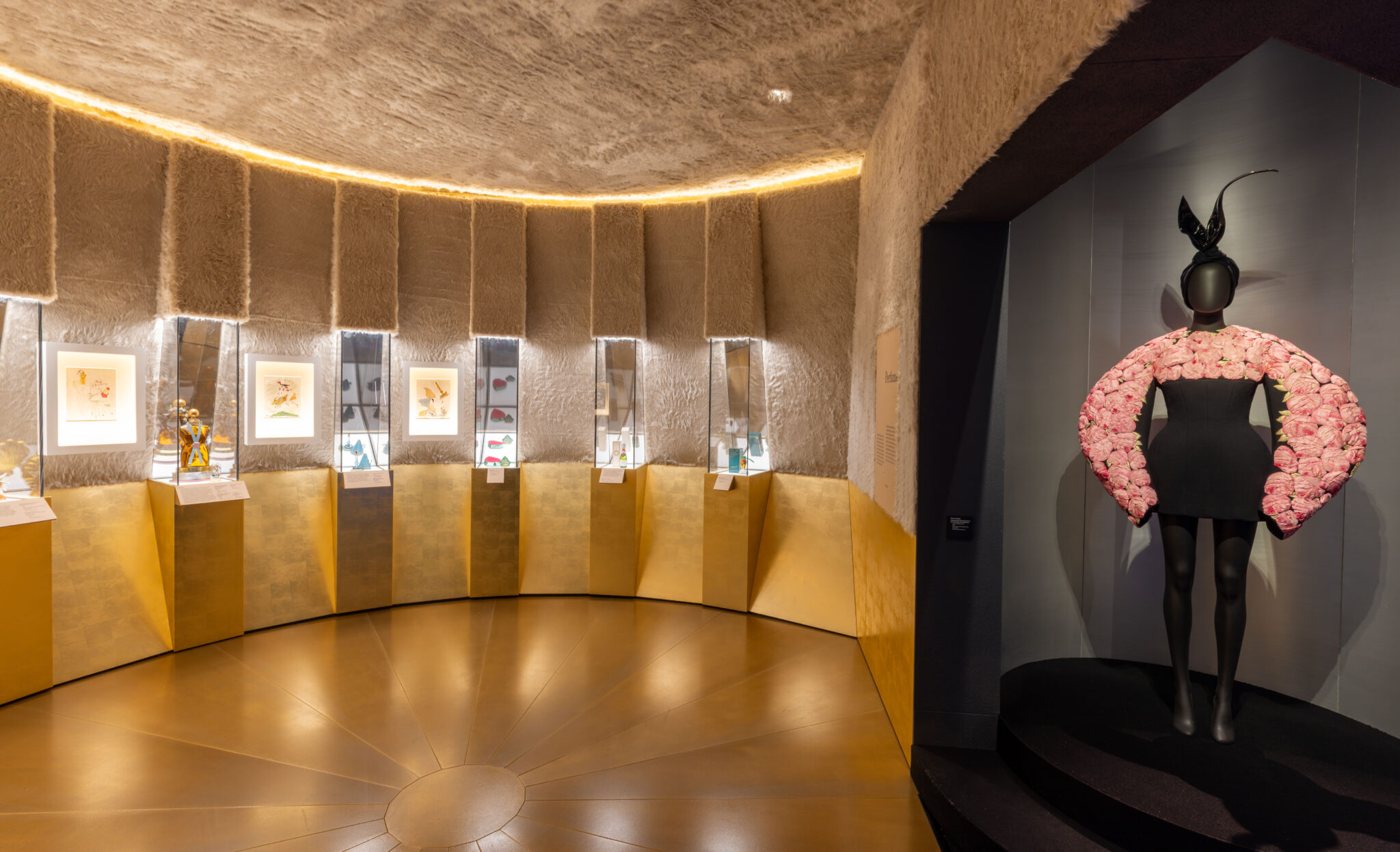
Installation view of “Schiaparelli: Fashion Becomes Art,” at the V&A Museum in London. (Photo: Jamie Stoker)
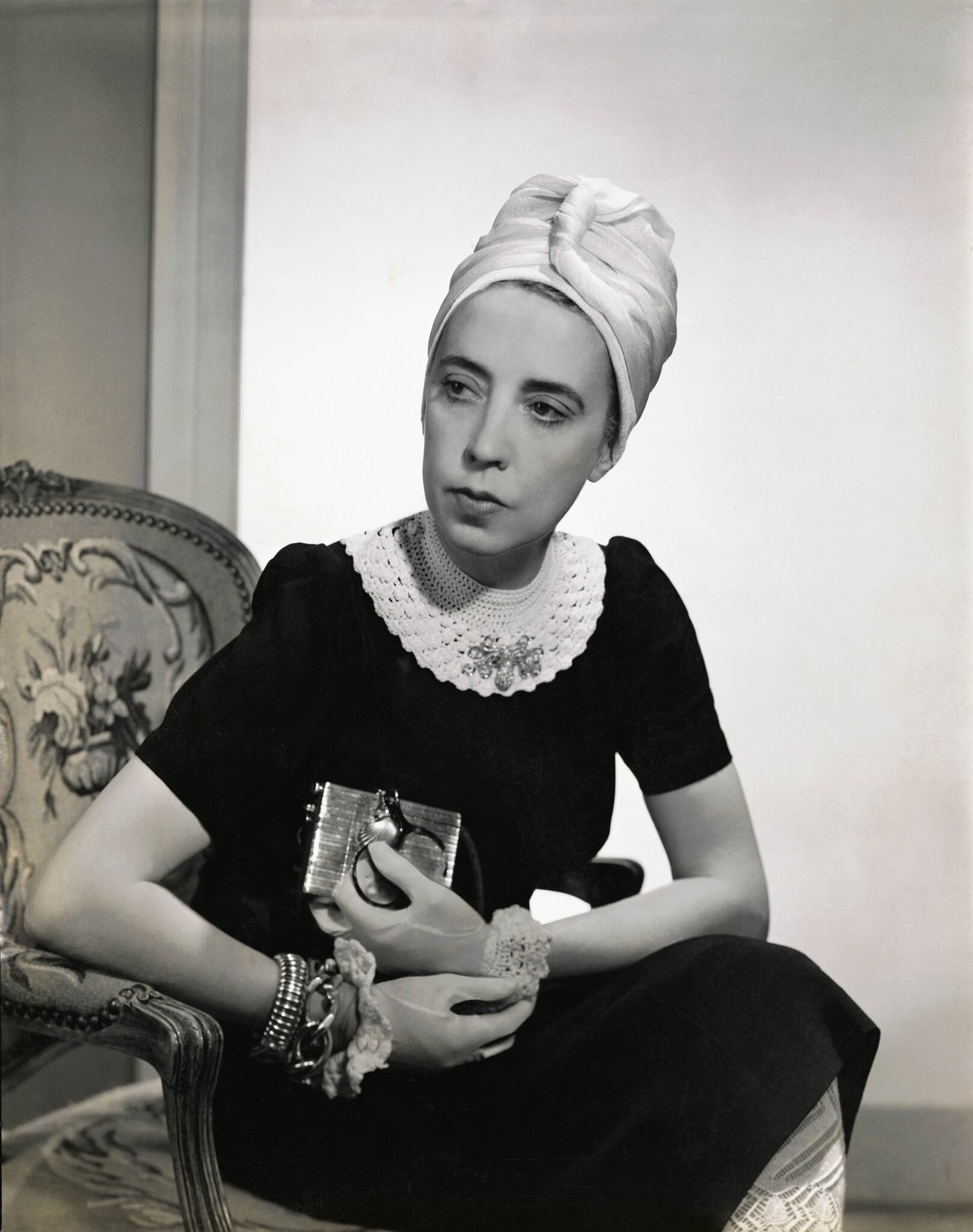
Elsa Schiaparelli wearing black silk dress with crocheted collar of her own design and a turban, as featured in Vogue in 1940. (Photo: Fredrich Baker/Condé Nast via Getty Images)