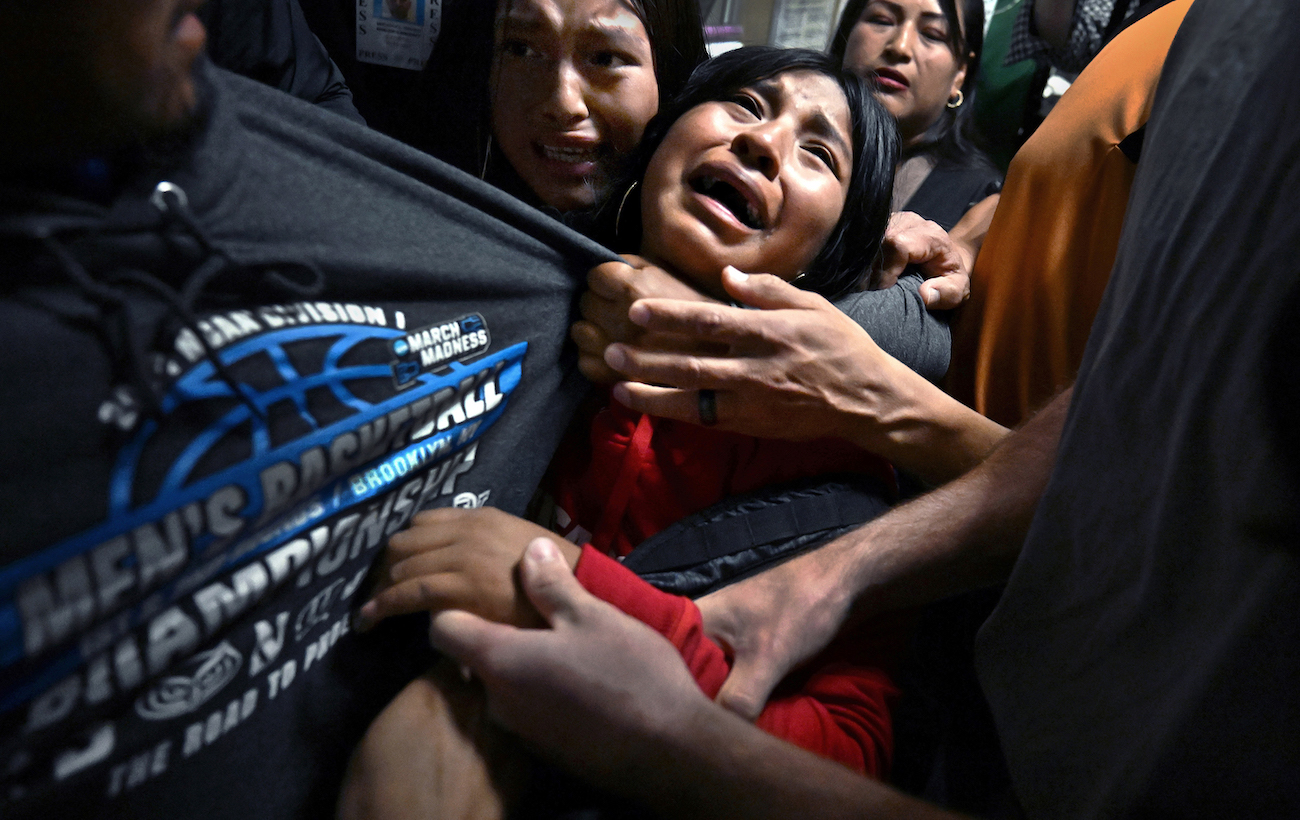
“ICE Arrests at New York Court” © Carol Guzy, United States, ZUMA Press, iWitness, for Miami Herald. 2026 World Press Photo of the Year
“‘Please understand we are coming here for a better opportunity, not just for ourselves, but for our children,’” said Cocha, after her husband, Luis, was detained by ICE agents following an immigration court hearing at the Jacob K. Javits Federal Building. Luis, an Ecuadorian migrant whom his family says has no criminal record, served as the household’s sole provider. This photograph, taken inside one of the few US federal buildings where photographers were granted access, captures a harrowing moment: a family separated by the state. What Carol Guzy has documented is not an isolated instance, but a policy indiscriminately applied to people who arrive for hearings in good faith. Cocha and their three children – ages seven, 13, and 15—were left inconsolable, facing immediate financial hardship and profound emotional trauma. In a democracy, the camera’s presence in that hallway is an essential witness to a policy that has turned courthouses into sites of shattered lives.”
Each year, the World Press Photo Contest recognizes the most powerful images created by photojournalists around the globe. For 2026, the organization recently announced its prestigious Photo of the Year prize along with two striking finalists, offering a sobering look at migration, conflict, and the long fight for justice.
This year’s top honor goes to Separated by ICE, photographed by Carol Guzy for The Miami Herald. Taken inside the Jacob K. Javits Federal Building in New York City, the image captures the moment an Ecuadorian father, Luis, is detained by U.S. Immigration and Customs Enforcement (ICE) agents following an immigration court hearing.
Guzy created the photograph in one of the few federal spaces where journalists were granted access. Working in a single hallway, she returned day after day to document similar encounters. As a result, the image reflects more than one family’s experience. It shows a pattern of enforcement that unfolds in real time.
In the photograph, Luis’s wife, Cocha, and their three children cling to one another in visible distress. According to the family, Luis had no criminal record and served as the household’s sole provider. His detention leaves them facing immediate financial hardship as well as profound emotional trauma. The image forms part of Guzy’s broader project, ICE Arrests at New York Court, which also received recognition in the contest.
The jury selected the photograph for its ability to make policy visible through lived experience. In response, Guzy emphasized that the award belongs to the families who allowed their stories to be shared. Their willingness, she noted, made it possible to document both suffering and resilience.
Alongside the winning image, two finalists further expand the scope of this year’s award. One photograph, titled Aid Emergency in Gaza by Saber Nuraldin for EPA Images, captures Palestinians climbing onto a truck entering the Gaza Strip through the Zikim Crossing on July 27, 2025. The scene unfolds during what the Israeli military described as a temporary pause in operations to allow humanitarian aid.
At the same time, the photograph reveals the scale of a deepening crisis. In 2025, famine spread across Gaza amid ongoing conflict. An independent United Nations inquiry has concluded that the situation constitutes genocide, a claim that Israel disputes. Earlier that year, Israeli authorities imposed a complete aid blockade, which humanitarian organizations have described as the weaponization of starvation.
According to United Nations reporting, at least 2,435 Palestinians seeking food were killed at or near aid distribution sites between late May and early October. Even after a ceasefire agreement, more than 75 percent of the population continues to face hunger and malnutrition. For this reason, the jury noted that the photograph confronts viewers with both urgency and scale, offering clear visual evidence of the crisis.
In contrast, the second finalist presents a quieter but equally significant moment. The Trials of the Achi Women by Victor J. Blue for The New York Times Magazine shows Doña Paulina Ixpatá Alvarado standing with fellow Maya Achi women outside a courthouse in Guatemala City. Earlier that day, three former paramilitary members were sentenced to 40 years in prison for rape and crimes against humanity.
The photograph marks the conclusion of a decades-long fight for justice. In 2011, 36 Indigenous women came forward after years of silence. They pursued legal action against men who had assaulted them during the Guatemalan Civil War. For years, many lived alongside their abusers in the same communities. Despite this, they continued to seek accountability.
The jury praised the image for its restraint. Rather than emphasizing trauma, it highlights dignity, presence, and collective strength. In doing so, it reframes how survivors of violence are represented in visual culture.
The winning and finalist images will appear in the World Press Photo Exhibition 2026, which opens on April 24 at De Nieuwe Kerk in Amsterdam before traveling to more than 60 locations worldwide.
World Press Photo names Carol Guzy’s Separated by ICE as the 2026 Photo of the Year, capturing the human impact of immigration enforcement in the United States.
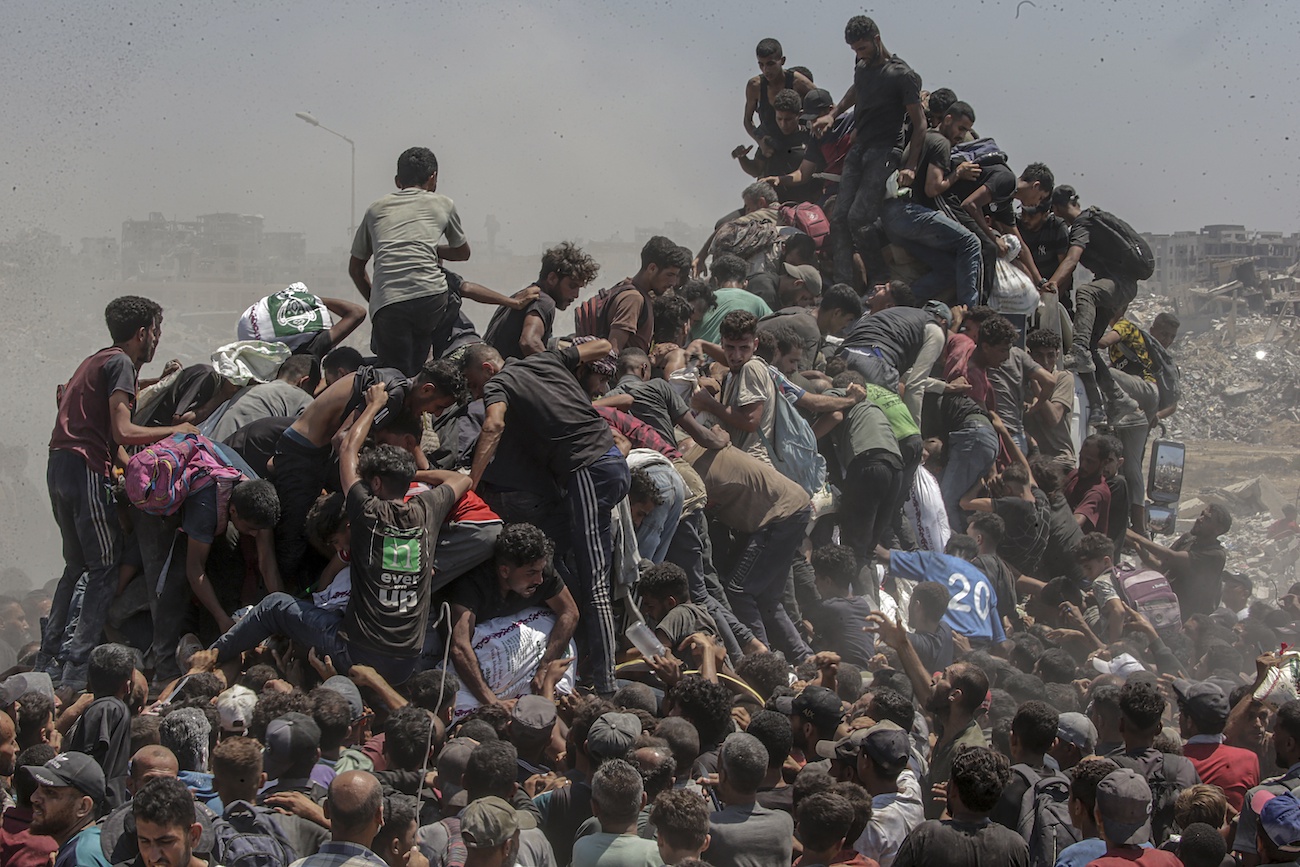
“Aid Emergency in Gaza” © Saber Nuraldin, Palestine, EPA Images
Palestinians climb onto an aid “Palestinians climb onto an aid truck as it enters the Gaza Strip via the Zikim Crossing in an attempt to get flour, during what the Israeli military called a ‘tactical suspension’ in operations to allow humanitarian aid through. 27 July 2025.”
Two 2026 finalists highlight urgent global crises in Gaza and Guatemala, documenting famine, conflict, and long struggles for justice.
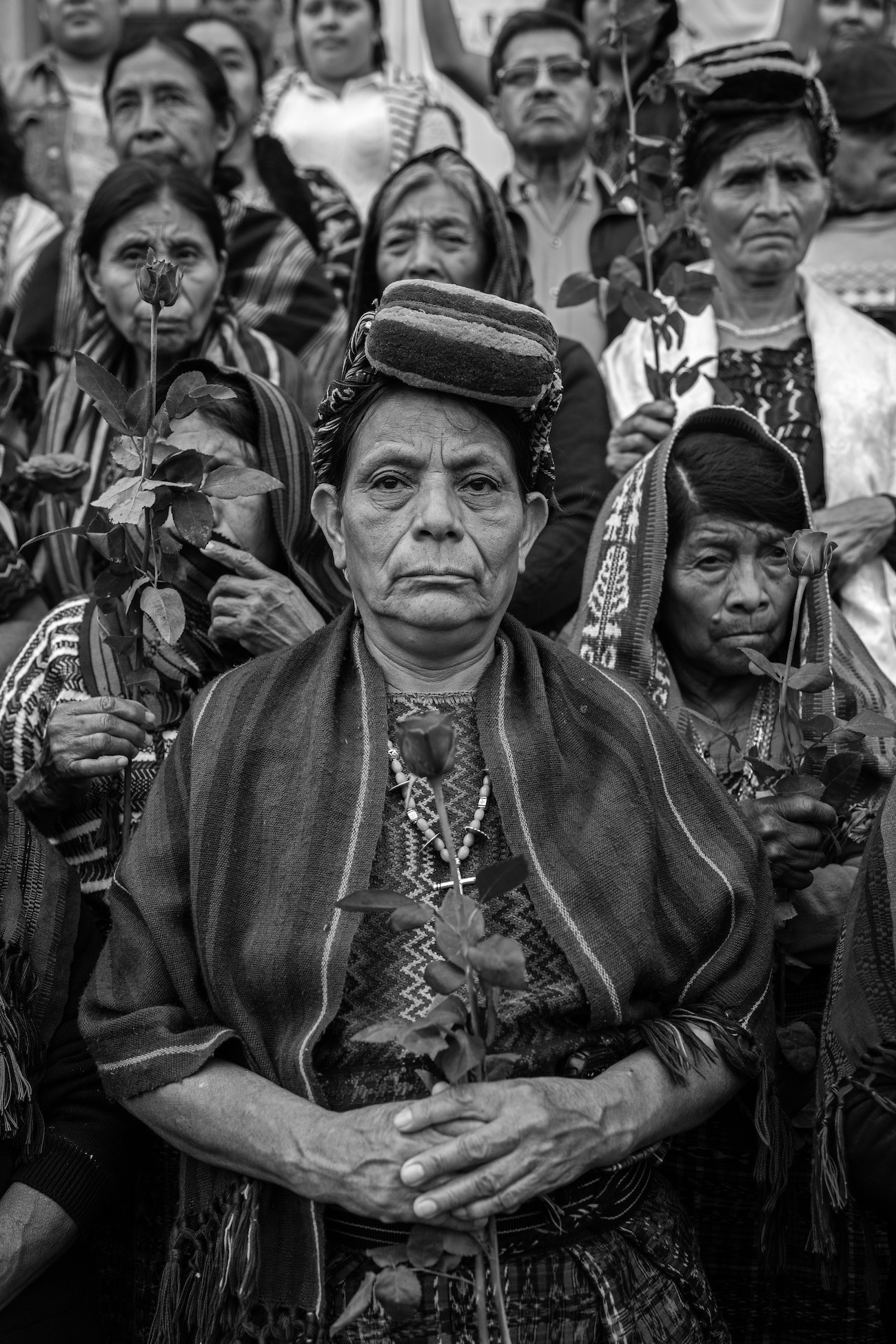
“The Trials of the Achi Women” © Victor J. Blue, United States, for the New York Times Magazine.
“Doña Paulina Ixpatá Alvarado stands with other Achi women outside a Guatemala City court. That afternoon, three ex-civil defense patrollers were found guilty of rape and crimes against humanity and sentenced to 40 years in prison each. Guatemala City, Guatemala, May 30, 2025.”